In modern structural engineering, connection design is just as critical as member sizing. While beams and columns often receive primary attention, long-term durability frequently depends on how joints perform under repeated stress. This is where steel building fatigue connections become a decisive factor in structural safety and lifecycle performance. Unlike static loading conditions, fatigue damage develops gradually under repeated stress cycles, even when those stresses remain well below the material’s ultimate strength.
In industrial plants, logistics hubs, crane-supported workshops, and high-wind regions, cyclic loading continuously acts on structural joints. Over time, this repetitive stress can initiate microscopic cracks that propagate and compromise structural integrity. Understanding steel building fatigue connections is therefore not optional — it is essential for engineers aiming to deliver durable, high-performance steel structures.
Understanding Steel Building Fatigue Connections
Fatigue in steel structures refers to progressive damage caused by repeated fluctuations in stress. Steel building fatigue connections are particularly vulnerable because stress concentrations often occur at bolts, weld toes, geometric discontinuities, and plate transitions. Even if a connection satisfies static strength requirements, it may still fail prematurely if cyclic loading effects are not properly evaluated.
What Is Fatigue in Structural Steel?
Fatigue failure differs fundamentally from static overload. In a static failure scenario, a member yields or fractures when stress exceeds its capacity. In fatigue, failure occurs after thousands or even millions of stress cycles. Each stress reversal contributes incremental damage. Over time, microcracks form at stress concentration points and gradually propagate.
This process explains why steel building fatigue connections must be analyzed using stress range rather than peak stress alone. The magnitude of fluctuation — not just maximum load — determines fatigue life.
The Role of Cyclic Loading
Cyclic loading refers to repeated application and removal of load. Common sources include:
- Overhead crane operations in industrial facilities
- Wind-induced sway in portal frame warehouses
- Machinery vibration in manufacturing plants
- Traffic loads in transport-related structures
- Seismic aftershocks and repeated lateral forces
Each cycle introduces tensile and compressive stress variation in connections. Over time, steel building fatigue connections experience cumulative damage. Engineers must evaluate expected cycle counts and stress ranges to predict fatigue life accurately.
Common Fatigue-Prone Areas in Steel Structures
Beam-to-Column Connections
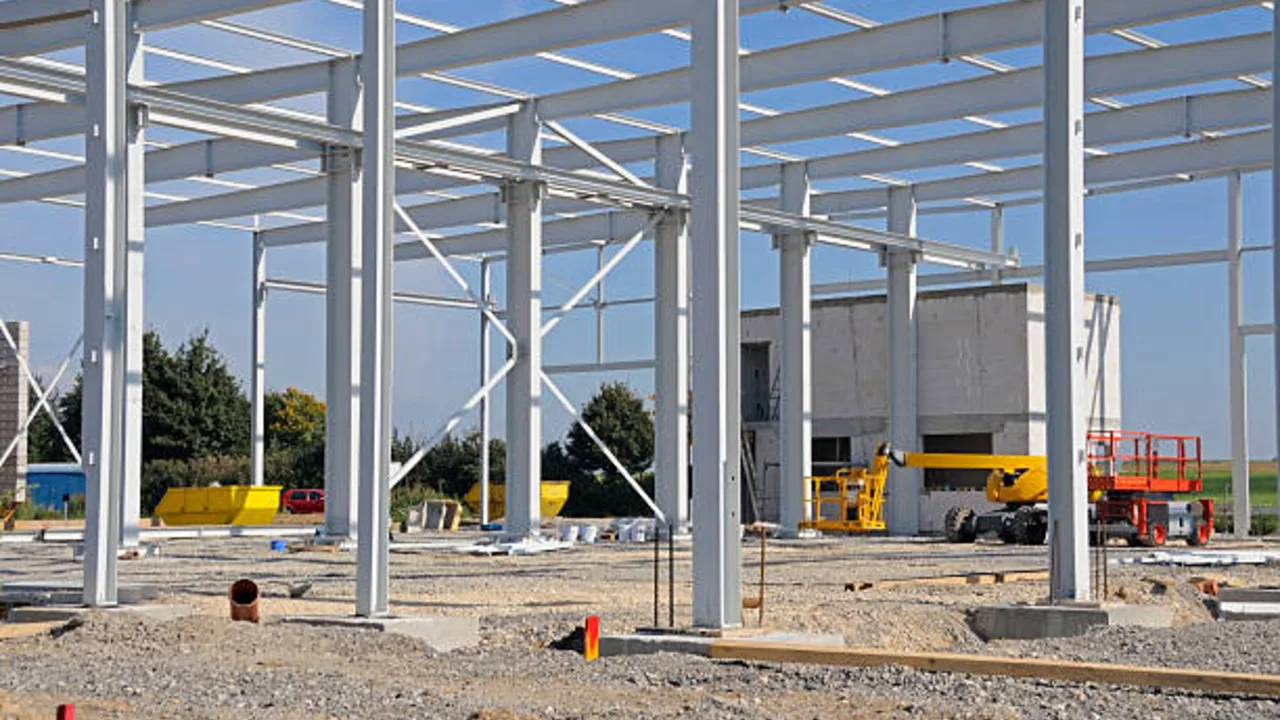
Moment connections and shear connections are primary fatigue-sensitive zones. Bolted end-plate assemblies, welded flange plates, and stiffener attachments can all develop stress concentrations. Improper detailing amplifies local stress range under cyclic loading.
In high-demand facilities, engineers must consider prying forces, bolt preload conditions, and weld continuity. Steel building fatigue connections at beam-column joints are often the first locations to exhibit crack initiation under repeated dynamic action.
Crane Runway Beams
Industrial buildings with overhead cranes present one of the most demanding environments for steel building fatigue connections. Crane wheels introduce vertical wheel loads, lateral surge forces, and impact effects. These loads repeat thousands of times per year.
Without fatigue-conscious detailing, runway beam brackets and stiffener welds may develop cracks. The presence of cyclic loading significantly increases fatigue risk compared to static warehouse structures.
Bracing Systems and Gusset Plates
Diagonal bracing members in wind-exposed buildings undergo repeated tension-compression reversals. Gusset plates and bolted interfaces are therefore fatigue-critical zones. Steel building fatigue connections in bracing systems require smooth geometry transitions and controlled weld profiles to minimize stress concentration.
Base Plates and Anchor Bolts
Although base plates are typically designed for static axial load and bending, uplift cycles or machinery-induced vibration can introduce fatigue demands. Anchor bolts subjected to repeated tension may experience crack initiation at thread roots.
Proper detailing ensures that steel building fatigue connections at column bases remain reliable over decades of service.
Engineering Mechanics Behind Fatigue Behavior
Stress Range and S-N Curves
Fatigue design commonly relies on S-N curves, which relate stress range (S) to number of cycles to failure (N). International standards such as those from the American Institute of Steel Construction classify connection details into fatigue categories based on geometry and weld configuration.
Steel building fatigue connections must satisfy allowable stress range limits corresponding to expected cycle counts. Higher stress ranges significantly reduce fatigue life.
Crack Initiation and Propagation
Fatigue cracks usually begin at weld toes, bolt holes, or abrupt geometry changes. Once initiated, cracks grow incrementally with each load cycle. If undetected, crack propagation can eventually cause sudden fracture.
By minimizing stress concentrations and improving surface quality, engineers enhance the durability of steel building fatigue connections under long-term cyclic loading.
Design Strategies for Durable Steel Building Fatigue Connections
Reducing Stress Concentrations
Smooth geometry transitions are critical. Rounded plate corners, proper weld termination, and gradual stiffness changes reduce local stress peaks. Steel building fatigue connections benefit significantly from refined detailing rather than simply increasing plate thickness.
High-Quality Bolted Connections
Preloaded high-strength bolts reduce slip and minimize secondary bending effects. Slip-critical assemblies are often preferred in fatigue-sensitive applications subjected to cyclic loading.
Weld Detailing and Inspection
Continuous welds, proper weld profiles, and post-weld treatments such as grinding can improve fatigue resistance. Quality inspection ensures that weld defects do not serve as crack initiation points.
Cyclic Loading in Industrial Steel Facilities
Consider a heavy manufacturing plant with dual overhead cranes operating daily. Each lift generates stress cycles in runway beam connections. Over a 20-year period, these steel building fatigue connections may experience millions of load reversals.
Designing purely for static strength would underestimate risk. Instead, engineers must evaluate cumulative damage effects and adjust detailing accordingly. This approach aligns with best practices in structure steel building design, where lifecycle performance is prioritized alongside strength.
Fabrication and Construction Quality
Precision during fabrication plays a decisive role in fatigue resistance. Misalignment, residual stresses, and poor weld penetration can significantly reduce fatigue life. Even well-designed steel building fatigue connections may fail prematurely if construction quality is compromised.
Proper fit-up, accurate hole alignment, and controlled welding procedures ensure that cyclic loading effects are distributed as intended in the design model.
Lifecycle Perspective
Fatigue performance is not determined solely at the design stage. Inspection and maintenance programs are equally important. Early crack detection and localized reinforcement can extend the life of steel building fatigue connections dramatically.
When engineers incorporate fatigue evaluation from the outset, structures achieve superior long-term reliability under cyclic loading conditions.
Inspection and Maintenance for Steel Building Fatigue Connections
Even the best-engineered joints require ongoing verification in service. Because fatigue damage accumulates gradually, inspection programs are the practical safeguard that prevents small defects from turning into major failures. For facilities exposed to frequent cyclic loading, inspection intervals should be aligned with operational intensity and the known fatigue sensitivity of specific details.
Routine Inspection Methods
- Visual inspection: Identifies corrosion, coating damage, deformation, and surface cracking near weld toes and bolt groups.
- Magnetic particle testing: Useful for detecting surface-breaking cracks around welds and stress concentration zones.
- Ultrasonic testing: Detects internal discontinuities and crack growth that may not be visible on the surface.
- Torque and bolt condition checks: Confirms that preloaded bolts remain within expected performance ranges in fatigue-sensitive joints.
These methods are especially important in steel building fatigue connections around crane runway brackets, bracing nodes, and high-stress beam-to-column joints. A consistent inspection record also helps engineers distinguish between harmless surface marks and true crack propagation.
Monitoring Crack Development
When cracks are found, the priority is understanding cause and growth rate. A small crack does not always require immediate shutdown, but it does require a response plan. Engineers typically evaluate the stress range from cyclic loading, confirm connection category assumptions, and decide between repair and reinforcement.
Common mitigation actions include:
- Stop-drilling crack tips to reduce stress concentration and slow propagation
- Weld toe grinding to improve surface profile and reduce crack initiation risk
- Adding doubler plates or stiffeners to redistribute force flow
- Replacing fatigue-critical bolts and restoring bolt preload where required
In facilities with continuous production schedules, these repairs are often planned during maintenance windows to avoid unplanned downtime.
Project Case: Fatigue Management in a Crane-Supported Steel Facility
A practical example of managing steel building fatigue connections can be observed in a crane-supported maintenance workshop built to serve high-duty industrial operations. The facility was designed to operate two overhead cranes within the same bay, producing repetitive wheel loads, lateral surge forces, and frequent braking events — all major drivers of cyclic loading.
During design review, engineers identified fatigue-sensitive details at runway beam brackets and welded stiffener terminations. Rather than relying on thicker members alone, the team focused on connection refinement. Weld profiles were specified for smoother transitions, abrupt geometry changes were reduced, and bolt groups were designed to limit secondary bending effects under load reversals.
To support long-term durability, the workshop incorporated an inspection plan from day one. High-cycle connection zones were documented with reference photos, inspection access points were kept clear, and testing intervals were scheduled around crane duty cycles. After commissioning, early monitoring confirmed stable performance and no abnormal crack initiation, reinforcing that fatigue-conscious detailing can significantly improve reliability.
Fabrication and Construction Factors That Affect Fatigue Life
Fatigue resistance is highly sensitive to workmanship. A connection that performs well in calculation can still fail if fabrication introduces defects. Key risk factors include poor fit-up, weld undercut, misaligned bolt holes, and excessive residual stress from uncontrolled welding.
Tolerance Control and Fit-Up Accuracy
Misalignment forces connections to “self-correct” during erection, creating unintended bending and local stress amplification. In steel building fatigue connections, small geometry deviations can significantly raise stress range under cyclic loading. Strict tolerance control reduces this risk.
Residual Stress and Heat-Affected Zones
Welding introduces residual stress and microstructural changes. While these are normal, they become critical when combined with repetitive loading. Controlled welding procedures, appropriate preheat when required, and consistent inspection help ensure fatigue performance matches design intent.
Common Design Mistakes in Steel Building Fatigue Connections
Fatigue failures are often preventable. Many occur because fatigue was never treated as a governing limit state. The most common mistakes include:
- Ignoring cyclic loading in early-stage connection planning
- Assuming static strength alone guarantees durability
- Using poor weld termination details that create stress raisers
- Overlooking prying action and secondary bending in bolted joints
- Failing to plan inspection access for fatigue-critical zones
Correcting these issues typically requires detail refinement rather than major redesign, which is why early consideration is so cost-effective.
Long-Term Reliability in Industrial and Commercial Steel Structures
Fatigue does not act alone. Corrosion, temperature variation, and operational changes can amplify fatigue risk. Corrosion pits can become crack initiation points, while equipment upgrades may increase the cyclic loading demand beyond the original assumptions.
For long service life, a steel structure should be designed and operated with a lifecycle mindset: fatigue-aware detailing, documented inspection routines, and clear criteria for repair when crack initiation is detected.
Why Steel Building Fatigue Connections Matter for Structural Safety
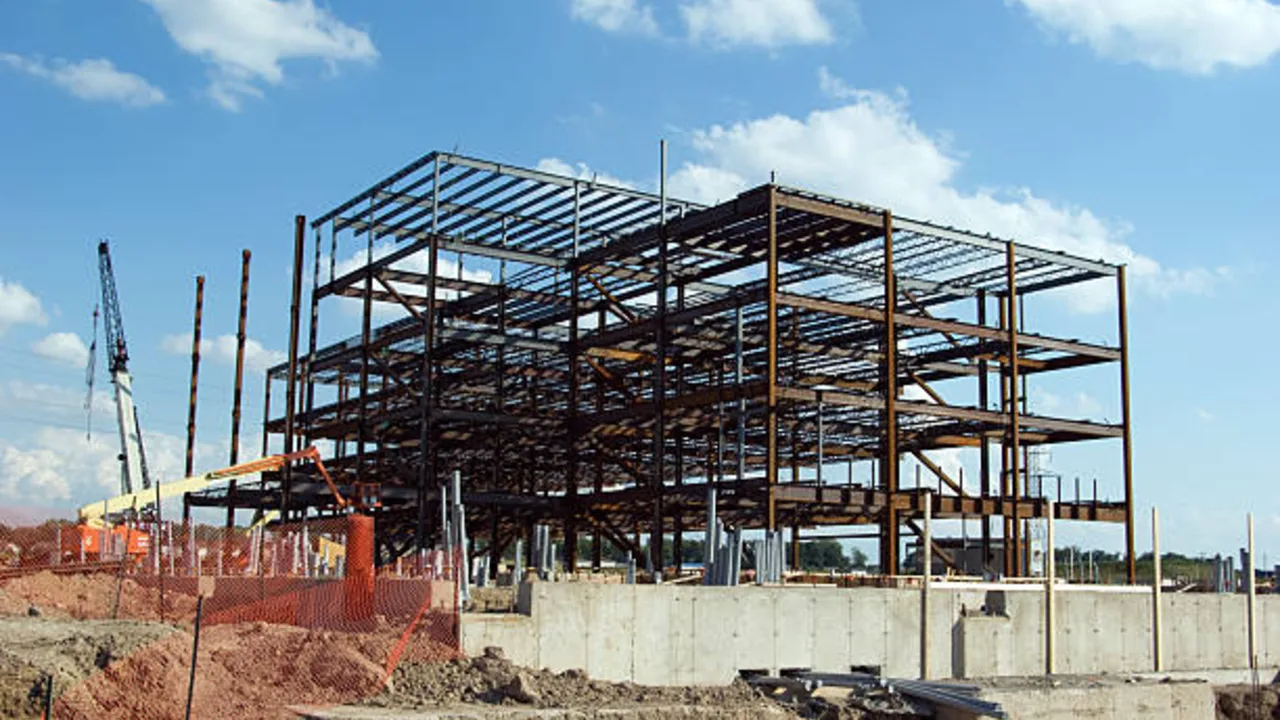
Steel building fatigue connections are not just an engineering detail — they are a safety issue. A connection failure can compromise structural redundancy, trigger progressive damage, and disrupt operations. By addressing cyclic loading explicitly and refining fatigue-sensitive details, engineers reduce risk and improve long-term value.
For owners and contractors seeking dependable steel performance, working with experienced teams in structure steel building delivery helps ensure fatigue is considered from design through fabrication and into maintenance.
Conclusion
Fatigue is a lifecycle challenge driven by repeated stress, not maximum load alone. By understanding cyclic loading sources, using fatigue-appropriate detailing, enforcing fabrication quality, and implementing inspection programs, engineers can significantly extend connection life.
When steel building fatigue connections are addressed systematically, steel structures remain safe, reliable, and cost-effective across decades of real-world operation.