In modern structural engineering, continuity and stiffness determine whether a steel system performs as intended under gravity, wind, and seismic forces. Among the most critical structural components are steel building moment connections, which enable beams and columns to act together as an integrated system. Unlike simple shear connections that allow rotation, moment-resisting joints transfer bending forces, providing the rigidity necessary for a stable rigid frame structure.
The design of steel building moment connections directly influences structural safety, lateral drift performance, and long-term durability. In industrial facilities, commercial buildings, and high-clearance warehouses, properly engineered moment connections ensure that the overall steel building structure maintains stiffness without excessive reliance on bracing systems. This article explores the principles, types, calculations, and design strategies behind steel building moment connections in modern construction.
What Are Steel Building Moment Connections?
Steel building moment connections are structural joints that transfer bending moments between beams and columns. These connections restrict rotation at the joint, enabling structural members to behave as a continuous frame rather than as isolated elements. In a rigid frame configuration, moment connections resist both vertical and lateral loads by developing tension and compression forces within beam flanges.
Unlike pinned connections that primarily transfer shear forces, steel building moment connections provide rotational stiffness. This stiffness is essential for structures subjected to wind loads, seismic forces, or heavy roof systems. By integrating bending resistance into the frame, designers can reduce excessive sway and improve global stability.
Load Transfer Mechanism
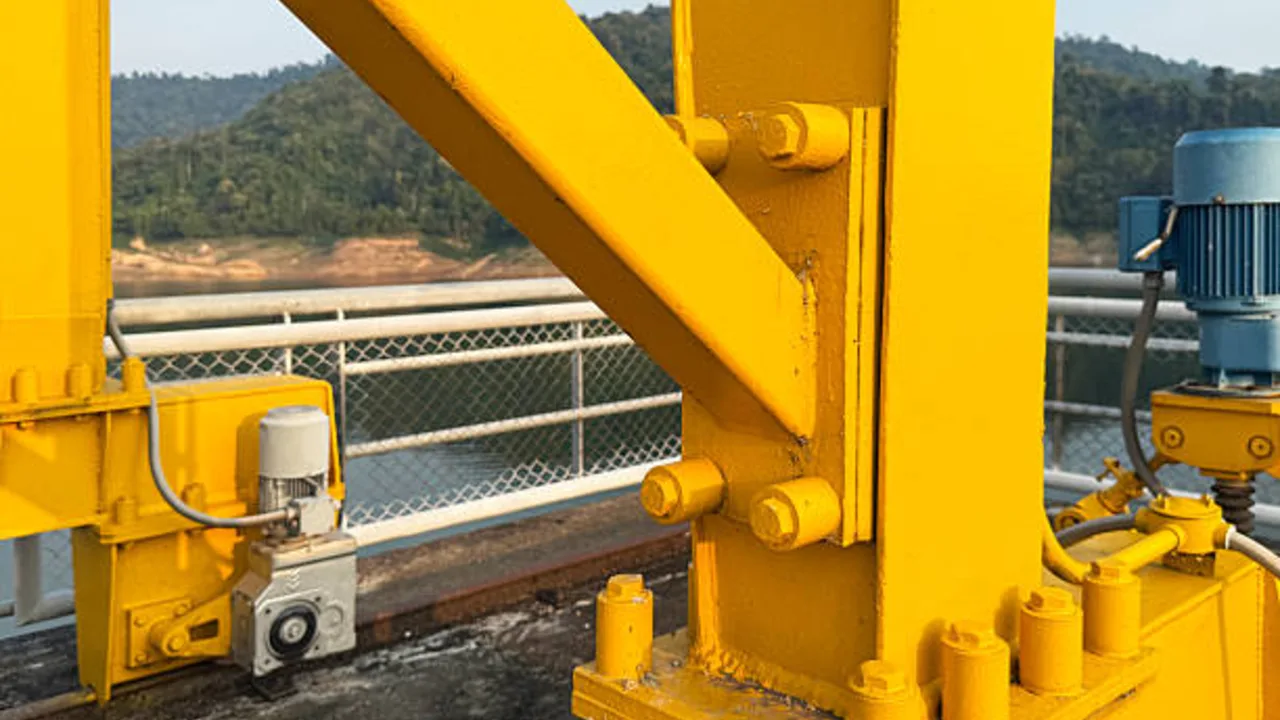
In a typical rigid frame system, bending moments develop at beam-column intersections. When a beam experiences downward load, its top flange enters compression while the bottom flange undergoes tension. Steel building moment connections must transfer these flange forces into the supporting column without excessive deformation.
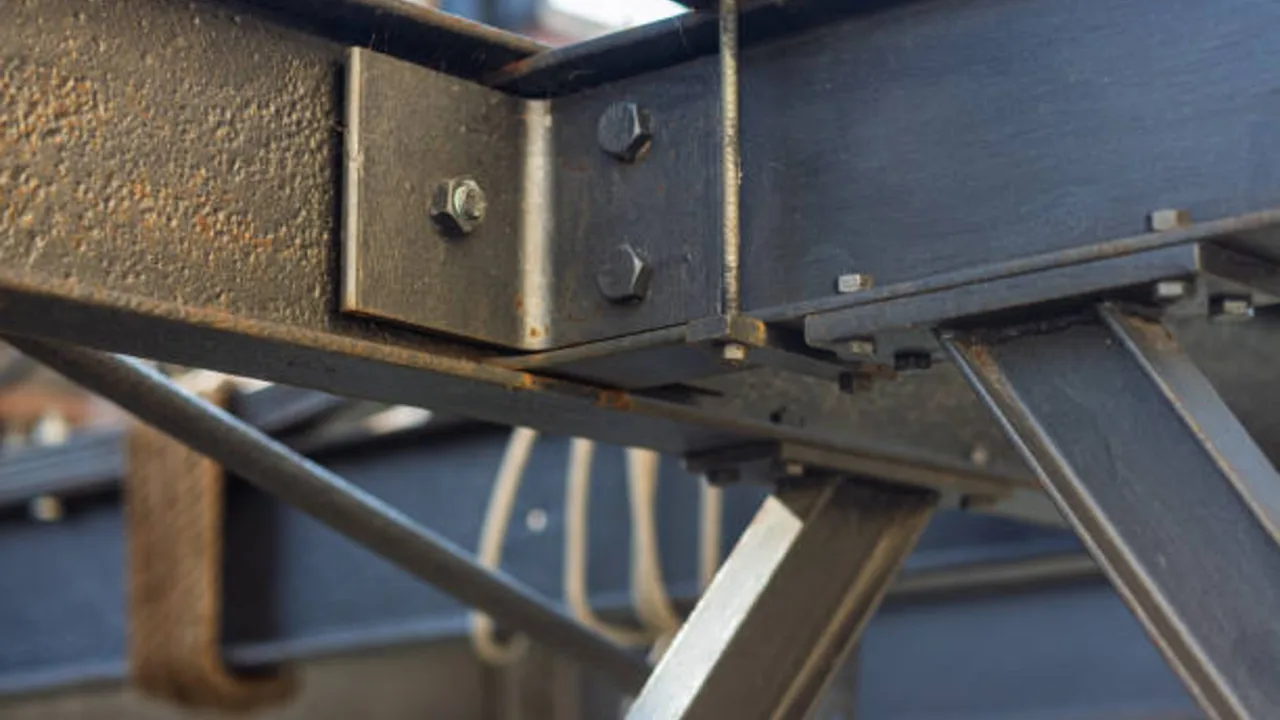
This load transfer occurs through welds, high-strength bolts, or a combination of both. Tension forces are typically resisted by flange plates or end plates, while compression forces are distributed through direct bearing and weld continuity. The web region of the connection resists shear forces and stabilizes the joint.
Accurate force equilibrium within steel building moment connections ensures that bending capacity aligns with the demands of the rigid frame system. Any imbalance in flange force transfer may lead to localized overstress or connection failure.
Classification of Moment Connections
Structural codes classify steel building moment connections according to stiffness and strength performance. The three primary categories include:
- Fully restrained (FR) connections, which provide near-complete rotational restraint.
- Partially restrained (PR) connections, which allow limited rotation under load.
- Nominally pinned connections, which transfer shear but negligible moment.
Fully restrained systems are most commonly used in rigid frame industrial buildings, where structural continuity is essential for lateral stability. The chosen classification affects structural analysis assumptions and drift control requirements.
Role of Moment Connections in Rigid Frame Systems
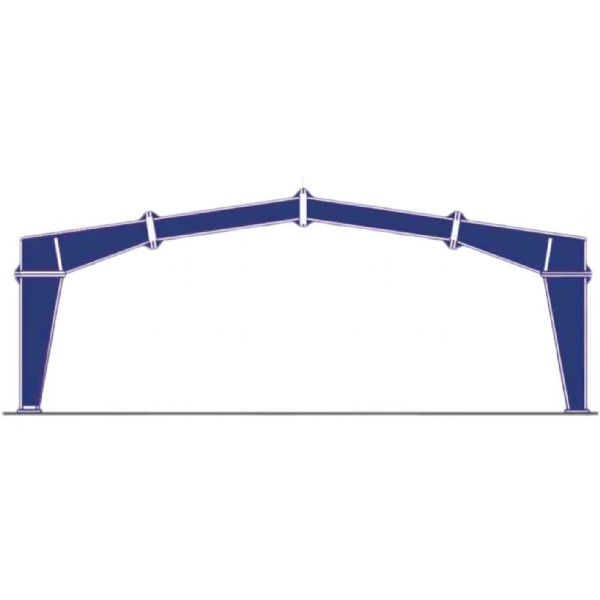
Rigid frame systems rely on the bending interaction between beams and columns to resist lateral forces. Steel building moment connections form the backbone of this structural behavior. By providing continuity at joints, the frame develops internal moments that counteract wind and seismic actions without extensive diagonal bracing.
In large-span industrial buildings, rigid frame systems offer architectural flexibility and unobstructed interior space. Steel building moment connections enable this configuration by ensuring that columns and rafters act together as a unified structural system.
Rigid Frame Behavior Under Wind Loads
Under wind pressure, lateral forces induce sway in the structure. A properly designed rigid frame distributes these forces through bending in beams and columns. Steel building moment connections must maintain sufficient stiffness to limit story drift within acceptable serviceability limits.
If connection stiffness is inadequate, excessive lateral displacement may occur, leading to serviceability issues or façade damage. Therefore, evaluating rotational rigidity is essential in moment connection design.
Seismic Performance Considerations
In seismic regions, steel building moment connections play a critical role in energy dissipation. Connections must provide ductility while maintaining strength. Modern seismic design strategies often encourage controlled plastic hinge formation in beam sections rather than brittle failure at the joint.
Proper detailing ensures that the rigid frame mechanism develops predictable yielding behavior. Reinforcing panel zones or modifying beam sections can help achieve this performance objective.
Common Types of Steel Building Moment Connections
Welded Flange, Welded Web (WFWF)
This traditional configuration directly welds beam flanges and webs to the column face. Welded connections provide excellent stiffness and are frequently used in high-performance rigid frame systems. However, quality control during welding is critical to avoid defects.
Bolted End-Plate Connections
End-plate moment connections use high-strength bolts to secure a beam end plate to a column flange. Extended end plates increase lever arm distance, improving moment capacity. These systems are often preferred for field erection efficiency while maintaining adequate rigidity.
Reduced Beam Section (RBS) Connections
Reduced beam section connections intentionally weaken the beam away from the joint, encouraging plastic hinge formation at a controlled location. This approach enhances seismic ductility while protecting the column face and connection core.
Haunched Beam Connections
Haunches increase beam depth near the column, improving bending capacity and reducing stress concentration at the joint. In large-span rigid frame industrial structures, haunched steel building moment connections are widely adopted to enhance load resistance.
Engineering Calculations Behind Steel Building Moment Connections
The design of steel building moment connections requires detailed structural analysis to ensure that connection strength exceeds applied bending moments. Engineers must evaluate bending capacity, bolt forces, weld strength, and column panel zone behavior.
Bending Capacity Evaluation
Moment capacity is typically based on the plastic moment strength of the connected beam section. Flange forces are calculated by dividing the design moment by the beam depth. These forces determine required bolt tension or weld size within steel building moment connections.
Bolt Tension and Shear Checks
In bolted systems, high-strength bolts resist flange tension forces. Designers must account for prying action, which can amplify bolt demand. Edge distances and bolt spacing directly influence connection capacity.
Weld Design Considerations
Welded steel building moment connections require careful sizing of groove or fillet welds. Heat input control during fabrication prevents distortion. For fatigue-prone environments, weld profile and inspection procedures become especially important.
Column Panel Zone Shear
The column panel zone experiences significant shear forces when moment connections transfer bending loads. Excessive panel zone deformation may reduce rigid frame stiffness. Stiffener plates can be added to reinforce this region when necessary.
Accurate calculation of panel zone strength ensures that steel building moment connections maintain overall structural integrity within the rigid frame system.
In Part 2, we will examine constructability challenges, inspection standards, real industrial project applications, common design mistakes, and long-term performance considerations affecting steel building moment connections.
Fabrication and Constructability Challenges
Beyond structural calculations, the practical execution of steel building moment connections significantly influences overall project success. Even the most precisely engineered rigid frame system can experience performance issues if fabrication tolerances, welding quality, or erection alignment are not properly controlled. Coordination between design engineers, fabricators, and site teams is essential to ensure that connection behavior in the field matches analytical assumptions.
Shop Welding vs Field Welding
Steel building moment connections may be partially fabricated in the workshop and completed on site. Shop welding generally offers higher quality control due to stable positioning, controlled environment, and easier inspection. However, transportation constraints often require certain welds or bolted assemblies to be completed in the field.
Field welding introduces variables such as weather conditions, access limitations, and alignment tolerances. For rigid frame systems, even small deviations can affect rotational stiffness. Therefore, many modern steel building moment connections utilize bolted end-plate systems to simplify erection while maintaining performance.
Tolerance and Fit-Up Issues
Moment-resisting joints demand accurate alignment between beams and columns. If column plumbness or beam camber deviates beyond allowable limits, connection fit-up becomes challenging. Excessive force applied during bolt tightening to compensate for misalignment may introduce unintended stress.
In rigid frame construction, precise geometry ensures that steel building moment connections develop the intended load path. Pre-assembly checks and dimensional verification reduce installation risks and protect long-term structural behavior.
Transportation and Module Constraints
Large industrial projects often prefabricate rigid frame segments to accelerate installation. However, transport size limitations may restrict connection preassembly. Designers must balance fabrication efficiency with logistical feasibility when detailing steel building moment connections.
Strategic modularization can shorten construction schedules while preserving connection integrity. Early coordination between engineering and logistics teams helps avoid costly redesign during erection.
Inspection and Quality Control
Given the structural importance of steel building moment connections, rigorous inspection procedures are mandatory. Quality control ensures that design intent translates into real-world performance within the rigid frame system.
Non-Destructive Testing (NDT)
Welded connections often require ultrasonic testing (UT) or magnetic particle inspection (MPI) to detect discontinuities. These tests verify weld penetration and identify cracks or inclusions that could compromise bending resistance.
For critical structures, inspection standards are typically guided by organizations such as the American Institute of Steel Construction, which provides detailed recommendations for connection design and verification.
Bolt Pretension Verification
High-strength bolts in steel building moment connections must achieve specified pretension levels to develop required flange force resistance. Turn-of-nut methods, calibrated torque wrenches, or tension-indicating washers are commonly used for verification.
Improper bolt tension can reduce connection stiffness, affecting rigid frame behavior under lateral loads.
Documentation and Compliance
Detailed documentation, including weld procedures, bolt certifications, and inspection reports, ensures traceability. In large-scale industrial projects, maintaining compliance records is essential for structural approval and long-term liability management.
Real Case Application: Large-Span Industrial Rigid Frame Facility
A recent 120-meter-span industrial manufacturing facility illustrates the impact of optimized steel building moment connections. The project required a high-clearance interior space with minimal bracing to accommodate heavy machinery and overhead cranes.
The engineering team adopted haunched beam moment connections to enhance bending resistance at critical joints. Finite element analysis revealed that increasing haunch depth reduced peak stresses at beam-column interfaces by nearly 15%. This optimization improved rigid frame performance while minimizing additional material weight.
During fabrication, extended end-plate connections were selected for field efficiency. Strict quality control ensured bolt pretension accuracy and weld integrity. After completion, load testing confirmed lateral drift remained well within serviceability limits.
This project demonstrated that properly engineered steel building moment connections directly influence structural efficiency, cost control, and long-term performance in industrial rigid frame systems.
Common Design Mistakes in Moment Connections
Even experienced designers may encounter challenges when detailing steel building moment connections. Some of the most frequent errors include:
- Underestimating panel zone deformation in columns.
- Neglecting prying forces in bolted end-plate systems.
- Overstiffening connections, leading to brittle failure in adjacent members.
- Failing to coordinate fabrication tolerances early in the design phase.
Rigid frame systems require balanced stiffness distribution. Excessively rigid joints may shift stress concentration to beams, while overly flexible joints increase drift. Comprehensive structural modeling mitigates these risks.
Rigid Frame Optimization in the Paraguay Logistics Hub
A practical demonstration of optimized steel building moment connections can be seen in the Paraguay Logistics Hub project, a 32,000 m² distribution facility designed with a long-span rigid frame system. The project required a 48-meter clear span without interior columns to accommodate automated racking systems and high-capacity forklifts.
Initial structural analysis showed that conventional shear connections combined with roof bracing would not provide sufficient lateral stiffness under regional wind loads. The engineering team therefore redesigned the primary frame using fully restrained steel building moment connections at beam-column joints to create a continuous rigid frame system.
Extended end-plate moment connections were selected to balance constructability and strength performance. Finite element modeling indicated that by increasing flange plate thickness and optimizing bolt spacing, rotational stiffness improved by 22%, reducing predicted lateral drift by nearly 18% under service wind conditions.
One critical design challenge involved column panel zone deformation. High bending demand at corner frames risked excessive shear distortion within the column web. To resolve this, doubler plates were introduced to reinforce the panel zone, ensuring that steel building moment connections maintained their intended stiffness without transferring unintended stress to adjacent members.
During erection, tight tolerance control was required to ensure proper alignment of the rigid frame geometry. Bolt pretension verification and ultrasonic testing of critical welds confirmed compliance with design specifications. Post-construction structural monitoring showed that deflection levels remained within predicted values during high-wind events.
This project illustrates how well-designed steel building moment connections directly influence rigid frame stability, drift control, and overall structural efficiency. By integrating analytical precision with fabrication coordination, the project achieved both structural reliability and cost optimization in a large-scale industrial steel building structure.
Long-Term Performance and Fatigue Behavior
Steel building moment connections are subject to cyclic stresses over their service life. Industrial facilities with crane operations or vibration-prone equipment experience repeated loading cycles that can affect connection durability.
Fatigue-resistant detailing, smooth weld transitions, and corrosion protection measures help preserve connection integrity. Protective coatings or galvanization maintain long-term performance within the rigid frame structure.
Routine inspections should monitor bolt condition, weld continuity, and corrosion. Preventive maintenance ensures that steel building moment connections continue to deliver expected rotational stiffness and bending capacity.
Why Steel Building Moment Connections Define Structural Reliability
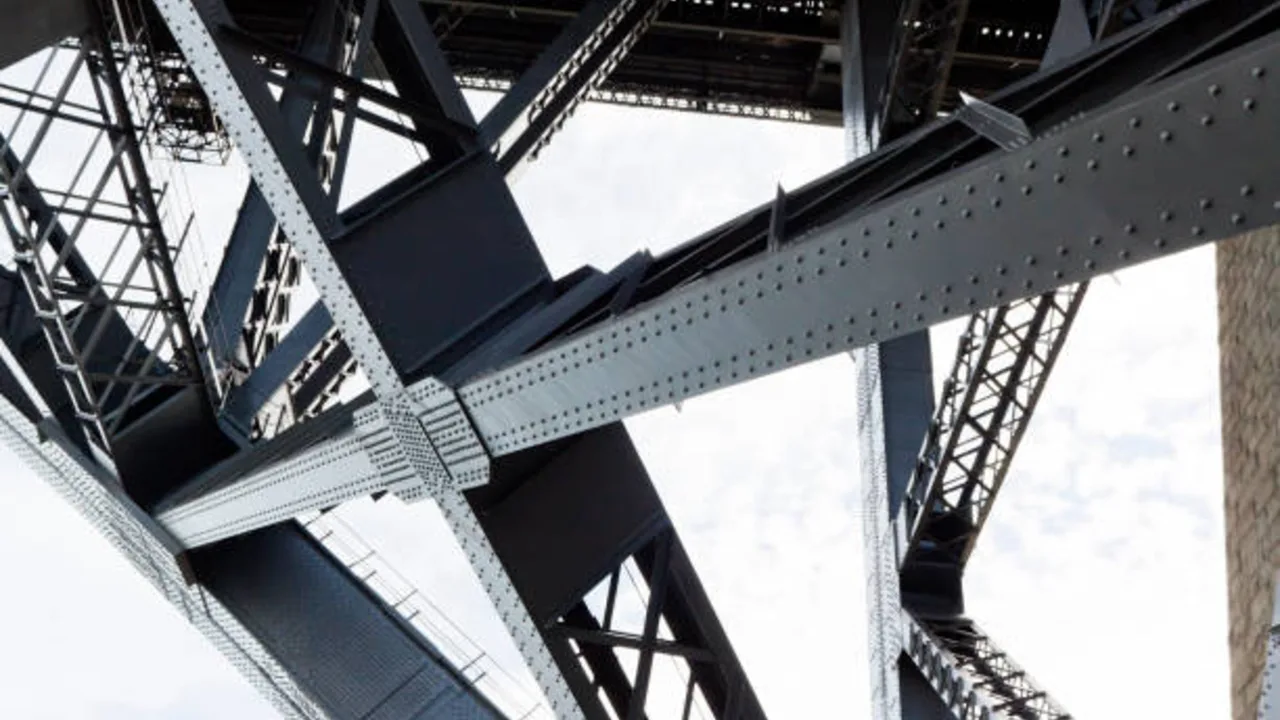
The overall safety and stability of a rigid frame depend heavily on the reliability of its joints. Steel building moment connections provide continuity, distribute bending forces, and maintain frame geometry under load.
When properly engineered, these connections enhance redundancy and reduce the need for excessive bracing systems. They also support architectural flexibility by allowing open interior layouts within a steel building structure.
Integrating precise connection design with global frame analysis ensures structural efficiency. Successful rigid frame systems combine accurate engineering, fabrication quality, and disciplined inspection practices.
Conclusion
Moment connection design is fundamental to the performance of modern steel structures. Steel building moment connections enable rigid frame systems to resist bending forces, control lateral drift, and maintain long-term stability.
By carefully evaluating bending capacity, bolt forces, weld strength, panel zone behavior, and constructability factors, engineers create reliable and cost-efficient structural systems. In any steel building structure, moment connections are not merely joints—they are the defining components of structural integrity.