In industrial construction, roof geometry is never just an architectural choice. It is a structural, environmental, and operational decision that directly affects long-term performance. Among all parameters, steel building roof slope design plays a decisive role in controlling drainage, managing rain load, and ensuring structural stability across large-span systems. Whether designing a warehouse, factory, logistics hub, or manufacturing plant, engineers must carefully determine the appropriate roof slope to balance cost efficiency with structural safety.
Industrial steel buildings typically feature wide clear spans, lightweight roofing systems, and high internal clearance requirements. These characteristics make them more sensitive to water accumulation compared to traditional concrete structures. If steel building roof slope design is underestimated, ponding water may increase rain load, overstress purlins, and reduce the lifespan of waterproofing membranes. Over time, poor slope decisions can lead to corrosion, deflection issues, and increased maintenance costs.
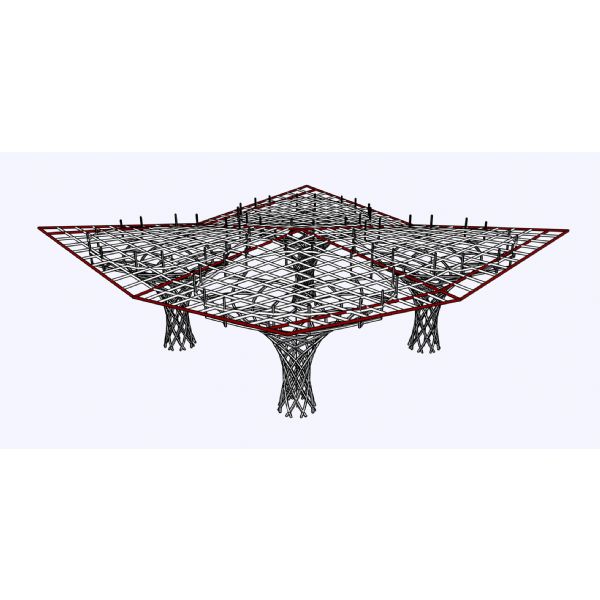
Modern facilities increasingly adopt optimized structural systems such as space truss roofs to achieve longer spans with material efficiency. In these configurations, roof slope is not only about water flow — it directly interacts with truss geometry, internal clearance, and load transfer to the primary steel building structure. A well-calculated slope improves drainage performance, distributes loads effectively, and supports long-term structural durability.
This article explains the engineering logic behind steel building roof slope design, examining drainage principles, rain load calculations, climate-based criteria, and integration with space truss systems. It provides practical insight for developers, engineers, and industrial investors who aim to design steel buildings that perform reliably for decades.
Why Roof Slope Matters in Industrial Steel Buildings
Structural Stability and Load Distribution
In industrial environments, roofs are exposed to continuous environmental forces. One of the most critical risks is rain load accumulation caused by insufficient slope. Proper steel building roof slope design ensures that water does not remain on the roof surface long enough to create structural stress. Even shallow water accumulation significantly increases load intensity because water weighs approximately 10 kN per cubic meter.
When slope is too low, ponding can occur. Ponding refers to the localized accumulation of water that increases deflection in roof members. As deflection increases, water collects further, amplifying the load in a self-reinforcing cycle. This phenomenon is particularly dangerous in long-span industrial roofs supported by tapered beams or space truss systems. Without adequate slope, the additional rain load may exceed design assumptions.
Effective steel building roof slope design distributes rain load toward designated drainage points. By guiding water flow efficiently, slope reduces the likelihood of uneven load concentration. This contributes to structural stability, minimizes bending stress in purlins, and protects the primary frame from excessive deflection.
Drainage Performance and Water Flow
Drainage in industrial steel buildings relies primarily on gravity. The steeper the slope, the faster water travels toward gutters or internal drains. However, optimal slope is not simply “the steeper the better.” It must align with building span, roofing material, and local rainfall intensity.
In practical steel building roof slope design, engineers calculate expected rainfall intensity based on historical meteorological data. Roof pitch is then adjusted to ensure runoff velocity exceeds the minimum threshold required to prevent standing water. Poor drainage increases maintenance frequency and accelerates membrane degradation.
Gutter sizing is also directly influenced by roof slope. A low-slope roof requires larger gutters and more closely spaced drain points to compensate for slower water flow. Conversely, moderate slopes reduce the dependency on oversized drainage components. In snow-prone regions, slope also affects melting patterns. Insufficient slope may allow melting snow to refreeze, increasing both rain load and snow load risk.
Standard Roof Slope Recommendations

Industrial projects commonly adopt slope ranges based on structural efficiency and climate conditions. Selecting the correct range is a key step in steel building roof slope design.
Low-Slope Industrial Roof (1%–3%)
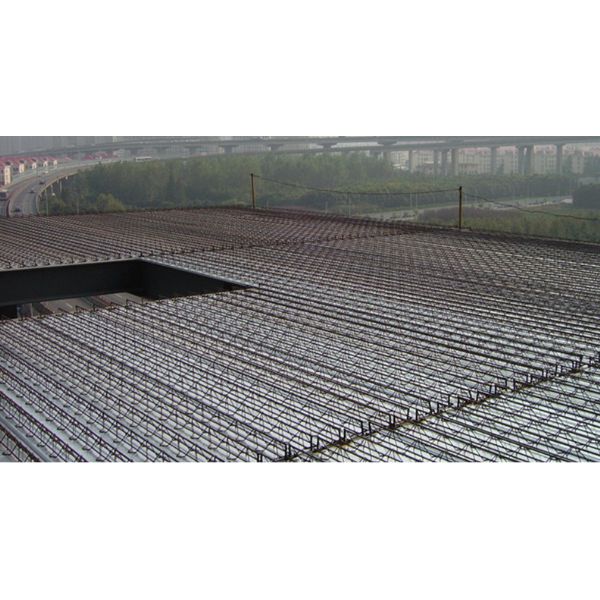
Low-slope roofs are frequently used in large warehouses and logistics centers where internal clearance and material savings are prioritized. A slope between 1% and 3% minimizes steel tonnage and reduces overall building height.
However, low-slope steel building roof slope design requires careful drainage planning. Because runoff speed is limited, internal drains must be strategically positioned. Waterproofing quality becomes critical. Engineers must also consider emergency overflow systems to prevent structural overload if primary drains are blocked.
Medium Slope (3%–7%)
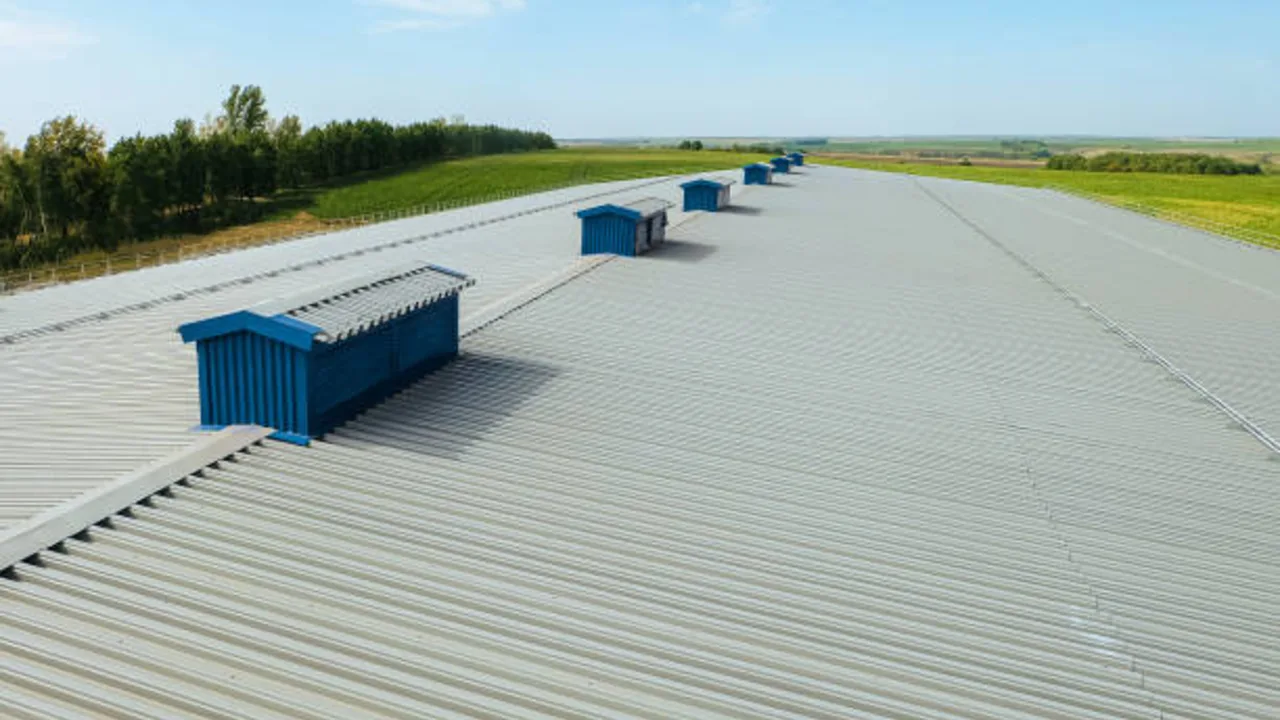
The 3%–7% range is considered the most balanced approach for many industrial applications. This slope category improves drainage performance without significantly increasing steel consumption. It is widely used in factories, manufacturing plants, and processing facilities.
With moderate pitch, steel building roof slope design achieves faster water discharge, reducing rain load accumulation risk. It also enhances membrane longevity and decreases long-term maintenance costs. For buildings incorporating space truss systems, medium slopes often integrate efficiently with truss geometry.
High Slope (>7%)
High-slope roofs are typically adopted in regions with heavy rainfall or significant snow. Steeper pitch accelerates runoff and encourages snow sliding, minimizing static load duration.
However, a high steel building roof slope design increases structural material consumption and may require additional bracing for wind uplift resistance. The decision to exceed 7% slope should be justified by environmental necessity rather than aesthetics alone.
Rain Load Calculations in Steel Roof Design
Understanding Rain Load vs Dead Load
Rain load differs from dead load because it is variable and dependent on drainage efficiency. Dead load represents the permanent weight of roofing panels, insulation, and structural members. Rain load, in contrast, results from temporary water accumulation.
Accurate steel building roof slope design accounts for both expected rainfall intensity and potential drainage obstruction. Engineers simulate worst-case scenarios, including partially blocked drains, to evaluate maximum ponding depth. The resulting calculated rain load is then incorporated into structural member sizing.
Ponding Effect and Structural Risk
Ponding is one of the primary structural concerns in industrial roofs. Even small deflections can trap water, increasing rain load beyond anticipated levels. Over time, repeated ponding cycles may weaken connections and accelerate corrosion.
To prevent ponding, steel building roof slope design must ensure a minimum positive slope across the entire roof plane. Secondary measures may include cambered beams, reinforced purlins, and additional internal drains in critical zones.
Drainage System Integration
Drainage systems must be designed simultaneously with roof slope. Internal gutters, scuppers, and downpipes must match the projected water flow rate. Inadequate integration between drainage and steel building roof slope design can compromise overall performance.
Emergency overflow provisions are essential in industrial facilities. These systems act as backup discharge paths if primary drains become blocked, protecting the steel building structure from excessive rain load.
Space Truss Roof Systems and Slope Configuration
Why Space Truss Works for Large Spans
Large industrial facilities often require spans exceeding 40, 60, or even 100 meters without internal columns. In such cases, space truss systems provide structural efficiency by distributing loads three-dimensionally. When combined with optimized steel building roof slope design, space truss systems achieve both strength and drainage performance.
Unlike conventional beam-and-purlin systems, space truss roofs distribute rain load more uniformly across multiple load paths. This reduces localized stress concentration and enhances structural redundancy. However, slope must be integrated directly into truss geometry during design. Improper slope coordination can cause uneven force distribution and inefficient material use.
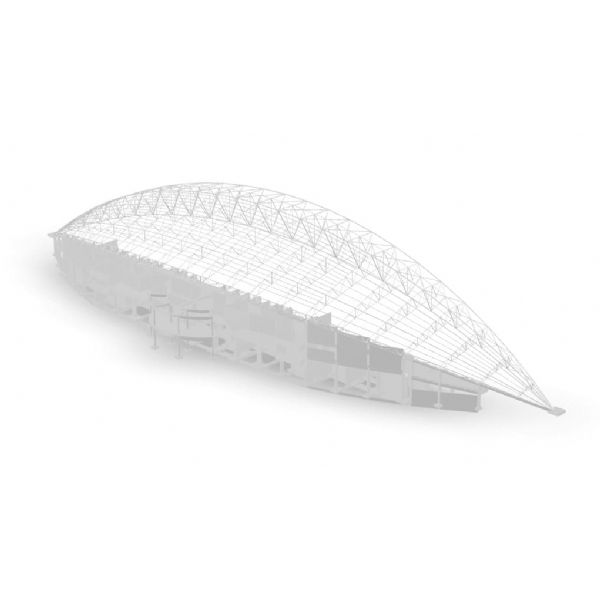
In practical engineering, steel building roof slope design within space truss systems often follows symmetrical double-slope geometry. This configuration channels water toward side gutters while maintaining balanced internal forces. For extremely large spans, slight curvature or arch-based truss layouts may further improve drainage and structural stiffness.
Slope Geometry in Space Truss Design
Slope geometry influences internal clearance, wind resistance, and construction complexity. Designers typically choose between:
- Single-slope roofs: Direct water flow toward one drainage side; suitable for modular expansion.
- Double-slope (gable) roofs: Balanced load distribution and efficient drainage.
- Arched truss roofs: Enhanced aerodynamic behavior and natural runoff.
Each configuration affects the overall steel building roof slope design strategy. For example, double-slope systems often allow moderate pitch without increasing ridge height excessively. In contrast, single-slope roofs may require reinforced edge beams to handle concentrated drainage flow.
Climate-Based Roof Slope Criteria
High Rainfall Tropical Regions
In tropical climates with intense rainfall events, drainage capacity becomes the dominant design factor. Here, steel building roof slope design typically falls within the 5%–10% range to accelerate runoff and minimize standing water.
Higher slopes reduce rain load duration, protecting insulation layers and preventing corrosion in steel components. Designers must also size gutters and downpipes to match peak rainfall intensity.
Snow-Heavy Regions
In colder climates, slope influences both rain load and snow load behavior. Steeper roofs encourage snow sliding, reducing static accumulation. However, sliding snow may create drift zones near eaves.
Proper steel building roof slope design in snow-prone regions balances sliding efficiency with safety considerations. Structural members must be designed for combined snow and rain scenarios, particularly during thaw cycles.
Desert and Wind-Intensive Areas
In desert or high-wind regions, slope affects aerodynamic performance. Excessively steep roofs may increase wind uplift forces. Therefore, steel building roof slope design in these areas often prioritizes moderate pitch combined with reinforced connections.
Wind tunnel data or computational simulations may be used for critical facilities. Optimized slope reduces uplift while maintaining effective drainage performance.
Cost Implications of Steel Building Roof Slope Design
Roof slope directly influences structural steel quantity, drainage system cost, and long-term maintenance expenses. A well-balanced steel building roof slope design minimizes lifecycle cost rather than focusing solely on initial material savings.
Material Consumption vs Drainage Efficiency
| Slope Category | Steel Consumption | Drainage Performance | Maintenance Risk |
|---|---|---|---|
| 1%–3% | Low | Moderate to Weak | Higher ponding risk |
| 3%–7% | Moderate | Balanced | Low maintenance risk |
| >7% | Higher | Excellent | Low ponding risk |
While low slope reduces initial steel tonnage, long-term costs may increase due to drainage maintenance and waterproofing repair. Medium slopes often provide the most economical overall steel building roof slope design solution.
Long-Term Maintenance Costs
Maintenance considerations include:
- Frequency of drain cleaning
- Waterproof membrane lifespan
- Corrosion risk at low points
- Inspection requirements
An optimized steel building roof slope design reduces stagnant water exposure and prolongs roof system durability.
Common Roof Slope Mistakes in Industrial Projects
Despite engineering guidelines, several recurring mistakes appear in industrial developments:
- Designing slope without accurate rainfall data.
- Ignoring potential drain blockage scenarios.
- Failing to coordinate slope with space truss geometry.
- Underestimating long-term rain load accumulation.
- Prioritizing short-term cost savings over durability.
These errors compromise the performance of the steel building structure and increase lifecycle cost.
Engineering Checklist for Optimal Roof Slope
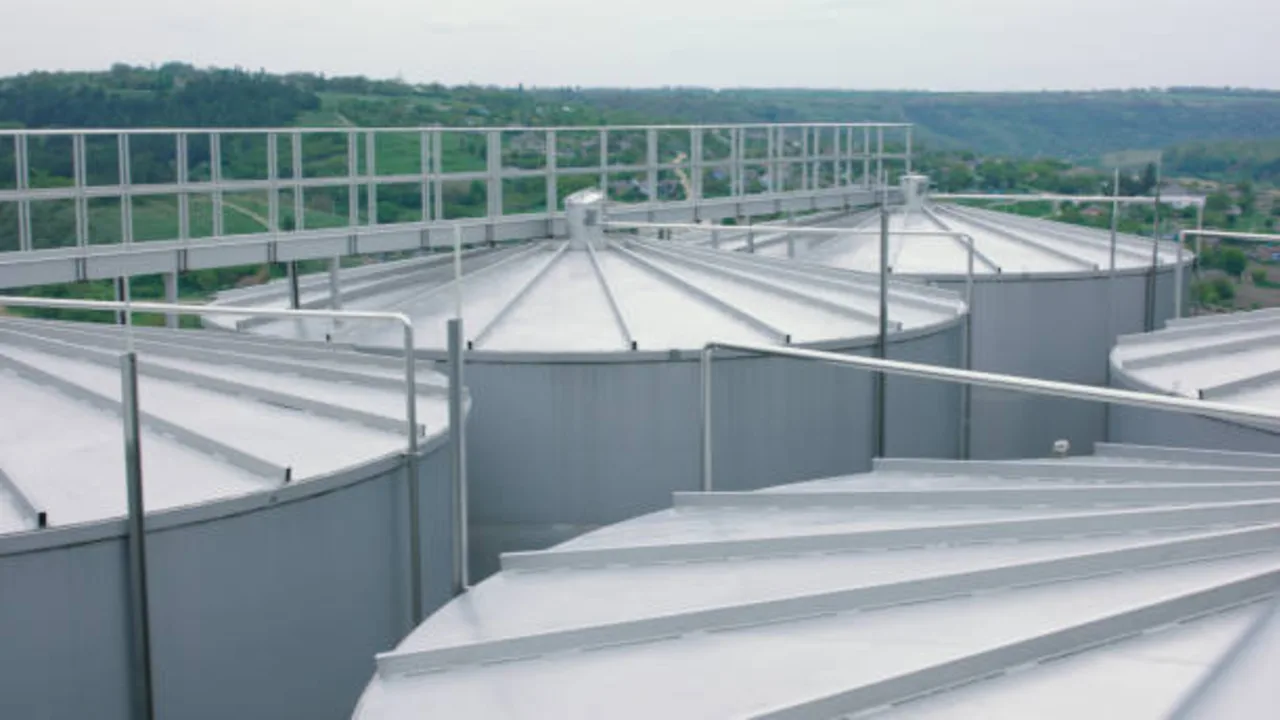
Before finalizing steel building roof slope design, engineers should verify:
- Minimum positive slope across all roof surfaces.
- Drain spacing aligned with rainfall intensity.
- Structural reinforcement for potential ponding zones.
- Compliance with regional building codes.
- Integration between slope geometry and space truss system.
Conclusion — Optimizing Steel Building Roof Slope Design for Long-Term Performance
Industrial roof systems must perform reliably under diverse environmental conditions. Effective steel building roof slope design is not simply about angle selection — it is a coordinated engineering decision involving drainage strategy, rain load calculation, climate adaptation, and structural integration.
By aligning roof pitch with environmental data and structural system design, developers can significantly reduce ponding risk, control rain load accumulation, and protect the integrity of the steel building structure. Whether using conventional frames or advanced space truss systems, thoughtful slope planning ensures durability, safety, and long-term economic performance.
Ultimately, a properly engineered steel building roof slope design transforms an industrial roof from a basic covering into a high-performance structural component capable of supporting decades of operation with minimal maintenance.