Across the world, rapid urbanization is pushing industrial, commercial, and infrastructure development into areas with high seismic activity. From manufacturing hubs along tectonic belts to logistics centers near coastal fault zones, engineers must design structures that can withstand unpredictable ground motion. In this context, steel building seismic design has become a critical discipline in modern structural engineering.
Earthquakes generate dynamic forces that differ significantly from static gravity loads. Buildings must not only support vertical weight but also resist sudden lateral acceleration, cyclic loading, and energy transfer through the foundation. Without proper earthquake resistance, even well-constructed buildings can experience severe structural damage or collapse.
Steel structure buildings offer unique advantages in seismic regions due to their ductility, strength-to-weight ratio, and predictable mechanical behavior. However, achieving reliable performance requires more than selecting steel as a material. Effective steel building seismic design integrates structural configuration, connection detailing, lateral force-resisting systems, and drift control strategies into a unified engineering approach. This article explores the principles, calculations, and practical considerations behind designing steel structures that perform safely in earthquake-prone areas.
Understanding Seismic Forces and Structural Response
Ground Motion and Load Transfer
When an earthquake occurs, seismic waves propagate through the ground in multiple directions. Buildings respond primarily to horizontal acceleration, although vertical components can also influence structural stability. Unlike static loads, seismic forces are inertia-driven. As the ground moves, the mass of the structure resists motion, generating lateral forces proportional to the building’s weight.
This is why reducing structural mass plays an important role in steel building seismic design. Lower mass results in reduced seismic demand. Steel systems, being lighter than reinforced concrete alternatives for equivalent strength, inherently reduce base shear forces and improve earthquake resistance.
Inertia, Base Shear, and Dynamic Effects
The total lateral force applied at the base of a building during an earthquake is referred to as base shear. Engineers calculate this value using seismic coefficients defined in building codes and adjust it based on structural period, site conditions, and importance factors. In steel building seismic design, understanding how base shear distributes vertically through columns and frames is fundamental to ensuring controlled structural response.
Dynamic amplification further complicates structural behavior. Buildings have natural vibration periods; if seismic excitation aligns with these periods, resonance can occur. Therefore, engineers must carefully evaluate stiffness and mass distribution to prevent excessive inter-story drift and maintain structural stability.
Why Steel Structure Buildings Excel in Seismic Regions
Ductility and Energy Dissipation
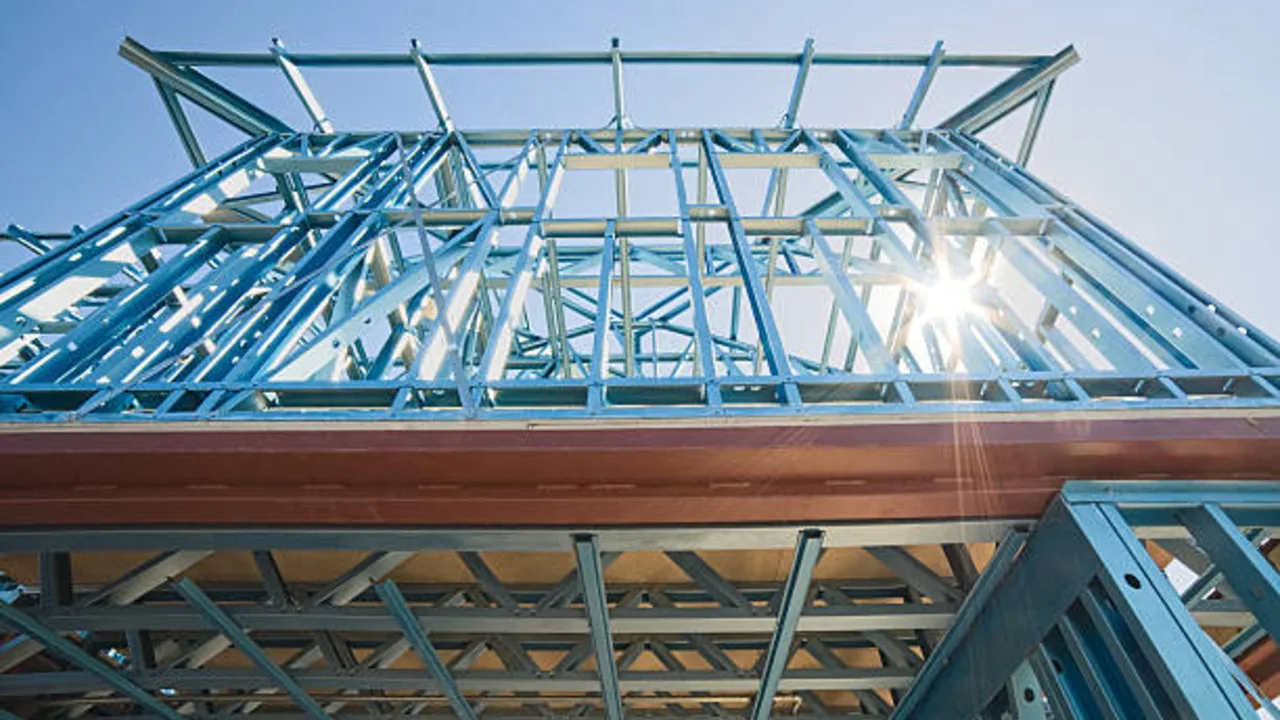
One of the primary advantages of steel in seismic applications is ductility. Steel can undergo significant plastic deformation before failure, allowing it to absorb and dissipate seismic energy without sudden collapse. This property is central to steel building seismic design because controlled yielding in beams or braces prevents brittle failure mechanisms.
Ductile behavior enables structural systems to maintain load-carrying capacity even after exceeding elastic limits. Instead of fracturing abruptly, steel components redistribute stresses, preserving overall earthquake resistance and life safety.
Strength-to-Weight Efficiency
Steel offers high strength relative to its weight. In seismic regions, this ratio is particularly valuable because lighter structures experience lower inertia forces. By minimizing self-weight while maintaining adequate stiffness, engineers enhance earthquake resistance without overdesigning structural members.
Compared to heavier materials, steel frames allow more efficient distribution of seismic loads. This efficiency reduces foundation demand and simplifies lateral force-resisting system design.
Predictable Fabrication and Performance
Steel components are manufactured with high dimensional accuracy under controlled factory conditions. Predictability in material properties and connection detailing supports reliable steel building seismic design outcomes. Precision fabrication reduces variability and enhances overall structural integrity during seismic events.
Core Principles of Steel Building Seismic Design
Structural Regularity and Symmetry
Buildings with regular shapes in plan and elevation perform more predictably during earthquakes. Irregular geometries can cause torsional response, leading to uneven stress distribution. Effective steel building seismic design prioritizes balanced mass and stiffness to minimize torsion and ensure uniform load paths.
Symmetrical framing layouts and consistent column spacing improve earthquake resistance by distributing forces evenly across structural elements.
Lateral Force-Resisting Systems
A well-defined lateral system is the backbone of steel building seismic design. Common systems include:
- Moment-resisting frames – Provide flexibility and ductility through rigid beam-column connections.
- Concentric braced frames – Offer high stiffness and efficient force transfer.
- Eccentrically braced frames – Combine stiffness with controlled energy dissipation.
Each system contributes differently to earthquake resistance. The selection depends on building height, occupancy, performance objectives, and regional seismic intensity.
Strong Column–Weak Beam Philosophy
A fundamental strategy in steel building seismic design is ensuring that beams yield before columns. This “strong column–weak beam” concept prevents story mechanisms and maintains vertical load-bearing capacity during extreme ground motion. By concentrating plastic deformation in designated regions, engineers protect the structural core.
Connection Detailing for Seismic Performance
Connections are critical points in any steel structure. During earthquakes, they experience cyclic loading and stress reversals. Proper detailing ensures that connections can accommodate rotation and deformation without brittle fracture. Weld quality, bolt tensioning, and plate thickness selection all contribute to reliable earthquake resistance.
Critical Structural Components in Seismic Regions
Columns and Beams Under Cyclic Loading
Columns must resist combined axial load and bending during seismic events. Stability under repeated load reversals is essential. Steel building seismic design evaluates interaction ratios and slenderness to ensure columns remain stable throughout ground motion cycles.
Beams, particularly in moment frames, are designed to yield in a controlled manner. Plastic hinge regions are strategically located to absorb energy while preserving overall structural integrity.
Bracing Systems and Stability
Braced frames improve global stiffness and limit drift. In high-seismic areas, buckling-restrained braces are sometimes used to provide stable hysteretic behavior under cyclic loading. These systems enhance earthquake resistance by preventing premature brace buckling and ensuring consistent energy dissipation.
Floor Diaphragm Action
Floor systems act as horizontal diaphragms, transferring seismic forces to vertical frames. Adequate stiffness and proper connection detailing between floor decking and beams are essential components of steel building seismic design. Without effective diaphragm action, lateral forces cannot be efficiently distributed.
Seismic Load Determination and Drift Control
Engineering calculations form the analytical backbone of steel building seismic design. Seismic loads are determined using response spectrum analysis or time-history methods, depending on code requirements and project complexity.
Inter-story drift limits protect non-structural elements and maintain serviceability. Excessive drift can damage cladding, partitions, and mechanical systems even if structural members remain intact. Therefore, drift control is integral to achieving reliable earthquake resistance.
Redundancy and stability checks further ensure that localized damage does not trigger progressive collapse. By designing multiple load paths, engineers increase structural resilience in extreme seismic events.
In Part 2, we will examine real-world project applications, fabrication considerations, inspection protocols, and long-term resilience strategies that influence steel building seismic design in high-risk regions.
Real-World Application: Industrial Steel Building in a High Seismic Zone
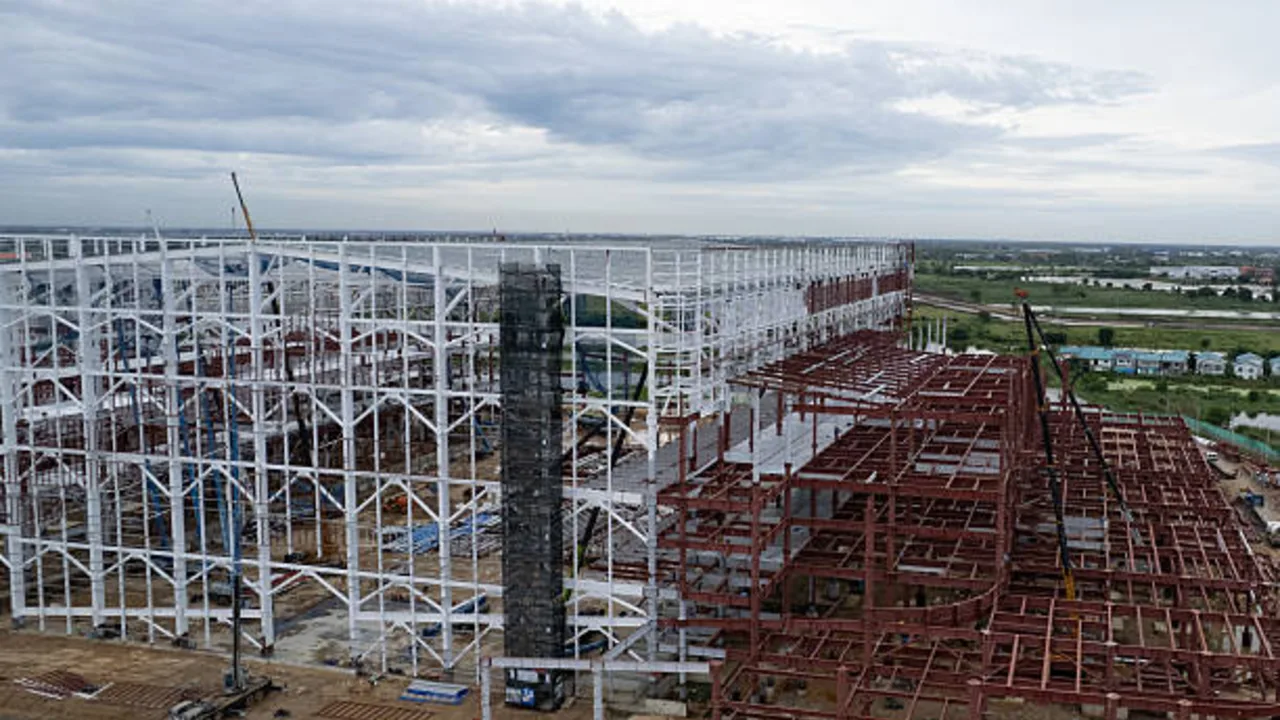
A practical example of steel building seismic design can be observed in the development of a 22,000 m² industrial manufacturing facility located in a high seismic Zone IV region. The project required long-span production bays, overhead crane systems, and uninterrupted floor space for heavy equipment installation. These functional requirements introduced complex structural challenges under seismic loading conditions.
During the conceptual phase, engineers evaluated multiple lateral force-resisting systems to ensure adequate earthquake resistance. A hybrid system combining special moment-resisting frames with concentrically braced bays was selected. The moment frames provided ductility and rotational flexibility, while the braced frames enhanced lateral stiffness and controlled drift.
Finite element analysis and response spectrum simulations were conducted to determine expected displacement patterns and stress distribution. The results revealed that torsional irregularities could develop due to asymmetrical equipment loading. To address this, the design team modified column spacing and redistributed mass to improve structural symmetry — a key refinement in effective steel building seismic design.
Connection detailing played a decisive role in project success. Beam-column joints were reinforced with continuity plates and doubler plates to prevent premature fracture. Strict welding inspection protocols were implemented to ensure compliance with seismic performance requirements. After completion, the structure underwent vibration testing to verify stiffness assumptions and confirm drift limits remained within code allowances.
The project demonstrated how integrated engineering — combining structural analysis, fabrication precision, and controlled erection — results in superior earthquake resistance without excessive material use.
Fabrication and Construction Considerations in Seismic Areas
Precision Manufacturing and Quality Assurance
Reliable steel building seismic design depends on fabrication accuracy. Steel members must meet strict dimensional tolerances to ensure proper alignment of bracing systems and moment connections. Even minor deviations can alter load paths and affect global performance.
Quality assurance procedures include ultrasonic testing of welds, bolt torque verification, and inspection of critical connection zones. Maintaining traceability of materials ensures that specified mechanical properties are achieved throughout the structure.
Site Erection and Structural Alignment
During erection, maintaining plumbness and geometric consistency is essential. Improper alignment may introduce unintended eccentricities that compromise earthquake resistance. Temporary bracing systems are often installed during construction to stabilize frames before permanent connections are fully secured.
Field welding and bolting operations must adhere to strict sequencing protocols. Controlled tightening of high-strength bolts and verification of weld penetration are fundamental to preserving the integrity of steel building seismic design strategies established during engineering.
Compliance with Seismic Codes
Seismic design standards such as AISC 341, Eurocode 8, and other regional codes define detailing requirements, drift limits, and ductility classifications. Engineers must align design calculations and connection detailing with these provisions to achieve certified earthquake resistance.
Third-party inspections and structural peer reviews are often required for buildings in high-risk zones, further reinforcing reliability and safety.
Common Mistakes in Steel Building Seismic Design
Despite advances in structural engineering, several recurring errors undermine performance in seismic regions:
- Ignoring plan irregularity and torsional effects.
- Underestimating inter-story drift demands.
- Inadequate connection detailing for cyclic loading.
- Overdesigning members without performance-based analysis.
Effective steel building seismic design is not about increasing member sizes indiscriminately. Instead, it requires understanding how energy dissipates through the structure and ensuring that yielding occurs in predictable, controlled regions.
Long-Term Durability and Post-Earthquake Resilience
Seismic resilience extends beyond initial construction. After an earthquake event, inspection protocols evaluate plastic hinge regions, brace deformation, and connection integrity. Because steel exhibits ductile behavior, damaged elements can often be repaired or replaced without demolishing the entire structure.
Modern steel building seismic design increasingly incorporates replaceable fuse elements and energy-dissipating devices. These components localize damage and simplify post-event restoration, significantly improving long-term earthquake resistance.
Maintenance planning also plays a vital role. Corrosion protection, bolt retightening, and periodic inspection of bracing systems help preserve structural reliability over decades of service.
Why Professional Expertise Is Essential
Designing structures in seismic regions requires deep technical knowledge, advanced analytical tools, and experience in connection detailing. Collaboration between structural engineers, fabricators, and site teams ensures that steel building seismic design principles translate into real-world performance.
Working with an experienced steel structure building china provider ensures integrated engineering, precision manufacturing, and compliance with international seismic standards. Expertise in both design and fabrication reduces risk and enhances earthquake resistance in demanding environments.
Conclusion
Earthquakes pose one of the most unpredictable and destructive forces in the built environment. Designing structures capable of withstanding seismic activity requires a comprehensive approach that integrates analysis, detailing, fabrication, and inspection.
Steel building seismic design leverages ductility, strength efficiency, and structural regularity to deliver superior earthquake resistance. By controlling drift, optimizing lateral systems, and ensuring connection integrity, engineers create buildings that protect occupants, equipment, and investments.
In seismic regions, steel structure buildings offer not only safety but also resilience and repairability. When engineered and constructed with precision, they stand as durable solutions capable of performing reliably under extreme ground motion for decades to come.