In modern steel construction, protective coatings are not just a finishing layer—they are a critical component of structural performance. The durability, corrosion resistance, and overall lifespan of steel structures depend heavily on how coatings are applied and controlled. Among all quality control parameters, paint thickness steel fabrication plays a decisive role in ensuring that protective coatings perform as intended.
Whether applied to industrial facilities, transmission towers, or large-span buildings, coatings must meet strict thickness specifications. Too thin, and the steel becomes vulnerable to corrosion. Too thick, and the coating may crack, peel, or fail prematurely. This is why measuring paint thickness is not a secondary step, but a core quality control process integrated into fabrication workflows.
A key method used in this process is DFT testing, which verifies the dry film thickness after coating application. By accurately measuring coating thickness, fabrication teams can ensure compliance with project specifications and extend the long-term reliability of steel structures.
Why Paint Thickness Matters in Steel Fabrication
Protection Against Corrosion
Steel is inherently susceptible to corrosion when exposed to moisture, oxygen, and environmental contaminants. Protective coatings act as a barrier between the steel surface and external elements. However, the effectiveness of this barrier depends entirely on achieving the correct thickness.
In paint thickness steel fabrication, insufficient coating thickness leaves microscopic gaps where corrosive agents can penetrate. Over time, this leads to rust formation, structural degradation, and costly repairs. Proper thickness ensures continuous coverage and long-term resistance.
Impact on Structural Lifespan
The relationship between coating thickness and lifespan is direct. Structures with properly controlled coating thickness require less maintenance and perform better under harsh conditions. On the other hand, inconsistent application leads to uneven protection.
- Undercoating results in premature corrosion
- Overcoating may lead to cracking and delamination
- Uneven thickness causes localized failure points
For this reason, paint thickness steel fabrication is not only about meeting specifications—it is about optimizing lifecycle performance.
Compliance with Industry Standards
International standards such as ISO, ASTM, and SSPC define strict requirements for coating thickness in steel structures. These standards ensure consistency across projects and guarantee that coatings meet performance expectations.
Fabrication teams must follow specified thickness ranges and document all measurements. Failure to comply can result in project rejection, rework, or long-term liability issues. This makes DFT testing an essential part of compliance verification.
Understanding Paint Thickness in Steel Fabrication

What is Paint Thickness?
Paint thickness refers to the total thickness of the coating layer applied to a steel surface. It is typically measured in microns (µm) or mils. In paint thickness steel fabrication, thickness is categorized into two main types: wet film thickness (WFT) and dry film thickness (DFT).
Each serves a different purpose in the coating process. WFT is measured during application to control the amount of paint being applied, while DFT is measured after curing to verify final coating performance.
Wet Film Thickness vs Dry Film Thickness
| Parameter | Wet Film Thickness (WFT) | Dry Film Thickness (DFT) |
|---|---|---|
| Measurement Stage | During coating application | After curing |
| Purpose | Application control | Final quality verification |
| Accuracy Level | Moderate | High |
| Importance | Prevents under/over application | Ensures compliance and durability |
While WFT helps applicators control the coating process, DFT is the final benchmark used in paint thickness steel fabrication to determine whether the coating meets project specifications.
DFT Testing in Steel Fabrication
What is DFT Testing?
DFT testing (Dry Film Thickness testing) is the process of measuring the thickness of a coating after it has fully cured. It is the most reliable method for validating coating performance and is widely used in industrial fabrication.
In paint thickness steel fabrication, DFT testing ensures that the applied coating meets the required thickness range defined in project specifications. It also verifies uniformity across different surfaces.
When DFT Testing is Performed
DFT testing is conducted at multiple stages of the fabrication process to ensure consistent quality:
- After full curing of the coating
- Before shipment of fabricated components
- During third-party inspection and quality audits
By integrating DFT testing into the workflow, fabrication teams can detect issues early and avoid costly corrections later.
Acceptance Criteria
Acceptance criteria for coating thickness are typically defined within a specified range. Both minimum and maximum limits must be respected.
- Minimum thickness ensures adequate protection
- Maximum thickness prevents coating failure
- Average readings must fall within tolerance limits
Accurate measurement and proper interpretation of these values are essential for successful paint thickness steel fabrication.
Common Methods of Paint Thickness Measurement

Magnetic Thickness Gauges
Magnetic gauges are commonly used for measuring coating thickness on ferrous materials such as steel. These devices operate by detecting changes in magnetic flux caused by the presence of a coating layer.
They are widely used in paint thickness steel fabrication due to their simplicity, portability, and reliable accuracy for standard applications.
Ultrasonic Thickness Gauges
Ultrasonic gauges use sound waves to measure coating thickness. They are particularly useful for multi-layer coatings or situations where non-destructive testing is required.
This method is often used in advanced DFT testing scenarios where precision is critical.
Eddy Current Devices
Eddy current devices are used for measuring coatings on non-ferrous substrates. While less common in structural steel applications, they are useful in specialized fabrication environments.
Comparison of Measurement Methods
| Method | Substrate Type | Accuracy | Application |
|---|---|---|---|
| Magnetic Gauge | Ferrous (steel) | High | Standard fabrication |
| Ultrasonic | Multi-layer coatings | Very High | Advanced inspection |
| Eddy Current | Non-ferrous | Moderate | Specialized use |
Key Factors Affecting Paint Thickness Accuracy
Surface Preparation
Surface preparation is one of the most influential factors in paint thickness steel fabrication. The roughness profile created during blasting directly affects how coatings adhere and distribute across the steel surface.
If the surface is too rough, coatings may accumulate unevenly, leading to localized over-thickness. If it is too smooth, adhesion may be compromised, reducing coating effectiveness. Proper blasting standards must be followed to ensure consistent coating behavior during DFT testing.
Application Method
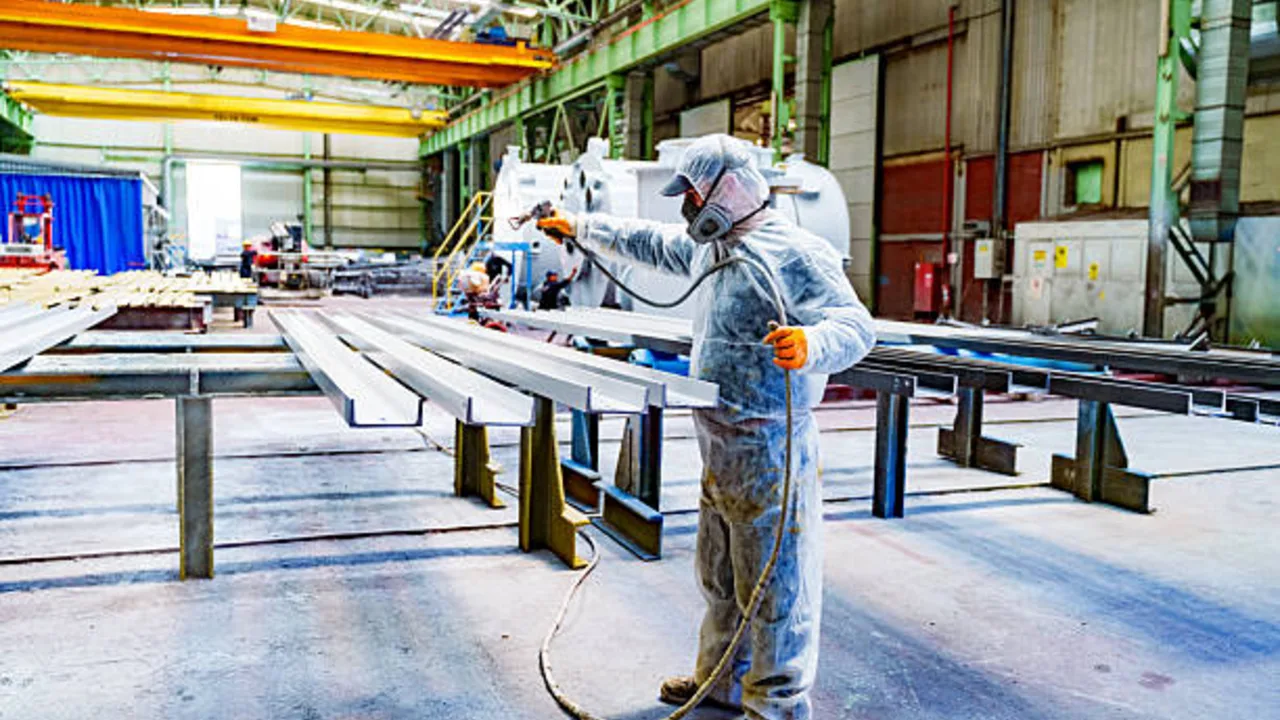
The method used to apply coatings significantly impacts thickness uniformity. Spray application is the most common method in steel fabrication, but operator skill plays a critical role in achieving consistent results.
- Spray application allows for uniform coverage across large surfaces
- Brush application may lead to uneven thickness
- Roller application is limited in complex geometries
In paint thickness steel fabrication, selecting the correct application method ensures better control and minimizes deviations in coating thickness.
Environmental Conditions
Temperature, humidity, and airflow conditions can all influence coating performance. High humidity may affect curing, while extreme temperatures can alter coating viscosity.
Uncontrolled environmental conditions often lead to inconsistencies detected during DFT testing, making environmental monitoring a key requirement in fabrication facilities.
Coating Type
Different coating systems behave differently when applied. Epoxy coatings, polyurethane finishes, and zinc-rich primers each have specific thickness requirements.
Understanding these variations is essential in paint thickness steel fabrication, as incorrect application may lead to performance issues even if thickness appears acceptable.
Quality Control Procedures in Paint Thickness Steel Fabrication
Inspection Workflow
Quality control in paint thickness steel fabrication follows a structured workflow to ensure consistent coating performance:
- Pre-coating inspection of surface condition
- Monitoring during coating application
- Post-coating verification using DFT testing
This systematic approach minimizes errors and ensures that coating thickness meets project specifications at every stage.
Sampling Techniques
Paint thickness cannot be measured at every point, so representative sampling methods are used. These methods ensure reliable data without excessive inspection time.
- Spot measurements at critical locations
- Area averaging for overall consistency
- Random sampling to detect irregularities
Proper sampling is essential for accurate evaluation in paint thickness steel fabrication.
Documentation and Reporting
All measurement results must be recorded and documented. Inspection reports provide traceability and serve as proof of compliance with project requirements.
In many cases, clients and third-party inspectors review these records to validate DFT testing results before approving shipment.
Real Project Application: Coating Performance in Industrial Steel Structures
In real-world fabrication projects, coating performance is just as important as structural design. Steel structures used in industrial plants, transmission systems, and infrastructure are often exposed to aggressive environments, including humidity, chemicals, and temperature fluctuations.
In these conditions, paint thickness steel fabrication becomes a critical factor in ensuring long-term durability. Coatings must be applied with precise thickness control to prevent corrosion and maintain structural integrity over time.
For large-scale steel projects, components are often fabricated off-site and transported for installation. This makes DFT testing essential before delivery, ensuring that all protective coatings meet required standards prior to exposure to environmental conditions.
Projects that prioritize coating control typically experience lower maintenance costs and longer service life. This highlights the importance of integrating paint thickness verification into every stage of fabrication.
Common Problems in Paint Thickness Measurement
Undercoating Issues
Undercoating occurs when the applied thickness is below the specified minimum. This is one of the most critical issues in paint thickness steel fabrication.
Consequences include:
- Reduced corrosion resistance
- Early coating failure
- Increased maintenance requirements
Overcoating Problems
While thicker coatings may seem beneficial, excessive thickness can lead to mechanical issues such as cracking, peeling, or poor adhesion.
Overcoating is often detected during DFT testing and must be corrected to avoid long-term failure.
Measurement Errors
Incorrect measurement techniques can produce unreliable results. Common errors include improper calibration, incorrect probe usage, and inconsistent measurement locations.
To maintain accuracy in paint thickness steel fabrication, all measurement devices must be regularly calibrated and operated by trained personnel.
Best Practices for Accurate Paint Thickness Control
Calibration of Equipment
Measurement devices must be calibrated before use to ensure accuracy. Calibration should be performed using certified reference standards.
Without proper calibration, even advanced tools cannot deliver reliable DFT testing results.
Training of Inspectors
Human factors play a significant role in inspection accuracy. Skilled inspectors are better equipped to identify inconsistencies and interpret measurement data correctly.
Investing in training improves the effectiveness of paint thickness steel fabrication processes.
Standardized Procedures
Standard operating procedures ensure consistency across different projects and teams. These procedures define how measurements are taken, recorded, and evaluated.
Consistency is key to maintaining high standards in paint thickness steel fabrication.
Choosing a Reliable structure steel fabrication Partner

The success of coating applications depends heavily on the capabilities of the fabrication partner. Companies with strong quality control systems are better equipped to manage coating thickness requirements.
A reliable partner will provide:
- Advanced coating application systems
- Integrated DFT testing procedures
- Experienced quality control teams
- Comprehensive inspection documentation
Working with a trusted structure steel fabrication provider ensures that coating quality is consistently maintained across all project stages.
Conclusion: Paint Thickness as a Critical Quality Indicator
Paint thickness is more than just a technical specification—it is a key indicator of coating performance and structural durability. In paint thickness steel fabrication, achieving the correct thickness ensures protection against corrosion, compliance with standards, and long-term reliability.
By integrating DFT testing, proper application methods, and rigorous quality control procedures, fabrication teams can deliver high-quality steel structures that perform reliably in demanding environments.
Ultimately, controlling paint thickness is not optional—it is a fundamental requirement for any successful steel fabrication project.