Exporting fabricated steel products across borders is not only about manufacturing quality steel structures, but also about preparing the correct and complete documentation. In international trade, missing or incorrect paperwork can lead to shipment delays, customs rejection, financial penalties, or even contract disputes. For companies involved in global steel projects, understanding steel fabrication export documents is essential to ensure smooth customs clearance and on-time delivery.
This article provides a practical breakdown of the documentation required for exporting steel fabrication, with a focus on commonly requested technical records such as MTC and inspection reports. Whether you are a contractor, EPC company, or sourcing from a china steel structure fabrication supplier, this guide will help you avoid costly mistakes.
Why Steel Fabrication Export Documents Matter
Steel fabrication exports involve heavy, high-value, and often project-specific products. Customs authorities, project owners, and third-party inspectors rely heavily on documentation to verify:
- Product specifications and material grades
- Compliance with international standards
- Manufacturing quality and traceability
- Country of origin and tariff classification
- Contractual and technical requirements
Properly prepared steel fabrication export documents reduce risks across logistics, finance, and legal compliance, especially for large-scale steel structure projects.
Core Commercial Documents for Steel Fabrication Export
Commercial Invoice
The commercial invoice is the primary financial document in steel export transactions. It outlines the seller, buyer, product description, unit price, total value, Incoterms, and payment terms. For fabricated steel, the product description should clearly state:
- Type of steel fabrication (structure, platform, beams, columns, etc.)
- Material grades
- HS code
- Quantity (weight and units)
Packing List
The packing list details how the steel fabrication is packed for shipment. It is critical for customs inspection and on-site unloading. Typical packing list details include:
- Package numbers
- Gross and net weight
- Dimensions of bundles or crates
- Markings and labels
For oversized steel structures, accurate packing lists help avoid port handling issues.
Bill of Lading (B/L)
The bill of lading serves as a transport contract and proof of shipment. It is issued by the shipping line and includes information on the shipper, consignee, cargo description, and destination port. Any mismatch between the bill of lading and other steel fabrication export documents can cause customs delays.
Technical Documents Required for Export Steel Fabrication
Mill Test Certificate (MTC)
The Mill Test Certificate (MTC) is one of the most critical technical documents in steel fabrication export. It confirms the chemical composition and mechanical properties of the steel used in fabrication.
Typical MTC information includes:
- Steel grade (Q355B, S355JR, ASTM A36, etc.)
- Chemical analysis
- Tensile strength and yield strength
- Heat number and traceability
Many project owners require EN 10204 3.1 or 3.2 certificates to ensure full material traceability.
Inspection Reports
Inspection reports validate that the fabricated steel meets project specifications and quality standards. These reports may be issued by internal QC teams or third-party inspection agencies.
Common inspection reports include:
- Dimensional inspection reports
- Welding inspection records
- NDT reports (UT, MT, PT, RT)
- Coating and painting inspection reports
For export projects, inspection reports are often reviewed by customs officials and project engineers before shipment approval.
Quality Control (QC) Documents
QC documentation provides a comprehensive record of the fabrication process. These documents typically include:
- Inspection and Test Plan (ITP)
- Welding Procedure Specification (WPS)
- Procedure Qualification Records (PQR)
- Welder qualification certificates
Well-organized QC files strengthen buyer confidence and reduce disputes during project execution.
Compliance and Regulatory Documents
Compliance and regulatory documents play a critical role in ensuring that exported steel fabrication products can legally enter the destination country. These documents are closely reviewed by customs authorities, banks, and project owners to verify origin, classification, and regulatory approval. Any inconsistency in this stage can cause shipment detention, fines, or forced re-export.
Certificate of Origin (CO)
The Certificate of Origin (CO) confirms the manufacturing country of the steel fabrication. This document is essential for determining applicable import duties, preferential tariff treatment, and eligibility under free trade agreements (FTA).
For steel fabrication exports, the CO is usually issued by an authorized chamber of commerce or government body and must match all commercial documents exactly.
Key functions of the Certificate of Origin include:
- Confirming the country where the steel fabrication was manufactured
- Supporting tariff reduction or exemption under trade agreements
- Preventing misdeclaration of origin and trade fraud
- Serving as mandatory proof for customs clearance in many countries
Incorrect or inconsistent origin declarations may result in:
- Higher import duties
- Customs penalties
- Shipment rejection or return
- Delays in project schedules
HS Code and Customs Declaration
Every steel fabrication product must be classified under the correct Harmonized System (HS) code. The HS code determines customs duties, import taxes, regulatory requirements, and inspection levels.
Steel fabrication exports often involve complex assemblies, which makes correct classification especially important. Misclassification can trigger customs audits or reassessment of duties.
HS code classification affects:
- Import tariff rates
- VAT and customs taxes
- Import licensing requirements
- Statistical trade reporting
- Risk profiling by customs authorities
Exporters should ensure that the HS code used on the commercial invoice, packing list, and customs declaration is consistent and aligned with the product description.
Export License (If Applicable)
In certain cases, an export license may be required for steel fabrication products, depending on:
- Product application (infrastructure, energy, defense)
- Destination country
- Sanctions or export control regulations
- Strategic or restricted materials
Although most general steel fabrication exports do not require licenses, projects related to power plants, oil & gas facilities, military infrastructure, or critical public works may be subject to export control.
Exporters should always verify:
- Local export control laws
- Destination country restrictions
- Project-specific regulatory requirements
Failing to obtain the required export license can result in severe legal consequences, including shipment seizure and long-term export restrictions.
Summary Table: Compliance & Regulatory Documents for Steel Fabrication Export
| Document | Purpose | Issued By | Common Risks if Incorrect |
|---|---|---|---|
| Certificate of Origin (CO) | Confirms manufacturing country and tariff eligibility | Chamber of Commerce / Government Authority | Higher duties, customs penalties, shipment rejection |
| HS Code Classification | Determines customs duty, tax, and regulatory requirements | Exporter (declared), verified by Customs | Reclassification, fines, delayed clearance |
| Customs Declaration | Official declaration of export/import details | Exporter / Customs Broker | Shipment detention, audit risk |
| Export License (if required) | Legal authorization to export controlled steel products | Government Export Authority | Legal violation, seizure, export ban |
Practical Tip for Exporters
For steel fabrication exports, it is best practice to:
- Confirm HS codes with customs brokers before shipment
- Align CO details with MTC, invoice, and packing list
- Check export license requirements early during project planning
- Maintain a compliance checklist for each destination country
Strong compliance preparation reduces customs risks and protects project timelines.
Project-Specific Documents for Steel Structure Export
Large steel structure projects often require additional documentation beyond standard export paperwork.
- Approved shop drawings
- As-built drawings
- Load calculation reports
- Design codes and standards compliance statements
These documents help project owners verify that the steel fabrication aligns with engineering and safety requirements.
Common Mistakes in Steel Fabrication Export Documentation
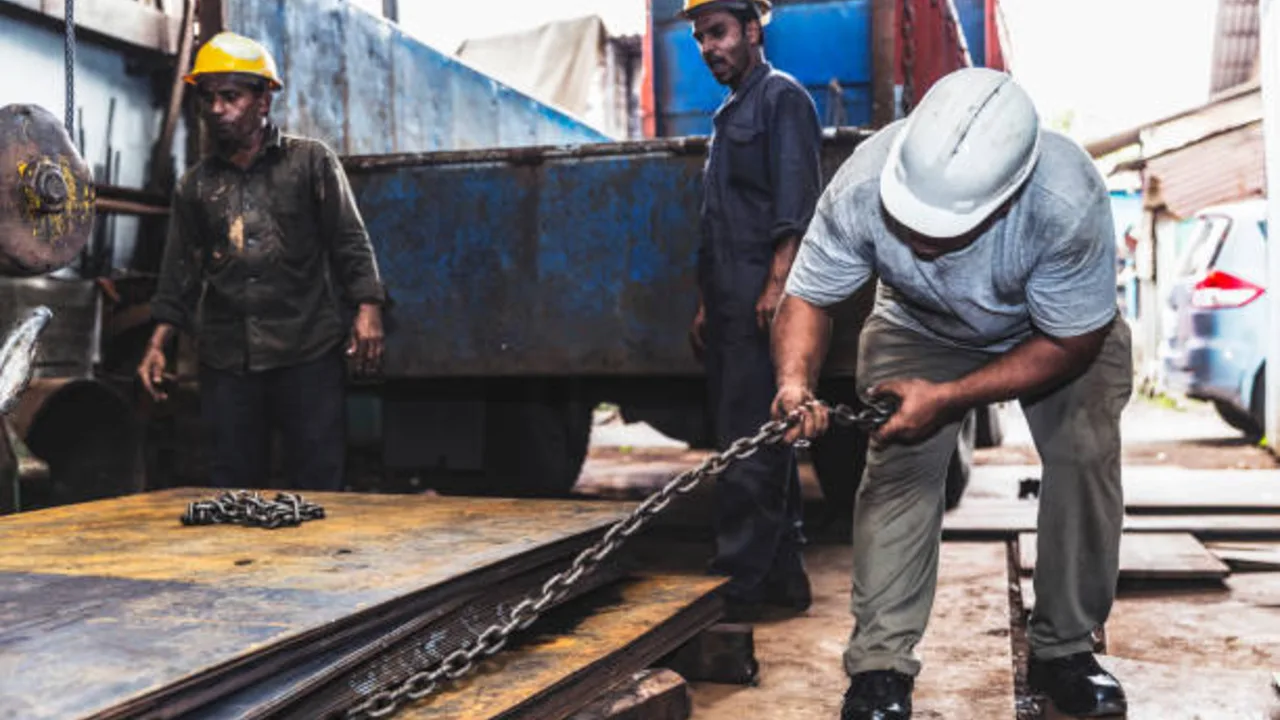
Despite having quality steel fabrication, many exporters still face shipment delays due to documentation errors. Customs authorities, shipping lines, and project owners carefully cross-check all export documents. Even small inconsistencies can trigger inspections, penalties, or clearance rejection.
Below are the most common mistakes in steel fabrication export documentation, along with their real-world impact.
Mismatched Data Across Invoice, Packing List, and Bill of Lading
One of the most frequent and costly mistakes is inconsistent information across core commercial documents. Differences in product names, quantities, weights, or HS codes between the commercial invoice, packing list, and bill of lading raise immediate red flags for customs officers.
Typical mismatches include:
- Different product descriptions between documents
- Weight discrepancies (gross vs net)
- Quantity inconsistencies
- HS code variations
Impact:
Customs may suspend clearance for manual verification, causing port demurrage charges, delayed delivery, and potential contractual penalties.
How to avoid:
Standardize document templates and conduct a final cross-check before shipment submission.
Incomplete MTC or Missing Heat Numbers
The Mill Test Certificate (MTC) is a critical quality and traceability document for steel fabrication exports. Missing chemical composition data, mechanical properties, or heat numbers undermine material traceability.
Common MTC issues include:
- Heat numbers not matching fabricated components
- Incomplete chemical or mechanical test results
- Incorrect steel grade references
Impact:
Project owners or inspectors may reject the shipment, requiring re-testing, re-issuance of certificates, or even material replacement.
How to avoid:
Ensure MTCs are reviewed by QC teams and fully aligned with fabrication drawings and packing lists.
Unclear or Generic Product Descriptions
Using vague product descriptions such as “steel parts” or “metal components” is a common mistake, especially in export documentation. Customs authorities require clear identification of the product to determine classification and duty rates.
Unclear descriptions often lack:
- Fabrication type (structure, platform, beam, column)
- Material grade
- Intended application
Impact:
Customs may reclassify the goods, apply higher duties, or request additional documentation, delaying clearance.
How to avoid:
Use precise and consistent descriptions across all documents, aligned with HS classification.
Missing Inspection Signatures or Stamps
Inspection and quality reports without authorized signatures, company stamps, or third-party inspector endorsements are often considered invalid.
Typical issues include:
- Unsigned inspection reports
- Missing inspector credentials
- Unstamped quality documents
Impact:
Customs or project owners may reject inspection records, requiring re-issuance or additional inspections at the port or site.
How to avoid:
Verify that all inspection documents are properly signed, stamped, and dated before dispatch.
Incorrect HS Code Classification
Incorrect HS code classification is one of the most serious documentation errors in steel fabrication export. Fabricated steel structures are often misclassified as raw materials or general steel products.
Common causes:
- Using generic HS codes
- Copying codes from previous projects without verification
- Ignoring destination-country HS subheadings
Impact:
Incorrect classification can result in customs fines, duty reassessment, shipment detention, or compliance audits.
How to avoid:
Confirm HS codes with customs brokers and destination-country regulations before shipment.
Summary Table: Documentation Mistakes and Their Consequences
| Common Mistake | Risk Level | Possible Consequences |
|---|---|---|
| Document data mismatch | High | Customs hold, demurrage, delivery delays |
| Incomplete MTC | High | Shipment rejection, re-testing costs |
| Unclear product description | Medium | Reclassification, higher duties |
| Missing inspection signatures | Medium | Document rejection, re-inspection |
| Incorrect HS code | Very High | Fines, audits, shipment seizure |
Why Documentation Accuracy Builds Trust
Beyond customs clearance, accurate documentation directly impacts trust with international clients. Consistent, transparent, and compliant export documents demonstrate professionalism, quality control, and long-term reliability.
In global steel projects, documentation accuracy is not just administrative—it is part of the product quality itself.
Best Practices for Managing Steel Fabrication Export Documents
- Create a standardized export document checklist
- Digitize and archive all technical records
- Coordinate closely with logistics and inspection teams
- Review documents against contract requirements before shipment
- Work with experienced export-oriented steel fabricators
Strong document control processes significantly reduce export risks.
Conclusion
Exporting steel fabrication is a complex process that extends far beyond manufacturing. Accurate and complete steel fabrication export documents—including MTC, inspection reports, and compliance certificates—are essential for smooth customs clearance and successful international delivery.
By understanding documentation requirements and working with experienced export-focused fabricators, companies can minimize risks, improve efficiency, and build long-term trust in global steel projects.