The logistics industry is entering a new era defined by robotics, AI-driven inventory systems, and real-time data integration. At the center of this transformation stands the automated warehouse steel structure. As global supply chains demand faster throughput, higher accuracy, and lower operational costs, traditional warehouse layouts are no longer sufficient. Modern facilities must be engineered from the ground up to support robotics, high-density storage systems, and scalable automation infrastructure.
An automated warehouse steel structure is not simply a storage building with machines inside. It is a fully integrated system where structural design, floor loading, clear height, column spacing, and mechanical integration all work together to enable automation. From robotic picking systems to automated storage and retrieval systems (AS/RS), the warehouse structure itself plays a decisive role in long-term operational efficiency.
The Evolution Toward Automated Warehouse Steel Structure Design
Warehouses were once designed primarily for manual handling and forklift circulation. Today, automation is reshaping structural priorities. The automated warehouse steel structure must accommodate robotic movement paths, vertical storage systems, conveyor lines, and precision-controlled environments.
This shift requires engineers to rethink column grids, slab tolerances, vibration control, and ceiling heights. Unlike conventional warehouses, an automated warehouse steel structure must support advanced robotics systems without compromising structural integrity or adaptability.
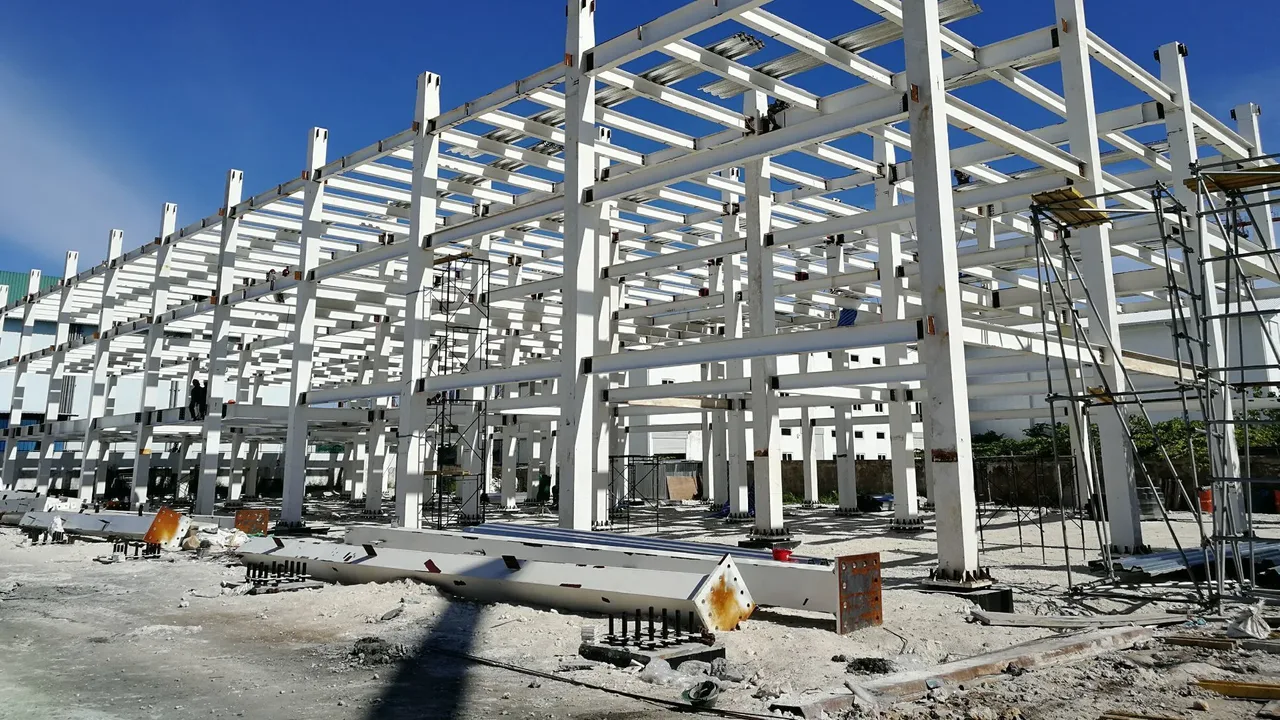
Automation-driven facilities prioritize vertical expansion. Higher clear heights allow multi-level racking supported by robotic shuttles. Steel structures are ideal because they can achieve wide spans and tall elevations with reduced structural weight. This makes the automated warehouse steel structure the preferred solution for logistics developers planning future-ready facilities.
Structural Requirements for Automation Integration
Clear Span and Column Grid Optimization
Automation systems operate most efficiently in unobstructed layouts. A well-designed automated warehouse steel structure minimizes internal columns, enabling smooth robotic navigation and conveyor alignment. Wide-span rigid frames or truss systems provide flexibility in configuring automated storage zones.
Column placement must align precisely with racking layouts and robotics pathways. Poor grid planning can limit future upgrades. Therefore, early-stage engineering of the automated warehouse steel structure must anticipate evolving automation technology.
Floor Load Capacity and Flatness
Automated systems impose concentrated and repetitive loads on warehouse floors. High-density racking combined with robotics demands reinforced concrete slabs supported by a stable automated warehouse steel structure. Slab flatness tolerances are especially critical for automated guided vehicles (AGVs) and robotic shuttles.
Structural engineers must calculate dynamic loads from robotics movement, not just static storage weight. A properly engineered automated warehouse steel structure ensures operational precision and minimizes long-term maintenance issues.
Vertical Expansion and Mezzanine Systems
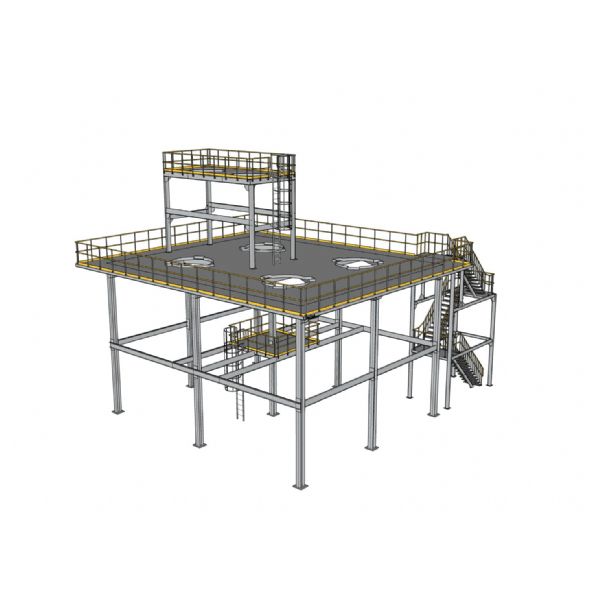
Many automation systems operate in vertical layers. Multi-tier picking platforms, robotic sorting decks, and elevated conveyors require integration with the primary automated warehouse steel structure. Steel framing allows seamless addition of mezzanine floors without compromising load distribution.
This adaptability ensures that the automated warehouse steel structure can evolve as robotics technology advances.
Robotics Integration in Automated Warehouse Steel Structure Planning
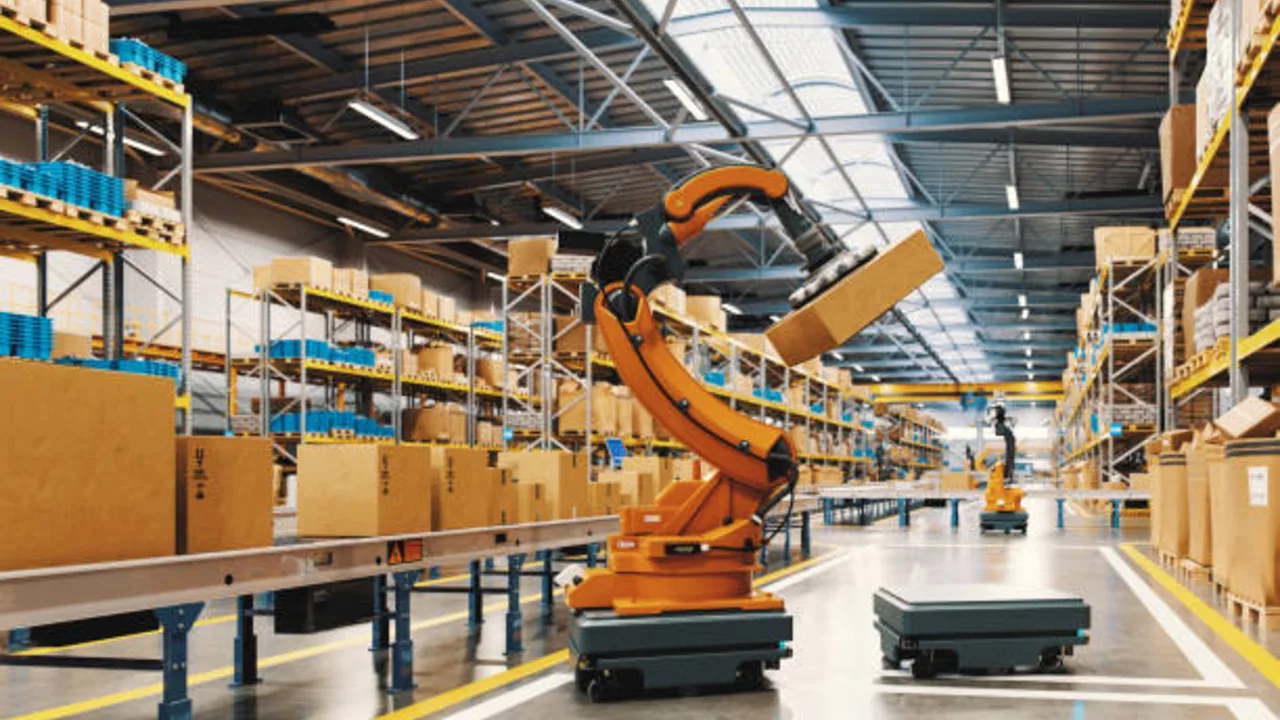
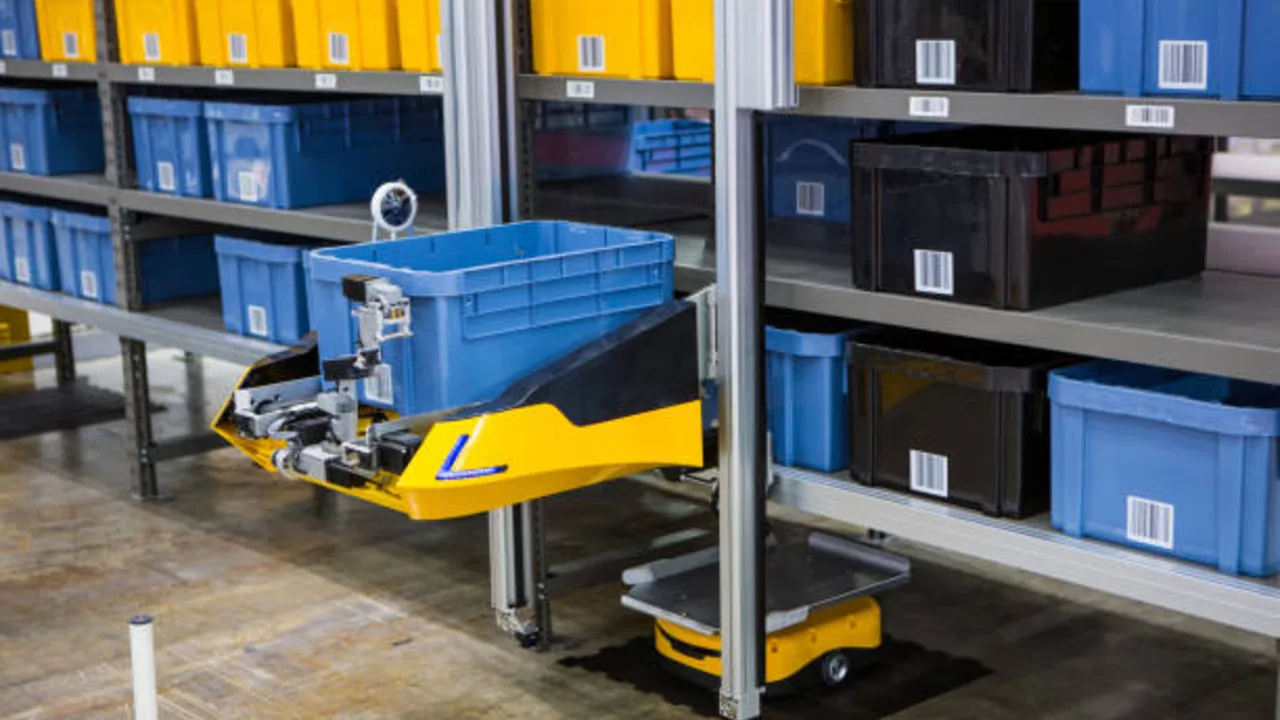
Robotics is the backbone of modern automated logistics. From robotic arms to shuttle systems, automation must be embedded into the building design itself. An effective automated warehouse steel structure supports:
- Automated Storage and Retrieval Systems (AS/RS)
- Autonomous Mobile Robots (AMRs)
- Robotic palletizing systems
- High-speed conveyor networks
Structural vibration control is particularly important. Robotics systems require stable surfaces and minimal structural deflection. A well-engineered automated warehouse steel structure ensures operational consistency and protects sensitive automation equipment.
Future-Proofing the Automated Warehouse Steel Structure
Technology evolves rapidly. A warehouse built today must accommodate automation upgrades ten or twenty years from now. Designing a flexible automated warehouse steel structure means planning for modular expansion, scalable power distribution, and adaptable internal layouts.
Steel offers unmatched modification flexibility. Walls can be extended, bays can be added, and roof structures can be reinforced. This makes the automated warehouse steel structure a long-term investment rather than a fixed asset.
Developers planning scalable logistics hubs often choose a prefab steel structure warehouse approach to reduce construction timelines while maintaining structural adaptability.
Environmental and Energy Considerations
Automation systems often operate 24/7, increasing energy consumption. A sustainable automated warehouse steel structure integrates insulation systems, natural lighting panels, and energy-efficient HVAC configurations.
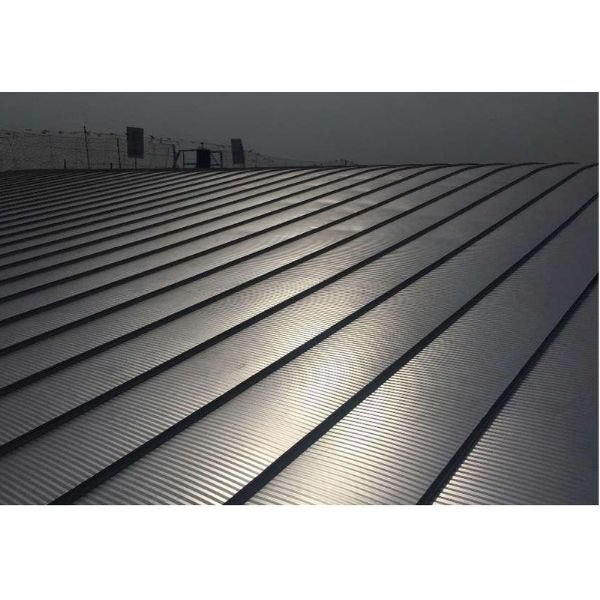
Roof designs can incorporate solar-ready framing, while insulated metal panels help regulate temperature for robotics performance stability. In temperature-sensitive automated facilities, maintaining climate control is essential for both equipment and inventory. The automated warehouse steel structure must therefore support energy-efficient envelope systems.
Comparing Traditional vs Automated Warehouse Steel Structure
| Feature | Traditional Warehouse | Automated Warehouse Steel Structure |
|---|---|---|
| Primary Handling Method | Manual / Forklift | Robotics & AS/RS |
| Clear Height | 8–12 m | 15–30+ m |
| Floor Tolerance | Standard Industrial | High Precision Flatness |
| Expansion Capability | Limited | Modular & Scalable |
| Structural Integration | Basic Framing | Integrated Automation Support |
The comparison highlights why an automated warehouse steel structure outperforms traditional designs in future-ready logistics applications.
Cost Factors in Automated Warehouse Steel Structure Development
Investment in an automated warehouse steel structure depends on span width, height, robotics integration level, floor reinforcement, and MEP complexity. While automation increases upfront cost, it significantly reduces labor dependency and improves throughput efficiency.
| Cost Component | Impact Level | Notes |
|---|---|---|
| Steel Framing | High | Depends on height & span |
| Reinforced Slab | High | Critical for robotics stability |
| Robotics Infrastructure | Very High | AS/RS & AMR systems |
| MEP Systems | Medium–High | Power & HVAC integration |
| Automation Software | Variable | WMS & AI systems |
When properly engineered, the automated warehouse steel structure delivers long-term ROI through higher efficiency and reduced operational errors.
Common Challenges in Automated Warehouse Steel Structure Projects
Precision Engineering Requirements
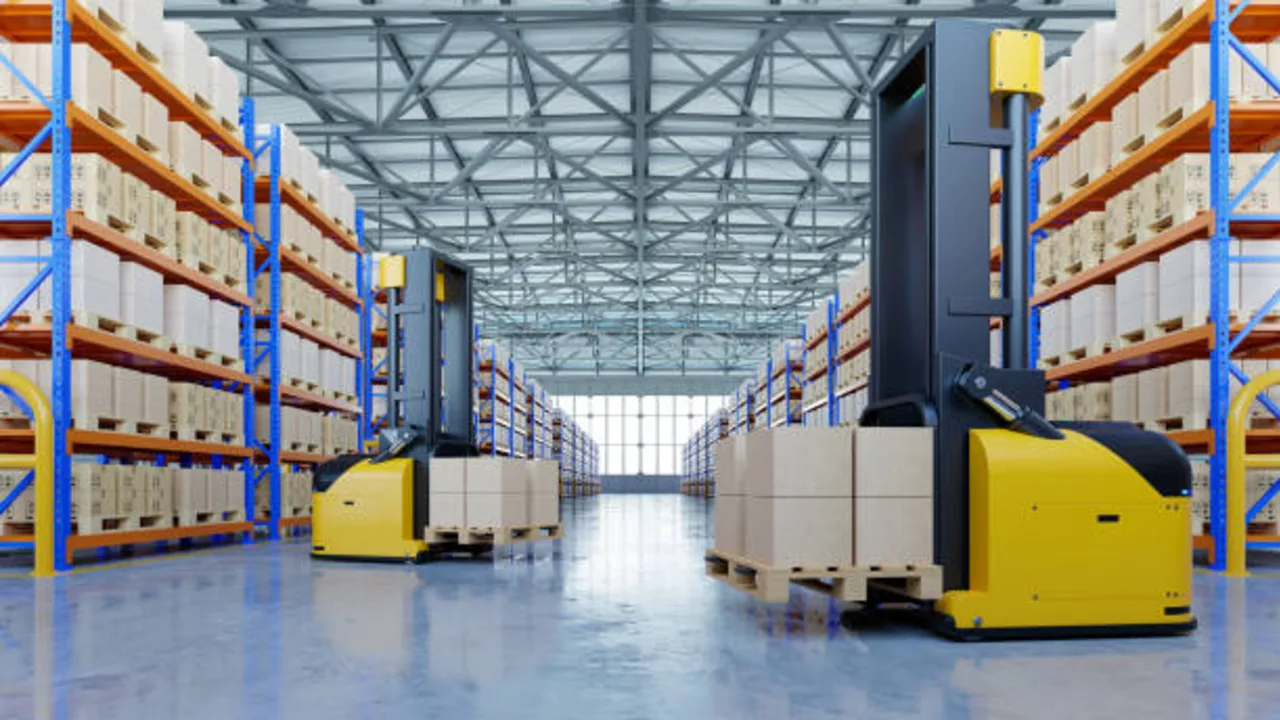
Automation systems demand extremely accurate tolerances — far beyond what traditional warehouse construction typically requires. In an automated warehouse steel structure, even minor deviations in slab flatness, column alignment, or beam deflection can disrupt robotic navigation, conveyor calibration, and racking precision.
For example, Automated Storage and Retrieval Systems (AS/RS) operate on guided tracks that rely on millimeter-level alignment. If the steel frame experiences unexpected deflection under load, or if floor tolerances exceed specified flatness (FF/FL ratings), robotics systems may experience vibration, tracking errors, or long-term mechanical wear. Over time, these small inaccuracies can compound into significant operational inefficiencies.
Additionally, high-bay automated warehouses often exceed 20–30 meters in height. At this scale, vertical alignment becomes critical. Slight column misalignment at the base can translate into large positional deviations at upper rack levels. Therefore, the automated warehouse steel structure must be fabricated and erected with high-precision surveying methods, laser alignment tools, and strict quality control protocols.
Structural vibration control is another crucial factor. Robotics systems, particularly high-speed shuttles and picking arms, are sensitive to dynamic movement. Engineers must evaluate:
- Live load deflection limits
- Dynamic load amplification
- Crane or mezzanine vibration transfer
- Wind-induced sway in tall structures
By integrating precision engineering from the earliest design phase, the automated warehouse steel structure becomes a stable and predictable operating platform for advanced robotics.
Coordination Between Structural and Robotics Teams
One of the most common risks in automated warehouse development is the disconnect between building design and automation layout. A successful automated warehouse steel structure cannot be designed in isolation — it must evolve in parallel with robotics system planning.
Structural engineers need detailed input from automation specialists, including:
- Rack layout dimensions
- Robot travel paths
- Conveyor routing elevations
- Equipment weight distribution
- Maintenance clearance zones
Without this coordination, structural grids may conflict with robotics aisles, column placement may obstruct shuttle pathways, or insufficient headroom may restrict vertical automation systems.
Early-stage BIM (Building Information Modeling) integration is critical. When robotics models are incorporated into the structural design phase, clashes can be resolved before fabrication begins. This reduces costly rework and ensures the automated warehouse steel structure fully supports system performance requirements.
Power distribution and MEP coordination also require alignment. Robotics systems demand stable electrical supply, data cabling infrastructure, and climate control consistency. If the structural design does not anticipate these requirements — such as cable tray routing or ceiling-mounted automation tracks — retrofitting becomes expensive and disruptive.
Ultimately, collaboration ensures that the automated warehouse steel structure functions not merely as a building shell, but as an integrated automation platform.
Scalability Planning
Automation technology evolves rapidly. What is state-of-the-art today may become outdated within five to ten years. A forward-thinking automated warehouse steel structure must therefore be designed with scalability embedded into its structural DNA.
Failure to anticipate growth can result in:
- Insufficient clear height for future racking expansion
- Slab thickness limitations preventing higher load density
- Structural framing incapable of supporting additional mezzanine systems
- Inflexible wall layouts that restrict expansion
A modular structural approach mitigates these risks. Steel framing systems allow additional bays to be added longitudinally, while roof systems can be extended with minimal disruption to ongoing operations. Mezzanine platforms can be reinforced or expanded, and additional robotics levels can be integrated without dismantling the core structure.
Scalability also applies to load capacity. Designing the automated warehouse steel structure with a slightly higher load tolerance than immediately required allows future installation of heavier robotics systems or denser racking configurations.
Electrical and data infrastructure should follow the same scalable logic. Conduits, cable trays, and power distribution panels must allow for future automation upgrades without requiring structural modification.
In essence, scalability planning transforms the automated warehouse steel structure from a fixed facility into a long-term automation ecosystem — capable of adapting to technological advancement without structural redesign.
Step-by-Step Development Process
| Phase | Description | Duration |
|---|---|---|
| Concept Planning | Define automation level & storage density | 2–4 weeks |
| Structural Engineering | Design steel frame & slab reinforcement | 3–6 weeks |
| Fabrication | Precision steel manufacturing | 4–8 weeks |
| Installation | Erection & robotics base setup | 3–6 weeks |
| Automation Integration | Robotics & system commissioning | 4–10 weeks |
This structured approach ensures the automated warehouse steel structure is fully aligned with robotics deployment schedules.
Conclusion
The future of logistics is automated, data-driven, and vertically optimized. A well-designed automated warehouse steel structure forms the physical backbone of this transformation. By integrating robotics considerations, structural precision, scalability planning, and energy efficiency, developers can create facilities that remain competitive for decades.
Choosing the right automated warehouse steel structure is not simply a construction decision — it is a strategic investment in operational performance. As robotics technology continues to evolve, steel-based automated warehouses will define the next generation of global supply chain infrastructure.