Modern logistics operations are driven by speed, accuracy, and predictability. Inside any steel warehouse, one seemingly simple decision has an outsized impact on daily performance: dock door placement. A well-planned warehouse dock door placement strategy determines how efficiently goods move between trucks, staging areas, and storage zones. When dock doors are positioned incorrectly, even the most advanced warehouse systems struggle with congestion, delays, and rising labor costs.
As distribution volumes grow and turnaround expectations tighten, warehouse owners can no longer treat dock doors as an afterthought. Dock door placement must be engineered as part of the overall building and operational strategy, especially in steel warehouses where long spans and modular layouts offer significant design flexibility. This article explains how strategic dock door placement improves loading efficiency, reduces operational friction, and supports long-term warehouse scalability.
Why Warehouse Dock Door Placement Matters
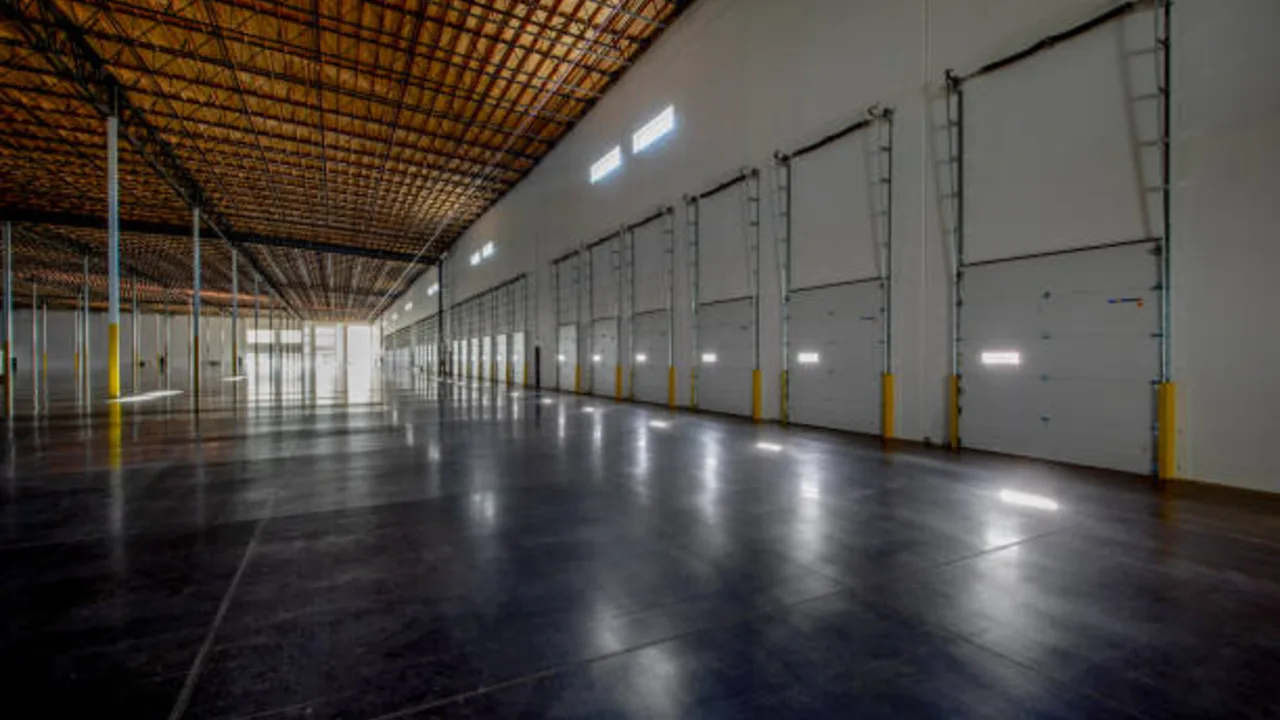
Dock doors are the physical interface between transportation and internal warehouse operations. Every inbound pallet, outbound shipment, and cross-docked load passes through these openings. Poor warehouse dock door placement creates bottlenecks that ripple throughout the entire facility.
When dock doors are poorly positioned, common problems emerge:
– Trucks queue longer at the yard
– Forklift travel distances increase
– Staging areas become congested
– Labor productivity declines
– Accident risks rise near busy dock zones
Conversely, a well-designed dock layout aligns truck movements with internal material flow. This alignment shortens handling paths, minimizes conflicts between inbound and outbound traffic, and directly improves loading efficiency. In high-throughput warehouses, even small improvements in dock door positioning can translate into significant operational gains.
Fundamentals of Warehouse Dock Door Placement

Relationship Between Dock Doors and Internal Layout
Effective warehouse dock door placement begins with understanding internal material flow. Dock doors should not be designed in isolation; they must align with how goods move inside the warehouse.
Key internal zones influenced by dock placement include:
– Receiving and inspection areas
– Staging and sorting zones
– Storage racking aisles
– Picking and consolidation areas
Inbound docks should be positioned to minimize travel distance to receiving and storage zones. Outbound docks should connect efficiently to picking and staging areas. In mixed-use warehouses, separating inbound and outbound dock zones often improves safety and throughput.
Dock Door Spacing and Quantity Planning
The number and spacing of dock doors directly affect operational rhythm. Too few doors lead to truck congestion, while too many doors increase construction cost and complicate wall reinforcement.
Planning considerations include:
– Average daily truck volume
– Peak-hour loading demand
– Type of cargo (palletized, bulk, oversized)
– Dock equipment type (levelers, seals, restraints)
A balanced warehouse dock door placement strategy ensures that door quantity matches operational demand without overbuilding.
Dock Door Placement in Steel Structure Warehouses
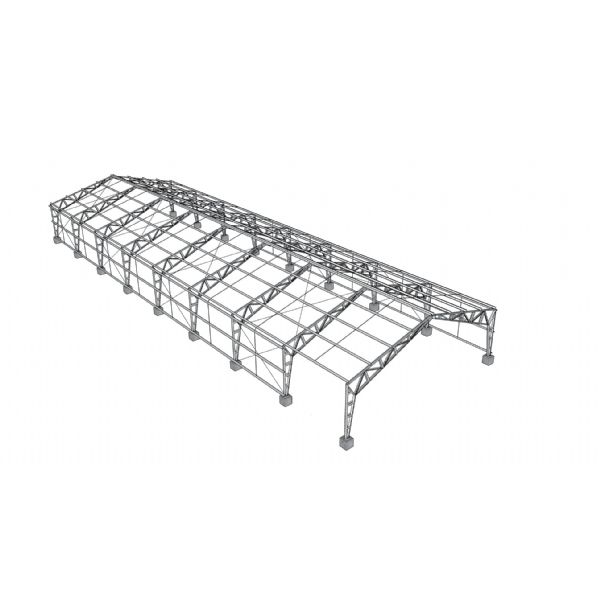
Steel warehouses offer structural advantages that significantly improve dock door planning flexibility. Long clear-span walls, modular framing, and expandable layouts make it easier to optimize dock locations compared to rigid concrete buildings.
Structural Advantages of Steel Warehouses
In a steel structure warehouse factory, dock doors can be distributed along extended wall lengths without compromising structural integrity. Steel framing allows engineers to reinforce dock openings efficiently while maintaining wide, unobstructed interiors.
Key advantages include:
– Flexible dock spacing along long sidewalls
– Easier integration of future dock expansions
– Reduced internal column interference
– Faster construction and modification cycles
These characteristics make steel warehouses ideal for evolving logistics operations that require adaptable warehouse dock door placement over time.
Side Wall vs End Wall Dock Door Placement
Choosing between side-wall and end-wall dock placement depends on site constraints and operational priorities.
Side-wall dock placement:
– Supports high door counts
– Enables parallel truck loading
– Improves scalability for large distribution centers
End-wall dock placement:
– Works well for smaller warehouses
– Simplifies traffic circulation
– Reduces structural reinforcement complexity
In most high-volume steel warehouses, side-wall placement delivers superior loading efficiency by supporting simultaneous dock operations.
Optimizing Loading Efficiency Through Dock Door Design
Dock door placement directly influences how quickly trucks are loaded and unloaded. Optimizing loading efficiency requires aligning dock locations with both yard operations and internal handling systems.
Reducing Truck Waiting Time
Strategic warehouse dock door placement minimizes truck queuing by:
– Allowing clear dock assignments
– Separating inbound and outbound flows
– Supporting cross-docking operations
When docks are positioned logically, trucks spend less time waiting, and yard congestion is reduced.
Improving Forklift and Material Handling Flow
Forklift travel distance is one of the largest contributors to labor inefficiency. Poor dock placement forces forklifts to cross traffic paths and travel long distances.
Optimized dock placement:
– Shortens forklift travel paths
– Reduces crossing conflicts
– Supports one-way circulation systems
These improvements directly enhance loading efficiency while improving safety.
Common Dock Door Placement Strategies
Single-Sided Dock Configuration
Single-sided docks are common in small to mid-sized warehouses. All dock doors are placed along one wall, simplifying internal flow and yard management.
Best for:
– Regional distribution centers
– Manufacturing warehouses
– Moderate truck volumes
Dual-Sided (Drive-Through) Configuration
Dual-sided layouts place dock doors on opposite walls, enabling inbound flow on one side and outbound flow on the other.
Advantages include:
– Clear separation of operations
– High throughput capacity
– Excellent loading efficiency for cross-docking
Multi-Zone Dock Door Layout
Large warehouses often divide docks into operational zones. Each zone serves a specific function such as inbound receiving, outbound shipping, or returns handling.
This approach supports complex workflows and improves control over warehouse dock door placement.
Engineering Considerations for Dock Door Placement
Structural Load and Wall Reinforcement
Each dock opening interrupts the wall structure and must be properly reinforced. Steel framing allows precise load redistribution around dock openings, maintaining structural safety.
Dock Levelers, Seals, and Canopies
Dock placement must account for:
– Leveler type and pit depth
– Weather seals and insulation
– Canopies for rain and sun protection
These elements influence both construction cost and long-term loading efficiency.
Fire Safety and Compliance
Dock zones are high-risk areas. Proper warehouse dock door placement supports fire zoning, emergency access, and compliance with local codes.
Dock Door Placement and Warehouse Expansion Planning
Future growth should be considered from the earliest planning stage of any warehouse project. In fast-moving logistics environments, warehouses rarely remain static. Changes in product mix, higher throughput demand, automation upgrades, or shifts in distribution strategy often require additional dock capacity. A well-designed warehouse dock door placement strategy anticipates these changes and avoids costly structural modifications later.
Steel warehouses offer a significant advantage when it comes to expansion planning. Unlike rigid concrete structures, steel framing systems allow engineers to design expansion-ready dock zones without disrupting ongoing operations. By embedding future expansion logic into the initial layout, warehouse owners gain flexibility while protecting their long-term investment.
One key strategy is the use of knock-out wall panels. These are non-load-bearing wall sections designed to be removed in the future without affecting the main structural frame. When additional dock doors are needed, knock-out panels allow new openings to be created quickly, reducing downtime and avoiding extensive demolition work.
Another critical factor is reserving structural capacity for future dock doors. During the initial engineering phase, columns, beams, and wall frames can be sized to accommodate additional openings later. This proactive approach ensures that future dock installations do not require major structural reinforcement, which is often expensive and operationally disruptive.
Dock door placement should also be aligned with long-term internal layout planning. Future racking configurations, automation systems, conveyor lines, and staging areas must be considered when positioning initial dock doors. By aligning dock zones with projected racking layouts, warehouses maintain efficient material flow even as storage density increases or automation is introduced.
A forward-looking warehouse dock door placement strategy not only reduces future construction cost but also preserves loading efficiency as operations scale. Instead of forcing logistics processes to adapt to fixed building constraints, expansion-ready dock planning allows the facility to evolve naturally with business growth.
Cost Impact of Dock Door Placement Decisions
Initial Construction Cost
Dock placement affects:
– Wall reinforcement requirements
– Door equipment cost
– Foundation detailing
Strategic planning avoids unnecessary overdesign.
Long-Term Operational Cost
Over time, poor dock placement increases:
– Labor hours
– Energy loss through dock gaps
– Equipment wear and maintenance
Optimized dock placement delivers sustained savings through improved loading efficiency.
Best Practices for Warehouse Dock Door Placement
– Align dock doors with material flow
– Balance inbound and outbound capacity
– Design for peak, not average, demand
– Coordinate dock placement with racking and conveyors
– Plan expansion capability from the start
Case Examples of Effective Dock Door Placement
E-commerce fulfillment centers benefit from dense side-wall dock layouts that support rapid order turnover. Manufacturing warehouses often use end-wall docks aligned with production lines. Cold storage facilities prioritize dock placement that minimizes door opening time to protect temperature control.
In each case, thoughtful warehouse dock door placement directly improves loading efficiency and operational stability.
Common Mistakes to Avoid

– Placing docks too close together
– Ignoring future expansion needs
– Mixing inbound and outbound flows without separation
– Failing to coordinate dock placement with yard traffic
Dock Door Planning in Large-Scale Steel Logistics Facilities
Practical dock door placement strategies are best understood through real-world applications. One representative example is the steel structure logistics and trade facility delivered by XTD Steel for the Xiangyang Hanjiang River Basin Modern Agriculture Trade Center.
This project serves as a regional distribution and trading hub, handling high-volume agricultural goods with frequent inbound and outbound truck movements. From the early design stage, dock door placement was treated as a core operational factor rather than a secondary architectural detail. The steel warehouse layout was engineered to support continuous truck circulation, fast loading cycles, and clear separation between receiving and dispatch zones.
By aligning dock doors along extended steel sidewalls, the facility achieved high dock density without compromising structural stability. This configuration allowed multiple trucks to operate simultaneously, significantly improving loading efficiency during peak trading periods. Internal material flow was optimized by positioning staging areas directly behind dock zones, reducing forklift travel distance and minimizing cross-traffic inside the warehouse.
The flexibility of the steel structure also enabled reinforced dock openings, accommodating heavy-duty dock levelers and large vehicle access while maintaining long clear-span interiors. This approach demonstrates how strategic warehouse dock door placement, when combined with steel structure engineering, directly enhances throughput, safety, and long-term operational scalability.
Projects such as this highlight how XTD Steel integrates real operational requirements into warehouse design, ensuring dock door placement supports not only current logistics demand but also future expansion and evolving distribution patterns.
Conclusion: Strategic Dock Door Placement Drives Warehouse Performance
Dock doors are more than access points—they are productivity multipliers. A well-engineered warehouse dock door placement strategy enhances loading efficiency, improves safety, and supports long-term operational growth.
For steel warehouses, the structural flexibility of steel framing unlocks powerful opportunities to optimize dock layouts today while preparing for tomorrow’s expansion. When dock door placement is treated as a strategic design decision rather than a construction detail, warehouse performance improves across every operational metric.