
In modern logistics and industrial operations, warehouse performance is no longer defined by size alone. Load intensity, storage density, and equipment movement now play a decisive role in operational efficiency. At the center of these factors lies one critical engineering variable: warehouse floor load capacity. A steel warehouse may appear structurally robust from the outside, but if the floor system is not properly designed, it becomes the weakest link in the entire facility.
As warehouses evolve toward high-density racking, automated systems, and heavier palletized goods, floor load demands continue to increase. Forklifts, reach trucks, pallet stackers, and racking legs all transfer concentrated forces into the slab and subgrade. When warehouse floor load capacity is underestimated, the result is not just cracked concrete—it can lead to uneven settlement, unsafe working conditions, and costly operational downtime.
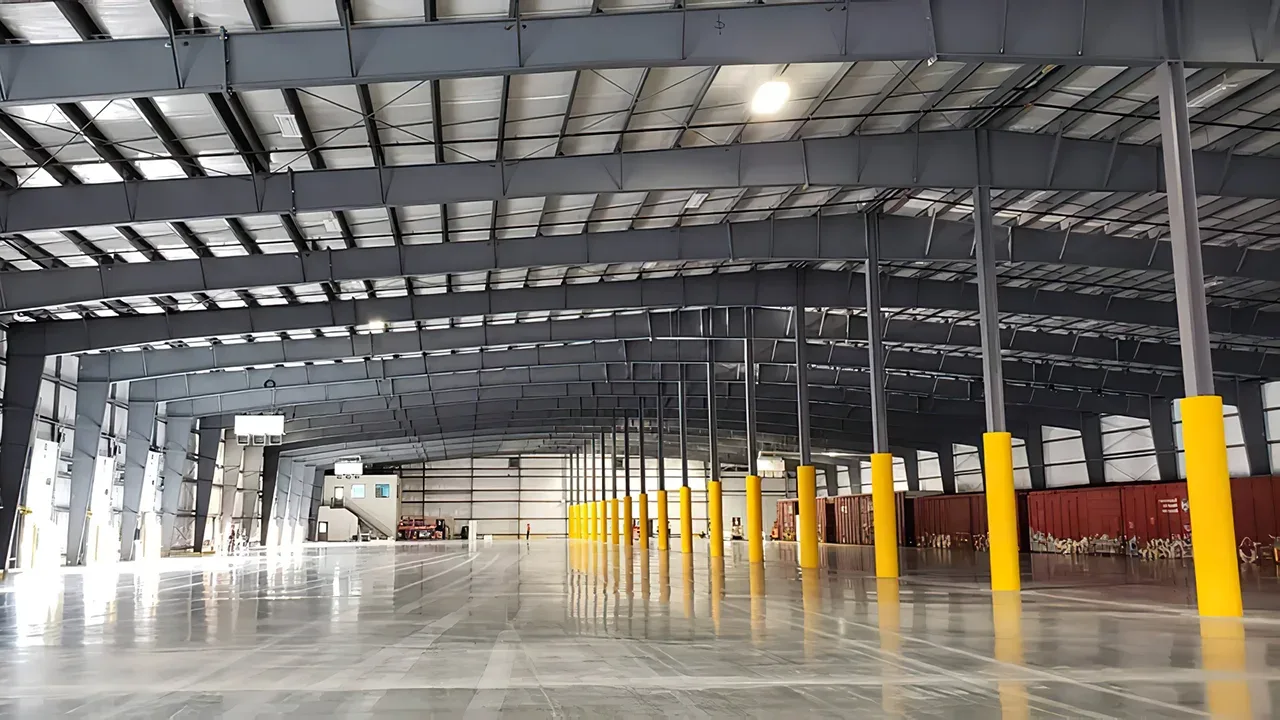
Unlike conventional buildings, steel warehouses depend on an integrated relationship between structure, slab design, and warehouse operations. The steel frame may allow long spans and flexible layouts, but the floor must safely support all vertical and dynamic loads generated during daily use. This is why floor planning should never be treated as an afterthought or a generic specification.
In well-engineered facilities, floor load planning is coordinated early alongside structural design and warehouse layout. This approach ensures that the slab system aligns with racking configuration, pallet load, equipment traffic, and future operational changes. When planned correctly, a steel structure warehouse building achieves long-term reliability, safety, and adaptability.
What Is Warehouse Floor Load Capacity?
Warehouse floor load capacity refers to the maximum load that a warehouse floor system can safely support without experiencing structural failure, excessive deflection, or long-term deterioration. This capacity is determined by a combination of slab thickness, concrete strength, reinforcement design, soil bearing capacity, and load distribution patterns.
In engineering terms, floor loads are typically classified into several categories. Dead load includes the self-weight of the concrete slab itself. Live load represents movable loads such as pallets, forklifts, and stored goods. Point loads occur at concentrated locations, such as racking legs or equipment wheels, while distributed loads spread across a wider surface area.
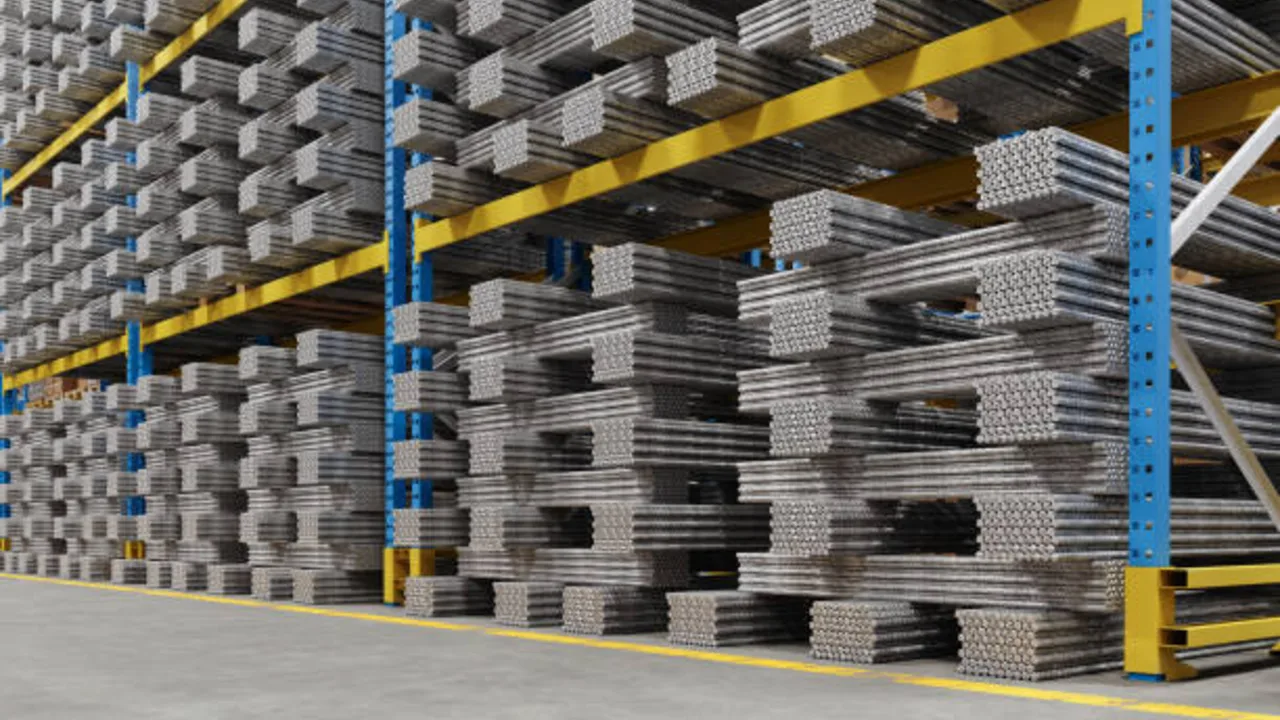
In steel warehouses, point loads are often the governing factor. Pallet racking systems transfer heavy vertical loads through relatively small base plates, creating high stress concentrations in the slab. Without proper slab design, these stresses can exceed concrete capacity even if the overall warehouse appears lightly loaded.
Another critical aspect of warehouse floor load capacity is its relationship with the subgrade. The slab does not act alone—it relies on compacted soil or engineered fill beneath it to distribute loads evenly. A strong slab over weak soil will still fail over time, while a well-prepared subgrade can significantly improve long-term performance.
Why Floor Load Capacity Is Critical in Steel Warehouses
Steel warehouses are designed for flexibility, scalability, and speed of construction. Clear-span steel frames allow operators to modify layouts, add racking systems, or introduce new equipment with minimal structural changes. However, this flexibility only exists if the floor system has been designed with sufficient load margins.
One of the most common issues in logistics facilities is the gradual increase in storage density. As operations grow, pallet loads become heavier, racking systems grow taller, and aisle widths shrink. Each of these changes increases stress on the slab. If warehouse floor load capacity was designed only for initial conditions, the facility quickly becomes over-utilized.
Dynamic loading further complicates the issue. Forklifts generate impact loads during braking, turning, and lifting operations. These dynamic effects are often underestimated but can significantly accelerate slab cracking and joint deterioration. Over time, small cracks develop into uneven surfaces that reduce equipment efficiency and increase maintenance costs.
From a safety perspective, insufficient floor capacity introduces serious risks. Racking instability, tilted storage systems, and uneven floors increase the likelihood of accidents. In high-throughput warehouses, even minor floor damage can disrupt operations across the entire facility.
For these reasons, floor load planning is not just an engineering calculation—it is a strategic decision that directly affects productivity, safety, and lifecycle cost in steel warehouse projects.
Key Factors That Determine Warehouse Floor Load Capacity
Slab Design Parameters
Slab design is the most visible component influencing warehouse floor load capacity. The thickness of the slab directly affects its ability to resist bending and shear forces. Thicker slabs generally provide higher load capacity, but thickness alone does not guarantee performance.
Concrete strength plays an equally important role. Higher compressive strength allows the slab to resist higher stresses at racking legs and wheel loads. Reinforcement strategy—whether using rebar, welded wire mesh, or fiber reinforcement—controls crack width and load redistribution after cracking.
Joint spacing and joint detailing are also critical. Poorly designed joints can become failure points under repeated forklift traffic. In high-load warehouses, jointless or reduced-joint slabs are often adopted to improve durability and load transfer.
A proper slab design balances material efficiency with long-term performance, ensuring that the slab supports operational demands without excessive cracking or maintenance.
Subgrade and Soil Bearing Capacity
The performance of a warehouse floor is inseparable from the quality of the soil beneath it. Even a well-designed slab will fail if placed on poorly compacted or weak subgrade. Soil bearing capacity determines how loads are transferred from the slab into the ground.
Soil investigation and compaction control are therefore essential steps in warehouse floor planning. Parameters such as soil type, moisture content, and compaction level directly influence long-term settlement behavior. In heavy-duty steel warehouses, engineered subbase layers are often introduced to improve load distribution.
Ignoring subgrade conditions is one of the most costly mistakes in floor construction, as remediation after slab failure is both disruptive and expensive.
Pallet Load and Storage Configuration
Pallet load represents the primary operational load in most warehouses. It is not only the weight of individual pallets that matters, but how those loads are transferred through racking systems into the floor.
High-density racking concentrates loads at racking legs, creating point loads that far exceed typical distributed load assumptions. When pallet weights increase or storage heights change, these point loads rise accordingly. Without recalculating warehouse floor load capacity, operators risk overloading the slab.
Future flexibility must also be considered. Warehouses rarely remain static. A floor designed for light pallet loads today may be required to support heavier goods or automated systems tomorrow. Designing with sufficient reserve capacity protects the facility from premature obsolescence.
Floor Load Capacity vs Racking Systems
In steel warehouses, racking systems are often the single biggest contributor to concentrated floor loads. While total storage weight matters, it is the way that weight is transferred into the floor that ultimately defines warehouse floor load capacity requirements. Different racking systems apply loads to the slab in very different ways, and ignoring this relationship is a common source of structural issues.
Selective racking systems distribute pallet loads across multiple upright frames, typically resulting in moderate point loads. However, as racking height increases, the load at each base plate rises significantly. Drive-in and drive-through racking systems introduce even higher point loads because multiple pallets are supported by fewer structural elements.
Automated storage and retrieval systems (AS/RS) present another challenge. These systems combine high pallet loads with dynamic forces generated by automated cranes and shuttles. The result is a complex load profile that demands careful coordination between slab design, reinforcement strategy, and joint detailing.
Very Narrow Aisle (VNA) warehouses also place unique demands on the floor. Narrow aisle widths concentrate traffic paths, increasing wear and fatigue at specific slab locations. In such facilities, warehouse floor load capacity must be evaluated not only for static storage loads but also for repeated dynamic loading.
Typical Load Ranges in Steel Warehouses
Although every warehouse should be engineered based on its specific operational requirements, typical load ranges provide a useful reference during early planning stages. These ranges help stakeholders understand how storage type, pallet weight, and handling systems influence slab requirements.
Table: Typical Warehouse Floor Load Capacity
| Warehouse Type | Typical Floor Load | Primary Application |
|---|---|---|
| Light Storage Warehouse | 5–7 kN/m² | Carton storage, manual picking |
| Standard Logistics Warehouse | 7–12 kN/m² | Pallet racking, forklift operations |
| Heavy-Duty Warehouse | 12–20+ kN/m² | Steel products, machinery, dense storage |
| Automated Warehouse (AS/RS) | Project-specific | High-bay automated systems |
These values should never replace detailed engineering calculations. Actual warehouse floor load capacity depends on point loads, slab thickness, reinforcement type, and soil conditions.
Common Mistakes in Warehouse Floor Load Planning
Many floor failures are not caused by poor materials, but by incorrect assumptions during planning. One of the most frequent mistakes is relying on generalized “rule-of-thumb” load values without verifying real operational demands.
Another common issue is designing only for current usage. Warehouses evolve quickly—pallet weights increase, racking systems change, and automation is introduced. If warehouse floor load capacity does not include future allowances, the facility becomes constrained long before the end of its intended lifespan.
Misalignment between slab design and racking installation is also widespread. Racking suppliers may specify base plate loads that exceed the slab’s original design capacity. When this coordination is missing, localized cracking and settlement often appear within the first few years of operation.
Finally, focusing solely on slab thickness while ignoring subgrade quality is a costly error. A thicker slab placed on poorly compacted soil will still experience differential settlement and joint failure.
Engineering Coordination: Slab, Structure, and Operations
Effective warehouse floor performance requires early coordination between multiple disciplines. Structural engineers, warehouse planners, and racking suppliers must work together to align assumptions and design parameters.
Structural engineers define slab thickness, reinforcement, and joint strategy based on load data. Warehouse planners provide information on pallet load, storage density, traffic patterns, and future expansion plans. Racking suppliers contribute precise point load data and base plate configurations.
When these inputs are integrated early, warehouse floor load capacity can be optimized rather than overdesigned. This approach reduces unnecessary material cost while ensuring long-term reliability.
In steel warehouses, this coordination is especially important because clear-span structures allow operational flexibility. The floor must match this flexibility by supporting a wide range of potential configurations.
Case Scenarios in Steel Warehouses
Case 1: Distribution Warehouse with High Pallet Load
A regional distribution center planned to increase pallet weights from 800 kg to 1,200 kg while maintaining the same racking layout. Initial floor design had been based on lower pallet loads, leaving limited reserve capacity.
Through slab reassessment, engineers identified the need for additional reinforcement and improved joint detailing in high-load zones. By selectively strengthening critical areas rather than rebuilding the entire slab, the facility safely accommodated higher pallet loads without major disruption.
This case highlights the importance of understanding how pallet load changes affect warehouse floor load capacity over time.
Case 2: Manufacturing Warehouse with Heavy Equipment
A steel fabrication warehouse required floor support for both palletized materials and heavy stationary machinery. Equipment point loads far exceeded typical warehouse assumptions.
The solution involved localized slab thickening and enhanced subgrade preparation beneath equipment zones. This targeted approach ensured long-term stability while keeping overall construction cost under control.
Here, accurate load mapping and coordination between operations and engineering prevented premature slab failure.
How to Plan Warehouse Floor Load Capacity Correctly

Successful floor planning follows a structured process rather than isolated calculations:
- Define warehouse operations, pallet load, and equipment types.
- Select racking systems and obtain accurate point load data.
- Conduct soil investigation and verify subgrade bearing capacity.
- Design slab thickness, reinforcement, and joints accordingly.
- Include allowance for future load increases and layout changes.
This approach ensures that warehouse floor load capacity supports both current operations and long-term growth.
FAQ – Warehouse Floor Load Capacity
How much load can a warehouse floor support?
This depends on slab design, soil conditions, and load type. Typical ranges vary from light storage to heavy-duty industrial applications.
Can a warehouse floor be upgraded later?
Yes, but upgrades are costly and disruptive. Proper planning during initial construction is far more efficient.
Is a thicker slab always better?
Not necessarily. Slab thickness must be balanced with reinforcement design and subgrade quality.
How does pallet load affect slab design?
Higher pallet loads increase point loads at racking legs, directly influencing slab thickness and reinforcement requirements.
In steel warehouses, warehouse floor load capacity is not just a structural parameter—it is a foundation for safe, efficient, and scalable operations. When floor design aligns with racking systems, pallet load, and long-term operational strategy, the warehouse becomes a resilient asset rather than a future constraint.