Modern warehouses are under constant pressure to store more inventory, process orders faster, and adapt to changing operational demands — all without increasing land footprint. As urban land costs rise and logistics cycles accelerate, expanding outward is no longer the most efficient option. This is where warehouse mezzanine design becomes a critical structural and operational strategy rather than a secondary add-on.
A mezzanine floor allows warehouse operators to unlock unused vertical space inside an existing building envelope. Instead of relocating or investing in new construction, businesses can double or even triple usable floor area by integrating an intermediate steel platform. For steel warehouses in particular, mezzanine integration offers a scalable and cost-efficient approach to storage expansion, supporting long-term growth without disrupting daily operations.
Unlike temporary shelving solutions, a well-engineered mezzanine floor becomes part of the warehouse’s structural logic. When properly designed, it integrates seamlessly with the steel frame, supports heavy operational loads, and remains flexible enough to evolve with changing storage or production requirements.
What Is Warehouse Mezzanine Design?
Warehouse mezzanine design refers to the structural planning and integration of an elevated intermediate floor within a warehouse building. This floor is typically supported by steel columns, beams, and decking systems and is designed to carry specific loads depending on its function — storage, light production, offices, or mixed-use operations.
In steel warehouses, mezzanine floors are not treated as permanent concrete levels. Instead, they are engineered steel systems that sit between the main floor and roof, making them faster to install, easier to modify, and more adaptable to future changes. This distinction is crucial. A mezzanine is designed to enhance flexibility, not restrict it.
From an engineering perspective, warehouse mezzanine design focuses on three key principles: load transfer, structural compatibility, and operational flow. Loads applied on the mezzanine must be safely transferred through columns and beams into the main warehouse foundation or primary steel frame. At the same time, the mezzanine must not interfere with material handling systems, racking layouts, or safety circulation paths.
Because of this, mezzanine floors are especially well-suited for a prefab steel structure warehouse, where standardized steel framing, predictable load paths, and modular construction allow mezzanines to be integrated or expanded with minimal structural conflict.
Why Mezzanine Floors Are Essential for Storage Expansion
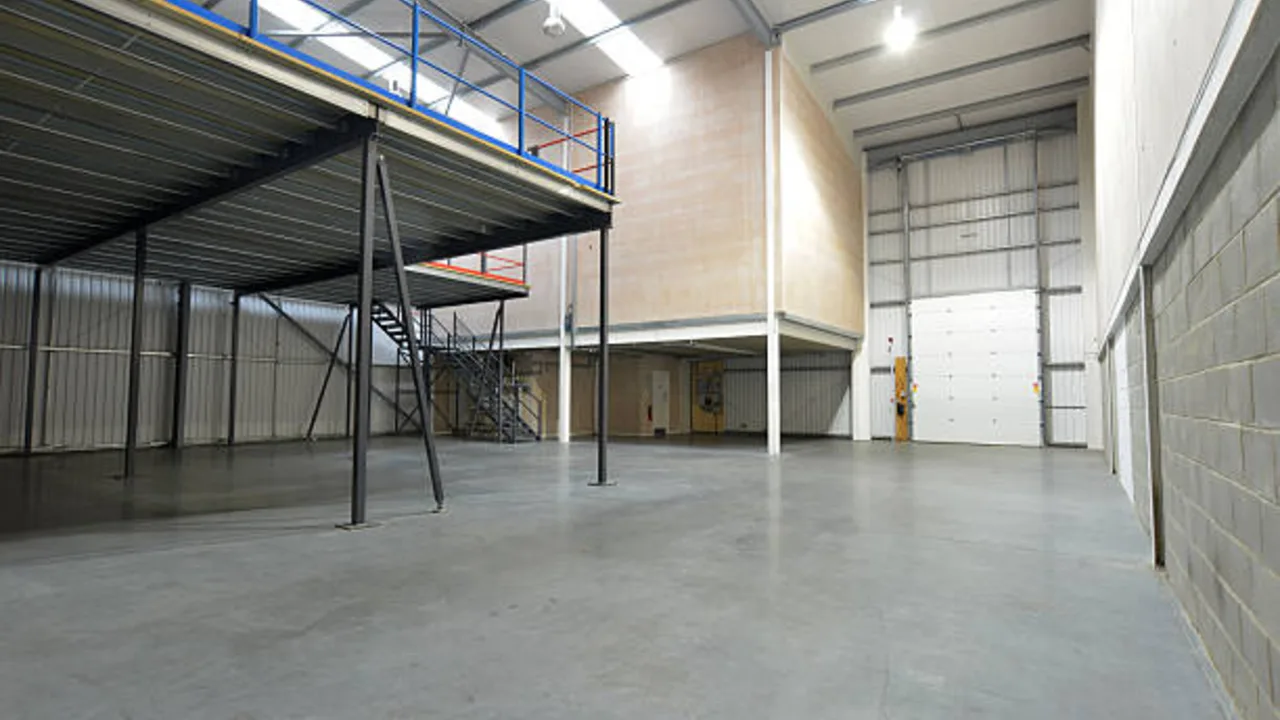
As warehouse operations scale, storage expansion becomes inevitable. Traditionally, expansion meant building a larger facility or adding new warehouse space horizontally. However, horizontal expansion often introduces high costs, long construction timelines, land acquisition challenges, and operational disruption.
Mezzanine floors offer a fundamentally different approach. Instead of expanding the building footprint, they expand usable volume. This vertical strategy aligns perfectly with modern warehouse economics, where ceiling heights in steel warehouses are often underutilized.
A well-executed warehouse mezzanine design can increase usable floor area by 50% to 200%, depending on clear height and structural capacity. This makes mezzanines particularly valuable for warehouses handling cartons, spare parts, light pallets, e-commerce inventory, or assembly-related storage.
From an operational standpoint, mezzanine-based storage expansion allows businesses to keep existing workflows intact. In many cases, mezzanines can be installed while the warehouse remains operational, avoiding downtime that would otherwise disrupt supply chains. This continuity is a major advantage for logistics centers, distribution hubs, and manufacturing warehouses operating on tight delivery schedules.
Strategically, mezzanine floors also future-proof warehouse assets. As inventory profiles change — from bulk storage to SKU-heavy fulfillment models, for example — mezzanine layouts can be reconfigured, reinforced, or extended. This adaptability makes warehouse mezzanine design a long-term investment rather than a short-term fix.
Structural Considerations in Warehouse Mezzanine Design
Successful mezzanine integration starts with structural compatibility. Not all warehouses are equally suited for mezzanine installation, and improper design can lead to inefficiencies, safety risks, or costly retrofits.
The first consideration is load capacity. Mezzanine floors must be designed to carry both static loads (stored goods, equipment) and dynamic loads (movement of people, trolleys, forklifts, or conveyors). Storage mezzanines typically require lower live loads than production or equipment platforms, but even light-duty systems must comply with structural safety standards.
Equally important is how those loads interact with the existing steel warehouse structure. In many cases, mezzanine columns are designed to transfer loads directly to the ground through independent footings. In others, loads may be partially shared with the main steel frame. The chosen strategy depends on foundation capacity, column spacing, and overall warehouse geometry.
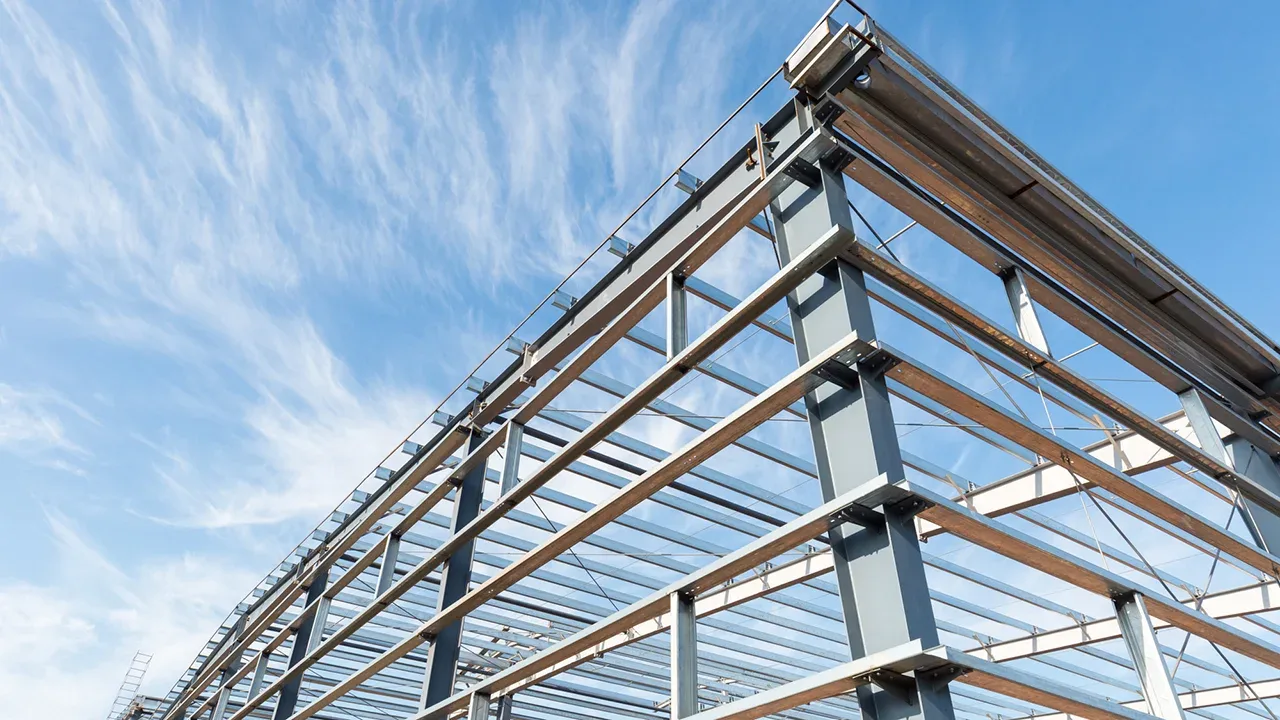
Steel warehouses provide a significant advantage here. Their rigid frames, predictable load paths, and modular grids make structural integration more straightforward. Engineers can align mezzanine columns with existing grid lines, reduce eccentric loading, and avoid overstressing primary beams. This level of compatibility is far more difficult to achieve in concrete or masonry buildings.
Another key factor is vibration and deflection control. Even if a mezzanine meets strength requirements, excessive deflection can affect usability, especially in areas with human traffic or sensitive equipment. Proper beam sizing, decking selection, and connection detailing are essential elements of responsible warehouse mezzanine design.
Designing for Operational Efficiency, Not Just Structure
While structural integrity is non-negotiable, mezzanine success ultimately depends on how well it supports warehouse operations. Poorly planned mezzanine layouts can create bottlenecks, reduce picking efficiency, or compromise safety.
Effective warehouse mezzanine design starts with a clear understanding of operational flow. Designers must consider how goods move from receiving to storage, from storage to picking, and from picking to dispatch. Mezzanines should enhance these flows, not interrupt them.
Clear headroom below and above the mezzanine is critical. Insufficient clearance can limit forklift movement, restrict racking heights, or reduce lighting effectiveness. Likewise, mezzanine placement must account for fire protection systems, ventilation, and natural lighting.
Access is another defining element. Staircases, lifts, and material handling interfaces should be positioned to minimize travel distance and congestion. In well-designed systems, mezzanines feel like a natural extension of the warehouse, not an obstacle layered on top of it.
When mezzanine floors are integrated early in the planning stage — rather than retrofitted as an afterthought — they deliver the highest value. This is especially true for expansion-ready steel warehouses, where mezzanine capacity can be anticipated, reserved, and implemented in phases as storage demands grow.
Types of Mezzanine Floors Used in Steel Warehouses
Different warehouse operations demand different mezzanine configurations. A well-planned warehouse mezzanine design always starts by matching the mezzanine type to its operational purpose. Treating all mezzanines as the same is one of the most common mistakes in warehouse planning.
Storage Mezzanine Floors
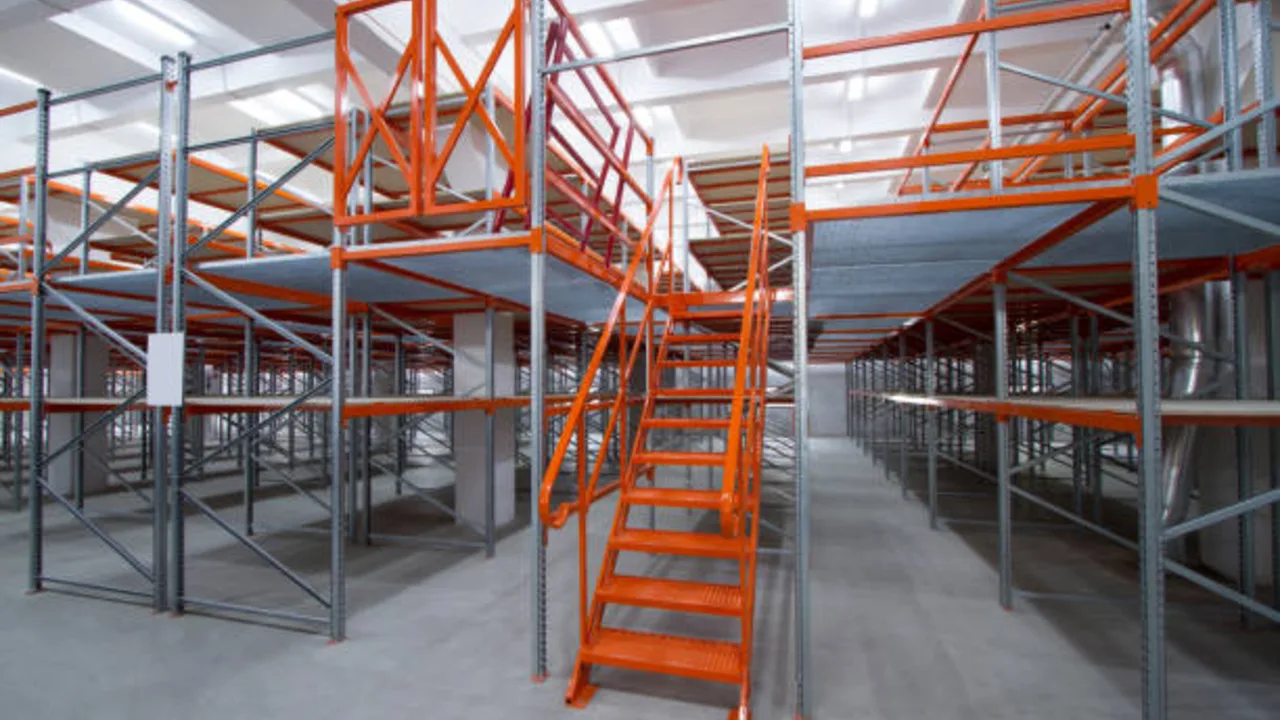
Storage mezzanines are the most widely used solution for vertical storage expansion. They are typically designed for cartons, spare parts, and light pallet storage, often integrated with shelving or racking systems. Because load requirements are predictable, storage mezzanines are highly cost-efficient and easy to scale.
These systems are especially popular in e-commerce fulfillment centers, spare-parts warehouses, and distribution hubs where SKU count grows faster than floor area.
Production and Assembly Mezzanines
In manufacturing environments, mezzanines are often used to support light production lines, assembly stations, or quality inspection areas. Compared to pure storage platforms, these mezzanines require higher live-load capacity and stricter vibration control.
Here, warehouse mezzanine design must carefully balance structural stiffness with ergonomic workflow, ensuring worker safety and process efficiency.
Office and Utility Mezzanines
Some warehouses integrate mezzanine floors for offices, control rooms, or technical spaces. These mezzanines reduce the need for separate office buildings and keep management, supervision, and operations within one envelope.
In a modern prefab steel structure warehouse, office mezzanines can be added without compromising storage density or material flow.
Access Systems and Safety Requirements
No warehouse mezzanine design is complete without addressing access and safety. Mezzanine platforms are elevated work environments, and improper access planning can quickly create operational risk.
Access Systems: Stairs, Lifts, and Material Interfaces
Access systems should be selected based on usage frequency and load type. Personnel access typically uses steel staircases with anti-slip treads, while goods movement may require lifts, conveyors, or vertical reciprocating platforms (VRCs).
Safety, Guardrails, and Fire Compliance
Safety is non-negotiable. Guardrails, toe boards, and handrails must comply with local regulations. Fire protection systems, including sprinklers and emergency exits, must be coordinated with mezzanine layout to ensure full code compliance.
Cost Factors in Warehouse Mezzanine Design
Understanding cost structure helps decision-makers evaluate whether a mezzanine floor is the right solution for their warehouse. Unlike full building expansion, mezzanine investment is modular and scalable.
Main Cost Drivers
The total cost of a mezzanine system depends on several variables, including structural load capacity, floor area, decking type, and access systems.
Table: Key Cost Drivers in Warehouse Mezzanine Design
| Cost Component | Impact Level | Description |
|---|---|---|
| Structural Steel Frame | High | Primary beams, columns, and connections |
| Floor Decking | Medium | Steel deck, grating, or composite panels |
| Load Capacity | High | Higher loads require heavier steel sections |
| Access Systems | Medium | Stairs, lifts, conveyors |
| Safety Systems | Medium | Guardrails, fire protection, signage |
| Installation & Labor | Medium | On-site assembly and coordination |
Compared to building extensions, mezzanines deliver faster ROI due to lower construction time and minimal operational disruption.
Mezzanine Floor vs Warehouse Expansion: A Practical Comparison
Choosing between vertical and horizontal expansion is a strategic decision. The table below highlights why mezzanines are often the preferred option.
Table: Mezzanine Floor vs Building Expansion
| Aspect | Mezzanine Floor | Warehouse Expansion |
|---|---|---|
| Construction Time | Short | Long |
| Land Requirement | None | Additional land needed |
| Capital Cost | Lower | Higher |
| Operational Disruption | Minimal | Significant |
| Flexibility | High | Low |
| Scalability | Modular | Limited once built |
This comparison clearly shows why warehouse mezzanine design has become a preferred strategy for businesses seeking rapid, cost-effective storage expansion.
Mezzanine-Ready Warehouse for Port Logistics Operations
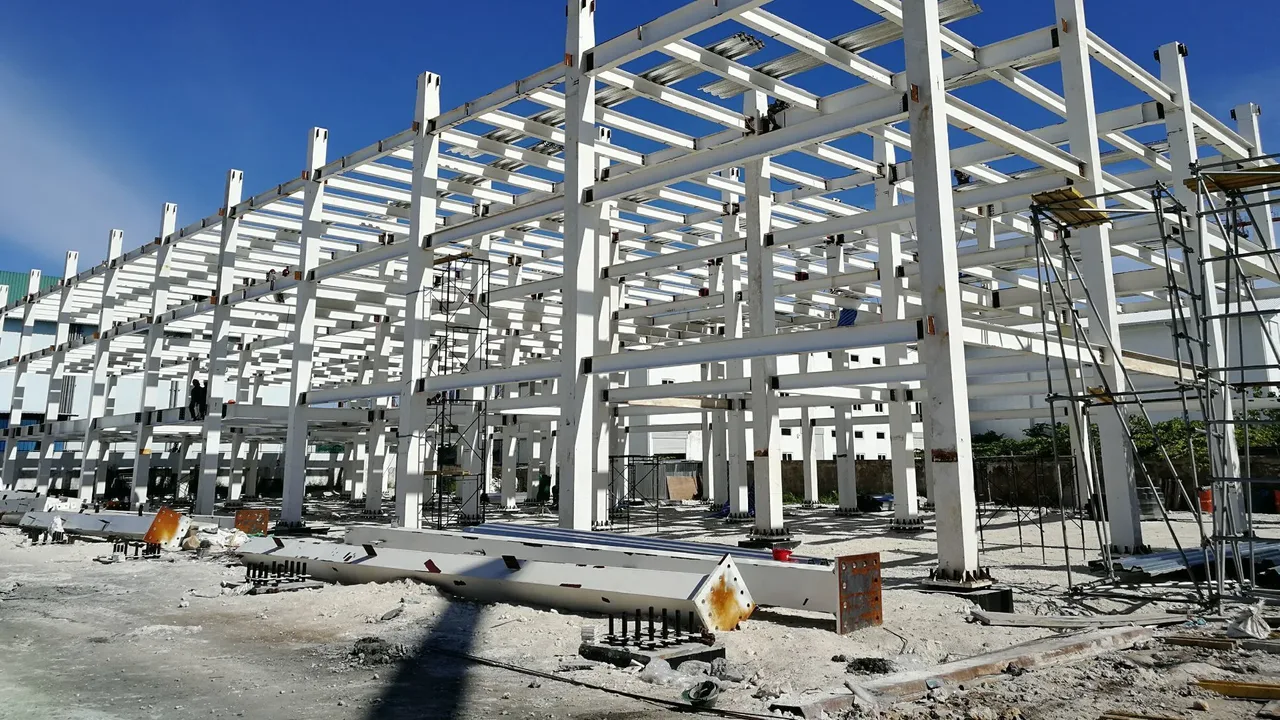
A practical example of how warehouse mezzanine design supports long-term storage expansion can be seen in XTD Steel’s delivery of the Phase II warehouse project for Zhejiang Qiantang River Water Conservancy Construction Engineering Co., Ltd. This facility was developed as part of a port logistics and industrial support zone, where operational flexibility and space efficiency were critical from the outset.
The warehouse was designed using a steel structural system that prioritized clear internal space, high load-bearing capacity, and future adaptability. Although the initial phase focused on ground-level logistics and storage operations, the structural grid, column spacing, and vertical clearance were intentionally engineered to allow mezzanine floor integration at later stages without requiring major structural modification.
In port-related warehousing environments, storage demand rarely remains static. Cargo turnover, equipment staging, spare parts storage, and auxiliary functions tend to increase over time. By adopting a steel warehouse framework compatible with mezzanine installation, the project ensured that vertical expansion could be implemented efficiently as operational needs evolved.
This approach reflects a key principle in modern warehouse planning: mezzanine floors should not be treated as afterthoughts. Instead, they should be anticipated during the initial structural design phase. In this project, the use of a steel structural system aligned with best practices for warehouse mezzanine design, allowing the owner to maximize usable space within the same building footprint while maintaining smooth logistics flow.
The project demonstrates how a prefab steel structure warehouse can serve as a scalable platform for future storage expansion. By reserving structural capacity and headroom from the beginning, XTD Steel enabled the warehouse to adapt to changing operational requirements without disrupting ongoing port activities.
More details on this project can be found here:
Zhejiang Qiantang River Port Project – Phase II Warehouse
Common Mistakes in Warehouse Mezzanine Design
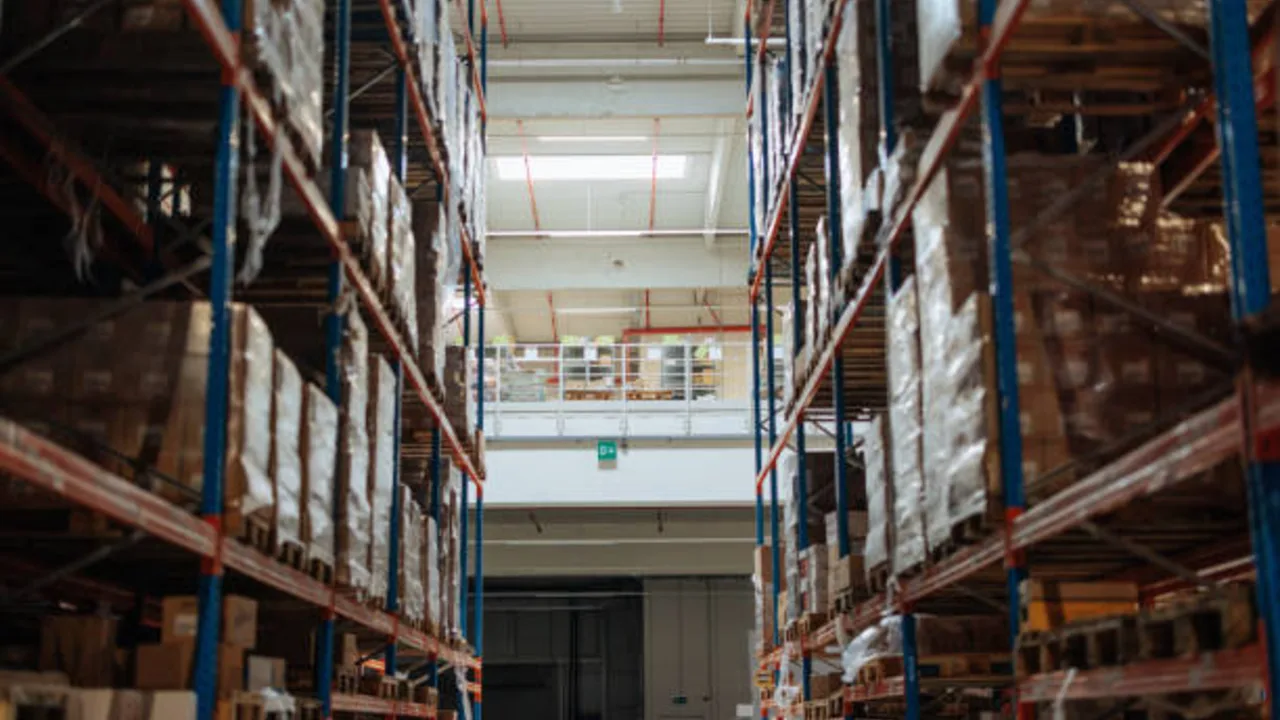
Despite its advantages, mezzanine integration can fail if poorly planned. Common issues include underestimating load requirements, ignoring future expansion, and designing mezzanines that disrupt warehouse flow.
Another frequent mistake is treating mezzanine floors as independent structures rather than integrated systems. In steel warehouses, mezzanines must work in harmony with the main frame, racking layout, and MEP systems.
When to Plan Mezzanine Integration from the Start
The most efficient mezzanine projects are planned during initial warehouse design, not added later as emergency solutions. When mezzanine capacity is anticipated early, engineers can reserve structural capacity, column grids, and headroom for future installation.
This forward-thinking approach is particularly effective in expansion-ready steel warehouses, where mezzanine floors can be phased in as storage demand grows without major redesign.
Conclusion: Mezzanine Floors as a Strategic Warehouse Investment
A well-executed warehouse mezzanine design transforms unused vertical space into a high-performing asset. By enabling vertical storage expansion, mezzanine floors allow warehouses to scale efficiently, reduce capital expenditure, and maintain operational continuity.
For modern steel warehouses, mezzanine integration is no longer optional — it is a strategic design decision that directly influences long-term flexibility, cost control, and operational efficiency.