In large industrial facilities, roof design is never a cosmetic decision—it is a structural and operational one. For steel warehouses with wide spans and long roof lengths, warehouse roof slope design plays a decisive role in drainage performance, structural stability, and long-term maintenance cost. A roof slope that is improperly designed can lead to rainwater ponding, accelerated corrosion, leakage issues, and even structural fatigue over time.
Unlike small buildings where roof pitch variations have limited impact, large steel warehouses amplify every design decision. The larger the roof area, the more critical the control of rainwater flow becomes. Even a small miscalculation in slope can result in thousands of liters of standing water during heavy rainfall. This is why roof slope design must be treated as an integrated engineering component—closely coordinated with drainage systems, roofing materials, and the overall structural framework.
This article explains how warehouse roof slope design works in large steel warehouses, why it matters, and how proper slope planning improves drainage efficiency, durability, and lifecycle cost performance.
What Is Warehouse Roof Slope Design?
Warehouse roof slope design refers to the intentional inclination angle built into the roof system to allow rainwater to flow toward designated drainage points. It is typically expressed as a percentage (%) or ratio, representing the vertical rise over a horizontal distance.
In steel warehouse engineering, roof slope is not selected arbitrarily. It must account for roof span length, roofing system type, rainfall intensity, drainage layout, and structural deflection under load. While architectural drawings may show a clean roof line, engineers evaluate slope behavior under real-world conditions—when the roof is carrying water, wind load, and its own dead weight.
It is also important to distinguish roof slope from roof pitch. Roof pitch is often used in residential or architectural contexts, while warehouse roof slope design focuses on functional performance: ensuring controlled water flow, preventing ponding, and protecting the steel structure beneath.
Why Roof Slope Matters in Large Steel Warehouses
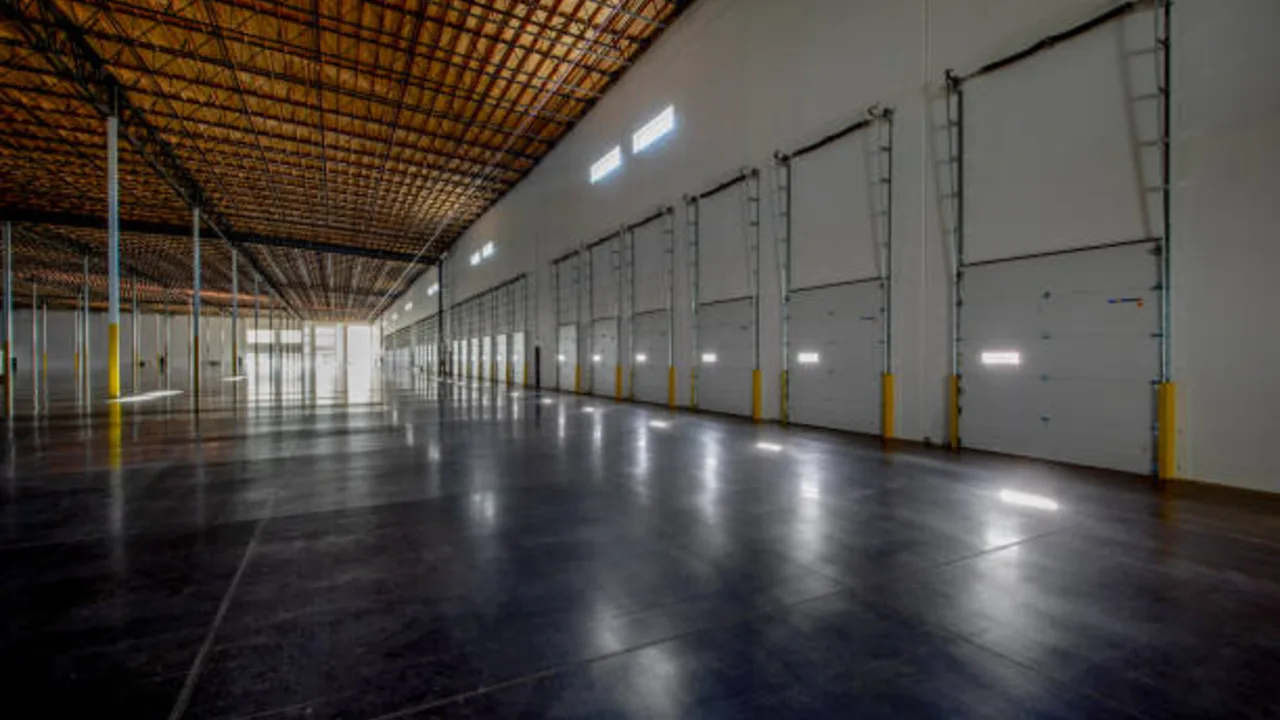
The importance of roof slope increases exponentially as warehouse size grows. A 5,000 m² roof behaves very differently from a 500 m² roof under the same rainfall conditions. For large steel warehouses, roof slope directly affects structural safety, drainage reliability, and maintenance workload.
Structural Performance and Load Distribution
When rainwater cannot drain efficiently, it accumulates on the roof surface. This creates additional live load that was never intended to remain for extended periods. In large-span steel warehouses, even shallow ponding can significantly increase load on purlins, rafters, and main frames.
Proper warehouse roof slope design helps ensure that rainwater flows away before excessive load builds up. This reduces the risk of long-term deflection, joint fatigue, and uneven stress distribution across the steel structure.
Drainage Efficiency and Water Flow Control
Roof slope and drainage performance are inseparable. Slope determines the speed and direction of water flow toward gutters, downpipes, or internal drains. If the slope is too low, water movement slows, increasing the likelihood of ponding, debris accumulation, and blockage.
In high-rainfall regions, poor slope design often leads to recurring leakage issues—not because of material failure, but because water simply stays on the roof too long. A well-calculated slope allows rainwater to evacuate the roof surface efficiently, protecting roofing sheets, insulation layers, and structural connections.
Long-Term Durability and Maintenance Cost
Standing rainwater is one of the most common causes of premature roof deterioration. Over time, moisture accelerates corrosion at overlaps, fasteners, and roof penetrations. In steel warehouses, this degradation does not stay isolated—it spreads into purlins, beams, and bracing members.
By optimizing warehouse roof slope design, owners significantly reduce maintenance frequency, extend roof lifespan, and lower total lifecycle cost. The upfront engineering effort pays for itself through reduced repairs and operational disruptions.
Common Roof Slope Types Used in Steel Warehouses
Large steel warehouses typically use a limited number of roof slope configurations, each suited to different spans, layouts, and drainage strategies. Selecting the right type is the first step toward an effective roof slope design.
Single Slope Roof (Mono-Slope)
Single slope roofs incline in one direction, directing rainwater toward a single drainage line. This configuration is commonly used in smaller warehouses, extensions, or facilities attached to existing buildings.
For large warehouses, mono-slope designs can simplify drainage planning but may result in very long water travel paths. This increases reliance on gutter capacity and requires careful coordination with structural deflection limits.
Double Slope Roof (Gable Roof)
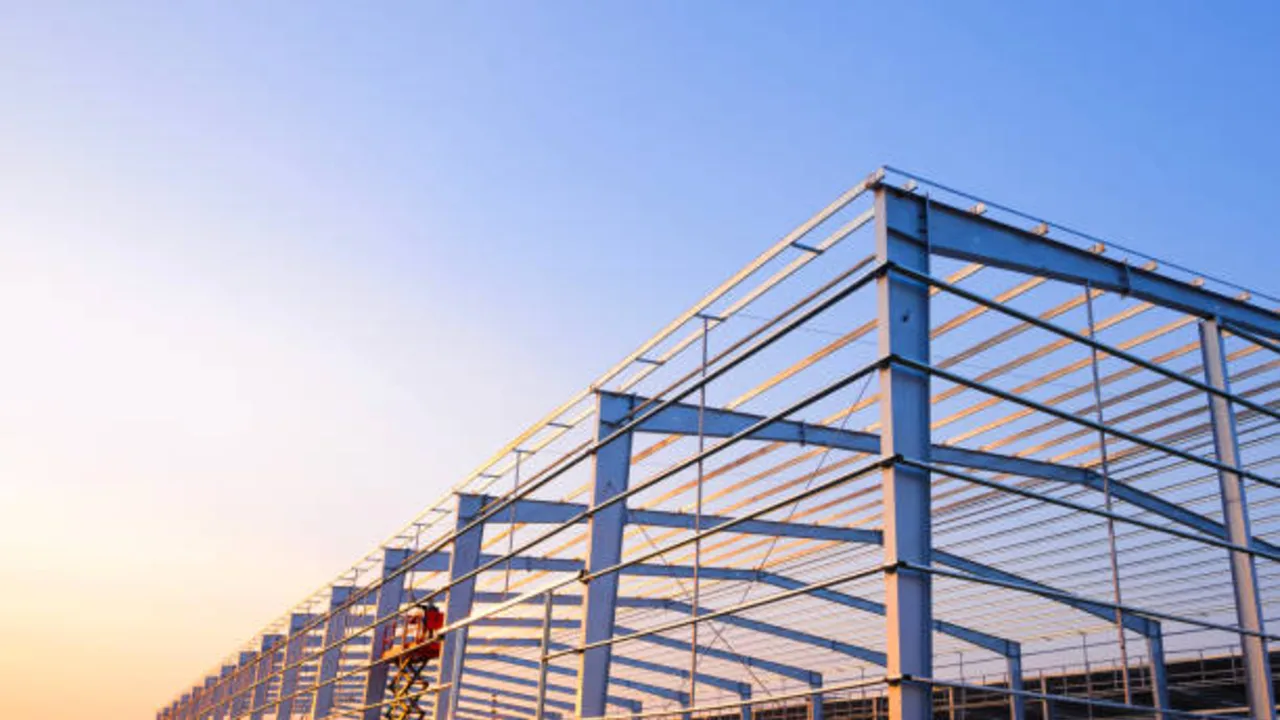
The double slope, or gable roof, is the most widely used configuration in large steel warehouses. The roof slopes down symmetrically from a central ridge, allowing rainwater to drain evenly on both sides.
This design balances structural efficiency and drainage performance, making it ideal for wide-span warehouse steel structure systems. Shorter drainage paths reduce ponding risk and simplify gutter sizing.
Multi-Span and Valley Roof Systems
Ultra-wide warehouses often use multi-span roof systems with internal valleys. While efficient for covering large areas, valley roofs demand precise slope control. Insufficient slope at valley zones is a common source of chronic leakage.
In these systems, warehouse roof slope design must be coordinated closely with internal drainage pipes and overflow provisions to prevent water accumulation during peak rainfall events.
Recommended Roof Slope Ranges for Steel Warehouses
There is no single “correct” roof slope for all warehouses. Instead, engineers work within recommended ranges based on roof size, rainfall conditions, and roofing materials. Selecting a slope within these ranges ensures effective drainage without unnecessary structural cost.
| Warehouse Type | Typical Roof Slope | Design Notes |
|---|---|---|
| Light-duty warehouse | 3–5% | Acceptable in low rainfall regions |
| Large steel warehouse | 5–10% | Balanced drainage and structural efficiency |
| High rainfall region | 7–12% | Improved rainwater evacuation |
| Valley roof system | ≥10% | Reduces ponding risk at valleys |
These ranges provide a practical starting point, but final values should always be validated through detailed drainage and structural calculations.
Drainage Design Considerations in Warehouse Roof Slope Design
In large industrial buildings, roof slope alone does not guarantee effective water management. Warehouse roof slope design must be developed together with a properly engineered drainage system to control rainwater flow under both normal and extreme weather conditions.
As roof area increases, the volume of water that must be evacuated during rainfall grows exponentially. Without sufficient drainage capacity, even a well-sloped roof can experience localized ponding, overflow, or backflow. This makes drainage engineering a core component—not an accessory—of roof slope design.
External vs Internal Drainage Systems
Steel warehouses typically use either external or internal drainage systems, depending on layout, climate, and architectural constraints.
External drainage systems rely on gutters installed along roof edges, directing rainwater into downpipes located outside the building envelope. This approach is simple, cost-effective, and easy to maintain, making it suitable for many standard warehouse applications.
Internal drainage systems collect water at roof valleys or internal low points and channel it through vertical pipes inside the structure. While visually cleaner, internal drainage requires more precise coordination with roof slope, waterproofing, and structural detailing to avoid leakage and blockage risks.
In both cases, the effectiveness of the system depends directly on warehouse roof slope design. Insufficient slope reduces flow velocity, increasing the chance of debris buildup and overflow during heavy rain.
Rainwater Flow and Drainage Capacity Calculation
Drainage design begins with calculating expected rainwater volume based on roof area and rainfall intensity. Engineers typically evaluate:
- Total roof catchment area
- Local rainfall intensity (mm/hour)
- Roof slope and flow direction
- Drain inlet capacity and spacing
A common design mistake is sizing gutters and downpipes only for average rainfall. In large steel warehouses, extreme rainfall events—even if infrequent—can overwhelm undersized systems, leading to water backup onto the roof surface.
To prevent this, warehouse roof slope design must allow water to reach drainage points quickly, while drainage components are sized to handle peak flow conditions.
Overflow and Emergency Drainage Provisions
Well-engineered warehouses include secondary or emergency drainage paths. These systems activate when primary drains become blocked or overloaded.
Examples include:
- Overflow scuppers at roof edges
- Secondary downpipes positioned above primary outlets
- Raised internal drains with emergency bypass routes
Emergency drainage works only when roof slope directs excess water toward these backup outlets. Without proper slope, emergency systems cannot function as intended.
Impact of Climate and Rainfall on Roof Slope Design
Climate conditions significantly influence warehouse roof slope design. A slope that performs adequately in a dry region may fail in tropical or monsoon climates.
In high-rainfall areas, steeper slopes improve water evacuation and reduce exposure time between rainwater and roofing materials. In contrast, arid regions with infrequent rainfall may allow for gentler slopes—but still require minimum slope thresholds to account for occasional storms.
Coastal warehouses face combined challenges: heavy rainfall, high humidity, and airborne salts. In these environments, effective slope design helps minimize standing water that accelerates corrosion of roofing sheets, fasteners, and supporting steel members.
Roof Slope and Roofing Material Selection
Roofing material choice directly affects the minimum slope required for safe performance. Different materials respond differently to water flow, overlap detailing, and joint sealing.
Metal Sheet Roofing
Profiled metal sheets are widely used in steel warehouses due to their durability and cost efficiency. However, they require sufficient slope to prevent water from flowing back at lap joints.
For large warehouses, low slopes combined with long sheet lengths increase leakage risk. Proper warehouse roof slope design ensures water flows over, not into, roof overlaps.
Sandwich Panel Roofing
Insulated sandwich panels provide thermal performance and clean interior finishes. While they can tolerate slightly lower slopes than single-skin sheets, inadequate slope still leads to long-term moisture issues at joints and seals.
Standing Seam Roofing Systems
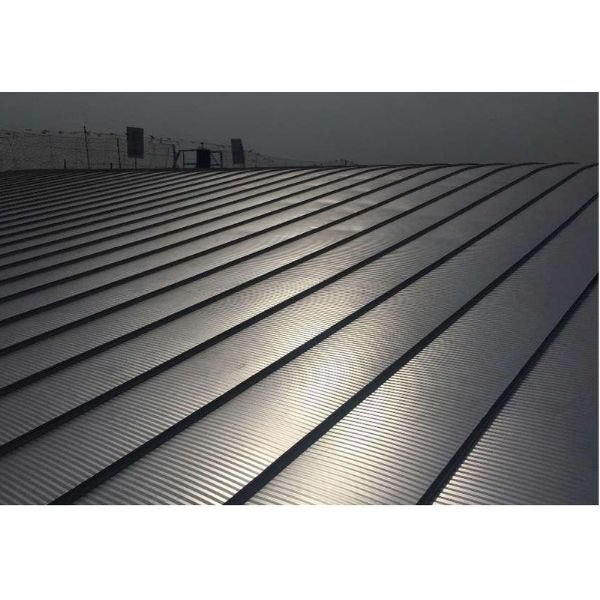
Standing seam systems offer superior waterproofing and allow for lower slopes compared to traditional metal sheets. However, they come at higher material and installation cost, making slope optimization even more important for cost control.
Structural Coordination: Roof Slope, Purlins, and Main Frames
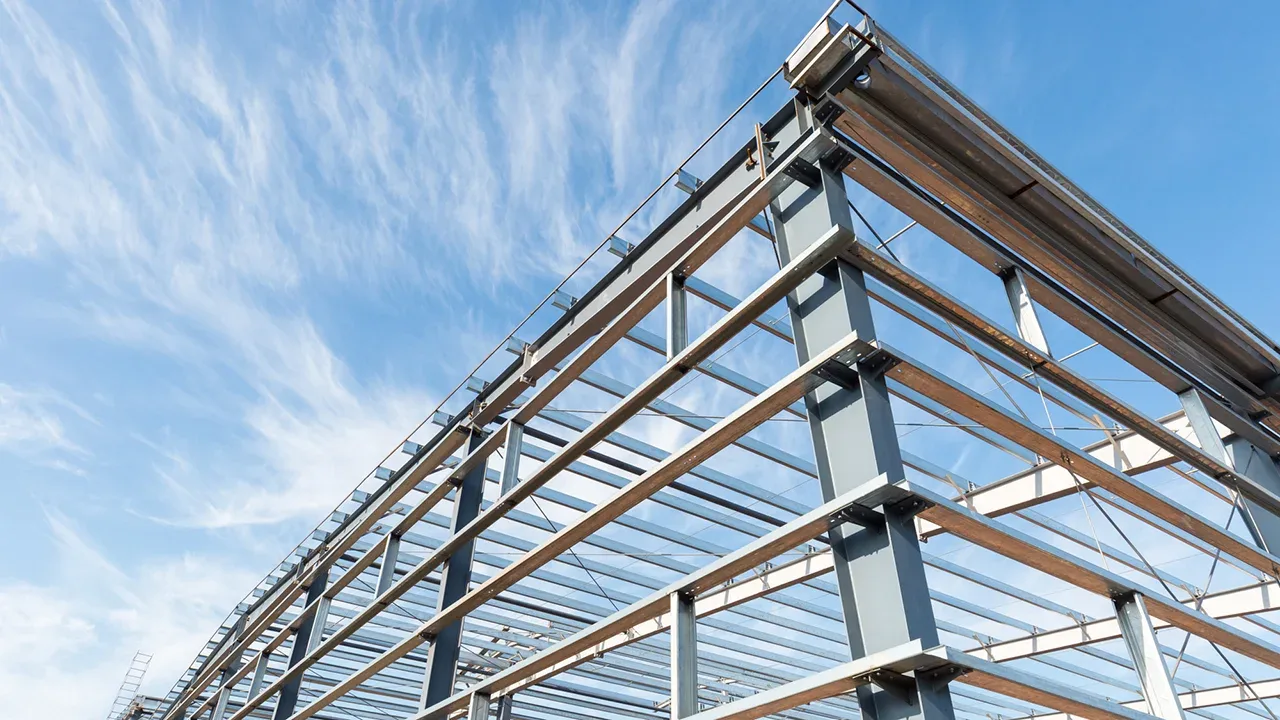
Roof slope cannot be designed in isolation. Changes in slope affect purlin spacing, rafter depth, column height, and overall steel tonnage.
Steeper slopes often improve drainage but may increase steel weight due to longer columns or deeper frames. Conversely, overly shallow slopes may reduce steel tonnage but increase long-term maintenance and drainage costs.
Effective warehouse roof slope design balances these trade-offs through integrated structural optimization, rather than focusing on slope alone.
Common Mistakes in Warehouse Roof Slope Design
Many roof-related problems in steel warehouses originate from early-stage design shortcuts. Common mistakes include:
- Using minimum slope values without considering roof deflection
- Ignoring valley drainage complexity in multi-span warehouses
- Undersizing gutters and downpipes
- Failing to account for future warehouse expansion
Once a warehouse is operational, correcting these issues is costly and disruptive. This is why slope and drainage decisions must be validated during the initial design phase.
Roof Slope Design for Expandable Steel Warehouses
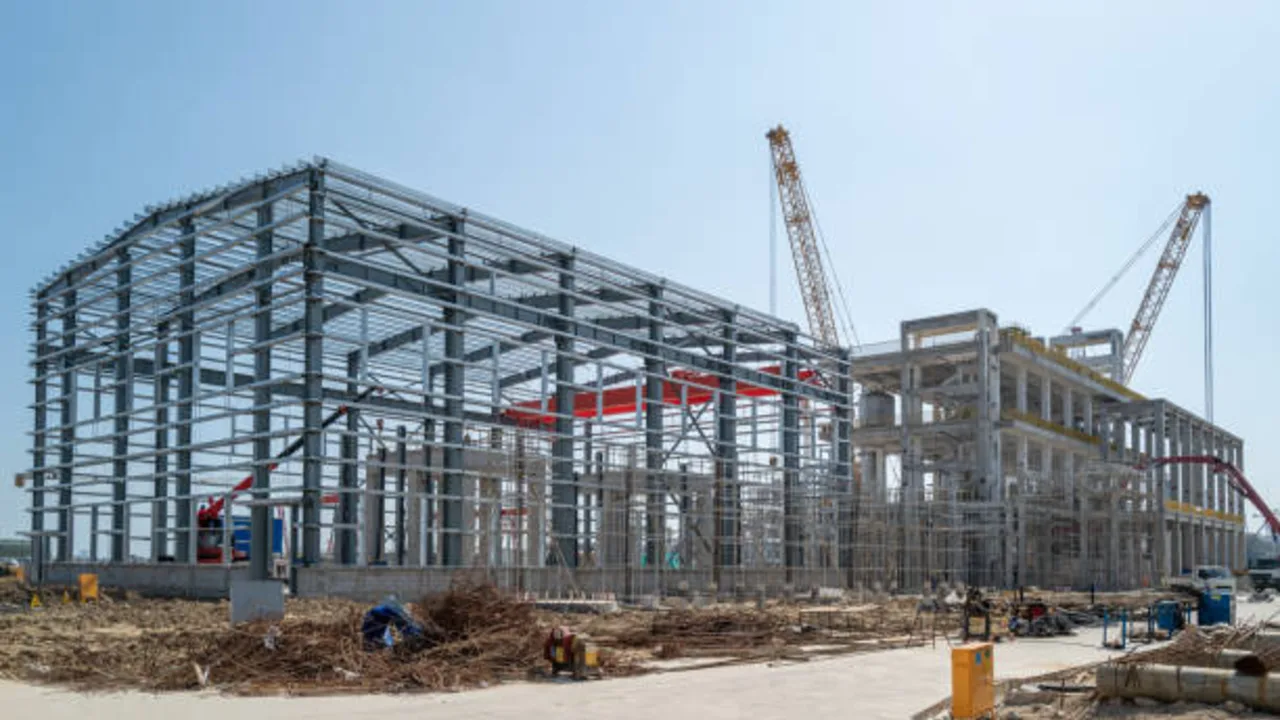
Many industrial warehouses are designed for phased expansion. In such cases, warehouse roof slope design must remain consistent across future extensions.
Mismatched slopes between existing and new roof sections often create internal drainage conflicts, leading to ponding at connection zones. A forward-looking slope strategy ensures seamless expansion without reworking the original drainage system.
How Roof Slope Affects Construction and Lifecycle Cost
Roof slope has a direct influence on both construction cost and long-term operating expenses. While steeper slopes may slightly increase initial steel quantities, they often reduce drainage complexity and maintenance requirements.
| Design Factor | Low Roof Slope | Optimized Roof Slope |
|---|---|---|
| Initial steel cost | Lower | Slightly higher |
| Drainage performance | Higher risk | More reliable |
| Maintenance frequency | High | Low |
| Lifecycle cost | Higher | Lower |
From a lifecycle perspective, optimized warehouse roof slope design consistently delivers better value than slope decisions driven solely by upfront cost savings.
Roof Slope Design in a Steel Warehouse Project in Paraguay
A practical illustration of effective warehouse roof slope design can be seen in the steel structure warehouse project in Paraguay. The project was developed for an industrial logistics application in a region characterized by seasonal heavy rainfall and high humidity—conditions that place significant demands on roof drainage performance.
From the early design stage, roof slope planning was treated as a core engineering parameter rather than a default value. The warehouse adopted a double-slope (gable) roof configuration, allowing rainwater to discharge symmetrically to both sides of the building. This reduced drainage path length and minimized the risk of localized ponding across the wide roof span.
Special attention was given to coordinating roof slope with gutter capacity and downpipe spacing. Instead of relying on minimum slope thresholds, the design team accounted for real-world factors such as steel frame deflection under load and peak rainfall intensity during storm events. This ensured that water flow remained uninterrupted even when the roof structure experienced temporary deformation under live loads.
The result was a roof system that has demonstrated stable drainage performance in operation, with no reported ponding or leakage issues. By aligning warehouse roof slope design with structural behavior and local climate conditions, the project achieved lower maintenance requirements and improved long-term durability—validating the importance of slope optimization in large steel warehouse projects.
This Paraguay case highlights a key takeaway: roof slope decisions made during the design phase directly influence operational reliability, especially in export-oriented steel warehouse projects exposed to demanding environmental conditions.
Conclusion: Designing Roof Slopes for Performance and Longevity
In large steel warehouses, roof slope is not a secondary detail—it is a performance-critical design parameter. Effective warehouse roof slope design ensures controlled rainwater flow, reliable drainage, reduced structural stress, and lower long-term maintenance costs.
By integrating slope planning with structural design, roofing material selection, and drainage engineering, warehouse owners and developers can achieve buildings that perform reliably for decades. In large-scale warehouse steel structure projects, getting the roof slope right from the start is one of the most cost-effective engineering decisions available.