In large industrial facilities, ventilation is never a secondary consideration—it is a core performance system. For modern logistics hubs, manufacturing plants, and distribution centers, warehouse ventilation design directly affects worker comfort, equipment reliability, inventory protection, and long-term structural durability. As warehouse buildings grow larger, taller, and more open, managing air movement becomes increasingly complex.
Steel warehouses, in particular, present a unique set of challenges. Their clear-span layouts, expansive roof areas, and high internal volumes create environments where heat, moisture, and stagnant air can accumulate rapidly if ventilation is not carefully engineered. Poor ventilation does not just make the space uncomfortable—it accelerates corrosion, increases maintenance costs, and reduces operational efficiency.
This article explores the real-world challenges of warehouse ventilation design in large steel warehouses, focusing on how airflow behaves in these spaces, why conventional solutions often fall short, and what engineers must consider during early-stage design.
Why Warehouse Ventilation Design Is Critical in Steel Warehouses
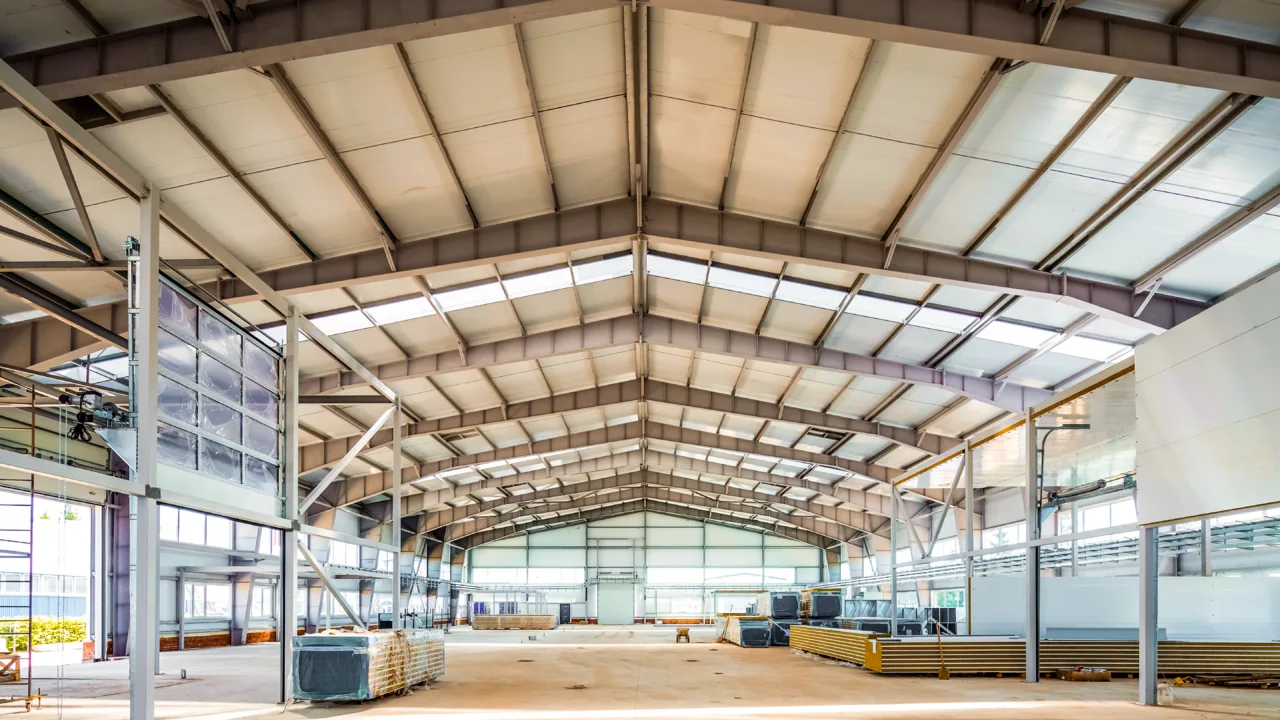
Large steel warehouses behave very differently from low-rise or compartmentalized buildings. The combination of long spans, high roof elevations, and minimal internal obstructions creates vast air volumes that are difficult to control. Heat generated by solar radiation, machinery, lighting, and vehicle movement naturally rises and becomes trapped beneath the roof, especially in facilities with limited exhaust pathways.
Effective warehouse ventilation design ensures that this heat does not stagnate. When hot air remains trapped at roof level, it increases internal temperature gradients, placing stress on roof panels, insulation systems, and steel connections. Over time, this can shorten the service life of the building envelope and raise cooling or ventilation costs.
Ventilation also plays a key role in moisture control. In humid climates or warehouses storing moisture-sensitive goods, insufficient air exchange can lead to condensation on steel surfaces. This not only damages stored products but also promotes corrosion, undermining the structural integrity of the building. In this sense, ventilation is closely tied to the long-term performance of any warehouse steel structure.
How Airflow Behaves Inside Large Steel Warehouses
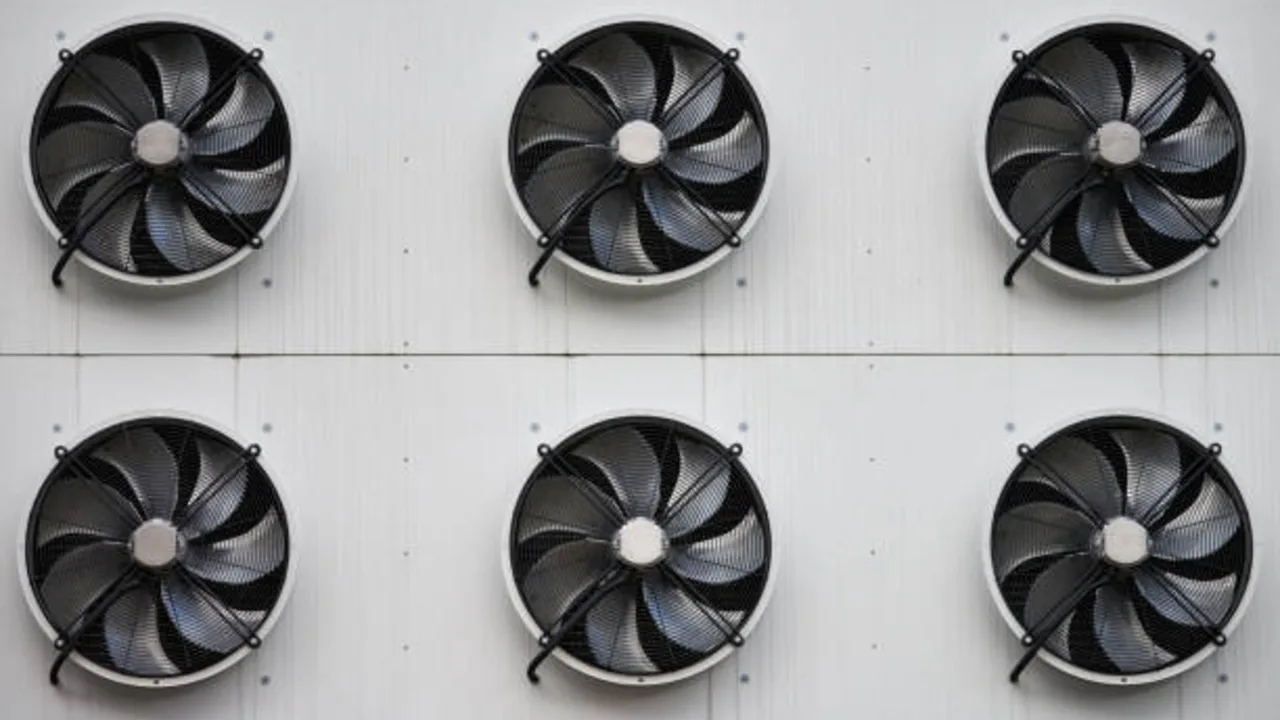
Understanding airflow behavior is fundamental to solving ventilation challenges. In large steel warehouses, air does not circulate evenly by default. Instead, it follows predictable but often misunderstood patterns driven by temperature differences, pressure zones, and building geometry.
Warm air naturally rises toward the roof, creating a phenomenon known as thermal stratification. In high-bay warehouses, this can result in significant temperature differences between floor level and roof level. Workers operate in warm, stagnant air below, while excessive heat accumulates above, unused and unmanaged.
Without proper ventilation pathways, this stratified air remains trapped. Simply adding wall openings or roof vents without considering pressure balance often leads to minimal improvement. True airflow requires both intake and exhaust zones, strategically positioned to encourage continuous air movement rather than isolated air escape.
Another challenge lies in airflow velocity. In very large spaces, air movement can be so slow that contaminants, fumes, or humidity linger far longer than expected. This is especially problematic in warehouses that support light manufacturing, packaging, or frequent vehicle traffic.
Scale and Volume: The Hidden Challenge of Large Warehouses
As warehouse footprints expand beyond tens of thousands of square meters, the sheer volume of air becomes a design obstacle. Traditional ventilation rules of thumb—often developed for smaller industrial buildings—no longer apply. What works for a compact warehouse may be entirely ineffective in a large steel facility.
In oversized buildings, the distance between air inlets and exhaust points can be significant. This reduces pressure differentials and weakens natural airflow forces. Even when large openings are provided, air may short-circuit near the perimeter while central zones remain poorly ventilated.
Effective warehouse ventilation design must therefore consider zoning strategies. Rather than treating the warehouse as a single air volume, engineers often need to design airflow paths that serve specific functional areas, such as loading zones, storage aisles, or processing sections. Without this level of planning, ventilation systems become inefficient and costly.
Climate as a Complicating Factor
Climate conditions amplify ventilation challenges in steel warehouses. In hot and humid regions, ventilation must balance heat removal with moisture control. Excessive intake of humid air without proper exhaust or air movement can worsen condensation problems instead of solving them.
In arid or desert climates, ventilation must manage dust infiltration while still maintaining sufficient air exchange. Large openings may improve airflow but introduce operational issues related to cleanliness and equipment wear.
Cold climates present a different challenge. Ventilation is still necessary to remove internal heat and contaminants, but uncontrolled airflow can lead to excessive heat loss and higher energy consumption. This makes climate-responsive warehouse ventilation design essential, rather than relying on generic solutions.
Why Ventilation Cannot Be an Afterthought
One of the most common mistakes in steel warehouse projects is treating ventilation as an add-on rather than a core design element. When ventilation is addressed only after the structural layout is finalized, options become limited and expensive.
Roof geometry, ridge height, column spacing, and wall panel configuration all influence how air moves through a warehouse. If these elements are not coordinated early, even the most advanced ventilation equipment may underperform.
Natural Ventilation vs Mechanical Ventilation in Large Steel Warehouses
Choosing the right ventilation strategy is one of the most consequential decisions in warehouse ventilation design. In large steel warehouses, both natural and mechanical systems are widely used, but their effectiveness depends heavily on building geometry, climate, and operational intensity.
Natural ventilation relies on pressure differences created by wind and temperature gradients. Mechanical ventilation, on the other hand, uses powered equipment to actively move air. In practice, many high-performing warehouses adopt a hybrid approach, combining both systems to balance performance and operating cost.
Natural Ventilation Systems
Natural ventilation is often attractive for steel warehouses because of its low operating cost and simplicity. When designed correctly, it can remove heat and stale air without relying on energy-intensive equipment.
Common natural ventilation elements include ridge ventilators, wall louvers, and strategically placed openings that promote cross ventilation. However, natural systems are highly dependent on external conditions. In low-wind environments or densely built industrial zones, their performance can be inconsistent.
Inadequate consideration of airflow paths can lead to short-circuiting, where air exits the building before reaching critical interior zones. This is a frequent issue in large clear-span warehouses.
Mechanical Ventilation Systems
Mechanical ventilation offers greater control and predictability. Industrial exhaust fans, supply–exhaust systems, and high-volume low-speed (HVLS) fans are commonly deployed in large steel warehouses.
These systems are particularly effective in facilities with high internal heat loads, vehicle traffic, or process-related emissions. However, mechanical systems increase energy consumption and require regular maintenance, which must be factored into lifecycle cost analysis.
Table: Natural vs Mechanical Ventilation Comparison
| Aspect | Natural Ventilation | Mechanical Ventilation |
|---|---|---|
| Energy Consumption | Very low | Medium to high |
| Control Over Airflow | Limited, climate-dependent | High and adjustable |
| Initial Cost | Low | Medium to high |
| Maintenance | Minimal | Regular maintenance required |
| Suitability for Large Warehouses | Moderate (climate-sensitive) | High |
Roof and Wall Design Impact on Warehouse Ventilation
The effectiveness of warehouse ventilation design is strongly influenced by roof and wall configuration. In steel warehouses, the roof is often the primary exhaust zone, while walls serve as intake or secondary exhaust paths.
Roof slope, ridge height, and vent placement determine how efficiently hot air can escape. A shallow roof with poorly positioned vents may trap heat, whereas a properly designed ridge vent system can significantly enhance thermal performance without mechanical assistance.
Wall panels and louvers must also be coordinated with internal airflow paths. Random placement can disrupt pressure balance, reducing overall ventilation efficiency.
Table: Roof and Wall Elements Affecting Airflow
| Building Element | Ventilation Role | Design Consideration |
|---|---|---|
| Roof Ridge | Primary heat exhaust | Continuous ridge vents improve performance |
| Roof Slope | Heat movement direction | Steeper slopes enhance thermal rise |
| Wall Louvers | Fresh air intake | Must align with prevailing wind |
| Wall Height | Pressure balance | Taller walls increase stack effect |
Ventilation Design for Different Warehouse Functions
Not all warehouses use ventilation in the same way. Functional requirements strongly influence warehouse ventilation design, especially in large steel structures.
Logistics and Distribution Warehouses
These facilities prioritize heat removal and general air circulation. Large door openings, vehicle movement, and high turnover rates generate heat that must be continuously managed.
Ventilation strategies often focus on roof exhaust combined with controlled intake at loading zones, ensuring consistent airflow without excessive energy use.
Manufacturing and Processing Warehouses
Warehouses that support production processes face additional challenges. Localized heat sources, fumes, and dust require targeted ventilation solutions.
In these cases, mechanical systems are often integrated with natural ventilation to maintain air quality while controlling temperature.
Storage Warehouses
Storage-focused warehouses emphasize stability rather than aggressive air movement. Ventilation must prevent condensation and maintain uniform conditions to protect goods and the underlying warehouse steel structure.
Common Mistakes in Warehouse Ventilation Design
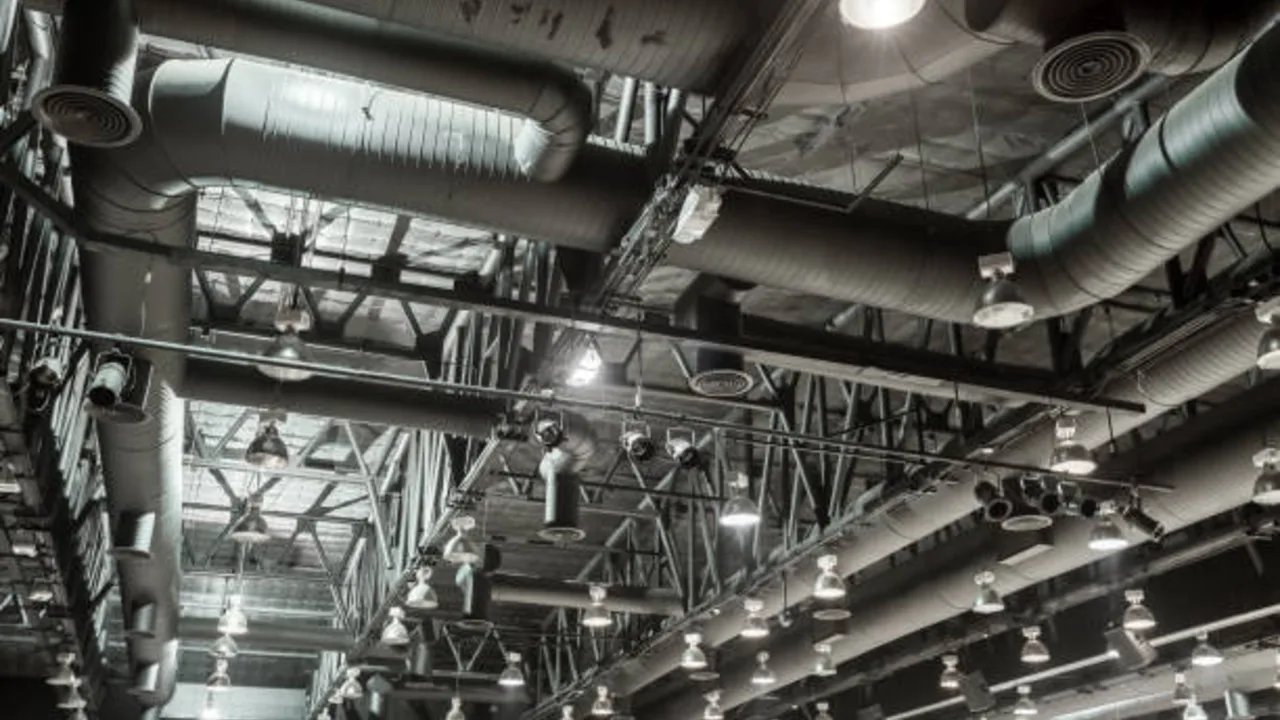
Despite its importance, ventilation is frequently underestimated during warehouse planning. A common mistake is relying solely on natural ventilation without verifying its effectiveness through airflow modeling.
Another frequent issue is failing to account for future expansion. As warehouses grow or operational intensity increases, ventilation systems that were once adequate can become insufficient.
Finally, poor coordination between structural and MEP design often leads to compromised performance. Vent openings placed without regard to beam layout or roof geometry can reduce structural efficiency while delivering minimal ventilation benefit.
Integrating Ventilation with Steel Warehouse Structure
High-performing warehouse ventilation design cannot be separated from structural planning. Ventilators, louvers, and fans must be integrated into the steel frame without weakening load paths or increasing maintenance risk.
Early coordination between structural engineers and ventilation designers ensures that airflow solutions complement the geometry of the building rather than working against it. This integrated approach reduces retrofitting costs and improves long-term operational reliability.
When ventilation strategy is aligned with the design of the warehouse steel structure, large steel warehouses achieve better thermal comfort, lower operating costs, and extended service life.
Cost Considerations in Warehouse Ventilation Design
Cost evaluation is a decisive factor in any large industrial project, and warehouse ventilation design is no exception. While ventilation systems may appear secondary compared to structural steel or foundations, their long-term financial impact can be significant.
Initial capital expenditure (CAPEX) varies depending on whether the design relies primarily on natural ventilation, mechanical systems, or a hybrid solution. Natural ventilation components such as ridge vents and wall louvers generally involve lower upfront costs, but their performance is closely tied to climate and building orientation.
Mechanical ventilation systems typically require higher initial investment due to equipment, electrical infrastructure, and control systems. However, in warehouses with high heat loads or continuous operations, mechanical systems often deliver better consistency and operational reliability.
Operating expenditure (OPEX) must also be considered. Poorly planned warehouse ventilation design can lead to excessive energy consumption, frequent maintenance, and premature equipment failure. Over time, these hidden costs can exceed the initial savings of a low-cost ventilation solution.
Table: Cost Impact Factors in Warehouse Ventilation Design
| Cost Factor | Impact Level | Description |
|---|---|---|
| Ventilation System Type | High | Natural vs mechanical systems significantly affect CAPEX and OPEX |
| Building Size & Height | High | Larger volumes require greater airflow capacity |
| Climate Conditions | Medium–High | Hot or humid climates increase ventilation demand |
| Energy Consumption | Medium | Mechanical systems add ongoing operating costs |
| Maintenance Requirements | Medium | Fans, motors, and controls require periodic servicing |
Ventilation Design Optimization Strategies
Optimizing warehouse ventilation design is not about selecting a single “best” system, but about combining strategies that suit the building’s scale, function, and environment.
One effective approach is hybrid ventilation. By combining natural exhaust paths with mechanical assistance, warehouses can achieve reliable airflow while minimizing energy use. Mechanical systems can operate only when natural airflow is insufficient, reducing operating costs.
Another increasingly common strategy is airflow modeling using computational fluid dynamics (CFD). CFD analysis allows engineers to visualize airflow patterns, identify stagnant zones, and adjust vent placement before construction begins. This reduces costly post-construction modifications.
Designing for future expansion is also critical. Large steel warehouses are often expanded over time, and ventilation systems should be modular and scalable. A rigid system designed only for current conditions may become inadequate as operations grow.
Finally, optimization requires early coordination between structural and MEP teams. When ventilation elements are integrated into the structural grid of the warehouse steel structure, airflow paths become more efficient and construction complexity is reduced.
Return on Investment of Proper Warehouse Ventilation Design
Although ventilation improvements may not generate direct revenue, their return on investment is realized through operational efficiency, reduced maintenance, and extended building lifespan.
Effective warehouse ventilation design lowers internal temperatures, improving worker productivity and reducing heat-related downtime. It also protects stored goods and equipment from moisture damage, minimizing losses and insurance risks.
From a structural perspective, controlled airflow reduces condensation and corrosion on steel components, extending the service life of the building. Over decades of operation, these benefits translate into substantial cost savings.
Conclusion – Solving Ventilation Challenges in Large Steel Warehouses
Ventilation challenges in large steel warehouses cannot be solved through generic solutions or late-stage adjustments. The scale, geometry, and operational demands of these buildings require ventilation to be treated as a core design discipline.
Successful warehouse ventilation design begins with understanding airflow behavior, climate influences, and functional requirements. By integrating ventilation strategy with structural planning from the earliest design stages, warehouse owners can achieve better comfort, lower operating costs, and improved long-term performance.
As warehouse buildings continue to grow in size and complexity, ventilation will remain a critical factor in operational success. Thoughtful design, supported by engineering analysis and coordinated execution, ensures that large steel warehouses perform efficiently today and remain resilient for decades to come.