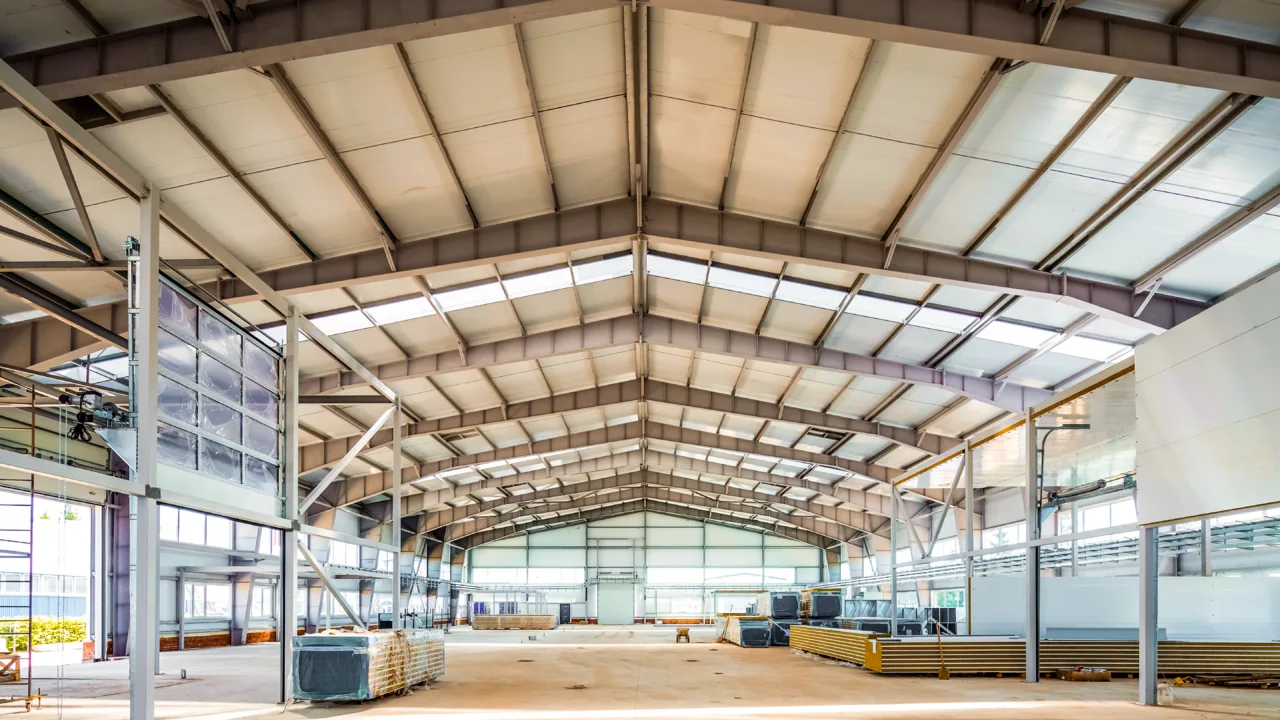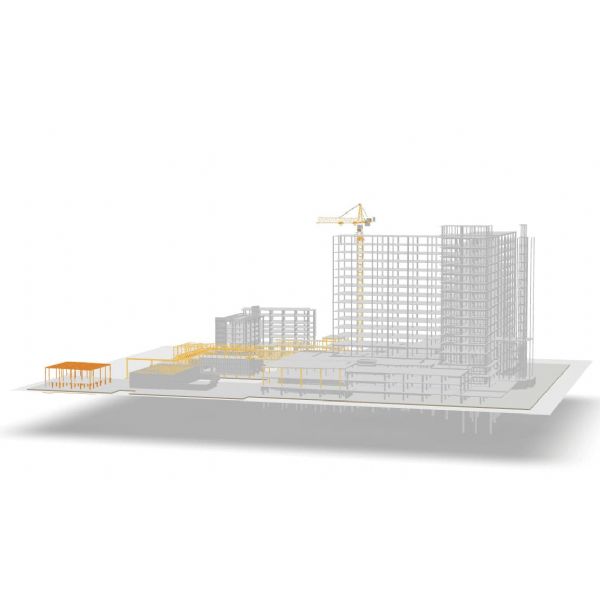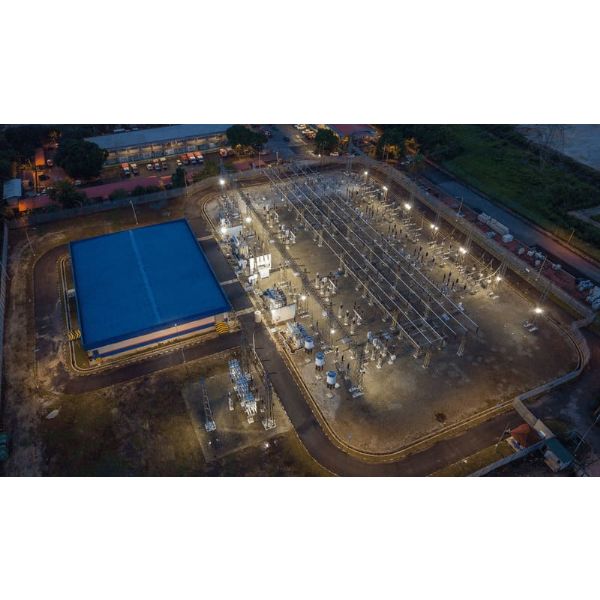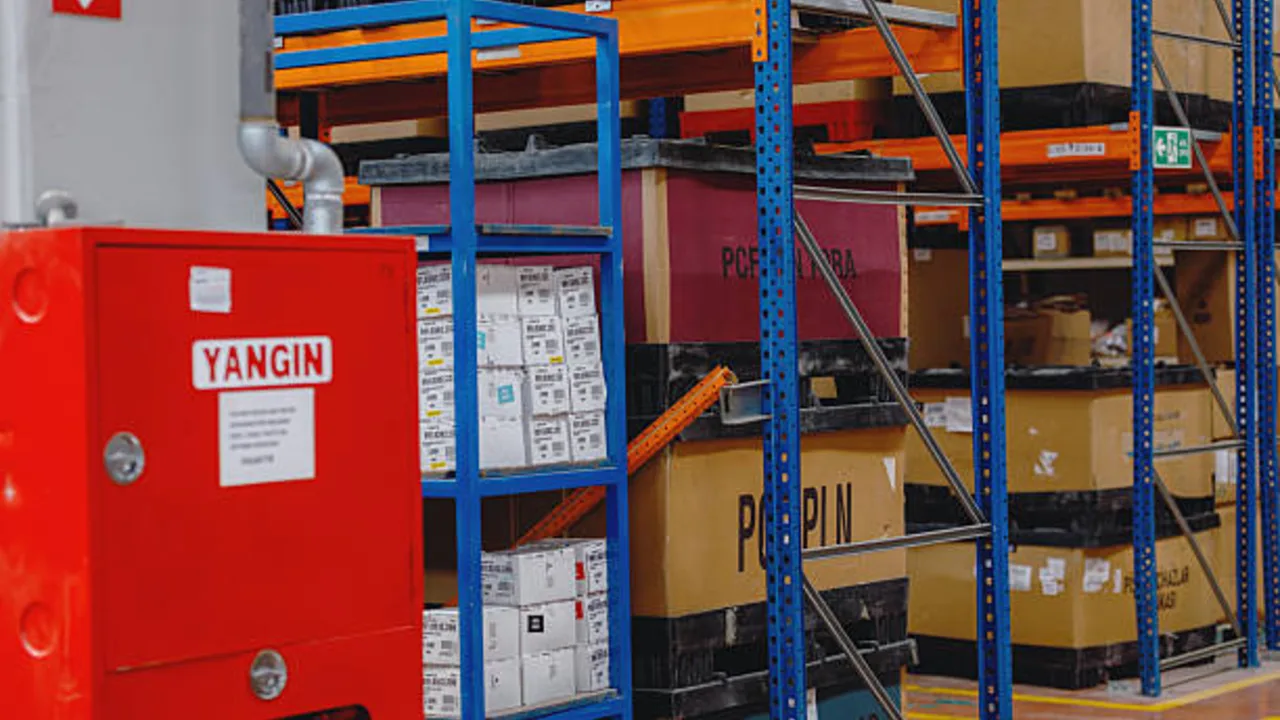
While warehouse fire compartmentation is a passive fire protection strategy, it must work in coordination with active fire protection systems to achieve maximum effectiveness. Passive systems contain fire. Active systems suppress or extinguish it. A high-performance steel warehouse requires both.
Active fire protection systems typically include:
-
- Automatic sprinkler systems
- Foam suppression systems for high-risk storage
- Smoke detection and alarm systems
- Mechanical smoke extraction systems
However, even the most advanced sprinkler system cannot guarantee full protection in a large, open-span building without defined fire zones. When a warehouse lacks proper warehouse fire compartmentation, sprinkler systems may be overwhelmed by excessive fire load, especially in high-bay racking environments.
Strategically designed fire zones reduce the area that sprinklers must control. By limiting the spread of fire horizontally and vertically, compartmentation enhances the effectiveness of active suppression systems. This layered protection model significantly improves life safety, structural protection, and asset preservation.
In modern industrial design, redundancy is essential. Relying solely on active systems introduces risk. Integrating warehouse fire compartmentation into the building’s structural concept ensures that even in cases of sprinkler malfunction or delayed response, fire remains confined within a controlled zone.
Cost Implications of Warehouse Fire Compartmentation

One common misconception is that warehouse fire compartmentation significantly increases construction costs without tangible financial return. In reality, while there is an initial investment, long-term economic benefits often outweigh upfront expenses.
Primary cost factors include:
- Fire-rated wall systems
- Fireproofing materials for steel members
- Fire shutters and compartment doors
- Design coordination and engineering consultation
However, facilities with well-designed fire zones typically benefit from:
- Lower insurance premiums
- Reduced reconstruction risk after fire incidents
- Minimized business interruption
- Improved regulatory compliance
Cost Strategy Comparison
| Strategy | Initial Investment | Long-Term Risk Exposure | Operational Impact |
|---|---|---|---|
| No compartmentation | Low | Very High | Severe potential downtime |
| Basic fire zones | Moderate | Reduced | Improved containment |
| Advanced fire-rated partitions & protected steel | Higher | Minimal | Maximum resilience & asset protection |
When evaluating warehouse fire compartmentation, decision-makers should assess total lifecycle cost rather than initial capital expenditure alone.
Common Design Mistakes in Warehouse Fire Compartmentation

Despite its importance, warehouse fire compartmentation is often improperly implemented due to coordination gaps between architects, structural engineers, and fire consultants.
Oversized Fire Zones
Creating excessively large fire zones defeats the purpose of compartmentation. If a fire zone exceeds allowable area limits, fire can spread too widely before containment measures activate.
Improper Door Sealing
Fire-rated partitions are only effective if openings are properly protected. Non-rated doors, poor sealing, or unprotected penetrations compromise the entire warehouse fire compartmentation strategy.
Ignoring Roof Void Areas
In steel warehouses, fire can travel rapidly through roof cavities or unsealed ceiling spaces. Effective compartmentation must extend fully to the roof deck.
Lack of Structural Fire Protection
Dividing a warehouse into fire zones without protecting the steel frame itself is insufficient. Structural fire resistance ratings must align with compartment boundaries.
Poor MEP Coordination
HVAC ducts, cable trays, and utility penetrations frequently breach compartment walls. Without proper fire-stopping systems, fire zone integrity is compromised.
Case Scenario – Fire Compartmentation in a 20,000 m² Steel Warehouse
Consider a 20,000 m² high-bay steel warehouse designed for logistics distribution. The facility features 12-meter clear height racking systems and automated conveyor lines. Without warehouse fire compartmentation, a single ignition event could impact the entire building footprint.
To mitigate risk, the warehouse was divided into four distinct fire zones, each approximately 5,000 m². Two-hour fire-rated partition walls were installed between zones, extending from floor slab to roof deck.
Additional measures included:
- Intumescent coatings applied to primary steel frames
- Fire-rated shutters at conveyor openings
- Dedicated smoke vents in each fire zone
- Protected electrical and utility penetrations
This warehouse fire compartmentation strategy ensured that even in worst-case scenarios, fire would remain confined within a single zone, protecting 75% of stored inventory and maintaining structural stability long enough for emergency response.
Final Recommendations for Industrial Developers
For industrial developers planning new facilities, steel structure warehouse building fire compartmentation should be integrated at the earliest design stage. Waiting until later phases often leads to costly redesigns and compromised safety solutions.
Key recommendations include:
- Define fire zone boundaries during conceptual layout planning
- Coordinate structural fire resistance ratings with compartment design
- Engage fire engineering consultants early
- Evaluate long-term risk rather than short-term cost savings
When integrated correctly, warehouse fire compartmentation enhances resilience without limiting operational flexibility. It transforms a large open steel structure into a controlled, risk-managed environment.
FAQ – Warehouse Fire Compartmentation
What is warehouse fire compartmentation?
It is the strategic division of a warehouse into fire-resistant zones to contain fire spread and protect structural integrity.
How large should a fire zone be?
Fire zone size depends on local building codes, storage classification, and sprinkler system design.
Does steel require fire protection?
Yes. Steel loses strength at high temperatures and typically requires fireproofing in compartmentalized structures.
Is fire compartmentation required by code?
Most building codes establish maximum fire area limits, making compartmentation necessary in large warehouses.
Can fire zones be modified later?
Yes, but modifications must maintain fire-rated integrity and comply with regulatory requirements.
As warehouse footprints continue to expand globally, warehouse fire compartmentation remains one of the most effective strategies for controlling fire risk in steel industrial buildings. By combining intelligent fire zone planning, structural fire protection, and coordinated engineering, developers can achieve safety, compliance, and long-term operational security.