Effective warehouse site drainage is one of the most overlooked yet critical components in industrial construction. While structural steel frames, roofing systems, and floor slabs often receive primary attention, poor drainage design can compromise the entire facility over time. Water accumulation around foundations leads to soil instability, erosion, slab cracking, and long-term settlement issues that significantly reduce a building’s service life.
Modern industrial developments—especially large-scale logistics hubs and manufacturing facilities—require carefully engineered drainage systems that manage both rainfall and surface runoff. Without proper grading, channeling, and stormwater planning, even a structurally sound building can experience operational disruptions and structural degradation.
For any steel structure warehouse, drainage must be integrated into the earliest stages of site planning. This ensures foundation protection, safe truck circulation, and long-term structural reliability. In this guide, we examine the engineering principles, soil considerations, system components, and cost implications involved in designing efficient warehouse site drainage systems.
Why Warehouse Site Drainage Is Critical for Steel Warehouse Projects
Protecting Structural Foundations
The primary function of warehouse site drainage is to protect the foundation system. Steel warehouse buildings typically rely on reinforced concrete footings, grade beams, and slab-on-grade systems. When water accumulates near these elements, it reduces soil bearing capacity and increases hydrostatic pressure against foundation walls.
Excess moisture softens subgrade soils, particularly clay-based soils, which expand and contract depending on water content. This movement creates uneven settlement, slab cracking, and joint displacement. Over time, repeated wet-dry cycles can weaken structural integrity and increase maintenance costs.
Proper drainage design ensures that water is directed away from foundation perimeters. This reduces saturation risk and stabilizes soil conditions, directly supporting long-term building performance.
Preventing Surface Runoff Accumulation
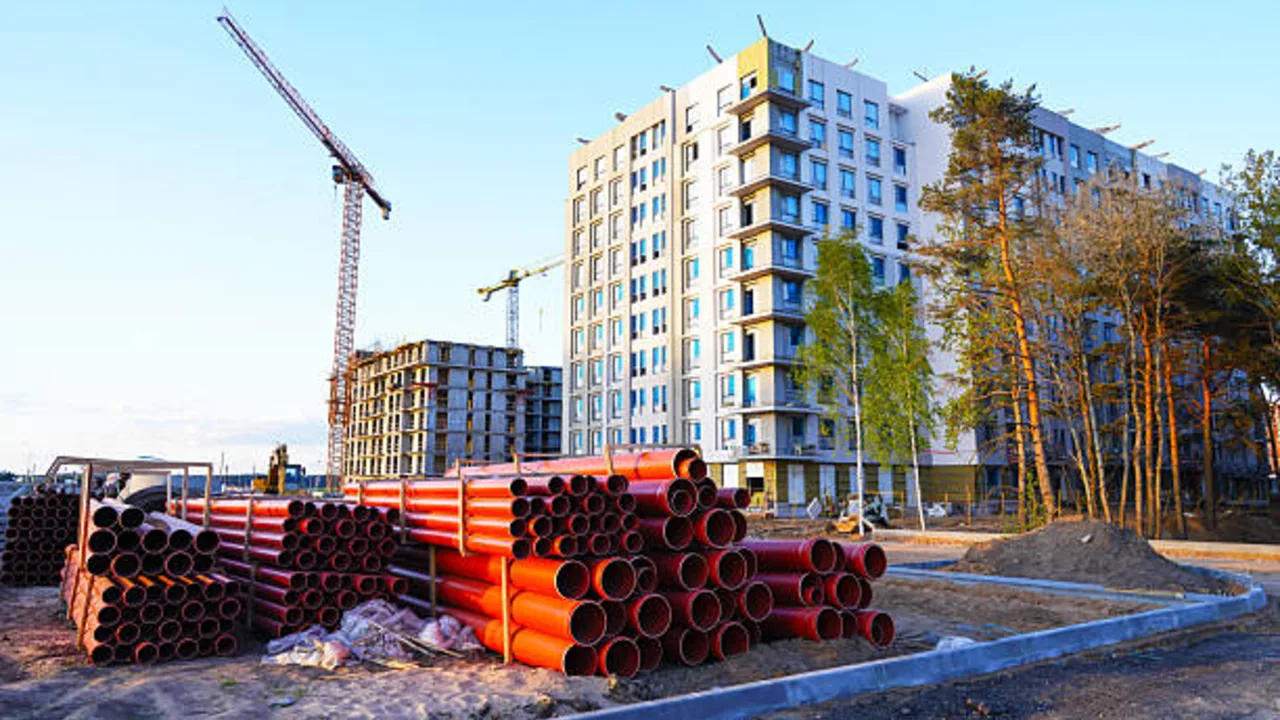
Surface runoff refers to rainwater that flows across the ground when soil absorption capacity is exceeded. In large industrial sites, extensive paved areas—such as truck yards, loading docks, and parking areas—significantly increase runoff volume.
Without effective warehouse site drainage, runoff accumulates near entrances, dock areas, and foundation edges. This results in water ponding, soil erosion, and potential flooding during heavy storms. Improperly managed runoff can also transport debris and contaminants toward structural components.
Strategic grading, channel drains, and catch basins are essential to intercept and redirect runoff before it compromises operational areas. Managing runoff is not just a structural concern—it is an operational necessity.
Maintaining Operational Safety
Industrial warehouses experience constant heavy vehicle traffic, including forklifts and 40-ton trucks. Standing water creates slip hazards, reduces tire traction, and increases accident risk.
Water accumulation at loading docks may damage goods, delay shipments, and create electrical hazards. Effective warehouse site drainage ensures that water does not interfere with circulation patterns or dock operations.
Insurance assessments for industrial facilities increasingly evaluate drainage design as part of risk management. A well-designed drainage system reduces liability exposure and ensures compliance with environmental standards.
Understanding Soil Conditions and Site Topography
Soil Types and Drainage Behavior
Soil composition significantly influences warehouse site drainage strategy. Sandy soils allow faster water infiltration, reducing runoff accumulation. However, sandy soils may require stabilization to prevent erosion near foundations.
Clay soils, on the other hand, have low permeability. They retain moisture longer, increasing swelling potential and creating pressure against foundation systems. For clay-heavy sites, subsurface drainage systems are often necessary to prevent prolonged saturation.
Geotechnical analysis during pre-construction is essential to determine permeability rates, compaction requirements, and drainage layering design.
Site Grading and Elevation Planning
Grading is one of the most effective tools in warehouse site drainage. Proper slope design directs water away from the building footprint.
Industry best practice typically recommends a minimum slope of 2% away from the foundation for the first 3 meters surrounding the building. Larger sites may incorporate broader grading strategies that guide runoff toward designated drainage channels or detention systems.
Incorrect grading often results in water flowing back toward the building during intense rainfall events. Elevation planning must consider both normal rainfall and extreme storm conditions.
Groundwater Considerations
High water tables introduce additional complexity to warehouse site drainage. If groundwater levels approach foundation depth, hydrostatic uplift and moisture migration become significant concerns.
Subsurface drainage solutions such as perforated pipe systems, gravel trenches, and geotextile-wrapped French drains help relieve hydrostatic pressure. These systems intercept groundwater before it impacts foundation components.
Combining surface and subsurface drainage ensures comprehensive moisture control around steel warehouse foundations.
Core Components of Warehouse Site Drainage Design
Surface Drainage Systems
Surface systems form the first line of defense in warehouse site drainage. These systems manage rainfall and surface runoff before water infiltrates subgrade layers.
Common surface drainage components include:
- Open concrete channels for directing large volumes of water
- Vegetated swales that slow runoff velocity
- Catch basins positioned at low points
- Trench drains near loading docks and entrances
Proper sizing of these systems depends on rainfall intensity calculations and paved surface area coverage.
Subsurface Drainage Systems
While surface systems handle visible runoff, subsurface systems address water movement below grade. In many projects, long-term warehouse site drainage success depends on hidden infrastructure beneath slabs and around footings.
Perforated pipes surrounded by gravel allow water to flow into controlled discharge paths. Geotextile membranes prevent soil clogging while maintaining permeability. These components reduce hydrostatic buildup and protect structural elements from prolonged moisture exposure.
Stormwater Management Integration
Beyond immediate foundation protection, effective warehouse site drainage must integrate with broader stormwater management systems. Large industrial developments often fall under municipal stormwater regulations that require controlled discharge rates and on-site water retention strategies.
Detention ponds temporarily store excess stormwater and release it at regulated flow rates. Retention basins, in contrast, hold water permanently and allow gradual infiltration. Both systems reduce downstream flooding risk and help manage surface runoff during heavy rainfall events.
In many regions, engineered drainage calculations must demonstrate that post-development runoff does not exceed pre-development conditions. This makes stormwater modeling a critical component of warehouse site drainage planning.
Designing Drainage Around Steel Warehouse Foundations
Foundation Perimeter Drainage
Perimeter drainage systems form a protective barrier around warehouse foundations. In well-designed warehouse site drainage layouts, footing drains are installed at the base of foundation walls to intercept groundwater before it builds hydrostatic pressure.
Waterproofing membranes are commonly applied to foundation surfaces to prevent moisture penetration. Capillary break layers—typically compacted gravel—separate the soil from structural concrete and reduce upward moisture migration.
These measures work together to preserve structural integrity and reduce long-term repair costs.
Slab-on-Grade Protection
Most steel warehouses use slab-on-grade floors designed to withstand heavy industrial loads. Without effective warehouse site drainage, moisture intrusion can weaken slab performance and compromise floor coatings.
Sub-base preparation typically includes compacted aggregate layers that promote drainage beneath the slab. Vapor barriers prevent moisture vapor transmission, which is particularly important in temperature-controlled warehouses.
Drainage mats may also be installed to facilitate subsurface water movement and prevent pressure buildup beneath the slab.
Expansion and Long-Term Settlement Considerations
Industrial warehouses frequently expand over time. A scalable warehouse site drainage plan must anticipate future extensions and increased paved areas.
Settlement joints, flexible connections, and properly graded expansion zones ensure that new construction does not disrupt existing drainage flow paths. Long-term planning reduces retrofitting costs and avoids operational disruptions.
Surface Runoff Management Strategies for Large Industrial Sites
Roof Water Discharge Planning
Roof drainage plays a major role in overall warehouse site drainage. Large steel warehouse roofs collect significant volumes of rainwater, especially during intense storms.
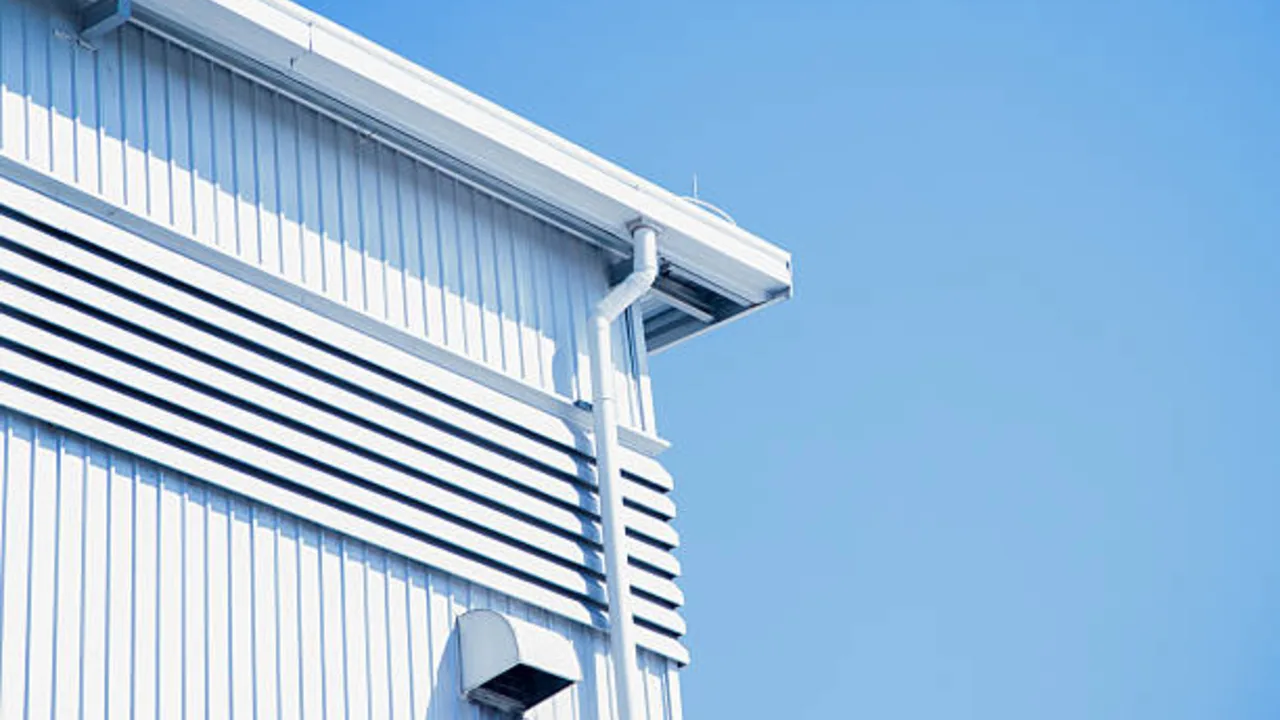
Gutter and downspout systems must be sized based on rainfall intensity and roof area calculations. Downspouts should discharge water into underground piping or designated surface channels that direct flow away from foundation zones.
Improper discharge points often cause localized erosion, foundation undermining, and repetitive maintenance issues.
Loading Dock and Access Road Drainage
Loading docks are particularly vulnerable to water intrusion. Proper warehouse site drainage design includes trench drains positioned directly in front of dock openings to intercept surface runoff.
Access roads and truck aprons require reinforced channel systems capable of handling both hydraulic flow and heavy vehicle loads. Structural trench drains must be rated for industrial traffic to prevent collapse or deformation.
Perimeter Landscaping and Water Flow Control
Landscaping can either support or undermine drainage performance. Vegetated swales slow water velocity and reduce erosion, while improperly placed landscaping can trap water near foundations.
Thoughtful integration of grading and vegetation ensures that warehouse site drainage remains efficient over the building’s lifecycle.
Cost Factors in Warehouse Site Drainage Planning
Drainage costs vary depending on site size, soil conditions, rainfall intensity, and regulatory requirements. Below is a simplified breakdown of typical cost components involved in warehouse site drainage systems.
Table: Primary Cost Components in Warehouse Site Drainage
| Component | Cost Impact | Description |
|---|---|---|
| Site Grading & Earthworks | High | Excavation, slope shaping, soil compaction |
| Surface Drainage Infrastructure | Medium–High | Catch basins, trench drains, open channels |
| Subsurface Drainage Systems | Medium | Perforated piping, gravel layers, geotextiles |
| Stormwater Retention Systems | High | Detention ponds, underground storage tanks |
| Waterproofing & Foundation Protection | Medium | Membranes, capillary breaks, perimeter drains |
| Maintenance Provisions | Low–Medium | Access points, inspection chambers |
Illustrative Cost Influence by Site Size
| Warehouse Size | Drainage Complexity | Estimated Cost Impact |
|---|---|---|
| Small (5,000–10,000 m²) | Basic grading + surface drains | Moderate |
| Medium (10,000–30,000 m²) | Integrated stormwater + subsurface | High |
| Large (30,000+ m²) | Advanced detention systems | Very High |
Investing adequately in warehouse site drainage during initial construction typically reduces long-term repair and maintenance expenses.
Common Mistakes in Warehouse Site Drainage
Even experienced developers sometimes underestimate the complexity of warehouse site drainage. Common errors include:
- Underestimating peak surface runoff during extreme storms
- Improper grading slopes near foundation walls
- Insufficient pipe diameter sizing
- Neglecting future site expansion impacts
Correcting drainage failures after construction is significantly more expensive than integrating proper systems from the beginning.
Case Example: Drainage Strategy for a Steel Structure Warehouse
A large industrial development project recently implemented a comprehensive warehouse site drainage system for a 25,000 m² steel warehouse facility.
The project faced heavy seasonal rainfall and clay-rich soil conditions. Engineers developed a multi-layered strategy that included:
- 2% perimeter grading away from the foundation
- Reinforced trench drains at loading docks
- Perforated subsurface piping around footings
- An on-site detention basin to manage peak surface runoff
The integrated system successfully reduced water ponding incidents and improved long-term foundation stability. This approach demonstrates how proper drainage planning enhances the performance of a modern steel warehouse.
Step-by-Step Warehouse Site Drainage Planning Process
- Conduct site survey and topographic mapping
- Perform soil and permeability analysis
- Model runoff using hydraulic software
- Develop engineering drawings and slope calculations
- Implement construction and inspection protocols
A systematic planning approach ensures that warehouse site drainage is aligned with structural design and regulatory compliance.
FAQ About Warehouse Site Drainage
How much slope is required around a warehouse foundation?
Typically at least 2% slope away from the structure for the first few meters.
What is the biggest risk to foundations?
Prolonged water saturation and uncontrolled surface runoff that weakens soil support.
How often should drainage systems be inspected?
At least annually, and after major storm events.
Can drainage systems be upgraded later?
Yes, but retrofitting is often more expensive than initial integration.
Conclusion
Effective warehouse site drainage is not a secondary consideration—it is a structural safeguard that directly influences foundation longevity, operational efficiency, and overall lifecycle cost.
By controlling surface runoff, implementing proper grading, integrating subsurface systems, and complying with stormwater regulations, developers can ensure that steel warehouse foundations remain stable and durable for decades.
Strategic drainage planning transforms water from a structural threat into a managed environmental variable—protecting investments and sustaining industrial performance.