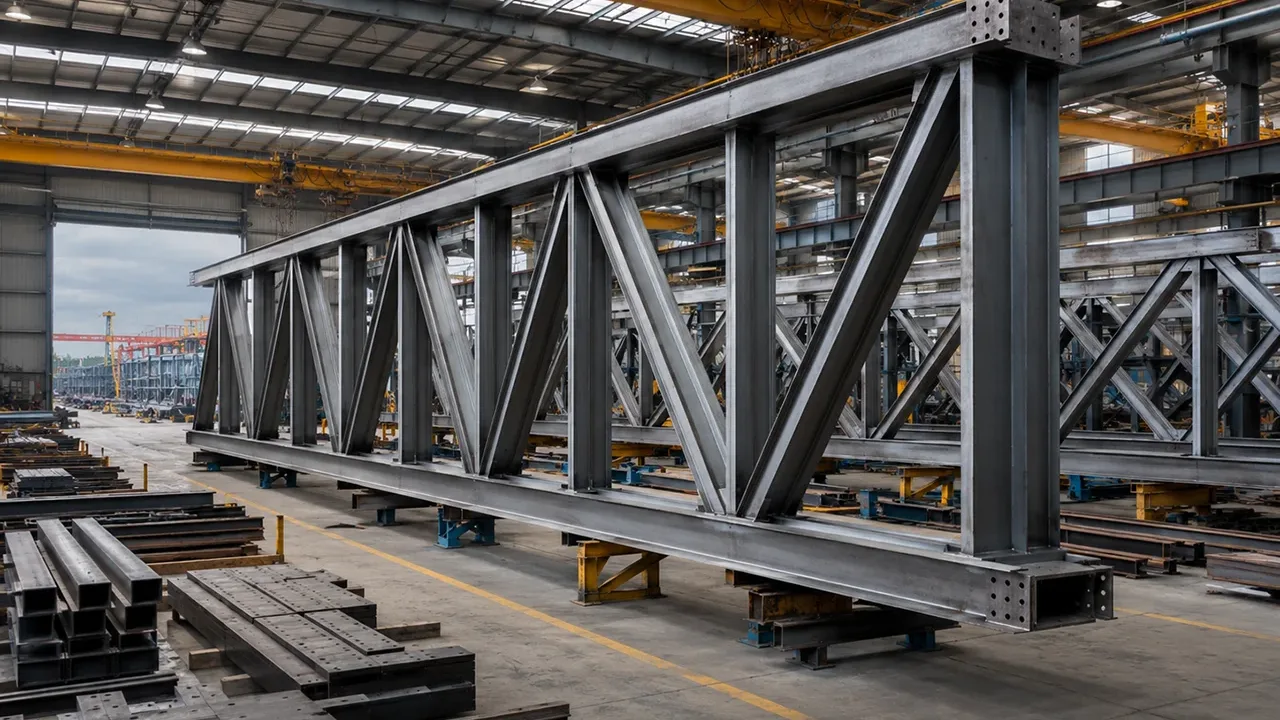
What Is Steel Truss Fabrication?
Steel truss fabrication refers to the engineering, processing, assembly, and quality control of steel members that form a truss structure. A truss is a framework consisting of interconnected members arranged in triangular configurations that efficiently distribute loads throughout the structure.
Unlike solid beams that rely primarily on bending resistance, trusses transfer loads through tension and compression forces within individual members. This design approach allows engineers to achieve longer spans with reduced material consumption.
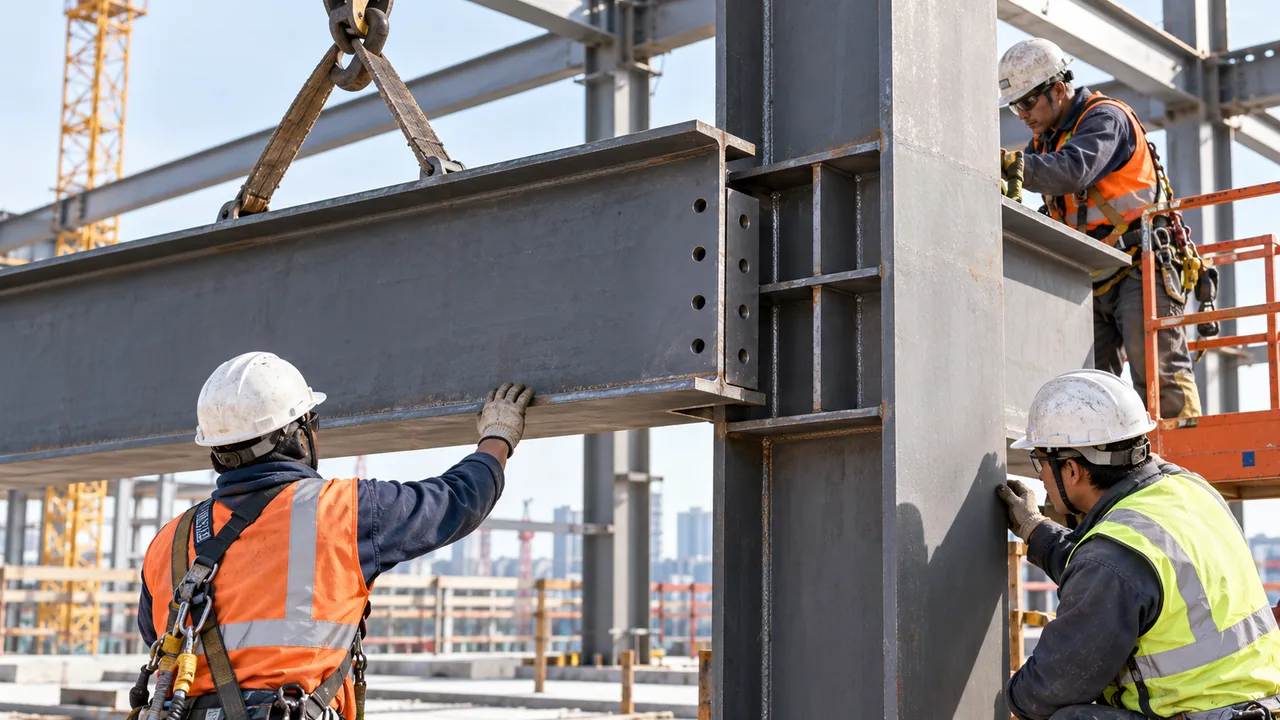
Fabrication involves transforming raw steel materials into finished structural components that are ready for transportation and installation on site.
Types of Steel Trusses Fabricated
Roof Trusses
Roof trusses are among the most common applications of steel truss systems. They provide structural support for roofing systems while creating large unobstructed interior spaces.
Typical applications include:
- Industrial facilities
- Warehouse buildings
- Manufacturing plants
- Commercial buildings
- Agricultural structures
Steel roof trusses can be designed to accommodate various roof geometries and loading conditions.
Long Span Trusses
Long-span trusses are engineered to cover significant distances without intermediate supports. These systems are commonly used when open floor areas are required.
Applications often include:
- Stadiums
- Exhibition centers
- Aircraft hangars
- Sports facilities
- Transportation terminals
The ability to achieve large spans while maintaining structural efficiency makes trusses an attractive solution for these projects.
Pipe Trusses
Pipe trusses utilize tubular steel members instead of traditional rolled sections. Their appearance and structural efficiency make them popular for both industrial and architectural projects.
Benefits include:
- Improved aesthetics
- Efficient load distribution
- Reduced wind resistance
- Architectural flexibility
Pipe trusses are frequently used in airports, public buildings, transportation hubs, and landmark structures.
Special-Shaped Trusses
Many projects require customized truss geometries to satisfy architectural or structural requirements.
Examples include:
- Curved trusses
- Arch trusses
- Three-dimensional trusses
- Custom industrial trusses
- Architectural feature structures
These projects often require advanced engineering analysis and specialized fabrication techniques.
Main Components of Steel Truss Fabrication
Top Chords
The top chord forms the upper portion of the truss and typically carries compression forces generated by applied loads.
Top chords play a critical role in:
- Load transfer
- Structural stability
- Overall truss performance
Proper fabrication and alignment are essential to maintaining structural accuracy.
Bottom Chords
The bottom chord generally resists tension forces and helps maintain the geometry of the truss system.
Functions include:
- Span support
- Tension resistance
- Load balancing
Bottom chord quality directly affects the performance of the completed truss.
Web Members
Web members connect the top and bottom chords and distribute forces throughout the truss.
Their primary responsibilities include:
- Force transfer
- Load distribution
- Structural efficiency
- Stability enhancement
Accurate fabrication of web members is critical to achieving design performance.
Connection Systems
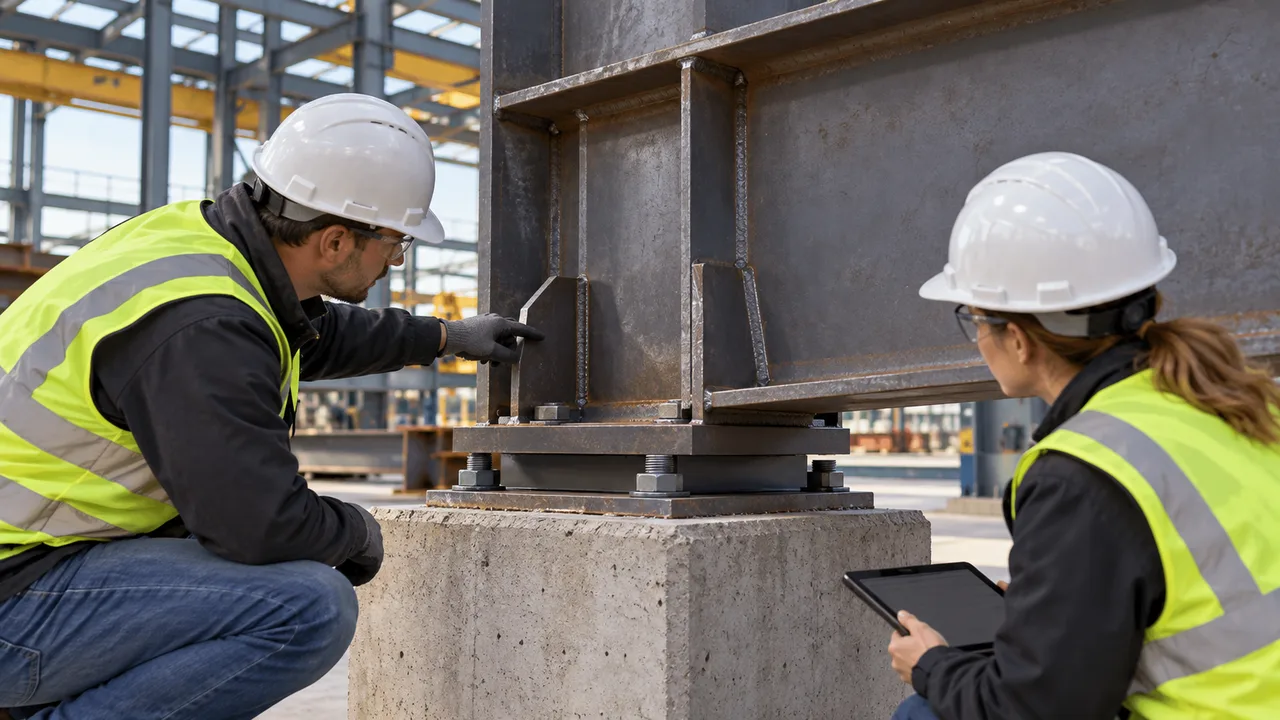
Connections are often considered the most important part of any truss system because they transfer forces between structural members.
Common connection methods include:
- Bolted connections
- Welded connections
- Combination connections
Connection design and fabrication must meet engineering requirements and applicable standards.
Engineering and Design Considerations
Load Analysis
Every truss system must be designed to safely resist all anticipated loads throughout its service life.
Engineering analysis commonly includes:
- Dead loads
- Live loads
- Wind loads
- Snow loads
- Seismic loads
- Equipment loads
Accurate load calculations help ensure structural safety and long-term reliability.
Span Requirements
Span length is one of the most important design parameters in truss engineering.
Longer spans may require:
- Deeper truss profiles
- Additional bracing systems
- Optimized member sizes
- Enhanced connection design
Engineers balance structural efficiency with project objectives when determining the final configuration.
Structural Optimization
Modern design software allows engineers to optimize truss systems for weight, strength, fabrication efficiency, and cost performance.
Optimization may focus on:
- Material reduction
- Weight control
- Manufacturing efficiency
- Installation simplicity
Well-optimized trusses often provide significant lifecycle benefits.
Steel Truss Fabrication Process
Material Procurement
The fabrication process begins with sourcing certified structural steel materials that meet project requirements.
Material management typically includes:
- Certification verification
- Traceability control
- Supplier qualification
- Material inspection
High-quality materials form the foundation of reliable structural performance.
CNC Cutting and Processing
Modern fabrication facilities use CNC equipment to achieve high precision and manufacturing consistency.
Processing activities may include:
- Plate cutting
- Profile cutting
- Hole drilling
- Edge preparation
- Component shaping
Automation improves dimensional accuracy while reducing production errors.
Welding and Assembly
Following component preparation, individual members are assembled according to approved fabrication drawings.
Assembly operations often include:
- Fit-up procedures
- Alignment verification
- Welding operations
- Temporary bracing
- Quality inspections
Accurate assembly ensures that fabricated trusses match engineering requirements.
Dimensional Verification
Fabricated trusses undergo dimensional inspections before surface treatment and shipment.
Inspection activities may include:
- Length verification
- Connection location checks
- Geometry confirmation
- Tolerance measurements
Dimensional control helps prevent installation difficulties in the field.
Surface Treatment and Protection
Painting Systems
Protective paint systems help shield steel trusses from environmental exposure while improving appearance.
Coating systems are selected according to project conditions and service environments.
Hot-Dip Galvanizing
Hot-dip galvanizing provides long-term corrosion protection through a zinc coating applied to steel surfaces.
This method is commonly used for outdoor structures and aggressive environments.
Corrosion Protection Solutions
Different environments require different protection strategies.
Protection systems may include:
- Galvanizing
- Industrial coatings
- Specialized protective treatments
- Multi-layer systems
Proper corrosion protection significantly extends service life.
Environmental Durability
Surface treatment selection should consider climate conditions, humidity, industrial exposure, and maintenance expectations.
Appropriate protection helps maintain structural integrity throughout the design life of the project.
Quality Control in Steel Truss Fabrication
Material Inspection
Quality control begins with verification of incoming materials to ensure compliance with specifications and standards.
Welding Inspection
Because welding is critical to structural performance, inspection procedures may include visual examination, dimensional verification, and non-destructive testing where required.
Dimensional Inspection
Fabricated trusses are checked against approved drawings to verify geometry, alignment, and dimensional tolerances.
Final Product Verification
Before shipment, completed trusses undergo final review to confirm readiness for transportation and installation.
Benefits of Professional Steel Truss Fabrication
High Structural Strength
Steel trusses provide exceptional strength while efficiently distributing loads throughout the structure.
Large Clear Spans
Truss systems can achieve substantial spans without interior supports, maximizing usable space.
Reduced Material Usage
The triangulated design of trusses often allows more efficient material utilization than alternative structural systems.
Faster Construction
Prefabricated truss components can significantly reduce on-site construction time.
Design Flexibility
Steel trusses can be customized to meet architectural, operational, and structural requirements across a wide range of applications.
Applications of Steel Truss Structures
Industrial Buildings
Industrial facilities frequently use trusses to create large production spaces and accommodate equipment requirements.
Warehouses
Warehouse buildings benefit from long-span truss systems that maximize storage capacity.
Factories
Manufacturing plants often utilize steel trusses to support heavy-duty industrial operations.
Stadiums and Arenas
Large public venues depend on truss systems to achieve wide unobstructed viewing and event spaces.
Transportation Infrastructure
Airports, railway stations, and transportation terminals frequently incorporate steel truss systems into their structural designs.
Why Choose XTD Steel Structure
Advanced Fabrication Facilities
Modern manufacturing equipment and CNC processing systems support precise and efficient truss production.
Experienced Engineering Team
Professional engineering expertise helps optimize structural performance and fabrication efficiency.
Complex Truss Manufacturing Capability
XTD Steel Structure has experience producing standard, tubular, long-span, and special-shaped truss systems for diverse projects.
Global Project Experience
XTD Steel Structure has supported industrial, commercial, and infrastructure projects across multiple international markets.
Frequently Asked Questions
What is steel truss fabrication?
It is the process of engineering, manufacturing, assembling, and inspecting structural truss systems made from steel components.
What types of steel trusses can be fabricated?
Roof trusses, pipe trusses, long-span trusses, and custom-engineered trusses can all be fabricated depending on project requirements.
What span can a steel truss achieve?
Steel trusses can achieve very large spans when properly engineered, making them suitable for warehouses, stadiums, and industrial facilities.
Is galvanizing recommended for steel trusses?
Yes. Hot-dip galvanizing is often recommended for projects exposed to outdoor conditions or corrosive environments.
Start Your Steel Truss Project
Steel truss fabrication combines engineering expertise, precision manufacturing, and quality control to create structural systems capable of supporting demanding construction projects. Whether the application involves industrial facilities, warehouses, transportation infrastructure, or architectural structures, professionally fabricated trusses deliver strength, efficiency, and long-term performance.
Working with an experienced fabrication partner helps ensure reliable manufacturing quality, efficient project execution, and successful structural outcomes.