Choosing the right stone processing machinery is a facility-level decision, not just a machine purchase. A stone processing facility usually needs more than one machine to move from raw material to finished product. Cutting, polishing, edge finishing, handling, inspection, and water management all affect how smoothly the operation runs.
For a small fabrication shop, one or two flexible machines may be enough at the beginning. For a larger stone factory, the equipment plan needs to support continuous production, stable quality, and lower downtime. The wrong machinery setup can create bottlenecks even when each individual machine looks capable on paper.
A facility should choose machines based on the work it actually handles every day: slab cutting, block cutting, countertop fabrication, wall panel production, stair processing, surface polishing, or custom architectural stone work. The goal is not simply to buy more machines. The goal is to build a production flow where each machine supports the next step.
How Stone Facilities Think About Production Flow
A stone processing facility normally follows a sequence. Material arrives as blocks, slabs, or semi-finished stone. From there, the facility cuts the stone to size, prepares the surface, polishes or finishes the product, completes edge work, checks quality, and prepares the finished pieces for delivery.
A simple workflow may look like this:
- Slab or block receiving
- Material inspection and measurement
- Cutting and sizing
- Surface preparation
- Polishing or finishing
- Edge work, profiling, or drilling
- Final inspection
- Cleaning, packing, and delivery
The important point is that stone processing machinery should follow the production sequence. If the cutting section works quickly but polishing is slow, unfinished products will pile up. If the polishing section is strong but material handling is weak, slabs may be damaged before they reach the finishing stage. If inspection is not planned properly, defects may be discovered too late, after labor and machine time have already been wasted.
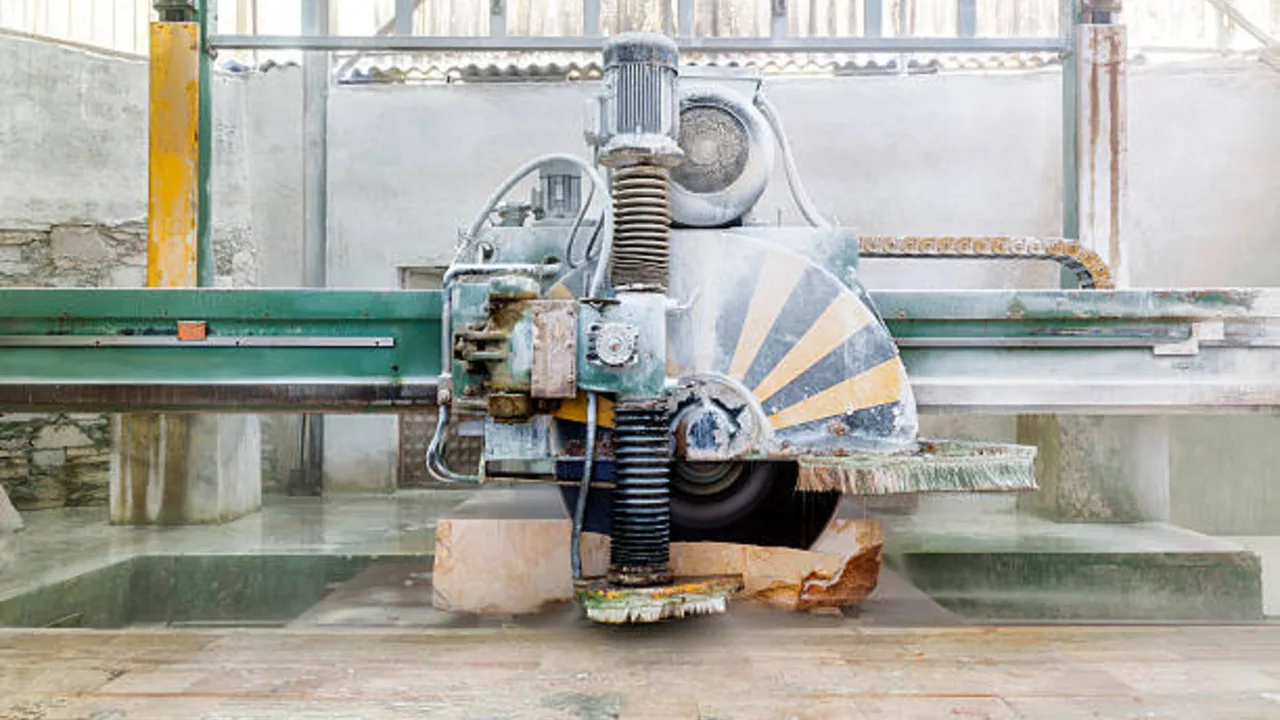
This is why facility managers often evaluate machinery as a complete system. A machine may have strong specifications, but it still needs to fit the factory layout, operator skill level, water supply, power capacity, and daily output target. Good planning helps the facility avoid wasted space, repeated handling, and unnecessary rework.
Cutting Equipment As The First Core Investment
Cutting is usually the first major machinery decision because it defines the size, shape, and accuracy of the product. If the cutting process is unstable, every process after it becomes harder. Poor cutting accuracy can increase polishing time, create installation problems, waste expensive material, and force workers to correct mistakes manually.
That is why stone cutting equipment should be selected based on product type, material hardness, slab size, thickness, and required accuracy.
Slab Cutting Machines
Slab cutting machines are used for countertops, wall panels, flooring pieces, stair components, vanity tops, and other flat stone products. Bridge saws and CNC cutting systems are common choices for facilities that process slabs.
A bridge saw can be practical for straight cutting and regular slab work. CNC cutting systems are better when the facility needs sink holes, curves, angled cuts, or repeatable custom shapes. For workshops that serve kitchens, hotels, villas, or commercial projects, and Stadium Lobby slab cutting accuracy directly affects installation quality.
Block Cutting Machines
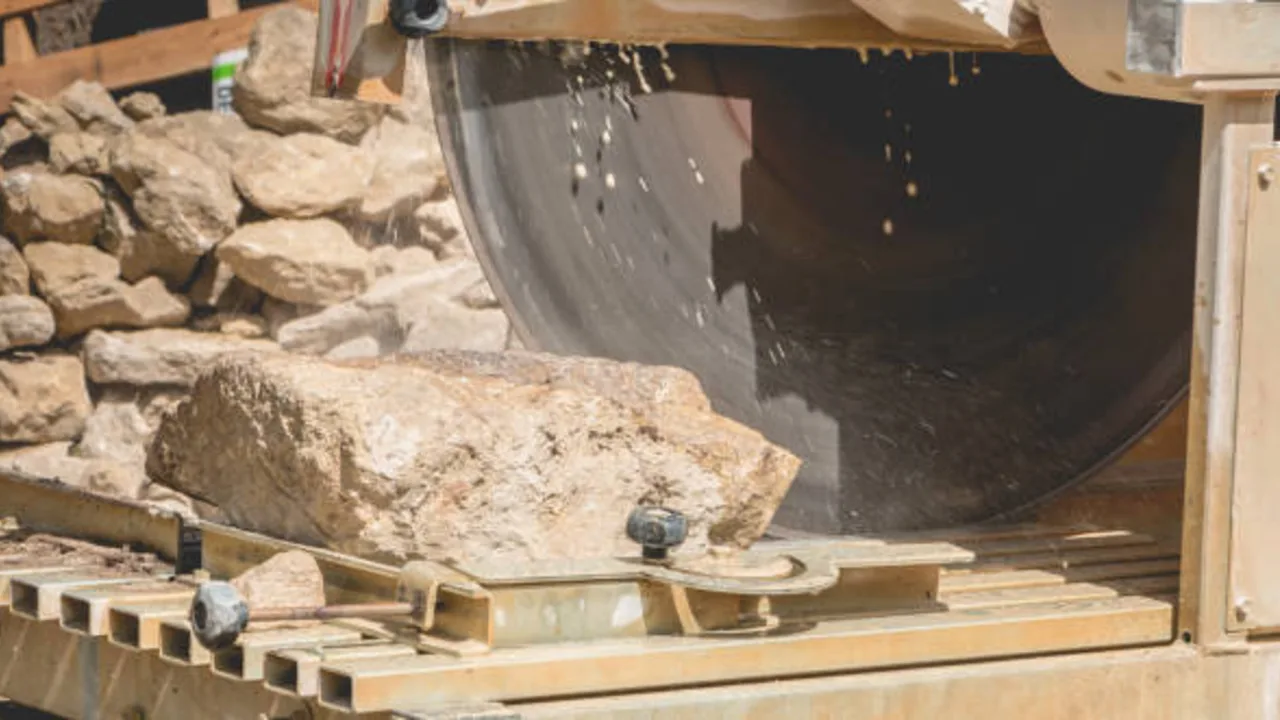
Facilities that start from raw stone blocks need a different level of cutting capacity. Block cutting machines are designed to process large stone blocks into slabs or thick sections before further processing.
This type of machine is usually more relevant for stone factories than small fabrication workshops. It requires more space, stronger handling equipment, and better planning for material movement. If a business only buys finished slabs, a block cutting machine may not be necessary.
CNC Cutting Systems
CNC cutting systems are useful when a facility handles custom shapes, repeated patterns, cutouts, and higher-value stone fabrication. These systems reduce manual marking, improve repeatability, and help operators produce more complex parts with better control.
However, CNC equipment should match the facility’s actual order structure. If most orders are basic straight cuts, a full CNC system may be underused. If custom projects are increasing, CNC capability can become a strong advantage.
Finishing And Polishing Equipment For Surface Quality
Cutting gives the product its dimensions, but finishing gives the product its market value. A slab can be cut accurately, but if the surface looks uneven, cloudy, scratched, or dull, the customer may still reject it. This is where stone polishing equipment becomes important.
Polishing and finishing equipment should be selected according to material type, finish level, product size, and production volume. Granite, marble, artificial stone, limestone, and engineered stone may require different polishing pressure, abrasive selection, and water control.
Flat Surface Polishing
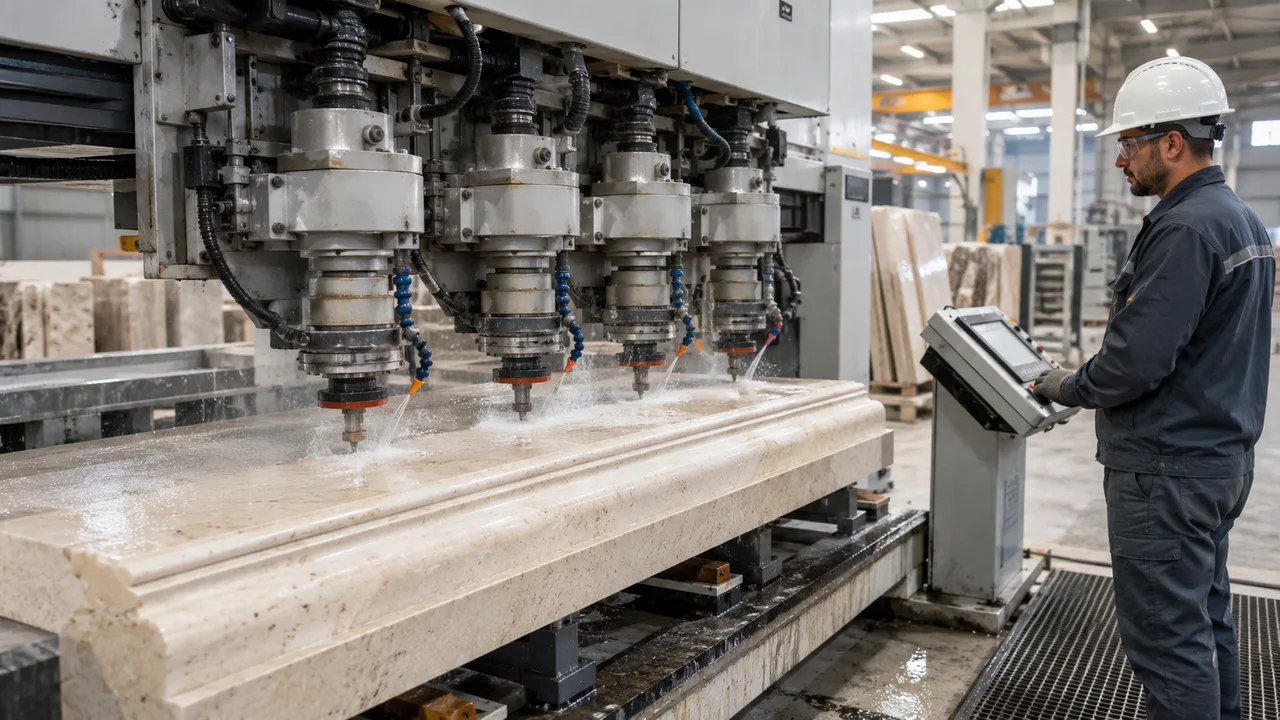
Flat surface polishing is used for slabs, panels, flooring, tabletops, and large stone surfaces. Facilities with repeated slab or panel production often need stable polishing equipment that can produce consistent gloss across many pieces.
For higher output, automatic polishing machines may be suitable. For lower output or custom work, bridge-type or semi-automatic polishing machines may provide enough flexibility.
Edge Polishing
Edges matter a lot in countertops, stairs, vanity tops, tables, and visible architectural pieces. Even if the surface is polished well, a rough or dull edge can make the product look unfinished.
Edge polishing machines help reduce manual finishing time and improve consistency. They are especially useful in facilities that produce many countertops or stone products with exposed edges.
Special Surface Finishes
Not every customer wants a high-gloss surface. Some projects require matte, brushed, textured, or other custom finishes. Facilities serving architectural or decorative markets may need machines that support more than one finishing style.
This is why finishing equipment should be chosen based on product demand, not only machine size. A facility that handles different stone products may need flexible finishing capability rather than one machine optimized for only one surface style.
Matching Machinery With Facility Type And Output Level
Not every facility needs the same machinery setup. A small workshop, a medium processing facility, and a large stone factory all have different priorities. The best equipment plan depends on production volume, product range, available space, and investment stage.
Small Fabrication Workshops
Small workshops usually need flexible machines. They may process mixed orders such as countertops, small panels, stairs, and custom pieces. In this type of facility, fabrication workshop equipment should be practical, easy to operate, and suitable for different jobs.
Manual or semi-automatic machines may still make sense if the workshop has skilled operators and moderate output. The key is to avoid buying oversized equipment that takes too much space or costs too much before the order volume is stable.
Medium Stone Processing Facilities
A medium facility usually needs a more balanced line. Cutting, polishing, edge finishing, and material handling should all support each other. If one process is much weaker than the others, the facility can lose efficiency.
Facilities comparing complete machine categories can review Hizar’s machinery used in stone processing facilities when planning cutting, finishing, and workshop equipment combinations.
Larger Stone Factories
Larger factories often need higher automation, stronger output capacity, and better process control. In this environment, stone factory machines must support stable production over longer working hours. Water treatment, slurry handling, spare parts access, and maintenance planning become more important because downtime can affect many orders at once.
For large facilities, the buying decision should include not only machine capacity, but also layout planning, operator flow, handling systems, and long-term service support.