Applications of Steel Structure Hangar Building
Aircraft Maintenance Hangars
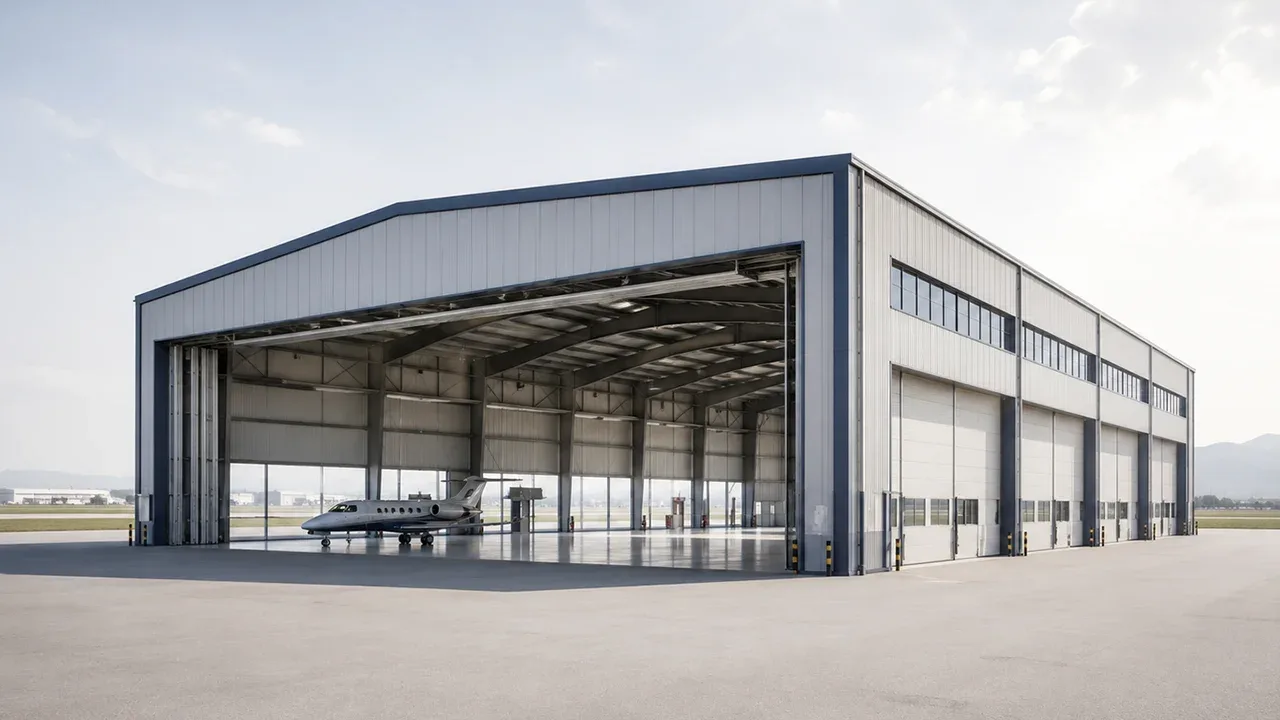
Aircraft maintenance facilities require open space for inspections, repair work, component replacement, and technical servicing. A well-designed steel hangar allows maintenance teams to move aircraft, lifting equipment, tools, and service platforms efficiently.
These buildings are commonly used for commercial aircraft, private jets, helicopters, and MRO operations where safety, clearance, and workflow are critical.
Industrial Equipment Hangars
Hangar-style steel buildings are also used beyond aviation. Mining companies, energy projects, construction fleets, and heavy industrial operators often need large covered areas for machinery storage and maintenance.
Steel structures provide the height, width, and durability required to protect valuable equipment from weather exposure while keeping access routes practical.
Military and Government Hangars
Defense and government projects may require specialized hangars for aircraft, vehicles, emergency equipment, or operational support facilities. These buildings often need customized dimensions, strong structural performance, and secure functional layouts.
Steel construction allows the structure to be adapted around mission requirements, large door systems, and multi-zone operational planning.
Logistics and Storage Hangars
Some projects use hangar buildings as large-scale sheltered storage facilities. The open span layout is useful for oversized goods, temporary staging areas, transport equipment, and materials that require weather protection without complex internal partitioning.
Large-Span Engineering for Hangar Buildings
Clear Span Structural Systems
The main requirement of a hangar is clear interior space. A steel structure hangar building can be engineered with wide spans that reduce or eliminate internal columns, creating efficient space for aircraft, machinery, or large stored materials.
The structural system may use portal frames, trusses, space frame systems, or customized long-span steel framing depending on building width, roof load, door opening size, and site conditions.
Roof Framing Efficiency
Hangar roofs must cover large spaces while remaining stable under wind, rain, snow, and maintenance loads. Steel roof framing provides high strength with relatively low structural weight, allowing efficient load distribution across the building.
| Design Factor | Hangar Requirement | Steel Structure Response |
|---|---|---|
| Interior Span | Wide open movement area | Long-span frames or trusses |
| Roof Load | Wind, snow, rain, and equipment loads | Engineered steel framing |
| Door Opening | Large access width and height | Reinforced frame design |
| Future Use | Changing aircraft or equipment needs | Adaptable structural layout |
Wind Resistance and Structural Stability
Hangars often have large wall surfaces and wide door openings, making wind load analysis especially important. Engineers must evaluate wind pressure, roof uplift, bracing systems, and frame stability to ensure safe long-term performance.
Properly designed bracing and connection systems help maintain structural integrity during extreme weather conditions.
Door System Integration
Large hangar doors affect both building function and structural design. Sliding doors, folding doors, vertical lift doors, or customized aircraft access systems must be coordinated with the main steel frame.
The surrounding structure must be reinforced to maintain stability while allowing smooth door operation.
Design Flexibility and Functional Layouts
Aircraft Circulation and Access
Hangar layout must support safe aircraft movement from apron to interior space. Door placement, clear height, turning area, and internal clearance must be planned together with the structural system.
For aviation projects, even small layout mistakes can reduce operational efficiency, so early coordination between engineering and facility planning is essential.
Interior Space Optimization
Not every hangar is only an empty shell. Many facilities include offices, tool rooms, workshops, storage mezzanines, technical areas, or crew support rooms. Steel framing allows these zones to be integrated without compromising the primary open-span function.
The best hangar layout balances open movement space with practical support areas.
Multi-Purpose Operational Areas
Hangars can be designed for mixed use, combining aircraft storage, maintenance, spare parts storage, and administrative areas within one facility. This approach helps operators reduce site complexity and improve daily workflow.
Fabrication and Construction Workflow
Precision Steel Component Production
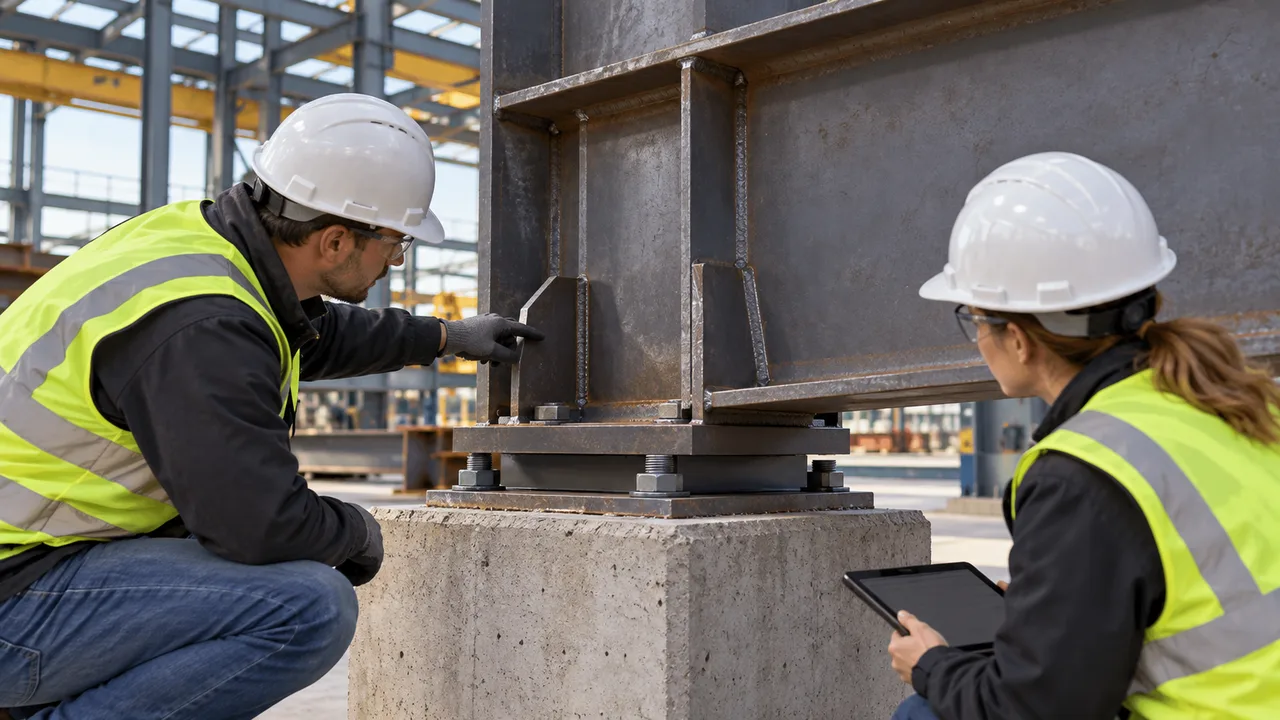
Steel hangar components are fabricated in controlled manufacturing facilities. Columns, beams, trusses, bracing members, and connection plates are cut, drilled, welded, and checked according to project drawings.
Factory production improves dimensional accuracy and reduces uncertainty during site assembly.
Surface Protection Systems
Hangars are often exposed to demanding environmental conditions. Steel components can be protected through galvanizing, anti-corrosion coatings, or industrial paint systems based on the project environment.
For coastal, airport, or industrial sites, surface protection should be selected carefully to reduce long-term maintenance needs.
Transportation and Site Logistics
Large steel members require organized packing, transport planning, and delivery sequencing. For international projects, container loading plans and component labeling help simplify site installation.
XTD Steel Structure supports steel building projects with coordinated fabrication and shipment planning for overseas delivery.
Structural Assembly and Installation
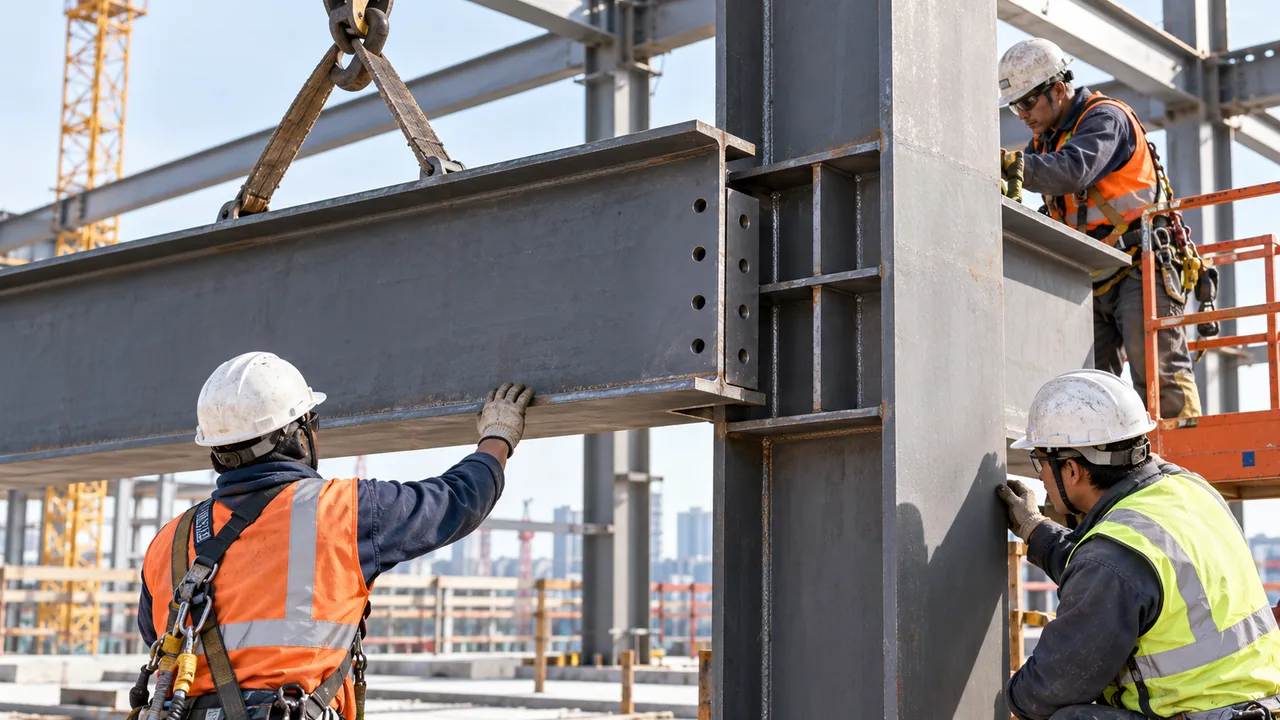
On site, the steel frame is erected according to the installation sequence. Columns, roof beams, bracing, purlins, wall systems, and door frames are installed step by step.
Bolted connections are commonly used to speed up assembly, while welding may be applied where required by design.
Operational Performance of Steel Hangars
A hangar must perform reliably through years of daily use. Steel structures are valued because they combine strength, adaptability, and manageable maintenance requirements.
For aviation and industrial operators, the building is not just a shelter. It is part of the operational system.
- Durable frame for long-term structural use
- Flexible layout for changing operational needs
- Reliable protection for aircraft, machinery, and equipment
- Efficient repair and maintenance access
- Potential for future extension or modification
When designed correctly, a steel hangar can support both current operations and future facility upgrades.
Choosing a Steel Hangar Building Partner
Hangar projects require more than standard steel building production. The partner must understand large-span engineering, aviation clearance requirements, door system coordination, surface protection, logistics, and installation planning.
Important evaluation points include:
- Experience with long-span steel structures
- Ability to customize hangar dimensions
- Reliable fabrication quality control
- Coordination with door and envelope systems
- International shipment and project support capability
For projects that require an engineered steel structure hangar building, working with a capable steel structure supplier helps reduce design conflicts and construction delays.
Common Questions About Steel Hangar Buildings
What span can a steel hangar support?
The span depends on engineering design, site loads, and operational requirements, but steel systems can support wide clear spans suitable for aircraft and large equipment.
Can hangar buildings be customized?
Yes. Dimensions, door systems, roof design, wall panels, internal rooms, and surface protection can be customized based on project needs.
Are steel hangars suitable for aircraft maintenance?
Yes. Steel hangars can provide the open space, clearance, and structural reliability required for aircraft maintenance and storage.
How long does construction take?
Because major components are prefabricated, steel hangar construction is usually faster than many traditional building methods.
Build Efficient Hangar Facilities with Steel Structures
A well-engineered steel structure hangar building provides the open space, durability, and operational flexibility required for aviation, industrial, logistics, and government facilities. With the right structural design and fabrication process, steel hangars can support reliable daily operation for many years.
For projects involving aircraft storage, maintenance, or large equipment protection, steel construction offers a practical path toward efficient facility development and long-term infrastructure value.