What Is a Portal Frame Steel Warehouse?
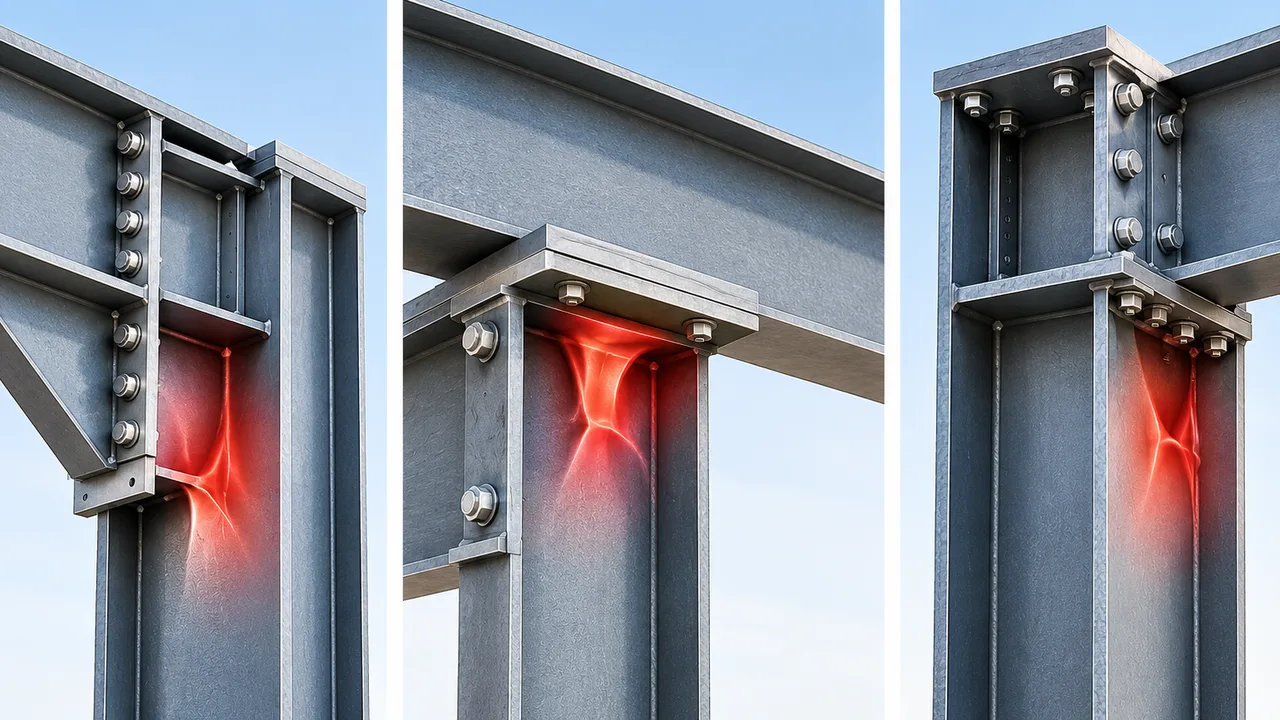
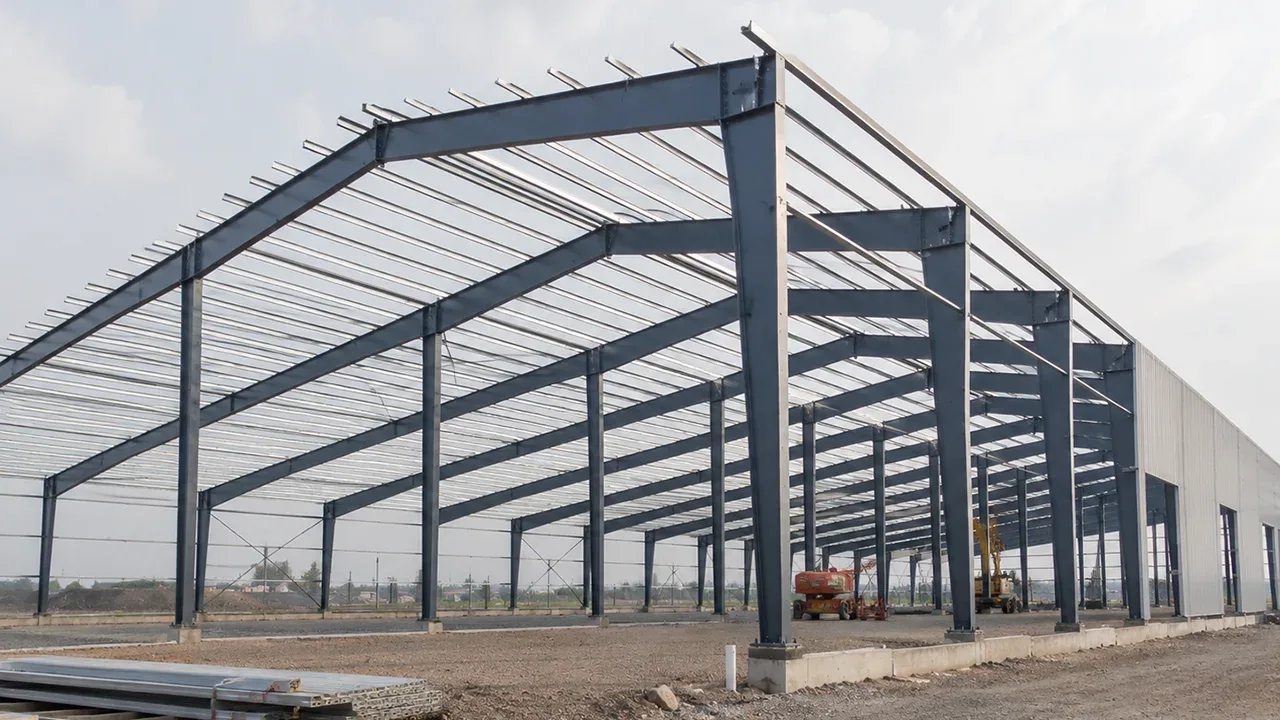
A portal frame steel warehouse is a steel building system that uses rigid frame connections between columns and rafters to create a stable load-bearing structure. This configuration allows the building to achieve large spans with fewer internal supports.
The structural system typically includes:
- Steel columns
- Tapered steel rafters
- Roof purlins and wall girts
- Bracing systems
- Roof and wall cladding panels
Because of its structural simplicity and construction efficiency, the portal frame system is extensively used in industrial warehouse projects worldwide.
Structural Characteristics of Portal Frame Warehouses
Long-Span Steel Frame Design
One of the defining characteristics of portal frame structures is their ability to create wide interior spaces without excessive columns.
This improves warehouse flexibility, forklift circulation, and storage planning efficiency.
Large-span systems are especially beneficial for logistics operations and bulk storage facilities where uninterrupted floor space is important.
Optimized Roof and Wall Systems
Portal frame warehouses are commonly designed with sloped roof systems that improve rainwater drainage and structural performance.
Wall and roof cladding systems can integrate:
- Insulated sandwich panels
- Ventilation openings
- Natural lighting systems
- Skylight panels
This helps improve energy efficiency and operational comfort.
Lightweight Yet High-Strength Structure
Compared to heavier concrete systems, portal frame steel structures reduce foundation loads while maintaining high structural strength.
The optimized use of steel also improves material efficiency and construction economy.
Common Applications of Portal Frame Steel Warehouse
Industrial Storage Facilities
Industrial warehouses frequently use portal frame systems because they provide efficient storage capacity and flexible layouts.
The clear-span structure simplifies shelving arrangements and equipment movement.
Logistics and Distribution Centers
Fast-moving logistics operations benefit from the open layouts of a portal frame steel warehouse. Large loading areas and unobstructed internal circulation improve operational efficiency.
Manufacturing and Processing Warehouses
Manufacturing facilities often require integrated storage and production areas. Portal frame structures can support machinery, crane systems, and production workflows.
Agricultural and Bulk Storage Buildings
Portal frame systems are also widely used for agricultural storage buildings, equipment shelters, and bulk material warehouses.
Their durability and low maintenance requirements make them suitable for demanding operational environments.
Advantages of Portal Frame Structural Systems
Portal frame structures are widely adopted because they combine engineering efficiency with practical industrial functionality.
- Faster construction schedules
- Economical steel consumption
- Large clear-span interiors
- Flexible future expansion
- Reduced structural weight
- Lower maintenance requirements
The combination of structural simplicity and operational flexibility makes portal frame systems highly efficient for industrial warehouse development.
Engineering and Design Considerations
Wind and Seismic Resistance
Structural engineers analyze environmental loads carefully to ensure long-term building stability. Wind resistance and seismic performance are critical design considerations for industrial steel warehouses.
Span and Height Planning
Warehouse dimensions depend on storage systems, equipment requirements, and operational workflows.
Proper span and height planning helps maximize usable storage volume.
Crane System Integration
Some industrial facilities require overhead crane systems integrated into the warehouse structure.
Portal frame systems can be engineered to support crane loads and heavy operational equipment.
Ventilation and Natural Lighting
Efficient warehouse environments often integrate roof ventilation systems and natural lighting solutions to improve indoor conditions while reducing energy consumption.
Fabrication Workflow for Portal Frame Warehouses
Steel Cutting and Assembly
Structural steel components are fabricated using CNC cutting, drilling, and automated assembly systems to ensure dimensional precision.
- Raw material preparation
- Plate cutting and shaping
- Component assembly
- Connection preparation
Welding and Surface Treatment
After assembly, steel components undergo welding and protective surface treatment processes.
Common treatments include galvanization, anti-corrosion coatings, and industrial paint systems.
Dimensional Inspection and Quality Control
Quality control teams inspect welding quality, structural dimensions, and coating thickness to ensure compliance with engineering standards.
As a professional steel structure manufacturer, XTD Steel Structure supports precision fabrication for industrial warehouse systems and export-oriented projects.
Installation and Construction Efficiency
Prefabricated Structural Components
Most portal frame components are manufactured before arriving on-site, reducing field fabrication requirements.
Faster On-Site Erection
Bolted structural connections allow faster installation compared to many traditional construction systems.
This helps reduce project timelines and labor costs.
Simplified Future Expansion
Portal frame buildings can often be expanded by extending structural bays or modifying wall sections.
This scalability supports future operational growth.
Choosing a Portal Frame Steel Warehouse Supplier
Industrial warehouse projects require reliable engineering support, fabrication capability, and project coordination. Choosing an experienced supplier helps improve construction quality and execution efficiency.
Key factors often include:
- Engineering experience
- Production capacity
- Export project capability
- Quality control systems
- Industrial construction expertise
Frequently Asked Questions
Why are portal frame warehouses widely used?
They provide economical construction, large interior spans, and efficient industrial layouts.
What span can portal frame warehouses achieve?
Portal frame systems can support large spans depending on engineering requirements and project design.
Are portal frame warehouses suitable for future expansion?
Yes. Their modular structural configuration allows relatively flexible expansion.
Build Efficient Industrial Storage with Portal Frame Steel Systems
A properly engineered portal frame steel warehouse supports industrial efficiency through fast construction, flexible layouts, and long-term structural performance.
With optimized engineering and precision fabrication, portal frame systems continue to serve as one of the most practical structural solutions for industrial warehouse development.