A lightweight steel roof structure is not simply a roof built with less steel. In practical construction, “lightweight” means the roof system is designed to reduce unnecessary dead load while still maintaining strength, stability, wind resistance, drainage performance, and long-term serviceability. The goal is not to make the roof weak or minimal. The goal is to place steel where it works best and remove weight that does not improve performance.
This matters in warehouses, workshops, factories, logistics buildings, agricultural sheds, commercial halls, and prefabricated buildings where construction speed is important. A lighter roof can be easier to fabricate, transport, lift, align, and assemble. It can also reduce demand on columns, frames, foundations, and lifting equipment when the overall structural system is coordinated properly.
However, lightweight design must be handled carefully. A roof that is too light can create problems with deflection, vibration, wind uplift, panel fixing, corrosion protection, or temporary stability during erection. The best result comes from balancing weight reduction with a clear load path, strong connections, proper bracing, suitable roof panels, and practical installation planning.
What Is a Lightweight Steel Roof Structure?
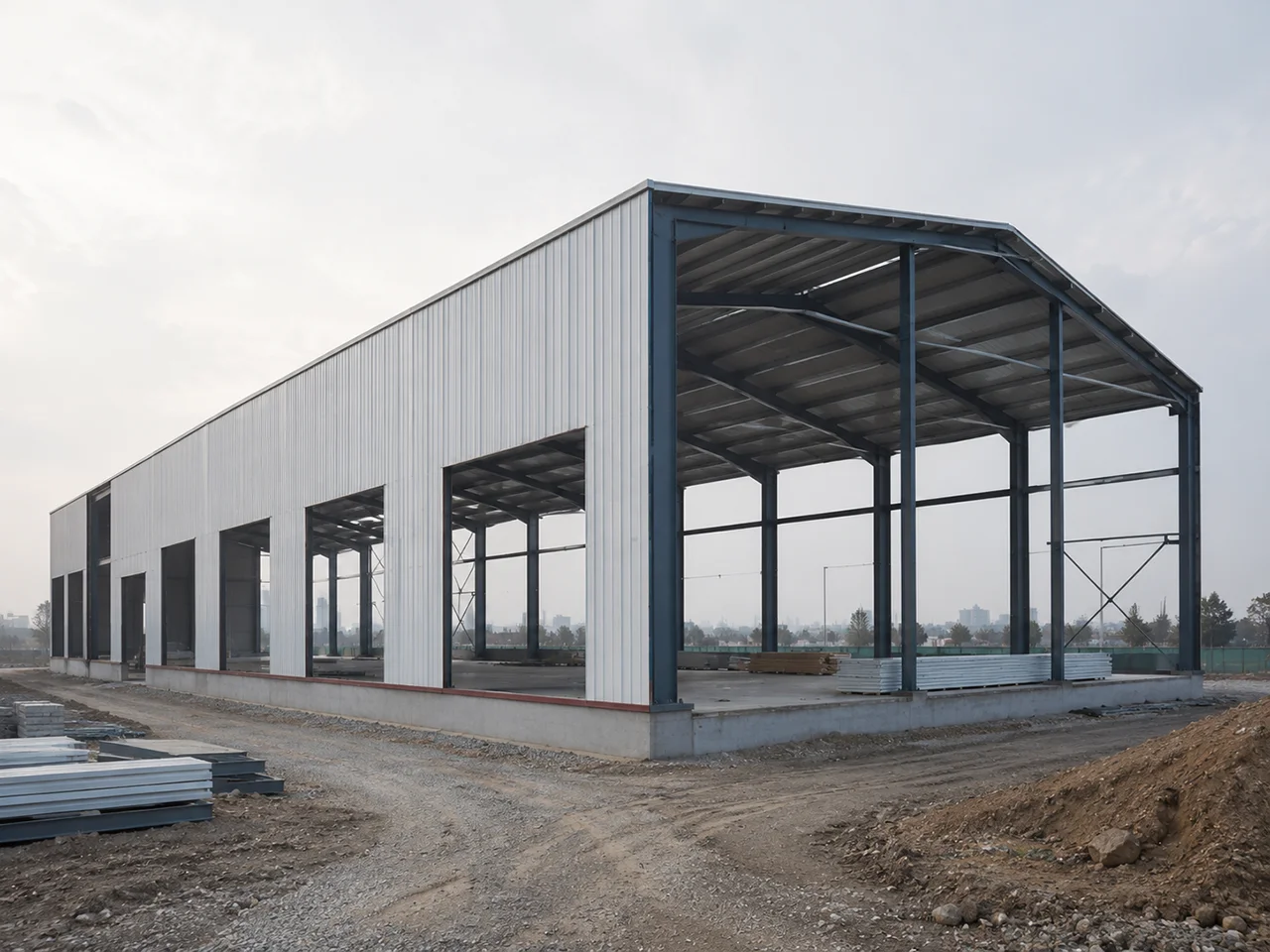
A lightweight steel roof structure is a roof framing system that uses optimized steel members, secondary framing, purlins, bracing, roof panels, and connections to support the roof with less unnecessary weight. It may include portal frames, light truss systems, cold-formed C or Z purlins, roof bracing members, bolted connections, prefabricated roof frames, or hybrid systems that combine different types of steel framing.
In broader construction terms, structural steel is used because it can provide high strength, predictable fabrication quality, and flexible structural forms. In lightweight roof design, these advantages are used to create roof systems that are efficient without sacrificing safety. The roof must still resist gravity loads, wind uplift, rain, snow where applicable, maintenance access, suspended services, and rooftop equipment loads.
Lightweight Does Not Mean Low-Strength
A lightweight roof should never be understood as a weak roof. A properly engineered light steel roof can perform well because the load path is clear and the members are selected for real structural demand. Rafters, trusses, purlins, bracing, and connections each have a defined role. When the system is coordinated, the roof can remain strong while avoiding unnecessary steel weight.
The risk appears when weight reduction becomes the only objective. If purlins are spaced too far apart, roof panels may deflect or become difficult to fix securely. If bracing is reduced too much, the roof may lose lateral stability. If wind uplift is underestimated, roof sheets, fasteners, purlins, or connections may be overstressed. Lightweight design works only when strength, serviceability, and buildability are considered together.
Where Lightweight Steel Roof Systems Are Commonly Used
Lightweight steel roof systems are commonly used in warehouses, industrial sheds, workshops, agricultural buildings, logistics centers, commercial buildings, prefabricated structures, and building extensions. These projects often require fast erection, repeated roof bays, efficient material use, and predictable site installation.
They are especially useful where the roof does not need to carry extremely heavy equipment loads or very complex architectural forms. A simple repeated industrial roof, for example, can often benefit from lightweight purlins, standardized bolted details, repeated roof frames, and factory-fabricated members that arrive on site ready for quick assembly.
Why Lightweight Steel Roof Structure Supports Faster Construction
One of the biggest advantages of a lightweight steel roof structure is faster construction. When roof members are lighter and better standardized, the project team can often reduce handling difficulty, simplify transport, shorten crane time, and make site assembly more predictable. This does not mean every lightweight roof is automatically faster, but it gives the project more opportunities to save time when the design is coordinated early.
Easier Transport and Handling
Lighter roof members can be easier to pack, load, unload, and sort on site. This is important for projects with limited laydown space, export delivery, long-distance transportation, or phased installation. If roof members are clearly marked and grouped according to the erection sequence, the site team can prepare each bay with less confusion.
Transport efficiency also depends on member length and connection strategy. A very long truss may be lighter than a solid beam, but it may still be difficult to transport as one piece. In that case, sectional fabrication and bolted splices may be used. The best solution depends on the balance between steel weight, member size, packing method, road limits, container planning, and site assembly requirements.
Faster Lifting and Positioning
During installation, lighter members can reduce lifting difficulty. Smaller roof beams, light trusses, and secondary steel members may require less crane capacity depending on the span, site access, and lifting radius. Faster lifting can reduce crane time, labor hours, and exposure to weather delays.
Still, lifting must be planned carefully. A lightweight roof member may be easier to lift, but it can also be more sensitive to wind or temporary deformation before the full roof system is braced. The erection plan should define lifting points, temporary supports, safe access, installation sequence, and when permanent bracing must be connected.
More Predictable Site Assembly
Predictability is one of the strongest construction benefits of lightweight roof framing. Repeated roof bays, standardized purlin spacing, consistent bolt patterns, and clear member marks help the site team work faster. Instead of adjusting many unique pieces in the air, crews can follow a repeatable sequence from one bay to the next.
This is especially valuable in prefabricated and industrial projects. When fabrication drawings, packing lists, member labels, and installation sequence are aligned, the roof structure can move from delivery to assembly with fewer delays. The time saved is not only from lighter steel. It also comes from fewer uncertainties during site work.
Main Components of a Lightweight Steel Roof System
A lightweight roof system is made from several parts that must work together. The primary members carry the main loads, secondary members support the roof panels, bracing keeps the system stable, and connections transfer forces between members. If one part is poorly designed, the whole roof can lose efficiency.
| Component | Function | Cost / Speed Impact | Design Consideration |
|---|---|---|---|
| Rafters or roof beams | Carry main roof loads across the span | Repeated members can speed fabrication and erection | Must control strength, deflection, and connection demand |
| Steel trusses | Support longer spans through triangulated members | Can reduce member weight for wider roofs | Requires careful node, splice, and lifting planning |
| C/Z purlins | Support roof panels and transfer loads to main frames | Lightweight and fast to install in repeated layouts | Spacing must match roof panel type, wind uplift, and insulation |
| Roof bracing | Stabilizes the roof plane and transfers lateral forces | Reduces instability risk during and after erection | Must not be removed or interrupted by openings without redesign |
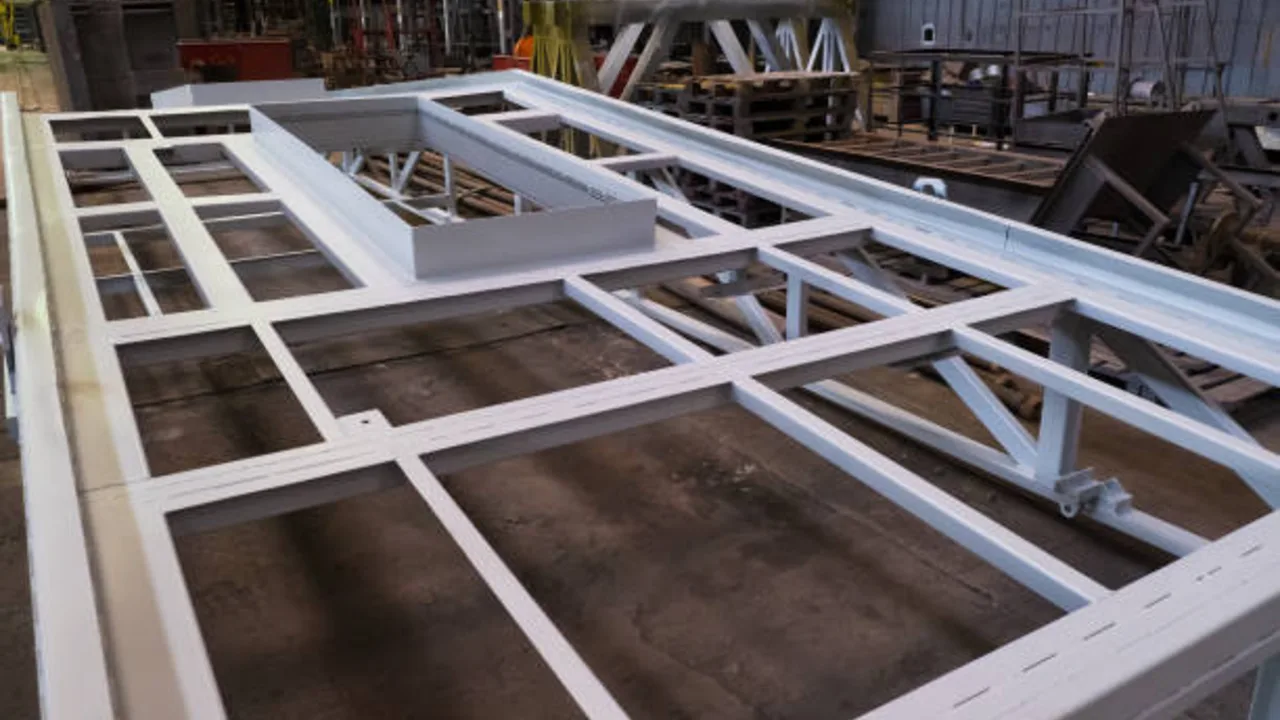
| Connection plates | Transfer forces between members | Standardized plates reduce fabrication time | Need correct thickness, bolt access, and alignment |
| Bolts | Allow fast site assembly | Can reduce field welding and improve installation speed | Bolt holes must align and remain accessible for tightening |
| Roof panels | Protect the building and transfer surface loads to purlins | Light panels can support faster installation | Panel type must match purlin spacing and wind demand |
| Insulation | Improves thermal performance and building comfort | Can affect dead load and installation sequence | Thickness and support must be coordinated early |
| Skylight or ventilation openings | Support daylighting, smoke exhaust, or airflow | Useful but may add framing complexity | Openings must not weaken purlins or bracing paths |
Primary Roof Members
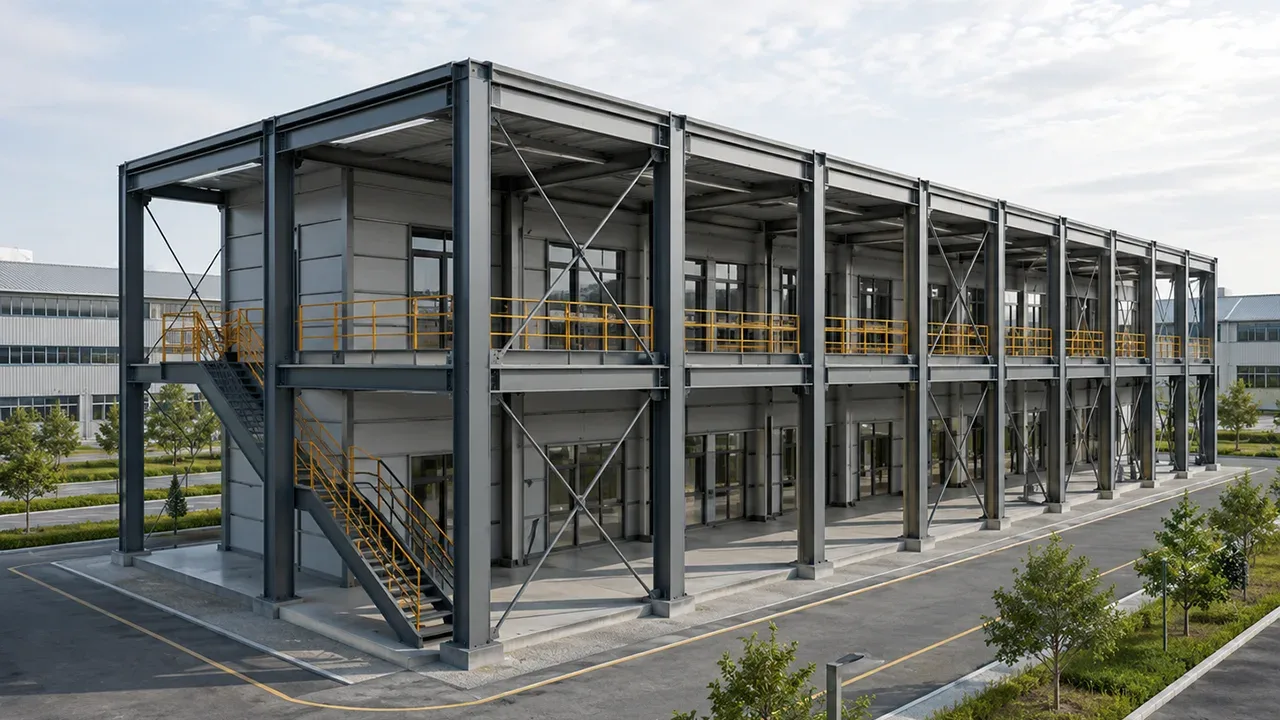
Primary roof members include rafters, roof beams, or trusses that carry the main roof load. In a simple industrial building, repeated rafters may be enough. In a wider building, trusses may be used to reduce member weight and distribute forces more efficiently. The choice depends on span, roof load, column spacing, wind demand, and installation method.
Primary members should not be selected only by steel weight. A member that is slightly heavier but easier to fabricate and install may be more economical than a lighter member with complicated connections. The practical goal is to create a roof frame that is strong, repeatable, transportable, and easy to align on site.
Secondary Members and Purlins
Purlins are critical in lightweight roof systems because they support the roof panels and transfer loads to the main structure. C and Z purlins are often used because they are light, efficient, and suitable for repeated roof bays. Their spacing affects panel support, wind uplift resistance, insulation support, fixing quality, and installation speed.
If the purlins are too light or too widely spaced, the roof panels may deflect, fasteners may become overstressed, or the roof may feel unstable during maintenance. If the purlins are overdesigned without reason, material and installation cost may rise. Good purlin design balances weight, spacing, roof panel requirements, wind load, and site handling.
Connections and Bracing
Connections and bracing are often where lightweight roof systems succeed or fail. Bolted connections can speed up installation, but only if hole alignment, plate thickness, bolt access, and member marking are well controlled. Bracing keeps the roof stable during construction and service, especially when the roof frame is light and sensitive to lateral movement.
Reducing weight should never mean reducing stability. Temporary bracing may be needed during erection before the full roof system is complete. Permanent bracing must also be coordinated with skylights, vents, roof openings, suspended services, and maintenance access. A lightweight roof needs strong structural logic, not just lighter parts.
Benefits of Lightweight Steel Roof Structure
The benefits of lightweight steel roofing are strongest when the building uses repeated bays, clear spans, practical roof geometry, and coordinated installation planning. For many industrial and commercial projects, a lighter roof can improve both construction speed and long-term building efficiency.
Reduced Dead Load on the Building
Reducing roof dead load can lower demand on columns, frames, foundations, and supporting structures. This can be useful for new buildings as well as extensions or retrofit projects where the existing structure has limited capacity. A lighter roof may also reduce stress on the building during transport, lifting, and erection.
However, reduced dead load must still be checked against wind uplift. In some projects, a lighter roof can experience stronger uplift effects relative to its own weight. This means fasteners, purlins, bracing, roof edges, and connections must be carefully designed.
Faster Fabrication and Site Installation
A lightweight roof can support faster fabrication when it uses repeated members and standardized details. Similar purlin sizes, repeated connection plates, consistent bolt patterns, and clear part marking can reduce workshop time. On site, these same features help crews install each bay more predictably.
Speed also comes from simpler handling. Lighter components can be easier to unload, position, align, and bolt. In projects where schedule pressure is high, these small time savings can add up across the full roof area.
Efficient Use of Steel Material
Efficient material use does not mean using the minimum possible steel in every member. It means avoiding unnecessary weight while keeping the roof safe, stable, and practical to build. A well-designed lightweight steel roof structure places material where it contributes to the load path and avoids excessive custom details that add fabrication labor without improving performance.
This is where early engineering matters. When span, wind load, roof panels, purlin spacing, bracing, and installation sequence are planned together, the roof can achieve better overall efficiency than a design that only tries to reduce member weight after the layout is already fixed.
Lightweight Steel Roof Structure for Warehouses and Industrial Buildings
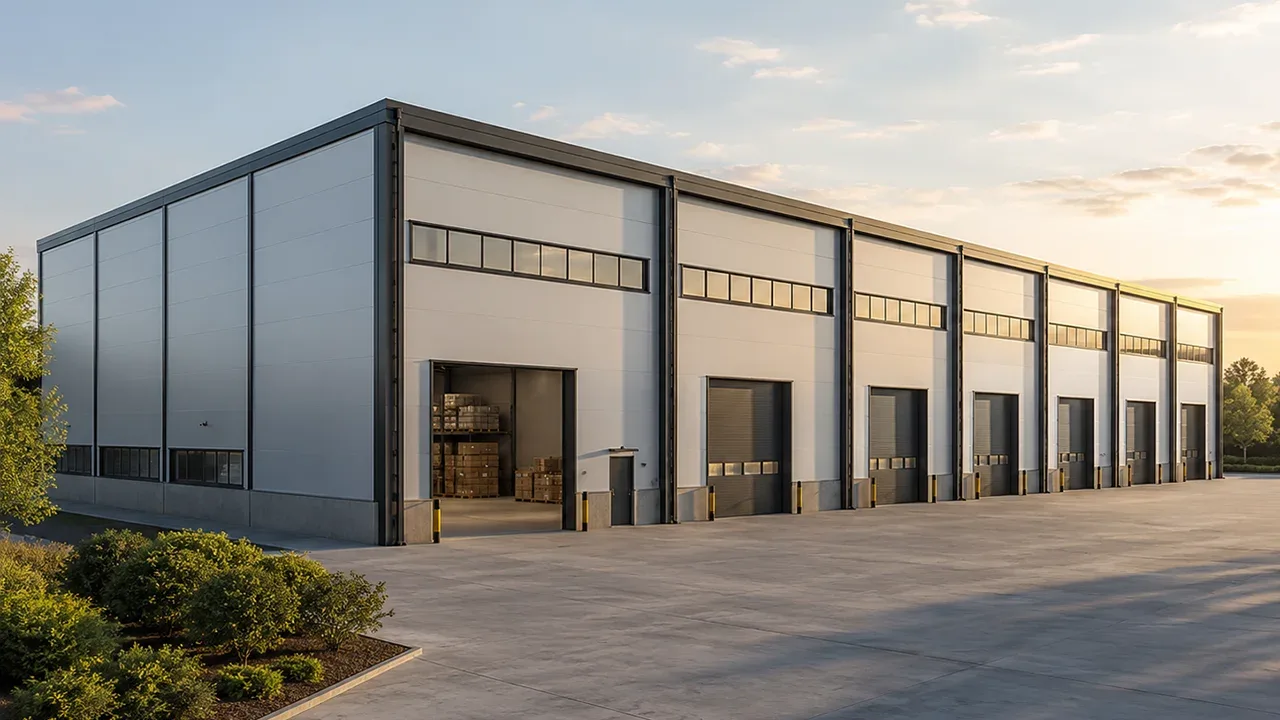
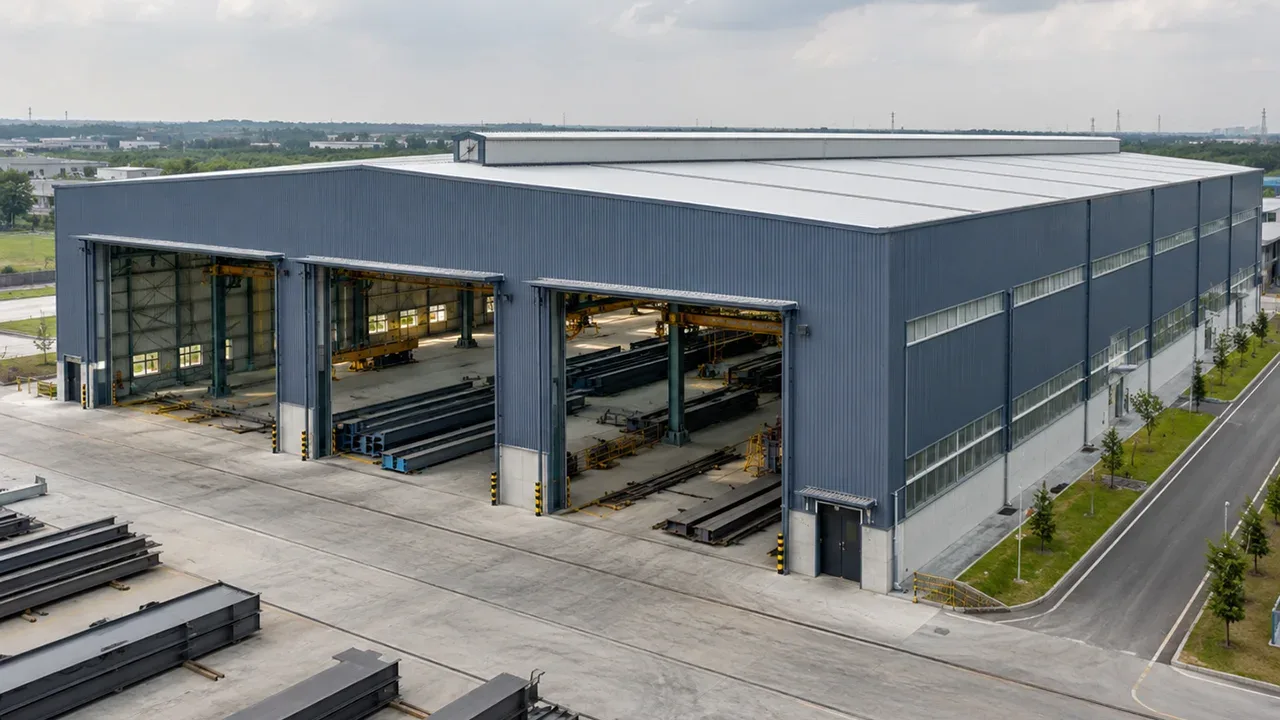
Warehouses and industrial buildings often benefit from lightweight roof systems because their layouts frequently use repeated bays, open floor areas, and practical roof geometry. For storage and logistics projects, a lightweight roof system can support faster erection while still meeting the practical demands of a steel roof structure for warehouses.
In a warehouse, the roof must support more than basic weather protection. It must provide reliable drainage, resist wind uplift, support roof panels, coordinate with lighting or fire pipes, and remain maintainable over time. A lightweight system can work well when roof loads are confirmed early and the framing layout is kept repeatable.
Why Warehouses Benefit from Repeated Lightweight Roof Bays
Repeated roof bays reduce shop drawing complexity, fabrication variation, packing confusion, and site installation mistakes. When rafters, purlins, bracing members, and connection details repeat across the building, the fabrication team can produce faster and the erection crew can follow a consistent sequence.
This type of repetition is one reason lightweight steel roofing works well for logistics centers, storage buildings, and industrial sheds. The building does not need to be visually complicated to perform well. In many cases, the simplest repeated roof logic gives the best balance between cost, speed, safety, and long-term serviceability.
When Lightweight Roofs Need Extra Design Attention
A lightweight roof system still needs careful engineering when the building has long spans, high wind exposure, rooftop solar panels, heavy insulation, large skylights, suspended services, or future expansion plans. These conditions can change the roof load, uplift demand, purlin spacing, bracing layout, and connection design.
For example, a logistics warehouse may initially require only a simple roof panel system, but future solar installation can add new dead load and wind uplift effects. A factory may later need exhaust fans, ducts, pipe supports, or maintenance platforms. If these items are not considered early, the lightweight roof may need reinforcement after fabrication, which can reduce the original speed and cost advantage.
Design Factors That Decide Whether a Lightweight Roof Is Practical
A lightweight roof is not the best answer for every building. The right decision depends on span, roof geometry, environmental loads, service loads, site conditions, and long-term maintenance. The roof should be evaluated as a full system, not only by member weight.
Span and Column Spacing
Span has a major influence on whether lightweight roof framing is practical. Moderate spans with repeated bays are often suitable for lightweight systems because the members can stay efficient and easy to install. Very long spans may require deeper trusses, stronger connections, additional bracing, and more careful deflection control.
This does not mean lightweight design cannot work for longer spans. It means the design must be checked more carefully. A long-span roof may still benefit from truss geometry, but the connection nodes, splice locations, lifting points, and temporary bracing plan become more important.
Wind Uplift and Roof Panel Fixing
Wind uplift is one of the most important issues in lightweight roof design. Because the roof system has lower dead load, uplift forces can become more critical. Roof edge zones, corners, fasteners, purlins, bracing, and panel laps must be designed to resist the actual wind conditions of the site.
The roof panel system should be coordinated with purlin spacing and fastener layout. If the panels are light but the fixing system is weak, the roof may be vulnerable during storms. Good design considers how wind forces move from the roof sheets into purlins, then into the main frame, bracing, columns, and foundations.
Roof Slope and Drainage
Roof slope affects drainage, roof panel selection, gutter capacity, waterproofing details, and long-term service performance. A lightweight roof with low slope may be economical, but it must control water flow carefully. Poor drainage can create ponding, leaks, local overload, and corrosion risk.
Drainage should be planned with the structure. Gutters, downpipes, valleys, skylights, roof penetrations, and maintenance access should not be added randomly after the framing has been finalized. Early coordination helps prevent difficult adjustments during installation.
Roof Equipment Loads
Modern industrial and commercial roofs often support more than roof panels. Solar panels, HVAC units, exhaust fans, fire pipes, cable trays, maintenance walkways, lighting systems, and suspended services can all affect a lightweight roof. These loads may be small individually, but together they can change the roof design.
The safest approach is to identify present and future equipment early. Engineers can then provide support points, adjust purlin spacing, reinforce local areas, or design the truss system for expected service loads. Late equipment changes often create rework, delays, and extra cost.
Deflection and Serviceability
A lightweight roof must be strong, but it must also remain serviceable. Excessive deflection can affect roof panels, gutters, skylights, insulation, ceiling systems, and suspended utilities. Even when the roof does not fail structurally, too much movement can create maintenance problems.
Serviceability checks are especially important for long-span roofs, roofs with suspended services, and buildings where drainage must remain accurate. A good lightweight design controls both strength and movement.
How Lightweight Roof Systems Reduce Project Cost
Lightweight steel roof systems can reduce project cost in several ways, but the savings usually come from the full construction process rather than material weight alone. A lighter roof may reduce steel quantity, transport difficulty, crane demand, installation time, and foundation load. However, these savings only appear when the design remains simple and buildable.
Material Savings vs Total Installed Cost
Lower steel weight can reduce material cost, but total installed cost includes more than steel tonnage. Fabrication labor, connection plates, bolts, coating, packing, transport, crane time, site labor, temporary bracing, and quality control all affect the final budget.
A roof that uses less steel but requires many custom plates, difficult splices, heavy welding, or complex installation may not be cheaper. In many projects, the best value comes from a slightly heavier but simpler roof that can be fabricated and installed faster. Lightweight design should focus on total project efficiency, not only minimum member weight.
Why Standardized Details Matter
Standardized details help lightweight roof systems become more economical. Repeated bolt patterns, consistent plate sizes, similar purlin layouts, and clear member marking reduce fabrication time and site confusion. They also make inspection and installation easier.
Standardization is especially valuable in large industrial roofs. If each bay uses different members, plates, or connection logic, the roof may lose the speed advantage of lightweight construction. Repetition allows the workshop and site team to work more predictably.
Common Mistakes in Lightweight Steel Roof Projects
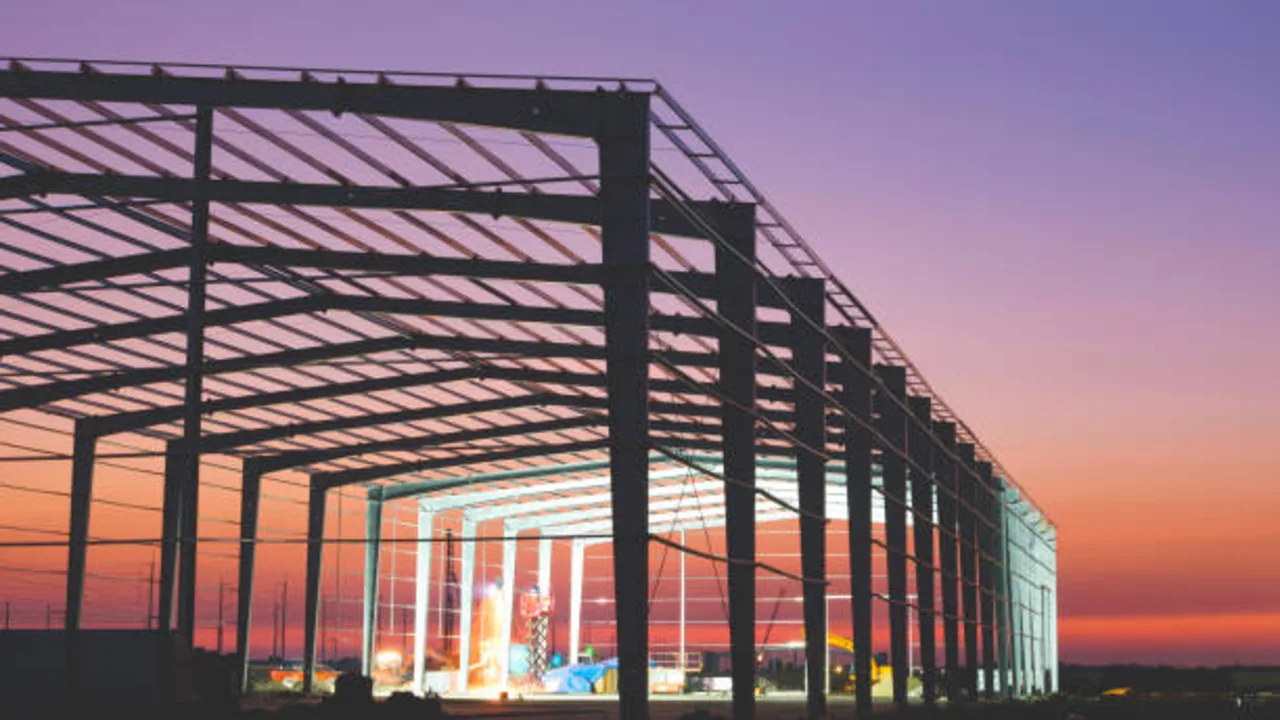
Many problems in lightweight steel roof projects come from over-focusing on weight reduction while ignoring load path, serviceability, and installation conditions. A lightweight system should still be engineered as a complete roof structure.
Making the Roof Too Light Without Checking Serviceability
If the roof is made too light without checking deflection and vibration, it may create long-term performance issues. Roof panels can become misaligned, gutters may stop draining properly, skylight seals may be stressed, and suspended services may need repeated adjustment.
Serviceability does not always show up as a sudden failure. It often appears as leaks, movement, maintenance problems, or uncomfortable building performance. These risks should be controlled during design.
Ignoring Wind Uplift
Ignoring wind uplift is a serious mistake. Lightweight roofs can be efficient, but they must still resist suction forces from wind. Roof edges, corners, fasteners, purlins, roof bracing, and main frame connections should be checked according to the building location and roof geometry.
A roof panel is only as reliable as its support and fixing system. If uplift forces are not transferred properly, damage may start at fasteners, panel laps, purlin connections, or bracing points.
Adding Roof Equipment Too Late
Late additions such as solar panels, HVAC units, fans, ducts, pipe supports, and maintenance walkways can reduce the efficiency of a lightweight roof system. If the roof was not designed for these loads, reinforcement may be needed after fabrication or even after installation.
This creates extra cost and schedule risk. Equipment planning should be part of early roof design, even if some equipment will be installed in the future.
Using Too Many Custom Details
Custom details can reduce the cost advantage of lightweight steel construction. Unique plates, special nodes, unusual bolt patterns, and complicated splices increase drawing time, fabrication labor, inspection work, and installation difficulty.
Some custom details are necessary, especially for special building functions. However, unnecessary variation should be avoided. A practical lightweight roof uses repetition where possible and customization only where needed.
Skipping Temporary Bracing Planning
Temporary stability is important during erection. A lightweight roof may be stable after all purlins, bracing, and roof panels are installed, but individual frames or trusses can be unstable during partial installation. Wind, accidental movement, or poor lifting points can create risk before the permanent system is complete.
The erection plan should define temporary bracing, lifting sequence, crane access, alignment checks, and safe working procedures. This planning protects both the structure and the site team.
How to Choose the Right Lightweight Steel Roof Structure
Choosing the right lightweight roof system requires more than asking for a lighter steel design. The project team should review building function, engineering demand, fabrication method, transport route, and installation conditions together.
- Building function: Confirm whether the roof supports a warehouse, workshop, factory, agricultural building, logistics center, commercial hall, or extension.
- Required span: Match the roof system with storage layout, production flow, vehicle movement, and equipment clearance.
- Roof slope: Coordinate slope with drainage, roof panel type, gutter layout, and waterproofing details.
- Wind, rain, and snow requirements: Check local environmental loads before selecting member sizes and fixing systems.
- Roof panel type: Match panel strength, profile, and fastening method with purlin spacing.
- Purlin spacing: Balance roof panel support, wind uplift resistance, insulation support, and installation speed.
- Insulation system: Confirm insulation weight, thickness, fixing method, and installation sequence.
- Rooftop equipment: Identify solar panels, HVAC units, exhaust fans, skylights, walkways, and future equipment early.
- Suspended services: Coordinate lighting, ducts, fire pipes, cable trays, and maintenance access.
- Corrosion environment: Select paint, galvanizing, or special coating based on exposure and maintenance access.
- Fabrication capability: Use member sizes, connection details, and tolerances that can be produced reliably.
- Transport route: Check member length, packing method, road limits, container planning, and delivery sequence.
- Crane access: Review lifting radius, working height, ground condition, and site restrictions.
- Installation sequence: Plan member order, temporary bracing, alignment checks, and roof panel installation.
- Future expansion: Consider additional bays, rooftop solar, new openings, or future service upgrades.
Conclusion: Lightweight Roof Design Works Best When Strength and Buildability Are Balanced
A lightweight steel roof structure can support faster construction, easier transport, quicker lifting, reduced unnecessary load, and more efficient project delivery. For warehouses, workshops, factories, logistics buildings, and prefabricated projects, it can be a practical way to improve construction speed without sacrificing structural performance.
The key is balance. Lightweight design should not simply remove steel. It should create a clear load path, control deflection, resist wind uplift, support roof panels properly, simplify fabrication, and make installation safer. When the roof is designed as a complete system, lightweight steel framing can help the building become faster to construct, easier to manage, and more efficient for long-term use.