What Is Steel Frame Fabrication?
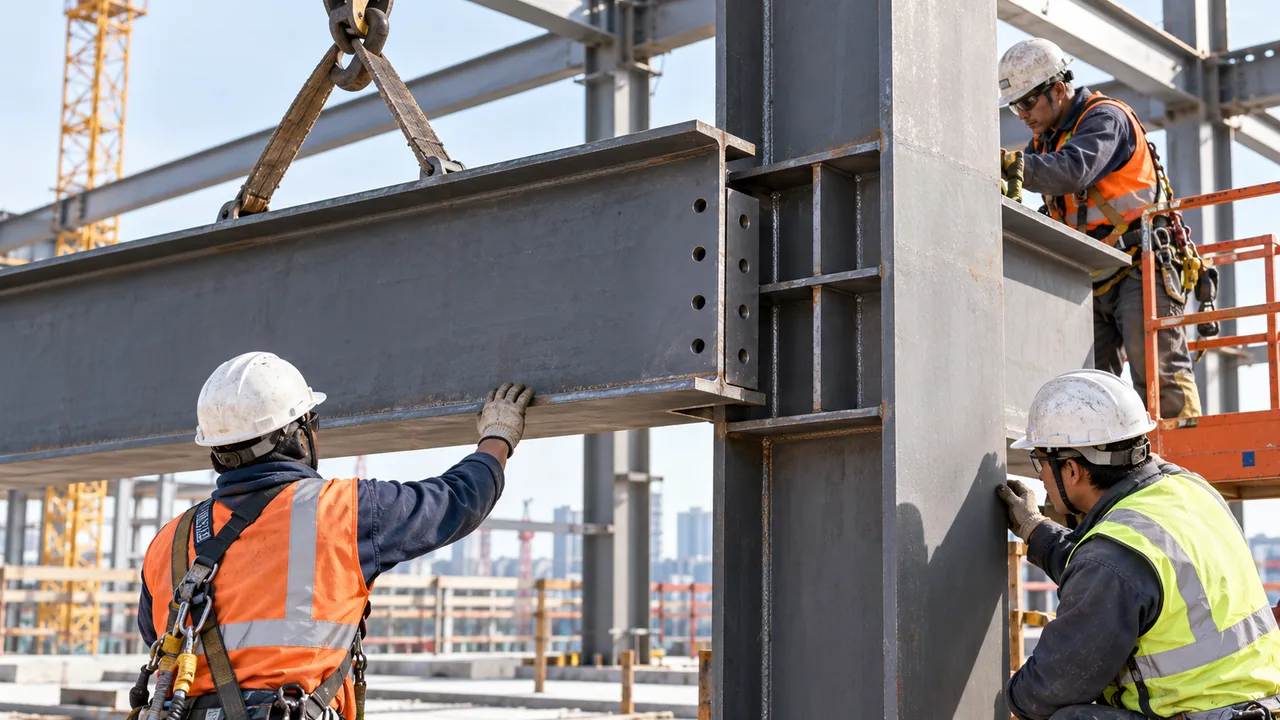
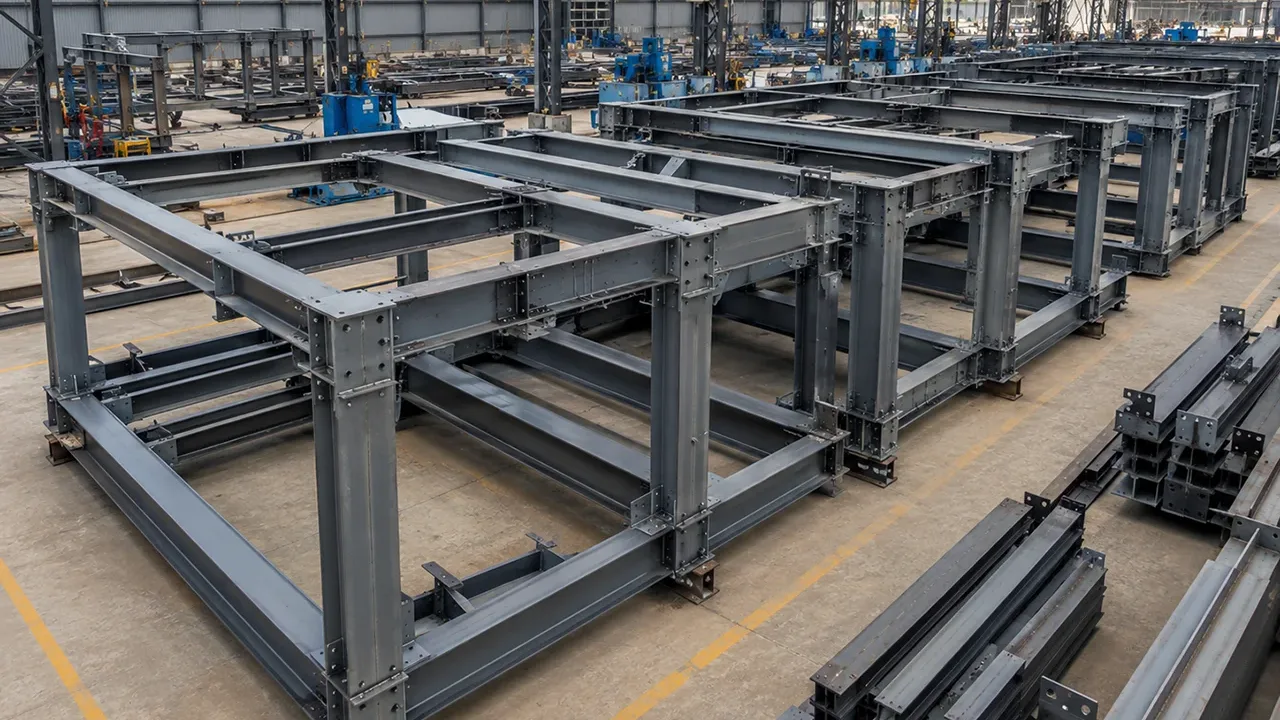
Steel frame fabrication refers to the engineering, processing, assembly, and quality control of structural steel components that form a building frame. The fabrication process converts raw steel materials into columns, beams, braces, and connection assemblies that are later transported to the construction site for erection.
Unlike installation, which occurs on-site, fabrication takes place in controlled manufacturing facilities where precision equipment and quality systems help ensure consistency and accuracy.
The fabrication process typically includes:
- Engineering review
- Material procurement
- Cutting and processing
- Welding and assembly
- Surface treatment
- Quality inspections
- Preparation for shipment
Each stage contributes to the overall quality and performance of the completed structure.
Types of Steel Frames Fabricated
Portal Frame Structures
Portal frames are among the most common steel framing systems used for industrial and commercial buildings. They provide excellent structural efficiency while creating large column-free spaces.
Typical applications include:
- Warehouses
- Factory buildings
- Logistics centers
- Agricultural facilities
- Distribution hubs
Their ability to achieve long spans makes them particularly suitable for industrial operations.
Building Frame Systems
Building frame systems are used for commercial and institutional structures where multiple floors and complex layouts are required.
Applications often include:
- Office buildings
- Educational facilities
- Healthcare buildings
- Retail developments
- Mixed-use projects
Steel framing allows designers to create flexible floor plans while maintaining structural performance.
Industrial Steel Frames
Industrial facilities often require heavy-duty framing systems capable of supporting equipment, cranes, and specialized production operations.
Industrial steel frames can be engineered to accommodate:
- Heavy machinery
- Overhead crane systems
- Production lines
- Material handling equipment
- Large industrial loads
The strength of steel makes it particularly well-suited for these demanding environments.
Customized Structural Frames
Some projects require unique framing solutions that cannot be achieved using standard configurations.
Examples include:
- Architectural steel structures
- Complex industrial facilities
- Special-shaped buildings
- Infrastructure projects
- Custom-engineered developments
These projects often require advanced engineering analysis and specialized fabrication techniques.
Main Components of Steel Frame Fabrication
Steel Columns
Steel columns are vertical structural members responsible for transferring loads from the building frame to the foundation system.
Their functions include:
- Supporting gravity loads
- Providing structural stability
- Transferring loads to foundations
- Supporting beams and framing systems
Accurate fabrication is essential to ensure proper alignment during installation.
Steel Beams
Steel beams are horizontal framing elements that transfer loads between columns and support floors, roofs, and other structural systems.
Common beam types include:
- Wide flange beams
- Built-up beams
- Plate girders
- Custom fabricated sections
The selection depends on project requirements and structural demands.
Bracing Systems
Bracing systems help resist lateral forces generated by wind, seismic activity, and operational loads.
Common bracing components include:
- Cross bracing
- K-bracing
- Chevron bracing
- Rigid frame systems
Properly designed bracing contributes significantly to structural stability.
Connection Components
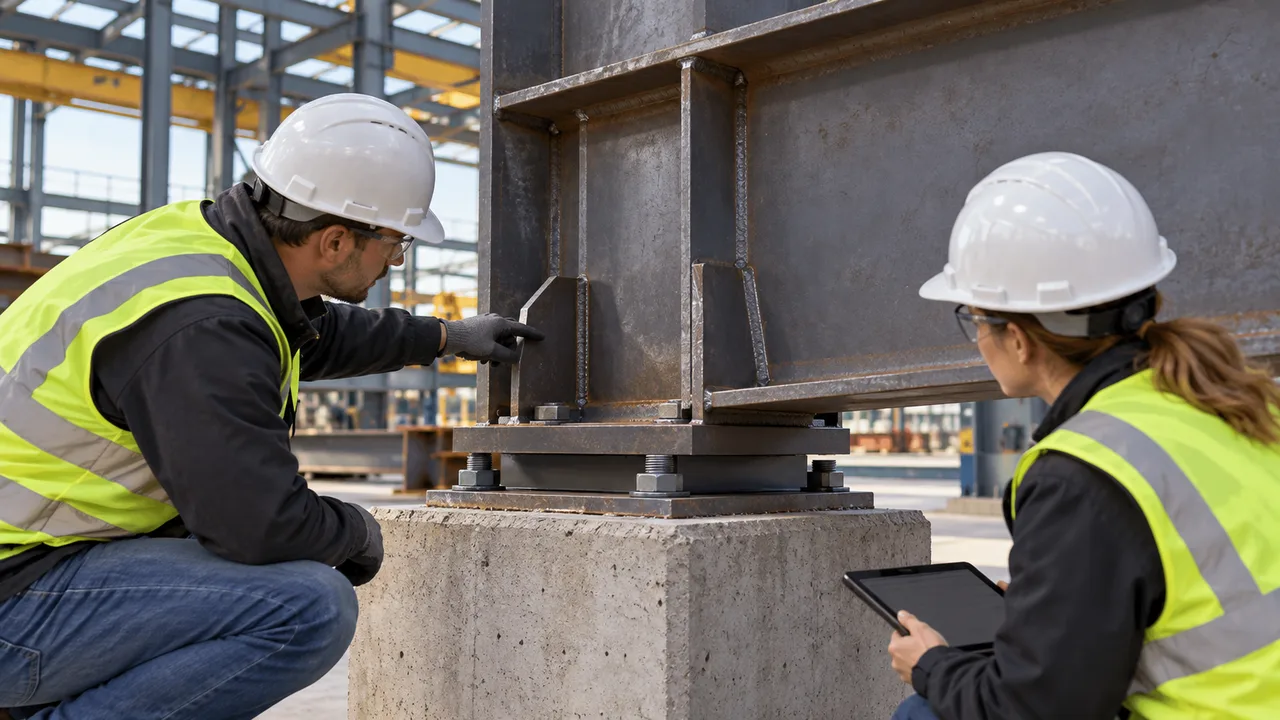
Connections are among the most critical elements of any steel frame because they transfer forces between structural members.
Connection systems may include:
- Bolted connections
- Welded connections
- Moment connections
- Shear connections
Connection fabrication must meet strict engineering requirements and quality standards.
Engineering and Design Considerations
Structural Analysis
Every steel frame must be engineered to safely withstand expected loads throughout its service life.
Analysis typically includes:
- Dead loads
- Live loads
- Wind loads
- Snow loads
- Seismic loads
- Equipment loads
Accurate structural analysis forms the basis of safe and efficient frame design.
Frame Optimization
Modern engineering software enables designers to optimize steel frames for performance, cost, and fabrication efficiency.
Optimization objectives often include:
- Weight reduction
- Material efficiency
- Cost control
- Construction efficiency
- Future scalability
Well-optimized frames can provide significant lifecycle benefits.
Compliance and Standards
Steel frame systems must comply with applicable design codes and construction standards.
Engineering teams evaluate:
- Structural regulations
- Safety requirements
- Industry standards
- Project specifications
Compliance helps ensure safety and long-term building performance.
Steel Frame Fabrication Process
Material Procurement
The fabrication process begins with sourcing certified structural steel materials that meet project specifications.
Material management typically involves:
- Certification verification
- Supplier qualification
- Material traceability
- Incoming inspection
Quality materials are fundamental to structural reliability.
CNC Cutting and Processing
Modern fabrication facilities use advanced CNC equipment to achieve high levels of precision and production consistency.
Processing activities commonly include:
- Plate cutting
- Profile cutting
- Drilling operations
- Edge preparation
- Component shaping
Automated processing improves accuracy and reduces production errors.
Welding and Assembly
Following material preparation, structural members are assembled according to approved fabrication drawings.
Assembly procedures often include:
- Fit-up operations
- Alignment verification
- Welding procedures
- Temporary bracing
- Inspection checkpoints
Proper assembly ensures fabricated frames match engineering requirements.
Inspection and Verification
Fabricated components undergo extensive inspections before surface treatment and shipment.
Verification activities may include:
- Dimensional measurements
- Connection inspections
- Geometry checks
- Tolerance verification
- Documentation review
Inspection procedures help ensure installation efficiency and structural accuracy.
Surface Treatment and Protection
Painting Systems
Protective coatings help shield steel surfaces from environmental exposure and corrosion.
Painting systems are selected based on environmental conditions and project requirements.
Hot-Dip Galvanizing
Hot-dip galvanizing provides long-term corrosion protection by applying a protective zinc coating to steel surfaces.
This solution is particularly effective for outdoor and high-humidity environments.
Corrosion Protection Methods
Different operating environments require different protection strategies.
Protection systems may include:
- Protective coatings
- Galvanizing
- Industrial paint systems
- Multi-layer corrosion protection
Proper protection helps maximize service life and reduce maintenance costs.
Service Life Enhancement
Surface treatments contribute significantly to durability and long-term structural performance.
Selecting the appropriate protection system can improve lifecycle value and reduce ownership costs.
Quality Control in Steel Frame Fabrication
Material Inspection
Quality control begins with verifying that incoming materials comply with specifications and project requirements.
Welding Quality Control
Welding inspections help ensure structural integrity and compliance with applicable quality standards.
Inspection methods may include visual examination and non-destructive testing when required.
Dimensional Verification
Fabricated components are measured and compared against approved drawings to confirm accuracy and compliance.
Final Inspection Procedures
Before shipment, completed frame components undergo final review to confirm readiness for transportation and installation.
Benefits of Professional Steel Frame Fabrication
High Structural Strength
Steel frames provide exceptional load-carrying capacity while maintaining efficient material usage.
Faster Construction
Prefabricated components can significantly reduce site construction time and improve project schedules.
Design Flexibility
Steel framing supports a wide range of architectural and operational requirements.
Consistent Manufacturing Quality
Controlled fabrication environments help maintain consistent quality and dimensional accuracy.
Future Expansion Capability
Many steel-framed buildings can be designed to accommodate future expansion and operational growth.
Applications of Steel Frame Structures
Warehouses
Warehouse projects rely heavily on steel frame systems to achieve large storage areas and operational flexibility.
Factory Buildings
Manufacturing facilities use steel frames to support production equipment and industrial operations.
Commercial Buildings
Commercial developments benefit from steel framing’s strength, flexibility, and speed of construction.
Logistics Facilities
Distribution centers and logistics hubs often utilize steel frames to create efficient operational environments.
Infrastructure Projects
Many transportation and public infrastructure developments incorporate steel framing systems as part of their structural design.
Why Choose XTD Steel Structure
Advanced Manufacturing Equipment
Modern CNC processing equipment and fabrication technologies support precision manufacturing and efficient production.
Experienced Engineering Team
Professional engineering expertise helps optimize frame design, fabrication quality, and project performance.
Large-Scale Fabrication Capacity
XTD Steel Structure maintains manufacturing capabilities suitable for both standard and complex structural projects.
Global Project Delivery Experience
XTD Steel Structure has supplied steel structure solutions for industrial, commercial, and infrastructure projects across international markets.
Frequently Asked Questions
What is steel frame fabrication?
Steel frame fabrication is the process of manufacturing structural steel components that form the primary framework of a building or structure.
What types of steel frames can be fabricated?
Portal frames, building frames, industrial frames, and custom-engineered structural systems can all be fabricated according to project requirements.
What industries use steel frame structures?
Industries including manufacturing, logistics, warehousing, commercial development, and infrastructure commonly utilize steel frame systems.
Is galvanizing necessary for steel frames?
Galvanizing is often recommended for outdoor environments or projects requiring enhanced corrosion protection and longer service life.
Start Your Steel Frame Project
Steel frame fabrication combines engineering expertise, advanced manufacturing technology, and rigorous quality control to produce structural systems capable of supporting modern construction projects. Whether the application involves warehouses, factories, commercial buildings, or infrastructure developments, professionally fabricated steel frames provide strength, efficiency, and long-term reliability.
Working with an experienced fabrication partner helps ensure consistent quality, efficient project execution, and successful structural performance from concept through completion.