Integrated Delivery for Steel Structure Projects
Traditional project delivery can involve separate designers, material suppliers, fabricators, logistics companies, erection contractors, and local site teams. This arrangement can work effectively when interfaces are carefully managed, but complex projects may face uncertainty over drawing revisions, production priorities, shipment sequencing, installation requirements, or responsibility for resolving technical conflicts.
An integrated steel structure delivery model aims to connect the major execution stages within a coordinated workflow. Depending on the contract, this may include:
- Project requirement review
- Engineering and structural coordination
- Detailed production information
- Material procurement
- Steel fabrication
- Quality inspection
- Surface protection
- Packaging and transportation
- Site erection
- Completion checks and handover
The key difference is coordination. A component-only supplier may finish its responsibility when fabricated members are dispatched. A turnkey delivery team considers how engineering decisions, production sequencing, logistics, and site installation interact across the agreed project scope.
What Is Turnkey Steel Structure Construction?
Turnkey steel structure construction is a project delivery approach in which interconnected stages of a steel structure project are managed under a coordinated scope. The owner typically defines functional needs, technical requirements, site conditions, performance expectations, schedule priorities, and contractual boundaries. The delivery team then coordinates the agreed activities required to move the project toward completion.
The term “turnkey” should not be interpreted as automatically including every possible part of a building. Its meaning depends on the contract. One project may cover structural engineering, fabrication, delivery, and erection, while another may additionally include cladding, selected civil interfaces, or other building systems.
From Project Concept to Completed Structure
A typical integrated workflow may begin with basic project information such as building use, dimensions, location, equipment requirements, operational loads, and target completion dates. These inputs guide engineering development and establish the basis for production.
Once technical information is approved, the project progresses through material planning, fabrication, inspection, surface treatment, packaging, transportation, erection, and completion verification. Each stage should provide usable information for the next rather than operating as an isolated activity.
Scope Depends on Contract and Project Requirements
Clear scope definition is essential. Depending on the agreement, responsibilities may include or exclude:
- Structural design
- Detailed shop drawings
- Foundation design or construction
- Primary and secondary steel structures
- Roof and wall cladding
- Doors and openings
- Mechanical, electrical, and plumbing systems
- Fire protection systems
- Installation equipment
- Local permits
- Testing and commissioning
A credible turnkey proposal should state these boundaries before execution begins. This reduces assumptions and helps all parties understand where responsibility transfers between the steel structure provider, owner, local contractor, and specialist suppliers.
Core Scope of a Turnkey Steel Structure Project
Project Requirement Review
The process begins by defining what the facility must achieve. A warehouse has different operational priorities from a crane-supported workshop, mining maintenance building, or processing facility.
Early review may consider:
- Building dimensions and intended use
- Required clear spans
- Internal height
- Equipment and machinery loads
- Crane requirements
- Storage capacity
- Environmental exposure
- Future expansion plans
- Target project schedule
These requirements create the foundation for engineering and delivery planning.
Engineering and Design Coordination
Engineering decisions influence nearly every downstream activity. Structural systems must respond to project loads while remaining practical to fabricate, transport, and install.
Coordination can address structural configuration, load paths, member sizing, bracing, connection concepts, equipment interfaces, constructability, and erection requirements. For industrial projects, the structure may also need to accommodate production lines, bridge cranes, platforms, conveyors, utility systems, or maintenance access.
Detailed Drawings and Production Information
Approved engineering information must be converted into clear manufacturing data. Shop drawings and production documents may define:
- Member dimensions
- Plate thicknesses
- Hole locations
- Connection geometry
- Welding details
- Component marks
- Assembly references
- Installation relationships
Revision control is particularly important because outdated production information can affect multiple batches of components and create downstream installation conflicts.
Material Procurement
Material planning connects engineering requirements with production schedules. Steel grades, plate thicknesses, structural sections, bolts, welding consumables, and coating materials must correspond to approved specifications.
Procurement coordination may also include material documentation, batch identification, delivery scheduling, and traceability requirements. For large projects, procurement timing can directly influence the sequence of fabrication.
Steel Structure Fabrication
Fabrication transforms approved production information into physical structural components. Depending on the project, operations may include:
- CNC cutting
- Precision drilling
- Sawing
- Edge preparation
- Plate assembly
- Structural welding
- Dimensional verification
- Component marking
Production sequencing should reflect not only factory efficiency but also shipment priorities and erection requirements. Components needed early on site should not become trapped behind later-stage packages.
Surface Protection
Protection systems are selected according to the service environment and project specification. Structures in coastal, humid, industrial, mining, or chemically aggressive environments may require different approaches from buildings in moderate inland conditions.
Work may include abrasive blasting, primer application, multilayer protective coatings, or project-specific corrosion protection systems. Surface preparation and coating inspection are important because the performance of a protective system depends heavily on application quality.
Packaging and Logistics
Logistics is not simply the movement of steel from a factory to a site. Effective planning considers how components will be identified, loaded, unloaded, stored, and erected.
Typical activities include:
- Component coding
- Packing list preparation
- Bundle organization
- Container loading planning
- Oversized cargo coordination where required
- Export documentation
- Shipment sequencing
For international projects, organized identification becomes especially important because site teams may receive multiple shipments over an extended period.
Site Installation
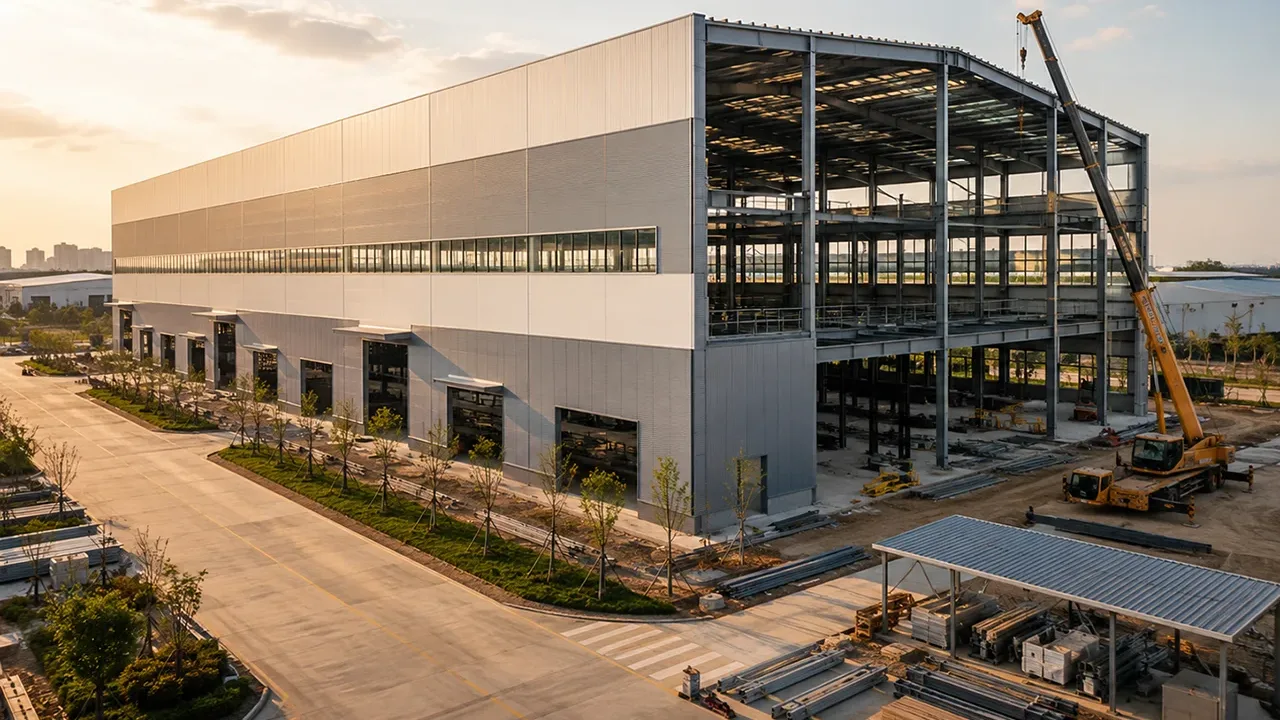
Installation converts fabricated components into the completed structural frame. The erection sequence depends on the structural system, site access, crane availability, building dimensions, temporary stability requirements, and delivery sequence.
Typical work can involve:
- Column erection
- Beam and rafter installation
- Bracing installation
- Bolted connections
- Site welding where specified
- Alignment checks
- Final bolt tightening
- Structural completion inspection
Installation planning should begin before steel arrives on site. Early coordination can reduce unnecessary handling and improve the relationship between shipment packages and erection priorities.
Final Inspection and Handover
Completion involves verifying the agreed scope rather than simply declaring that erection has ended. Depending on contractual requirements, final activities may include structural checks, outstanding work review, documentation compilation, completion records, and formal handover.
How the Turnkey Delivery Process Works
Stage 1: Project Definition
The project team establishes building function, required capacity, site information, operational conditions, schedule expectations, and scope boundaries. Missing information at this stage should be identified before it affects engineering or procurement.
Stage 2: Engineering Development
The structural concept is developed and coordinated with fabrication feasibility and installation conditions. Connection strategies, component dimensions, transport limitations, and erection requirements should be considered together rather than sequentially.
Stage 3: Manufacturing Preparation
Approved information is converted into material plans, production drawings, quality requirements, component codes, and manufacturing sequences. This stage establishes the practical bridge between engineering and factory execution.
Stage 4: Fabrication and Quality Control
Components are processed, assembled, welded, inspected, and protected according to project requirements. Quality control is integrated into production so that issues can be identified before they reach the site.
Stage 5: Logistics and Delivery
Shipment priorities are coordinated with site readiness and installation sequence. International projects may also require container optimization, export documentation, port coordination, and local inland transportation planning.
Stage 6: Installation and Completion
The structure is erected according to an organized sequence that maintains stability while progressing toward permanent completion. Alignment, connections, final inspections, and agreed handover documentation complete the delivery chain.
Benefits of Turnkey Steel Structure Construction
Fewer Coordination Interfaces
Every transfer of responsibility creates a potential information gap. Integrated delivery reduces the number of disconnected interfaces between engineering, fabrication, logistics, and erection. This does not eliminate project complexity, but it can make communication paths clearer.
Clearer Project Responsibility
When responsibilities are defined within one coordinated delivery structure, technical issues can be escalated more efficiently. Owners spend less time determining whether a problem originated with a designer, fabricator, shipper, or installation contractor.
Better Schedule Coordination
Project stages can be linked more deliberately:
- Engineering priorities guide procurement
- Procurement timing supports production
- Production sequence supports shipping
- Shipping sequence supports erection
- Erection priorities inform package organization
This relationship can be particularly valuable for projects with strict operational deadlines.
Improved Constructability
A coordinated approach allows manufacturing and installation considerations to influence earlier decisions. Connection details can consider site access. Component sizes can consider transport limits. Packaging can reflect erection sequence. These practical relationships help reduce avoidable site difficulties.
More Predictable Quality Control
Shared quality requirements across engineering, materials, fabrication, coating, logistics, and installation create better continuity. Records can follow the project through multiple stages rather than being isolated within separate organizations.
Better Cost Visibility
Turnkey delivery does not automatically mean the lowest initial price. Its value often comes from improved visibility of interfaces, fewer hidden coordination tasks, reduced rework exposure, and clearer responsibility for agreed deliverables.
Turnkey Construction vs Traditional Fragmented Delivery
| Project Factor | Turnkey Delivery | Fragmented Delivery |
|---|---|---|
| Responsibility | More consolidated under an agreed scope | Split among multiple parties |
| Engineering coordination | Connected with downstream execution | Requires multiple interfaces |
| Fabrication feedback | Can flow directly into project coordination | May require separate communication channels |
| Logistics | Linked to production and site priorities | Often separately managed |
| Installation planning | Considered earlier in the workflow | May be developed after fabrication decisions |
| Issue resolution | More centralized within defined responsibility | Can cross several contractual boundaries |
Neither model is universally correct for every project. The appropriate choice depends on owner capabilities, project complexity, local contracting conditions, technical requirements, and the ability to manage interfaces. However, projects with complex coordination demands can benefit significantly from integrated delivery.
Projects Suitable for Turnkey Steel Structure Delivery
Industrial Factories
Factories may combine production lines, cranes, equipment foundations, maintenance zones, storage areas, and future expansion requirements. Coordinating the structure around these operational needs can improve project execution.
Steel Warehouses
Logistics centers, distribution facilities, high-bay warehouses, and industrial storage buildings often benefit from coordinated engineering, fabrication, shipment, and rapid erection planning.
Heavy Workshops
Workshops with bridge cranes, large equipment access, heavy operational loads, or high clearances require careful integration between structural design and manufacturing accuracy.
Mining and Resource Facilities
Remote project locations create additional logistics and installation challenges. Processing buildings, maintenance workshops, material handling structures, and support facilities can benefit from organized component identification and delivery planning.
Commercial and Public Buildings
Selected exhibition halls, commercial facilities, public buildings, and other large-span developments may use integrated delivery when schedule coordination and structural complexity justify the model.
International Steel Structure Projects
Overseas projects can involve long-distance transport, multiple shipments, local installation teams, language differences, and complex responsibility boundaries. Integrated coordination helps connect factory production with destination-site requirements.
Engineering Considerations in Turnkey Steel Construction
Site Conditions
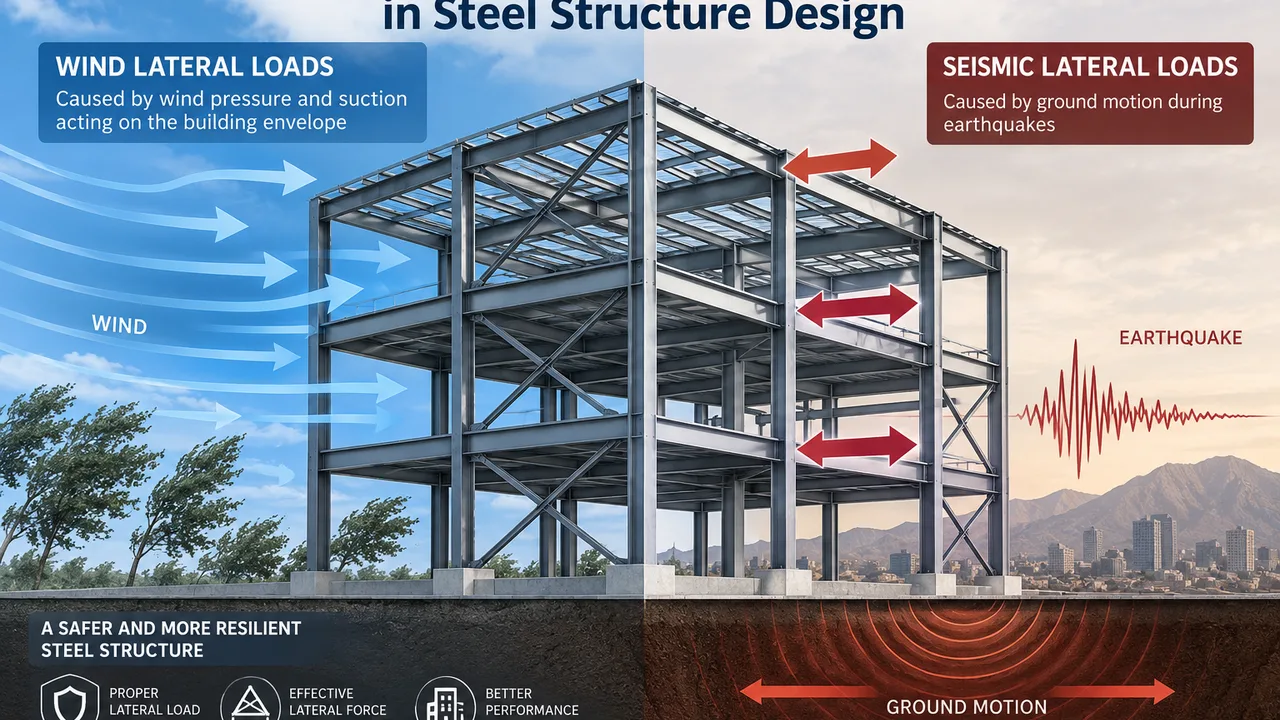
Wind, seismic conditions, temperature, corrosion exposure, site access, and foundation interfaces influence structural decisions. These conditions should be understood early enough to guide engineering and construction planning.
Operational Loads
Industrial facilities may involve machinery loads, storage loads, crane actions, vibration, dynamic forces, or maintenance access requirements. The structural system must respond to actual operating conditions.
Building Expansion
Future production growth may require additional bays, warehouse extensions, new equipment zones, or increased operational capacity. Where known, expansion intentions can be considered during initial planning.
Installation Constraints
Restricted sites, remote locations, limited crane access, seasonal weather, or complex delivery routes can influence member sizes, connection strategies, packaging, and erection sequence.
Quality Management Across the Entire Delivery Chain
Quality management in turnkey steel structure construction extends beyond factory inspection. The objective is to maintain control as information and components move from engineering through production and into final installation.
Engineering Control
Approved drawings, revision status, design changes, and technical clarifications should be managed systematically to reduce the risk of outdated information reaching procurement or production.
Material Control
Material verification may include steel grade confirmation, certificate review, batch identification, visual inspection, and traceability records according to project requirements.
Fabrication Inspection
Inspection can cover dimensions, hole positions, connection geometry, weld quality, component identification, and surface protection. Non-destructive testing may be applied where specified by project requirements or applicable standards.
Logistics Control
Component marks, packing records, loading plans, shipment documents, and delivery sequences should remain coordinated so that site teams can identify and manage arriving steel efficiently.
Installation Inspection
Site checks may include alignment, bolted connections, specified field welds, structural geometry, bracing completion, and other agreed completion requirements.
Managing International Turnkey Steel Structure Projects
International delivery adds complexity beyond fabrication. Export documentation, shipping schedules, container utilization, port handling, inland transportation, local lifting resources, and site communication can all influence project performance.
Effective coordination may involve:
- Planning shipment batches around erection priorities
- Using clear component identification systems
- Preparing practical packing documentation
- Considering destination unloading conditions
- Defining local contractor responsibilities
- Coordinating technical information across time zones
- Managing changes between factory and site teams
Local responsibilities should be explicitly defined. A turnkey international package may still depend on local civil contractors, permitting authorities, lifting equipment providers, utility specialists, or installation labor. Clear boundaries help prevent assumptions after materials have already been shipped.
Why Delivery Scope Must Be Defined Before Project Execution
The word “turnkey” can create problems when it is used without a detailed scope. One party may interpret it as a complete structural package, while another expects foundations, cladding, MEP systems, permits, commissioning, and all local construction activities.
Before execution, the project should clarify:
- Engineering boundaries
- Foundation responsibilities
- Primary and secondary steel scope
- Roof and wall system scope
- MEP interfaces
- Fire protection responsibilities
- Installation labor
- Cranes and lifting equipment
- Temporary works
- Local permits and approvals
- Testing requirements
- Handover documentation
This level of definition protects both the owner and the delivery team. A successful turnkey model depends on coordinated responsibility, not vague promises of unlimited inclusion.
XTD Steel Structure for Integrated Project Delivery
XTD Steel Structure supports customized steel structure projects through coordinated engineering, steel processing, fabrication, quality inspection, international supply, and installation-related project coordination according to the agreed scope. Project solutions can be developed for factories, warehouses, workshops, mining-related facilities, industrial buildings, and selected infrastructure applications.
The delivery approach can connect structural requirements with manufacturing feasibility, production sequencing, component identification, logistics planning, and site execution needs. This is particularly valuable for projects where steel is fabricated in one country and delivered to another, because decisions made at the factory can directly affect unloading, organization, and erection at the destination.
Project scope should always be defined according to actual requirements. By establishing responsibilities early, owners and project teams can evaluate an integrated delivery model based on technical needs, site conditions, schedule priorities, and local execution capabilities.
Frequently Asked Questions
What is included in turnkey steel structure construction?
The exact scope depends on the contract. It may include engineering coordination, detailed drawings, material procurement, fabrication, quality inspection, surface treatment, transportation, installation, completion checks, and handover. Foundations, cladding, MEP systems, permits, and other works should be explicitly defined rather than assumed.
Is turnkey construction suitable for overseas projects?
Yes. International projects can benefit from coordinated engineering, fabrication, export packaging, shipment sequencing, component identification, and installation planning. However, local responsibilities must still be clearly established.
Does turnkey steel construction include foundations and MEP systems?
Not automatically. These elements may be included in some contracts and excluded in others. The project agreement should clearly define foundation works, mechanical systems, electrical systems, plumbing, fire protection, and other building services.
Can turnkey steel structures be customized for industrial equipment?
Yes. Structural systems can be coordinated around machinery loads, bridge cranes, equipment platforms, conveyors, maintenance access, specialized supports, and other project-specific operational requirements.
How does turnkey delivery help control project schedules?
It can link engineering priorities with procurement, fabrication, logistics, and erection planning. This reduces disconnected handovers and allows downstream requirements to influence earlier project decisions.
Discuss Your Turnkey Steel Structure Project
Every project has different requirements for structural loads, building dimensions, operational functions, delivery location, installation conditions, and contractual scope. Working with a turnkey steel structure construction partner that can coordinate engineering information, manufacturing, logistics, and site execution helps create a more connected delivery process.
Share your project drawings, intended building use, site location, required delivery scope, structural loads, destination, installation expectations, and target schedule to evaluate an integrated steel structure solution suited to your project.