Integrated Full Service Steel Construction for Complete Project Delivery
A complete full service steel construction approach brings major steel structure phases into one connected delivery framework. Depending on project requirements, the service can cover technical assessment, engineering, detailing, fabrication, surface protection, packing, transportation planning, erection coordination, and final structural verification.
The objective is continuity. Information developed during engineering should remain useful during production, logistics, and installation rather than being repeatedly reinterpreted by disconnected parties. This can improve technical communication and provide better visibility over interfaces that affect schedule, quality, and constructability.
One Coordinated Delivery Framework
A coordinated framework connects project definition with physical execution. Functional requirements, structural grids, equipment zones, loading conditions, building dimensions, and future expansion plans can be considered before detailed decisions become difficult or expensive to change.
This continuity also helps teams understand how design revisions may affect procurement, shop drawings, fabrication priorities, shipping arrangements, and site activities.
Flexible Scope Based on Project Requirements
Not every project requires exactly the same service boundary. Some clients need engineering, fabrication, export delivery, and erection support. Others already have consultants or local contractors and require a coordinated manufacturing and technical package.
A flexible model can therefore interface with owner requirements, approved external designs, local engineering teams, general contractors, and installation partners while maintaining clear technical responsibilities.
Scope of Full Service Steel Construction
Early Project Planning and Technical Assessment
The process begins by understanding the intended function of the building or structure. Important inputs may include required floor area, span, clear height, structural grid, equipment arrangement, crane requirements, access conditions, future expansion, and local environmental factors.
Early assessment also identifies potential delivery constraints such as transportation dimensions, restricted site access, limited lifting areas, phased construction, or interfaces with existing facilities.
Structural Engineering and Design Coordination
Engineering develops a structural solution based on project function, loading, geometry, applicable standards, and performance requirements. The work may include structural scheme selection, stability strategy, member analysis, bracing configuration, and coordination of critical interfaces.
Constructability should be considered alongside structural performance so that the resulting solution remains practical for production, transportation, and erection.
Detailed Engineering and Shop Drawings
Detailed engineering converts the structural concept into information suitable for manufacturing and assembly. This phase may include member detailing, connection design, base plates, anchor interfaces, splice locations, bracing details, and fabrication drawings.
Clear component identification and controlled revision management are especially important when many structural members must be produced, packed, shipped, and installed in a defined sequence.
Steel Fabrication and Production
Fabrication can include material preparation, CNC cutting, drilling, profiling, welding, assembly, and dimensional verification. Production planning should reflect approved engineering information and, where practical, downstream delivery priorities.
For large projects, manufacturing sequence can be coordinated with phased shipping or erection requirements rather than producing components without reference to site needs.
Surface Treatment and Protection
Steel protection requirements depend on environmental exposure, design life, project specifications, and maintenance strategy. Suitable systems may include industrial coatings, anti-corrosion paint systems, hot-dip galvanizing where appropriate, or other project-specific finishes.
Logistics and Delivery Coordination
Logistics planning considers component dimensions, weight, identification, packing, loading, transport method, delivery sequence, and unloading conditions. International projects may also require coordination for container loading, oversized components, breakbulk transport, and export documentation.
Site Erection and Installation Support
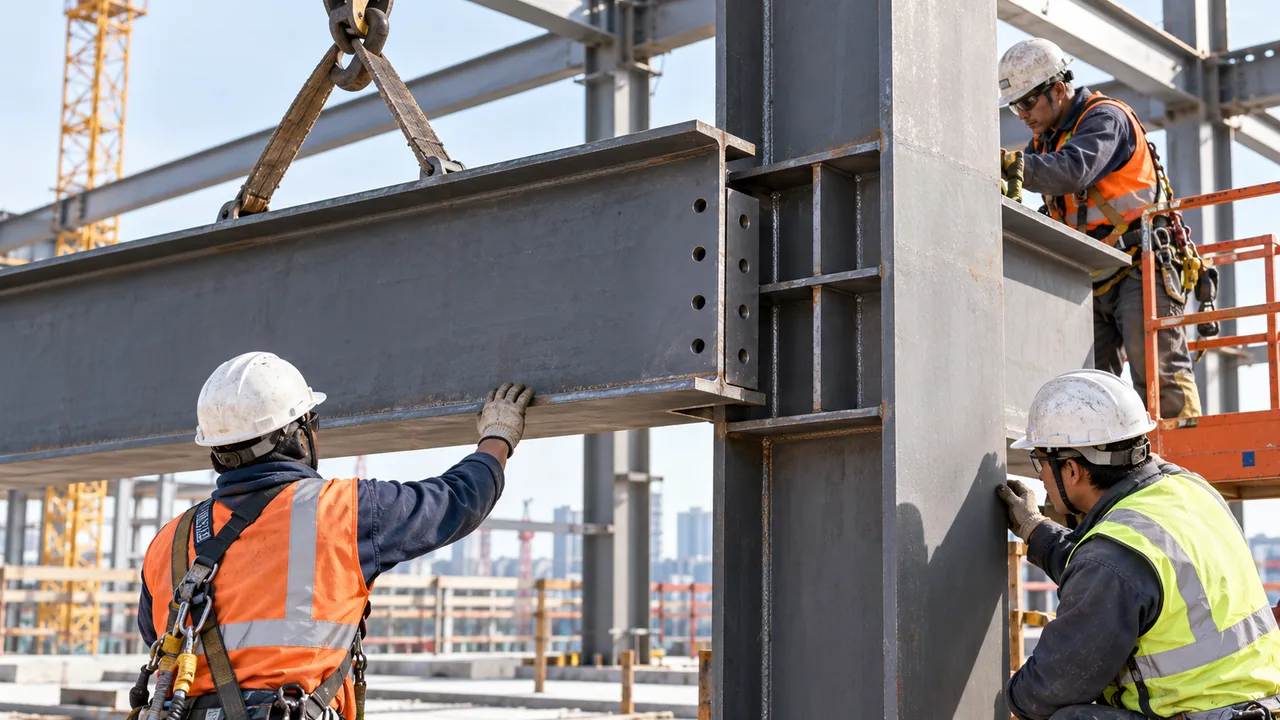
The construction-related scope can include erection planning, sequence coordination, structural assembly, bracing installation, alignment, connection completion, and technical support. Exact responsibilities depend on contract arrangements and local project conditions.
How the Full Service Delivery Model Works
Project Definition
The first stage establishes project objectives, scope boundaries, technical inputs, responsibilities, and critical interfaces. This provides a clearer basis for engineering and reduces ambiguity between participating teams.
Engineering Development
Project requirements are translated into a structural system that addresses strength, stability, serviceability, operations, and practical execution. Engineering decisions are reviewed against fabrication and construction realities where relevant.
Production Preparation
Before workshop production advances, fabrication information, material requirements, component priorities, and drawing status should be coordinated. This helps reduce conflicts caused by incomplete or inconsistent production inputs.
Fabrication and Quality Control
Structural components are manufactured according to approved requirements. Inspection activities may include material verification, weld checks, dimensional control, assembly verification, and surface treatment inspection.
Shipping and Site Mobilization
Delivery priorities can be coordinated with site readiness and erection sequence. Proper planning helps reduce unnecessary handling and avoids burying urgently required members beneath later-stage components.
Erection and Structural Completion
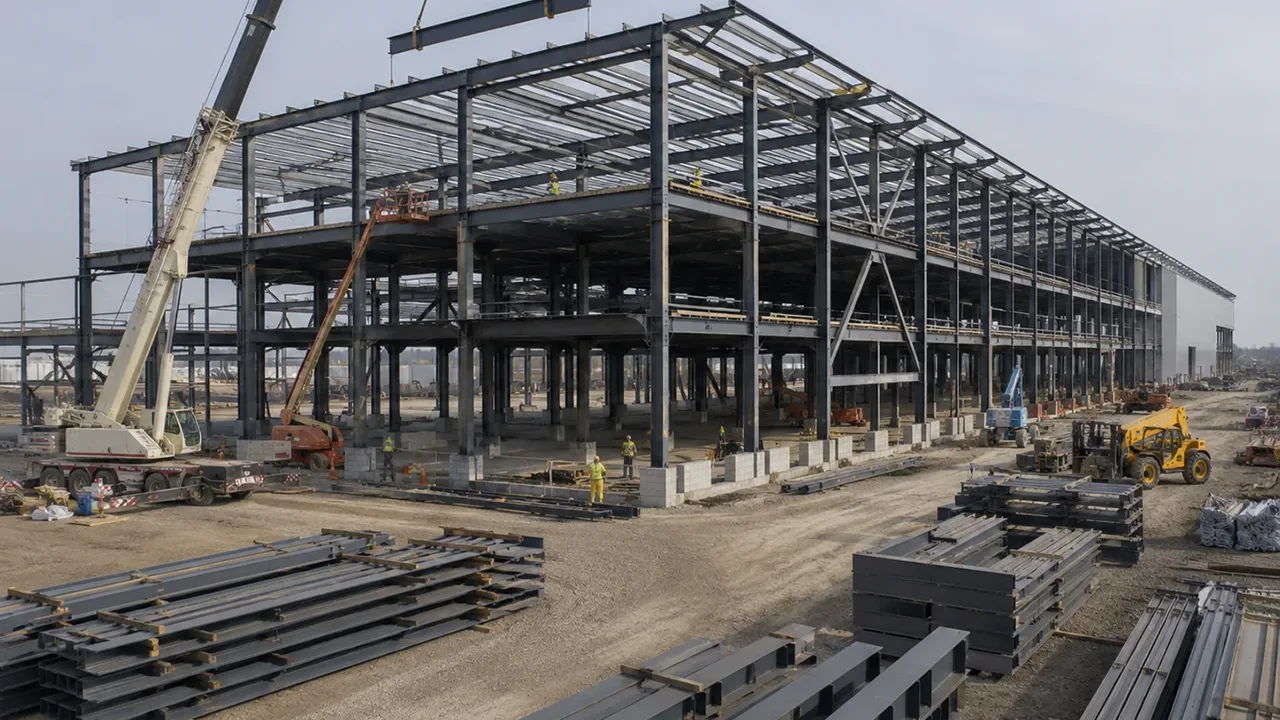
Primary frames are assembled according to the planned sequence, followed by required bracing, secondary members, and remaining structural elements. Alignment, geometry, and connection completion are then verified according to project requirements.
Steel Structure Systems Covered by the Service
Portal Frame Steel Buildings
Portal frame systems are widely used for warehouses, factories, workshops, and logistics facilities. They can provide efficient large internal spaces and can be adapted to different widths, clear heights, crane requirements, and expansion strategies.
Heavy Steel Structures
Heavy structural systems may be required for high-load industrial facilities, crane-supported buildings, equipment-intensive operations, and projects with substantial concentrated or dynamic loads.
These applications require close coordination between load requirements, member design, connections, fabrication capacity, and installation methodology.
Truss and Large-Span Structures
Steel trusses can support wide column-free spaces, complex roofs, industrial facilities, transport-related buildings, and public structures. Their geometry should be coordinated with fabrication segmentation, transportation restrictions, lifting capacity, and site assembly.
Multi-Storey Steel Structures
Multi-storey systems can serve industrial, commercial, office, and mixed operational functions. Steel framing may be coordinated with composite floors, concrete elements, vertical circulation zones, and different stability systems.
Custom and Special-Shaped Structures
Non-standard projects may involve irregular geometry, complex nodes, curved elements, unique architectural interfaces, or project-specific load paths. Such structures benefit from strong continuity between engineering, detailing, fabrication, and erection planning.
Applications of Full Service Steel Construction
Manufacturing and Factory Facilities
Manufacturing projects often require coordination between production lines, equipment zones, crane systems, utility routes, maintenance access, and future expansion. Structural planning should support these operational requirements from an early stage.
Warehouse and Logistics Projects
Warehouse developments may require clear-span storage areas, high-bay configurations, loading zones, racking interfaces, and automated logistics systems. Structural grids and building geometry should align with actual material flow and storage operations.
Industrial Processing Facilities
Processing facilities can introduce heavy operational loads, equipment support requirements, access platforms, maintenance zones, and complex interfaces between structural and mechanical systems.
Commercial and Public Developments
Commercial and public buildings may prioritize large interior spaces, flexible layouts, architectural expression, and coordination with multiple building services. Steel systems can be adapted to these project-specific requirements.
Infrastructure and Specialized Projects
Transport-related structures, industrial support facilities, and specialized developments may involve constrained sites, phased construction, existing infrastructure, or limited installation windows. These conditions make coordinated planning especially important.
Engineering Coordination Within a Full Service Model
Structural System Selection
The appropriate structural system should be selected according to function, span, height, loading, site conditions, operational requirements, and project priorities. A complete service model should not force every project into one standardized configuration.
Load and Performance Requirements
Engineering assessment may consider:
- Dead and imposed loads
- Wind actions
- Seismic requirements
- Snow and climatic loads where applicable
- Crane and equipment loads
- Project-specific operational conditions
These requirements influence member sizing, stability systems, connections, deformation limits, and other aspects of structural performance.
Coordination With Architecture and MEP
Structural design should consider major openings, equipment routes, service penetrations, roof systems, wall interfaces, drainage requirements, and other building systems. Early coordination can reduce disruptive modifications after fabrication begins.
Design for Constructability
Member segmentation, splice positions, connection accessibility, transport limitations, lifting weights, and erection sequences should be reviewed where they materially affect delivery. A structurally valid design must also be practical to manufacture and assemble.
Steel Fabrication as Part of the Complete Service
Material Preparation
Steel plates and sections can be processed through controlled cutting, drilling, profiling, and preparation procedures. Accurate material processing supports reliable fit-up and consistent downstream assembly.
Welding and Component Assembly
Fabricated components are welded and assembled according to approved requirements. Fit-up control and dimensional verification help maintain geometry and compatibility between related members.
Component Identification and Packing
Clear marking systems support production tracking, packing, unloading, and installation. For export or phased projects, component identification can be coordinated with shipment and erection priorities to improve site handling efficiency.
Quality Management Across Project Phases
Engineering Review
Engineering quality management can include drawing checks, interface reviews, revision control, and verification of critical technical inputs before information is released downstream.
Production Inspection
Depending on project requirements, inspection activities may cover material verification, weld quality, dimensional tolerances, assembly conditions, and protective coating systems.
Installation Verification
During structural installation, relevant checks may include alignment, verticality, geometry, connection completion, and project-specific acceptance requirements. Verification should follow the agreed technical scope and applicable standards.
Logistics and International Project Delivery
Export-Oriented Packing Strategy
Packing should protect structural components while supporting efficient identification, unloading, and site handling. The arrangement can be planned around component type, shipment sequence, and installation priorities.
Container and Breakbulk Coordination
Component dimensions and weights influence transport strategy. Standard members may be suitable for containerized shipping, while oversized structural elements may require alternative segmentation or breakbulk arrangements.
These considerations can affect engineering and detailing decisions, making early logistics review valuable.
Coordination With Local Site Teams
International projects frequently involve local contractors or erection teams. Clear drawings, component identification, sequence information, and timely technical clarification help maintain continuity between exported steel packages and local execution.
Construction and Erection Planning
Pre-Construction Readiness
Before structural erection begins, teams should review foundation interfaces, anchor bolt conditions, access routes, crane positions, storage zones, delivery readiness, and other site constraints.
Erection Sequence Planning
Installation sequencing typically considers primary frames, temporary stability, permanent bracing, secondary structures, and remaining components. The actual sequence must reflect structural behavior, site conditions, and available equipment.
Structural Alignment and Completion
Alignment, verticality, geometry, bolted connections, and specified site-welded connections should be completed and verified according to project requirements. Final checks help confirm that the installed structure corresponds with approved information.
Advantages of Full Service Steel Construction
A coordinated delivery approach can provide several practical advantages:
- Better continuity from planning to structural completion
- Reduced fragmentation between separate scopes
- Earlier identification of technical conflicts
- Improved coordination between fabrication and erection
- More practical logistics planning
- Clearer management of project interfaces
- Better visibility of schedule dependencies
- Faster response to controlled technical changes
The main value is not simply the number of activities included. It comes from managing relationships between those activities through a connected workflow.
Project Schedule and Delivery Control
Coordinated Engineering and Procurement
Engineering priorities can be aligned with material requirements and procurement needs. This helps teams identify long-lead items, critical structural packages, and information dependencies earlier.
Production Sequencing Based on Site Needs
Where project conditions permit, manufacturing priorities can reflect erection sequence and phased delivery requirements. This can reduce unnecessary storage and support more orderly site progress.
Managing Changes Across the Workflow
Design changes can affect drawings, material orders, production, packing, transportation, and installation. Controlled revision management and clear communication help reduce conflicting information across project phases.
Full Service Delivery for International Steel Projects
Engineering for Different Project Environments
International projects may involve different codes, climate conditions, owner specifications, operational requirements, and local construction practices. These factors should be identified during technical development rather than treated as late-stage adjustments.
Manufacturing for Export Projects
Export-oriented fabrication requires attention to component segmentation, identification, packing, transportation efficiency, and documentation. Large members may need to be designed with practical shipping and site assembly requirements in mind.
Local Installation Coordination
Where applicable, technical coordination can support local erection teams through installation information, sequence communication, drawing clarification, and management of structural interfaces. The exact responsibility should remain clearly defined according to the project contract.
Why Choose a Full Service Steel Construction Partner
Integrated Engineering Capability
A capable partner should combine structural analysis, detailed engineering, connection design, and project-specific optimization. This allows technical decisions to reflect actual building function and delivery conditions.
Controlled Manufacturing Capacity
Production planning, CNC processing, welding, assembly, dimensional management, and quality procedures should operate within a controlled manufacturing environment capable of supporting project scale and complexity.
Practical Construction Coordination
Experience with logistics, erection planning, site interfaces, and international project delivery helps connect workshop production with actual construction needs.
XTD Steel Structure supports integrated project delivery through coordinated engineering, fabrication, logistics, and construction-related planning capabilities, helping clients manage steel structure projects across connected technical and execution phases.
Frequently Asked Questions
What is full service steel construction?
It is an integrated delivery model that can coordinate multiple phases of a steel structure project, including technical planning, engineering, detailing, fabrication, quality management, logistics, and construction-related execution.
Does the service always include design, fabrication, and installation?
No. The exact scope depends on project requirements, contract responsibilities, location, and the roles of other participating parties. A full service model can be adapted while maintaining coordination between the included phases.
Can full service steel construction support international projects?
Yes. The model can support international projects through coordinated engineering, export-oriented fabrication, packing, transportation planning, documentation, and interfaces with local installation teams.
What types of steel structures can be delivered?
The service can support portal frames, heavy industrial structures, truss systems, large-span buildings, multi-storey structures, and custom or special-shaped steel systems, depending on project requirements.
How does a full service model reduce project complexity?
It improves continuity between phases, reduces fragmented interfaces, supports earlier technical coordination, and creates clearer communication between engineering, production, logistics, and construction activities.
Start Your Full Service Steel Construction Project
A well-coordinated full service steel construction model connects technical planning, engineering, fabrication, logistics, and construction execution around the actual requirements of the project. This approach can improve continuity, reveal constraints earlier, and help project teams manage complex interfaces before they create avoidable downstream disruption.
Whether the requirement involves an industrial facility, warehouse, manufacturing building, commercial development, or specialized steel structure, the delivery scope should be defined around real technical conditions rather than a generic package. Early project evaluation provides the foundation for a practical strategy covering engineering responsibilities, production, transportation, and site execution.