Built for Factory Projects With Tight Construction Schedules
Many factory buildings are planned around business deadlines rather than ideal construction conditions. A manufacturer may need a new workshop before the next production season. A logistics-linked production facility may need to open before a supply contract begins. A growing factory may need additional space without stopping the existing operation.
In these cases, conventional construction methods can create schedule risks because they often depend heavily on site labor, formwork, curing time, and weather-sensitive work. Steel structure construction changes the process by moving much of the work into the factory. Cutting, drilling, welding, inspection, coating, and packing can be completed before the components arrive on site.
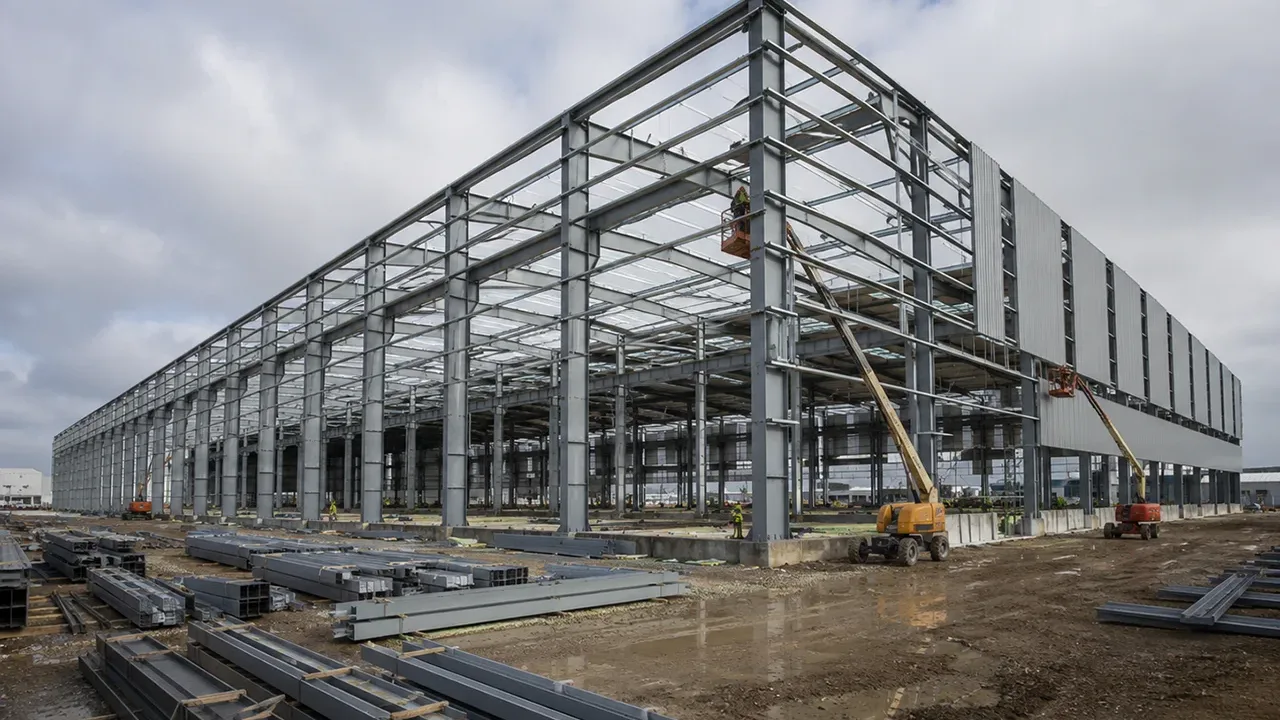
A well-planned quick assembly steel structure factory is especially useful for new production halls, factory expansions, industrial workshops, warehouse-connected factories, and export projects where construction teams need a predictable installation sequence.
What Makes a Steel Structure Factory Quick to Assemble?
Pre-Engineered Structural Layout
Fast assembly begins during the design stage. The structural layout should be planned with efficient column grids, practical bay spacing, suitable roof slope, and repeatable frame modules. When the main structure follows a clear and logical pattern, engineering, fabrication, packing, and installation become easier to control.
This does not mean every factory must use the same design. Production flow, equipment layout, door positions, crane requirements, ventilation needs, and future expansion plans still need to be reviewed carefully. The goal is to create a factory layout that is customized for the project while remaining efficient to manufacture and assemble.
Factory-Fabricated Steel Components
The main advantage of steel structure construction is that many critical processes happen before site installation begins. Steel columns, beams, bracing members, purlins, girts, and connection plates can be produced in a controlled factory environment. This improves dimensional accuracy and reduces the amount of adjustment required on site.
Factory fabrication also helps project teams maintain quality control. Hole positions, weld quality, member dimensions, coating thickness, and component identification can be checked before shipment. When components arrive correctly fabricated and clearly marked, the erection team can work faster and with fewer interruptions.
Bolt-Connected Installation System
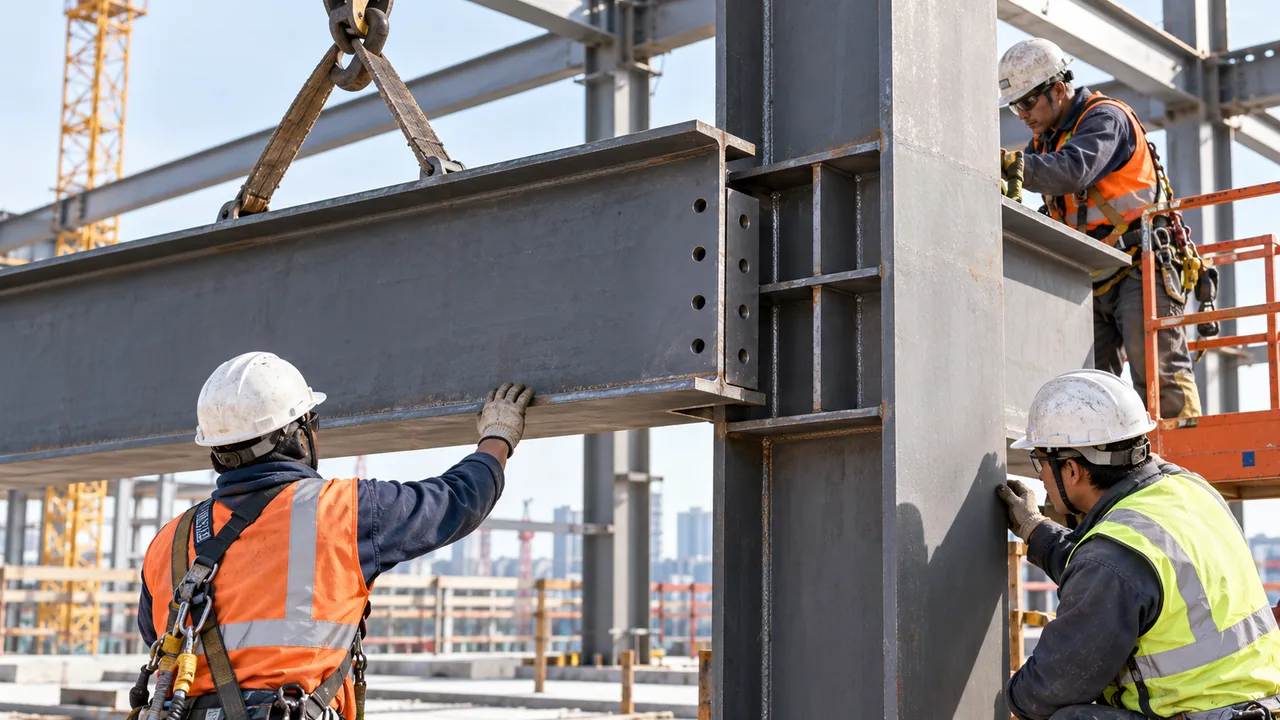
Quick assembly depends heavily on connection design. Bolted connections reduce the need for extensive on-site welding and allow the erection team to connect columns, beams, bracing, and secondary members more efficiently. This method is especially valuable for industrial factory projects where installation speed and safety must be managed together.
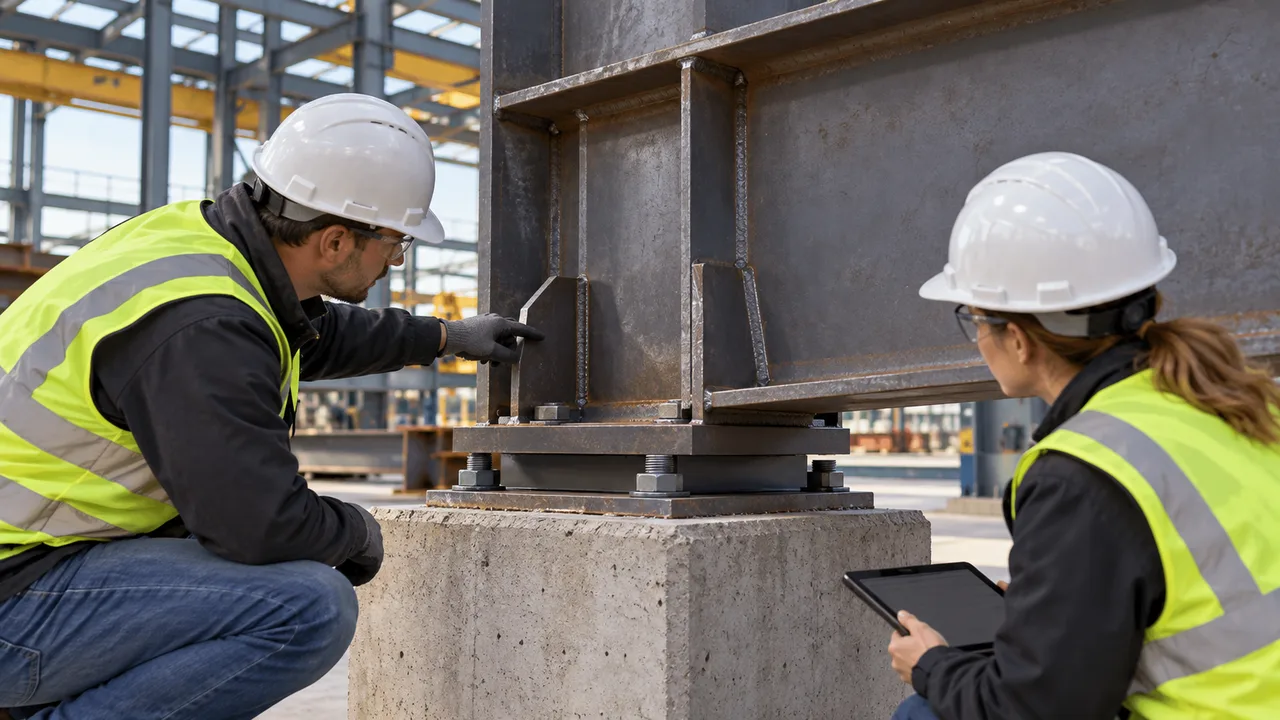
A bolt-connected system also makes the construction process more predictable. With the right anchor bolt layout, connection plates, and shop drawing details, the site team can follow a clear erection sequence from foundation preparation to frame installation, bracing, roof purlins, wall girts, and enclosure panels.
Clear Component Marking and Packing Sequence
Even a well-designed structure can lose time on site if components are difficult to identify. For fast assembly, steel members should be marked clearly and packed according to construction zones or erection sequence. This helps the site team locate the correct parts quickly and reduces delays caused by searching, sorting, or unpacking components in the wrong order.
For overseas projects, packing sequence is even more important. Container loading, bundle labeling, accessory packing, bolt grouping, and installation documents should support the actual assembly process at the destination site.
Suitable Applications for Quick Assembly Factory Buildings
Manufacturing Workshops
Manufacturing workshops often need practical open space, stable structural performance, and efficient installation. A quick assembly steel building can support machinery placement, assembly lines, product processing, internal movement, and basic production support zones.
Because the structural system can be customized, the workshop can be planned around production flow instead of forcing equipment and workers into a fixed building layout.
Industrial Production Facilities
Industrial production facilities may require larger spans, higher clear height, ventilation systems, crane zones, material handling routes, and connection to warehouse areas. Steel structure systems are suitable for these requirements because they can combine strength, flexibility, and faster project execution.
For production halls, fabrication areas, packaging zones, and mixed-use industrial facilities, steel construction provides a strong framework that can be adapted to many types of factory operation.
Factory Expansion Projects
Factory expansion projects often need speed because the existing facility may still be operating. A fast assembly structure helps reduce disturbance around the site and shortens the time required to add new workshop space, storage space, or production support areas.
Expansion planning should consider connection to existing buildings, traffic routes, equipment movement, drainage, power access, and future production flow. When these factors are reviewed early, the new steel structure factory can integrate better with the existing plant.
Construction Method From Fabrication to On-Site Assembly
Design Confirmation and Shop Drawing Preparation
The process starts with confirming project requirements. Important details include factory dimensions, production purpose, span, height, local load requirements, crane needs, door positions, ventilation preferences, loading areas, and installation schedule. Once these inputs are clear, engineers can prepare design calculations and shop drawings for fabrication.
Shop drawings are essential for quick assembly because they translate the design into accurate production and erection information. They define member sizes, hole positions, connection plates, bolt requirements, welding details, and component marks.
Steel Fabrication and Trial Quality Control
During fabrication, steel components are cut, drilled, assembled, welded, inspected, and coated according to project specifications. Quality control should check dimensional accuracy, weld condition, bolt hole alignment, surface preparation, and coating quality.
For projects with tight schedules, accurate fabrication is critical. If members are fabricated incorrectly, the site team may lose valuable time correcting issues during installation. Good factory control helps protect the construction timeline.
Delivery Planning and Site Erection
Delivery planning should match the erection sequence. Columns, beams, bracing, purlins, wall members, bolts, accessories, roof panels, and wall panels should be shipped and unloaded in a way that supports the site workflow.
On site, the usual sequence includes foundation checking, anchor bolt confirmation, column erection, beam installation, bracing installation, secondary structure installation, roof and wall panel fixing, and final adjustment. With clear drawings and organized components, the installation process becomes faster and easier to manage.
Speed Should Not Reduce Structural Performance
Load and Span Requirements
A fast construction method must still meet real industrial requirements. The structure should be designed according to span, height, wind load, roof load, equipment load, possible crane load, and local building conditions. A factory used for light assembly will not have the same structural demand as a facility used for metal processing, heavy production, or crane-supported operation.
For this reason, a quick assembly steel structure factory should never be treated as a shortcut. It is a faster delivery method supported by proper engineering, fabrication control, and installation planning.
Bracing and Connection Safety
Bracing systems, anchor bolts, high-strength bolts, and connection details are essential for building safety. These elements help the structure resist lateral forces, wind action, vibration, and operational movement. When they are coordinated correctly, the building can remain stable during both installation and long-term use.
Connection detailing is also important for assembly speed. Well-designed connections are easier to align, bolt, inspect, and complete on site.
Roof, Wall, Ventilation, and Insulation Coordination
A factory must be fast to build, but it must also be practical to operate. Roof and wall systems, skylights, ventilation, insulation, drainage, fire access, doors, windows, and internal circulation all affect daily productivity.
These building elements should be coordinated with the structural system instead of being added as afterthoughts. Good coordination helps the factory perform as a complete industrial facility, not only as a steel frame.
Recommended Configuration Options
The right configuration depends on the factory’s production process, timeline, location, and expansion plan. The table below shows common options used in fast assembly steel factory projects.
| Factory Element | Quick Assembly Option | Project Benefit |
|---|---|---|
| Main Frame | Pre-engineered portal frame or modular steel frame | Speeds up design, fabrication, and erection sequence |
| Secondary Structure | Standardized purlins, girts, and bracing members | Improves installation efficiency and component organization |
| Connection Method | Bolt-connected steel members | Reduces on-site welding and supports faster assembly |
| Roof and Wall Panels | Single sheet or insulated sandwich panel system | Allows fast enclosure and better control of building performance |
| Door and Opening System | Pre-planned industrial doors, windows, and ventilation openings | Supports production flow, loading access, and worker comfort |
| Surface Treatment | Paint coating or galvanizing based on exposure conditions | Improves durability before components arrive on site |
| Expansion Plan | Reserved end bay or modular extension direction | Makes future factory growth easier to manage |
Why Choose a Quick Assembly Steel Structure Factory?
For many industrial projects, time has a direct business value. A faster factory building can help owners begin production earlier, meet contract deadlines, reduce site management costs, and respond more quickly to market demand.
- Faster construction compared with many concrete-heavy factory building methods
- Less dependency on site labor because major steel work is completed in the factory
- More predictable quality through controlled fabrication and inspection
- Easier transportation and installation with marked and packed components
- Flexible layout for production lines, storage areas, cranes, and future expansion
- Better suitability for export projects where efficient packing and assembly guidance are important
When speed, structure, and installation planning are handled together, steel construction becomes a practical method for building industrial factories with shorter project cycles.
XTD Steel Structure Support for Fast Factory Building Projects
XTD Steel Structure supports factory building projects through engineering coordination, steel processing, welding, drilling, surface treatment, component marking, packing, and delivery support. This integrated service helps connect the design stage with factory production and site assembly.
For overseas factory projects, clear fabrication details and organized packing are especially important. Marked components, installation drawings, bolt lists, and shipment planning can help the local site team understand the erection sequence more easily.
Whether the project is a new production workshop, an industrial factory expansion, or a steel structure factory building for export delivery, the goal is to provide a practical building system that can be fabricated accurately and assembled efficiently.
Project Workflow for Quick Assembly Factory Construction
Requirement Review
The project begins with a review of factory purpose, building size, span, height, production flow, equipment layout, crane requirement, local design conditions, and target timeline. This information helps define the most suitable structural system and construction method.
Engineering and Fabrication
After the design direction is confirmed, engineers prepare drawings and fabrication details. Steel components are then produced in the factory through controlled cutting, drilling, welding, inspection, and coating procedures.
Packing, Shipping, and Installation Support
Finished components are packed according to shipment and erection needs. For international projects, export packing, container loading sequence, component marking, and installation guidance help reduce site confusion and support faster assembly.
Quick Assembly Steel Structure Factory FAQs
What makes a steel structure factory quick to assemble?
The speed comes from pre-engineered design, factory-fabricated steel components, bolted connections, clear component marking, organized packing, and a planned erection sequence.
Is a quick assembly factory strong enough for industrial production?
Yes. When properly engineered, the factory can meet span, load, wind, roof, equipment, and crane requirements. Quick assembly refers to the construction method, not a lower structural standard.
Can the factory include cranes, mezzanine, or office areas?
Yes. Cranes, mezzanine floors, office zones, loading areas, ventilation systems, and other functional spaces can be included when they are considered during the design stage.
Can the structure be expanded later?
Yes. Future expansion can be planned through modular bay spacing, reserved end-wall design, and a layout that allows additional workshop or storage areas to be connected later.
Build Your Factory Faster With a Planned Steel Structure System
A quick assembly steel structure factory is a practical solution for owners who need faster project delivery without sacrificing structural reliability. By combining pre-engineered design, factory fabrication, organized packing, and bolt-connected erection, the factory building can move from production to installation with better control.
To prepare your project, define the factory size, production use, site location, required span, height, crane needs, door positions, enclosure system, and expected completion schedule. With these details, the project team can develop a preliminary structural proposal and a construction method that supports faster factory operation.