Why Fabrication Quality Matters for Steel Buildings
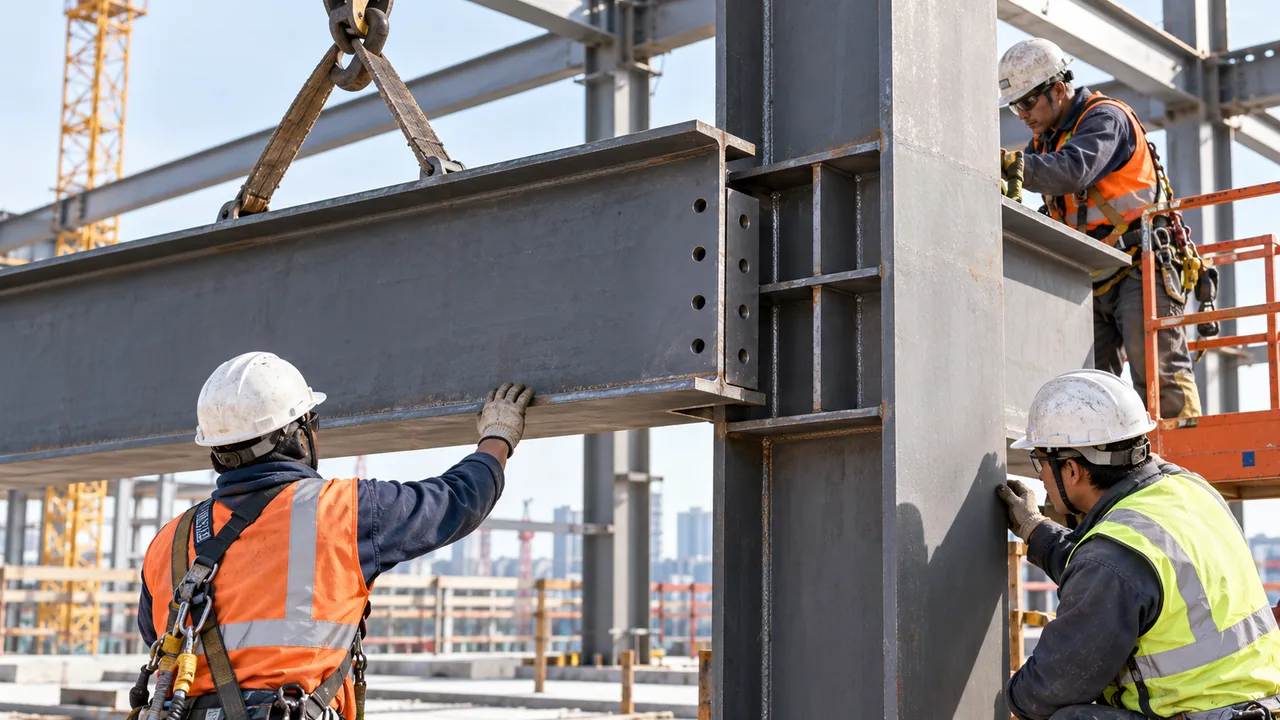
Steel buildings depend on the accuracy of many connected components. Columns, beams, rafters, bracing members, purlins, base plates, splice plates, and connection parts must work together as one structural system. Even small errors in hole position, member length, plate angle, or weld quality can create major problems during installation.
For building projects with tight schedules, poor fabrication quality can delay crane work, increase site labor, and force emergency modification. Cutting or drilling steel on site is usually slower, less controlled, and more costly than doing it correctly in the factory.
Quality-controlled fabrication helps improve:
- Frame alignment during erection
- Connection accuracy between steel members
- Welding consistency and structural reliability
- Coating durability and corrosion resistance
- Component identification and installation sequence
- Project schedule control and site efficiency
- Long-term steel building performance
For this reason, fabrication should be planned as part of the building delivery strategy, not as a separate production task.
What ISO Standard Steel Fabrication Means in Practice
ISO standard steel fabrication is not only about following a label. In practical steel building projects, it means using controlled procedures, clear documentation, consistent inspection, traceable materials, and repeatable production methods. The goal is to make each steel component reliable before it leaves the factory.
For structural steel buildings, this may include reviewing drawings before production, checking steel material certificates, controlling welding procedures, inspecting component dimensions, verifying coating quality, and marking parts clearly for shipment and installation.
The most important value is consistency. When the fabrication process is standardized, project teams can reduce uncertainty. Engineers, fabricators, contractors, and owners can work from clearer information, making it easier to coordinate production, delivery, and erection.
Quality Control Before Steel Production Starts
Drawing Review and Technical Confirmation
Quality control begins before steel is cut. Shop drawings, connection details, member sizes, bolt-hole positions, base plate dimensions, bracing layout, and installation sequence should be reviewed carefully before production starts.
This step helps confirm that the design intent can be manufactured and installed efficiently. It also helps identify possible conflicts between structural members, façade interfaces, roof systems, wall panels, crane supports, mezzanine areas, or building service openings.
Material Selection and Traceability
Material quality is the foundation of structural steel fabrication. Steel grade, thickness, plate specification, profile type, and material certificates should match project requirements. For projects with strict quality expectations, batch information and material records help maintain traceability throughout production.
Before processing begins, steel materials should be checked for specification compliance, surface condition, and suitability for the intended structural use. This reduces the risk of using incorrect or inconsistent materials in important building components.
Production Planning for Building Components
Steel buildings often involve many repeated but project-specific parts. Columns, roof beams, wall beams, bracing, connection plates, purlins, and secondary components must be fabricated in an organized sequence.
Good production planning helps align fabrication with delivery priority. Components needed first on site can be processed, inspected, marked, and packed according to the erection plan, reducing confusion during installation.
Controlled Fabrication Process for Structural Steel Components
CNC Cutting, Drilling, and Plate Preparation
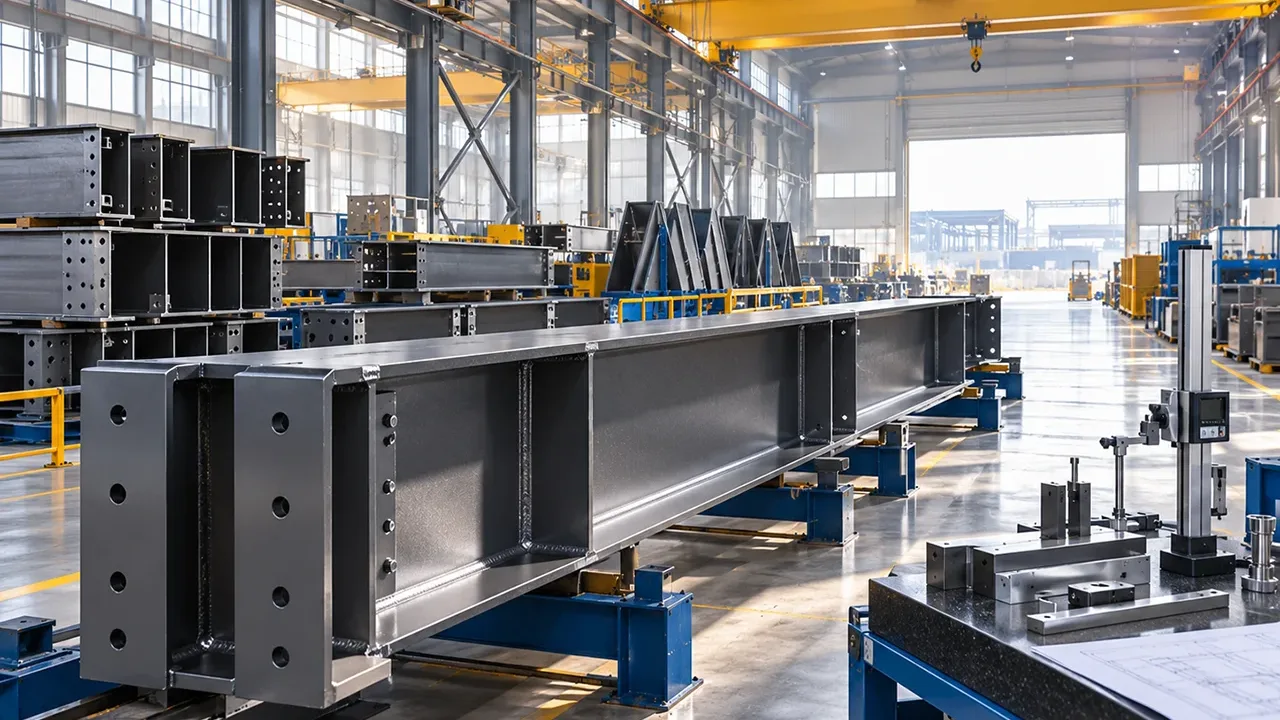
Accurate cutting and drilling are essential for steel building assembly. CNC processing helps improve dimensional consistency, hole accuracy, edge quality, and repeatability across multiple components. This is especially important for portal frames, large-span buildings, prefabricated warehouse systems, and structures with many bolted connections.
When holes and plates are prepared correctly in the factory, site teams can assemble components more smoothly with less forced adjustment.
Welding and Assembly Control
Welding quality affects both structural safety and installation accuracy. Fit-up control, welding sequence, weld size, distortion management, and visual inspection all influence the final quality of fabricated steel members.
For building components such as columns, rafters, base plates, splice plates, and crane-related members, welding should be managed carefully to reduce deformation and maintain connection compatibility. A controlled process helps ensure that welded assemblies remain suitable for accurate erection.
Dimensional Inspection Before Delivery
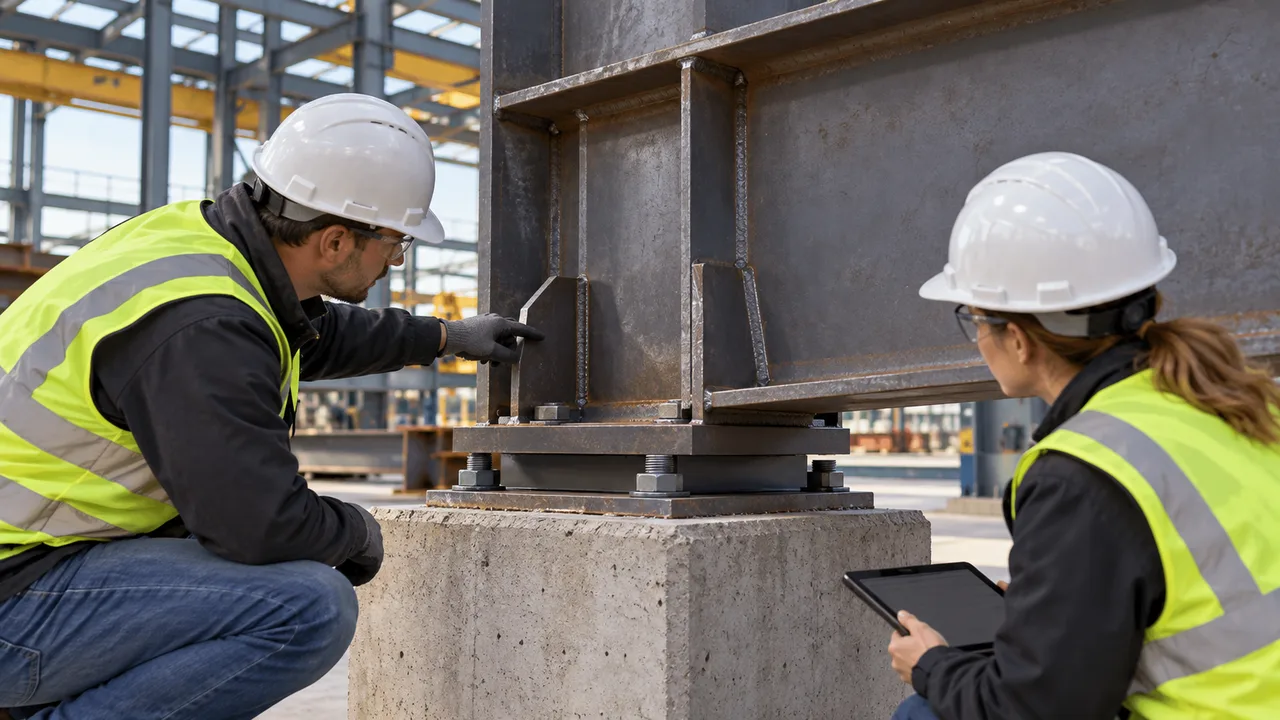
Before steel components are packed and shipped, important dimensions should be checked. This may include member length, hole spacing, base plate geometry, connection interface, column alignment, plate orientation, and part marking.
Dimensional inspection is one of the most practical ways to prevent site delays. If an issue is found in the factory, it can usually be corrected more efficiently than after the steel arrives at the construction site.
Surface Treatment and Corrosion Protection Quality
Steel building quality is not limited to geometry and welding. Surface treatment also plays an important role in long-term durability. Poor surface preparation or inconsistent coating can reduce corrosion protection, especially for buildings exposed to humidity, coastal air, industrial environments, or heavy daily use.
Depending on project requirements, surface treatment may include blasting, primer application, industrial paint systems, coating thickness checks, or hot-dip galvanizing for selected components. The correct protection method should reflect the project location, exposure condition, service life expectation, and transportation requirements.
Proper handling after coating is also important. Components should be protected from unnecessary damage during movement, packing, loading, and shipping.
Quality Documentation and Inspection Records
Quality documentation helps connect factory production with project management. For domestic and international steel building projects, clear records make it easier for owners, contractors, and installation teams to understand what has been produced, inspected, packed, and delivered.
Common quality documents may include:
- Material certificates
- Drawing and technical confirmation records
- Welding inspection records
- Dimensional inspection reports
- Coating or surface treatment checks
- Component marking records
- Packing lists and shipment documents
- Pre-shipment review records
For exported steel structure projects, documentation is especially useful because production and installation often happen in different countries. Clear records reduce communication gaps and help the receiving team manage components more efficiently.
Recommended Quality Checkpoints
The table below shows common checkpoints used in quality-oriented steel building fabrication.
| Quality Stage | What Is Checked | Why It Matters for Steel Buildings |
|---|---|---|
| Material Receiving | Steel grade, thickness, certificates, surface condition | Ensures the correct material is used before production starts |
| Drawing Confirmation | Member size, hole position, connection details, tolerances | Reduces fabrication errors and installation conflicts |
| Cutting and Drilling | Length, edge quality, bolt-hole accuracy, plate preparation | Improves assembly speed and connection fit on site |
| Welding and Assembly | Fit-up, weld quality, distortion, connection compatibility | Supports structural reliability and component accuracy |
| Dimensional Inspection | Overall dimensions, base plates, splice points, markings | Helps prevent erection problems before shipment |
| Surface Treatment | Blasting quality, coating system, coating thickness, touch-up | Improves corrosion protection and service life |
| Marking and Packing | Part numbers, bundle sequence, packing list, protection | Makes transportation and site installation more organized |
| Pre-Shipment Review | Final inspection, documents, loading sequence, delivery readiness | Confirms components are ready for project delivery |
How ISO-Style Fabrication Reduces Project Risk
A steel building project becomes more predictable when fabrication quality is controlled from the beginning. Accurate components reduce forced alignment, missing connection problems, and unnecessary site modification. This supports faster erection and helps contractors use labor and lifting equipment more efficiently.
ISO standard steel fabrication also improves communication between project parties. When materials, inspections, markings, and packing are documented clearly, owners and contractors can track progress with more confidence.
For overseas projects, this is even more important. Once steel components are shipped internationally, correcting fabrication errors becomes costly and time-consuming. A strong factory quality system helps reduce that risk before the materials leave the production facility.
Steel Building Applications That Need Strict Fabrication Quality
Industrial Buildings and Factories
Industrial buildings often support production lines, mechanical equipment, maintenance areas, cranes, and heavy operational loads. Fabrication quality is important because the structure must remain accurate and stable under demanding use.
Warehouses and Logistics Buildings
Warehouse and logistics buildings usually rely on repetitive steel frames, large spans, fast erection, loading docks, and clear internal movement. Accurate fabrication helps keep installation efficient and reduces problems during frame assembly.
Commercial and Public Buildings
Commercial and public buildings may require better appearance control, façade coordination, service integration, and stricter safety expectations. Fabrication accuracy helps support both structural performance and architectural results.
XTD Steel Structure Quality-Oriented Fabrication Support
XTD Steel Structure supports steel building projects with engineering coordination, fabrication drawing review, CNC processing, welding, assembly, surface treatment, inspection, packing, and delivery coordination. This integrated workflow helps connect project requirements with practical manufacturing control.
By combining steel structure fabrication experience with organized quality checks, the project team can better manage component accuracy, installation readiness, and delivery reliability. For clients developing prefabricated steel buildings, industrial facilities, warehouses, or commercial structures, this quality-oriented approach helps turn engineering drawings into buildable steel components.
ISO Standard Steel Fabrication FAQs
What does ISO standard steel fabrication mean?
It refers to a controlled fabrication approach that follows standardized quality management principles, including material traceability, production control, inspection records, welding checks, dimensional verification, and organized documentation.
Why is fabrication quality important for steel buildings?
Fabrication quality affects frame alignment, connection fit, installation speed, structural reliability, coating durability, and long-term building performance. Poor fabrication can lead to site rework and project delays.
What inspection steps are usually required?
Typical inspection steps include material verification, drawing confirmation, cutting and drilling checks, welding inspection, dimensional inspection, coating checks, marking review, and pre-shipment inspection.
Can quality records be provided for exported steel components?
Yes. Quality records such as material certificates, inspection reports, packing lists, and component marking information can support export projects and help installation teams manage steel components more clearly.
Does ISO-style fabrication help reduce installation problems?
Yes. When components are fabricated, inspected, marked, and packed under a controlled process, the risk of incorrect dimensions, mismatched holes, missing parts, and site modification can be reduced.
Build Steel Structures With Better Quality Control
ISO standard steel fabrication gives steel building projects a stronger foundation before construction begins. By controlling drawings, materials, processing, welding, inspection, coating, documentation, and shipment preparation, project teams can reduce uncertainty and improve delivery confidence.
To start planning your steel building fabrication project, prepare drawings, building dimensions, load requirements, project location, coating expectations, delivery schedule, and any special installation requirements. With the right fabrication partner, steel components can be produced with the accuracy, documentation, and quality control needed for reliable construction.