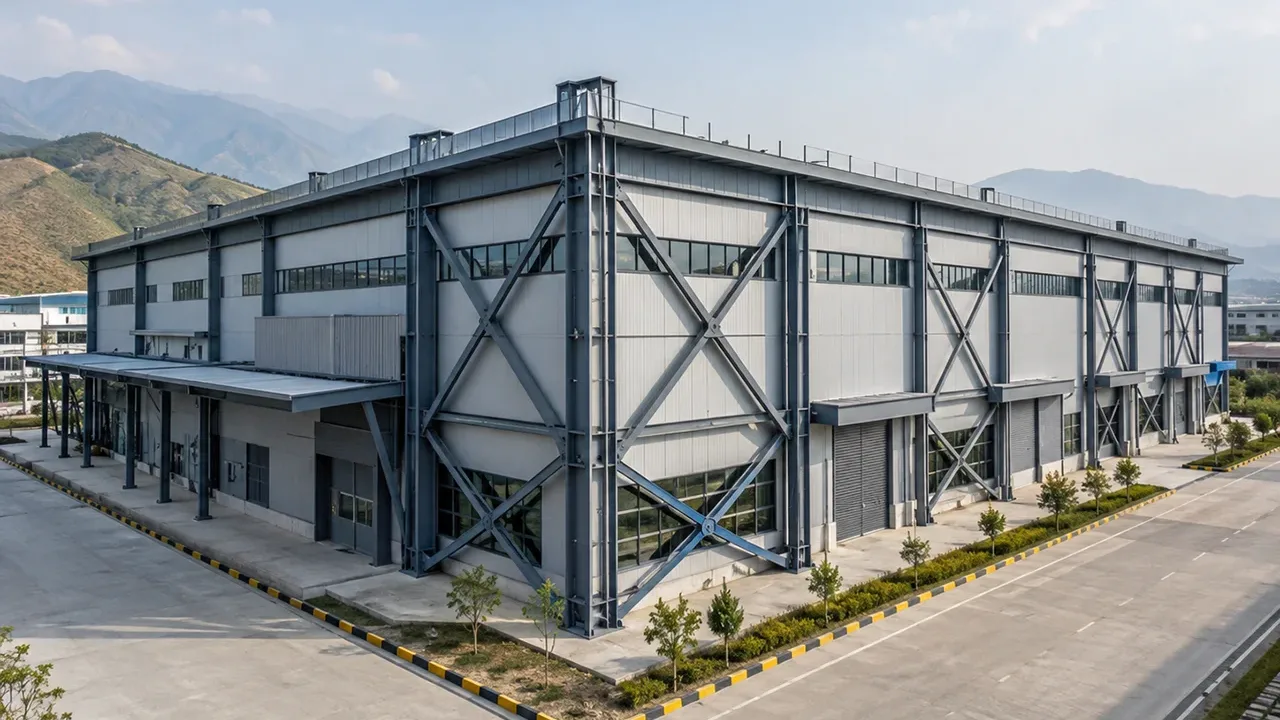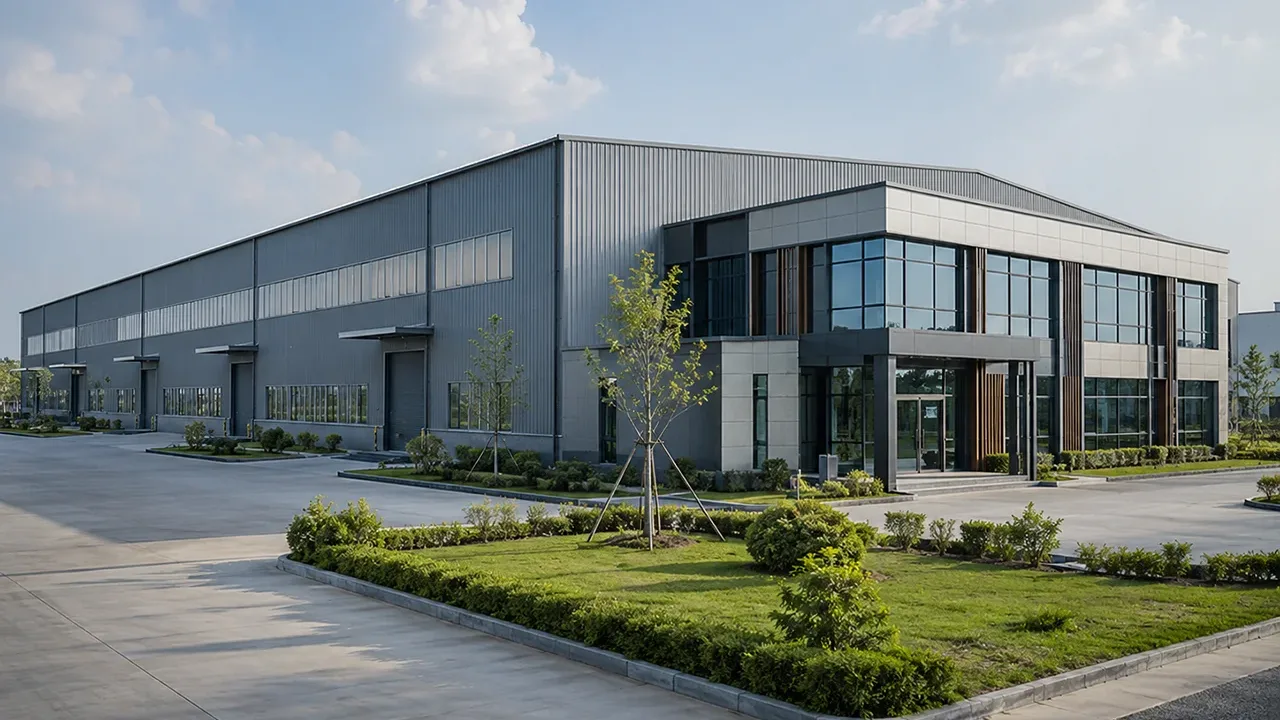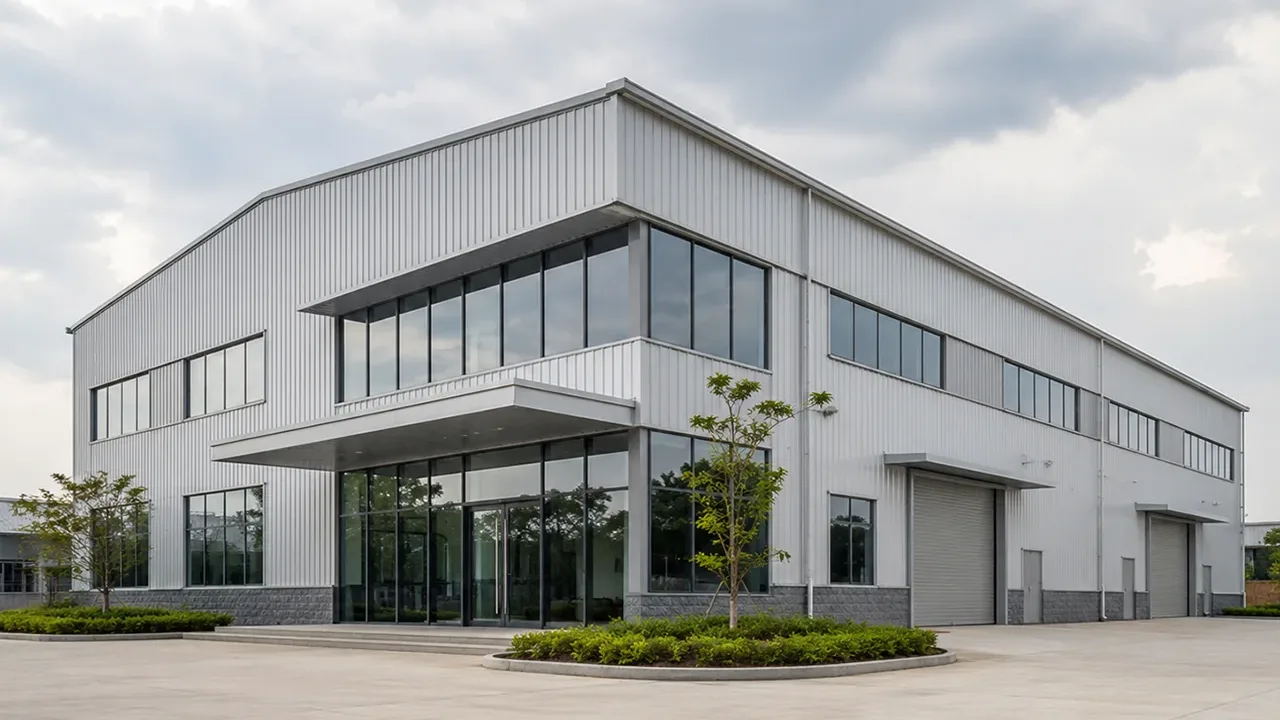
Steel buildings depend on more than strong columns, beams, and roof members. The performance of the whole frame also depends on how those members are connected. In portal frame buildings, beam-to-column joints, rafter splices, and apex connections must transfer loads safely while still allowing the structure to be fabricated, transported, and installed efficiently. This is where the bolted end-plate connection becomes one of the most practical solutions for modern steel construction.
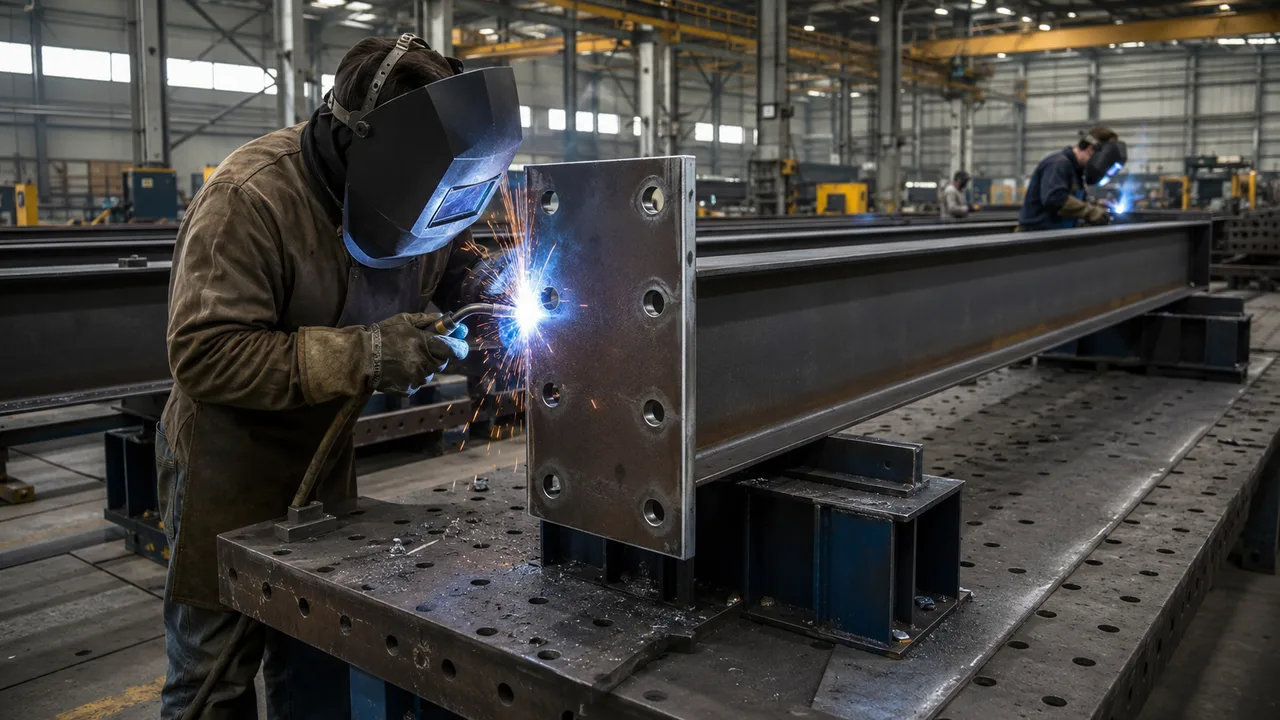
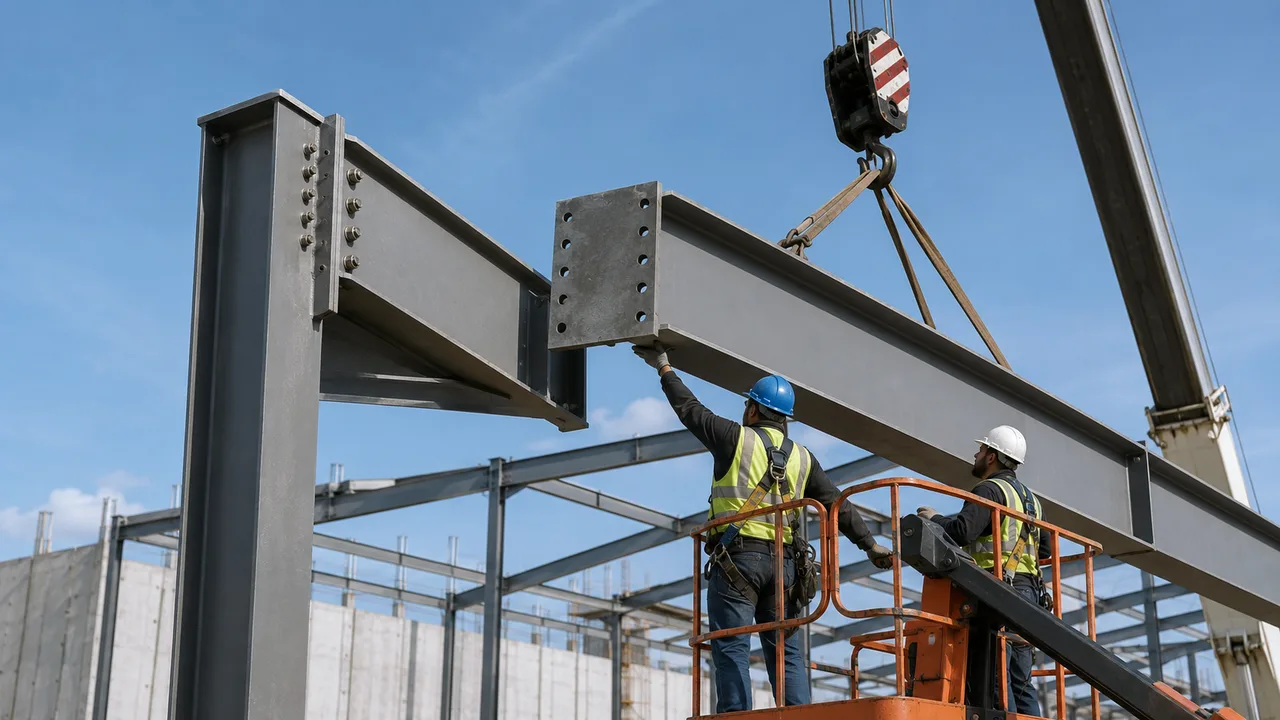
A bolted end-plate is commonly used where steel beams or rafters need to be joined with columns, other beams, or frame components. Instead of relying heavily on welding at the construction site, the end plate is usually welded to the member in the factory, then connected on site with high-strength bolts. This makes the system suitable for prefabricated steel buildings, portal frames, warehouses, workshops, and industrial facilities that require accurate fabrication and fast erection.
What Is a Bolted End-Plate Connection?
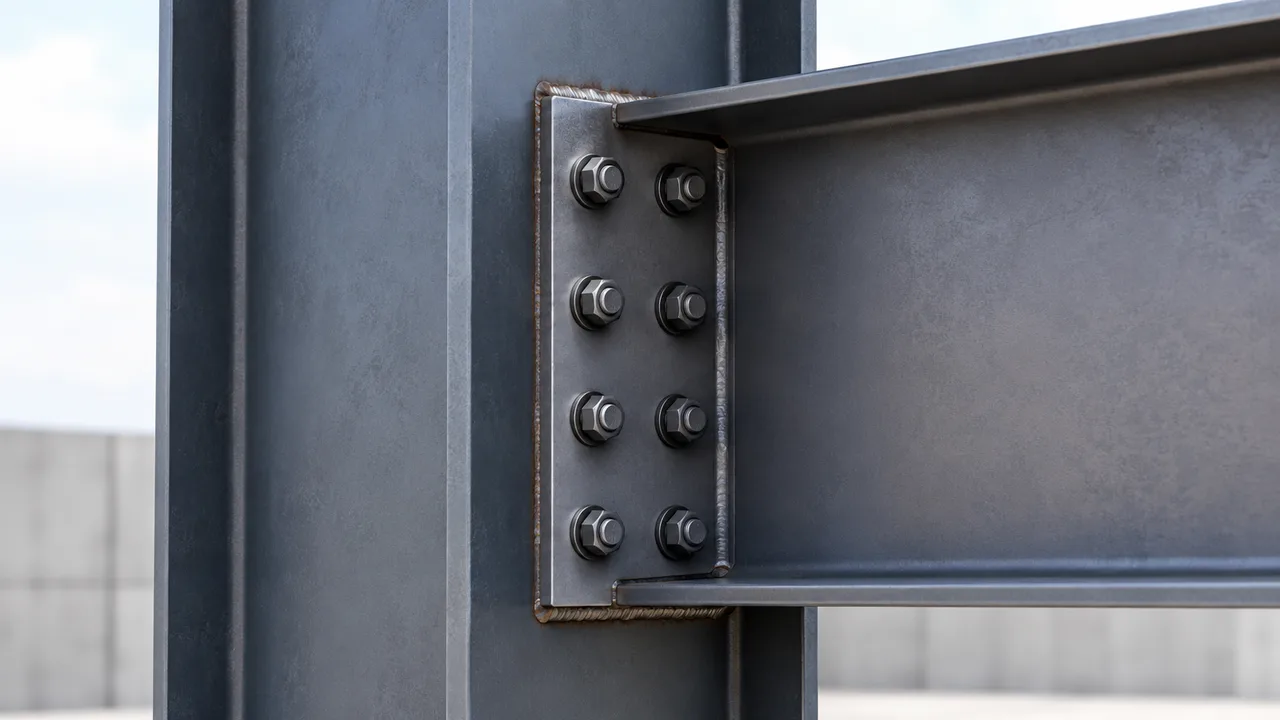
A bolted end-plate connection is a structural joint where a steel plate is welded to the end of a beam, rafter, or frame member. This plate is then bolted to another steel member, such as a column flange, another beam, or a matching connection plate. The connection works through the combined action of the end plate, bolts, welds, and connected steel members.
In a simple beam connection, the joint may mainly transfer shear force. In a portal frame, the same connection may need to resist bending moment, shear, and sometimes axial force at the same time. Because of this, the design of the plate thickness, bolt arrangement, weld size, and member geometry must match the structural requirements of the building.
Bolted end-plate joints are widely used because they fit well with prefabricated steel construction. Components can be processed in a controlled workshop environment, checked before shipment, and assembled quickly at the project site. For buildings with repeated frames, such as warehouses or production halls, this connection method can improve both installation speed and construction consistency.
Main Components of the Connection
End Plate
The end plate is the steel plate welded to the end of the beam or rafter. Its thickness, width, height, and hole arrangement are selected according to the force demand of the joint. If the plate is too thin, it may bend excessively under tension or moment. If the plate is properly designed, it helps distribute forces from the beam into the bolts and connected member.
High-Strength Bolts
Bolts are used to clamp the end plate to the column, beam, or splice plate. Their diameter, grade, quantity, and spacing affect the connection capacity. In many structural steel projects, high-strength bolts are preferred because they provide reliable performance and are easier to install on site compared with extensive field welding.
Weld Between Beam and Plate
The weld transfers force from the steel beam or rafter into the end plate. Since this weld is often completed in the factory, quality control can be stronger than site welding. Proper fit-up, weld size, welding sequence, and inspection are important because a weak weld can reduce the overall performance of the joint.
Connected Steel Member
The column, beam, or rafter receiving the connection must also be checked. A strong plate and bolt group will not perform correctly if the connected member is too weak, locally deforms, or lacks required stiffening. For portal frames, the connection detail must work together with the entire frame system.
How Bolted End-Plate Connections Transfer Loads
Steel connections are part of the load path. When a beam carries roof load, wind load, equipment load, or live load, those forces must travel through the connection into the column and foundation. A bolted end-plate joint can transfer several types of force depending on how it is designed.
Shear Force
Shear force is often transferred through the bolts and plate bearing surfaces. In beam connections, this may be the main force. The bolt group must be arranged so that shear can move safely from the supported member into the supporting member without bolt failure, plate tearing, or local deformation.
Bending Moment
Portal frame joints often need to resist bending moment. In this case, one part of the connection may be in tension while another part is in compression. The bolts near the tension zone carry pulling force, while the plate and connected member help resist compression and bending. Extended end plates are commonly used where higher moment resistance is required.
Axial and Combined Forces
Some joints do not carry only one type of force. Wind, crane loads, roof slope, building geometry, and frame action can create combined shear, moment, and axial force. Because of this, connection design should not be treated as a simple bolt layout exercise. It must reflect the actual structural behavior of the building.
Common Types of End-Plate Connections
Flush End-Plate Connection
A flush end-plate connection has a plate that generally stays within the depth of the beam. It is commonly used for simpler beam-to-beam or beam-to-column joints where moment demand is limited. This type is compact and economical, but it may not be suitable for heavy moment-resisting portal frame joints.
Extended End-Plate Connection
An extended end-plate connection has a plate that extends beyond the beam flange. The extension allows bolts to be placed outside the beam depth, improving the ability of the joint to resist bending moment. This is common in portal frame knee joints, apex joints, and beam splices where the structure requires stronger moment transfer.
Stiffened End-Plate Connection
For larger spans, heavier loads, or higher connection forces, stiffeners may be added to improve performance. Stiffeners help control plate deformation and strengthen the force transfer path. They are often used where a standard plate alone is not enough to meet the required capacity or stiffness.
Why This Connection Is Popular in Portal Frames
Portal frames are widely used in steel warehouses, workshops, factories, agricultural buildings, and logistics facilities because they allow clear spans, fast construction, and efficient use of steel. A bolted end-plate connection supports this construction model because it combines factory accuracy with simple site assembly.
Efficient Factory Fabrication
In a steel structure factory, beams and rafters can be cut, drilled, welded, inspected, painted, and marked before delivery. The end plate is positioned accurately and welded under controlled conditions. Bolt holes can be drilled or CNC-cut according to shop drawings. This reduces the risk of errors during site installation.
Faster Site Erection
Once the fabricated members arrive at the site, the erection team can lift the steel frame components into position and connect them with bolts. This is usually faster than completing major welded joints on site. For buildings with many repeated bays, the time savings can be significant.
Better Quality Control
Factory welding and hole preparation make it easier to control dimensional accuracy. Inspection can be done before shipment, and components can be labeled for the erection sequence. This helps reduce delays caused by poor fit-up, missing holes, or inconsistent connection details.
Design Factors That Affect Connection Performance
Plate Thickness and Size
The end plate must be thick enough to resist bending and local deformation. A plate that is too thin may reduce the stiffness of the joint and overload the bolts. However, an oversized plate can increase cost and weight. Good design balances strength, stiffness, fabrication practicality, and material efficiency.
Bolt Diameter and Layout
Bolt spacing, edge distance, bolt diameter, and bolt grade all affect connection behavior. The bolt layout must allow the connection to resist the required shear and tension forces while still leaving enough space for tightening tools during installation.
Weld Size and Welding Quality
The weld between the beam and end plate must match the structural demand. Poor welding can create weak points in the connection, even if the plate and bolts are properly selected. For critical joints, inspection and quality control should be part of the fabrication process.
Frame Geometry and Load Conditions
Connection design is influenced by building span, column height, roof slope, wind load, seismic requirements, crane load, and the overall frame system. A small warehouse and a heavy industrial workshop may both use end-plate connections, but the actual details can be very different.
Fabrication Process in a Steel Structure Factory
The reliability of an end-plate joint depends heavily on fabrication accuracy. In a professional steel structure factory, the process usually starts with shop drawings and connection details. These drawings define plate dimensions, hole positions, weld requirements, bolt specifications, and member marks.
Steel members are cut to length, and the ends are prepared according to the connection geometry. The end plate is then fitted to the member and welded in the required position. After welding, bolt holes are checked for alignment, and the component may go through dimensional inspection before surface treatment.
For complex portal frames, trial assembly may be used to check the fit between matching members. This is especially useful for large-span frames, heavy steel components, or projects where tight erection tolerances are required. After inspection, the members are usually shot blasted, painted, galvanized, or otherwise treated according to project requirements.
Common Problems and How to Avoid Them
Bolt Hole Misalignment
One of the most common problems is misalignment between bolt holes. This can slow down installation and may require field correction. Accurate drilling, CNC processing, and proper marking help reduce this risk.
Plate Deformation
If the plate is not thick enough or the joint carries high moment, the end plate may deform under load. Proper plate sizing, bolt arrangement, and stiffener design can help control this issue.
Poor Bolt Tightening
Bolts must be installed according to the required tightening method. If bolts are not tightened correctly, the connection may not perform as intended. Site crews should follow project specifications and inspection procedures.
Weld Defects
Weld defects can weaken the connection between the beam and end plate. Factory welding procedures, qualified welders, and inspection help improve joint reliability before the steel components reach the site.
Bolted End-Plate Connection vs Site-Welded Connection
| Comparison Item | Bolted End-Plate Connection | Site-Welded Connection |
|---|---|---|
| Fabrication Location | Most welding and hole preparation are completed in the factory | More work is completed at the construction site |
| Installation Speed | Usually faster because members are assembled with bolts | Usually slower due to welding, cooling, and inspection time |
| Quality Control | Factory conditions make welding and drilling easier to control | Site conditions can affect welding quality and consistency |
| Site Labor Demand | Lower welding demand on site | Higher demand for skilled site welders |
| Suitability for Portal Frames | Highly suitable for repeated frame systems and prefabricated buildings | Possible, but less efficient for fast erection projects |
| Inspection and Maintenance | Bolts and plates can be visually checked more easily | Weld inspection may require more specialized procedures |
Applications in Steel Beam and Portal Frame Buildings
Steel Warehouses
Steel warehouses often use portal frames with repeated bays. End-plate connections make these structures easier to fabricate and faster to install, especially when large clear spans and open interior space are required.
Industrial Workshops
Industrial workshops may require strong frame joints for equipment loads, roof systems, ventilation openings, or crane-related forces. Properly designed end-plate joints support both structural capacity and erection efficiency.
Factory Buildings
In production facilities, steel frames must support roof loads, wall systems, service platforms, and sometimes crane beams. End-plate connections are useful because they allow the main frame to be manufactured in sections and assembled accurately on site.
Agricultural and Logistics Buildings
Prefabricated agricultural buildings and logistics centers often need efficient construction schedules. Bolted frame connections help reduce site work and keep the installation process organized, especially for projects with multiple identical frames.
Why Connection Design Matters for Long-Term Performance
A steel building is only as reliable as its load path. Even when beams and columns are strong, poor connection design can create weak points in the structure. The connection must be able to transfer forces safely, control deformation, and support the intended structural behavior of the frame.
For portal frame projects, connection accuracy also affects installation quality. If plates are not aligned, holes do not match, or bolts cannot be tightened properly, the erection process may become slower and less reliable. This is why connection design, shop drawing accuracy, fabrication control, and site installation all need to work together.
XTD Steel Structure supports steel building projects with design coordination, fabrication, and installation experience for industrial and commercial steel structures. For projects that use portal frames, beam splices, and end-plate joints, proper detailing helps improve safety, speed, and long-term building performance.
Conclusion
A bolted end-plate connection is a practical and widely used solution for steel beams and portal frames. It allows major welding work to be completed in the factory, reduces site welding, improves installation speed, and supports accurate prefabricated steel construction.
For warehouses, workshops, factories, logistics buildings, and other steel structures, the performance of this connection depends on good design and precise execution. Plate thickness, bolt layout, weld quality, fabrication tolerance, and site tightening all matter. When these details are properly controlled, bolted end-plate joints can provide a strong, efficient, and reliable connection system for modern steel buildings.
FAQ
What is a bolted end-plate connection?
It is a steel connection where an end plate is welded to the end of a beam, rafter, or frame member, then bolted to another steel member such as a column or beam.
Is this connection suitable for portal frames?
Yes. It is commonly used in portal frame buildings because it supports factory fabrication, fast site assembly, and reliable connection performance when properly designed.
What is the difference between flush and extended end plates?
A flush end plate usually stays within the beam depth, while an extended end plate extends beyond the beam flange to improve moment resistance in stronger frame joints.
Why is factory fabrication important for end-plate joints?
Factory fabrication improves welding quality, hole accuracy, component marking, dimensional control, and inspection before the steel members are delivered to the site.
Can this connection be used in steel structure factory buildings?
Yes. It is suitable for many steel structure factory buildings, especially portal frame production halls, industrial workshops, crane-supported areas, and prefabricated building systems.