When Factory Operations Need More Than a Standard Steel Building
A standard factory building may be enough for light production, packaging, or simple storage. However, once overhead cranes, monorail cranes, hoists, or heavy material handling systems are introduced, the building must be designed with higher structural performance in mind.
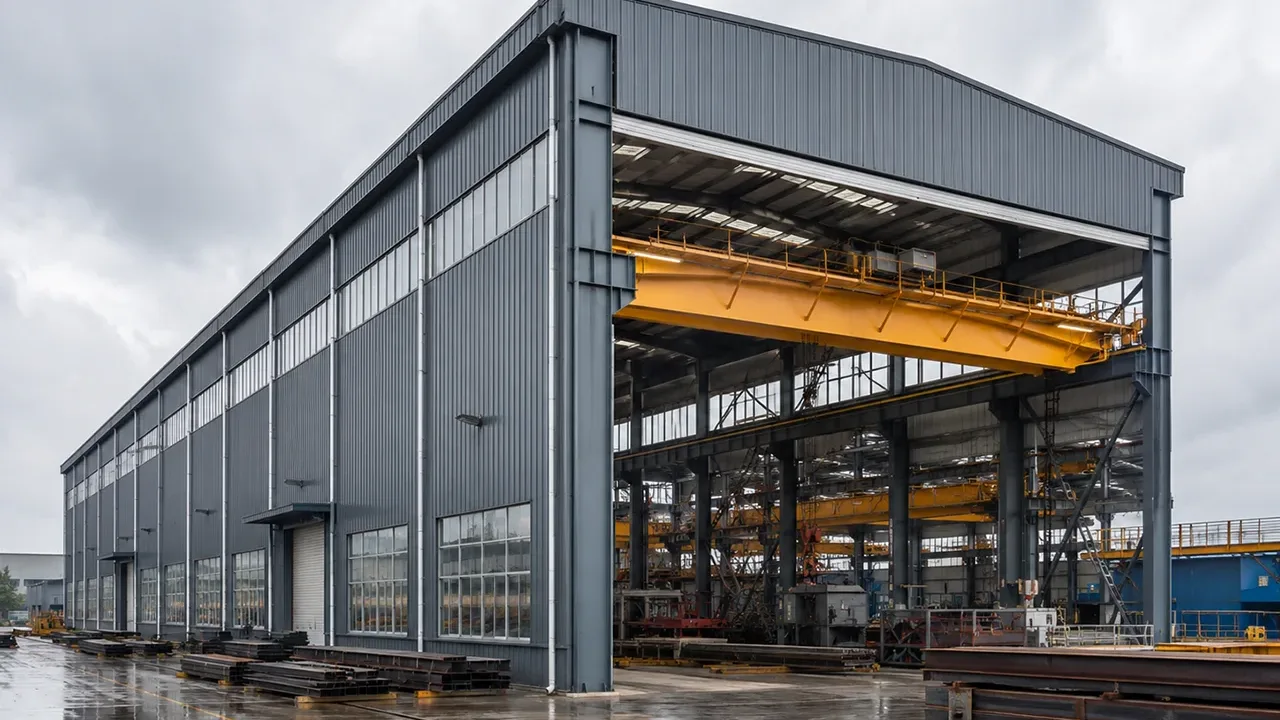
A crane supported steel structure factory is commonly required when production involves large components, heavy raw materials, welding assemblies, metal processing, machinery manufacturing, or frequent movement between work zones. In these projects, lifting efficiency affects production speed, labor safety, and equipment utilization.
The main goal is not only to support the crane load, but to create a stable working environment. Operators need smooth crane travel, reliable lifting points, clear internal routes, and enough space for production lines, forklifts, trucks, and storage areas. A properly engineered steel factory helps all of these systems work together.
Why Crane Support Changes the Factory Structure
Crane Loads Affect the Main Frame
Crane loads are different from ordinary building loads. In addition to vertical lifting loads, the structure must consider horizontal force, braking force, impact load, wheel pressure, and repeated operation. These forces are transferred through runway beams, brackets, columns, bracing systems, and foundations.
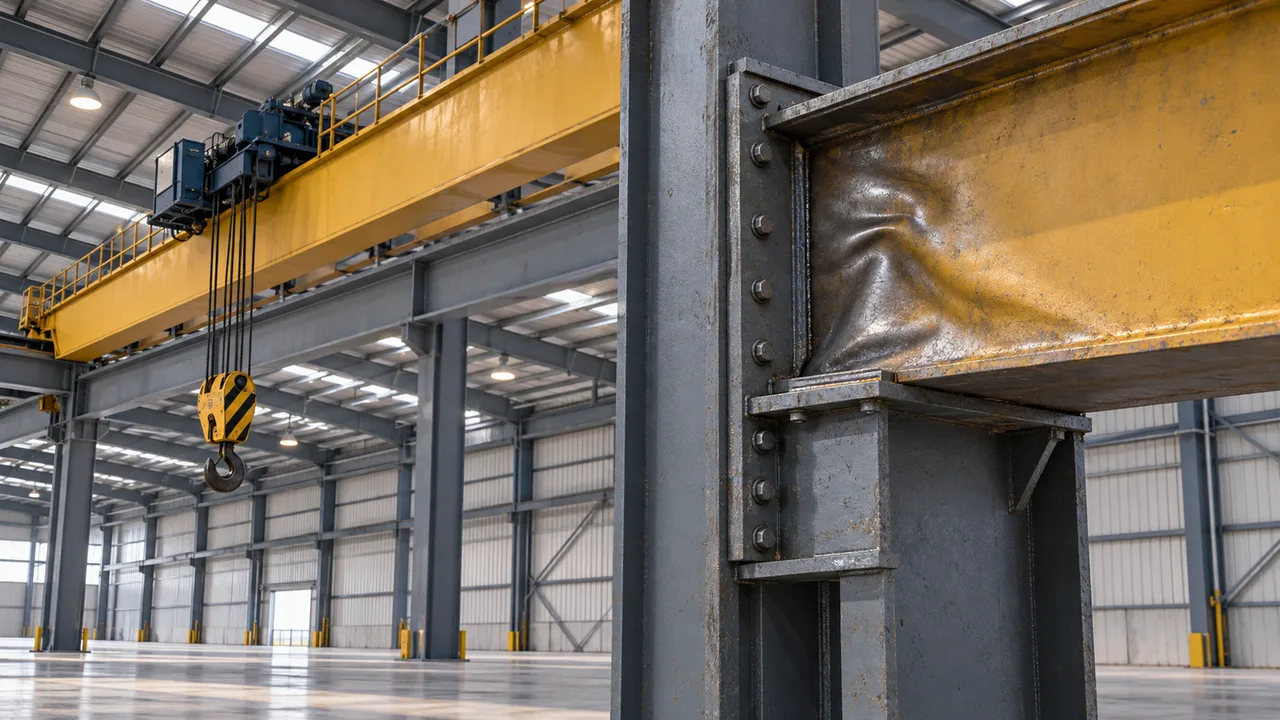
If the main frame is not designed for crane operation from the start, problems such as vibration, excessive deflection, misalignment, or local overstress may appear during use. This is why crane load data should be confirmed early in the engineering stage.
Runway Beams Need Accurate Structural Integration
The crane runway beam is one of the most important components in a crane-supported factory. It must be aligned accurately and connected securely to the column system. Beam size, support bracket design, end stops, connection plates, and installation tolerance all affect crane movement.
Accurate fabrication and installation help the crane move smoothly along the production bay. Poor alignment can increase wear on crane wheels, create noise, reduce lifting safety, and cause long-term maintenance issues.
Stable Movement Supports Safer Production
Factory cranes often operate above workers, equipment, and valuable products. Structural stability is therefore directly connected to production safety. A strong steel frame, proper bracing, and controlled deflection help reduce unnecessary movement during lifting and traveling.
When the structure performs well, workers can move heavy materials with greater confidence, production areas stay more organized, and lifting tasks can be completed with fewer disruptions.
Suitable Factory Applications
Machinery Manufacturing Plants
Machinery plants often need to lift large equipment frames, motors, machine bases, molds, and assembly parts. A steel structure factory with crane support allows heavy components to move between machining, welding, painting, assembly, and testing areas more efficiently.
Steel Processing and Metal Fabrication Workshops
Steel plates, beams, pipes, welded frames, and metal assemblies are difficult to move safely without proper lifting equipment. In steel processing and fabrication workshops, the factory structure must support crane operation while keeping the floor layout open for cutting, welding, drilling, and assembly zones.
Industrial Production Facilities
Crane-supported factory structures are also used in automotive component plants, energy equipment workshops, logistics-linked production buildings, equipment repair facilities, and general heavy manufacturing projects. The common requirement is the same: the building must support efficient lifting and long-term industrial use.
Key Structural Components in a Crane Supported Factory
Reinforced Steel Columns
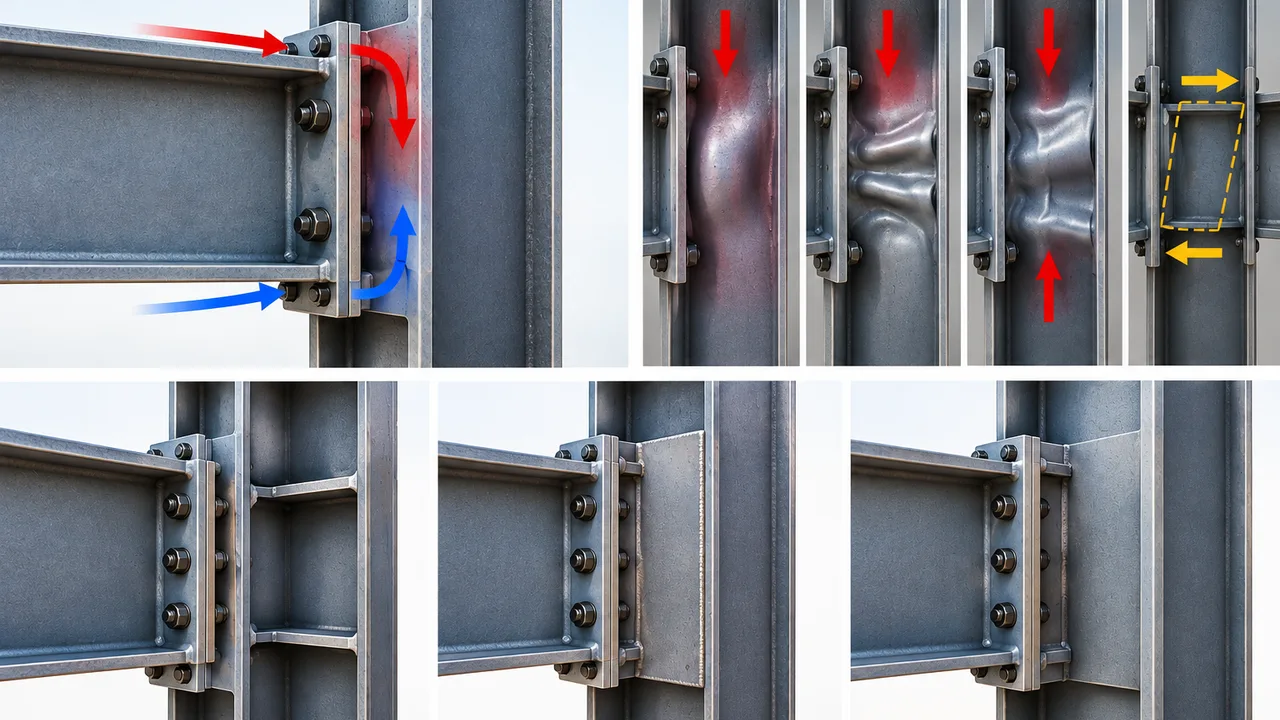
Steel columns in a crane-supported factory carry more than roof and wall loads. They may also support crane runway beams, lifting forces, and lateral movement from crane operation. Depending on the crane capacity and working duty, columns may require stronger sections, shorter bay spacing, or additional reinforcement.
Crane Runway Beams and Brackets
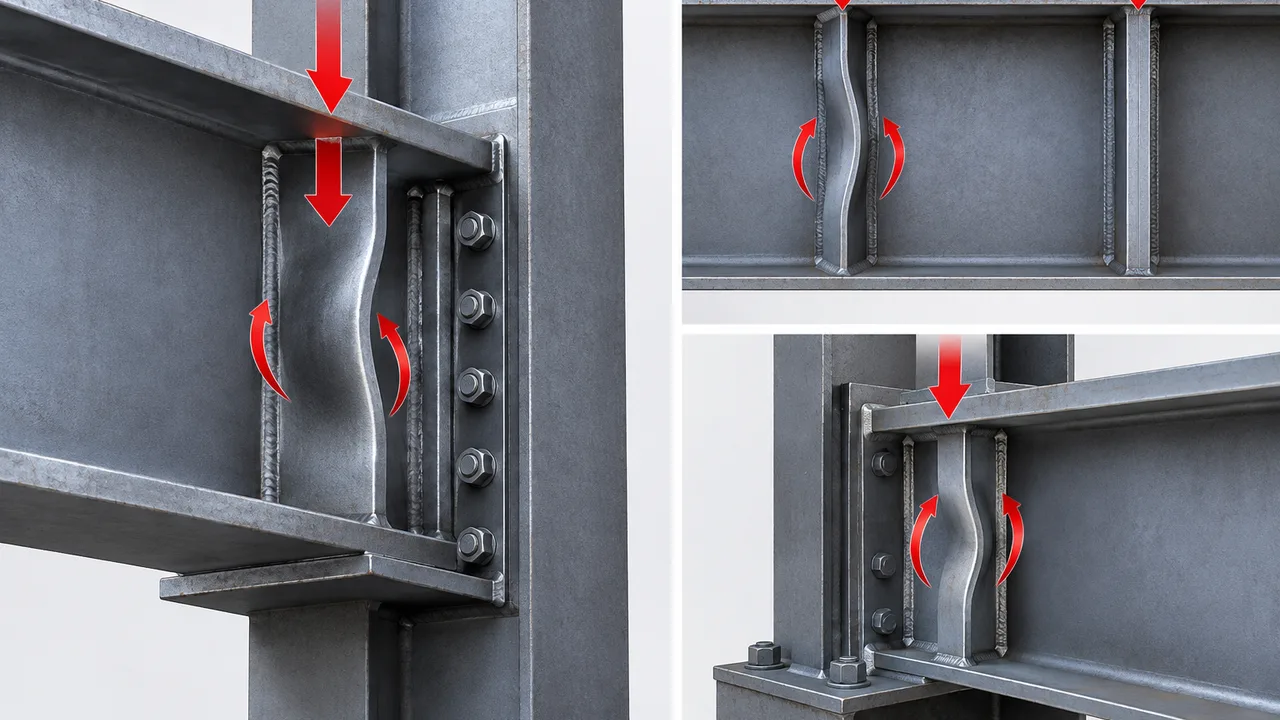
Runway beams transfer crane wheel loads into the main steel frame. Brackets, stiffeners, connection plates, and bolts must be detailed carefully so the load moves safely from the crane system into the columns and foundation. This is one of the areas where engineering accuracy has a major effect on long-term performance.
Roof and Wall Bracing Systems
Bracing helps the building resist wind load, seismic force, crane movement, and lateral instability. Roof bracing, wall bracing, tie rods, and column bracing must work together as one structural system. For factories with heavy lifting operation, bracing design helps keep the entire building stable during daily production.
Foundation and Anchor Bolt Coordination
The steel structure must be coordinated with the foundation design. Anchor bolt layout, column base plates, foundation reactions, and installation tolerance all affect the final crane alignment. If the foundation and steel frame are not coordinated properly, installation problems can appear before production even begins.
Design Factors That Determine Crane Performance
Crane Capacity and Working Class
Before designing a crane supported steel structure factory, the project team should confirm crane capacity, working frequency, span, lifting height, travel length, and duty class. A 5-ton crane used occasionally has different structural requirements from a 20-ton crane used continuously in a heavy production line.
Factory Span, Height, and Bay Layout
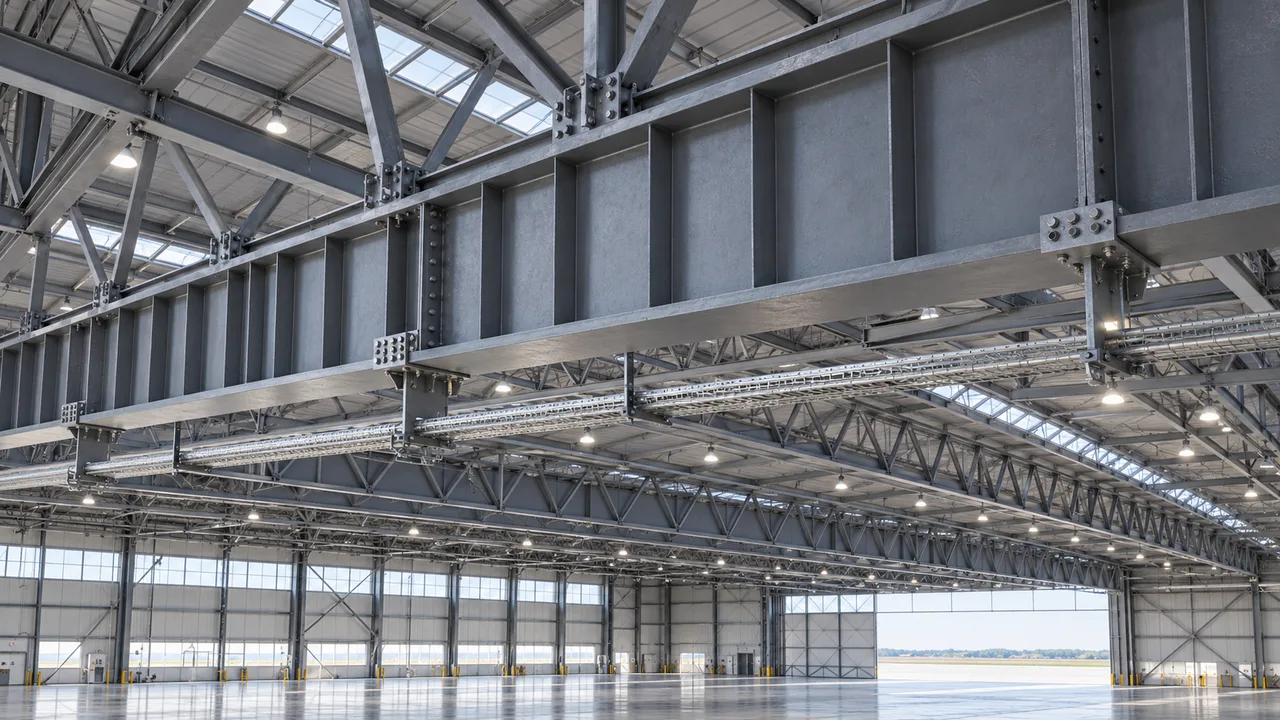
Factory layout has a direct impact on crane performance. Clear span, column spacing, hook height, roof clearance, production zones, material storage, truck access, and forklift routes must be coordinated together. Good planning helps reduce wasted movement and improves production flow.
Deflection, Alignment, and Safety Margin
Crane runway beams must control deflection within acceptable limits. Excessive deflection can affect crane travel, wheel loading, and operator safety. Structural alignment and safety margin should be reviewed carefully during design, fabrication, and installation.
Recommended Configuration Options
The right configuration depends on crane tonnage, production process, site condition, and future expansion plan. The table below shows common planning points for crane-supported steel factory buildings.
| Configuration Item | Common Option | Why It Matters |
|---|---|---|
| Crane Capacity | Light, medium, or heavy-duty overhead crane | Determines column size, runway beam design, and foundation reaction |
| Runway Beam | Welded or hot-rolled steel beam | Supports crane wheel load and controls travel stability |
| Column System | Reinforced steel columns with crane brackets | Transfers lifting forces safely into the main frame |
| Span Layout | Single-span, multi-span, or dedicated crane bay | Improves production movement and material handling efficiency |
| Roof Bracing | Horizontal roof bracing and tie members | Improves overall structural stability |
| Wall Bracing | Column bracing or portal bracing | Helps resist lateral load and crane-related movement |
| Surface Protection | Paint coating or galvanizing for selected parts | Protects the structure in industrial environments |
| Future Upgrade | Reserved capacity or expansion-ready bay | Allows future crane or production line upgrades |
Fabrication Quality for Crane-Ready Steel Structures
Crane-supported buildings require accurate fabrication because even small dimensional errors can affect crane alignment and installation quality. Steel members must be cut, drilled, welded, assembled, inspected, and marked according to approved drawings.
XTD Steel Structure supports industrial factory projects with structural engineering coordination, steel fabrication, welding, drilling, surface treatment, component marking, and export-ready packing. This helps reduce communication gaps between design requirements and factory production.
For overseas projects, clear member marking and shipment sequencing are especially important. When components arrive on site in the right order and match the installation drawings, the assembly process becomes more efficient and less prone to errors.
Benefits of a Crane Supported Steel Structure Factory
A well planned crane supported steel structure factory gives the owner more than lifting capacity. It creates a stronger production environment where heavy materials can move safely, equipment can be positioned efficiently, and future manufacturing needs can be considered from the beginning.
- Stronger lifting performance for heavy components and production materials
- Safer material handling with better crane movement and structural stability
- Improved production efficiency through smoother internal logistics
- Flexible factory layout for production lines, storage zones, and equipment areas
- Long-term durability under repeated industrial operation
- Future upgrade potential when expansion or crane capacity is planned early
Project Workflow for Factory Buildings With Crane Systems
Requirement Review
The process begins with a review of factory size, crane capacity, lifting height, working frequency, production flow, site location, local loads, and project schedule. These details help define the correct structural direction before detailed design begins.
Engineering and Structural Detailing
Engineers prepare frame design, crane runway beam design, bracing layout, connection details, and shop drawings. This stage connects production requirements with safe structural performance.
Factory Fabrication and Delivery
After drawings are confirmed, the steel components are fabricated, inspected, coated, marked, packed, and prepared for delivery. Factory-controlled production improves consistency and reduces site work pressure.
Installation Support and Site Coordination
Site coordination is important for anchor bolts, column installation, runway beam alignment, bracing installation, and final inspection. XTD Steel Structure can provide project support based on the client’s delivery model and installation requirements.
Crane Supported Steel Structure Factory FAQs
What information is needed before designing this type of factory?
Important information includes factory dimensions, crane capacity, lifting height, crane span, working frequency, production process, local wind or seismic requirements, and future expansion plans.
Can the factory support multiple cranes?
Yes. A steel structure factory can be designed to support multiple cranes when crane layout, runway beam system, column design, and operational zones are planned from the beginning.
What crane capacity can a steel structure factory support?
The capacity depends on the structural design, column system, runway beam configuration, foundation, and working class. Light-duty and heavy-duty crane systems can both be supported with the correct engineering approach.
Can the crane system be upgraded later?
Future upgrades are possible when reserved capacity, column spacing, runway beam planning, and foundation coordination are considered during the original design. Without early planning, upgrades may require structural reinforcement.
Build a Factory Structure Ready for Heavy Lifting
A crane supported steel structure factory should be designed around real lifting requirements, not adjusted after the building frame is already fixed. From crane capacity and runway beam alignment to bracing and foundation coordination, every detail affects safety, productivity, and long-term use.
To start planning your project, prepare factory layout, crane tonnage, lifting height, production flow, site location, and expected delivery schedule. With the right engineering and fabrication partner, your factory can be built as a reliable industrial facility ready for heavy lifting and future production growth.