
Buckling problems in structural steel are not always caused by the same component, even when the visible deformation appears in the same part of a beam or plate girder. Around supports, concentrated loads, deep web panels, and heavily loaded connections, both the web plate and the stiffener system may be vulnerable to instability. Distinguishing stiffener buckling vs web buckling is therefore an important part of diagnosing the actual limit state before deciding how a steel member should be reinforced.
A thin web may lose stability because of shear, compression, or concentrated force transfer. A stiffener, on the other hand, may buckle because it is too slender, insufficiently restrained, poorly connected, or subjected to a compressive force greater than it can safely transfer. Although these mechanisms can occur close to each other, they involve different structural components and require different design responses.
Understanding the difference helps engineers avoid a common mistake: adding more steel without addressing the actual failure mechanism. Increasing stiffener thickness will not necessarily solve a web panel buckling problem, while increasing web thickness alone may not prevent a slender bearing stiffener from becoming unstable.
What Is Web Buckling in Structural Steel?
The web is the relatively thin plate connecting the upper and lower flanges of an I-section, welded girder, or similar built-up member. Its main functions include carrying shear, maintaining the separation between the flanges, and transferring concentrated forces through the depth of the member.
Because webs are often much thinner than their depth, they can behave as slender plates. When compressive stresses develop beyond a critical level, the plate may lose its flat configuration and deform out of plane. This instability is generally described as web buckling.
The Structural Role of the Web
In a conventional steel beam, bending is resisted primarily by the flanges while much of the shear is carried by the web. In deep fabricated girders, however, the web may also be involved in more complex load-transfer mechanisms caused by support reactions, point loads, framing connections, and localized compression.
The web is restrained by the flanges along its upper and lower boundaries. Transverse stiffeners may provide additional restraint by dividing a large web into smaller panels. The effectiveness of these boundaries strongly influences the critical stress at which buckling occurs.
How Web Buckling Develops
Web buckling can develop through several related mechanisms.
Under high shear, principal compressive stresses form diagonally across the web panel. If the web is sufficiently slender, these stresses may cause diagonal shear buckling.
Concentrated loads or support reactions can create high compressive stresses over a relatively small region. This may result in localized web instability near the load application point.
A web subjected to direct or combined compression may also buckle as a plate between surrounding restraints.
The exact deformation pattern depends on web slenderness, panel dimensions, load distribution, flange restraint, stiffener spacing, and the interaction between shear and compression.
Conditions That Increase Web Buckling Risk
Web buckling becomes more likely when the web has a high depth-to-thickness ratio. A large clear web depth combined with a small plate thickness produces a slender plate with relatively low resistance to out-of-plane instability.
Other important factors include:
- high shear demand;
- large support reactions;
- concentrated loads;
- long web panels between transverse stiffeners;
- limited rotational restraint at panel boundaries;
- high compressive stresses;
- fabrication distortion or initial imperfections; and
- combined shear, bending, and compression.
For this reason, web stability cannot be assessed only by looking at material strength. A web made from high-strength steel can still buckle if its geometry is too slender.
What Is Stiffener Buckling?
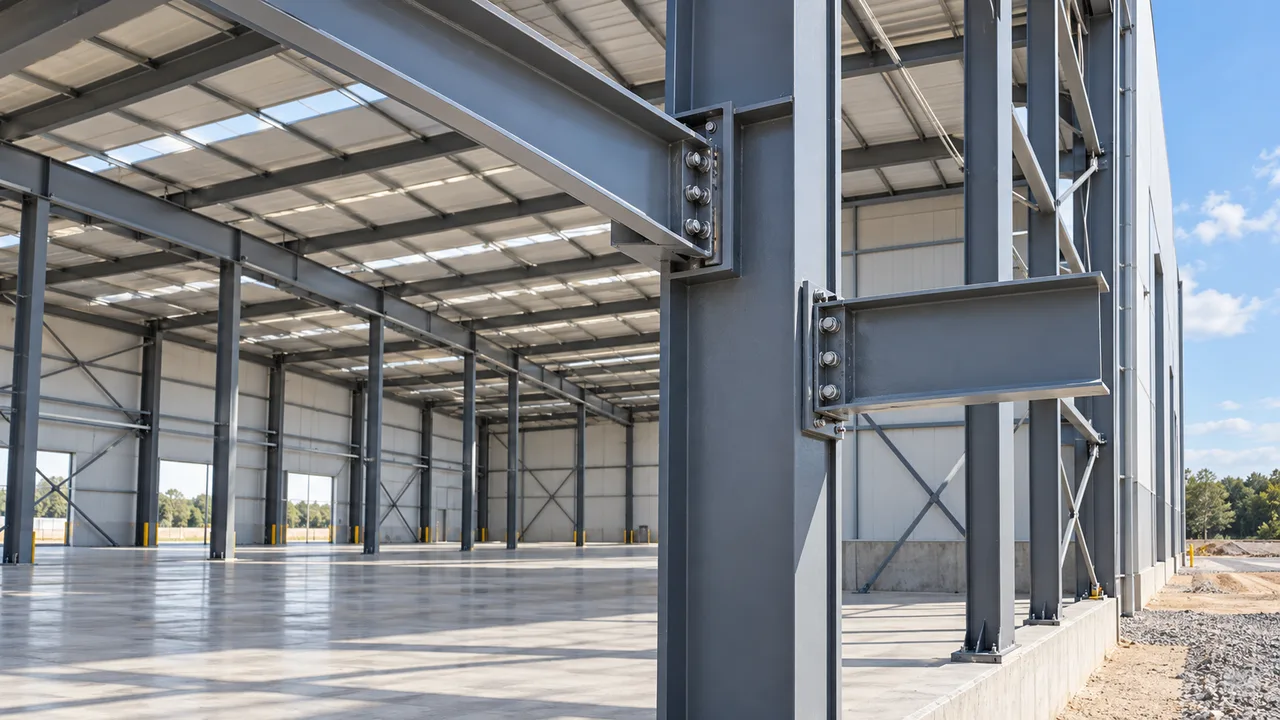
Stiffeners are additional plates installed along a web to improve its stability or assist in transferring concentrated forces. Depending on their function, they may be used as transverse stiffeners, bearing stiffeners, longitudinal stiffeners, or connection stiffeners.
However, a stiffener is itself a structural element. Once compression is transferred into it, its own slenderness, effective length, local plate proportions, and boundary conditions become important.
Stiffener buckling occurs when the stiffener plate or stiffener assembly becomes unstable before it can develop the intended resistance.
Why Stiffeners Are Added to Steel Webs
Transverse stiffeners can reduce the unsupported dimensions of a web panel and increase its resistance to instability. At locations with heavy reactions or concentrated forces, bearing stiffeners can also create a more direct load path between the loaded flange and the opposite flange or support.
Depending on the design, stiffeners may:
- divide a slender web into smaller panels;
- provide boundaries for shear buckling behavior;
- transfer concentrated compression;
- improve web stability near supports;
- support connection regions; and
- help maintain the geometry of deep fabricated girders.
The presence of a stiffener does not automatically mean the region is adequately reinforced. The stiffener must have sufficient stiffness, strength, and stability to perform its intended function.
How a Stiffener Can Buckle
A transverse or bearing stiffener subjected to compression can behave partly like a column. If its effective length is too large relative to its stiffness, it may bow out of plane.
Individual stiffener plates may also experience local buckling if their width-to-thickness proportions are excessive. In some design models, the stiffener acts together with an effective strip of the adjacent web, creating a composite compression element whose overall stability must be checked.
One-sided stiffeners may introduce additional eccentricity because the compression force is not necessarily aligned with the combined section’s centroid. This can increase bending effects and make the stiffener more sensitive to instability.
Factors Affecting Stiffener Stability
Important variables include:
- stiffener plate width;
- stiffener thickness;
- unsupported length;
- whether stiffeners are installed on one or both sides of the web;
- connection to the flanges;
- weld detailing;
- effective participation of the surrounding web;
- load eccentricity;
- initial out-of-straightness; and
- the compressive force transferred through the stiffener.
These factors explain why the comparison of stiffener buckling vs web buckling must consider not only where deformation occurs but also how forces enter and leave the region.
Stiffener Buckling vs Web Buckling: The Core Difference
The most direct distinction is the component that loses stability. Web buckling is primarily a plate instability of the web, while stiffener buckling involves instability of the reinforcement plate or the stiffener-plus-web compression system.
| Design Aspect | Web Buckling | Stiffener Buckling |
|---|---|---|
| Primary component | Web plate | Stiffener plate or stiffener assembly |
| Typical stress source | Shear, compression, or concentrated force | Primarily compression with possible bending |
| Typical location | Web panel, support region, or concentrated load zone | Along transverse or bearing stiffeners |
| Important geometry | Web depth, thickness, and panel size | Stiffener width, thickness, and effective length |
| Main restraint | Flanges and adjacent stiffeners | Web, flanges, welds, and end restraint |
| Typical design response | Increase web thickness, reduce panel size, or add stiffeners | Increase stiffener stiffness, thickness, restraint, or symmetry |
When evaluating stiffener buckling vs web buckling, it is important to recognize that the two mechanisms are not completely independent. A stiffener may be introduced specifically to prevent web instability, but that stiffener then becomes another component requiring its own buckling verification.
How Load Paths Create Different Buckling Mechanisms
Buckling checks become easier to understand when the load path is identified first.
A structural member does not simply experience an abstract design force. The load must travel through individual plates, welds, flanges, webs, and stiffeners before reaching a support or another connected member.
Shear Forces in Web Panels
High shear produces principal tensile and compressive stresses within a web panel. The diagonal compressive component is particularly important for a slender web because plates are generally much more vulnerable to instability under compression than tension.
When the critical shear buckling condition is reached, the web can develop diagonal out-of-plane waves.
In some plate girder systems, additional resistance may develop after initial buckling through tension-field action. This behavior depends on the surrounding boundary conditions and must only be relied upon where it is recognized by the applicable design method.
Concentrated Loads and Support Reactions
A support reaction enters the member over a limited length. Similarly, a concentrated load applied through a flange must spread through the web.
These forces can create intense local compressive stresses.
Where a bearing stiffener is provided, the intended load path may resemble:
Loaded flange → stiffener and effective web → opposite flange or support.
The stiffener must therefore transfer the compression without excessive local deformation or overall buckling.
Why Both Risks Can Exist in the Same Region
A support region may contain a slender web and a slender bearing stiffener at the same time.
The web may be vulnerable to localized compression or shear buckling, while the stiffener may be vulnerable to flexural or local buckling. Strengthening one component does not automatically eliminate instability in the other.
This interaction is one of the main reasons engineers should diagnose stiffener buckling vs web buckling before changing the plate arrangement.
How Engineers Identify Which Buckling Mode Governs
The likely governing mechanism can often be narrowed down by considering the observed deformation shape, stress state, structural geometry, and boundary conditions.
Start With the Buckling Shape
Web buckling often produces deformation distributed over part of a web panel. Depending on the loading condition, it may appear as diagonal waves, localized out-of-plane deformation, or a larger plate buckle between surrounding restraints.
Stiffener buckling tends to be concentrated around the stiffener itself. The stiffener may bow laterally, rotate away from the web, or develop local plate deformation along its outstanding width.
In some situations, the stiffener and a portion of the adjacent web move together. This can indicate instability of the combined compression element rather than isolated local buckling of one plate.
Check the Stress State
The next question is what stress is driving the instability.
High panel shear suggests that web shear buckling should be investigated.
High localized compression near a support or point load may require checks of both the web and bearing stiffener.
If a stiffener primarily carries axial compression, its behavior may be closer to a column stability problem.
Combined stress states can make the distinction less obvious and may require several limit states to be checked independently.
Review the Boundary Conditions
Restraint strongly influences buckling resistance.
Engineers should determine:
- whether the web panel is bounded by effective transverse stiffeners;
- whether the stiffener is connected to one or both flanges;
- whether lateral movement of the stiffener is restrained;
- whether the load is applied concentrically;
- whether the weld pattern provides sufficient force transfer; and
- whether adjacent plates provide realistic rotational restraint.
A member that appears adequate under idealized fixed conditions may behave differently if the actual detailing provides much less restraint.
Web Buckling Design Checks
A broader web buckling design assessment should consider web slenderness, panel dimensions, applied shear, concentrated forces, boundary restraint, and the effect of stiffeners rather than relying on a single plate ratio.
Web Slenderness
Web slenderness is commonly related to the clear web depth divided by its thickness. As this ratio increases, the plate becomes more sensitive to elastic buckling.
The exact allowable or limiting proportions depend on the structural system, loading condition, material properties, and applicable design standard.
Shear Buckling Resistance
For slender webs subjected to significant shear, the applied shear demand must be compared with the available resistance of the web panel.
Panel aspect ratio can influence the critical buckling condition. Closely spaced transverse stiffeners may improve behavior by creating smaller web panels, although the stiffeners themselves must possess sufficient rigidity.
Local Compression and Concentrated Forces
At supports and concentrated load locations, engineers must consider how compressive force spreads through the web.
Local instability may occur before the entire web panel reaches a general shear buckling condition.
The geometry of the flange, web, stiffeners, bearing length, and support condition can all affect this response.
Post-Buckling Behavior
Initial plate buckling does not always mean complete loss of member resistance. Certain properly detailed plate girders can continue carrying additional load after initial web buckling because stresses redistribute through the panel.
However, post-buckling resistance should never be assumed automatically. It must be supported by an appropriate design model and adequate boundary elements.
Stiffener Buckling Design Checks
Stiffeners must be proportioned not only to resist the applied force but also to remain stable while transferring it.
Stiffener Slenderness
The width and thickness of the stiffener plate influence local stability. A wide, thin outstanding element may buckle locally even if the gross cross-sectional area appears sufficient for the compressive force.
Increasing thickness is one possible solution, although plate proportions, welding, fabrication, and load distribution should be considered together.
Effective Compression Member Behavior
Bearing stiffeners can sometimes be treated as part of a compression member formed by the stiffener plates and an effective portion of the web.
This approach reflects the fact that the stiffener does not act completely independently from the surrounding web.
The resulting compression element may require verification for axial capacity, overall stability, and local plate slenderness.
Effective Length and Restraint
Effective length depends on how the stiffener is restrained at its ends and along its height.
A stiffener closely fitted and effectively connected between the flanges may behave very differently from a plate that has limited end restraint or incomplete force transfer.
Assuming more restraint than the actual detail provides can result in unconservative stability predictions.
Stiffener-to-Web and Stiffener-to-Flange Connections
A stiffener can only perform its intended function if forces can enter and leave it.
Welds between the stiffener and web must transfer the required forces. Connections or bearing details at the flanges must also be compatible with the assumed structural model.
A thick stiffener with inadequate attachment may still fail to provide the intended reinforcement.
Can Stiffeners Prevent Web Buckling?
Yes, appropriately designed stiffeners can significantly improve web stability, but their effectiveness depends on what type of web buckling is being controlled.
Transverse stiffeners can reduce web panel dimensions and provide stronger boundaries against shear instability. Bearing stiffeners can improve force transfer near concentrated loads and reactions. Longitudinal stiffeners may also be used in highly slender webs to modify the plate buckling behavior.
However, stiffeners cannot compensate indefinitely for an excessively thin web.
A design may still be inadequate when:
- the web plate is too slender;
- stiffener spacing is excessive;
- the stiffener does not provide sufficient rigidity;
- flange attachment is ineffective;
- the stiffener itself is unstable; or
- the actual failure mechanism has been incorrectly identified.
The correct answer to stiffener buckling vs web buckling therefore determines whether changing the web, the stiffener, or both is the most efficient solution.
When Adding a Stiffener Creates a New Buckling Check
Adding a stiffener can solve one instability problem while creating another design requirement.
Consider a deep fabricated girder with a slender web. The original web panel may fail a shear stability check. Adding transverse stiffeners reduces the effective panel dimensions and improves the web buckling resistance.
At this point, however, the new stiffener must have sufficient rigidity to function as the assumed panel boundary.
If the stiffener also carries a concentrated compressive force, its local and overall stability must be checked.
The design sequence can therefore become:
Web instability identified → stiffener introduced → web stability improved → stiffener stability becomes a required limit state.
This is why stiffener buckling vs web buckling should not be treated as a choice where only one condition is ever checked. Depending on the structural arrangement, both may need verification.
Design Strategies for Controlling Both Buckling Modes
There is no single reinforcement strategy that is optimal for every girder.
Increase Web Thickness
Increasing web thickness reduces web slenderness and can improve both shear and local compression behavior.
This approach may be attractive when instability affects many panels or when minimizing the number of welded attachments simplifies fabrication.
The trade-off is additional steel weight.
Add or Reposition Transverse Stiffeners
Reducing the distance between stiffeners can decrease web panel dimensions and improve stability.
This can be efficient when buckling is concentrated in high-shear regions rather than throughout the entire member.
However, additional stiffeners increase fabrication, welding, inspection, and detailing requirements.
Increase Stiffener Thickness or Width
If stiffener instability governs, increasing plate thickness or changing the stiffener geometry can improve resistance.
The revised element should still be checked for local slenderness and overall stability.
Use Double-Sided Stiffeners
Where appropriate, stiffeners on both sides of the web can create a more symmetrical reinforcement arrangement.
This may reduce eccentricity and improve stiffness, particularly where significant concentrated compression must be transferred.
Improve Restraint and Connection Detailing
Better stiffener-to-flange contact, stronger weld detailing, improved lateral restraint, and more direct load transfer can sometimes provide a more effective solution than simply increasing plate size.
Coordinate Web and Stiffener Design
The web and stiffeners should be treated as interacting parts of the same structural system.
Optimizing them separately without considering load transfer may lead to unnecessary material or an unintended weak point.
Common Design Mistakes
Several recurring assumptions can lead to inefficient or unsafe solutions when assessing stiffener buckling vs web buckling.
Assuming Any Stiffener Eliminates Web Buckling
Simply attaching a plate to the web does not guarantee adequate panel restraint.
Its stiffness, geometry, location, and connection details must match the structural assumptions used in the design.
Checking Web Slenderness but Ignoring Stiffener Slenderness
A web may satisfy its revised stability requirements after stiffeners are added, while the stiffeners themselves remain too slender.
Both components require appropriate checks.
Ignoring Eccentric Loading
One-sided stiffeners or asymmetric connection details may introduce bending in addition to axial compression.
Treating such elements as perfectly concentric compression members can misrepresent their actual response.
Treating Bearing Stiffeners Only as Flat Plates
Bearing stiffeners often participate in a larger compression system involving the surrounding web and flange restraints.
Their behavior cannot always be represented adequately by plate area alone.
Ignoring Weld and Connection Capacity
Even an adequately proportioned stiffener cannot transfer force if the welds or bearing details are insufficient.
Connection design must remain consistent with the assumed load path.
Reinforcing the Wrong Failure Mechanism
If the web is experiencing diagonal shear buckling, making a bearing stiffener thicker may provide little benefit to the governing panel instability.
Likewise, increasing web thickness may be an inefficient response if the actual problem is a slender compression stiffener.
Example Comparison: Plate Girder Under a High Support Reaction
Consider a deep welded plate girder carrying a large reaction at its end support.
The girder uses a relatively thin web to reduce steel weight, and a transverse bearing stiffener is positioned near the support.
The first step is to identify the load path. The reaction must travel from the support into the girder and be distributed through the web, stiffener, and flange system.
The web should be checked for the relevant shear and localized compression effects. Its depth, thickness, panel length, and boundary conditions determine whether plate instability is likely.
If the web is too slender, the designer may determine that a transverse stiffener is required or that the existing stiffener spacing should be reduced.
The bearing stiffener must then be checked for the compression transferred through the support region.
Its plate width and thickness should provide adequate local stability, while the combined stiffener system must also possess adequate overall stability.
The connection between the stiffener, web, and flanges must be capable of developing the assumed load path.
The final governing limit state might therefore be:
- web shear buckling;
- localized web instability;
- stiffener local buckling;
- overall stiffener buckling;
- connection failure; or
- another strength limit state unrelated to buckling.
This example demonstrates why engineers should not decide between stiffener buckling vs web buckling based only on where the reinforcement plate is located.
Stiffener Buckling vs Web Buckling in Fabricated Steel Structures
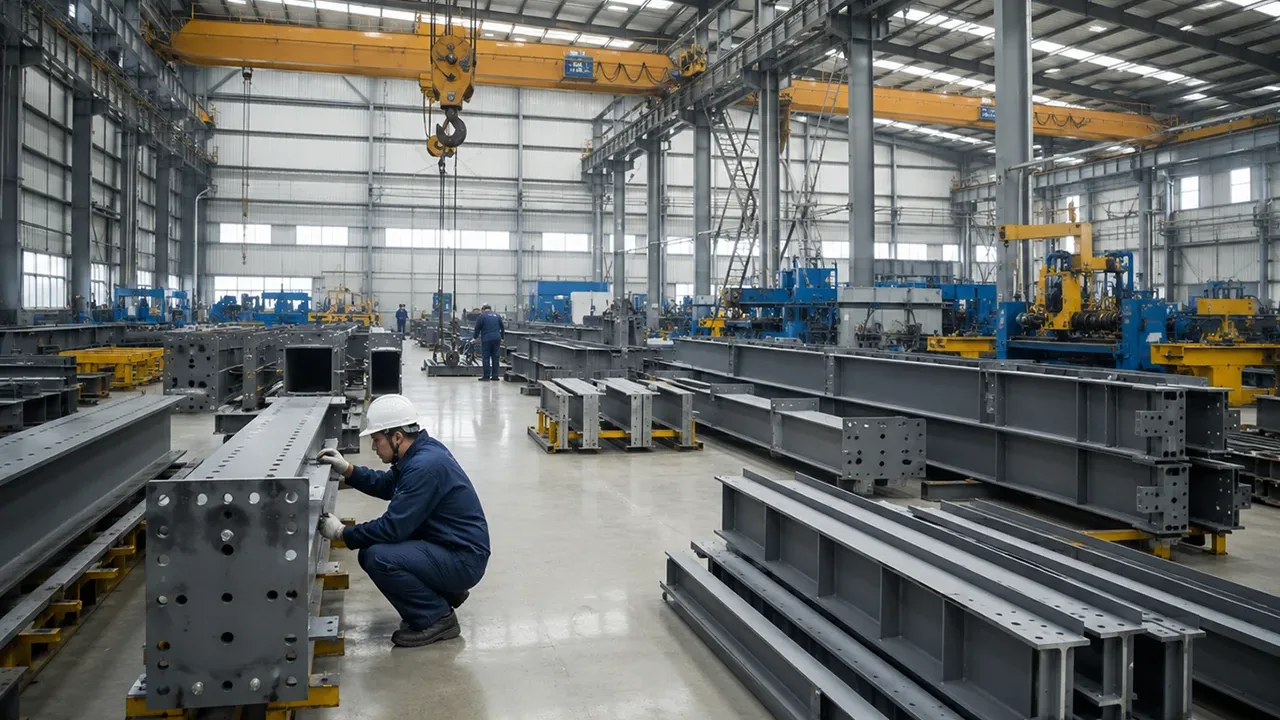
The distinction becomes especially important in fabricated members because designers have greater freedom to select web thickness, flange sizes, stiffener spacing, and plate geometry.
Deep plate girders used in heavy industrial buildings, long-span structures, crane-support systems, transfer girders, and other engineered steel structures may use relatively slender webs to achieve an efficient strength-to-weight ratio.
Fabrication quality then becomes part of the stability problem.
Web flatness, stiffener alignment, weld sequence, heat-induced distortion, plate tolerances, and fit-up can influence the initial imperfections from which buckling develops.
For fabricated members produced by XTD Steel Structure, coordination between structural detailing and manufacturing is particularly important where thin webs and multiple stiffeners are used. A structurally efficient calculation still needs practical weld access, reasonable tolerances, and a fabrication sequence that minimizes unnecessary distortion.
The comparison of stiffener buckling vs web buckling should therefore continue beyond analytical calculations into detailing, production, inspection, transportation, and erection planning.
Practical Design Checklist
The following checklist helps separate the relevant checks for the web and stiffener while highlighting where they interact.
| Design Check | Web | Stiffener |
|---|---|---|
| Plate slenderness | Yes | Yes |
| Shear demand | Yes | Normally indirect |
| Compression demand | Yes | Yes |
| Panel dimensions | Yes | Not normally governing |
| Effective member length | Not normally treated as a column | Yes |
| Local buckling | Yes | Yes |
| Flange restraint | Yes | Yes |
| Weld and load transfer | Indirectly | Yes |
| Concentrated loads | Yes | Yes |
| Fabrication tolerances | Yes | Yes |
The governing limit state should be identified before increasing plate thickness, changing stiffener spacing, or adding additional reinforcement.
Frequently Asked Questions
What Is the Main Difference Between Stiffener Buckling and Web Buckling?
The main difference is which structural component becomes unstable. Web buckling is primarily instability of the web plate under shear, compression, or concentrated loading. Stiffener buckling occurs when the stiffener plate or stiffener assembly loses stability while transferring or restraining forces.
Can a Stiffener Buckle Before the Web?
Yes. A stiffener can govern even when the adjacent web satisfies its stability requirements. This can happen when the stiffener is slender, inadequately restrained, eccentrically loaded, or subjected to high compression.
Do Transverse Stiffeners Always Prevent Web Buckling?
No. Their effectiveness depends on stiffness, spacing, geometry, connections, and the type of instability being controlled. An inadequately proportioned stiffener may not provide the boundary condition assumed by the web design.
Is Web Buckling the Same as Web Crippling?
No. Web buckling is primarily an instability phenomenon involving out-of-plane deformation of a slender plate. Web crippling generally refers to highly localized deformation, yielding, or crushing around concentrated loads or reactions. The mechanisms can occur in similar locations but should not be treated as identical.
When Are Bearing Stiffeners Required?
Bearing stiffeners may be required where concentrated reactions or loads cannot be safely transferred through the unstiffened web. The requirement depends on the web geometry, loading, support condition, available resistance, and applicable structural design rules.
Should the Web or Stiffener Be Checked First?
The load path and probable failure mechanisms should be established first. Engineers can then check the web and stiffener for the relevant limit states. In many heavily loaded regions, both components need verification rather than assuming that one check automatically covers the other.
Matching the Reinforcement to the Governing Failure Mode
The practical value of comparing stiffener buckling vs web buckling is that it directs reinforcement toward the component that actually controls structural performance.
A slender web that is unstable under shear may require greater web thickness, smaller panel dimensions, or a revised stiffener arrangement. A compression stiffener that becomes unstable may instead require greater thickness, improved restraint, reduced effective length, more symmetric detailing, or stronger connections.
The most efficient solution starts with the load path, identifies the component losing stability, evaluates the interaction between the web and reinforcement, and then adjusts the design accordingly.
For fabricated steel structures, XTD Steel Structure coordinates member geometry, stiffener detailing, welding, and production requirements so that the final arrangement can be manufactured and assembled consistently with the intended structural behavior.