Steel Factory Layouts Designed Around Production Flow
Industrial facilities are typically organized around sequential workflow movement. A properly engineered industrial production steel factory supports smoother transitions between receiving, fabrication, assembly, storage, and dispatch operations.
Raw Material Receiving Zones
Production begins with efficient unloading and material intake. Steel factory layouts can accommodate large vehicle access points, overhead lifting systems, and organized storage zones near production areas.
This reduces unnecessary material handling and internal transport time.
Fabrication and Assembly Areas
Large open-span steel structures allow production equipment to be positioned with fewer structural restrictions. This is especially important for automated manufacturing lines, robotic systems, and heavy industrial machinery.
- Machine installation flexibility
- Efficient operator circulation
- Reduced production bottlenecks
- Improved workflow visibility
Finished Product Storage and Dispatch
Production facilities often require integrated warehouse and dispatch zones. Steel structures simplify this integration by supporting flexible internal partitioning and large loading access areas.
Internal Logistics and Equipment Movement
Forklifts, automated guided vehicles, cranes, and transport systems require clear movement corridors. Steel buildings help maintain unobstructed logistics routes inside industrial facilities.
Structural Requirements in Industrial Production Environments
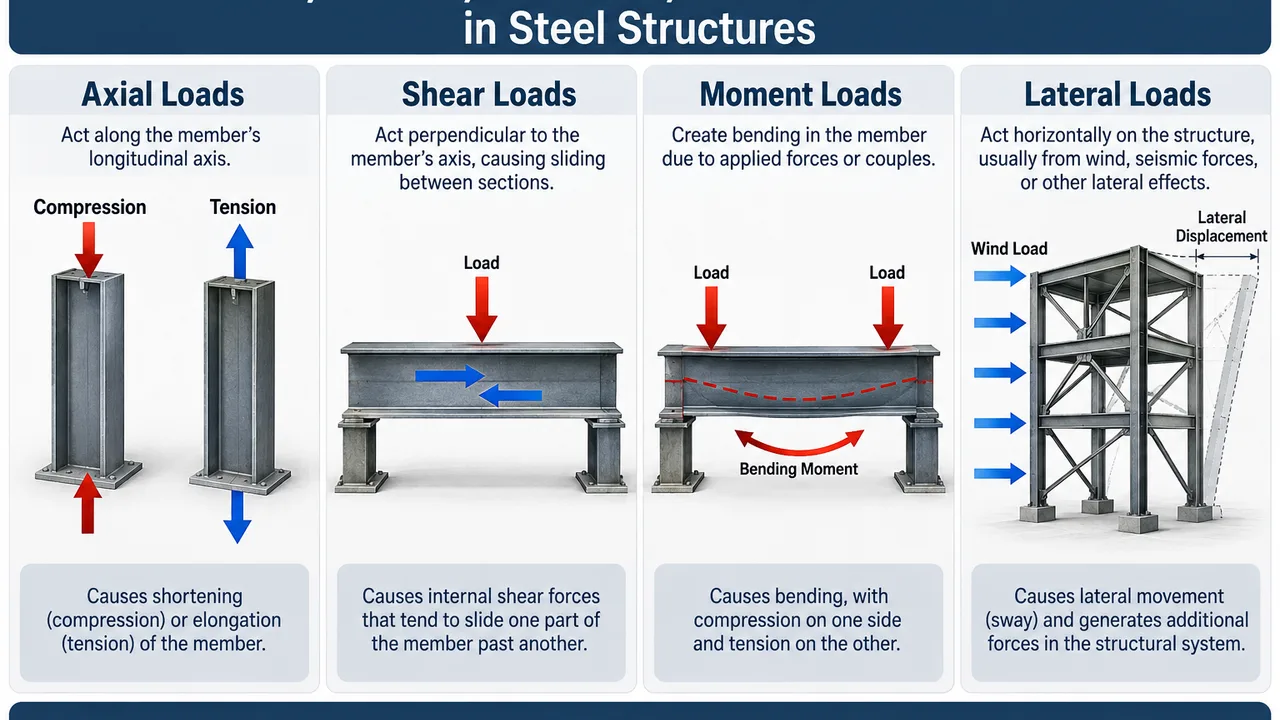
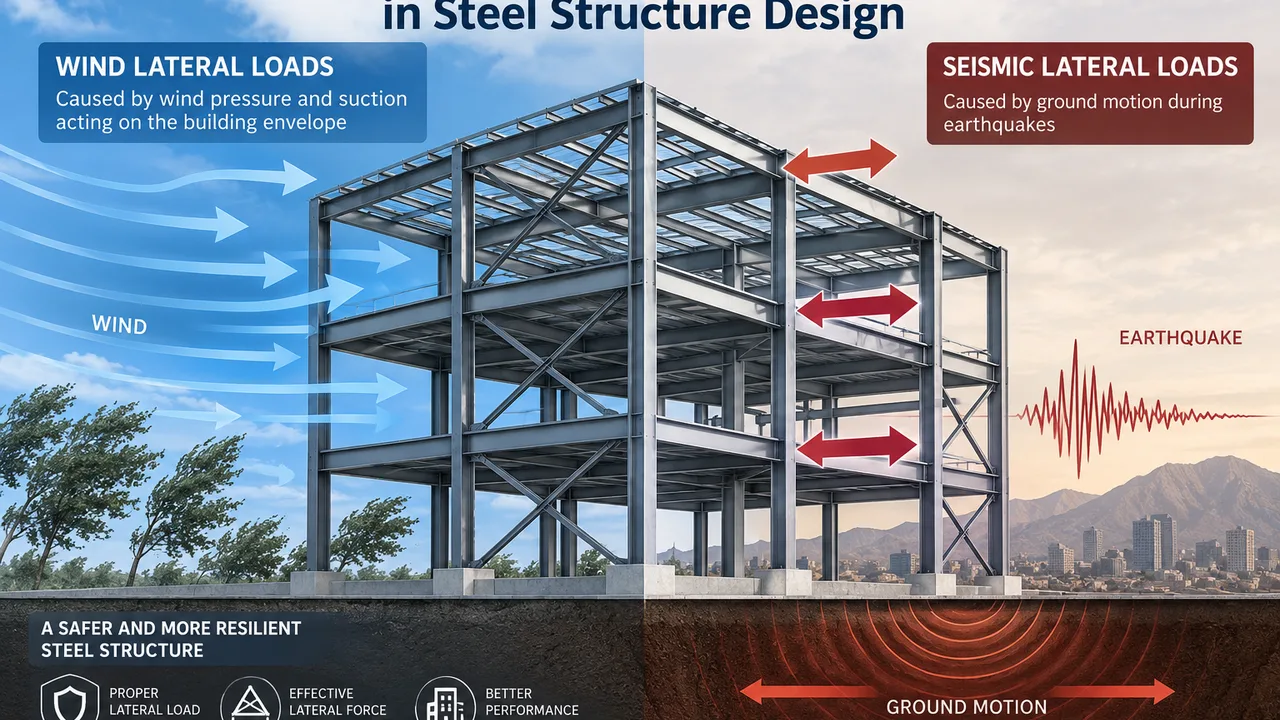
Industrial production environments place continuous demands on building structures. Unlike standard commercial buildings, factories must support heavy operational loads, equipment vibration, and long-term industrial activity.
High Load Capacity for Machinery
Industrial equipment can generate substantial structural loads. Steel systems can be engineered to support concentrated machine loads while maintaining structural stability.
Crane System Integration
Many manufacturing operations rely on overhead cranes for production handling. A properly designed industrial production steel factory can integrate crane beams, rail systems, and lifting infrastructure directly into the structural framework.
| Factory Requirement | Steel Structure Advantage |
|---|---|
| Heavy machinery | High structural strength |
| Overhead crane systems | Integrated support systems |
| Large production lines | Wide clear-span layouts |
| Continuous operations | Long-term durability |
Large Clear Span Requirements
Production lines often require uninterrupted floor space for equipment placement and movement efficiency. Steel framing systems can achieve large spans with minimal internal columns.
Ventilation and Heat Management
Industrial environments may generate heat, fumes, and airborne particles. Steel structures can integrate ventilation systems, roof exhaust designs, and airflow management solutions.
Why Steel Structures Improve Industrial Productivity
Operational efficiency is one of the main reasons manufacturers prefer steel factory systems.
- Faster factory construction schedules
- Easier future production upgrades
- Reduced structural maintenance interruptions
- Better equipment integration
- More adaptable production layouts
Because steel systems are modular, production facilities can often expand without major disruption to existing operations.
In many industrial sectors, scalable factory infrastructure directly supports long-term manufacturing growth.
Common Industries Using Industrial Production Steel Factory Buildings
- Heavy manufacturing
- Machinery production
- Steel processing facilities
- Automotive component manufacturing
- Industrial equipment production
- Energy equipment fabrication
These industries frequently require large production halls, crane systems, integrated logistics zones, and durable structural performance.
Steel structures also support changing production demands more effectively than many conventional construction systems.
Construction Approach for Industrial Production Facilities
Prefabricated Steel Component Manufacturing
Most structural components are manufactured in controlled factory environments before delivery to the project site. This improves dimensional accuracy and reduces construction delays.
Fast Installation for Operational Deadlines
Industrial projects are often tied to production schedules and operational targets. Faster steel installation helps manufacturers begin operations sooner.
Multi-Phase Factory Expansion Planning
Many industrial facilities are developed in phases. Steel systems simplify future expansion by allowing additional bays, extensions, and production zones to be integrated later.
Long-Term Operational Advantages
Industrial buildings operate under continuous stress from machinery, logistics traffic, and production cycles. Structural consistency becomes critical over time.
Steel factory systems provide:
- Reliable long-term structural performance
- Lower maintenance interruption risk
- Better adaptability for production line modifications
- Efficient integration of future equipment systems
In large-scale industrial environments, operational continuity can be just as important as initial construction cost.
Selecting an Industrial Steel Factory Partner
Factory projects require more than structural engineering alone. Successful industrial development also depends on workflow planning, equipment coordination, fabrication precision, and construction scheduling.
An experienced partner understands how building design affects operational efficiency inside manufacturing facilities.
XTD Steel Structure supports industrial factory development through integrated engineering, fabrication, and steel structure construction services tailored to industrial production requirements.
FAQ
Can steel factories support heavy production lines?
Yes. Steel structures can be engineered for heavy industrial equipment and continuous operational loads.
Are crane systems compatible with steel structures?
Yes. Overhead crane systems are commonly integrated into industrial steel factory buildings.
Can industrial production factories expand later?
Yes. Modular steel systems make future expansion and production upgrades easier.
Build Production Facilities Around Efficiency
A properly planned industrial production steel factory supports efficient manufacturing workflows, equipment integration, and scalable industrial growth. Structural flexibility and operational efficiency make steel systems suitable for modern production environments across multiple industries.
As manufacturing demands continue to evolve, steel factory infrastructure provides the adaptability needed for long-term industrial development.