Steel connection design becomes more demanding when a frame must resist bending instead of simply transferring vertical reaction or axial force. In rigid frames, portal frames, crane-supporting structures, and heavy industrial buildings, beam ends often carry high moment loads that create concentrated force around flanges, webs, bolts, welds, and supporting columns. In this situation, beam stiffeners can play an important role in controlling local deformation and keeping the load path stable.
Moment loads and beam stiffeners are closely connected because moment-resisting joints do not transfer force through one simple point. A bending moment creates tension on one side of the beam and compression on the other, while the web and connection plates help transfer shear and local force into the supporting member. If the connection zone is too flexible or locally weak, the beam may be strong enough as a member but still perform poorly at the joint.
What Moment Loads Mean in Steel Connection Design
A moment load is the bending effect created when a force acts at a distance from a support, joint, or connection. In a steel structure, this often appears at beam-to-column joints, roof frame corners, cantilever supports, crane brackets, equipment platforms, and rigid frame connections. The larger the force or the longer the lever arm, the greater the bending demand placed on the connection.
Unlike a simple shear connection, a moment connection must resist rotation. This means the connection needs enough stiffness and strength to transfer flange forces, web forces, bolt forces, weld forces, and plate deformation into the supporting member. The design must consider not only the beam section, but also the local behavior of the column flange, column web, end plate, stiffener plates, and weld details.
How Moment Loads Develop
Moment loads can develop in several common project conditions. A long-span beam carrying roof or floor load creates bending along its length. A beam connected rigidly to a column transfers rotation demand into the joint. A cantilever beam creates high moment at its fixed end. Wind or seismic action can also create frame bending, especially in portal frames and moment-resisting bays.
Industrial buildings often add more complexity. Crane beams, mezzanine platforms, pipe supports, and equipment loads may create repeated or concentrated bending effects. If these loads are located near a connection or support, the local force can become high even when the overall structure appears simple.
Why Moment Loads Affect Connections
Moment does not pass through a connection in the same way as direct shear. In a beam, one flange may act in tension while the opposite flange acts in compression. These flange forces must transfer through bolts, welds, end plates, column flanges, or continuity plates. The beam web also contributes by transferring shear and helping maintain section stability.
When the connection zone is not strong enough, local damage may appear before the main beam reaches its full capacity. This can include flange bending, web yielding, web crippling, bolt group distortion, weld overstress, or panel zone deformation. For this reason, moment loads and beam stiffeners must be reviewed together during steel connection design.
Why Beam Stiffeners Are Used
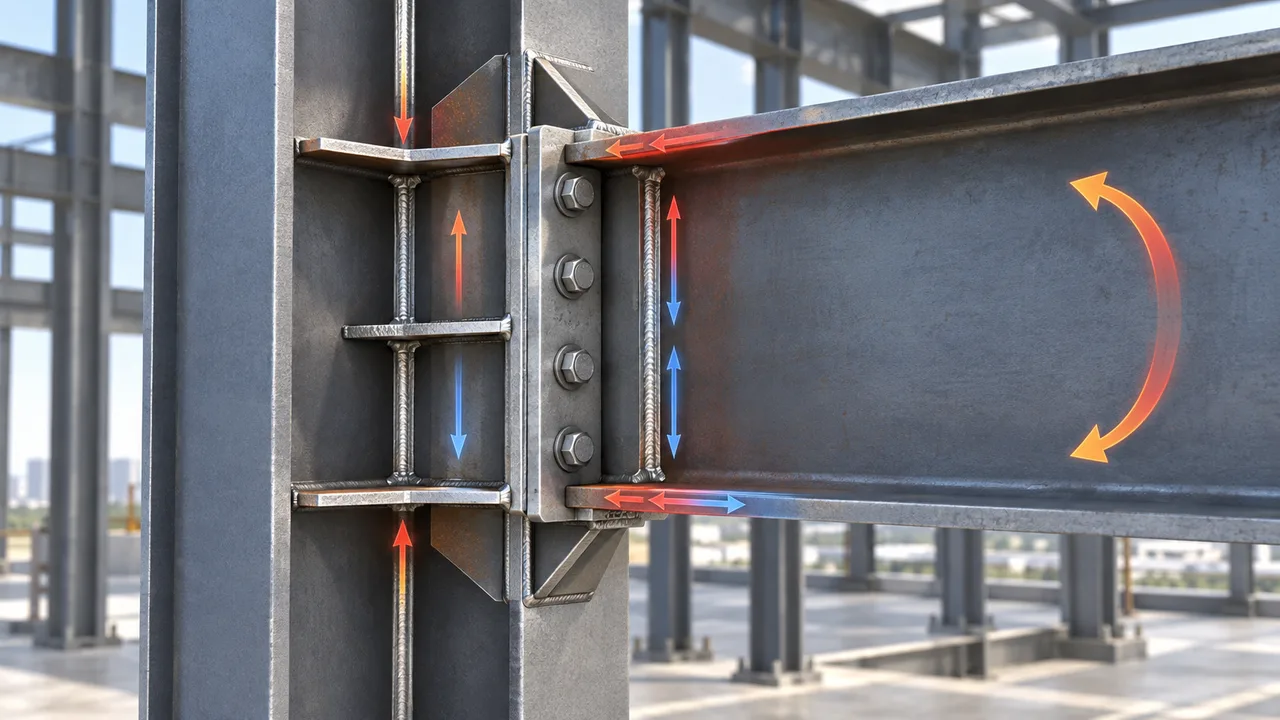
Beam stiffeners are plates added to a beam, column, or connection zone to increase local strength, stiffness, and load transfer capacity. They are not added simply to make the structure look heavier. A properly designed stiffener supports a specific load path and addresses a specific local failure mode.
In many cases, stiffeners are used to prevent web buckling, reduce local flange bending, support concentrated reactions, strengthen connection zones, and distribute force into a larger area of the steel member. They are especially useful where a concentrated force enters a thin web or where a moment connection creates high compression and tension forces near the beam end.
Good stiffener design also improves fabrication reliability. When plates are aligned with the force direction and welded properly, they help the connection behave more predictably. When stiffeners are poorly placed or oversized without purpose, they may increase welding difficulty, create access problems, or introduce unwanted restraint.
Common Locations for Beam Stiffeners
Stiffeners can be placed in different locations depending on the type of connection and the force that needs to be transferred. The most common locations include beam webs, column connection zones, end plate connections, crane beam supports, and areas with concentrated loads.
Beam Web Stiffeners
Beam web stiffeners are usually vertical plates welded to the web of a beam. They are often placed near supports, point loads, bearing areas, or connection zones where the web may be exposed to high compression or local reaction. Their main function is to prevent web crippling, web buckling, and excessive local deformation.
Column Stiffeners at Beam Connections
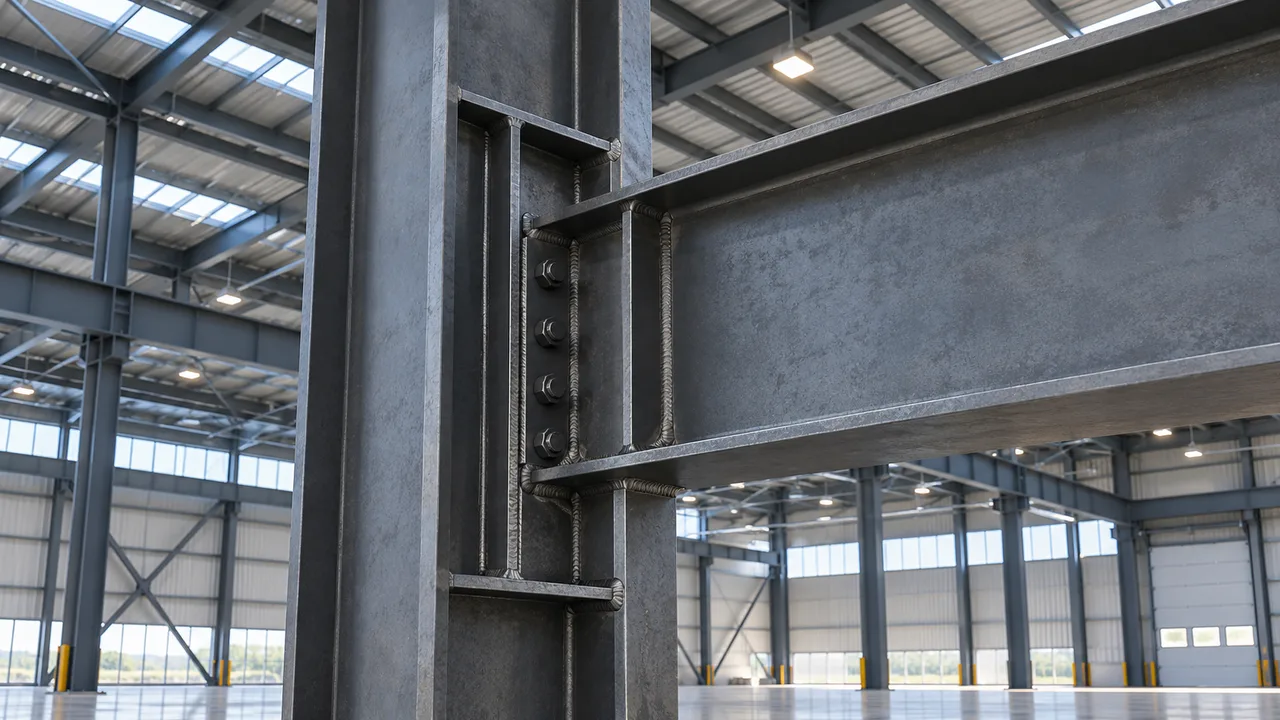
At a beam-to-column moment connection, beam flange forces must enter the column. If the column flange or web is not strong enough to distribute these forces, transverse stiffeners or continuity plates may be required. These stiffeners help carry tension and compression from the beam flange into the column section.
End Plate and Moment Connection Stiffeners
Bolted end plate moment connections can create bending in the end plate and high tension in bolts. Stiffeners may be added near the end plate to improve connection rigidity, reduce plate deformation, and support the transfer of moment from the beam into the column or supporting member.
Crane Beam and Heavy Load Areas
Crane-supporting beams often experience repeated wheel loads, vertical reactions, lateral forces, and sometimes fatigue-sensitive behavior. Stiffeners near supports and load points help distribute these forces and reduce local web damage. In heavy industrial buildings, this can be critical for long-term service performance.
How Moment Loads Move Through a Steel Structure Connection
Understanding the load path is the key to reliable connection design. A beam carrying vertical load develops bending moment. That moment creates a pair of forces in the beam flanges: one side works in compression and the other works in tension. The beam web carries shear and helps keep the beam section working as a stable unit.
At the connection, these forces must pass through welds, bolts, end plates, flange plates, web plates, or other connection components. From there, the force enters the column flange, column web, panel zone, or supporting frame member. If any part of this path is weak, thin, misaligned, or too flexible, local deformation may occur.
This is where moment loads and beam stiffeners become important in a steel structure. Stiffeners help guide force into stronger parts of the section, reduce local plate distortion, and improve the connection’s ability to resist bending demand without excessive deformation.
Beam Stiffeners and Local Failure Modes
Stiffeners are often selected after reviewing possible local failure modes around the beam, column, or connection. These local checks are important because failure may begin in a small plate region even when the overall beam size appears adequate.
Web Local Yielding
Web local yielding occurs when a concentrated force creates high stress in a limited area of the beam or column web. This can happen near supports, load application points, or beam flange force transfer zones. Stiffeners help spread the force over a wider area and reduce the risk of local yielding.
Web Crippling
Web crippling is a localized crushing or instability condition near a support or concentrated reaction. It is common where load enters a thin web over a short bearing length. Vertical stiffeners can reinforce the bearing zone and improve the web’s ability to carry local compression.
Web Buckling
Web buckling occurs when a slender web plate loses stability under compression, shear, or concentrated load. Stiffeners can reduce the unsupported web panel size and increase local stability. This is especially important for deep beams, crane beams, and members with high concentrated reactions.
Flange Local Bending
Flange local bending can occur when connection forces, bolt tension, or transferred moment cause the flange plate to bend locally. This may appear near end plates, flange plates, or beam-to-column joints. Proper stiffening can reduce flange deformation and improve force transfer.
Panel Zone Deformation
In moment-resisting frames, the column panel zone may deform when beam flange forces enter the column. Excessive panel zone deformation can reduce connection stiffness and affect frame performance. Column stiffeners or continuity plates may be required when the panel zone cannot resist the demand on its own.
When Beam Stiffeners May Be Required
Beam stiffeners may be required when the unstiffened member cannot safely resist local force, deformation, or instability. They are commonly used in high moment connections, large-span beams, crane-supporting structures, concentrated equipment load areas, and bolted end plate moment connections.
They may also be needed where a beam transfers large flange forces into a column, where the column web is too flexible, or where repeated dynamic loads can gradually damage local zones. In industrial steel structure projects, stiffeners are often reviewed together with bracing layout, beam span, crane load, roof load, and installation sequence.
However, stiffeners should not be added blindly. Extra plates increase cutting, welding, inspection, and fabrication complexity. A stiffener is useful only when it improves the actual load path or solves a specific design problem. The goal is not to add more steel, but to place reinforcement where the connection needs it.
Comparison of Beam Stiffener Use Cases
| Design Situation | Possible Issue | Stiffener Function | Typical Detail |
|---|---|---|---|
| Moment beam-to-column connection | High flange force transfer | Strengthen the column flange or web zone | Transverse column stiffener or continuity plate |
| Concentrated beam reaction | Web crippling or local yielding | Support the local bearing area | Vertical web stiffener |
| Crane beam support | Repeated local force and vibration | Improve local stability and service performance | Bearing stiffener near support or wheel load zone |
| End plate moment connection | End plate bending and bolt tension | Increase connection rigidity and reduce plate deformation | End plate stiffener or beam flange stiffener |
| Large-span roof beam | High bending demand and local deformation | Improve web stability and force distribution | Web stiffener or flange reinforcement |
Design Factors for Beam Stiffeners
Stiffener design should match the actual demand of the connection. A stiffener that is too thin may not provide enough reinforcement, while a stiffener that is unnecessarily large may complicate fabrication without improving performance.
Plate Thickness
The stiffener plate thickness should be selected based on the force demand, connected member thickness, weld detail, and local deformation limit. It should be strong enough to transfer force without buckling, yielding, or distorting under load.
Weld Detail
Welds must transfer force between the beam, column, and stiffener plate. The weld size, weld length, access for welding, and inspection requirements all affect the final performance. Poor welding can make even a correctly sized stiffener ineffective.
Stiffener Length and Shape
Stiffener geometry should allow proper fit-up and welding. Chamfers, clearances, coping, and access holes may be needed depending on the beam shape and connection arrangement. The plate should fit the connection without creating unnecessary interference during fabrication or erection.
Alignment With the Load Path
Stiffeners should align with the force they are intended to transfer. For example, a column continuity plate should align with beam flanges. A bearing stiffener should align with the concentrated reaction. Misaligned stiffeners may add material without effectively supporting the load path.
Fabrication Tolerance
Fabrication tolerance affects how well the stiffener works in the real structure. Gaps, misalignment, weld distortion, or poor plate contact can reduce effectiveness. Shop drawing coordination and quality inspection are important for stiffener performance.
Common Mistakes in Stiffener Detailing
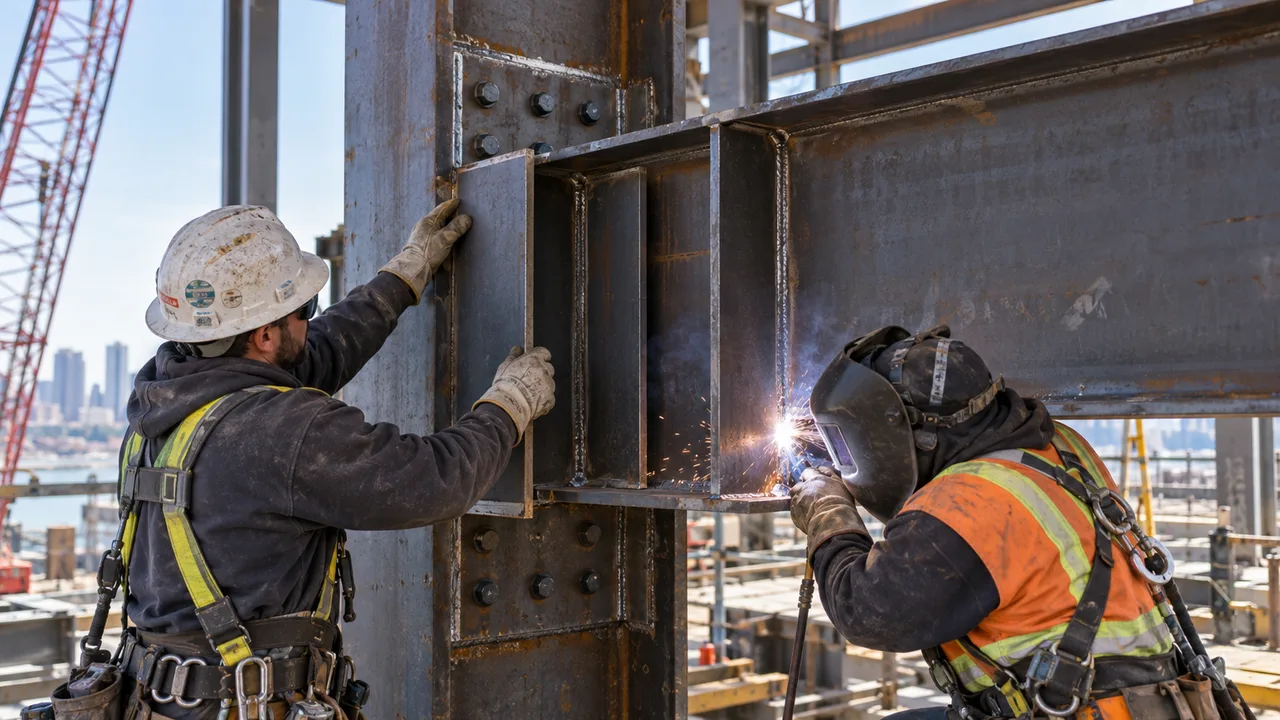
One common mistake is adding stiffeners without understanding the load path. A stiffener should support the force direction, not simply be placed where the connection looks heavy. If the stiffener does not align with the actual tension, compression, bearing, or flange force, it may provide little structural benefit.
Another mistake is underestimating weld requirements. The stiffener plate and surrounding member must work together, so the weld is part of the load-transfer system. If weld access is poor or the weld size is insufficient, the stiffener cannot perform as intended.
Over-stiffening can also create problems. Too many stiffeners may increase fabrication cost, make welding difficult, create distortion, and complicate coating or inspection. Good design balances structural demand with fabrication practicality.
Practical Takeaway for Moment Loads and Beam Stiffeners
Moment loads and beam stiffeners should be reviewed together because moment-resisting connections create concentrated local forces. A beam may have enough overall bending capacity, but its connection zone still needs proper reinforcement to transfer flange force, web force, bolt force, and weld force safely.
A well-designed stiffener does more than add extra steel. It improves the load path, controls local deformation, supports connection stiffness, and helps the structure perform reliably under bending demand. For steel structure projects involving rigid frames, crane beams, long spans, or heavy industrial loads, stiffener detailing is an essential part of connection design.
FAQ About Moment Loads and Beam Stiffeners
What Are Moment Loads in Steel Connections?
Moment loads are bending effects transferred through a connection when a beam or frame member resists rotation. They usually create tension and compression forces around the beam flanges and connection zone.
What Are Beam Stiffeners Used For?
Beam stiffeners are plates added to strengthen local zones, prevent web buckling or web crippling, support concentrated forces, and improve load transfer at supports or moment connections.
Are Beam Stiffeners Always Required?
No. Beam stiffeners are required only when the beam, column, web, flange, or connection zone cannot safely resist local force, deformation, or instability without reinforcement.
Where Are Beam Stiffeners Usually Placed?
They are commonly placed near supports, concentrated load points, beam-to-column moment connections, end plates, crane beam supports, and column panel zones.