A prefabricated steel roof structure can reduce roof installation delays long before the first crane lift happens on site. In many industrial and commercial projects, slow roof erection is not only caused by labor speed. Delays often come from unclear shop drawings, inaccurate bolt holes, missing connection plates, poor packing sequence, late service coordination, or members that require cutting and adjustment at height. When too much work is left for the jobsite, every small mismatch can become a schedule problem.
Roof construction is especially sensitive because the roof system connects many parts of the building at once. Main beams, rafters, trusses, purlins, bracing, roof panels, skylights, vents, gutters, insulation, suspended services, and maintenance access all need to work together. If one member is fabricated incorrectly or delivered in the wrong order, the installation team may need to stop, search, modify, or wait.
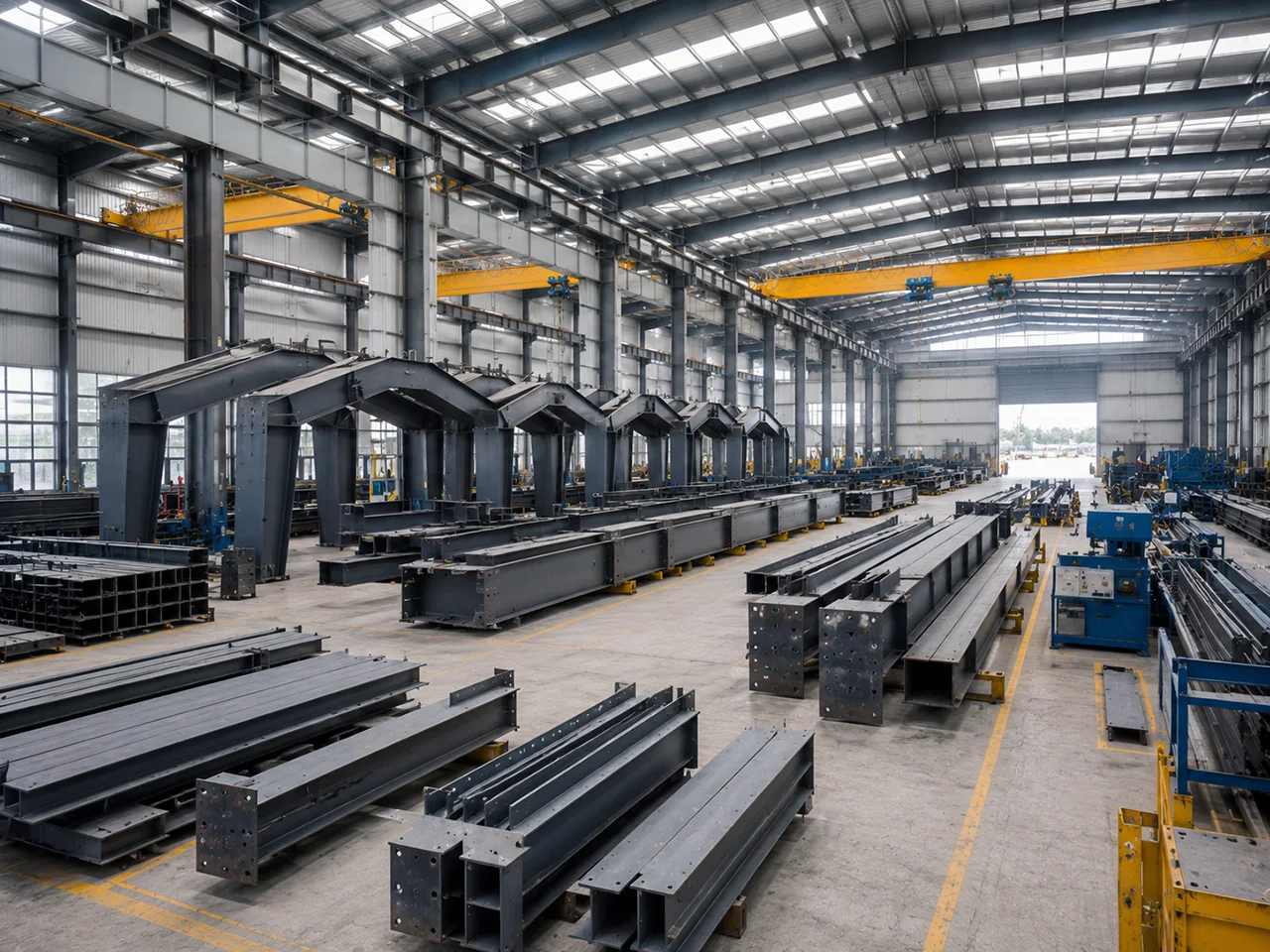
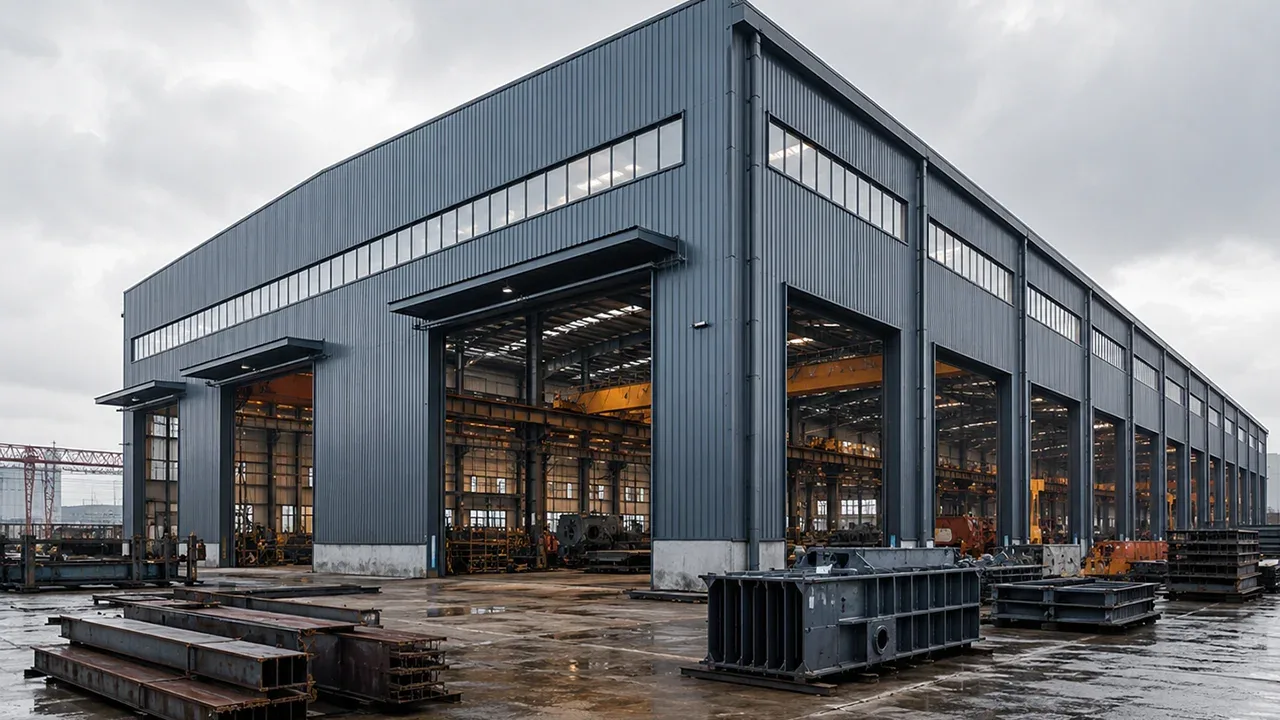
Prefabrication changes that workflow. Instead of treating the roof as a set of loose steel members to be adjusted on site, the project shifts cutting, drilling, welding, marking, coating, inspection, and packing into a controlled factory environment. The site becomes more of an assembly location. This helps reduce uncertainty, improve fit-up, and make installation more predictable. For warehouses, factories, workshops, logistics buildings, commercial halls, and large-span industrial facilities, this difference can have a major effect on both schedule and quality.
What Is a Prefabricated Steel Roof Structure?
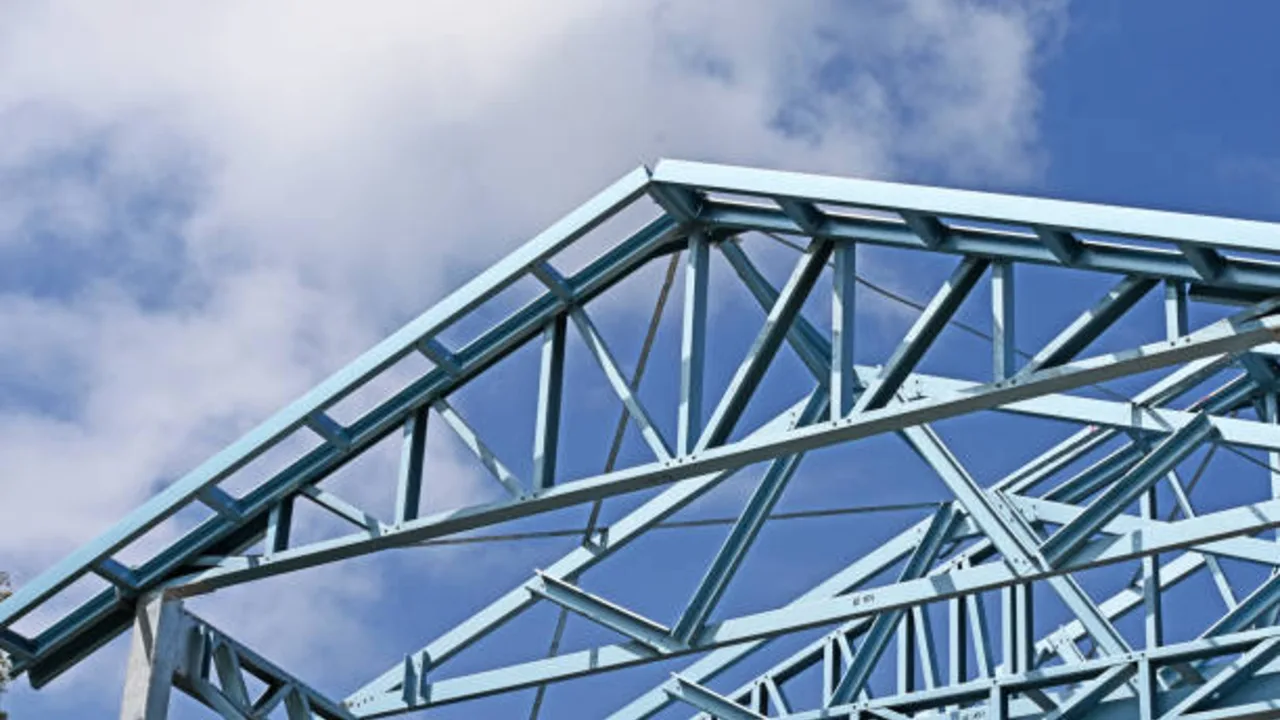
A prefabricated steel roof structure is a roof framing system where the main roof members and supporting components are manufactured off-site before being delivered to the project for installation. Depending on the building type, this may include main rafters, roof beams, steel trusses, purlins, roof bracing, connection plates, bolted splice points, gutter supports, roof edge members, skylight supports, vent frames, and coated or galvanized steel components.
The purpose of prefabrication is not simply to make steel somewhere else. The real value is that the roof system is prepared according to approved drawings, checked under controlled conditions, marked clearly, packed logically, and delivered in a way that supports the erection sequence. This reduces the amount of measuring, cutting, drilling, welding, and trial-and-error fitting required at the jobsite.
In a well-managed project, prefabrication also improves coordination between the roof structure and other building systems. Roof openings, drainage zones, ventilation units, suspended lighting, cable trays, solar supports, fire protection lines, and maintenance walkways can be reviewed before fabrication. That early coordination helps avoid expensive changes after the roof steel has already been installed.
How It Differs from Fully Site-Built Roof Framing
In a fully site-built approach, more work happens under field conditions. Crews may need to cut members, adjust holes, weld connections, modify plates, or solve alignment issues while working at height. This can slow installation and increase the risk of quality variation. Site conditions are also harder to control because weather, access, lighting, dust, lifting limitations, and available labor can all affect work quality.
With prefabrication, the roof members are prepared in a workshop before delivery. Cutting, drilling, welding, surface preparation, coating, labeling, and dimensional checks can be done before the steel reaches the site. This does not remove the need for skilled erection work, but it makes field work more organized. The installation team can focus on lifting, aligning, bolting, bracing, and verifying the roof system rather than correcting avoidable fabrication issues.
Where It Is Commonly Used
Prefabricated roof systems are common in warehouses, factories, workshops, logistics centers, agricultural buildings, hangars, commercial halls, storage facilities, and large-span industrial structures. These buildings often use repeated bays, long roof areas, and predictable structural modules, which makes prefabrication especially effective.
The method is also useful when construction speed matters. A logistics warehouse may need quick enclosure so interior work can begin. A factory may need roof installation completed before machinery installation. A commercial hall may need accurate roof geometry to coordinate ceilings, lighting, ventilation, and architectural finishes. In all these cases, prefabrication can help control both time and quality.
Why Prefabrication Improves Roof Installation Speed
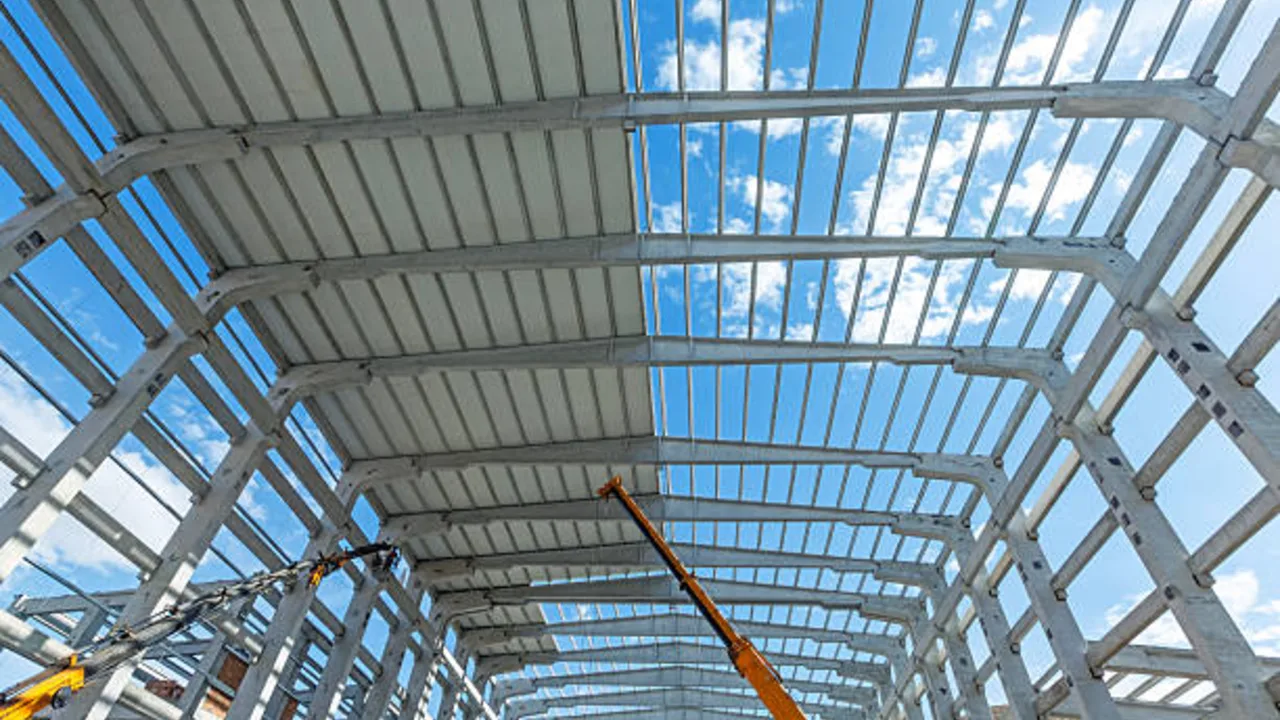
Faster roof installation does not come from rushing the site crew. It comes from removing unnecessary work from the site before installation begins. A roof frame installs faster when members arrive prepared, connections are clear, hardware is complete, and the delivery sequence matches the erection plan.
Members Arrive Ready for Assembly
Prefabricated roof members can be cut to length, drilled, welded, coated, labeled, and prepared for lifting before delivery. This means the site team receives components that are intended for assembly, not raw material that still needs major preparation. Main beams, rafters, truss segments, purlins, bracing members, and connection plates can be matched to erection drawings and member marks.
This preparation reduces site uncertainty. Workers do not need to spend extra time identifying unmarked members or adjusting components that should have been prepared in the shop. When members are clearly marked and dimensionally checked, crane lifts become more predictable and installation crews can move from one bay to the next with fewer interruptions.
Bolted Connections Reduce Site Welding
Bolted connections are one of the main reasons prefabricated roof structures can be installed quickly. When connection plates, splice points, and bolt holes are prepared accurately in the workshop, site assembly becomes cleaner and more efficient. Bolting is generally easier to control during erection than extensive field welding, especially at roof height or in changing weather conditions.
This does not mean welding disappears completely. Some projects still require welded assemblies in the shop, and certain special details may need additional work. However, the more the project can shift controlled welding into the factory and use planned bolted connections on site, the easier it becomes to maintain schedule, reduce safety risks, and keep connection quality consistent.
Delivery Sequence Supports Erection Sequence
Good fabrication alone does not guarantee fast installation. Packing and delivery order matter just as much. If the roof bracing required for the first bay is buried under later-stage purlins, or if connection hardware arrives separately without clear labeling, the site team may lose time even though the steel itself is accurate.
A good prefabrication workflow links shop production, packing lists, transport planning, and erection sequence. Main frame members, temporary stability elements, roof bracing, purlins, splice plates, bolts, and accessories should be grouped in a way that supports the actual installation order. This allows crews to work more smoothly and reduces unnecessary material handling on site.
Less Weather-Dependent Work on Site
Roof installation often happens in exposed conditions. Rain, wind, poor lighting, dust, heat, cold, or limited access can slow down field cutting, welding, measurement, coating touch-up, and alignment checks. Prefabrication reduces the amount of work exposed to these conditions by completing more tasks in the workshop.
This is especially valuable for large roof areas. The more the roof system depends on precise holes, clean welds, surface preparation, and accurate member lengths, the more useful factory-controlled work becomes. Site work still needs careful planning, but the crew is less dependent on making complex fabrication decisions in the field.
Quality Control Advantages of a Prefabricated Roof System
One of the strongest reasons to choose a prefabricated roof system is quality control. Many practical steel roof structure advantages become stronger when fabrication, coating, marking, and inspection are completed before the roof members reach the jobsite. Errors are easier to find when the steel is still in the workshop than after the crane is waiting, the crew is on site, and the schedule is under pressure.
A prefabricated steel roof structure gives the project team more chances to verify dimensions, welds, holes, plate positions, coating quality, and member identification before shipment. This can reduce rework, improve fit-up, and make the final roof system more consistent.
Controlled Cutting, Drilling, and Welding
Workshop fabrication provides a more stable environment for cutting, drilling, welding, and inspection. Machines can be calibrated, drawings can be checked, templates can be used, and dimensional tolerances can be monitored before the steel leaves the factory. This helps reduce common roof installation problems such as misaligned holes, uneven splice points, incorrect member lengths, or plate position errors.
Controlled welding is also important. Roof trusses, connection plates, stiffeners, brackets, and special support frames often depend on weld quality. In a factory setting, welds can be inspected more consistently, access is better, and surface preparation can be handled before coating. This reduces the need for difficult field welding at height.
Better Coating and Surface Preparation
Steel roof members may need primer, paint, galvanizing, or other protective systems depending on the project environment. A dry warehouse, humid storage building, coastal workshop, food processing facility, or chemical-related building may require different coating strategies. Factory preparation makes it easier to clean surfaces, apply coating systems, check thickness, and inspect coverage before delivery.
When coating is done too late or repaired too often on site, quality can become inconsistent. Field touch-up may still be needed after bolting or handling, but the main protective system is usually easier to control in the workshop. This helps improve long-term durability and reduces the risk of corrosion problems starting from poorly prepared areas.
Trial Fitting and Dimensional Checks
For complex roof systems, trial fitting can be valuable before shipment. This may involve checking truss segments, splice locations, special connection zones, curved roof elements, or long-span assemblies. The purpose is not always to assemble the entire roof in the factory. Even partial fit-up can reveal problems that would be expensive to discover on site.
Dimensional checks are especially important for long-span roof structures, repeated bay systems, roof trusses, and projects with skylights, vents, suspended services, or special architectural geometry. If errors are corrected before shipping, the site installation team can work with more confidence.
Traceability and Member Identification
Marking and documentation are part of quality control. Each member should be identifiable, matched to drawings, and packed according to installation logic. Labels, member marks, inspection records, bolt kits, packing lists, and delivery documents help the site team understand what each part is and where it belongs.
This becomes important when a roof system includes hundreds or thousands of components. Without clear identification, installation crews may waste time searching for parts, opening the wrong bundles, or installing members out of sequence. Good traceability reduces confusion and helps the project maintain installation speed.
Main Components in a Prefabricated Steel Roof Structure
A prefabricated roof system includes more than the large visible frame members. The final roof performance depends on how primary members, secondary members, bracing, connections, and accessories work together. If one part is missing or poorly coordinated, the installation sequence can slow down and the roof system may not perform as intended.
Main Roof Beams and Rafters
Main roof beams and rafters carry major roof loads and transfer them into columns, trusses, or supporting frames. In prefabrication, these members can be prepared with accurate splice plates, bolt holes, lifting points, and connection details. This is important because primary members are usually lifted early in the erection sequence, and any mismatch can delay the entire roof installation.
Prefabricated rafters and beams are also easier to coordinate with roof slope, drainage, purlin spacing, and bracing layout. When these details are controlled before shipment, the roof frame is more likely to align properly during erection.
Steel Roof Trusses
Steel roof trusses are often used when the building requires longer spans or efficient strength-to-weight performance. Trusses can reduce the need for heavy solid beams, but they require accurate node geometry, member lengths, splice positions, and connection plates. Prefabrication helps control these details in the workshop.
For large trusses, transportation limits may require the truss to be shipped in segments. In that case, splice design and member marking become critical. The installation crew must be able to identify each segment, lift it safely, and connect it without unnecessary field adjustment.
Purlins and Secondary Roof Members
Purlins support roof panels and transfer loads to the main roof members. In many industrial and commercial buildings, C or Z purlins are used because they are lightweight, repeatable, and efficient. Their spacing affects roof panel support, insulation support, wind uplift resistance, and installation quality.
Secondary roof members also support roof edges, gutters, skylights, vents, and service openings. When these members are prefabricated and marked correctly, roof panel installation becomes easier and alignment problems are reduced.
“`html id=”prefabricated-steel-roof-structure-en-part-2″
Roof Bracing and Stability Members
Roof bracing helps the roof frame resist lateral movement, distribute wind forces, and stabilize the building during and after erection. In a prefabricated roof system, bracing should not be treated as a small accessory. It must be included in the fabrication drawings, packing plan, and erection sequence because the roof may not be stable until the correct bracing members are installed.
This is especially important for large-span roofs, high-eave buildings, hangars, warehouses, and industrial halls exposed to wind during construction. The completed structure may be stable, but partial installation can create temporary risk. Prefabricated bracing members, clear labels, and correct bolt kits help the site team install stability elements at the right stage.
Connection Plates, Bolts, and Splices
Connections often decide whether a roof installation moves smoothly or becomes delayed. Connection plates, splice locations, gusset plates, bolts, washers, stiffeners, and erection holes must match the real geometry of the roof. A small mismatch in a plate or bolt hole can stop progress, especially when the affected member is part of the main roof frame.
Prefabrication gives the project team a chance to check connection details before shipment. It also allows bolts and plates to be packed according to installation zones. This reduces site confusion and helps the erection crew focus on assembly rather than searching for missing hardware or correcting avoidable connection issues.
How Prefabrication Reduces Site Errors
Site errors often happen when too many decisions are left until installation. Roof work is difficult because crews may be working at height, under weather exposure, around cranes, and within tight schedule pressure. A prefabricated steel roof structure reduces this risk by shifting more precision work into the factory and leaving the site team with a clearer assembly process.
Fewer Field Measurements
Field measurement is sometimes necessary, but too much field measuring creates risk. If roof members depend heavily on manual measurement after delivery, small mistakes can affect alignment, bolt fit-up, panel installation, and bracing geometry. Prefabricated components follow approved shop drawings and controlled dimensions, which reduces the need for improvisation on site.
This is especially useful in repeated-bay buildings. Once the first bay is verified, the remaining bays can often follow a more predictable rhythm. The site team can move faster because members are already prepared for their positions.
Less Cutting and Rework at Height
Cutting, drilling, grinding, welding, or adjusting steel at roof height is slow and risky. It can require extra platforms, hot-work control, weather protection, lifting coordination, and coating repair. It may also reduce quality if the work is done under poor access conditions.
Prefabrication reduces this kind of work. Members should arrive with the correct length, hole positions, plate details, and coating condition. Minor adjustments may still happen, but the project should not depend on major field modification to make the roof fit.
Clearer Installation Logic
A well-prefabricated roof system should be easy to understand on site. Member marks should match erection drawings. Bolt kits should be grouped logically. Bracing members should be identified clearly. Packing lists should help crews find the next required component without unnecessary searching.
This installation logic matters because roof erection often follows a sequence: main frames, temporary stability, roof bracing, purlins, secondary members, edge supports, and finally roof cladding. If the steel arrives without clear organization, the project can lose time even when the fabrication itself is accurate.
Reduced Clash Between Roof Members and Services
Roof structures must coordinate with more than structural loads. Skylights, ventilation units, smoke vents, ducts, cable trays, fire protection pipes, solar panel supports, and maintenance walkways can all affect member placement. If these items are added after fabrication, the project may need drilling, welding, reinforcement, or coating repair on site.
Early coordination reduces these clashes. Roof openings and service supports can be included in the drawings before fabrication begins. This allows the prefabricated members to arrive ready for the actual building system, not just the structural frame alone.
Design Factors Before Prefabricating a Steel Roof
Prefabrication works best when design decisions are made early. A roof cannot be fabricated accurately if the span, slope, drainage, loads, service openings, transport plan, and connection strategy are still changing. Before ordering a prefabricated steel roof structure, the project team should review the building as a complete system.
Span, Roof Slope, and Drainage
Span affects member size, roof depth, truss layout, steel weight, lifting method, and deflection control. Longer spans may reduce internal columns, but they can also increase fabrication complexity and transport requirements. Roof slope affects drainage, gutter support, roof panel layout, and water flow.
Drainage should be decided before fabrication. Gutters, valleys, downspouts, roof edge members, and support brackets need to align with the roof frame. If drainage details are changed after steel fabrication, the site may need extra brackets, field welding, or awkward waterproofing solutions.
Load Requirements
Roof loads may include dead load, wind load, rain load, snow load where applicable, maintenance load, suspended lighting, ventilation equipment, solar panels, HVAC units, skylights, vents, fire protection lines, and future upgrades. These loads must be identified before fabrication so members and connections can be designed properly.
Late load changes can affect more than one component. Adding rooftop equipment may require stronger purlins, additional support frames, reinforced connection plates, stronger rafters, or local bracing changes. This is why early load review is one of the most important steps in prefabricated roof planning.
Transportation Limits
Prefabricated roof members must still be transported safely. Member length, width, weight, container loading, road restrictions, lifting points, and unloading method all influence fabrication decisions. A large truss may be structurally efficient but impossible to ship as one piece. In that case, the truss must be divided into segments with carefully designed splice points.
Transport planning should happen before finalizing member lengths. The best prefabricated solution is not always the largest possible assembly. Sometimes smaller, accurately marked segments are faster and safer to ship, unload, lift, and connect.
Crane Access and Erection Method
The erection method should influence fabrication. Crane capacity, lifting radius, site access, temporary supports, laydown area, working height, and weather exposure all affect how the roof should be divided and installed. A member that is easy to fabricate may still be difficult to lift if the site has limited access.
Good planning connects fabrication drawings with erection drawings. Lifting points, splice locations, bracing sequence, and temporary stability should be reviewed before steel is shipped. This helps avoid site improvisation and improves safety.
Connection Strategy
Connection strategy determines how the roof goes together. Bolted splices, field connection points, plate thickness, bolt access, tolerance control, and member segmentation should all be reviewed early. If connections are too complex or difficult to access, installation may slow down even when the steel is accurately fabricated.
A good connection strategy balances fabrication efficiency with field practicality. The goal is not only to make the connection strong, but also to make it buildable, inspectable, and repeatable during installation.
Factory Quality Control Checklist Before Shipment
Factory inspection should not be treated as paperwork only. It directly affects installation speed, fit-up quality, safety, and rework risk. Before a prefabricated roof system is shipped, the project team should confirm that the key items have been checked and documented.
| QC Item | What to Check | Why It Matters on Site |
|---|---|---|
| Member dimensions | Length, depth, angle, camber, and overall geometry | Prevents fit-up problems during lifting and assembly |
| Bolt hole alignment | Hole position, diameter, spacing, and matching plates | Reduces delays caused by drilling or forced alignment |
| Weld quality | Weld size, continuity, appearance, and inspection records | Improves connection reliability and reduces field repair |
| Plate position | End plates, splice plates, gusset plates, and stiffeners | Ensures members connect correctly during erection |
| Surface preparation | Cleaning, rust removal, surface profile, and readiness for coating | Supports coating adhesion and long-term durability |
| Coating thickness | Primer, paint, galvanizing, or specified protection system | Reduces corrosion risk and limits site touch-up |
| Member marking | Labels, part numbers, erection marks, and orientation marks | Helps crews identify and install components quickly |
| Packing list | Bundle contents, member sequence, hardware, and accessories | Prevents missing-part delays during roof installation |
| Trial fit where required | Complex trusses, special connections, or repeated critical assemblies | Finds dimensional problems before shipment |
| Hardware completeness | Bolts, nuts, washers, splice kits, brackets, and special plates | Keeps installation from stopping due to small missing items |
A strong QC process supports the whole roof schedule. When members arrive with clear marks, complete hardware, verified dimensions, and documented coating quality, the erection team can work with fewer interruptions.
Common Problems in Prefabricated Steel Roof Projects
Prefabrication improves speed and quality, but it does not remove the need for coordination. Many problems happen when design, fabrication, logistics, or erection planning are not aligned. These issues should be addressed before production begins.
Shop Drawings Released Too Early
Releasing shop drawings before roof services and openings are finalized can create serious problems. Skylights, smoke vents, ducts, solar supports, roof drains, and maintenance walkways may require additional framing or modified member locations. If these details are added after fabrication, the project may need rework.
Fast fabrication is useful only when the information is ready. Approving drawings too early can make the factory move quickly in the wrong direction.
Packing Does Not Match Installation Sequence
Accurate steel can still slow a project if it is packed poorly. If first-stage bracing is placed under later-stage purlins, or if bolt kits are separated from the members they serve, crews may spend unnecessary time sorting materials.
Packing should follow erection logic. Main frames, bracing, purlins, edge members, connection hardware, and accessories should be grouped so the site team can install the roof in a stable and efficient sequence.
Connection Tolerances Are Ignored
Connection tolerance is one of the most common sources of field delay. Bolt holes, splice plates, end plates, and member geometry must allow for realistic fabrication and erection tolerances. If the design assumes perfect site conditions, the roof may become difficult to assemble.
Good tolerance planning does not mean accepting poor accuracy. It means designing connections that are precise, buildable, and able to accommodate normal erection conditions without forcing members into position.
Roof Equipment Added After Fabrication
Adding roof equipment after fabrication can affect both load and geometry. Solar panels, HVAC units, exhaust fans, skylights, maintenance platforms, and fire protection systems may require local support or additional framing. If these items are added late, crews may need to drill, weld, reinforce, or repair coating on site.
This can reduce the benefits of prefabrication. Roof equipment should be identified early so support members and connection points can be included in the factory-made system.
Temporary Stability Is Not Planned
A completed roof frame may be stable, but partial erection can be vulnerable. Main rafters, trusses, or long roof beams may need temporary bracing before the permanent roof bracing and purlins are installed. Wind during erection can increase risk if temporary stability is ignored.
The erection plan should define when permanent bracing is installed, where temporary supports are needed, and how each stage of the roof remains stable. Prefabrication helps only when installation sequence and stability planning are also clear.
Prefabricated Steel Roof Structure vs Conventional Site-Built Roof Framing
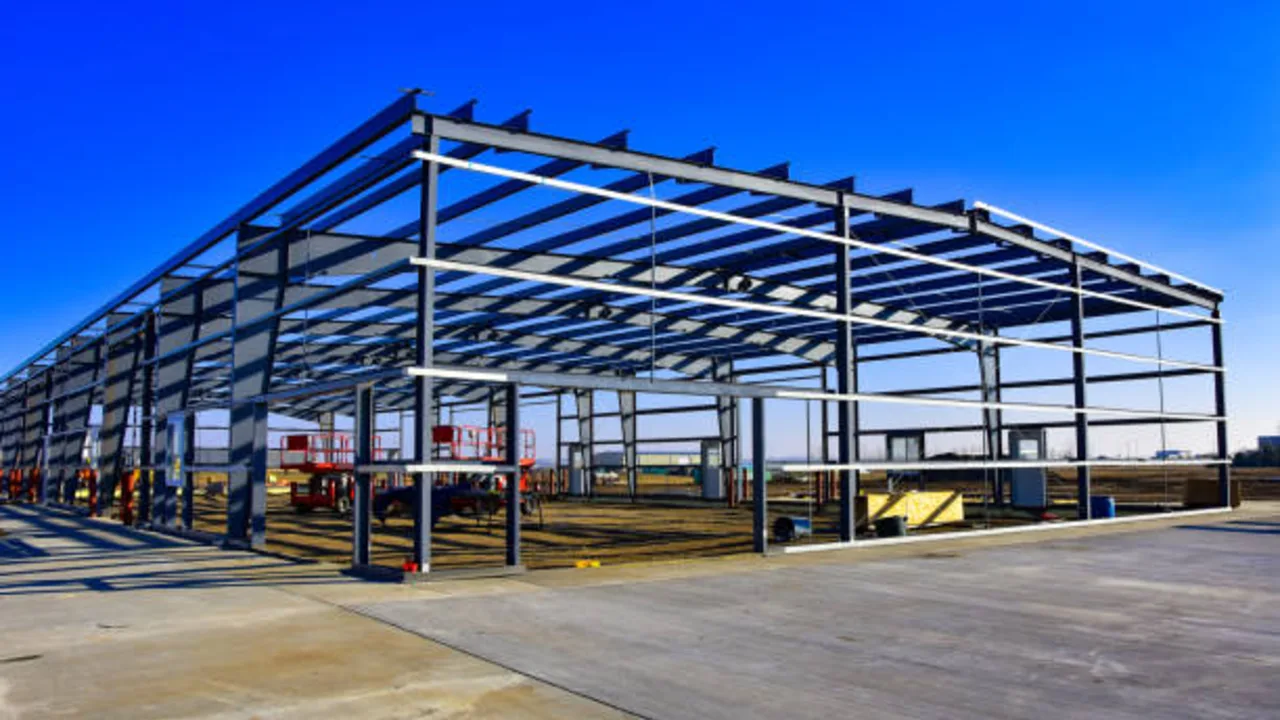
Prefabrication is not just a material choice. It is a delivery method. The difference is not simply where steel is made, but how design, quality control, logistics, and erection are managed.
| Factor | Prefabricated Steel Roof Structure | Conventional Site-Built Roof Framing |
|---|---|---|
| Fabrication control | Controlled cutting, drilling, welding, marking, and coating | More work depends on field conditions and site adjustment |
| Site labor demand | Focused on lifting, aligning, bolting, and inspection | More cutting, fitting, welding, and correction may be needed |
| Installation speed | Faster when packing and erection sequence are coordinated | Can slow down if many decisions are made on site |
| Weather exposure | Less fabrication work exposed to weather | More work may be affected by wind, rain, dust, and access limits |
| Quality inspection | More checks can happen before shipment | More issues may be discovered during installation |
| Rework risk | Lower when drawings, QC, and logistics are controlled | Higher if site modification becomes normal |
| Transport planning | Requires early review of member size, weight, and packing | Less preplanning may be needed, but site work increases |
| Design coordination | Requires earlier decisions on openings, loads, and services | Allows more field flexibility but can create quality variation |
The prefabricated approach works best when the project team is ready to make decisions early. If the roof layout, services, loads, drainage, and connection strategy are still uncertain, prefabrication may lose some of its value. When these decisions are coordinated from the beginning, prefabrication can produce a faster and more predictable installation.
How to Choose the Right Prefabricated Roof Solution
Before choosing a prefabricated steel roof structure, project owners should evaluate the roof as part of the complete building system. The right solution is not always the largest pre-assembled piece. In many projects, smaller, well-marked, accurately fabricated segments install faster and safer than oversized assemblies that are difficult to transport or lift.
- Building function: Define whether the building is a warehouse, factory, workshop, hangar, commercial hall, or logistics facility.
- Required span: Match the roof system with interior clearance, storage layout, production needs, and equipment access.
- Roof slope and drainage: Coordinate slope, gutters, valleys, downspouts, and roof edge supports.
- Environmental loads: Review wind, rain, snow where applicable, corrosion exposure, and temperature movement.
- Roof-mounted equipment: Identify solar panels, HVAC units, exhaust fans, skylights, vents, and service supports early.
- Insulation and cladding: Confirm panel type, purlin spacing, vapor control, thermal performance, and fastening method.
- Coating environment: Select paint, primer, galvanizing, or other protection based on exposure conditions.
- Transport route: Check member length, weight, container loading, road limits, and unloading method.
- Crane access: Review lifting radius, site access, temporary supports, and safe installation zones.
- Erection sequence: Plan main frames, bracing, purlins, edge members, and roof panels in a stable order.
- Future upgrades: Consider solar installation, added equipment, maintenance walkways, or roof replacement access.
- Quality documentation: Request inspection records, packing lists, member marks, coating reports, and hardware lists.
The best prefabricated roof solution balances engineering, manufacturing, logistics, erection, and long-term building use. When these factors are considered together, the roof system becomes easier to install and easier to manage after completion.
Conclusion: Faster Roof Installation Starts Before the Steel Reaches Site
A prefabricated steel roof structure improves installation speed by shifting critical work into a controlled factory environment. Cutting, drilling, welding, coating, marking, inspection, and packing can be handled before the members arrive at the jobsite. This reduces field uncertainty and helps the erection team work with clearer logic.
The strongest value comes from coordination. Design decisions, service openings, roof loads, connection details, transport limits, coating requirements, packing sequence, and erection planning must be aligned early. When that happens, prefabrication does more than make roof steel faster to install. It improves quality control, reduces rework, supports safer assembly, and helps the roof perform better over the full life of the building.
Fast installation is not only about working faster on site. It is about removing uncertainty before the roof steel arrives.