Modern modular construction relies heavily on precision. In steel prefab projects, components are manufactured with tight dimensional tolerances and are expected to fit together efficiently during site assembly. However, even when fabrication quality is excellent, problems at the foundation level can significantly disrupt installation.
Uneven foundations are among the most common and costly site-related challenges in modular steel construction. Minor elevation differences, alignment inconsistencies, or settlement issues can create major complications during assembly, affecting structural alignment, connection accuracy, crane operations, and installation sequencing.
As prefab systems become larger and more complex, proper prefab uneven foundation handling becomes increasingly critical for maintaining project efficiency, installation safety, and long-term structural performance.
Unlike traditional construction methods, modular steel projects depend on precise coordination between factory fabrication and site conditions. If foundations deviate from planned tolerances, the mismatch can quickly impact multiple installation stages simultaneously.
For this reason, experienced contractors and manufacturers now rely on advanced surveying systems, digital modeling, adjustable connection technologies, and integrated coordination strategies to manage foundation irregularities before they escalate into major structural problems.
In industrialized construction, successful prefab uneven foundation handling is no longer simply a corrective activity — it has become a core part of risk management and installation planning.
Why Foundation Accuracy Matters in Prefab Construction
The relationship between prefab precision and foundation tolerances
Prefab steel systems are designed around highly controlled manufacturing processes. Structural members, connection plates, anchor points, and modular interfaces are fabricated according to precise engineering dimensions.
Because of this precision, site foundations must also remain within strict tolerance ranges.
Even small deviations can affect:
- Module alignment
- Connection fit-up
- Vertical plumbness
- Load transfer efficiency
- Installation safety
As project scale increases, tolerance sensitivity becomes even more critical. Large-span steel modules may amplify small elevation errors across long structural distances.
This is why accurate prefab uneven foundation handling is essential before assembly activities begin.
How uneven foundations disrupt modular assembly
Prefab assembly relies on predictable geometry. When foundations become uneven, installers may face immediate alignment conflicts during lifting and positioning operations.
Common assembly problems include:
- Misaligned bolt holes
- Connection gaps
- Twisting structural frames
- Uneven bearing surfaces
- Module interface conflicts
These issues can slow installation progress and increase labor requirements.
In severe cases, modules may require temporary modification or re-fabrication before installation can continue.
Effective prefab uneven foundation handling helps minimize these disruptions and preserves assembly efficiency.
Long-term structural implications
Foundation irregularities not only affect installation but can also influence long-term structural behavior.
Uneven support conditions may create:
- Unexpected stress concentrations
- Differential settlement
- Connection fatigue
- Misaligned load paths
- Waterproofing complications
If left unresolved, these problems can reduce structural durability and increase future maintenance requirements.
Proper leveling and alignment procedures during assembly are therefore critical to ensuring long-term structural reliability.
Common Causes of Uneven Foundations in Prefab Projects
Soil settlement and ground movement
Ground conditions are one of the primary causes of uneven foundations.
Settlement may occur due to:
- Weak soil layers
- Improper compaction
- Groundwater changes
- Vibration from nearby activities
- Uneven loading conditions
Even small settlement variations can create noticeable alignment problems for prefab steel systems.
Early geotechnical investigation is therefore essential for reducing foundation risks.
Concrete curing inconsistencies
Concrete foundations may experience uneven curing or shrinkage during construction.
Factors influencing curing consistency include:
- Temperature variation
- Moisture exposure
- Mix quality
- Pour sequencing
- Surface finishing practices
Poor curing control can lead to elevation inconsistencies that later interfere with prefab assembly accuracy.
Surveying and layout errors
Surveying inaccuracies remain a major source of installation problems.
Potential issues include:
- Incorrect benchmark placement
- Improper elevation transfer
- Anchor bolt positioning errors
- Coordinate system mismatches
- Measurement drift
As steel modules become increasingly precise, even small layout mistakes can create substantial assembly complications.
Advanced digital surveying systems are now widely used to improve installation accuracy.
Environmental and weather-related influences
Weather conditions may also affect foundation stability before assembly begins.
Common environmental influences include:
- Heavy rainfall
- Freeze-thaw cycles
- Soil erosion
- Temperature expansion
- Surface water accumulation
These conditions can alter foundation elevations or create unstable support conditions for incoming modules.
Proper site preparation and monitoring help reduce these risks.
How Uneven Foundations Affect Prefab Assembly
Misalignment of structural modules
The most immediate consequence of uneven foundations is module misalignment.
When support elevations vary unexpectedly:
- Frames may lean
- Connection points may shift
- Roof modules may not align properly
- Wall systems may develop gaps
These problems can rapidly affect multiple downstream installation activities.
Accurate prefab uneven foundation handling minimizes alignment disruption and preserves installation continuity.
Connection difficulties during erection
Steel prefab systems rely heavily on accurate connection geometry.
Foundation irregularities may cause:
- Bolt misalignment
- Weld fit-up problems
- Plate contact inconsistencies
- Structural binding
- Excessive installation force requirements
These conditions increase installation time and may compromise structural quality if not corrected properly.
Load distribution complications
Uneven foundations may alter intended structural load paths.
As a result:
- Certain supports may become overloaded
- Stress concentrations may increase
- Differential movement may occur
- Connection fatigue may accelerate
Proper leveling procedures help restore balanced load distribution across the structure.
Installation sequencing disruptions
Foundation problems frequently affect installation sequencing.
For example:
- Critical modules may require re-leveling before erection
- Crane schedules may need adjustment
- Temporary supports may become necessary
- Follow-up module deliveries may be delayed
These disruptions can significantly impact overall project schedules.
Effective planning for prefab uneven foundation handling helps reduce these operational delays.
Pre-Assembly Inspection and Survey Procedures
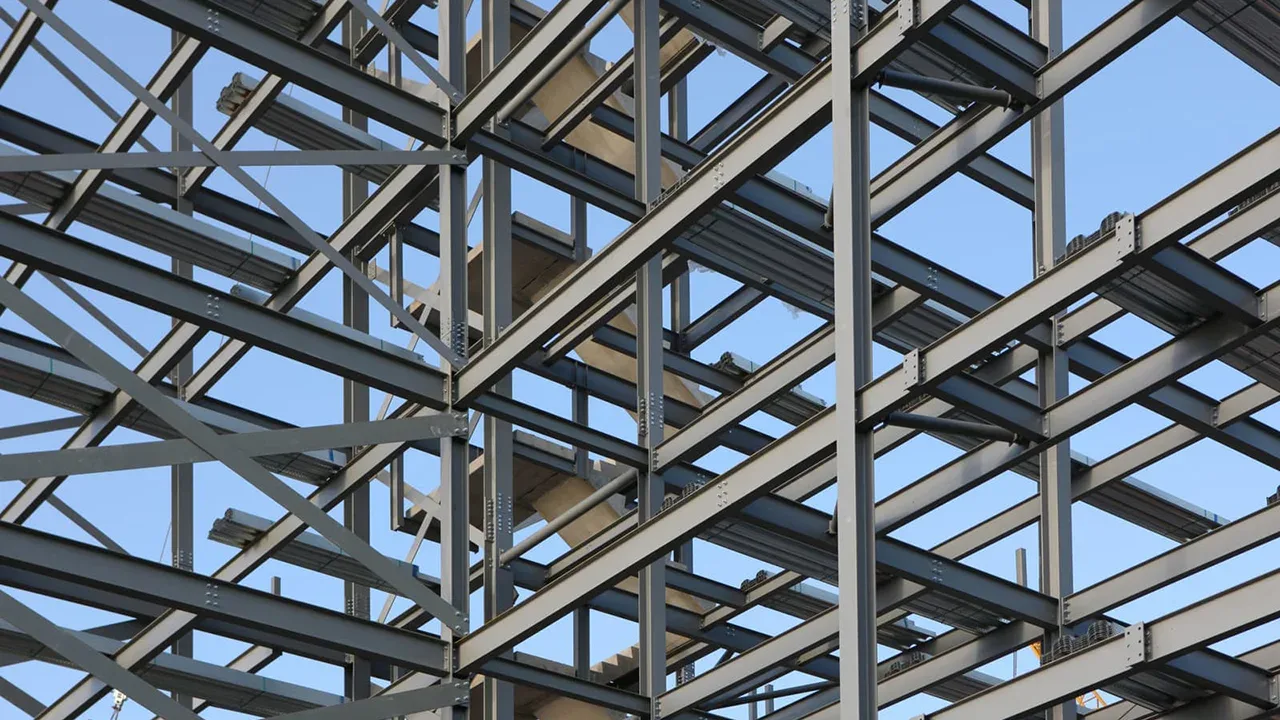
Laser scanning and total station verification
Modern prefab projects increasingly rely on advanced digital surveying technologies before installation begins.
Common systems include:
- 3D laser scanning
- Total station surveying
- GPS positioning systems
- Digital elevation mapping
These tools allow teams to identify elevation deviations with extremely high accuracy.
Digital verification significantly improves early-stage prefab uneven foundation handling by detecting problems before modules arrive on site.
Elevation checks and benchmark comparisons
Foundation elevations must be carefully verified against project benchmarks before assembly operations begin.
Inspection teams typically review:
- Anchor bolt elevations
- Base plate positions
- Concrete surface flatness
- Gridline alignment
- Support bearing elevations
Even small elevation inconsistencies may require correction before structural modules can be safely installed.
Digital modeling validation before installation
Many advanced projects now compare field survey data directly against BIM models before installation starts.
This process helps:
- Identify geometry conflicts
- Verify module fit-up
- Predict connection problems
- Optimize installation planning
Digital coordination reduces uncertainty and improves installation efficiency during complex prefab assembly.
Leveling Methods Used During Prefab Assembly
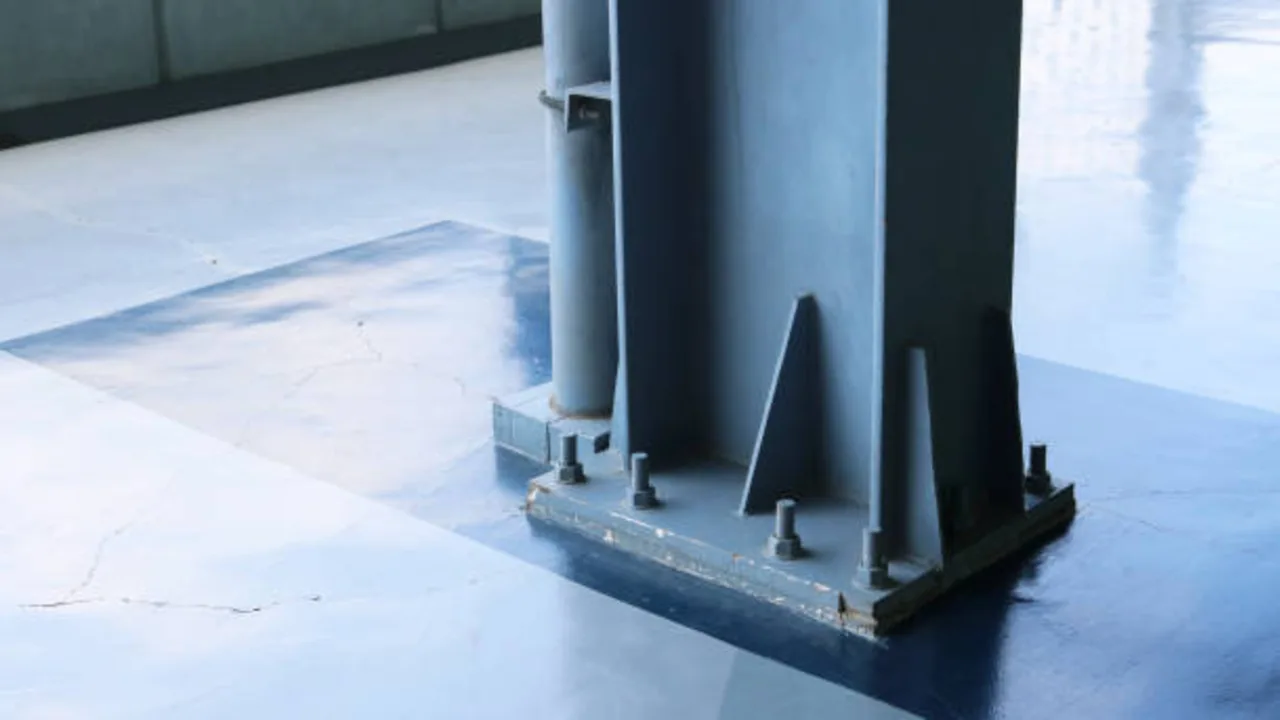
Shim plate adjustments
Shim plates are among the most widely used leveling solutions in prefab steel construction.
These steel plates are installed beneath base plates or support points to compensate for elevation differences.
Shim systems help:
- Correct minor elevation discrepancies
- Improve bearing contact
- Maintain structural alignment
- Distribute loads more evenly
Proper shim placement is critical to preventing localized stress concentrations.
Experienced installation teams carefully calculate shim thicknesses based on field survey measurements before module erection begins.
Accurate shim management is an important part of effective prefab uneven foundation handling.
Grouting techniques for elevation correction
Grouting is commonly used to stabilize support conditions and improve load transfer beneath steel base plates.
Common grout applications include:
- Non-shrink structural grout
- Precision leveling grout
- High-strength cementitious grout
- Epoxy grout systems
Grouting helps fill gaps caused by uneven surfaces while improving structural bearing performance.
Proper grout curing is essential to maintaining long-term structural stability.
Adjustable base plate systems
Some modern prefab systems incorporate adjustable base plate technologies to improve installation flexibility.
These systems may include:
- Threaded leveling assemblies
- Adjustable anchor systems
- Sliding connection interfaces
- Flexible support bearings
Adjustable systems allow installers to compensate for minor foundation variations without extensive field modification.
This flexibility can significantly improve installation speed and reduce assembly risk.
Temporary leveling supports
Temporary support systems are frequently used during complex module positioning operations.
These supports may include:
- Hydraulic jacks
- Temporary steel cribbing
- Adjustable support frames
- Alignment bracing systems
Temporary leveling systems help maintain module stability while permanent connections are completed.
Careful monitoring during lifting operations is critical to ensuring installation safety.
Managing Structural Tolerances in Steel Prefab Systems
Fabrication tolerance versus site tolerance
Steel prefab projects involve two separate but interconnected tolerance systems:
- Factory fabrication tolerances
- Site installation tolerances
While factory tolerances are highly controlled, site conditions are often less predictable.
Foundation irregularities can create conflicts between these two systems.
Successful prefab uneven foundation handling requires careful coordination between manufacturing precision and field adjustment capability.
Connection flexibility design
Modern prefab steel systems often incorporate flexible connection details to accommodate minor installation variation.
These details may include:
- Slotted bolt holes
- Adjustable splice plates
- Floating connection interfaces
- Tolerance-absorbing joint systems
Connection flexibility helps reduce installation stress while maintaining structural integrity.
However, excessive adjustment capability may reduce structural efficiency if not properly engineered.
Importance of coordinated engineering review
When foundation irregularities are discovered, engineering teams must carefully evaluate their structural impact before installation proceeds.
The review process may involve:
- Tolerance assessment
- Load path analysis
- Connection verification
- Temporary support planning
- Corrective procedure approval
Integrated engineering coordination helps ensure safe and efficient installation under non-ideal site conditions.
Role of BIM and Digital Coordination
Foundation verification using BIM
Building Information Modeling (BIM) has become a major tool for managing prefab installation accuracy.
BIM systems allow project teams to:
- Compare field conditions with design models
- Visualize elevation conflicts
- Validate module positioning
- Coordinate corrective actions
This digital visibility significantly improves early-stage decision-making during prefab uneven foundation handling.
To better understand how BIM supports construction coordination, review this overview of Building Information Modeling (BIM).
Detecting elevation conflicts before assembly
Advanced digital survey integration allows teams to detect foundation problems before installation begins.
These systems can identify:
- Out-of-tolerance elevations
- Anchor misalignment
- Support inconsistencies
- Potential connection conflicts
Early detection reduces costly field adjustments and minimizes installation delays.
Digital coordination between factory and site
Modern prefab construction increasingly relies on real-time communication between manufacturing facilities and installation teams.
Digital coordination systems help synchronize:
- Production schedules
- Survey updates
- Installation sequencing
- Corrective procedures
- Engineering revisions
This integration improves overall project responsiveness and reduces coordination risk.
Logistics and Installation Challenges Caused by Uneven Foundations
Crane positioning limitations
Uneven foundations can affect crane setup and lifting stability during module installation.
Potential issues include:
- Uneven crane support surfaces
- Restricted lifting geometry
- Load balance instability
- Reduced lifting precision
These conditions increase installation complexity and may require additional safety measures.
Proper ground preparation remains essential for safe crane operation.
Safety risks during lifting operations
Foundation irregularities may introduce additional safety hazards during lifting activities.
Risks may include:
- Unexpected module shifting
- Temporary instability
- Uneven load transfer
- Support displacement
Strict monitoring and controlled lifting procedures are necessary to minimize these hazards.
Safety planning is therefore a critical component of prefab uneven foundation handling.
Re-sequencing module installation
In some situations, uneven foundations may force project teams to alter installation sequencing.
For example:
- Specific modules may require delayed installation
- Temporary structural stabilization may become necessary
- Correction work may need prioritization
- Transportation schedules may require adjustment
Flexible project management helps reduce schedule disruption when foundation problems arise.
Best Practices to Reduce Foundation Problems
Early geotechnical investigation
Comprehensive soil investigation is one of the most effective methods for preventing foundation problems.
Geotechnical studies help evaluate:
- Soil bearing capacity
- Settlement risk
- Groundwater conditions
- Compaction requirements
- Long-term stability
Early identification of ground risks allows engineers to develop more reliable foundation systems.
Accurate survey control systems
High-precision survey control systems are essential for maintaining foundation accuracy.
Modern projects often utilize:
- Digital layout systems
- Automated surveying tools
- Continuous elevation monitoring
- Real-time coordinate verification
Improved survey accuracy directly reduces installation conflicts during prefab assembly.
Continuous monitoring during construction
Foundation conditions should be continuously monitored throughout project execution.
Monitoring activities may include:
- Settlement measurement
- Elevation tracking
- Anchor bolt verification
- Surface condition inspection
Continuous monitoring allows teams to identify developing problems before they impact structural assembly.
Integrated communication between stakeholders
Successful prefab projects depend heavily on communication between:
- Engineers
- Manufacturers
- Survey teams
- Installation contractors
- Project managers
Coordinated communication improves decision-making and allows faster corrective action when foundation irregularities are detected.
Strong collaboration significantly improves overall prefab uneven foundation handling efficiency.
How Experienced Manufacturers Handle Foundation Variability
Pre-engineered adjustment strategies
Experienced prefab manufacturers often incorporate adjustment capability directly into system design.
These strategies may include:
- Adjustable connection details
- Tolerance-absorbing interfaces
- Modular shim systems
- Flexible bearing configurations
Pre-engineered flexibility helps reduce installation delays when minor foundation variation occurs.
Installation support teams
Many advanced prefab manufacturers provide on-site technical support during assembly operations.
These teams may assist with:
- Survey validation
- Leveling procedures
- Connection alignment
- Corrective recommendations
- Installation sequencing adjustments
Field support improves coordination between factory engineering and actual site conditions.
Flexible connection detailing
Connection systems are increasingly designed with installation adaptability in mind.
Modern detailing may include:
- Multi-directional adjustment capability
- Extended tolerance allowances
- Temporary stabilization options
- Simplified field correction methods
These solutions help improve installation efficiency while preserving structural safety.
Real-time site coordination
Large prefab projects increasingly rely on digital coordination during active installation.
Real-time coordination systems allow teams to:
- Share survey updates instantly
- Track module positioning progress
- Coordinate corrective actions
- Adjust installation schedules dynamically
This operational visibility significantly improves responsiveness during complex assembly operations.
Future Trends in Prefab Foundation Management
AI-assisted surveying systems
Artificial intelligence is beginning to improve foundation verification and installation planning.
AI-assisted systems may help:
- Detect elevation anomalies
- Predict settlement risk
- Optimize leveling procedures
- Improve survey accuracy
These technologies may eventually reduce manual surveying requirements while improving installation precision.
Digital twin monitoring
Digital twin technology creates real-time virtual representations of construction conditions.
These systems may support:
- Foundation monitoring
- Structural movement tracking
- Installation simulation
- Predictive maintenance planning
Digital twins are expected to become increasingly important in large-scale prefab projects.
Automated leveling technologies
Emerging leveling systems may automate parts of the alignment process during assembly.
Potential technologies include:
- Self-leveling support systems
- Automated hydraulic adjustment
- Sensor-based alignment control
- Robotic positioning assistance
Automation may significantly improve installation speed and reduce field labor requirements.
Real-time installation analytics
Future prefab projects will likely rely more heavily on real-time construction analytics.
These systems may provide:
- Live installation monitoring
- Predictive sequencing analysis
- Dynamic safety evaluation
- Continuous structural verification
Advanced analytics will help project teams respond more effectively to unexpected site conditions.
Conclusion
Modern modular steel construction depends heavily on precision, coordination, and installation efficiency.
Because prefab systems are manufactured with tight tolerances, even relatively small foundation irregularities can create significant assembly complications.
As a result, effective prefab uneven foundation handling has become an essential component of successful prefab project execution.
Proper foundation management requires:
- Accurate surveying
- Advanced leveling systems
- Integrated engineering coordination
- Flexible installation planning
- Continuous site monitoring
Companies involved in large-scale prefabricated steel structure building projects increasingly rely on digital coordination systems, adaptive connection technologies, and advanced field verification methods to reduce installation risk and improve structural performance.
As industrialized construction continues evolving, foundation management and leveling coordination will remain critical to maintaining prefab assembly accuracy, safety, and long-term reliability.