Construction sites have always been environments where risk is unavoidable. Heavy equipment, working at height, tight schedules, and coordination between multiple trades create conditions where safety incidents, errors, and delays can easily occur. In traditional building methods, much of the work is performed directly on-site, exposing workers and project timelines to variables that are difficult to fully control.
As construction projects grow larger and more complex, the industry has increasingly shifted toward prefabrication as a strategic solution for prefabrication construction risk reduction. By transferring critical construction activities from the jobsite to controlled factory environments, prefabrication fundamentally changes how risk is managed. Instead of reacting to problems after they occur on-site, risks related to safety, errors, and quality are reduced at the source.
This article explains how prefabrication construction risk reduction works in practice, why it improves safety and error reduction, and how off-site manufacturing has become a core risk-management strategy in modern construction projects.
Understanding Construction Risk in Traditional On-Site Building
Construction risk refers to the probability of incidents, errors, or disruptions that negatively affect worker safety, structural quality, project schedules, and overall cost. In traditional on-site construction, many of these risks are embedded directly into daily operations.
Common sources of risk in conventional construction methods include:
- Manual work performed at height or in confined spaces
- On-site cutting, welding, and fitting with variable accuracy
- Dependence on weather conditions
- Skill-level differences among labor teams
- Coordination issues between trades working simultaneously
These factors often lead to safety incidents, inconsistent workmanship, and rework. Even small errors—such as misaligned connections or incorrect measurements—can cascade into major delays or structural corrections. From a project management perspective, this makes risk difficult to predict and even harder to control.
What Is Prefabrication in Modern Construction
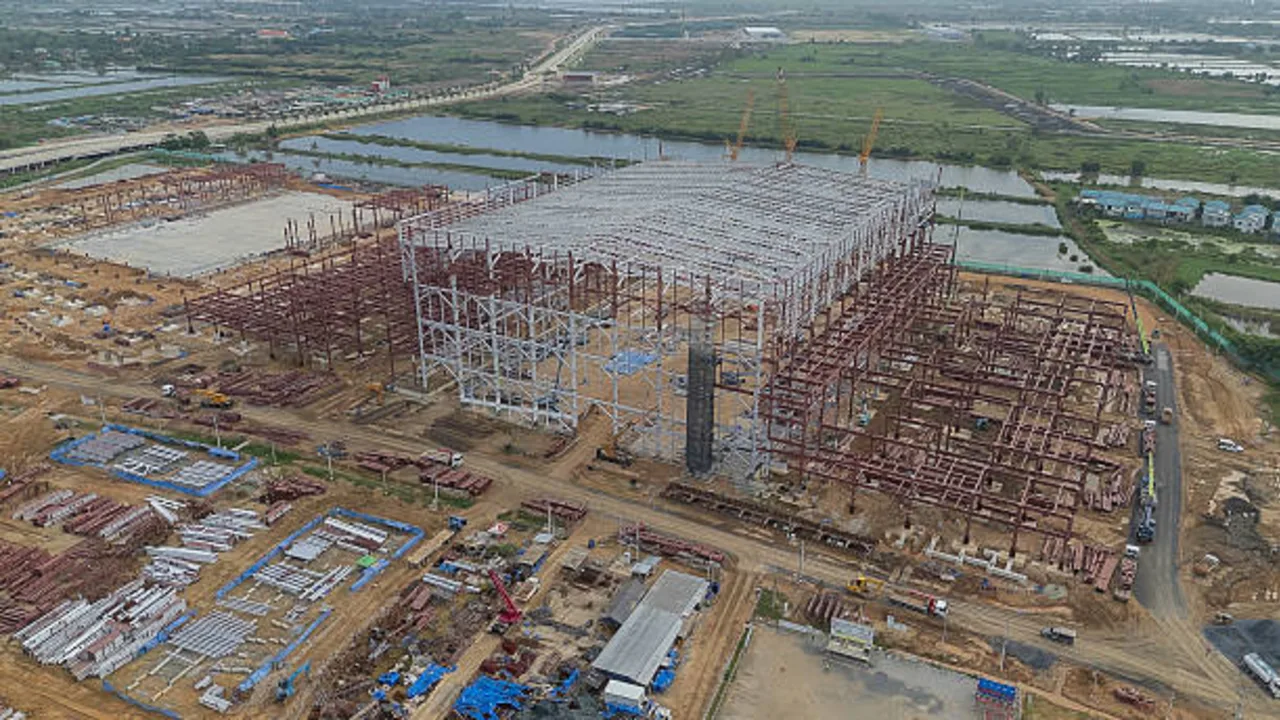
Prefabrication is a construction approach where building components are manufactured in a factory or controlled off-site facility before being transported to the construction site for assembly. Rather than building everything piece by piece on location, prefabrication shifts labor-intensive and precision-critical work into an environment designed for consistency and control.
Modern prefabrication can include:
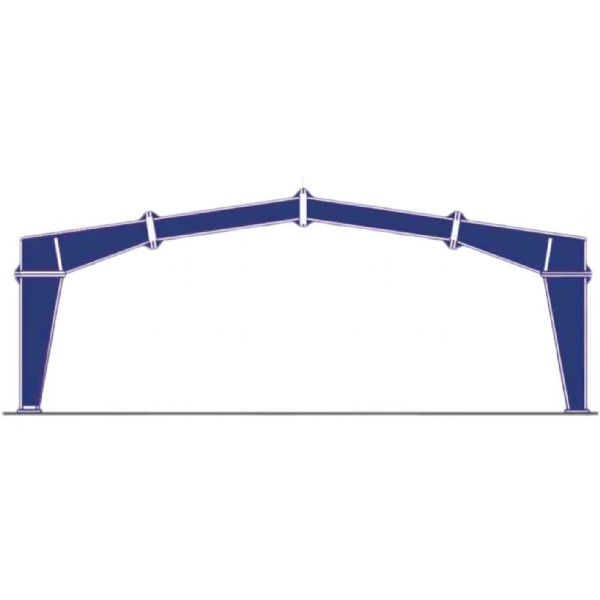
- Structural frames and primary load-bearing elements
- Wall and roof assemblies
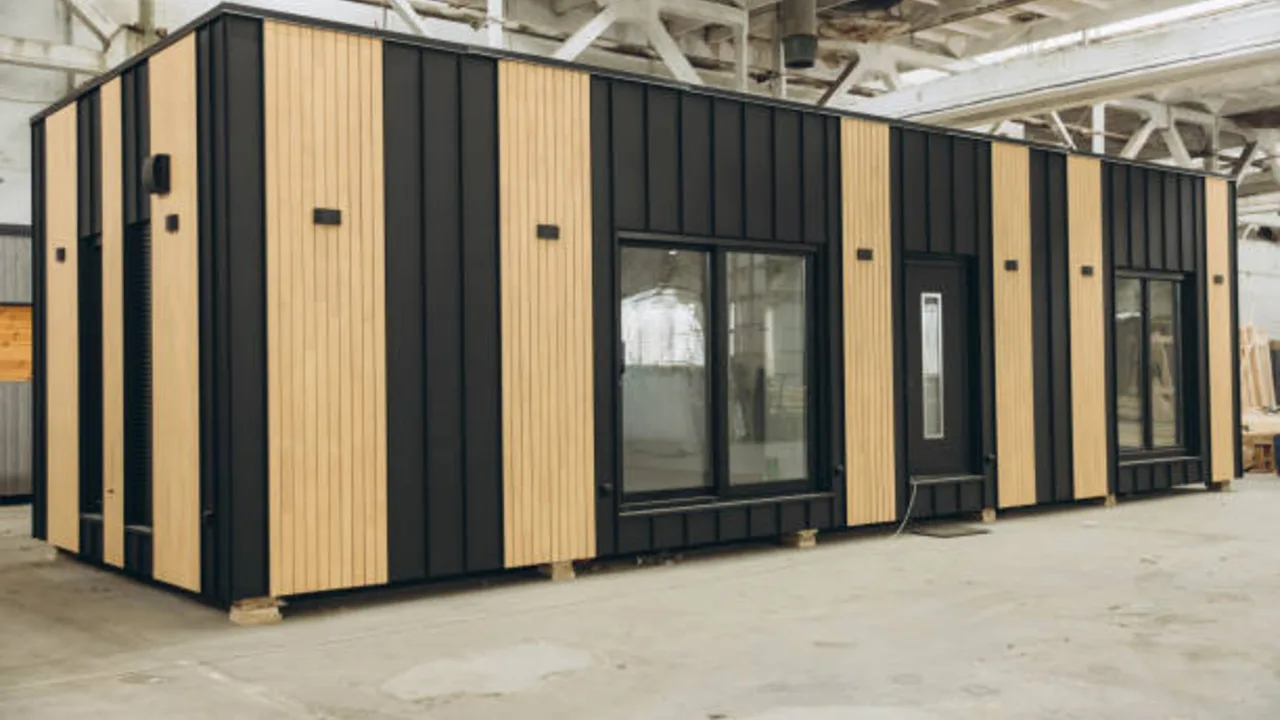
- Modular sections or volumetric units
- Mechanical and electrical subassemblies
Unlike traditional construction, where accuracy depends heavily on on-site conditions and human judgment, prefabrication relies on standardized processes, digital drawings, and repeatable manufacturing methods. This difference is the foundation of effective prefabrication construction risk reduction.
How Prefabrication Construction Risk Reduction Works
The core principle behind prefabrication construction risk reduction is control. By moving work away from unpredictable construction sites into factories, many common risk factors are either eliminated or significantly reduced.
In a controlled manufacturing environment:
- Work is performed at ground level instead of at height
- Weather has no impact on production quality
- Tools and equipment are purpose-built for precision tasks
- Processes are standardized and repeatable
This controlled setting reduces reliance on improvisation and minimizes variation between components. As a result, safety incidents decrease, errors are caught earlier, and overall construction risk becomes more manageable and predictable.
Safety Improvements Through Prefabrication
Safety is one of the most immediate and measurable benefits of prefabrication. Traditional on-site construction exposes workers to hazards such as falls, unstable working platforms, heavy lifting, and environmental exposure. Prefabrication reduces these risks by redesigning how and where work is performed.
Key safety improvements associated with prefabrication include:
- Reduced work at height due to ground-level fabrication
- Fewer workers required on congested job sites
- Lower exposure to wind, rain, heat, or extreme cold
- Improved ergonomics and safer lifting conditions
By decreasing the amount of complex work performed on-site, prefabrication construction risk reduction directly supports safer working conditions. Fewer hazardous activities on-site translate into fewer accidents, reduced insurance exposure, and stronger compliance with safety regulations.
Error Reduction Through Factory-Based Production
Error reduction is another major advantage of prefabrication. On traditional sites, errors often occur due to manual measurement, inconsistent workmanship, or last-minute adjustments made under time pressure. These errors may not be discovered until later stages, leading to costly rework.
Factory-based production minimizes these risks by introducing:
- Digitally coordinated drawings and models
- Precision cutting and fabrication equipment
- Multiple quality control checkpoints
- Consistent assembly procedures
Components are produced according to exact specifications, inspected before delivery, and tested for fit and alignment. This systematic approach significantly improves error reduction and ensures that parts arrive on-site ready for installation, rather than adjustment.
As a result, prefabrication construction risk reduction is not limited to safety alone—it also protects project schedules and budgets by preventing avoidable mistakes.
Real-World Cases Showing Prefabrication Construction Risk Reduction
To fully understand how prefabrication construction risk reduction works in practice, it helps to look at real construction scenarios where off-site manufacturing directly prevented on-site problems. These cases reflect common challenges faced across industrial, commercial, and infrastructure projects.
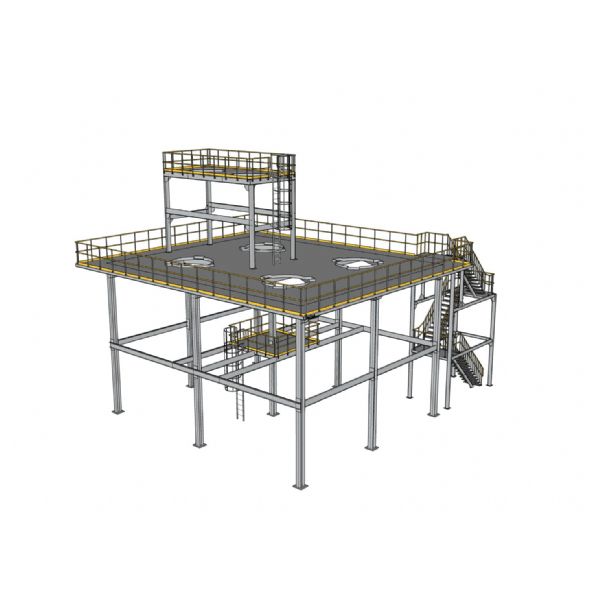
Case 1: Industrial Steel Structure with High On-Site Safety Risk
In a conventional industrial building project, structural steel connections are often welded or adjusted on-site at height. This exposes workers to fall hazards, unstable platforms, and time pressure during installation. In one large industrial facility, the project team shifted all major steel fabrication to a factory environment.
Beams, columns, and connection plates were fully fabricated, drilled, and inspected off-site before delivery. On-site work was limited to bolted assembly at ground-controlled positions. As a result, the number of workers required at height was reduced significantly, and installation time per bay dropped sharply.
This approach demonstrated clear prefabrication construction risk reduction by removing high-risk activities from the site entirely, rather than attempting to manage them through additional safety procedures.
Case 2: Error Reduction in a Time-Sensitive Commercial Project
A commercial project with a tight completion deadline faced repeated delays during early on-site construction due to dimensional errors and misaligned components. These issues typically require rework, temporary fixes, and additional inspections—each adding risk and uncertainty.
By transitioning to prefabricated structural and enclosure components, the project team introduced factory-level quality control into the process. Components were produced using digital models, verified before shipment, and delivered in installation-ready condition.
Once installation began, assembly progressed smoothly with minimal adjustments. The reduction in on-site corrections directly translated into improved schedule certainty and fewer safety incidents related to rushed corrective work. This case clearly illustrates how error reduction is a core benefit of prefabrication construction risk reduction.
Case 3: Weather-Related Risk Elimination Through Off-Site Fabrication
Weather is one of the most unpredictable risk factors in traditional construction. In regions with frequent rain or extreme temperatures, on-site fabrication and finishing work is often delayed or compromised.
In a warehouse development located in a high-rainfall area, prefabrication allowed roof and wall systems to be manufactured under controlled conditions. While site foundations were prepared, structural and enclosure components were fabricated in parallel at the factory.
When installation began, the building envelope was assembled quickly, minimizing exposure to adverse weather. This parallel workflow not only reduced schedule risk but also eliminated quality issues caused by environmental exposure—another clear example of effective prefabrication construction risk reduction.
These real-world cases show that prefabrication does not merely improve efficiency. It fundamentally changes how risk is distributed and controlled throughout a construction project, shifting uncertainty away from the site and into predictable, managed processes.
Risk Reduction Across the Project Lifecycle
One of the strongest advantages of prefabrication construction risk reduction is that it addresses risk at every stage of the project lifecycle, not just during installation. By shifting work off-site, risk is managed earlier and more systematically.
Design stage: Prefabrication requires early coordination and detailed digital modeling. This front-loaded planning reduces design conflicts and eliminates late-stage changes that often introduce risk on-site.
Fabrication stage: Manufacturing in a controlled environment allows consistent quality checks, standardized processes, and repeatable outcomes. Errors are detected before components ever reach the jobsite.
Transportation stage: Although logistics must be planned carefully, prefabricated components are packaged, labeled, and sequenced to minimize handling risks and site congestion.
Installation stage: On-site activities are simplified to assembly rather than fabrication. Fewer trades work simultaneously, reducing coordination conflicts and safety exposure.
Commissioning and handover: With fewer defects and corrections, final inspections proceed more smoothly, lowering the risk of delays at project closeout.
Comparing On-Site Construction vs Prefabrication
| Risk Category | Traditional On-Site Construction | Prefabrication Approach |
|---|---|---|
| Safety Risk | High exposure to work at height and heavy lifting | Reduced on-site hazards through off-site fabrication |
| Error Probability | Manual measurement and on-site adjustments | Factory precision and quality control |
| Schedule Certainty | Weather and labor-dependent timelines | Parallel fabrication and site preparation |
| Cost Volatility | High risk of rework and delays | Predictable material usage and labor planning |
| Quality Consistency | Variable workmanship | Standardized manufacturing processes |
This comparison highlights why prefabrication construction risk reduction is increasingly viewed as a strategic decision rather than a purely technical one.
How Prefabrication Improves Schedule Certainty
Schedule risk is one of the most costly forms of construction risk. Delays affect not only project budgets but also downstream operations, tenant occupancy, and contractual penalties.
Prefabrication improves schedule reliability by allowing multiple activities to occur simultaneously. While foundations and site utilities are prepared, structural and enclosure components are fabricated off-site. This parallel workflow compresses the overall timeline and reduces dependence on favorable site conditions.
Because components arrive ready for installation, on-site assembly progresses faster and with fewer interruptions. The result is a construction schedule that is easier to forecast and easier to protect.
Cost Risk Reduction Through Prefabrication
Cost overruns are often driven by uncertainty—unexpected rework, extended labor hours, safety incidents, and material waste. Prefabrication construction risk reduction directly addresses these cost drivers.
Key cost-stability benefits include:
- Reduced rework due to factory-level accuracy
- Predictable material quantities and waste control
- Lower labor variability on-site
- Fewer accident-related disruptions and claims
While prefabrication may require higher upfront coordination, the reduction in downstream cost risk often results in a lower total cost of ownership for the project.
Prefabrication Risk Reduction in Steel Structures
Steel construction is particularly well-suited to prefabrication construction risk reduction. Structural steel components can be fabricated with high precision, tested for fit, and delivered in an installation-ready state.
Factory welding, drilling, and surface treatment are more consistent than on-site operations. This improves connection accuracy, structural tolerance, and long-term performance. As a result, steel projects that use prefabricated steel structure systems experience fewer installation issues and significantly reduced on-site risk.
For large-span buildings, industrial facilities, and infrastructure projects, prefabricated steel systems offer one of the most effective paths to minimizing safety exposure and error-related delays.
When Prefabrication Delivers the Highest Risk Reduction
While prefabrication offers benefits across many project types, its impact is greatest in situations where risk exposure is naturally high. These include:
- Large-span or high-rise structures
- Projects with tight completion deadlines
- Sites with harsh weather or limited access
- Facilities requiring strict quality and safety compliance
In these scenarios, prefabrication construction risk reduction is not just an efficiency upgrade—it becomes a critical risk-mitigation strategy.
Limitations and Risks to Manage in Prefabrication
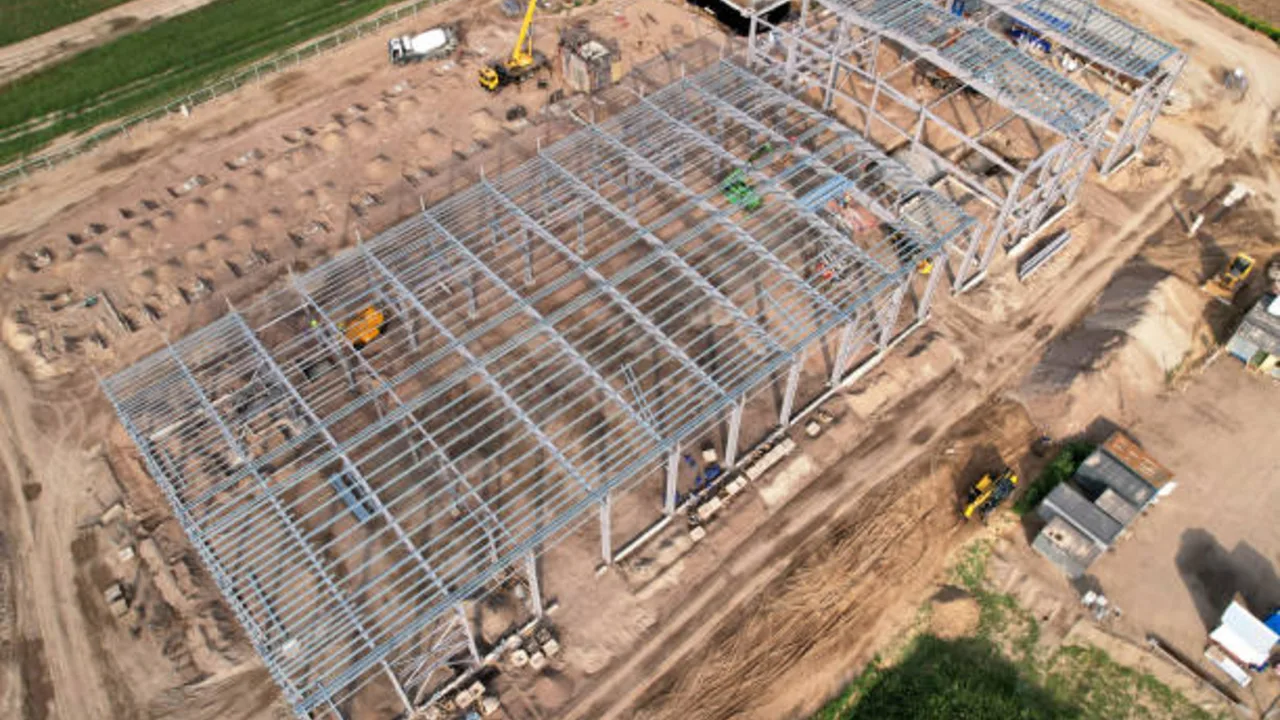
Despite its advantages, prefabrication is not risk-free. Effective implementation requires early design decisions, accurate coordination, and careful logistics planning.
Common challenges include:
- Transportation constraints for large components
- Need for early design freeze
- Coordination between factory and site teams
These risks can be mitigated through experienced engineering, clear communication, and realistic planning—ensuring that prefabrication delivers its full risk-reduction potential.
Why Prefabrication Is Becoming the Industry Standard
As safety regulations tighten, labor availability declines, and project complexity increases, the construction industry is rethinking how risk is managed. Prefabrication construction risk reduction aligns with these pressures by offering safer workflows, higher predictability, and improved quality control.
Rather than reacting to problems on-site, prefabrication enables teams to design risk out of the process. This shift explains why off-site manufacturing is rapidly becoming a standard practice across industrial, commercial, and infrastructure construction.
Conclusion
Prefabrication construction risk reduction is not simply about building faster—it is about building smarter. By relocating high-risk activities to controlled environments, prefabrication improves safety, reduces errors, and stabilizes both schedules and costs.
For project owners and contractors seeking predictable outcomes in an increasingly complex construction landscape, prefabrication represents one of the most effective tools available for managing on-site construction risk.