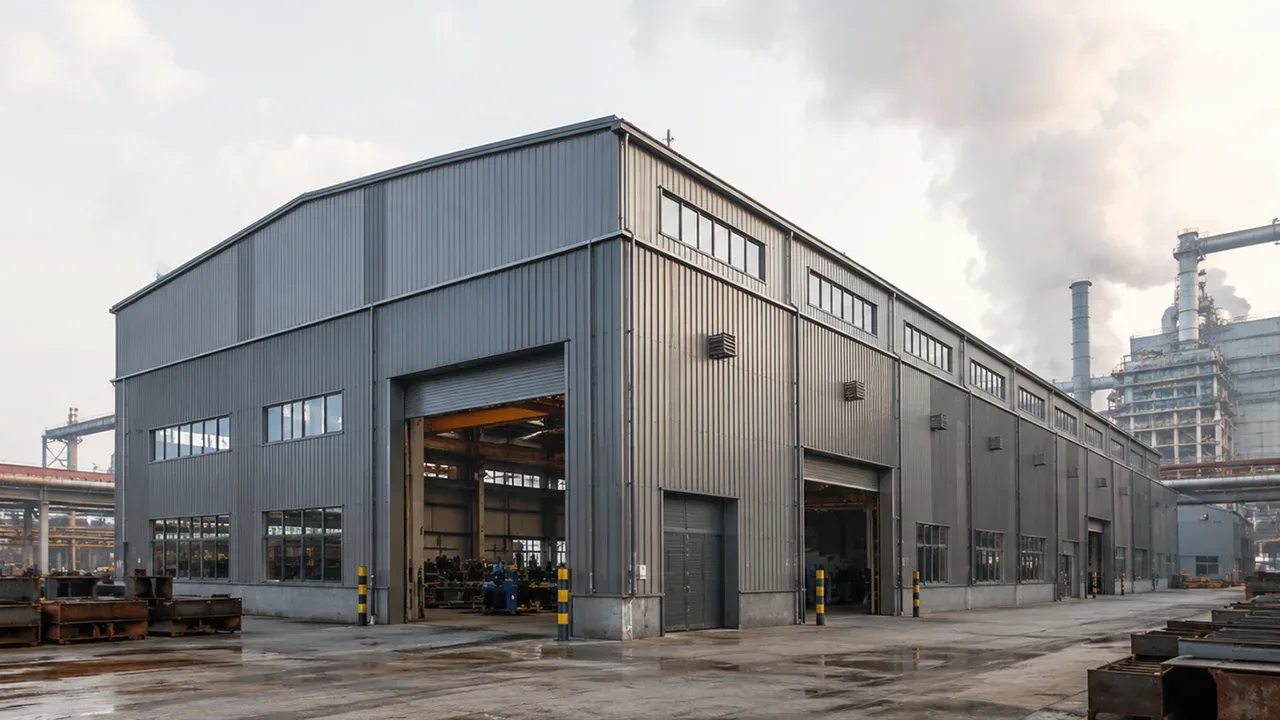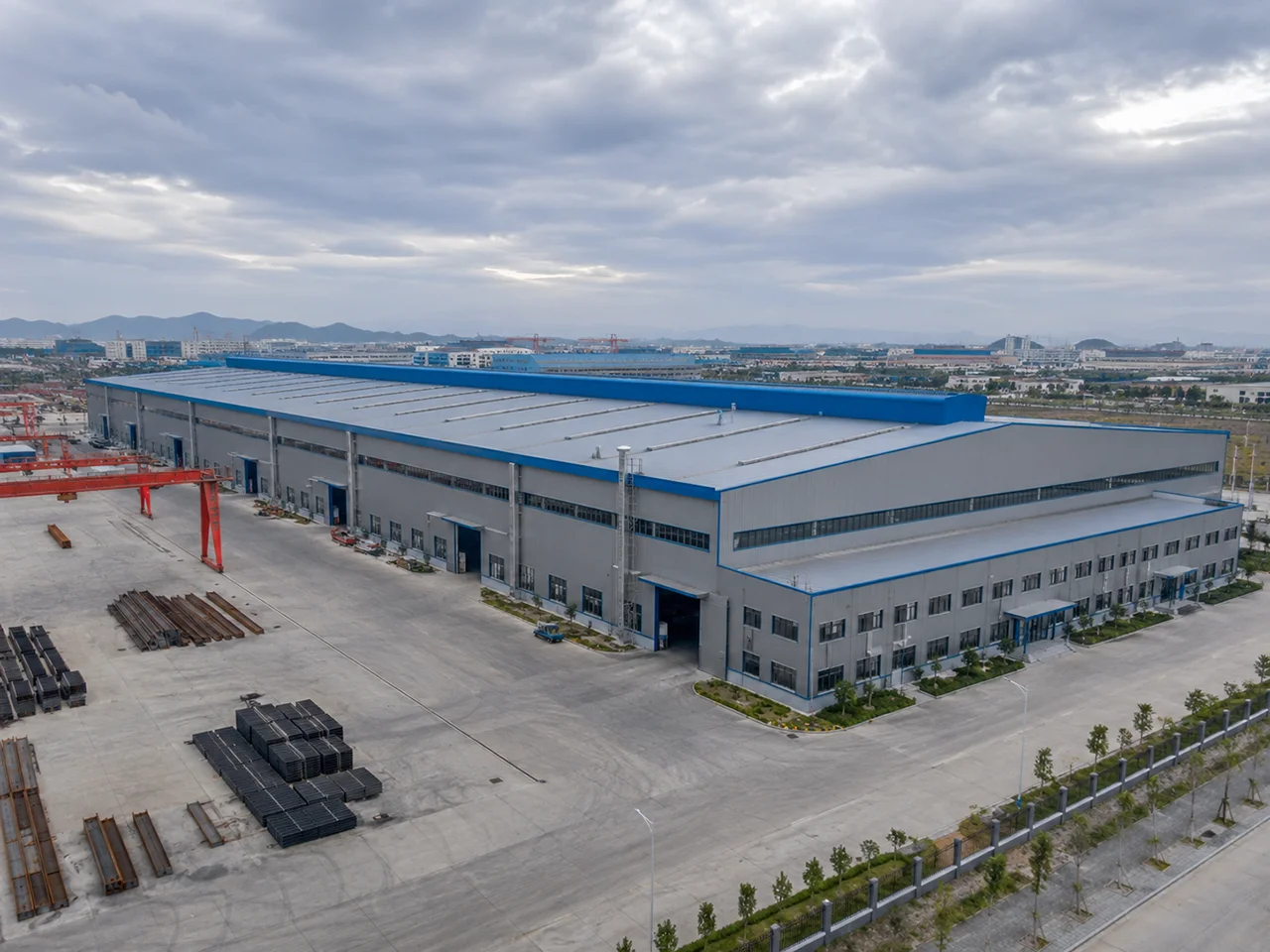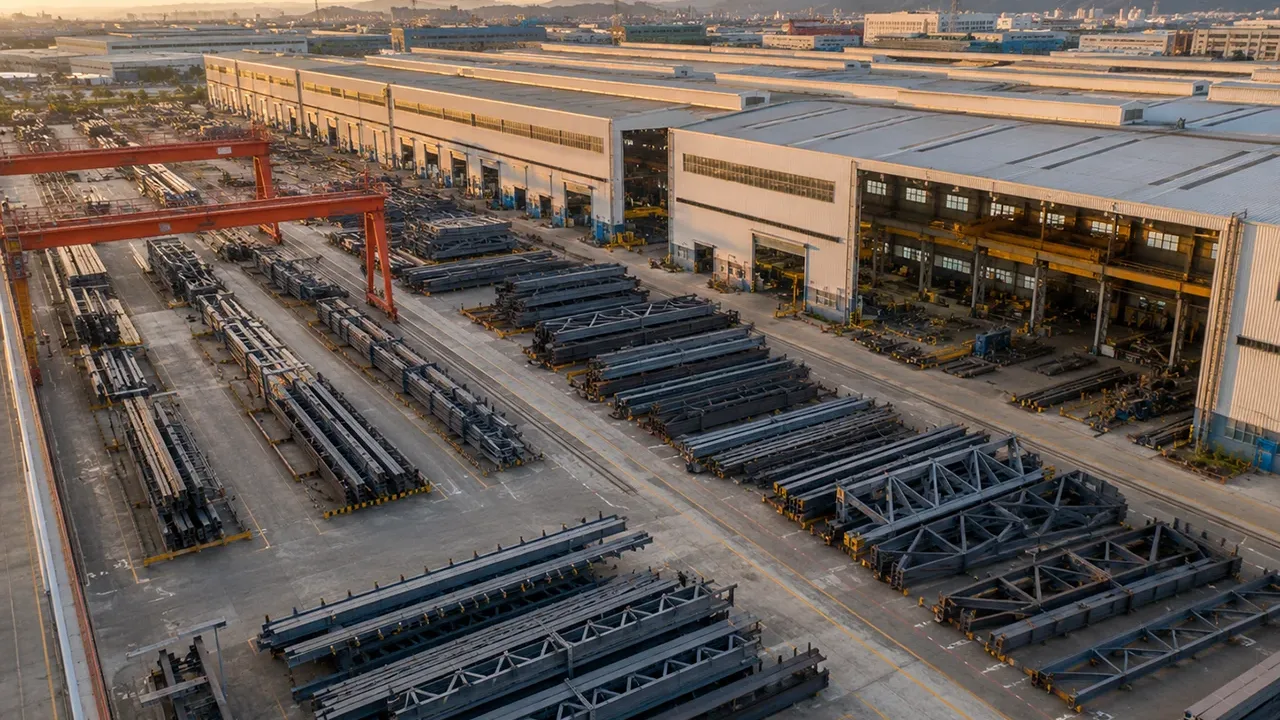
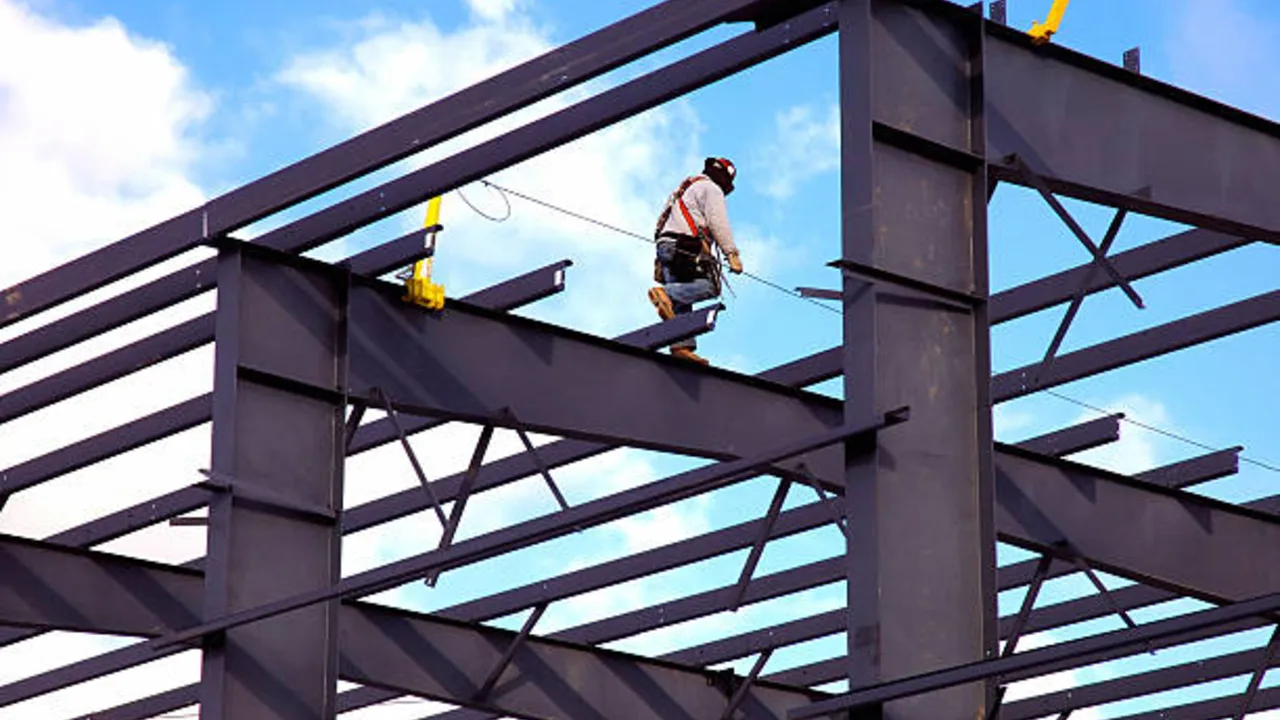
Steel construction is one of the most reliable building methods for industrial and commercial projects because it combines structural strength, fabrication accuracy, construction speed, and long-term adaptability. For warehouses, factories, workshops, logistics centers, commercial halls, platforms, and large-span facilities, steel provides a practical way to create strong buildings with open layouts and predictable project control.
In modern projects, steel is not used only because it is strong. It is used because it can be engineered, fabricated, transported, and assembled as a coordinated building system. Columns, beams, rafters, trusses, bracing, purlins, connections, roof panels, wall systems, coatings, and erection sequences all work together. When these parts are planned correctly, the result is a building method that supports both construction efficiency and long-term performance.
Industrial and commercial buildings often need more than a basic structure. They may require wide-span interiors, crane systems, machinery foundations, storage zones, truck access, roof ventilation, insulation, fire protection, corrosion resistance, or future expansion. Steel can respond to these needs because it allows flexible structural layouts and controlled fabrication before site installation begins.
The reliability of steel does not come from the material alone. It comes from the complete process: engineering design, connection detailing, fabrication quality, delivery planning, site erection, alignment, inspection, and maintenance. A successful steel building project treats all of these stages as one connected system.
What Steel Construction Means in Modern Building Projects
Steel construction refers to a building method where steel members form the main structural system. These members may include columns, beams, rafters, trusses, portal frames, bracing, platforms, stairs, mezzanine structures, roof support systems, and secondary members. In many industrial and commercial buildings, the steel frame carries the main loads while roof and wall systems provide enclosure and protection.
However, the meaning is broader than simply using steel columns and beams. A complete steel building project includes structural calculation, member sizing, connection design, shop drawings, cutting, drilling, welding, coating, delivery, lifting, bolting, welding on site when required, alignment, and final inspection. Each step affects the quality of the finished building.
This is why good planning matters. If the design team only focuses on member strength but ignores fabrication, transport, or erection, the project may face delays and rework. If the fabrication team produces accurate members but the site sequence is weak, installation can still become difficult. Reliable steel projects require coordination between design, workshop production, logistics, and site assembly.
From Structural Design to Site Assembly
The process starts with understanding what the building must do. A warehouse may need open storage space and truck loading areas. A factory may need crane beams, equipment loads, ventilation, and production flow. A commercial building may need flexible floor plans, exterior appearance, fire protection, and mechanical systems. These requirements shape the structural system.
Engineers then study span, height, roof slope, wind load, seismic conditions, live load, dead load, crane load, equipment load, and local code requirements. These factors determine the size of columns, beams, rafters, bracing, and connections. Once the main structure is designed, detailed shop drawings guide fabrication.
After fabrication, steel members are marked, packed, transported, and installed according to a planned sequence. Site assembly normally begins with foundations and anchor bolts, followed by columns, beams, rafters, bracing, roof members, wall members, and enclosure systems. Alignment and inspection are important throughout the process because small errors can affect the rest of the structure.
Why Steel Is Used for Industrial and Commercial Buildings
Steel is widely used for industrial and commercial buildings because it offers a strong balance of performance and practicality. It can carry heavy loads, span long distances, and support flexible building layouts. For many projects, this is more useful than simply building a heavy structure.
Steel also supports prefabrication. Many components can be produced in a controlled factory environment before they arrive on site. Cutting, drilling, welding, coating, and marking can be completed with better control than many site-based processes. This helps improve accuracy and reduce uncertainty during installation.
Another reason steel is popular is adaptability. Industrial and commercial buildings often change over time. A warehouse may need expansion. A factory may need new equipment. A commercial hall may need layout adjustments. A steel frame can often be modified, extended, reinforced, or connected to new structures more easily than some conventional building systems.
Key Components in Steel Construction
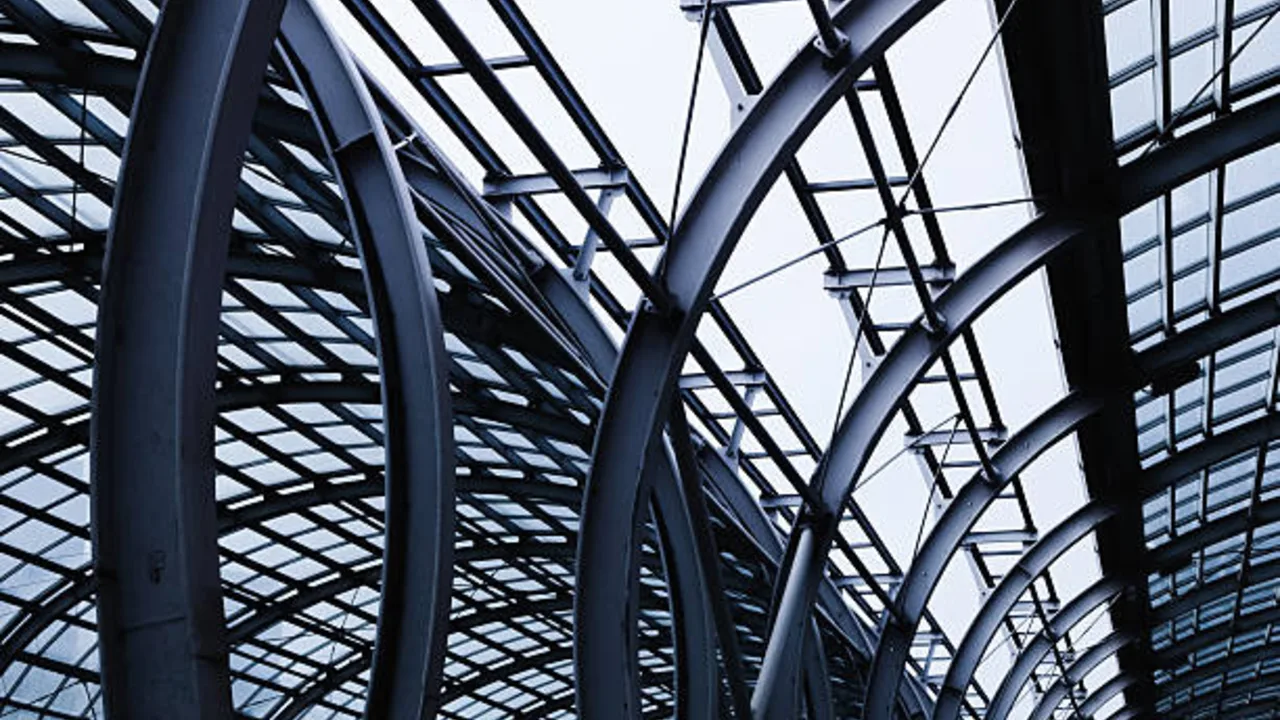
A steel building works as a system of primary and secondary components. Primary members carry the main structural loads, while secondary members support roof panels, wall panels, services, and stability requirements. Connections join these elements together and allow forces to move safely through the structure.
Understanding these components helps owners and project teams make better decisions. A steel building is not only a collection of parts. Each column, beam, brace, purlin, bolt, weld, and plate has a role in stability, strength, installation accuracy, and long-term performance.
Columns and Beams
Columns transfer vertical loads from the roof, floors, platforms, or crane systems down to the foundations. Beams transfer loads horizontally between columns or across structural bays. Together, columns and beams form the basic skeleton of many steel buildings.
In industrial buildings, columns may also support crane beams, mezzanine floors, equipment platforms, pipe racks, or roof-mounted systems. Their size and spacing affect the building layout, usable floor area, foundation reactions, and installation sequence.
Beams must be designed not only for strength, but also for deflection and connection behavior. A beam that is strong enough but too flexible may still create serviceability problems. This is why structural design must consider both safety and building performance.
Roof Trusses, Rafters, and Portal Frames
Roof systems are central to many industrial and commercial steel buildings. Portal frames are commonly used for warehouses, workshops, and factories because they can create clear-span interiors with efficient roof support. Rafters connect with columns to form the main frame, while the roof slope helps support drainage and enclosure.
Trusses are useful when longer spans, heavier roof loads, or special roof forms are required. A truss can distribute forces through multiple members, making it suitable for large halls, canopies, public buildings, or industrial facilities with wide roof coverage.
The choice between portal frames, rafters, and trusses depends on span, roof load, building height, interior clearance, crane use, architectural requirements, and cost targets. The best system is the one that matches the building function instead of only looking simple on drawings.
Bracing and Stability Systems
Bracing controls lateral movement and helps the building resist wind, seismic forces, crane forces, and other horizontal loads. Without proper bracing, even strong columns and beams may not perform safely as a complete structure.
Bracing can appear in roof planes, wall planes, frame bays, or special stability zones. It may use rods, angles, tubes, channels, or other steel members. The location of bracing affects doors, windows, wall openings, equipment access, and interior planning, so it should be coordinated early.
In some commercial or architectural projects, visible bracing may not be acceptable in certain areas. In those cases, engineers may use moment frames, hidden bracing, rigid connections, or alternative stability systems. The stability strategy must match both structural requirements and building use.
Purlins, Girts, and Secondary Members
Purlins support roof panels, while girts support wall panels. These secondary members transfer enclosure loads back to the main steel frame. They also help maintain panel alignment and support insulation, ventilation details, and waterproofing systems.
Although secondary members are smaller than primary columns and beams, they are still important. Poor spacing or weak detailing can cause problems with roof panels, wall panels, fasteners, drainage, and wind resistance. For this reason, purlins and girts should be designed together with the roof and wall envelope.
Secondary members may also support accessories such as skylights, vents, louvers, gutters, doors, windows, and facade elements. If these features are added late, the project may require extra steel or site modifications.
Connections, Bolts, and Welds
Connections are where steel members transfer forces to each other. A reliable building depends on reliable connections. Bolts, welds, plates, gussets, stiffeners, and anchor bolts must be designed for the loads they carry and the sequence in which they are installed.
Connection design affects fabrication accuracy and site speed. A simple member can become difficult to install if the bolt holes do not align, if the connection plate is poorly detailed, or if the erection clearance is too tight. Good connection detailing reduces site rework and improves assembly efficiency.
Weld quality is also important. Some welds are completed in the workshop under controlled conditions, while others may be required on site. Workshop welding usually provides better quality control, but site welding may still be necessary for special conditions. The project should define inspection standards clearly before fabrication begins.
Steel Construction Methods for Industrial Projects
Industrial projects use different steel construction methods depending on the building function, span, load requirements, and site conditions. A logistics warehouse does not need the same structure as a heavy manufacturing workshop. A commercial showroom may need a different balance between appearance and structural efficiency. A platform or equipment building may focus more on load capacity and access.
The right method should be selected based on how the building will operate. Structure, fabrication, transport, erection, roof system, wall system, and future expansion should all be considered together.
Portal Frame Construction
Portal frame construction is one of the most common methods for warehouses, workshops, factories, storage buildings, and logistics facilities. It uses rigid frames made from columns and rafters to create open interior space. This method is popular because it supports large clear spans, fast erection, and efficient use of steel for many single-story buildings.
Portal frames work well when the building needs wide floor areas with limited internal columns. They can support roof purlins, wall girts, bracing systems, and metal cladding. They are also suitable for buildings that need practical construction speed and clear internal workflow.
However, portal frame design must consider wind load, roof slope, frame spacing, eave height, crane requirements, bracing layout, and foundation reactions. If these factors are not coordinated, the building may face excessive movement, difficult installation, or poor long-term performance.
Truss-Based Steel Construction
Truss-based systems are useful for longer spans, heavier roof loads, or special building forms. A truss distributes forces through a network of members, allowing the roof to cover larger areas without relying on very heavy single beams.
This method is often used for large halls, industrial buildings, public facilities, canopies, sports buildings, and special roof structures. Trusses can also be combined with portal frames, space frames, or supporting columns depending on the project.
Truss-based design requires careful control of member geometry and connection details. Many members meet at nodes, and small fabrication errors can affect assembly. For this reason, shop drawings, member marking, transport planning, and site lifting sequence are especially important.
Multi-Story Steel Frame Construction
Multi-story steel frame construction is used for commercial buildings, offices, industrial platforms, mixed-use facilities, and buildings that require vertical expansion. It uses columns, beams, floor systems, bracing, and sometimes composite slabs to create multiple levels.
This method supports flexible planning because steel frames can create open floor areas and allow service routes through coordinated structural bays. It can also reduce construction time when fabrication and erection are planned properly.
For multi-story buildings, coordination with fire protection, elevators, stairs, facade systems, mechanical equipment, and floor vibration requirements is important. The steel frame must work with the whole building system, not only the structural model.
Prefabricated Steel Construction
Prefabricated steel construction improves project control by moving much of the work into the factory. Steel members are fabricated, drilled, welded, coated, marked, and prepared before shipment. On site, the work focuses more on assembly, alignment, bolting, lifting, and inspection.
This method is especially useful when projects need faster schedules, consistent quality, reduced site labor, or construction in difficult environments. Factory production can reduce weather-related delays and make quality checks easier before materials arrive on site.
For a full project delivery system, steel construction should connect design, fabrication, logistics, and erection planning from the beginning. Prefabrication works best when transport limits, crane capacity, site access, storage areas, and erection sequence are considered before production starts.
Prefabrication does not remove the need for engineering control. It simply changes where much of the work happens. If the design is unclear, if connections are poorly detailed, or if the site is not ready, prefabricated members can still face delays. The best results come when factory work and site work are planned as one process.
Why Steel Construction Is Reliable for Industrial and Commercial Projects
The reliability of steel construction comes from the way design, fabrication, and installation can be controlled. Industrial and commercial projects often have strict requirements for strength, schedule, safety, and long-term use. Steel supports these requirements because the material properties are predictable, the components can be manufactured accurately, and the site work can follow a planned erection sequence.
For project owners, reliability means more than structural strength. It also means fewer surprises during construction, easier coordination with building systems, practical maintenance, and the ability to adapt the building later. A well-planned steel building can support daily operations while giving owners flexibility for future changes.
Predictable Material Strength
Steel is an engineered material with known strength properties. This allows structural engineers to calculate load paths, member sizes, deflection limits, connection forces, and stability systems with a high level of predictability. For buildings that must support machinery, storage loads, suspended systems, wind forces, or crane loads, this predictability is important.
Industrial and commercial buildings often require performance under demanding conditions. A warehouse roof may need to resist wind uplift. A factory frame may need to support crane beams and equipment loads. A commercial building may need flexible floor areas and code-compliant fire protection. Steel can be designed to meet these requirements when the load conditions are clearly defined.
Controlled Fabrication Quality
Many steel components are fabricated in a workshop before they arrive on site. This allows cutting, drilling, welding, fitting, surface preparation, coating, and inspection to happen under controlled conditions. Compared with work that depends heavily on site conditions, workshop fabrication can improve dimensional accuracy and reduce installation uncertainty.
Quality control may include checking member dimensions, weld quality, bolt hole positions, coating thickness, plate details, and component marking. These checks are valuable because errors found in the workshop are usually easier to correct than errors found during erection.
Controlled fabrication also helps the site team. When members are clearly marked and produced according to approved drawings, erection can follow a more predictable sequence. This reduces confusion, improves safety, and helps the project stay closer to schedule.
Faster Site Installation
Steel buildings can often be installed faster than many conventional construction methods because a large portion of the work is completed before materials reach the site. Once foundations are ready, steel members can be lifted, aligned, bolted, braced, and connected in sequence.
This faster installation is especially useful for industrial and commercial projects where delays can affect business operations. A warehouse owner may want to start storage operations quickly. A factory owner may need to install production equipment by a certain date. A logistics center may need the building envelope closed before racking, lighting, and systems installation begins.
Speed still depends on planning. Foundations, anchor bolts, crane access, material storage, weather conditions, worker safety, and inspection steps must be coordinated. Fast steel erection only works well when the project is prepared for it.
Large-Span and Flexible Interior Layout
One of the major advantages of steel buildings is the ability to create large-span interiors with fewer internal columns. This is valuable for warehouses, factories, logistics centers, aircraft hangars, sports facilities, commercial halls, and many public buildings.
Open interiors make the building easier to use. Storage layouts can change. Production lines can be adjusted. Equipment routes can be planned more freely. Commercial spaces can be divided or reconfigured. For long-term ownership, this flexibility can be more valuable than the initial structure alone.
Steel frames, portal frames, trusses, and space frame systems can all support different span requirements. The correct system depends on building width, roof load, equipment load, height, and future use.
Easy Expansion and Modification
Industrial and commercial buildings often change after they are built. A company may need more storage area, a larger workshop, a new production line, an added canopy, or a mezzanine floor. Steel structures can often be extended or modified when the original design considers future expansion.
Expansion is easier when column lines, connection zones, bracing locations, and foundations are planned with long-term use in mind. If future growth is likely, the design team should discuss this early instead of treating the building as a fixed one-time structure.
Modification still requires engineering review. New loads, removed members, added openings, crane upgrades, and equipment changes can affect the whole structure. But with proper assessment, steel buildings often provide practical options for adaptation.
Steel Construction Process: From Planning to Completion
A reliable steel building project follows a clear process. Each stage affects the next stage, so decisions made early can influence fabrication quality, site speed, cost control, and long-term performance. The process should not be treated as separate tasks handled in isolation.
1. Project Requirement Review
The first stage is understanding the building’s purpose. The project team should review building use, span requirements, height, bay spacing, crane loads, equipment loads, storage needs, truck access, workflow, environmental exposure, fire requirements, budget, and schedule.
For a warehouse, the main concern may be clear storage space and fast installation. For a factory, the main concerns may include crane systems, ventilation, machinery foundations, and production flow. For a commercial building, appearance, fire protection, insulation, and future tenant flexibility may be more important.
Clear requirements help prevent design changes later. When the project purpose is understood early, the structural system can be selected more accurately.
2. Structural Design and Detailing
After requirements are defined, engineers calculate the structure. This includes dead load, live load, wind load, seismic load, snow load where applicable, crane load, service load, and equipment load. The design also defines member sizes, bracing systems, connection forces, deflection limits, and foundation reactions.
Detailing turns the structural design into fabrication information. Shop drawings show member dimensions, holes, plates, welds, bolts, markings, and assembly references. Good detailing reduces confusion in the workshop and on site.
This stage is critical because a strong design can still cause problems if the details are unclear. Connection design, tolerances, erection clearance, and member marking all affect installation success.
3. Steel Fabrication
Fabrication includes cutting, drilling, welding, fitting, assembly, surface preparation, coating, marking, and inspection. The goal is to produce steel members that match the approved drawings and can be installed efficiently on site.
Fabrication quality affects both safety and schedule. Incorrect hole positions, poor welding, damaged coating, wrong member length, or unclear markings can delay installation. For this reason, inspection should be part of the fabrication process, not only a final check.
Surface treatment is also important. Paint systems, galvanizing, or other protective coatings should match the building environment. Coastal, humid, industrial, and chemical environments may require stronger corrosion protection than dry inland locations.
4. Transport and Site Preparation
Transport planning connects the factory to the site. Steel members must be packed, loaded, shipped, unloaded, stored, and protected in a way that supports the erection sequence. Long members, heavy trusses, coated parts, and complex assemblies may need special handling.
At the same time, the site must be ready. Foundations should be complete, anchor bolts checked, cranes planned, access routes cleared, and storage areas prepared. If the site is not ready when steel arrives, materials may be handled too many times or stored in poor conditions.
Good logistics reduce damage and delays. They also help the erection team install members in the correct order.
5. Erection and Alignment
Erection is the stage where the steel frame becomes a building structure. Columns are installed first, followed by beams, rafters, bracing, roof members, wall members, and secondary systems. Temporary bracing may be required until the structure becomes stable.
Alignment is essential. Columns must be plumb, frames must be positioned correctly, bolts must be tightened according to requirements, and bracing must be installed at the right time. Small errors can affect roof panels, wall panels, doors, cranes, and future building systems.
Final inspection should confirm geometry, connections, coatings, stability systems, and readiness for roof and wall enclosure. A steel building is reliable only when erection quality matches design and fabrication quality.
Steel Construction Advantages Compared with Conventional Methods
Steel construction is often selected because it offers a strong combination of speed, span flexibility, quality control, and long-term adaptability. Conventional methods can also be effective, but the best choice depends on the project’s function, location, budget, and schedule.
| Comparison Factor | Steel Construction | Conventional Construction |
|---|---|---|
| Construction speed | Faster when prefabricated members are ready for erection | Often slower because more work depends on site processes |
| Span flexibility | Strong for large open spaces and fewer internal columns | May need more internal supports for similar spans |
| Quality control | More work can be controlled in the factory | Quality may depend more heavily on site conditions |
| Structural weight | Often lighter for long-span industrial buildings | May increase foundation demand depending on system |
| Expansion | Can often be modified or extended with engineering review | May be more difficult to change after construction |
| Weather impact | Less affected after fabrication is complete | May be more affected by curing, wet work, and site delays |
The comparison does not mean steel is always the best choice for every project. It means steel is especially strong when the project needs speed, large spans, factory-controlled quality, and future adaptability.
Design Factors That Affect Steel Construction Performance
The performance of a steel building depends on design decisions made before fabrication begins. A good structure is not only strong on paper. It must match the building use, environment, site conditions, installation method, and long-term maintenance needs.
Load Requirements
Load requirements include dead load, live load, wind load, seismic load, snow load, crane load, equipment load, suspended load, and maintenance load. These loads affect member sizes, connections, bracing, foundations, and erection planning.
Industrial buildings often have special load conditions. Crane systems, machinery, pipe racks, storage platforms, and roof equipment should be defined early. If these loads are added late, the design may require major changes.
Span and Building Height
Span and height affect almost every part of the structure. Larger spans may require deeper rafters, trusses, stronger connections, or more careful deflection control. Taller buildings may face higher wind effects and greater stability demands.
The best span is not always the largest possible span. It should match the building function, cost target, roof system, foundation condition, and operational layout.
Corrosion Protection
Steel must be protected according to the environment. Indoor dry buildings may need a different coating strategy from coastal warehouses, chemical plants, humid factories, or outdoor platforms. Corrosion protection may include paint systems, zinc-rich coatings, galvanizing, or project-specific treatments.
Protection should also consider transport and installation. Coatings can be damaged during handling, lifting, bolting, or welding. Site touch-up procedures should be included in the project plan.
Fire Protection
Fire protection depends on building use, local code, occupancy, fire rating, and structural requirements. Some buildings may use fire-resistant boards, spray-applied fireproofing, intumescent coatings, sprinkler systems, or a combination of methods.
Fire strategy should be coordinated early because it can affect cost, appearance, maintenance, and installation sequence. It should not be treated as a final-stage decision.
Roof and Wall Envelope
The roof and wall envelope affects waterproofing, insulation, ventilation, drainage, thermal performance, and building appearance. Roof panels, wall panels, skylights, gutters, doors, windows, louvers, and insulation systems all connect back to the steel frame.
If the envelope is selected too late, secondary steel members may need changes. Early coordination helps reduce leaks, panel misalignment, extra steel, and site rework.
Common Industrial and Commercial Applications
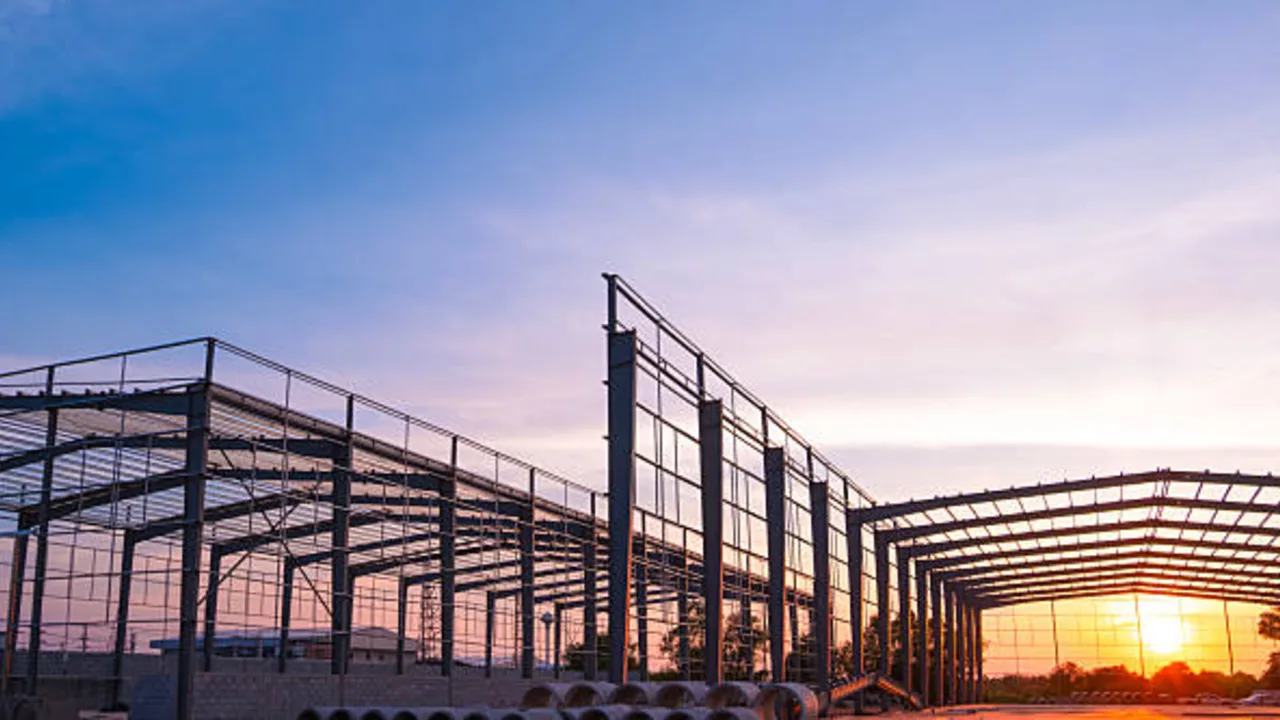
Steel buildings are used across many industrial and commercial sectors because they can be adapted to different functions. The structural system should always match the building’s operation.
Warehouses and Logistics Centers
Warehouses and logistics centers need open storage space, truck access, loading zones, racking layouts, and fast construction. Steel frames are practical because they can create wide interiors with fewer obstructions.
Factories and Workshops
Factories and workshops often need crane systems, machinery areas, ventilation, production flow, and service routes. Steel structures can be designed around these requirements while allowing future equipment changes.
Commercial Buildings
Commercial buildings may include showrooms, retail buildings, offices, service centers, and mixed-use spaces. Steel frames can support flexible layouts, modern facades, and faster construction schedules.
Agricultural and Storage Facilities
Agricultural buildings, storage sheds, cold storage facilities, and equipment shelters often benefit from simple steel layouts, practical spans, and durable enclosure systems.
Public and Infrastructure Buildings
Transport terminals, canopies, halls, stations, and public facilities may use steel because it supports long spans, architectural expression, and controlled fabrication.
Common Mistakes in Steel Construction Projects
Many problems in steel projects come from weak coordination rather than the material itself. A good steel structure can still face delays if design, fabrication, logistics, and site work are not aligned.
Treating Steel as Only a Material Cost
Some buyers compare only the price of steel tonnage. This is too narrow. Fabrication, connection complexity, coating, transport, lifting, installation, inspection, and maintenance all affect the real project cost.
Ignoring Erection Sequence
Steel members must be installed in a safe and logical order. Poor sequencing can cause delays, instability, misalignment, and safety risks. The erection plan should be considered before fabrication is complete.
Deciding Cladding Too Late
Roof and wall systems affect purlins, girts, drainage, waterproofing, insulation, and fasteners. If cladding is selected late, the secondary structure may need revision.
Underestimating the Corrosion Environment
A coating system should match the project environment. Coastal, humid, industrial, or chemical exposure can require stronger protection. Underestimating corrosion can increase long-term maintenance costs.
Weak Coordination Between Design and Fabrication
Fabrication depends on clear detailing. Missing dimensions, unclear welds, poor hole coordination, or late changes can create workshop delays and site rework. Good shop drawings are essential for reliable steel delivery.
How to Choose the Right Steel Construction Method
Choosing the right method means matching the structure to the building’s function, budget, schedule, environment, and long-term use. A warehouse, factory, commercial hall, platform, and terminal may all use steel, but they should not use the same structural strategy automatically.
Match the Structure to the Building Function
The structure should support how the building will be used. A warehouse may need clear-span storage. A factory may need crane beams and equipment zones. A commercial building may need flexible layouts and facade integration. A public facility may need large spans and architectural expression.
Balance Speed, Cost, and Long-Term Use
Fast construction is valuable, but it should not sacrifice durability, maintenance access, or future adaptability. The best project plan balances initial cost with long-term building performance.
Plan Fabrication and Installation Together
The most reliable projects connect workshop production with site execution. Member sizes, transport limits, crane capacity, site access, storage zones, connection details, and erection sequence should be reviewed together.
Conclusion: Steel Construction Works Best When Design, Fabrication, and Installation Are Coordinated
Steel construction is reliable because it combines material strength, engineering control, fabrication accuracy, fast installation, large-span flexibility, and long-term adaptability. For industrial and commercial buildings, these benefits can support stronger project planning and better building performance.
The best results come when steel is treated as a complete building method, not just a material choice. Structural design must match the building function. Fabrication must follow accurate details. Transport and erection must be planned around real site conditions. Roof, wall, fire protection, corrosion protection, and maintenance needs must be coordinated early.
When design, fabrication, logistics, installation, and inspection work together, steel can deliver a strong, practical, and adaptable building system for warehouses, factories, workshops, logistics centers, commercial spaces, and many other industrial or commercial projects.