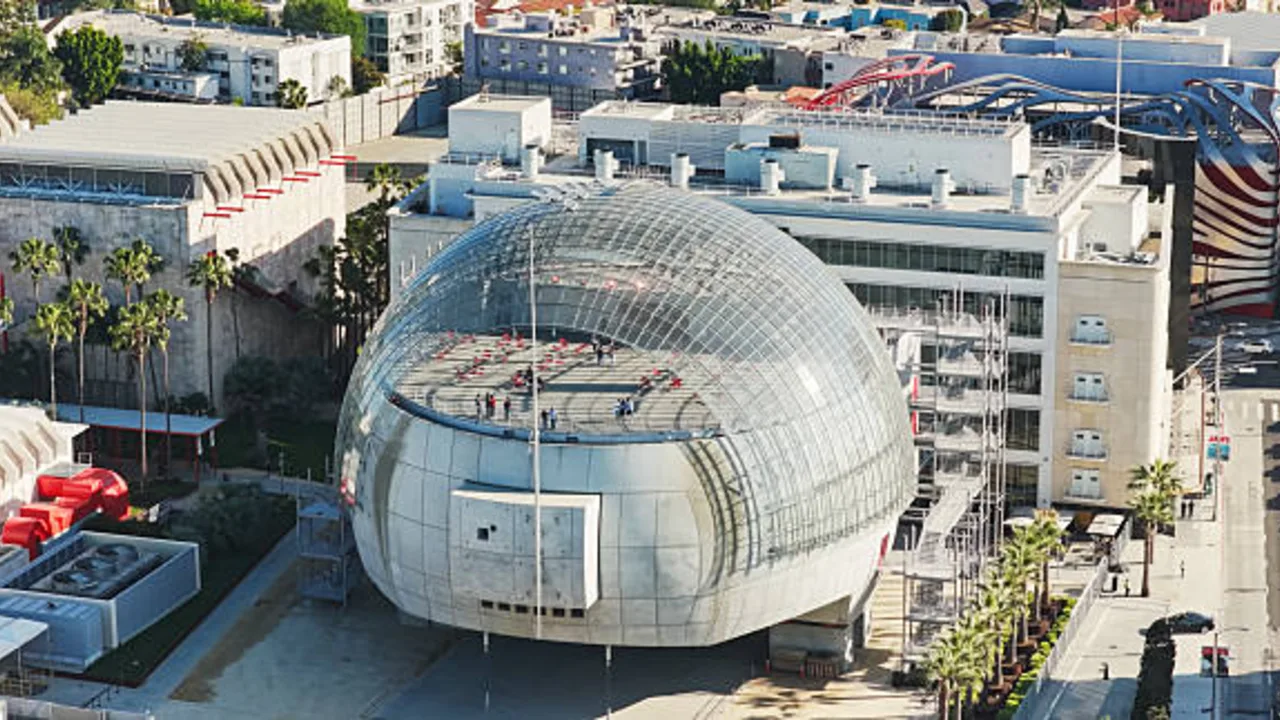
A steel dome is more than a curved roof shape. It is a structural roofing solution for buildings that need large span, open interior space, strong load distribution, and a visual identity that is difficult to achieve with ordinary flat or low-slope roof systems. In modern architecture, steel domes are used for stadiums, exhibition halls, airports, cultural centers, sports arenas, public buildings, storage facilities, industrial covers, and large commercial halls where the roof must perform both structurally and architecturally.
The value of a dome comes from the relationship between geometry and load transfer. Instead of relying only on straight beams or repeated portal frames, a dome uses curved form, ribs, lattice members, rings, or three-dimensional framing to distribute forces across a wide roof area. This allows the building to reduce internal columns, improve visibility, and create a more continuous interior volume. For public buildings and commercial spaces, that open interior can improve circulation, seating, event layout, lighting, and architectural expression.
However, a dome is not successful simply because it looks impressive. A large-span roof must be planned as a complete system. Geometry, connection design, cladding, waterproofing, drainage, corrosion protection, fabrication tolerance, site assembly, lifting sequence, and maintenance access all affect the final result. When these factors are coordinated early, a steel dome can become a durable and efficient roof system for demanding architectural and industrial projects.
What Is a Steel Dome?
A steel dome is a curved or spherical roof structure made from steel members that work together to cover a large space. It may use radial ribs, triangular members, lattice grids, space frame nodes, circular rings, or hybrid structural components. Unlike a flat roof beam system, a dome roof distributes loads through its curved shape and three-dimensional geometry.
In simple terms, the dome form allows forces to spread around the roof rather than move only in one direction. Roof loads may travel through cladding, secondary supports, ribs, nodes, ring beams, columns, and foundations. Depending on the design, some parts of the dome may work mainly in compression, while other parts may resist tension, bending, or lateral force. This is why dome design must consider the entire structural system rather than only individual steel members.
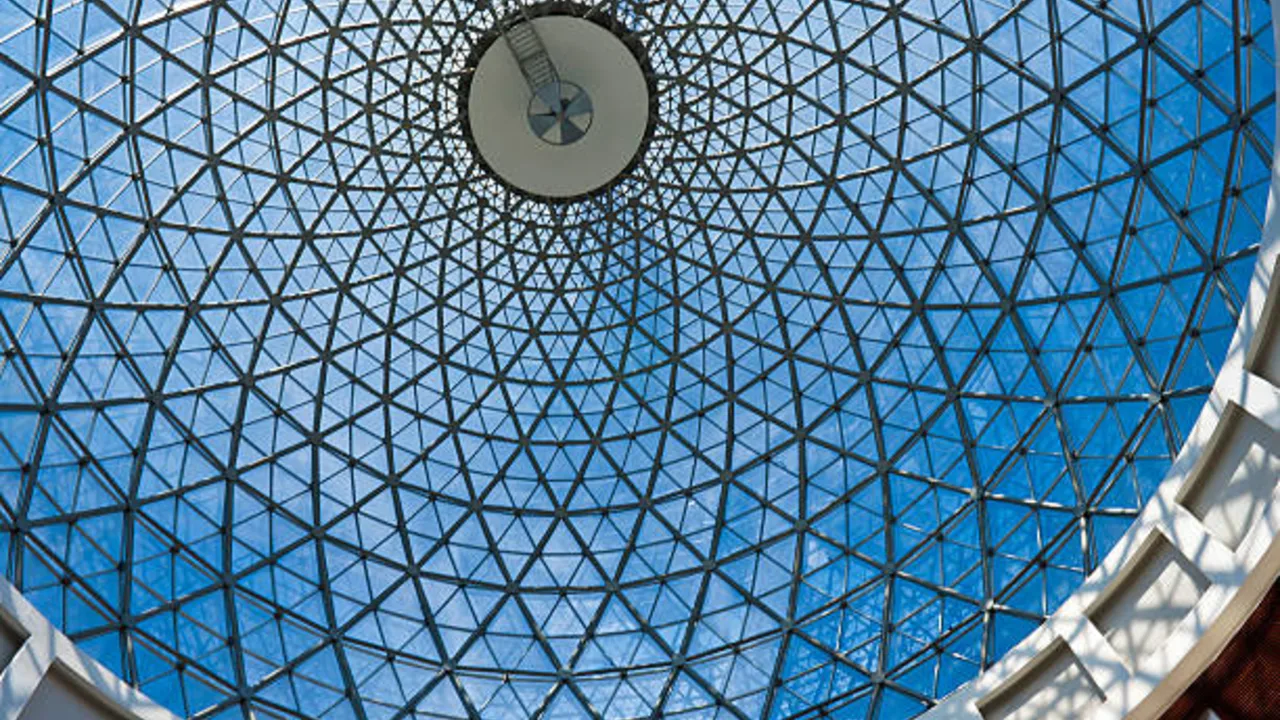
Steel domes can take different forms. A ribbed dome uses main curved ribs arranged around the roof. A geodesic dome uses triangular geometry to distribute loads across a network of members; for broader context, a geodesic dome is widely known for using a triangulated surface to create efficient curved enclosures. A space frame dome uses a three-dimensional grid with nodes and members to resist forces in multiple directions. A lattice dome uses repeated steel members arranged into a curved grid. Some projects use hybrid dome roofs, where steel framing is combined with specialized cladding, skylights, tension elements, or architectural edge details.
Steel Dome as Structure, Not Just Shape
The curved appearance of a dome often attracts attention first, but the structure must be more than a visual gesture. If the geometry does not match the load path, the dome can become difficult to fabricate, hard to install, or expensive to maintain. Every member should have a clear role. Every connection should support the intended load transfer. Every cladding joint should match the curve and drainage direction.
This is especially important in large-span buildings. A small error in member length, node angle, or ring alignment can multiply across the roof. If the dome is made from many repeated pieces, fabrication tolerance and erection sequence must be controlled carefully. If the dome uses custom curved ribs, the workshop must manage cutting, bending, drilling, welding, surface treatment, and trial fitting with high accuracy.
A well-designed dome is therefore both architectural and structural. It creates a strong roof form while also supporting real construction logic. The best results come when architects, structural engineers, fabricators, cladding specialists, and erection teams coordinate from the beginning.
Where Steel Domes Are Commonly Used
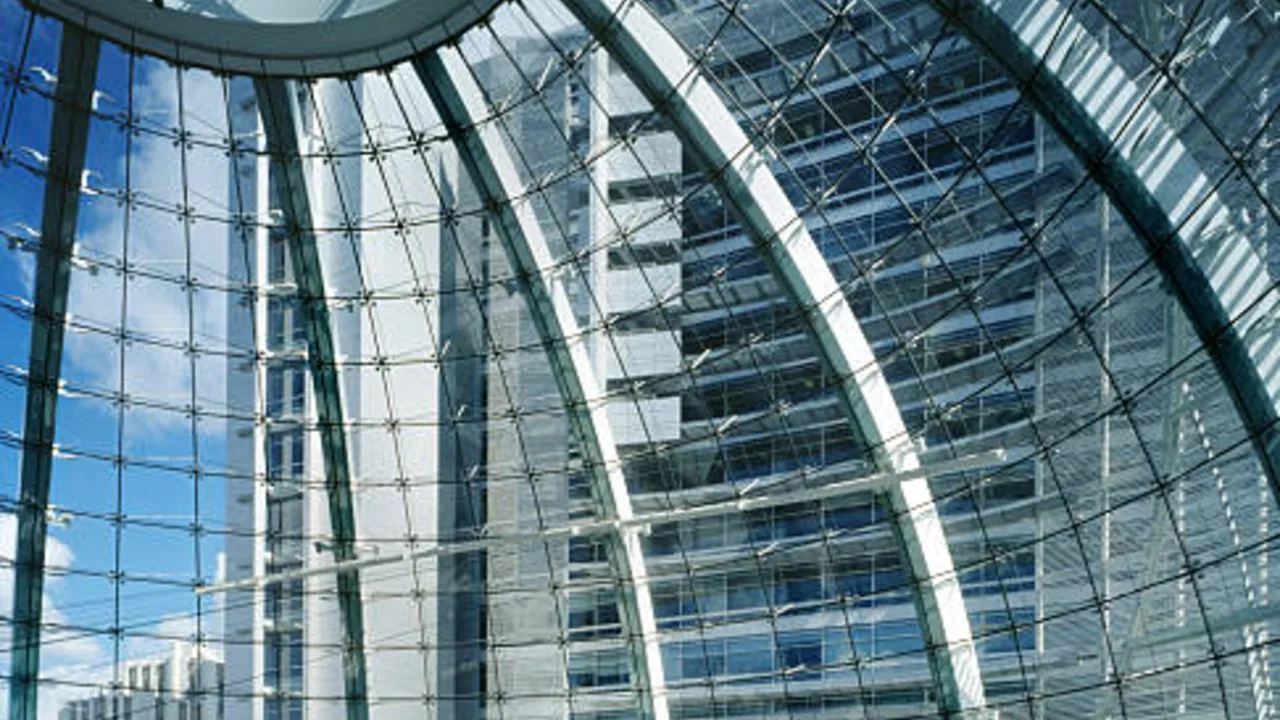
Steel dome roofs are used where a building needs a combination of large-span coverage, open space, durability, and visual presence. They are not limited to landmark architecture. They can also serve practical industrial and storage functions where a curved roof improves coverage, reduces internal obstruction, or protects large equipment and materials.
Sports and Public Assembly Buildings
Sports buildings are among the most recognizable applications for dome roofing. Stadiums, arenas, indoor courts, gymnasiums, aquatic centers, and public assembly halls often need long spans without columns blocking the view. A dome can help create a continuous roof over seating, performance areas, courts, or event floors while preserving audience visibility and interior openness.
In these projects, roof geometry also affects acoustics, lighting, ventilation, and crowd experience. A dome can become part of the building identity, giving the structure a recognizable profile. However, public assembly buildings also require careful coordination with fire protection, smoke control, lighting rigs, scoreboard supports, catwalks, maintenance access, and acoustic finishes. These systems should be considered early because they can add loads or require attachment points within the roof structure.
Transport, Exhibition, and Commercial Buildings
Transport terminals, exhibition centers, museums, shopping halls, and cultural facilities often use dome-like or curved steel roof systems to create a strong sense of arrival. These buildings benefit from open interiors because they need clear movement routes, flexible floor use, and visual continuity. A dome roof can help reduce internal structural interruption while giving the building a distinctive architectural character.
For commercial and public projects, the roof must also coordinate with façades, skylights, ceilings, HVAC systems, lighting, signage, and maintenance routes. The dome may appear simple from outside, but its edge condition can be technically demanding. The transition between curved roof, wall system, gutter, façade, and structural support must be detailed carefully to avoid leakage, thermal movement problems, or cladding misalignment.
Industrial and Storage Uses
Steel domes are also used in industrial and storage environments. Bulk storage covers, circular storage buildings, tank roofs, equipment shelters, material stockpile covers, and weather protection structures may all use dome or dome-like steel systems. In these projects, the design priority may be less about architectural appearance and more about efficient coverage, durability, corrosion protection, ventilation, and maintenance.
Industrial dome roofs may need to handle dust, humidity, chemical exposure, temperature variation, or internal equipment loads. If the building stores bulk materials, the dome may also need inspection access, roof vents, conveyor openings, or special edge sealing. The structure must be practical for daily operation, not only strong in calculation.
How a Steel Dome Transfers Loads
The performance of a steel dome depends on how clearly loads move through the structure. In a basic roof system, loads may move in one direction from panels to purlins to beams. In a dome, the load path is more three-dimensional. Forces may spread through ribs, triangular grids, lattice members, rings, nodes, supports, and foundations.
Roof panels or cladding usually receive the first load. This may include dead load, wind pressure, wind suction, rain, snow where applicable, maintenance loads, solar panels, suspended lighting, vents, or equipment supports. These forces then move into secondary members or directly into the main dome frame. From there, the loads are distributed through the curved structural network toward support rings, edge beams, columns, or foundation systems.
Curved Geometry and Ring Action
Dome geometry can help distribute forces around the roof rather than concentrating them in a single line. A ring beam or compression/tension ring may be used around the dome base to collect forces and keep the structure stable. The exact behavior depends on the dome type, span, rise, support condition, and member layout.
This is why the rise of the dome matters. A shallow dome may behave differently from a taller dome. A very shallow curve can create larger horizontal forces at the supports, while a higher dome may improve some load distribution but increase interior volume, surface area, wind exposure, and architectural impact. The shape should be selected according to engineering logic as well as visual intent.
Vertical Loads
Vertical loads include the weight of steel members, roof panels, insulation, skylights, ceiling systems, maintenance workers, rain, snow in relevant regions, and any equipment supported by the roof. In a dome, these loads are distributed through the structural pattern. Ribbed domes may transfer more force along major ribs. Space frame domes may spread force through many interconnected members. Lattice domes may distribute loads through repeated grid action.
Heavy point loads should be identified early. A suspended scoreboard, maintenance platform, HVAC unit, lighting rig, or roof-mounted equipment may require local reinforcement or a dedicated support frame. Adding these loads after the dome has already been designed can lead to expensive redesign, additional steel, or awkward site modification.
Lateral Loads and Uplift
Wind behavior is especially important for dome roofs. A curved roof can experience pressure and suction differently from a flat or low-slope roof. Wind may create uplift on selected zones, pressure on other zones, and complex flow around roof edges. The support system must transfer these forces safely into rings, columns, bracing, and foundations.
In seismic regions, the dome also needs a clear lateral stability strategy. The curved roof must work with supporting columns, walls, bracing, or moment-resisting systems so that movement is controlled. Even when a dome is strong under gravity loads, poor lateral coordination can lead to serviceability issues, connection stress, or difficulty during erection.
Main Types of Steel Dome Structures
Different dome systems are suited to different project goals. The right choice depends on span, roof shape, fabrication capability, cladding system, erection method, budget, maintenance access, and architectural intent.
| Dome Type | Best Use | Main Advantage | Design Concern |
|---|---|---|---|
| Ribbed steel dome | Sports halls, public buildings, circular roofs | Clear radial structure and strong visual order | Rib fabrication accuracy and ring connection design |
| Geodesic steel dome | Large enclosures, lightweight roofs, modular layouts | Efficient triangular load distribution | Node precision and cladding coordination |
| Space frame dome | Exhibition halls, terminals, large public spaces | Strong three-dimensional load distribution | Node complexity and erection sequencing |
| Lattice dome | Architectural roofs, cultural buildings, commercial halls | Flexible curved grid and repeated member logic | Geometry control and panel layout |
| Hybrid dome roof | Projects with mixed architectural and technical needs | Combines steel framing with specialized cladding or supports | Requires careful interface coordination |
Ribbed Steel Dome
A ribbed steel dome uses main curved ribs arranged from the base toward the crown or central area. This system creates a clear visual rhythm and can work well for circular or centralized building plans. The ribs may be connected by secondary members, rings, or purlins that support the roof cladding.
The main advantage is structural clarity. Designers can organize the roof around repeated radial elements. The challenge is fabrication and alignment. Each rib must match the intended curve, and the connection between ribs, rings, and supports must be detailed accurately.
Geodesic Steel Dome
A geodesic steel dome uses triangular geometry to create a curved surface. Because triangles are stable shapes, this system can distribute load efficiently through many small members. It is often useful for lightweight large-span enclosures, modular roof systems, and projects where repeated triangular panels can support both structure and form.
The main challenge is node and panel coordination. Many small members mean many connection points. If the nodes are not accurate, errors can spread through the dome surface. Cladding must also follow the triangular or segmented geometry without creating leakage or installation difficulty.
Space Frame Dome
A space frame dome uses a three-dimensional network of members and nodes. This system can distribute loads in multiple directions and is often used for large public spaces, terminals, exhibition halls, and complex roof geometry. It can be highly efficient where the roof must cover a broad area with strong structural behavior.
However, space frame domes require careful engineering coordination. Node type, member length, fabrication tolerance, transport packaging, temporary support, and erection sequence all affect success. The system may look repetitive, but it still demands disciplined detailing and site planning.
“`html id=”steel-dome-en-part-2″
Key Design Factors for a Steel Dome
A steel dome should be designed as a complete roof system, not only as a curved structural form. The dome geometry, member layout, connection details, cladding system, support condition, drainage route, and erection method must work together. If one of these factors is ignored, the project may face alignment problems, leakage risk, excessive movement, or expensive site correction.
Span, Rise, and Dome Geometry
Span and rise are two of the most important decisions in dome design. The span determines how much area the roof must cover. The rise determines how high the dome reaches above the support line. Together, these dimensions affect structural behavior, interior volume, wind exposure, architectural appearance, fabrication complexity, and construction cost.
A low-rise dome may create a subtle roof profile, but it can also generate larger horizontal forces at the supports. A taller dome may improve load distribution in some cases, but it increases surface area, interior air volume, cladding quantity, and visual height. The right geometry should not be selected only for appearance. It should match the building function, roof load, support system, construction method, and maintenance plan.
Connection Design and Node Accuracy
Dome structures depend heavily on connection precision. In a ribbed dome, the connection between ribs, rings, purlins, and supports must be accurate. In a geodesic or space frame dome, many members meet at nodes, which means small errors can multiply across the roof surface. A few millimeters of tolerance issue at one node may create larger alignment problems across a large curved grid.
Connection details may include bolted plates, welded nodes, spherical nodes, gusset plates, splice plates, ring beam connections, and base supports. These details must be designed not only for strength, but also for fabrication, transport, coating, installation access, and inspection. A connection that is strong in calculation but difficult to assemble can slow the entire project.
Cladding, Waterproofing, and Drainage
Curved roofs need careful cladding coordination. Panels must follow the dome geometry while maintaining proper overlap, fastening, sealing, and water movement. If the cladding layout is not planned early, installers may face awkward panel cuts, uneven joints, difficult edge details, or leakage risk around penetrations.
Drainage also needs special attention. A dome may shed water naturally because of its shape, but water still needs controlled paths to gutters, downspouts, valleys, roof edges, or collection points. Poor drainage planning can lead to ponding near edges, leakage at panel joints, staining on façades, or maintenance difficulties. Waterproofing should be coordinated with skylights, vents, access hatches, smoke exhaust systems, and roof-mounted equipment.
Thermal Movement and Expansion
Large steel roofs move as temperature changes. A steel dome may expand during heat and contract during cold conditions. If this movement is restrained incorrectly, the structure can create additional stress in members, connections, cladding, or supports. Expansion joints, sliding supports, ring details, flexible connections, and compatible cladding systems may be needed depending on the dome size and environment.
Thermal movement should be reviewed together with waterproofing and support design. A joint that allows movement but leaks is not acceptable. A waterproof detail that prevents required movement can create structural stress. Good dome design balances both needs.
Steel Dome Compared with Other Steel Roof Systems
A dome roof should be selected for a clear reason. Compared with conventional roof systems, the decision to use a dome should be evaluated alongside broader steel roof structure advantages, including span efficiency, durability, erection speed, and long-term adaptability. A dome is not automatically better than every other roof type. It is better when the project needs large-span coverage, strong visual identity, efficient curved load distribution, or a centralized building plan.
A portal frame roof is often more economical for simple warehouses, workshops, and rectangular industrial buildings. A truss roof may be practical for long rectangular spans where the roof shape does not need to be curved. A flat or low-slope space frame roof may suit exhibition halls or terminals that need large coverage but not a dome profile. A conventional low-slope steel roof may be best for buildings where cost, drainage simplicity, and fast enclosure are the main priorities.
A steel dome becomes attractive when the roof must do more than cover the building. It can create a landmark profile, reduce internal columns, support radial or circular planning, and provide a strong architectural ceiling form. The final choice should balance appearance, structure, fabrication, cladding, erection complexity, and maintenance.
Benefits of Steel Dome Roofing
Steel dome roofing offers several advantages when the project requirements match the system. These benefits are strongest when the dome is engineered as a complete roof solution rather than treated as a decorative shape.
Large Span with Fewer Internal Supports
One of the main reasons to choose a dome is the ability to cover large areas with fewer internal supports. This is valuable for stadiums, arenas, exhibition halls, public buildings, and storage facilities where columns can interrupt visibility, movement, storage, or event layouts.
By reducing internal obstruction, a dome can improve interior flexibility. Seating can be arranged with clearer sightlines. Exhibition layouts can change more easily. Industrial storage areas can use floor space more efficiently. Public spaces can feel more open and continuous.
Strong Architectural Identity
A dome can give a building a memorable profile. For cultural buildings, sports venues, commercial halls, and civic projects, the roof shape may become part of the building’s identity. A dome can signal openness, scale, and permanence in a way that ordinary roof shapes often cannot.
This architectural value should still be supported by practical engineering. A dome that looks impressive but is difficult to waterproof, fabricate, or maintain may become a long-term problem. The best dome combines visual impact with reliable technical performance.
Efficient Structural Behavior
When designed properly, dome geometry can distribute loads efficiently across a curved surface. Depending on the system, forces may move through ribs, rings, lattice members, triangular grids, or space frame nodes. This can reduce dependence on a few isolated heavy beams and create a more integrated roof structure.
Efficiency depends on good detailing. Member layout, support condition, ring behavior, node accuracy, and lateral stability must be coordinated. A poorly detailed dome may lose the structural advantage that the geometry is supposed to provide.
Durability and Long Service Life
Steel domes can provide long service life when corrosion protection, inspection access, drainage, and maintenance are planned correctly. Surface treatment may include painting systems, galvanizing, or project-specific protective coatings. The correct choice depends on the environment, humidity, exposure, maintenance cycle, and building use.
Durability also depends on replaceable cladding, accessible joints, and clear inspection routes. A large roof that cannot be inspected or maintained easily may become expensive over time. Maintenance planning should be part of the design, not an afterthought.
Fabrication and Erection Considerations
A steel dome may look smooth and continuous after completion, but construction usually depends on many accurately fabricated parts. Fabrication and erection planning are therefore central to project success.
Workshop Fabrication Accuracy
Workshop fabrication may include cutting, drilling, bending, welding, node preparation, segment labeling, trial assembly, surface treatment, and packaging. Accuracy is especially important because curved geometry leaves less room for adjustment than simple straight framing.
Trial assembly may be useful for complex dome segments, custom nodes, or repeated modules. Clear member marks and packing sequences help the site team install components in the correct order. If fabrication drawings, node details, or piece marks are unclear, the erection process can slow down quickly.
Transport and Segment Planning
Dome elements may be delivered as individual members, prefabricated ribs, modular panels, node-member packages, or larger roof segments. The best segmentation depends on transport limits, site access, crane capacity, coating protection, and erection method.
Large segments can reduce site assembly time but may be harder to transport and lift. Smaller pieces are easier to move but may increase site connection work. The fabrication and erection teams should agree on segmentation before production begins.
Site Assembly Method
Several erection methods may be used for dome projects. Some domes are assembled on the ground and lifted into place. Others are installed ring by ring using temporary support towers. Some use crane-assisted segment erection, while others rely on modular assembly or staged installation from the perimeter toward the crown.
The correct method depends on span, site space, crane access, dome weight, support conditions, weather risk, and safety planning. A method that works for one project may not suit another. Early erection planning helps avoid unsafe temporary conditions and costly delays.
Temporary Stability During Installation
A completed dome may be stable, but a partially assembled dome may not be. Temporary supports, bracing, guying, or staged locking sequences may be required during erection. Wind during construction can also create risk before the full structural system is complete.
Temporary stability should be engineered, not improvised on site. The erection plan should identify when the structure becomes self-supporting, which members must be installed before lifting continues, and how workers can access connection points safely.
Common Mistakes in Steel Dome Projects
Many dome problems come from poor coordination rather than weak steel. A successful dome needs structural logic, fabrication accuracy, cladding planning, and practical installation strategy.
Choosing Dome Shape Only for Appearance
A dome should not be selected only because it looks iconic. The shape must match the building function, load path, support layout, cladding system, and construction method. A visually attractive dome can become costly if the geometry creates difficult connections, awkward panel layouts, or excessive support forces.
Ignoring Node Tolerance
Node tolerance is critical in domes, especially geodesic, lattice, and space frame systems. Small errors can spread across the curved grid, causing misalignment, connection difficulty, or cladding problems. Accurate shop drawings, controlled fabrication, trial assembly, and clear inspection procedures help reduce this risk.
Weak Drainage Planning
Curved roofs still need water control. Rainwater must move safely to gutters, downspouts, drains, or edge collection systems. If drainage is treated too late, the project may face leakage, staining, ponding near edges, or difficult maintenance access.
Underestimating Installation Complexity
Large-span domes require serious installation planning. Lifting sequence, temporary stability, worker access, crane positioning, weather control, and connection access all affect schedule and safety. A dome that is easy to model may still be difficult to erect if construction logic is ignored.
How to Evaluate a Steel Dome for Your Project
Before choosing a steel dome, project owners and designers should evaluate whether the building truly benefits from dome geometry. Important points include:
- Building function: Confirm whether the project is a stadium, hall, terminal, storage cover, cultural building, commercial space, or industrial facility.
- Required clear span: Review whether the dome reduces internal supports in a meaningful way.
- Dome rise and geometry: Balance structural behavior, interior volume, wind response, and architectural appearance.
- Environmental loads: Review wind, snow, seismic, rain, temperature movement, and corrosion exposure.
- Cladding and waterproofing: Confirm panel layout, joints, sealants, gutters, edge details, and roof penetrations.
- Interior services: Identify lighting, HVAC, fire protection, acoustic systems, smoke vents, and maintenance platforms early.
- Fabrication capability: Check whether the workshop can control member length, node accuracy, coating, and trial assembly.
- Transport and site access: Review segment size, delivery sequence, crane access, and storage area.
- Erection method: Plan lifting, temporary supports, bracing, weather risk, and worker access.
- Maintenance access: Consider inspection routes, replaceable panels, coating maintenance, and safe roof access.
- Budget and architectural intent: Confirm that the dome’s visual and functional value justifies its complexity.
A dome should be selected when structural logic, building function, and architectural goal support the same decision. If the project only needs a simple rectangular roof, another steel roof system may be more practical. If the project needs open space, curved identity, and large-span performance, a dome can be a strong option.
Conclusion: Steel Dome Roofing Combines Strength, Span, and Architectural Value
A steel dome is a durable large-span roof solution for projects that need open interior space, strong structural behavior, and recognizable architecture. It can support stadiums, public halls, exhibition spaces, transport buildings, industrial covers, and storage facilities when the design is properly coordinated.
The best dome is not only the most impressive shape. It is the one designed with clear geometry, accurate fabrication, reliable connections, practical cladding, safe erection, and long-term maintenance in mind. When these factors work together, a steel dome becomes more than a roof. It becomes a structural and architectural system that supports the building for decades.