What Is Steel Hangar Construction?
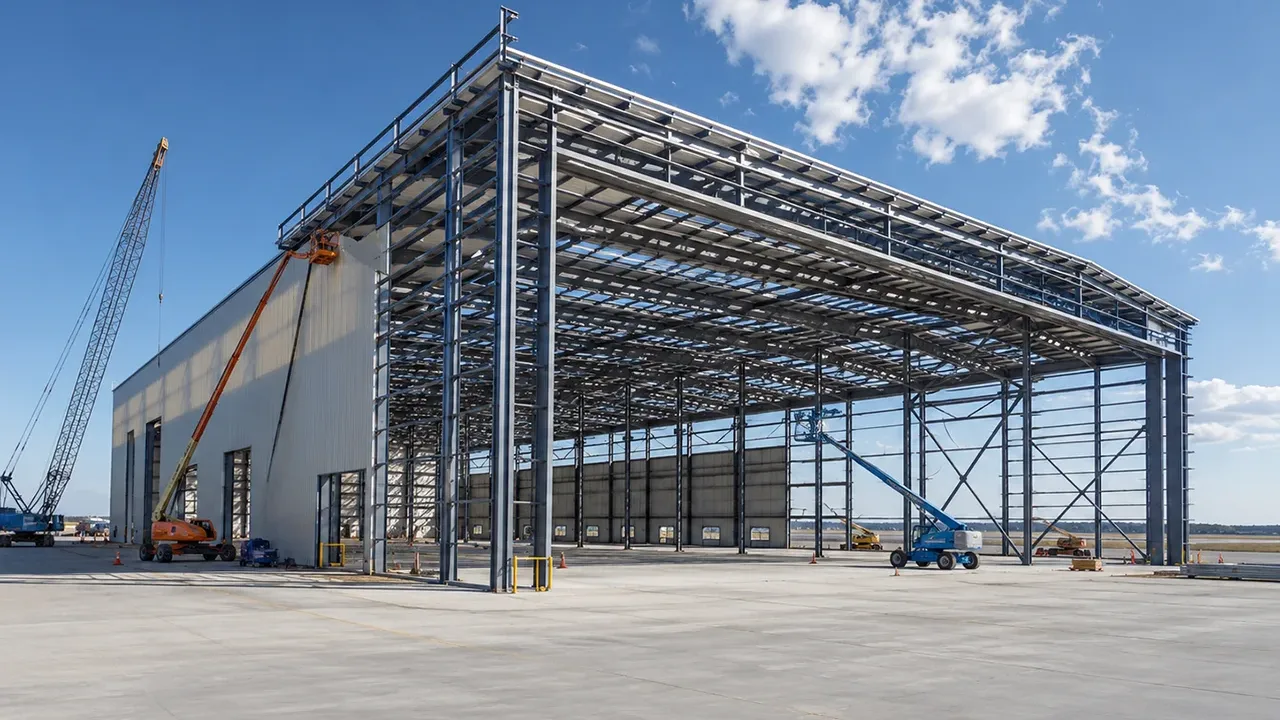
Steel hangar construction refers to the design, fabrication, and erection of steel-framed buildings used to house, service, maintain, or manufacture aircraft. These buildings are typically engineered with large clear-span spaces so aircraft can move safely without internal columns interrupting operations.
Steel is commonly used for hangars because it can support wide roof structures, large door openings, and heavy environmental loads while allowing efficient prefabrication. A steel hangar can also be customized for different aircraft types, from helicopters and private jets to commercial aircraft and military fleets.
The construction process usually includes site planning, structural engineering, steel fabrication, foundation work, frame erection, roof and wall installation, hangar door integration, and final inspection.
Types of Steel Hangars
Aircraft Maintenance Hangars
Aircraft maintenance hangars are designed for inspection, repair, servicing, and MRO operations. These facilities often require large working zones, service platforms, lighting systems, ventilation, and specialized equipment access.
The steel structure must support operational efficiency while maintaining safe clearances around aircraft, maintenance tools, and personnel movement.
Aircraft Storage Hangars
Aircraft storage hangars protect aircraft from weather, sunlight, corrosion exposure, and environmental damage. They are commonly used by private aviation owners, commercial fleet operators, and regional airports.
Storage hangars may prioritize open interior layouts, secure door systems, and cost-effective long-term protection.
Military Aircraft Hangars
Military hangars often require enhanced security, specialized operational layouts, durable structural systems, and support for mission-critical aircraft. These buildings may include reinforced access zones, equipment areas, and controlled maintenance environments.
Steel systems provide the strength and flexibility required for defense-related aviation infrastructure.
Helicopter Hangars
Helicopter hangars are usually more compact than fixed-wing aircraft hangars but still require careful planning for rotor clearance, door access, maintenance zones, and safety movement.
Steel construction allows helicopter facilities to be designed efficiently for emergency services, private aviation, military bases, and offshore support operations.
Key Structural Components of a Steel Hangar
Primary Steel Frame
The primary steel frame forms the main load-bearing structure of the hangar. It usually includes columns, rafters, rigid frames, or truss-supported systems designed to carry roof loads, wind loads, and structural forces safely to the foundation.
Because hangars often need wide open interiors, the primary frame must be carefully engineered for clear-span performance.
Roof Structure System
The roof system may use steel trusses, rafters, purlins, and bracing to create stable long-span coverage. Roof design must consider aircraft clearance, drainage, wind uplift, insulation, and long-term durability.
For larger hangars, truss systems can help reduce interior obstructions while maintaining structural strength.
Hangar Door Systems
The hangar door is one of the most important functional elements of the building. Door systems may include sliding doors, folding doors, vertical lift doors, or hydraulic doors depending on aircraft size and operational needs.
The steel frame must be designed to support large door openings without compromising stability.
Wall and Cladding Systems
Wall systems protect aircraft, equipment, and personnel from weather exposure. Common options include metal cladding, insulated panels, sandwich panels, and weatherproof wall assemblies.
The right cladding system depends on climate, insulation needs, corrosion exposure, and operational requirements.
Engineering Requirements for Steel Hangar Construction
Large Clear Span Design
Aircraft hangars require column-free interior space to allow safe movement, parking, servicing, and maneuvering. Clear-span design is one of the most important engineering priorities in hangar construction.
Engineers must evaluate aircraft wingspan, tail height, movement routes, maintenance zones, and door clearance before finalizing the structure.
Wind Load Design
Hangars often include large door openings and wide roof surfaces, making wind load design especially important. Airports and open aviation sites may experience strong winds, uplift forces, and exposure conditions that must be considered carefully.
Proper bracing, frame stiffness, and connection design help maintain structural safety.
Seismic Considerations
In seismic regions, steel hangars must be designed to resist earthquake forces while maintaining stability and safe load transfer. Structural connections, bracing systems, and foundation design all play important roles.
Regional codes and project requirements guide seismic design decisions.
Future Expansion Planning
Aviation facilities often need to expand as aircraft fleets, maintenance operations, or storage needs grow. Steel hangars can be designed with future extensions in mind.
Expansion planning may include additional bays, longer building length, larger service zones, or upgraded door systems.
Steel Hangar Construction Process
Site Assessment and Planning
The project begins with site evaluation and operational planning. Engineers review aircraft dimensions, taxi access, soil conditions, drainage, wind exposure, and available construction space.
Planning also considers hangar orientation, apron access, door opening direction, and future development potential.
Engineering and Design
After the project requirements are defined, the structural design team prepares calculations, layout drawings, fabrication drawings, and installation documentation.
Important design factors include:
- Aircraft wingspan and height
- Clear interior space
- Door opening size
- Roof span and slope
- Wind and seismic loads
- Insulation and cladding systems
Steel Fabrication
Once drawings are approved, steel components are manufactured in a controlled factory environment. Fabrication may include CNC cutting, drilling, welding, assembly, surface treatment, and dimensional inspection.
Factory fabrication helps improve accuracy and reduce site construction time.
Construction and Installation
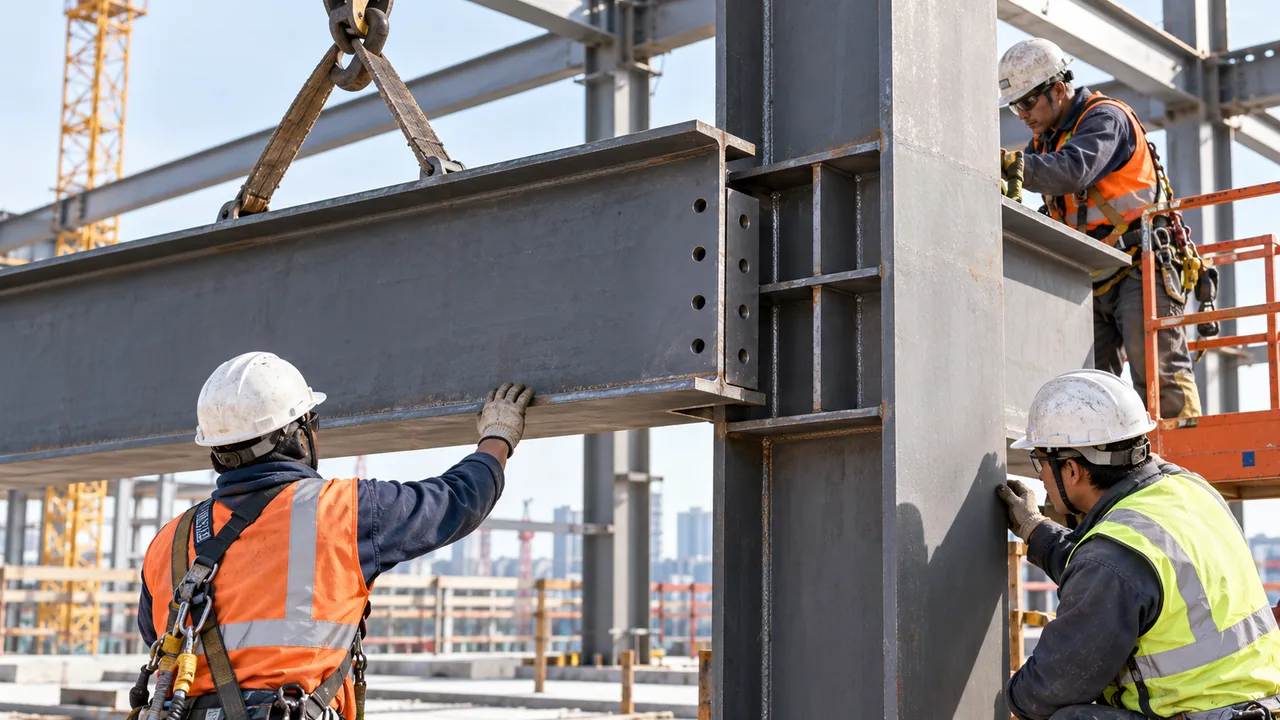
On site, construction begins with foundation work and anchor bolt placement. After foundations are ready, the steel frame is erected, followed by roof systems, wall cladding, bracing, and door installation.
Careful installation planning is essential because hangars involve large members, wide spans, and major door openings.
Benefits of Steel Hangar Construction
Large Span Capability
Steel structures can achieve the large clear spans required for aircraft movement and storage. This makes steel especially suitable for aviation facilities where interior columns would limit operations.
Fast Construction Schedule
Prefabricated steel components can be manufactured while site and foundation work are underway. This parallel workflow helps shorten construction schedules and allows facilities to become operational sooner.
Long-Term Durability
Properly fabricated and protected steel structures provide strong long-term performance. Protective coatings, galvanizing, and quality cladding systems help reduce corrosion risk and maintenance needs.
Flexible Interior Layout
Steel hangars can be customized for storage, maintenance, office areas, spare parts rooms, workshops, and equipment zones.
This flexibility allows aviation operators to design facilities around real operational workflows.
Cost Efficiency
Steel construction can provide strong lifecycle value through faster installation, efficient material use, lower maintenance requirements, and future expansion capability.
Applications of Steel Hangars
Commercial Airports
Commercial airports use steel hangars for aircraft storage, maintenance, ground service support, and airline operations.
Private Aviation Facilities
Private aircraft owners and aviation clubs use steel hangars to protect aircraft and create secure operational spaces.
Military Air Bases
Military aviation projects require durable, secure, and adaptable hangar structures for aircraft storage, maintenance, and mission support.
Cargo Aviation Operations
Cargo operators need large, efficient hangar and service facilities that support aircraft movement, maintenance, and logistics operations.
Aircraft Manufacturing Facilities
Aircraft manufacturing and assembly operations require wide-span buildings with precise layout planning and large access openings.
Surface Protection and Maintenance
Protective Coating Systems
Protective coatings help shield steel members from moisture, chemicals, and environmental exposure. Coating systems should be selected based on site conditions and service life expectations.
Corrosion Protection
For coastal airports, humid environments, or high-exposure sites, corrosion protection becomes especially important. Options may include galvanizing, industrial coatings, or multi-layer protection systems.
Maintenance Planning
Routine inspection and maintenance help extend the life of the hangar. Maintenance planning may include checking coatings, fasteners, door systems, drainage, and cladding conditions.
Service Life Optimization
Good design, proper fabrication, and suitable surface protection help steel hangars maintain structural performance for many years.
Why Choose XTD Steel Structure
Large-Span Structural Expertise
XTD Steel Structure supports steel projects requiring large-span design, structural coordination, and customized building solutions for demanding applications.
Precision Steel Fabrication
Advanced fabrication equipment, CNC processing, welding procedures, and quality inspections help ensure accurate steel components for hangar construction.
International Project Experience
With international project experience, XTD Steel Structure can support export packaging, logistics coordination, technical documentation, and global delivery requirements.
Complete Engineering Support
From planning and fabrication to project coordination, XTD Steel Structure provides integrated support for aviation-related steel building projects.
Frequently Asked Questions
What is steel hangar construction?
Steel hangar construction is the process of designing, fabricating, and erecting steel-framed buildings used for aircraft storage, maintenance, repair, or aviation operations.
How large can a steel hangar span be?
The span depends on aircraft size, structural design, roof system, wind loads, and project requirements. Steel systems can be engineered for large clear-span aviation spaces.
Which hangar door system is best?
The best door system depends on aircraft dimensions, opening width, budget, climate, and operational frequency. Sliding, folding, vertical lift, and hydraulic doors are common options.
How long does steel hangar construction take?
Project duration depends on size, engineering complexity, site conditions, door system selection, and logistics. Prefabricated steel components typically help reduce overall construction time.
Start Your Steel Hangar Project
Steel hangar construction offers a strong, flexible, and efficient solution for aircraft storage, maintenance, and aviation facility development. With large-span engineering, precise fabrication, durable cladding, and coordinated installation planning, steel hangars can support long-term operational needs across private, commercial, military, and industrial aviation projects.
Working with an experienced steel structure partner helps ensure reliable design, accurate fabrication, efficient delivery, and successful project execution from concept to completion.