When a roof must cross a wide production floor, warehouse bay, aircraft maintenance area, or public hall without interrupting the space below, simple beams are not always the most practical answer. As the span becomes longer, roof weight, deflection, wind uplift, connection demand, and erection planning all become more difficult to control. A steel roof truss system solves this problem by distributing forces through a network of connected members instead of forcing one deep beam to carry the entire load alone.
This is why steel trusses are widely used in large-span roofing projects. They help create open interior space while keeping the roof structure efficient, buildable, and easier to adapt to different building functions. Warehouses need clear storage areas. Workshops need open working zones. Factories may need ventilation, overhead services, lighting, or maintenance access. Exhibition halls, sports buildings, transport halls, and logistics centers often need large roof areas with fewer internal supports.
A roof truss is not selected only because it can span far. It is selected because it can balance strength, stiffness, steel weight, fabrication practicality, transport limits, and site erection requirements. When these factors are coordinated from the beginning, the truss becomes more than a roof support. It becomes a structural system that helps the whole building work better.
What Is a Steel Roof Truss System?
A steel roof truss system is a structural roof framework made from connected steel members arranged in triangular forms to carry roof loads across a span. Instead of relying mainly on one solid beam, a truss divides the load into a network of members that work together. These members usually include top chords, bottom chords, diagonal web members, vertical web members, gusset plates, bolted or welded joints, splice points, purlins, roof bracing, and support bearings.
The truss itself is only one part of the complete roof structure. It must work with columns, main frames, purlins, roof panels, gutters, bracing systems, connection plates, and foundations. If the truss is strong but poorly connected to the supporting frame, the roof may still perform badly. If the truss is efficient but the purlin layout is wrong, the roof panels may be difficult to install or align. If the truss is stable after completion but unstable during lifting, erection can become risky.
For broader engineering context, a truss is generally understood as a structure formed from connected members, often arranged in triangular units, so forces can be carried efficiently through tension and compression. In roofing projects, this principle becomes useful because large spans can be supported without turning every roof member into a heavy solid beam.
Why the Triangular Form Matters
The triangular form is the reason trusses are efficient. A triangle is stable because its shape does not distort easily when forces are applied at the joints. In a roof truss, this allows loads to be distributed through members that mainly work in tension and compression. This is different from a simple beam, where the member usually resists the load mostly through bending.
Because the load is shared through multiple members, a truss can often cover a longer span with a better strength-to-weight ratio. This does not mean every truss is automatically light or cheap. The final steel weight still depends on span, roof load, truss depth, connection design, steel grade, and bracing requirements. However, the triangular arrangement gives engineers more control over how forces move through the roof.
Difference Between a Roof Truss and a Simple Roof Beam
A simple roof beam works mainly as one long bending member. When load is applied from roof panels, purlins, or suspended services, the beam bends between supports. As the span becomes longer, the beam may need to become deeper and heavier to control stress and deflection.
A roof truss works differently. It breaks the span into a series of smaller triangular panels. The top chord, bottom chord, and web members share the load. Some members may work mainly in compression, while others work mainly in tension. This makes the truss useful when the roof must cover a wide area but still remain practical to fabricate, transport, and erect.
For large industrial and commercial buildings, the difference is important. A deep beam may be simple in appearance, but it can become heavy, expensive, and difficult to handle. A truss may require more members and more connections, but it can reduce unnecessary steel depth and provide better control over long-span performance.
Where Steel Roof Truss Systems Are Commonly Used
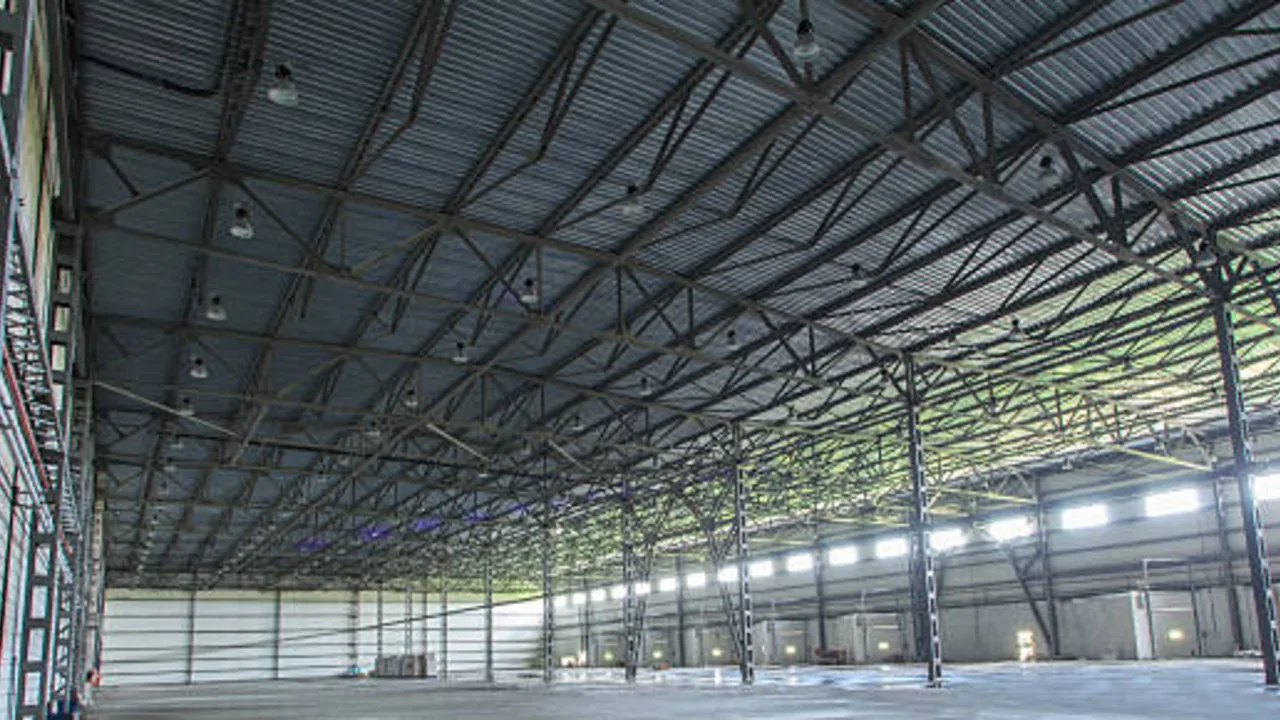
Steel roof trusses are used when the roof must support large areas, reduce internal columns, or coordinate with demanding building functions. The best use cases are usually buildings where open interior space matters as much as structural strength.
Industrial Buildings and Workshops
Industrial buildings often need roof systems that leave the floor below as open as possible. Fabrication shops, repair facilities, machine workshops, production halls, and industrial sheds may need wide working bays, vehicle access, equipment movement, ventilation routes, overhead lighting, or exhaust systems. A truss roof can support these needs by spanning across the working area while keeping the internal layout flexible.
In workshops, truss depth and spacing must be coordinated with equipment clearance. A roof that is structurally efficient but blocks ventilation ducts, lighting, crane clearance, or maintenance access may create operational problems. This is why industrial truss design should begin with the real use of the building, not only with the roof span.
Warehouses and Logistics Buildings
Warehouses and logistics buildings benefit from open interior space. Racking layout, forklift routes, staging areas, loading doors, and storage height all depend on the building structure. A steel truss roof can reduce the need for internal supports, making it easier to plan flexible storage zones and efficient circulation.
However, wide span alone is not always the best answer. Very long trusses may increase steel tonnage, connection demand, lifting difficulty, and transport complexity. A practical warehouse roof balances span, column spacing, truss depth, roof slope, and installation method. The goal is not simply to make the roof as wide as possible. The goal is to support warehouse operation with the right structural rhythm.
Commercial and Public Large-Span Buildings
Commercial and public buildings often use trusses when open space and roof expression both matter. Sports halls, exhibition centers, transit halls, event venues, showrooms, and public buildings may need large roof areas with fewer columns. A steel roof truss system can provide the required span while also supporting ceiling layouts, lighting, acoustic treatments, signage, smoke control, and roof services.
In these buildings, truss design may also affect appearance. The truss may be hidden above a ceiling, exposed as an architectural feature, or integrated with curved roof geometry. This makes coordination between structural engineers, architects, and building service teams especially important.
Special Roof Projects
Some roof projects require special truss solutions. Aircraft hangars may need very wide clear openings. Covered yards may need long roof spans with minimal internal support. Industrial corridors, canopies, transfer zones, and process buildings may require trusses that fit unusual geometry or connect different structural systems.
Special roof projects often demand more careful planning for transport, splicing, temporary support, and erection sequence. A truss that works well in calculation must still be possible to fabricate, deliver, lift, align, and brace safely on site.
Main Components of a Steel Roof Truss System
A truss roof is made from several components that must work together. Each part has a different role in carrying loads, stabilizing the roof, supporting cladding, and transferring forces into the building frame.
Top Chord and Bottom Chord
The top chord is the upper member of the truss. It usually follows the roof slope or roof profile and receives loads from purlins or other roof support members. Depending on the truss type and loading condition, the top chord often carries compression, although force behavior can vary in more complex systems.
The bottom chord is the lower member of the truss. It ties the truss together and helps complete the structural triangle. In many roof trusses, the bottom chord carries tension under typical gravity loading. It may also support ceilings, lighting, service hangers, or access systems if these loads are included in the design. These additional loads should never be added casually after the truss has already been finalized.
Web Members
Web members are the diagonal and vertical members between the top and bottom chords. They divide the truss into smaller triangular panels and help transfer force through tension and compression. Their arrangement affects truss stiffness, steel weight, fabrication complexity, and connection layout.
Web member design must consider more than force calculation. Member angles affect connection detailing. Long slender web members may need buckling checks. Repeated web patterns can improve fabrication efficiency. Poorly arranged webs can create difficult node details, awkward bolt access, or unnecessary steel weight.
Gusset Plates and Truss Connections
Gusset plates and connection details are critical because truss forces meet at nodes. A truss member may be properly sized, but if the node is weak, misaligned, or difficult to assemble, the system can lose efficiency. Bolted and welded joints must be designed for the actual forces moving through the truss.
Connection detailing includes plate thickness, bolt diameter, hole spacing, weld size, edge distance, access for tightening, and erection tolerance. In long-span roofs, small connection errors can create large site problems. Accurate shop drawings, fabrication control, and inspection are essential.
Purlins and Roof Cladding Support
Purlins sit on or connect to the trusses and support the roof cladding. They transfer roof panel loads into the truss system and help define roof panel alignment. Purlin spacing affects roof sheet performance, wind uplift resistance, insulation support, fastener layout, and installation speed.
Purlins must also coordinate with skylights, smoke vents, roof openings, gutters, solar panels, and maintenance access. If purlins are treated as a late detail, the roof may suffer from panel misalignment, awkward fastening, or difficult service integration.
Roof Bracing and Stability Members
A truss roof needs lateral stability. Individual trusses can be strong in their own plane but vulnerable to sideways movement, twisting, or instability if they are not braced correctly. Roof bracing, cross bracing, tie members, and lateral restraint systems help keep the trusses aligned and stable.
This is especially important during erection. A completed roof may be stable after purlins, bracing, and cladding are installed, but individual trusses can be unstable while being lifted or before the permanent bracing is complete. Temporary bracing and a clear lifting sequence are part of safe truss construction.
How Loads Move Through a Steel Roof Truss System
The performance of a steel roof truss system depends on a clear load path. Roof loads must move from the cladding into secondary members, then into the truss, then into the supporting frames or columns, and finally into the foundation. If this path is unclear, forces may concentrate in unexpected areas.
Vertical Load Transfer
Vertical loads usually begin at the roof surface. Roof panels, insulation, maintenance activity, rain load, snow load where applicable, suspended services, solar panels, and roof-mounted equipment all add demand to the roof. These loads are first carried by roof sheets or panels, then by purlins, and then transferred into truss nodes, chords, or support points.
From the truss, the loads move into columns, portal frames, wall frames, or other primary supports. The forces then pass through base plates, anchor bolts, and foundations. A strong truss is not enough if the support frame, connections, and foundation cannot receive the load properly.
Wind Uplift and Lateral Forces
Large roofs also face wind uplift and lateral forces. Wind can pull upward on roof cladding, push against walls, and create suction zones near edges and corners. These forces must be transferred through roof sheets, fasteners, purlins, truss members, roof bracing, wall bracing, and support frames.
Wind behavior is especially important for large-span roofs because the surface area is large. If uplift is not controlled, roof panels, purlins, connections, or bracing members may become overstressed. Truss design must therefore coordinate with the whole lateral stability system, not only with gravity load calculations.
Why Deflection Control Is Critical
A truss can be strong enough to avoid failure but still deflect too much for practical use. Excessive deflection can affect roof drainage, roof cladding alignment, ceilings, skylights, equipment supports, gutters, or waterproofing details. In commercial buildings, visible roof movement may also affect finishes and user comfort.
Deflection control becomes more important as the span increases. Engineers must check not only ultimate strength, but also serviceability. The roof should remain aligned, drain properly, support services safely, and maintain long-term usability under normal operating conditions.
“`html id=”steel-roof-truss-system-en-part-2″
Common Types of Steel Roof Trusses
Different roofing projects use different truss forms. The right choice depends on span, roof slope, load type, ceiling requirements, fabrication method, transport limits, and architectural intent. A truss type that works well for a warehouse may not be ideal for a sports hall, hangar, or public terminal roof.
| Truss Type | Typical Use | Main Advantage | Design Concern |
|---|---|---|---|
| Pratt truss | Industrial roofs, workshops, repeated bays | Efficient force distribution and practical fabrication | Connection detailing and compression member control |
| Warren truss | Warehouses, halls, long-span roof systems | Simple repeated triangular pattern | Deflection and member force reversal under different loads |
| Howe truss | Roof structures with specific load direction requirements | Useful web arrangement for selected roof loading patterns | Member sizing depends strongly on load direction |
| Fink truss | Lighter roof applications and smaller to medium spans | Efficient web pattern for sloped roofs | May not suit very heavy industrial roof loads |
| Bowstring or curved truss | Sports halls, public buildings, hangars, architectural roofs | Large-span capability with strong visual form | Fabrication precision and curved cladding coordination |
| Parallel chord truss | Flat or low-slope roofs, industrial buildings, platforms | Simple geometry and easy service coordination | Drainage and roof slope must be planned carefully |
Pratt and Warren Trusses for Industrial Roofs
Pratt and Warren trusses are common in industrial roofing because they use clear, repeatable web patterns. This makes them practical for warehouses, workshops, production buildings, and roof systems with repeated structural bays. Their geometry can be efficient, but the final performance still depends on connection details, truss depth, member sizing, and bracing layout.
These trusses are often selected when the project needs a balance between structural efficiency and fabrication practicality. Repeated web geometry can simplify cutting, welding, drilling, and inspection. It can also make site assembly more predictable when truss segments must be spliced before lifting.
Fink and Howe Trusses for Lighter Roof Applications
Fink and Howe trusses may be used where roof load, span, and slope conditions fit their web arrangement. They are often more suitable for smaller to medium spans, lighter roof systems, or projects where the roof profile benefits from their geometry. In these cases, they can provide efficient support without excessive member size.
However, they should not be selected only because the shape looks familiar. Industrial roofs may include suspended services, maintenance loads, solar panels, HVAC equipment, or heavy cladding. If these loads are not considered early, a lighter truss arrangement may need redesign or reinforcement later.
Curved and Special-Shaped Trusses for Architectural Roofs
Curved, bowstring, and special-shaped trusses are often used when the roof must support both engineering and architectural goals. Sports halls, terminals, exhibition centers, public buildings, covered entrances, and long canopies may use these systems to create wide spans with a more expressive roof form.
The challenge is that special-shaped trusses often require tighter fabrication control. Curved members, non-standard node angles, complex purlin seats, and custom cladding interfaces can increase detailing work. These systems can perform very well, but they need strong coordination between engineering, manufacturing, delivery, and erection teams.
Why Steel Roof Trusses Work Well for Large-Span Roofing
A steel truss is valuable because it uses geometry to improve roof performance. Instead of making every member larger, the truss divides the span into a series of connected force paths. This helps the roof carry load efficiently while preserving open space below.
Efficient Strength-to-Weight Ratio
One major advantage of trusses is their strength-to-weight efficiency. A solid beam must resist bending across the full span, which can require large depth and heavy steel as the span increases. A truss distributes force through chords and web members, allowing steel to be placed where it contributes most to structural performance.
This efficiency can reduce unnecessary member weight, but it does not remove the need for careful design. A lighter truss with complicated connections may not be cheaper or easier to build. The best truss balances steel tonnage, connection simplicity, fabrication accuracy, and erection practicality.
Fewer Internal Columns
Large-span trusses can reduce the number of internal columns needed below the roof. This is valuable in warehouses, workshops, factories, vehicle maintenance buildings, sports halls, and public spaces where the floor area must remain open and flexible.
Fewer columns can improve storage layout, production flow, equipment access, vehicle circulation, and sightlines. However, reducing columns usually increases demand on the roof truss, support frames, foundations, and erection equipment. The design should balance open space with structural economy.
Better Coordination with Roof Services
Large-span roofs often support many services. Lighting, fire protection pipes, ventilation ducts, exhaust fans, smoke vents, skylights, cable trays, solar panels, ceiling systems, and maintenance walkways may all interact with the truss roof. If these systems are coordinated early, the truss can include proper support points and avoid unnecessary field changes.
Late service coordination can create problems. A duct may conflict with web members. A roof opening may interrupt purlins. A suspended platform may add load to a member that was not designed for it. Good coordination helps the roof structure support the building’s actual operation.
Adaptability for Repeated Bays
Steel trusses work well when a building uses repeated structural bays. Warehouses, workshops, logistics buildings, industrial sheds, and production halls often repeat the same roof rhythm across the length of the building. This repetition can simplify fabrication, marking, packing, delivery, and erection.
Repeated trusses also make future review easier. If the building later needs an extension, solar installation, service upgrade, or bay modification, engineers can evaluate the existing truss logic more systematically when the original structure is well documented.
Design Factors That Affect Steel Roof Truss Performance
The success of a steel roof truss system depends on design decisions made before fabrication begins. Span, depth, roof slope, connection design, transport, erection method, corrosion exposure, and maintenance access all influence long-term performance.
Span Length and Truss Depth
Span length has a direct effect on truss design. Longer spans usually require greater truss depth, stronger chord members, more careful web member design, or tighter deflection control. A deeper truss can improve efficiency, but it may reduce ceiling clearance, increase transport height, or complicate architectural coordination.
The right truss depth is not chosen by a fixed rule alone. It depends on roof load, span, support condition, service requirements, transport limits, and the space available inside the building. A roof that looks efficient in calculation may become impractical if it cannot be transported or lifted safely.
Roof Slope, Drainage, and Cladding Layout
Roof slope affects drainage, roof sheet layout, gutter performance, insulation detailing, and long-term waterproofing. If the slope is too low or poorly coordinated, rainwater may pond on the roof, increase leakage risk, or overload selected gutter zones.
Truss geometry must work with the roof cladding system. Purlin seats, panel lengths, skylights, vents, fastener lines, and roof penetrations should be coordinated with the truss layout. A strong truss can still create roof problems if the cladding system is difficult to install or maintain.
Connection Design and Node Accuracy
Truss performance depends heavily on node accuracy. Loads move through the joints where chords and web members meet. If gusset plates are too thin, bolt layouts are difficult, weld access is poor, or holes are misaligned, the truss may become difficult to assemble and less reliable in service.
Good node detailing considers actual fabrication and erection conditions. Workers need access to tighten bolts. Welds need proper preparation and inspection. Splice plates must fit. Member markings must be clear. Connection design should support both structural strength and real construction workflow.
Transport and Erection Limits
Long trusses may not be transported in one piece. They may need to be fabricated in segments, delivered to site, assembled on the ground, and then lifted into place. Splice locations affect member forces, alignment, crane planning, and erection speed.
Lifting points must also be planned carefully. A truss may be designed for final roof loads, but lifting creates temporary force conditions that are different from the completed structure. Temporary bracing, rigging design, crane access, and site assembly space should be reviewed before erection begins.
Corrosion Protection and Environment
The surrounding environment affects steel protection. Coastal buildings, chemical facilities, agricultural sheds, high-humidity storage buildings, industrial exhaust zones, and food processing facilities may each require different coating strategies. Surface preparation, primer, paint system, galvanizing, access for maintenance, and drainage detailing all affect durability.
Corrosion protection should not be treated as a final cosmetic step. It is part of the roof system’s long-term performance. A truss that is difficult to inspect, repaint, or maintain may create future cost even if the initial structure is strong.
Steel Roof Truss System and Project Cost Considerations
Cost decisions for a truss roof are rarely simple. A truss is not automatically cheaper or more expensive than another roof framing system. The final steel roof structure cost depends on span, truss depth, steel tonnage, connection quantity, fabrication complexity, coating system, transportation method, lifting equipment, roof cladding, and installation time.
A deeper truss may reduce steel weight by improving structural efficiency, but it can also increase fabrication height, transport difficulty, or connection complexity. A simpler truss may be easier to fabricate, but it may require heavier members. Large shop-welded segments may reduce site work, but they can create delivery and lifting limits. Smaller bolted sections may be easier to transport, but they can increase site assembly labor.
The best cost decision is usually not the lowest steel weight alone. It is the solution that balances material, fabrication, transport, erection, safety, maintenance, and building function. A truss roof should be evaluated as a complete system, not only as a tonnage number.
Fabrication and Erection Considerations
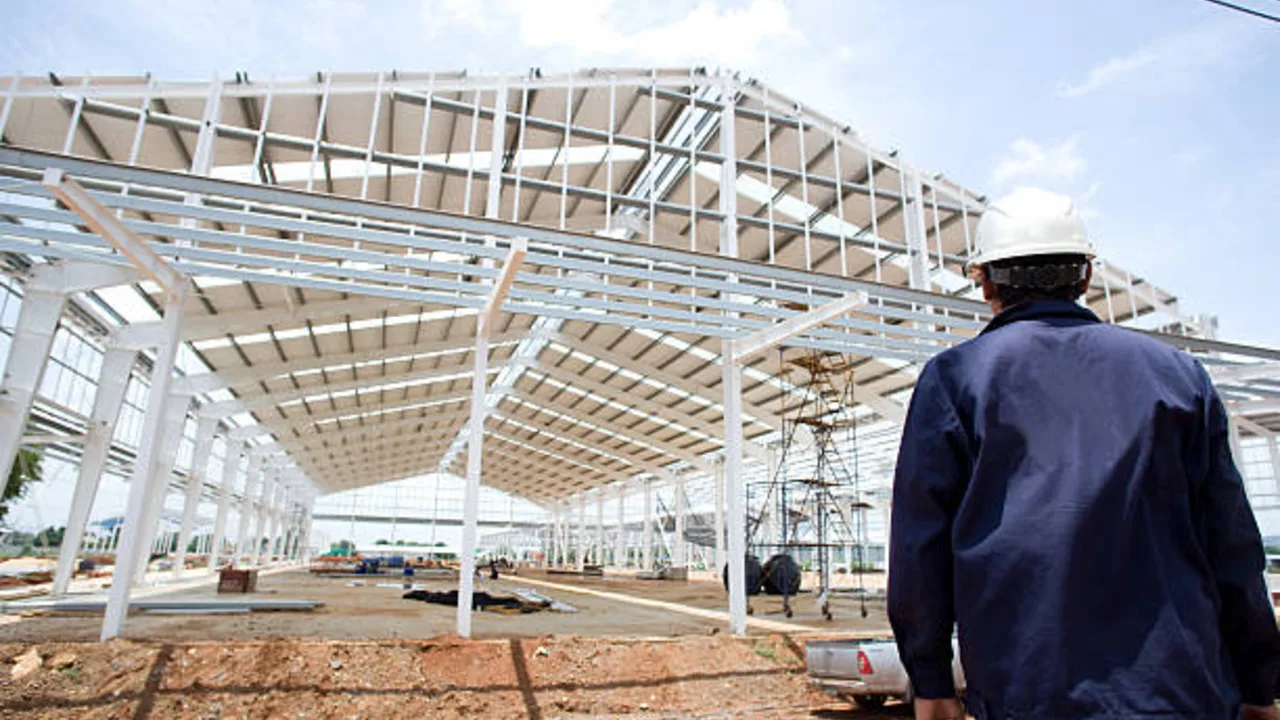
A good truss design still needs accurate fabrication and a safe erection plan. Large-span trusses can become difficult on site if shop drawings, splice details, member markings, lifting points, and temporary bracing are not coordinated early.
Shop Fabrication Accuracy
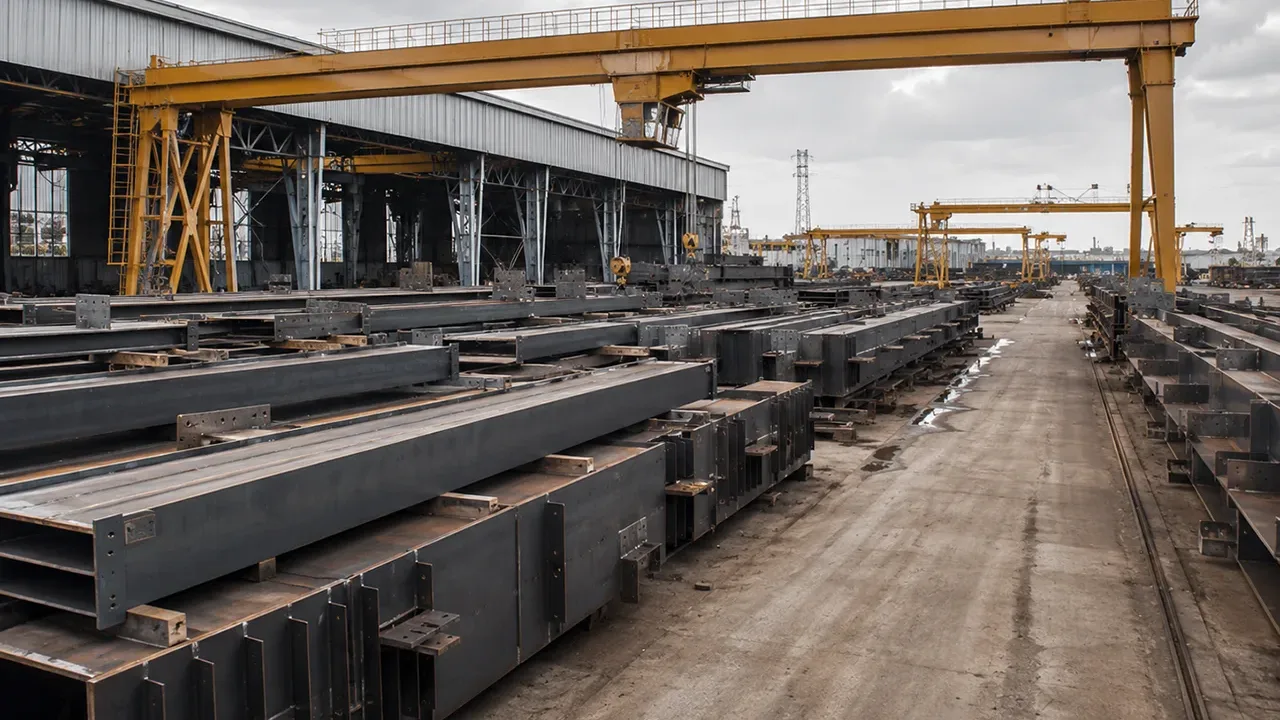
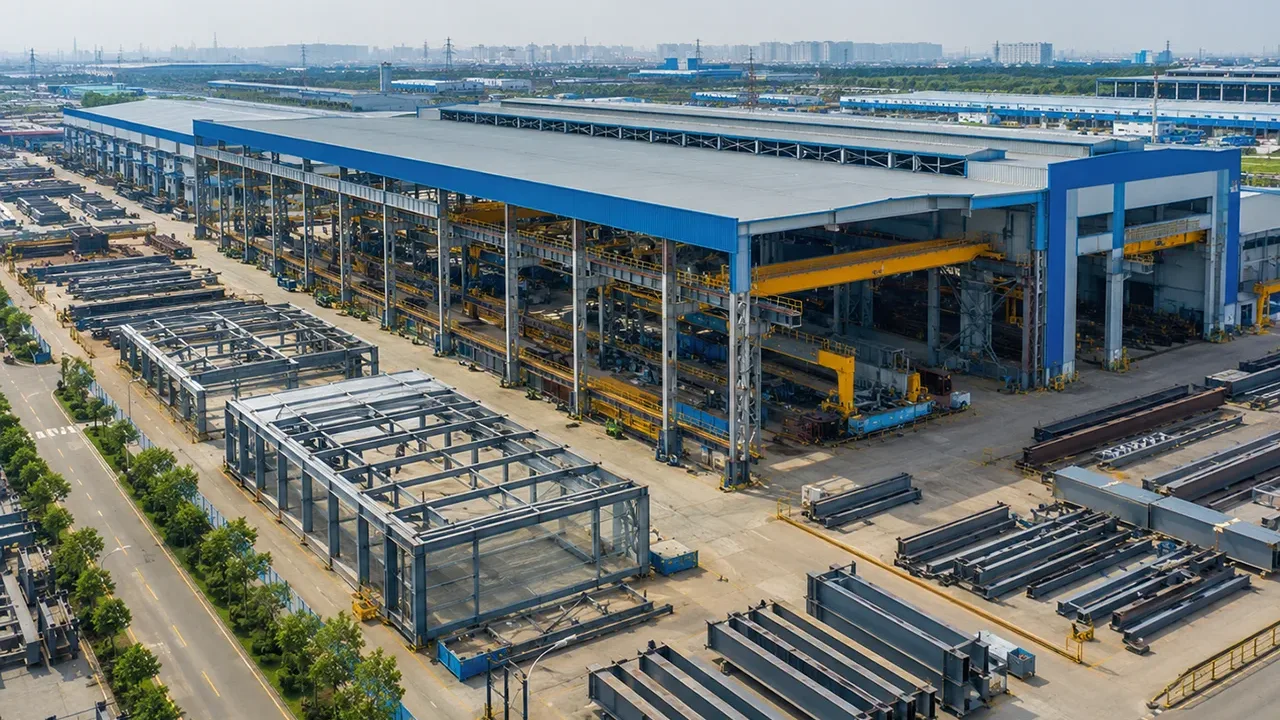
Shop fabrication includes cutting, drilling, welding, gusset plate preparation, trial assembly, member marking, surface treatment, coating, and quality inspection. Because many truss members meet at nodes, small fabrication errors can create large alignment problems during assembly.
Accurate shop drawings are essential. They must show member lengths, hole positions, plate thicknesses, weld details, splice locations, and erection marks clearly. When fabrication is controlled well, site assembly becomes faster, safer, and more predictable.
Splicing and Transport Planning
Long trusses often need to be split into transportable sections. Splice planning affects strength, alignment, site labor, and lifting sequence. A splice should be located where it can transfer forces safely and still be practical for workers to assemble on site.
Transport planning should consider road limits, member length, packing order, coating protection, unloading space, and site storage. Poor transport planning can damage members, confuse erection sequence, or delay installation even when the truss design itself is correct.
Lifting, Temporary Bracing, and Site Stability
Trusses may be vulnerable during lifting. They can twist, sway, or deform if lifted from poor points or if temporary bracing is missing. The final roof may be stable only after purlins, permanent bracing, and roof cladding are installed.
Site crews need a clear erection plan. This plan should define lifting points, crane positions, temporary supports, bracing sequence, working access, weather limits, and inspection points. Safe erection is part of the structural system, not a separate afterthought.
Coordination with Roof Panels and Purlins
Roof panels and purlins must match the truss layout. Purlin spacing affects panel support, fastener lines, wind uplift resistance, insulation support, and installation speed. Roof openings for skylights, smoke vents, exhaust fans, or maintenance access should be coordinated before fabrication.
If roof panels and purlins are coordinated late, the project may face cutting, patching, extra framing, or waterproofing problems. Early coordination helps the roof perform as a clean and complete system.
Common Mistakes in Steel Roof Truss Projects
Many truss roof problems come from coordination failures rather than weak steel. A truss may be strong in calculation, but still create cost, delay, or maintenance problems if loads, connections, erection sequence, and roof services are not planned properly.
Choosing a Truss Only by Span
Span is important, but it is not the only factor. Roof load, deflection, connection complexity, transport limits, erection method, roof slope, service integration, corrosion protection, and cost all affect the right truss choice. A truss selected only because it can span far may not be the best system for the project.
Ignoring Roof Equipment Loads
Solar panels, HVAC units, smoke vents, ducts, pipe supports, suspended ceilings, lighting systems, and maintenance walkways can all add loads to the roof. If these are added after truss design is complete, the roof may need reinforcement, redesign, or awkward site modification.
Poor Node and Gusset Plate Detailing
Nodes are where truss forces meet. Poor gusset plate detailing, bolt conflicts, weak weld access, incorrect hole alignment, or insufficient plate thickness can create serious fabrication and site problems. Good node design supports both load transfer and practical assembly.
Weak Temporary Stability Planning
A truss may be stable after the roof is complete but unstable during erection. Temporary bracing, lifting sequence, ground assembly, crane planning, and worker access must be defined before installation. Weak temporary stability planning can create safety risks and alignment problems.
Late Changes to Openings or Skylights
Roof openings affect purlins, truss spacing, bracing, cladding, waterproofing, and load transfer. Late changes to skylights, smoke vents, ducts, or roof hatches can interrupt the structural layout and create rework. These items should be coordinated early with both engineering and roof cladding teams.
How to Evaluate a Steel Roof Truss System for a Project
Before choosing a steel roof truss system, project owners and engineers should evaluate the roof as a complete structural and construction system. The best truss is not always the deepest, lightest, or cheapest. It is the one that fits the span, load demand, building use, site condition, and long-term maintenance needs.
- Building function: Define whether the project is a warehouse, workshop, factory, hangar, sports hall, logistics building, or public facility.
- Required clear span: Match the truss with storage layout, production flow, vehicle access, equipment clearance, and public space requirements.
- Roof slope and drainage: Review rainwater flow, gutter location, roof valleys, downspouts, and maintenance access.
- Dead load and live load: Include roof panels, insulation, purlins, maintenance loads, ceiling systems, and service loads.
- Wind uplift: Check roof cladding, fasteners, purlins, truss connections, roof bracing, and support frames.
- Snow load where applicable: Confirm local code requirements and drifting effects in colder regions.
- Suspended services: Identify lighting, fire pipes, ducts, cable trays, ceilings, and access systems early.
- Roof-mounted equipment: Review solar panels, HVAC units, exhaust fans, smoke vents, and maintenance platforms.
- Purlin spacing: Coordinate with roof sheet span, wind uplift resistance, insulation, and fastening layout.
- Truss depth and ceiling clearance: Balance structural efficiency with usable space below the roof.
- Fabrication limits: Consider member length, gusset plates, shop welding, bolt access, and quality inspection.
- Transport route: Review shipping length, packing sequence, coating protection, unloading, and site storage.
- Crane access: Confirm lifting points, crane position, site space, ground assembly, and weather conditions.
- Temporary bracing: Plan stability before the permanent roof bracing and purlins are complete.
- Corrosion protection: Match coating or galvanizing strategy with the building environment.
- Future expansion or solar planning: Consider later roof loads, additional bays, service upgrades, and maintenance access.
Conclusion: A Good Roof Truss Is a Complete Roofing System
A steel roof truss system is not just a triangular frame. It is a coordinated roof support system that includes load path, purlins, bracing, connections, fabrication, transport, erection, and maintenance planning. When these parts work together, the roof can cover large spans while remaining practical to build and reliable to use.
The best truss design is not always the deepest, lightest, or cheapest option. It is the system that fits the span, roof load, building function, site constraints, and future use. When planned early, a steel truss roof can support large spaces, reduce internal obstruction, simplify repeated bays, and give the building long-term structural value.