In modern steel construction, structural performance begins long before the first column is erected. It starts at the foundation level—specifically with anchor bolt placement. When discussing structural precision, steel building anchor bolt tolerance becomes one of the most critical yet underestimated factors in project execution.
Anchor bolts serve as the mechanical interface between the concrete foundation and the steel superstructure. If the steel building anchor bolt tolerance is not carefully controlled, even minor deviations can create cascading alignment problems, affect base plate alignment, delay erection, and increase long-term structural stress.
For contractors, engineers, and project owners, understanding steel building anchor bolt tolerance is not simply about meeting specification requirements—it is about protecting structural integrity, erection efficiency, and lifecycle reliability. This article explains why anchor bolt accuracy matters, how tolerance deviations occur, and how modern projects manage and control steel building anchor bolt tolerance in complex steel systems.
Why Steel Building Anchor Bolt Tolerance Matters
Structural Load Transfer Fundamentals
In any steel building structure, loads follow a defined path. Vertical loads travel from roof beams to columns, from columns to base plates, from base plates to anchor bolts, and finally into the concrete foundation. If steel building anchor bolt tolerance is exceeded, this load path becomes compromised.
Anchor bolts resist:
- Axial compression forces
- Uplift tension forces
- Shear forces from lateral loads
- Moment forces in rigid frame systems
When anchor bolts are misaligned beyond acceptable steel building anchor bolt tolerance, uneven stress distribution can occur at the base plate. Over time, this can create stress concentrations that affect structural durability.
Tolerance vs. Precision in Steel Construction
It is important to distinguish between fabrication precision and site tolerance. Steel components are manufactured with high dimensional accuracy in controlled factory conditions. However, foundations are poured on site, where environmental and human variables increase deviation risks.
Steel building anchor bolt tolerance refers to the acceptable deviation in bolt position, elevation, projection height, and spacing. These tolerances allow minor adjustment during erection while preventing structural compromise.
Excessive deviation directly impacts base plate alignment, often requiring slot enlargement, reaming, or even structural modification.
Common Causes of Anchor Bolt Misalignment
Surveying and Layout Errors
Accurate gridline transfer from design drawings to foundation layout is essential. Misplaced reference points can immediately violate steel building anchor bolt tolerance limits.
Common causes include:
- Incorrect benchmark referencing
- Improper total station setup
- Manual measurement inaccuracies
Even a few millimeters of deviation can significantly affect base plate alignment in tightly engineered projects.
Concrete Pour Movement
During concrete pouring, anchor bolt cages can shift if not properly braced. Vibrations from concrete consolidation may disturb bolt verticality or spacing, pushing placement outside acceptable steel building anchor bolt tolerance.
Without rigid templates, bolts may tilt or rotate, creating installation challenges once steel columns arrive on site.
Template Installation Issues
Steel or plywood templates are commonly used to maintain bolt spacing. However, insufficient rigidity or inadequate bracing can allow movement during placement.
If template distortion occurs, the final position may exceed allowable steel building anchor bolt tolerance, requiring time-consuming correction measures.
Impact of Poor Anchor Bolt Placement on Base Plate Alignment
Base Plate Alignment Challenges
Proper base plate alignment ensures uniform load transfer from column to foundation. When steel building anchor bolt tolerance is exceeded, erection crews often face:
- Misfit bolt holes
- Forced column positioning
- Plate slot enlargement
- On-site drilling or torch cutting
While minor adjustments may be manageable, repeated deviation weakens structural reliability and compromises aesthetic alignment.
Structural and Safety Implications
Improper anchor bolt placement affects more than installation speed. It can:
- Create eccentric loading conditions
- Increase localized stress under base plates
- Reduce effective bolt tension capacity
- Accelerate fatigue behavior in dynamic systems
For moment-resisting frames, maintaining strict steel building anchor bolt tolerance is especially critical because base connections directly resist bending forces.
Steel Building Anchor Bolt Tolerance Standards and Best Practices
Typical Tolerance Ranges
Although tolerance requirements vary by specification, general best practice for steel building anchor bolt tolerance includes control over:
| Parameter | Typical Control Consideration |
|---|---|
| Horizontal Position | Limited deviation from grid centerline |
| Vertical Projection | Uniform projection height above concrete |
| Bolt Spacing | Maintained within specified tolerance band |
| Verticality | Minimal tilt or angular deviation |
Exceeding steel building anchor bolt tolerance typically triggers engineering review before erection proceeds.
Inspection Before Steel Erection
Before column installation, a pre-erection survey should verify:
- Horizontal alignment relative to grid
- Elevation consistency
- Compatibility with base plate hole layout
Advanced measurement tools such as laser scanners and total stations help confirm compliance with steel building anchor bolt tolerance requirements before steel delivery.
Anchor Bolt Tolerance in Different Structural Systems
Rigid Frame Steel Buildings
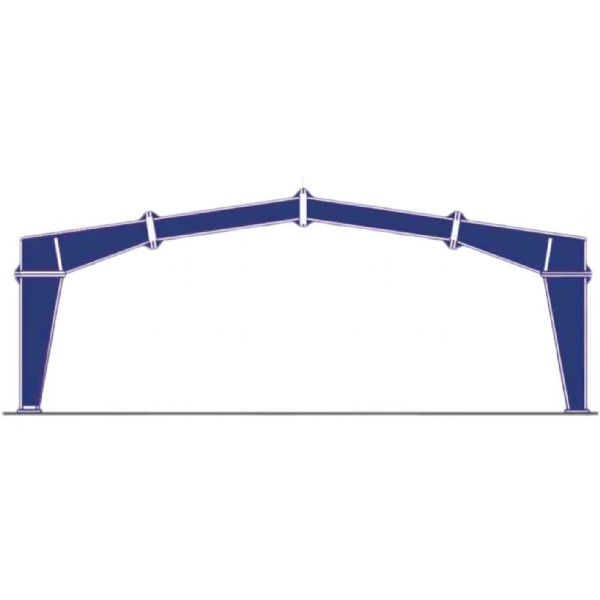
In rigid frame systems, columns resist both axial and bending forces. Because base connections participate in moment resistance, steel building anchor bolt tolerance becomes structurally sensitive.
Any misalignment can introduce unintended eccentricity that alters load behavior.
Space Truss Structures
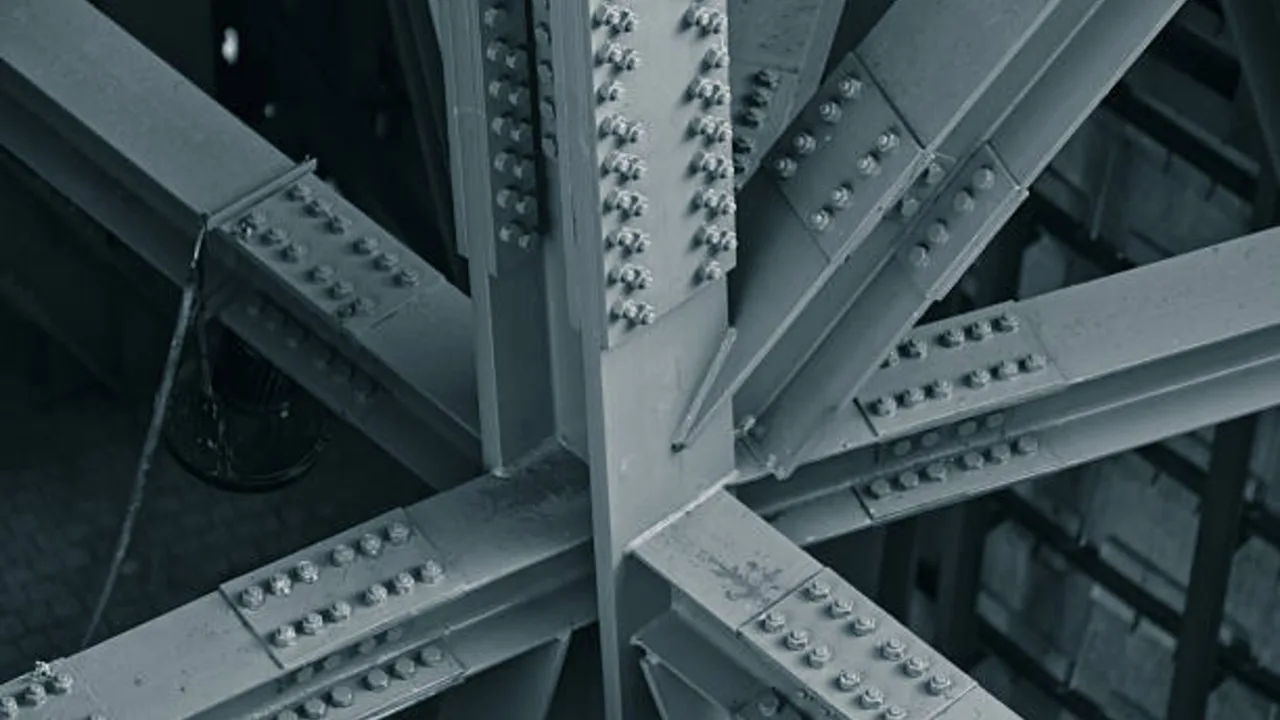
For Space truss systems, precision becomes even more critical. Space truss nodes rely on geometric accuracy across multiple directions. If foundation anchor bolts exceed allowable steel building anchor bolt tolerance, node misalignment may propagate throughout the entire structural grid.
Unlike simple frames, Space truss structures distribute forces three-dimensionally, meaning alignment errors can accumulate rapidly if not controlled.
Engineering Solutions to Control Steel Building Anchor Bolt Tolerance
Use of Steel Templates
One of the most effective methods to maintain proper steel building anchor bolt tolerance is the use of rigid steel templates. These templates are fabricated to match the exact base plate hole configuration and are secured in place before concrete pouring.
Unlike wooden forms, steel templates offer superior dimensional stability. When properly braced, they significantly reduce the risk of deviation beyond allowable steel building anchor bolt tolerance during vibration and curing.
Best practice includes:
- Welding bolts to temporary positioning frames
- Installing cross-bracing to prevent rotation
- Pre-pour survey verification
By controlling movement at this stage, contractors minimize post-concrete corrections and protect base plate alignment.
Adjustable Base Plate Design
Design flexibility can help accommodate minor deviations within acceptable steel building anchor bolt tolerance ranges. Engineers often incorporate:
- Oversized bolt holes
- Slotted holes in one direction
- Leveling nuts beneath base plates
- Shim plates for fine adjustment
However, excessive reliance on slotting to compensate for poor steel building anchor bolt tolerance is not recommended. Adjustment capacity should act as a safety margin—not a substitute for precision.
Digital Survey Technology
Modern steel projects increasingly use digital layout control systems. Laser scanning, 3D survey mapping, and BIM-based verification allow early detection of deviation outside acceptable steel building anchor bolt tolerance.
By integrating digital models with field measurement data, discrepancies can be corrected before steel erection begins, preventing misalignment of critical structural systems such as Space truss assemblies.
On-Site Correction Methods for Misaligned Anchor Bolts
Minor Deviations
When deviations remain within marginal limits of steel building anchor bolt tolerance, corrective measures may include:
- Reaming base plate holes
- Slight slot extension (engineer-approved)
- Use of tapered washers
These methods preserve structural performance while restoring acceptable base plate alignment.
Moderate Deviations
If anchor bolts exceed typical steel building anchor bolt tolerance thresholds but remain structurally salvageable, solutions may involve:
- Installing epoxy-set supplemental anchors
- Adding welded plate extensions
- Engineering-approved reinforcement detailing
Such corrections require formal review to ensure that load transfer capacity is not compromised.
Severe Deviations
In extreme cases where steel building anchor bolt tolerance is grossly exceeded, anchor bolts may need to be cut and replaced. This process includes:
- Core drilling
- New anchor installation
- Non-shrink grout repair
These corrections increase project cost and delay erection schedules, reinforcing why preventive control of steel building anchor bolt tolerance is far more efficient than reactive repair.
Quality Control Workflow for Anchor Bolt Installation
Pre-Concrete Checklist
Maintaining strict steel building anchor bolt tolerance begins before concrete placement. A structured QC checklist should verify:
- Template rigidity and fastening
- Bolt verticality confirmation
- Correct gridline positioning
- Measurement documentation
Pre-pour inspection ensures the project remains within acceptable steel building anchor bolt tolerance limits before permanent embedding occurs.
Post-Concrete Verification
After curing, a detailed survey must confirm compliance with required steel building anchor bolt tolerance. Verification typically includes:
- Elevation measurement
- Horizontal deviation recording
- Spacing confirmation
- Deviation report documentation
Only after tolerance verification should steel erection proceed.
Coordination Between Fabrication and Foundation Teams
Shop Drawing Review
Coordination between steel fabrication and civil foundation teams plays a decisive role in maintaining steel building anchor bolt tolerance. Shop drawings must clearly define:
- Base plate hole diameter
- Bolt center-to-center spacing
- Required projection height
- Allowable tolerance range
Miscommunication at this stage can directly impact base plate alignment during erection.
Communication During Construction
Real-time data exchange between site engineers and fabricators reduces risk. When tolerance data is shared early, steel components can be adjusted within allowable steel building anchor bolt tolerance limits before delivery.
In complex projects involving Space truss systems, cross-team coordination is especially critical due to the geometric sensitivity of node connections.
Cost Impact of Anchor Bolt Errors in Steel Projects
Direct Costs
Failure to control steel building anchor bolt tolerance results in measurable direct costs, including:
- Rework labor
- Grinding and cutting modifications
- Additional hardware and materials
- Equipment idle time
Indirect Costs
Indirect impacts often exceed visible repair expenses. Poor steel building anchor bolt tolerance control can lead to:
- Erection schedule delays
- Crane standby charges
- Project penalty clauses
- Reputation damage
On large industrial projects, anchor bolt correction can delay entire phases of a steel building structure installation.
Preventing Anchor Bolt Issues in Large-Scale Steel Building Projects
Early Engineering Involvement
The most effective strategy for maintaining steel building anchor bolt tolerance is early integration of foundation and superstructure design teams. When structural engineers coordinate bolt layout with fabrication tolerances, risk is significantly reduced.
Design-phase planning ensures compatibility between anchor bolts, base plates, and overall load transfer strategy.
Mock-Up and Trial Installations
For high-precision projects, trial installation of a pilot column or foundation segment helps validate steel building anchor bolt tolerance before full-scale construction proceeds.
This proactive step is especially recommended for complex systems such as Space truss assemblies, where cumulative alignment error can propagate across the structural grid.
Conclusion – Precision at the Foundation Defines Structural Success
Anchor bolt placement may appear to be a small component of steel construction, yet it defines the accuracy of the entire structure. Strict control of steel building anchor bolt tolerance protects structural integrity, improves erection efficiency, and reduces lifecycle risk.
When steel building anchor bolt tolerance is maintained within acceptable limits, base plate alignment becomes straightforward, structural load paths remain stable, and systems such as Space truss frameworks perform as engineered.
In modern steel projects, precision at the foundation is not optional—it is the starting point of long-term structural reliability. Controlling steel building anchor bolt tolerance ensures that the superstructure stands exactly where it was designed to stand.