In modern steel construction, steel fabrication tolerances play a critical but often underestimated role in determining the safety, durability, and performance of a structure. While design calculations may be precise on paper, real-world fabrication introduces inevitable dimensional variations. If these tolerances are not properly controlled and coordinated, they can compromise structural alignment, load transfer, and long-term serviceability.
Understanding how fabrication tolerances influence dimensional accuracy and fit-up is essential for engineers, fabricators, and project managers involved in steel structure fabrication. This article explains why tolerances matter, how they affect structural safety, and what best practices help mitigate risk.
What Are Steel Fabrication Tolerances?
Steel fabrication tolerances define the acceptable limits of variation in the dimensions, geometry, and alignment of fabricated steel components. In practical terms, they recognize a fundamental reality of steel construction: no fabrication process can achieve absolute perfection. Cutting, drilling, welding, and handling steel will always introduce small deviations from nominal design dimensions.
Rather than aiming for unrealistic zero deviation, fabrication tolerances establish controlled boundaries—clear numerical limits within which dimensional differences are considered safe, functional, and constructible. As long as fabricated components fall within these limits, the structure is expected to perform as intended without compromising strength, stability, or serviceability.
Tolerances are therefore not “errors” but engineered allowances, carefully calibrated to balance structural safety, fabrication feasibility, and on-site assembly efficiency.
Why Tolerances Exist in Steel Fabrication
Steel fabrication involves multiple processes, each contributing potential variation:
- Thermal cutting and welding cause expansion, contraction, and residual stresses
- Mechanical drilling and punching introduce positional inaccuracies
- Material handling and transportation can lead to minor deformation
- Assembly sequencing may influence cumulative dimensional deviation
Fabrication tolerances account for these realities, ensuring that minor variations do not translate into major structural or erection problems.
Typical Categories of Steel Fabrication Tolerances
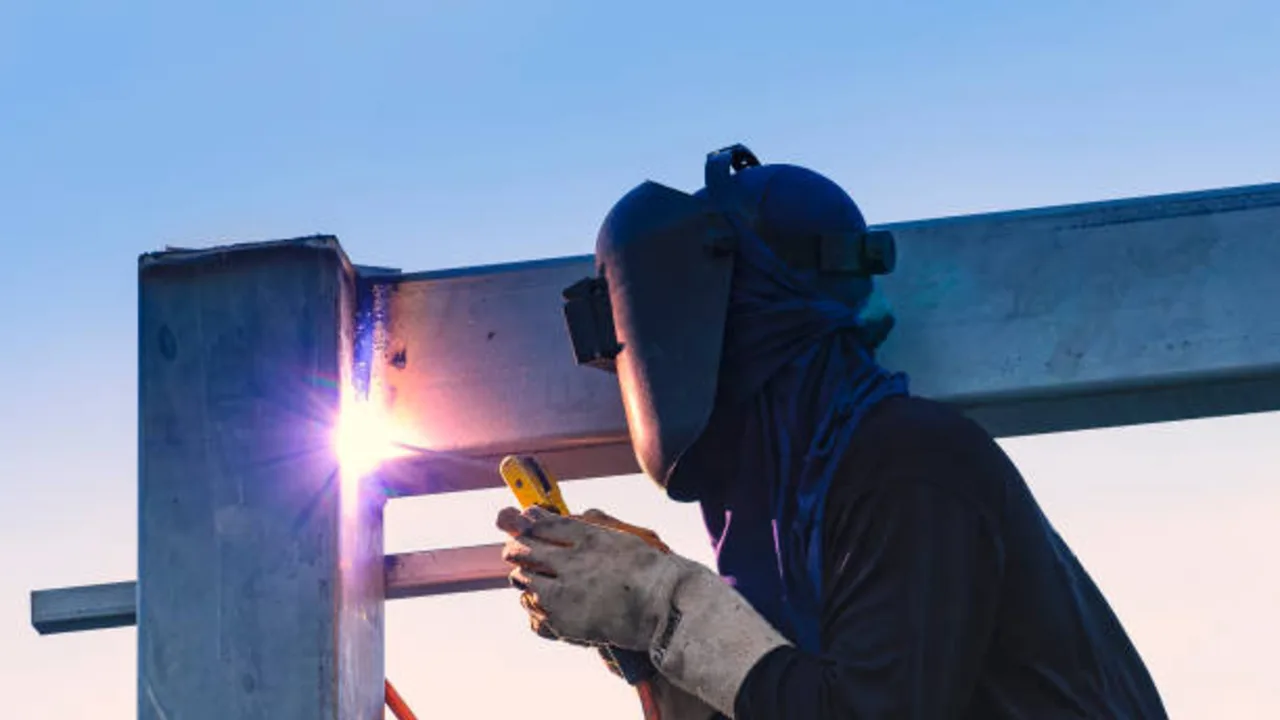
Fabrication tolerances are commonly classified into several technical categories, each affecting different aspects of structural performance:
- Length, width, and thickness of steel members
These tolerances control overall member dimensions. Excessive deviation can alter span lengths, affect bearing conditions, or change load distribution within the structure. - Straightness, flatness, and squareness
These geometric tolerances govern how true a member is to its intended shape. Poor straightness or flatness may introduce unintended bending stresses, while lack of squareness can complicate fit-up at connections. - Hole size, location, and edge distance
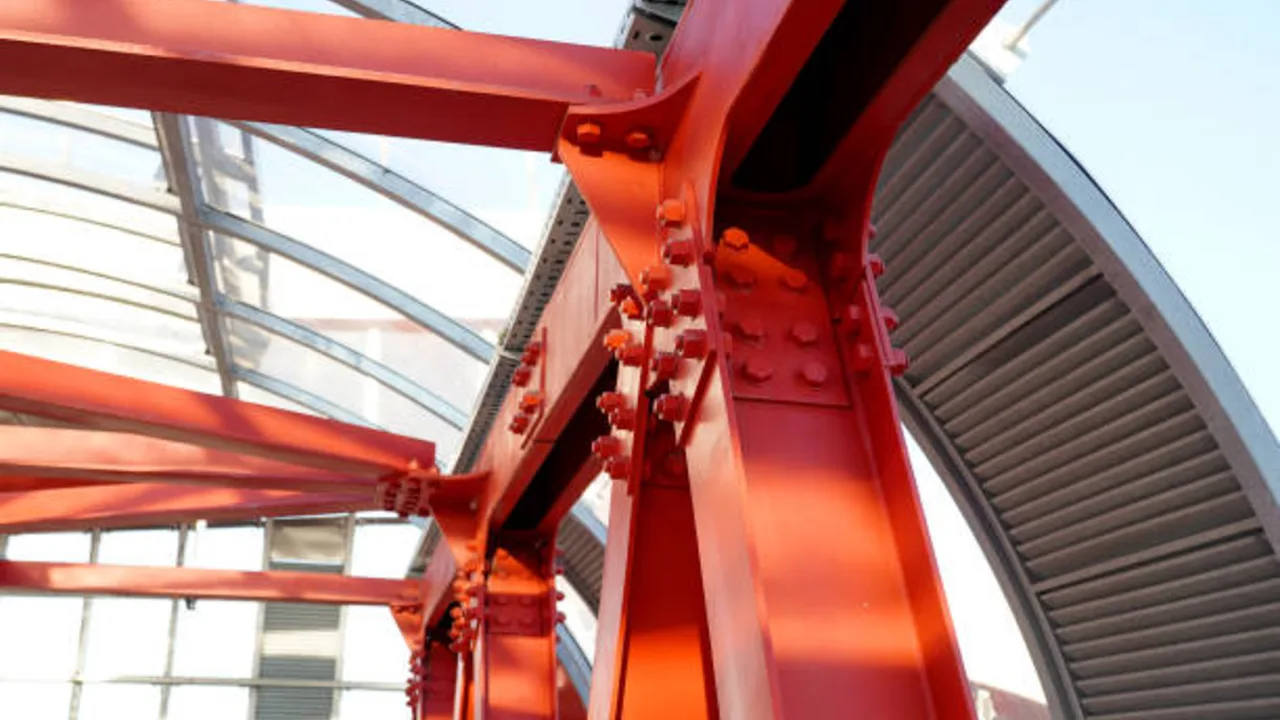
Connection performance is highly sensitive to hole tolerances. Misaligned or oversized holes can reduce bolt effectiveness, increase slip, or lead to uneven force transfer between connected members. - Weld size, penetration, and distortion
Welding tolerances control both strength and geometry. Inadequate weld size or penetration compromises load capacity, while excessive distortion can pull members out of alignment and affect downstream fit-up.
Tolerances as a Link Between Design and Construction
Fabrication tolerances act as a bridge between theoretical design and physical construction. Structural engineers design based on idealized geometry, but fabricators and erectors work with real materials under real conditions. Tolerances ensure that this transition from design intent to built reality remains controlled and predictable.
When tolerances are clearly defined, communicated, and respected, they allow:
- Smooth site erection without forced adjustments
- Reliable load paths consistent with design assumptions
- Reduced need for on-site rework or corrective measures
Conversely, poorly specified or poorly controlled tolerances can create misalignment, connection issues, and long-term structural risks.
Balancing Manufacturability and Safety
Ultimately, steel fabrication tolerances are defined through industry standards and technical guidance to strike a balance between:
- Manufacturability — what can be realistically achieved in a fabrication shop
- Constructability — what can be efficiently assembled on site
- Structural safety — what ensures the structure performs reliably over its service life
When properly applied, tolerances do not weaken a structure; instead, they enable safe, efficient, and repeatable steel construction.
Why Fabrication Tolerances Matter for Structural Safety
Even small dimensional deviations can significantly affect how loads are transferred through a steel structure. Poor control of steel fabrication tolerances can lead to cumulative errors during erection, increasing stress concentrations and reducing structural reliability.
Load Path Disruption
Structural safety depends on a clear and predictable load path. Misaligned columns, beams, or connection plates can cause unintended eccentric loading, increasing bending moments and shear forces beyond design assumptions.
Connection Performance
Bolted and welded connections are particularly sensitive to dimensional accuracy. Improper hole alignment or excessive fit-up gaps may:
- Prevent full bolt engagement
- Cause uneven force distribution
- Reduce fatigue resistance
Over time, these issues can accelerate connection failure under cyclic or dynamic loads.
Dimensional Accuracy and Fit-Up in Steel Structures
Dimensional accuracy refers to how closely fabricated components match their intended dimensions, while fit-up describes how well components align during assembly. These two factors are closely linked and directly influence erection quality.
Impact on Site Installation
Poor dimensional accuracy often results in difficult or forced fit-up on site. Common consequences include:
- Excessive shimming or slotting of bolt holes
- On-site flame cutting or rework
- Increased erection time and labor cost
From a safety perspective, site modifications introduce uncontrolled variables that were not considered during design.
Cumulative Tolerance Effects
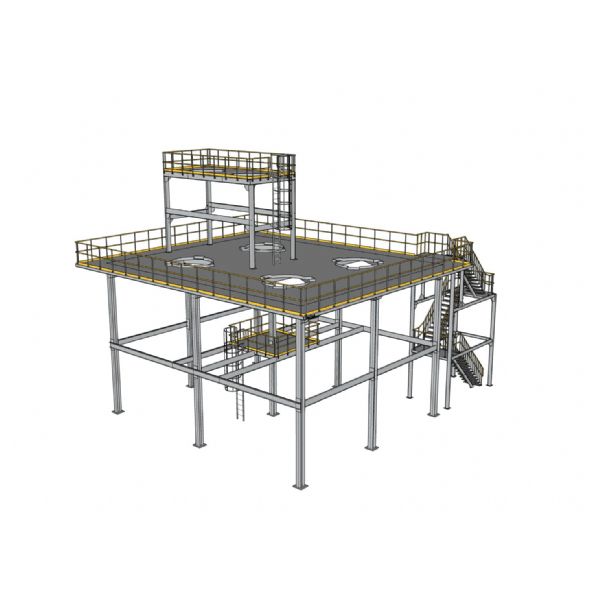
Tolerance issues rarely occur in isolation. Small deviations across multiple members can accumulate, resulting in significant global misalignment at higher elevations or longer spans. This cumulative effect is especially critical in multi-level platforms, mezzanines, and industrial structures.
Fabrication Tolerances vs Design Assumptions
Structural design calculations typically assume ideal geometry. When fabrication tolerances exceed acceptable limits, the real structure may behave differently than predicted. Potential risks include:
- Unexpected secondary stresses
- Reduced buckling resistance
- Lower fatigue life under repeated loading
This mismatch between design assumptions and fabricated reality highlights why coordination between designers and fabricators is essential.
Standards and Guidance for Fabrication Tolerances
Industry standards provide clear guidance on acceptable tolerance ranges to protect structural safety. One widely referenced document is published by the British construction steel industry, which outlines practical limits and inspection considerations for fabricated steelwork.
For a detailed technical reference, see the guidance published by the British Constructional Steelwork Association (BCSA), which explains how fabrication tolerances influence erection quality and structural performance.
Best Practices to Control Steel Fabrication Tolerances
Maintaining safe and consistent steel fabrication tolerances requires a systematic approach across design, fabrication, and erection stages.
Design Coordination
- Define realistic tolerance limits during design
- Account for tolerances in connection detailing
- Specify critical dimensions clearly on drawings
Fabrication Quality Control
- Use calibrated measuring tools and fixtures
- Implement dimensional inspections at key stages
- Control welding sequence to minimize distortion
Erection and Verification
- Conduct pre-erection fit-up checks
- Monitor cumulative tolerances during installation
- Document deviations and corrective actions
Conclusion: Tolerances as a Safety-Critical Factor
Steel fabrication tolerances are not merely a manufacturing concern—they are a fundamental structural safety issue. Proper control of dimensional accuracy and fit-up ensures that the fabricated structure behaves as intended by the designer, with predictable load paths and reliable connections.
By aligning design assumptions with fabrication reality and following established standards, project teams can significantly reduce risk, avoid costly rework, and deliver steel structures that perform safely throughout their service life.