Industrial Requirements for Factory Buildings
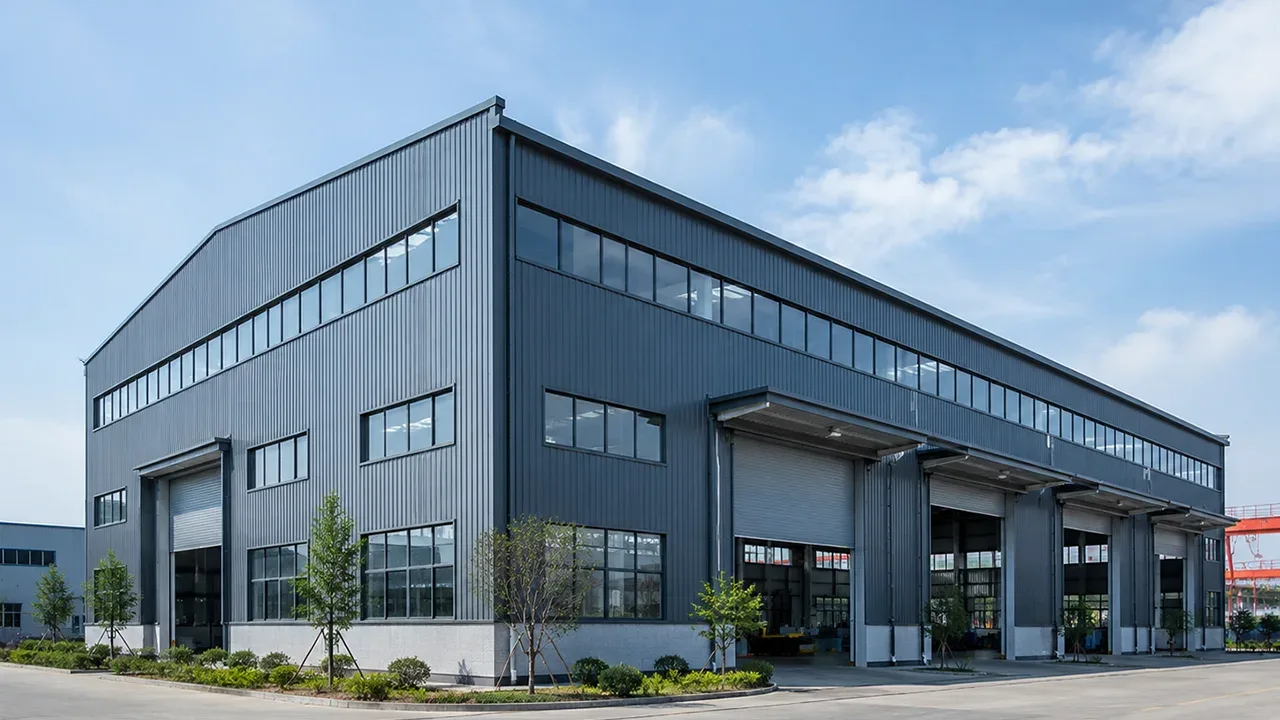
Factory buildings must support continuous industrial activity while maintaining structural reliability and operational flexibility. A properly designed steel structure factory building helps optimize workflow efficiency and equipment integration.
Large Production Areas
Industrial production often requires wide open spaces with minimal internal obstructions. Steel framing systems can create large-span layouts that improve production line organization and material movement.
These open layouts also simplify future equipment upgrades and operational adjustments.
Heavy Equipment Support
Many factories operate heavy machinery and overhead crane systems that require reinforced structural support. Steel systems are capable of accommodating:
- Overhead crane beams
- Heavy production machinery
- Industrial storage systems
- High live-load requirements
Proper engineering analysis ensures that structural performance remains stable under demanding industrial conditions.
Workflow Optimization
Factory efficiency depends heavily on material flow and production organization. Steel structures allow engineers to design layouts that improve logistics, reduce bottlenecks, and support smoother manufacturing operations.
Common Types of Steel Structure Factory Buildings
Manufacturing Factories
Manufacturing facilities use steel structures to support large production equipment, assembly areas, and industrial storage zones. The flexibility of steel framing allows efficient integration of different manufacturing processes.
Assembly Plants
Assembly plants often require organized production lines with consistent workflow movement. A steel structure factory building can be configured to support automated systems, conveyor layouts, and scalable production expansion.
Machinery Workshops
Industrial workshops handling equipment fabrication or repair benefit from the durability and open-span capability of steel structures.
These buildings can support crane systems and heavy operational loads while maintaining accessible workspaces.
Industrial Processing Facilities
Processing facilities may involve specialized environmental conditions such as heat, ventilation, or chemical exposure. Steel structures can be engineered to meet these operational requirements.
Logistics-Integrated Factory Buildings
Some industrial projects combine manufacturing and warehousing functions within one facility. Steel systems support flexible layouts that integrate production, storage, and logistics operations efficiently.
Structural Systems Used in Factory Buildings
Portal Frame Systems
Portal frame structures are widely used for industrial factory buildings because they provide efficient large-span support with relatively lightweight structural systems.
These systems are suitable for a wide range of industrial applications.
Heavy Steel Structure Systems
Heavy steel systems are commonly used for factories requiring high load-bearing capacity, crane support, or large industrial equipment installations.
Multi-Span Industrial Layouts
Multi-span configurations allow factories to separate production zones, storage areas, and logistics operations within the same structure.
| Structural System | Main Advantage | Typical Use |
|---|---|---|
| Portal Frame | Large open spans | General factories |
| Heavy Steel Structure | High load capacity | Heavy industry |
| Multi-Span Layout | Operational zoning | Integrated facilities |
Factory Environment Performance Considerations
Ventilation and Heat Management
Industrial operations often generate heat and require controlled ventilation systems. Steel factory buildings can integrate ventilation openings, roof systems, and airflow management solutions.
Structural Durability in Industrial Environments
Factory buildings may be exposed to dust, moisture, vibration, and industrial chemicals. Protective coatings and engineered structural systems help improve durability and long-term performance.
Expansion Capability for Future Production
Industrial facilities frequently expand as production demand increases. Steel structures simplify future building extensions and equipment upgrades.
Maintenance Accessibility
Industrial facilities require efficient maintenance access for equipment, utilities, and structural systems. Steel layouts can improve service accessibility while minimizing operational interruptions.
Fabrication and Construction Workflow
Engineering and Production Planning
The project process begins with engineering analysis, production planning, and operational layout coordination.
- Structural engineering design
- Production workflow planning
- Equipment load analysis
- Fabrication scheduling
Precision Steel Fabrication
Structural steel components are manufactured using advanced fabrication technologies including cutting, welding, drilling, and automated processing systems.
Precision production improves installation efficiency and structural consistency.
Transportation and Site Assembly
Steel components are transported according to installation sequencing to support smoother project coordination.
Installation Coordination with Industrial Equipment
Factory construction often requires coordination between structural installation teams and industrial equipment suppliers.
As an experienced industrial structure provider, XTD Steel Structure supports integrated project execution for various manufacturing facilities worldwide.
Why Steel Structures Improve Factory Efficiency
Industrial businesses prioritize operational efficiency, construction speed, and long-term scalability. Steel systems support these objectives through flexible and durable structural solutions.
- Faster construction schedules
- Reduced production downtime
- Flexible production layouts
- Simplified future expansion
- Long service life
- Efficient industrial space utilization
Well-designed steel factory buildings can improve both operational efficiency and long-term facility adaptability.
Choosing a Steel Structure Factory Building Partner
Industrial projects require accurate engineering, reliable fabrication quality, and coordinated installation management. Choosing a qualified steel structure partner helps reduce project risks and improve construction efficiency.
Manufacturing capability, industrial experience, and global logistics support all play important roles in successful factory building execution.
Frequently Asked Questions
Why are steel structures widely used for factories?
Steel structures provide open layouts, high strength, and faster construction for industrial facilities.
Can factory buildings support overhead cranes?
Yes. Steel systems can be engineered for overhead crane operations and heavy industrial equipment.
Are steel factory buildings expandable?
Yes. Steel structures are highly adaptable for future factory expansion projects.
How long does factory construction take?
Construction timelines vary by project size, but steel systems generally reduce overall project duration.
Build Efficient Industrial Facilities with Steel Structures
A properly engineered steel structure factory building supports modern manufacturing through operational flexibility, structural durability, and scalable industrial design. Steel systems continue to play a major role in improving industrial productivity and factory development worldwide.
Efficient engineering coordination and precision fabrication help ensure that factory projects remain reliable, adaptable, and ready for long-term industrial growth.