Industrial Requirements for Machinery Production Facilities
Heavy Equipment Load Capacity
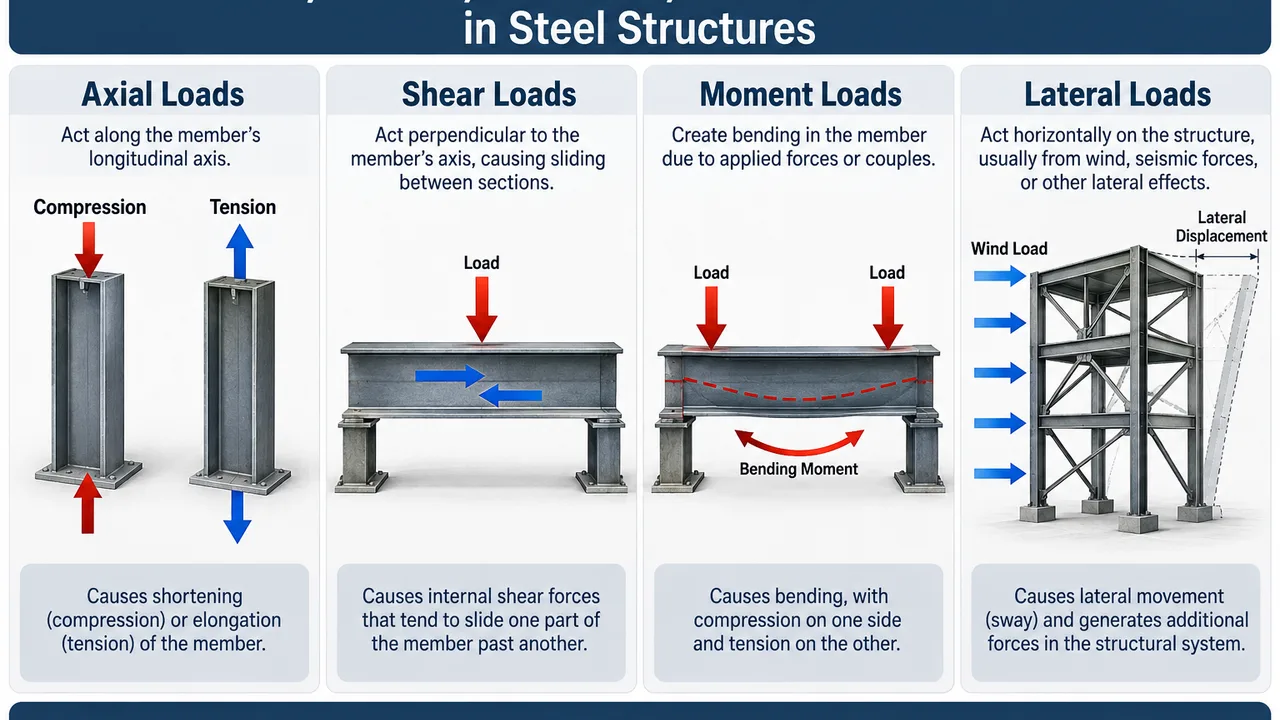
Machinery production often involves large steel parts, machine tools, rotating equipment, and heavy assemblies. The structure must be designed to handle these loads without excessive deflection or vibration. Columns, beams, crane girders, and connection systems must work together as a coordinated industrial frame.
Load planning usually considers:
- Overhead crane capacity
- Machine foundation loads
- Material handling equipment
- Dynamic vibration from machinery
- Storage loads from steel parts and components
Large Production Space Efficiency
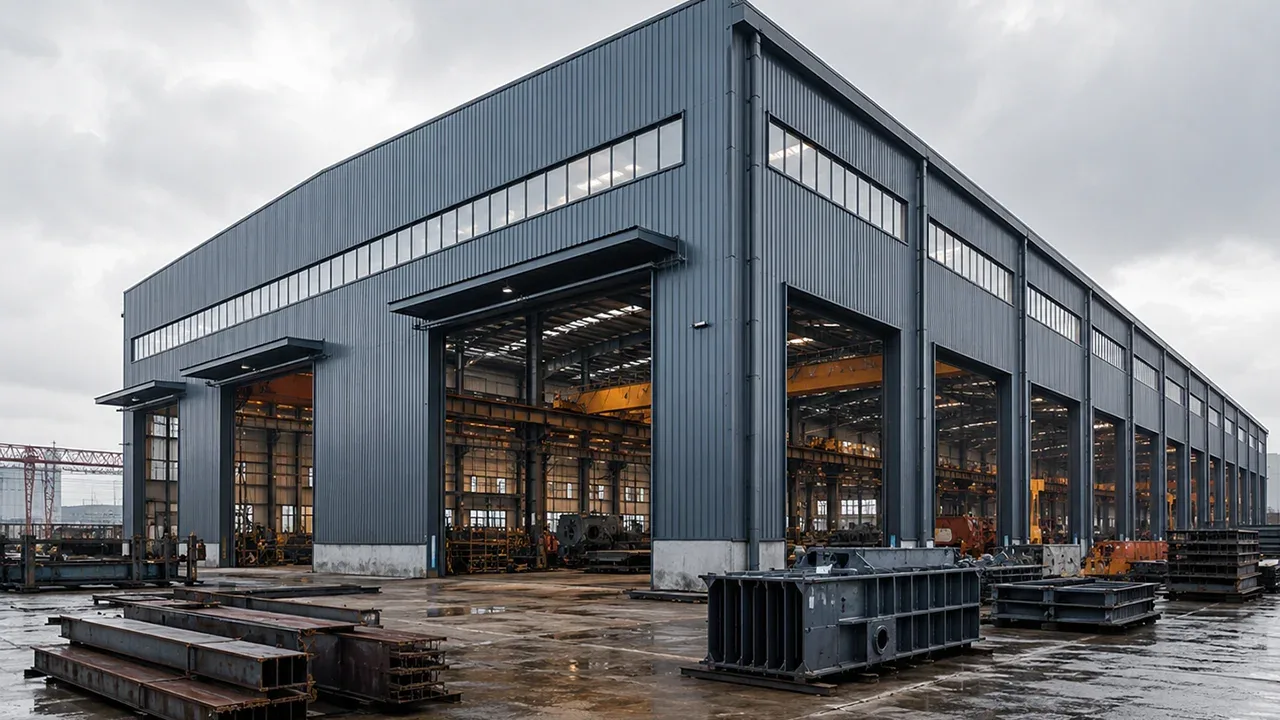
A steel structure factory for machinery production normally requires wide working areas for machining, assembly, testing, and movement of oversized components. Steel framing allows large spans with fewer internal columns, giving manufacturers more freedom to organize production lines.
This is especially important when forklifts, cranes, and transport carts need to move freely between production zones.
Vertical Clearance for Industrial Operations
Machinery factories often need higher clear height than ordinary industrial buildings. Vertical clearance must allow safe lifting, crane hook movement, large equipment assembly, and maintenance access. The roof structure, crane beam elevation, and internal equipment height should be coordinated during the design stage.
Factory Layout Planning for Machinery Manufacturing
The efficiency of a machinery production facility depends heavily on how each zone is arranged. A poorly planned layout can increase handling time, create safety risks, and reduce production output. Steel structures allow the building grid to be planned around the manufacturing process rather than forcing production to adapt to the building.
Raw Material Handling Zones
Raw material areas should be positioned near unloading points and crane coverage zones. Steel plates, profiles, castings, and components need enough storage space and direct access to cutting or machining sections.
Machining and Assembly Areas
Machining zones require stable foundations, adequate lighting, and controlled movement paths. Assembly areas need wider working bays where large machinery parts can be positioned, aligned, and joined safely.
Welding and Fabrication Sections
Welding and fabrication sections require ventilation, fire safety planning, and proper separation from finished product areas. The structure may also need support for extraction systems, service platforms, and equipment rails.
Finished Equipment Storage and Dispatch
Finished machinery and large equipment should be stored in zones with easy truck access. A smooth flow from assembly to inspection, packaging, and loading helps reduce delays before shipment.
Structural Systems Used in Machinery Production Factories
Portal Frame Steel Structures
Portal frame systems are commonly used for industrial factories because they provide economical large-span solutions. They are suitable for machining workshops, assembly halls, and general production buildings.
Crane-Supported Steel Systems
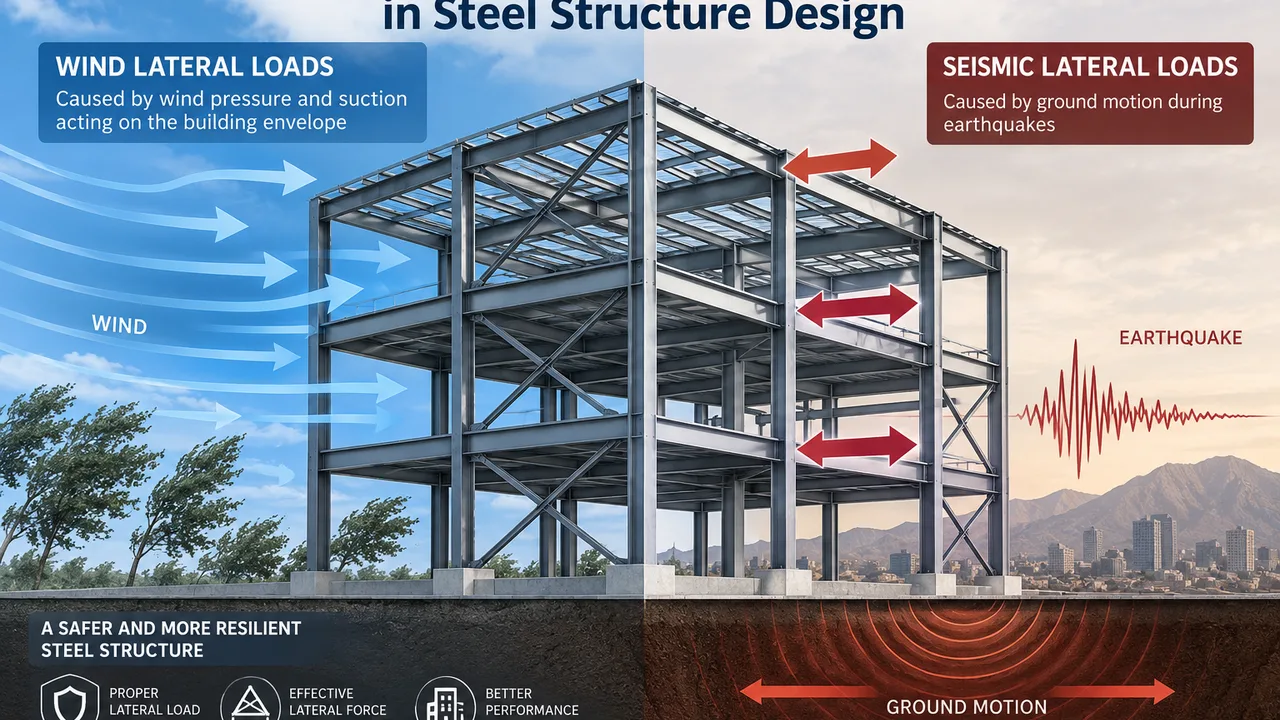
For heavy machinery production, crane-supported structures are often required. These systems include crane beams, reinforced columns, and lateral bracing designed to handle lifting forces and crane movement.
| Structural Feature | Function in Machinery Production |
|---|---|
| Wide-span frame | Creates open production space |
| Crane beam system | Supports lifting and material handling |
| Reinforced columns | Handles vertical and lateral industrial loads |
| Bracing system | Improves overall stability |
Heavy-Duty Industrial Flooring Integration
Although the steel frame forms the main structure, the floor system is equally important. Machinery foundations, anchor bolts, embedded plates, and floor load capacity must be coordinated with the steel structure design.
Environmental and Operational Considerations
Ventilation and Heat Management
Machinery production may generate heat, fumes, and airborne particles. Ventilation planning should consider welding zones, machining areas, coating sections, and general worker comfort.
Noise and Vibration Control
Heavy equipment can generate vibration and noise during operation. Structural design should account for vibration-sensitive zones, equipment foundations, and separation between production and office areas.
Fire Safety for Industrial Equipment
Fire safety planning is essential in machinery factories, especially where welding, cutting, painting, or electrical equipment is used. Fire-resistant coatings, compartment planning, and safe evacuation routes should be integrated into the building design.
Maintenance Accessibility
A practical factory design should allow maintenance teams to access cranes, roof systems, ventilation equipment, and production utilities. This improves long-term operational reliability.
Fabrication and Construction Process
Precision Steel Component Manufacturing
Steel components are fabricated according to engineering drawings and project specifications. Cutting, drilling, welding, and surface treatment are completed in controlled production environments to improve dimensional accuracy.
XTD Steel Structure supports industrial projects through integrated design coordination and steel fabrication services for heavy-duty factory buildings.
Factory Pre-Assembly Coordination
For complex industrial buildings, pre-assembly checks can help reduce installation errors. Connection points, crane beam alignment, and key structural members may be reviewed before shipment.
On-Site Industrial Installation
- Foundation and anchor bolt inspection
- Column and beam erection
- Crane beam installation
- Roof and wall system assembly
- Final alignment and structural inspection
Why Steel Structures Are Effective for Machinery Factories
Steel construction fits machinery production because it supports the practical realities of heavy industrial work. The structure can be strong, expandable, and efficient without limiting the production process.
- High load-bearing capacity for industrial operations
- Compatibility with overhead crane systems
- Large clear spans for machinery assembly
- Faster construction compared with many traditional systems
- Future expansion with lower disruption
- Durable performance under demanding factory conditions
The best machinery factory structure is not simply strong; it is planned around production flow.
Selecting an Industrial Steel Structure Manufacturer
Choosing the right manufacturer is important because machinery production buildings require more than standard warehouse framing. The supplier must understand crane loads, heavy-duty fabrication, industrial workflow, logistics, and installation sequencing.
Key capabilities to evaluate include engineering coordination, steel fabrication precision, industrial project experience, and the ability to support custom production requirements. For machinery manufacturers, a reliable steel structure partner can help reduce construction risk and improve long-term factory performance.
Common Questions About Machinery Production Factories
Can steel factories support heavy machinery?
Yes. Steel factories can be designed with reinforced frames, heavy-duty foundations, and crane systems to support machinery production.
Are overhead crane systems compatible with steel structures?
Yes. Crane beams and supporting columns can be integrated directly into the steel structure design.
How large can a machinery production factory be?
The size depends on production needs, site conditions, crane requirements, and structural design. Steel systems can support large industrial spans and expandable layouts.
Can the factory be expanded later?
Yes. Steel structure factories can often be planned with future extension zones to support production growth.
Build Efficient Machinery Production Facilities
A well-designed steel structure factory for machinery production provides the structural strength, workflow flexibility, and long-term durability required for heavy manufacturing. By coordinating crane systems, production zones, storage areas, and installation planning from the beginning, the factory can support smoother operations and future expansion.
For machinery manufacturers, steel construction offers a practical way to build industrial facilities that are strong, adaptable, and ready for demanding production environments.