Industrial Requirements in Textile Factory Construction
High-Volume Production Environments
Textile factories usually operate with continuous production lines and high equipment density. The building must provide enough space for machinery placement, maintenance access, worker movement, and material flow.
Steel structures are suitable for this requirement because they can create wide working areas with fewer internal columns. This allows production managers to plan equipment layouts more freely and reduce unnecessary movement between workstations.
Ventilation and Climate Control
Textile operations often involve heat, humidity, dust, and airflow requirements. A factory building must support proper ventilation and climate management to maintain production quality and worker comfort.
- Roof ventilation systems can help release heat from production areas.
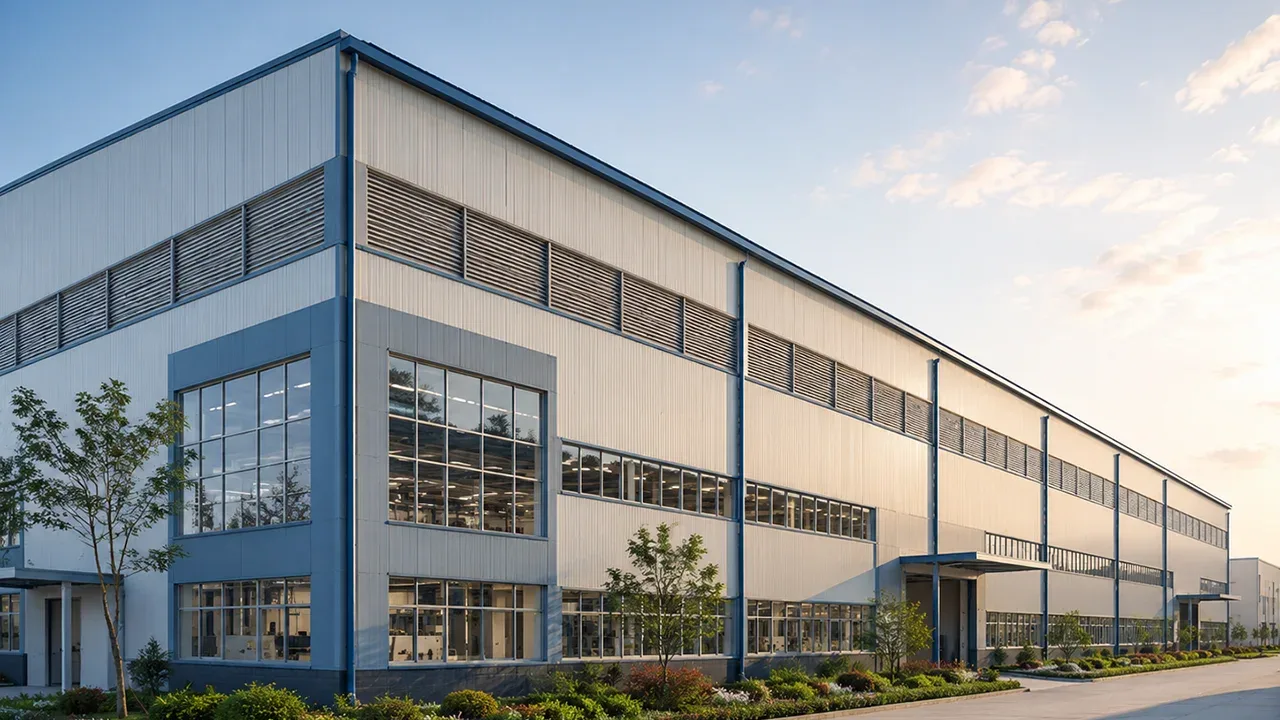
- Wall ventilation and louvers can improve air circulation.
- Insulated panels can help manage indoor temperature.
- Dust control systems can be integrated with the building layout.
For processes such as dyeing, finishing, or fabric treatment, environmental control becomes especially important.
Material Storage and Logistics Flow
Textile factories handle many types of materials, including yarn, fabric rolls, chemicals, packaging materials, and finished products. The building layout must separate production flow from storage and shipping zones to avoid congestion.
A well-planned steel structure factory for textile industry can include dedicated areas for raw materials, production, inspection, packing, and outbound logistics.
Why Steel Structures Fit Textile Manufacturing
Large Clear-Span Workspace
Steel framing systems allow large clear-span spaces that are useful for textile production lines. With fewer internal columns, equipment can be arranged according to workflow instead of being limited by structural obstacles.
Flexible Interior Equipment Layout
Textile production requirements may change over time as machinery is upgraded or production capacity increases. Steel structures allow easier interior adjustment compared with more rigid building systems.
Faster Expansion for Growing Production
Many textile manufacturers expand in stages. Steel buildings can be designed with future expansion in mind, allowing new bays, additional storage areas, or connected workshops to be added more efficiently.
Integration with Mezzanine and Utility Systems
Textile factories may require mezzanine platforms, utility corridors, pipe racks, electrical systems, compressed air lines, and maintenance platforms. Steel structures can support these additional systems with proper engineering coordination.
Common Areas Inside a Textile Steel Structure Factory
Fabric Production Area
The production area is the core of the textile factory. It must allow stable machine operation, safe worker access, and efficient material transfer. Steel structures support open layouts that help organize spinning, weaving, knitting, or fabric processing equipment.
Dyeing and Finishing Section
Dyeing and finishing areas often require stronger environmental planning because they may involve water, steam, chemicals, humidity, and temperature control. Surface protection and corrosion-resistant design should be considered in these zones.
Warehouse and Shipping Zone
Storage and shipping areas should be connected logically to production and packing sections. A steel factory building can be planned with loading docks, wide doors, forklift routes, and high storage areas to improve logistics efficiency.
Administrative and Worker Facilities
Textile factories also need offices, quality inspection rooms, changing areas, rest areas, and supporting spaces for workers. These areas can be integrated into the same building or connected as attached service blocks.
Structural and Environmental Considerations
Roof Ventilation Systems
Roof ventilation is important for textile factories with high internal heat load. Ridge vents, roof exhaust systems, and mechanical ventilation can be coordinated with the steel roof system.
Lighting Efficiency for Production
Good lighting helps improve inspection accuracy and production safety. Steel factory buildings can integrate skylights, translucent panels, LED lighting systems, and high-bay fixtures depending on production requirements.
Moisture and Corrosion Protection
Some textile processes create humid or chemically active environments. In these areas, steel components should be protected with appropriate coatings, galvanizing, or corrosion-resistant surface treatments.
Structural Durability Under Continuous Operation
Textile factories often operate for long hours. The structure must remain stable under continuous vibration, equipment loads, temperature changes, and daily logistics activity. Engineering design should account for both building loads and operational requirements.
Manufacturing and Construction Workflow
Engineering and Factory Planning
The process begins with understanding production flow, equipment dimensions, building span requirements, storage needs, and expansion plans. Engineering coordination at this stage helps avoid conflicts between structure and production systems.
Steel Fabrication and Surface Treatment
After design approval, steel components are fabricated in the factory. This includes cutting, welding, drilling, assembly, and surface treatment. For textile projects, surface protection should be selected according to the production environment.
Transportation and Installation
Prefabricated components are packed and delivered to the project site. Installation is planned according to erection sequence, crane access, site safety, and construction schedule.
Final Integration with Production Equipment
Once the main structure is installed, the building can be coordinated with flooring, ventilation, utilities, insulation, electrical systems, loading docks, and production equipment installation.
Benefits for Textile Industry Investors
For textile manufacturers, the building must support production efficiency, not only construction cost savings. Steel structures provide a practical balance between speed, strength, and operational flexibility.
- Faster factory completion and earlier production start
- Large-span space for machinery and workflow planning
- Flexible expansion for future capacity growth
- Better integration with storage and logistics areas
- Durable structure for long-term industrial use
- Adaptable design for different textile processes
A textile factory is easier to operate when the building layout is designed around production flow from the beginning.
Choosing a Steel Structure Partner for Textile Projects
Textile factory projects require more than standard building fabrication. The structural partner must understand industrial workflow, equipment coordination, ventilation requirements, and project schedule control.
For international textile manufacturing projects, export experience and fabrication management are also important. Components must be produced accurately, packed properly, and delivered according to the construction sequence.
XTD Steel Structure provides steel structure solutions for industrial buildings with integrated support from engineering design to fabrication and project coordination. For textile factory projects, this helps align the building system with production, storage, and operational requirements.
Frequently Asked Questions
Why are steel structures suitable for textile factories?
Steel structures provide large interior spaces, fast construction, flexible layouts, and strong durability, making them suitable for textile production environments.
Can ventilation systems be integrated into the factory design?
Yes. Roof ventilation, wall louvers, mechanical exhaust systems, and insulation can be coordinated with the steel structure design.
Is future expansion possible?
Yes. A steel factory building can be planned for phased expansion, additional bays, or connected production and storage areas.
Build Efficient Textile Manufacturing Facilities
A well-designed steel structure factory for textile industry supports production efficiency, material movement, ventilation, and future growth. With proper engineering planning, steel construction can help textile manufacturers build durable and scalable facilities for long-term operation.
For textile companies planning new production capacity or factory expansion, steel structure systems offer a practical path toward faster construction and more adaptable industrial space.