
Commercial and industrial projects in Curitiba often need to combine large usable areas, controlled schedules, layout flexibility, and the possibility of future expansion. In this context, a steel structure in Curitiba provides a solution that allows engineering, industrialized fabrication, and planned erection to be integrated into a single construction system.
The use of a steel building structure in Curitiba can serve applications ranging from industrial buildings and logistics centers to commercial buildings, workshops, production facilities, and special structures. Instead of carrying out a large portion of the structural work directly on site, the main components can be detailed and fabricated in an industrial environment before being transported for erection.
However, to take advantage of these characteristics, the project must consider much more than simply the quantity of steel. Structural geometry, loads, connections, surface protection, logistics, and erection sequence should be coordinated from the early stages. This guide presents the main points that buyers, contractors, and developers should evaluate when planning steel structures in Curitiba.
Why Is Steel Structure in Curitiba Used for Commercial and Industrial Projects?
The selection of the structural system depends on the specific characteristics of each project. For projects requiring large spans, open interior areas, or well-defined erection schedules, steel can offer important advantages.
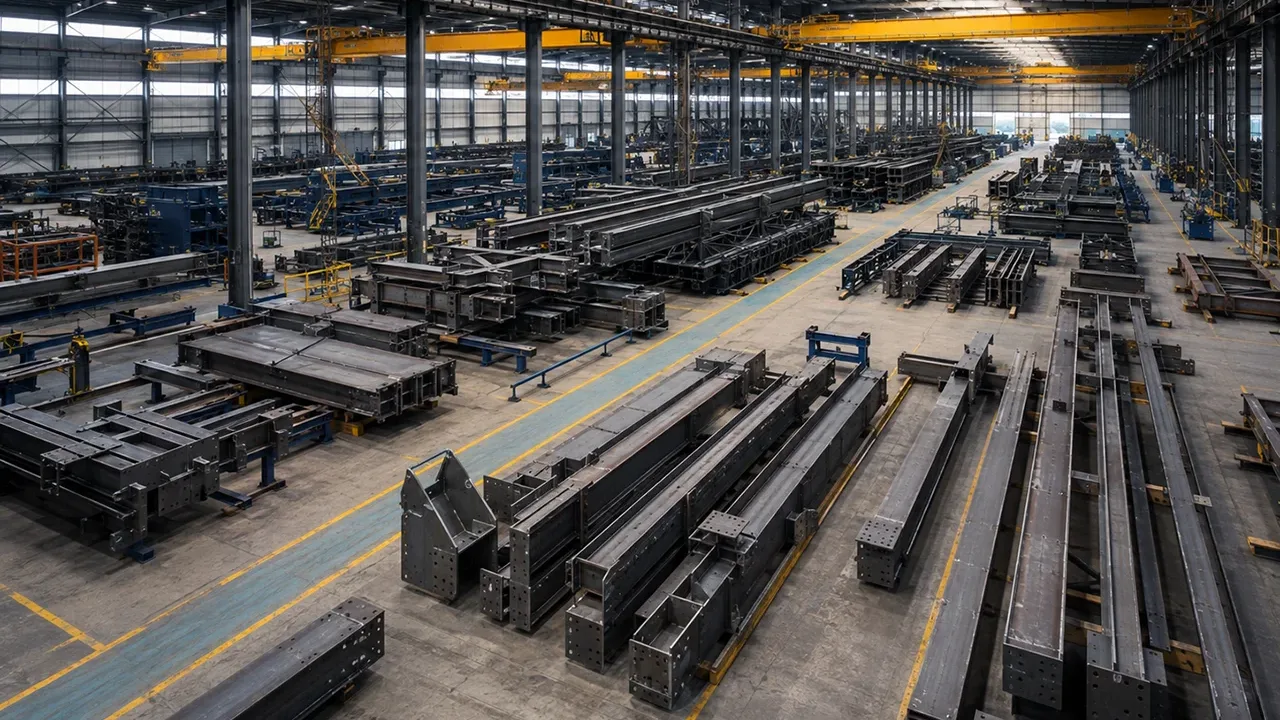
A large portion of the components of a steel structure in Curitiba can be produced in a factory while other activities are being prepared at the construction site. Columns, beams, trusses, bracing, and connection plates are fabricated according to approved drawings, identified, and subsequently shipped for erection.
Among the main reasons for considering this system are:
- the possibility of industrialized off-site fabrication;
- the ability to create large spans and open interior areas;
- reduced self-weight in certain structural configurations;
- flexibility for different architectural and industrial layouts;
- the possibility of future expansion when planned in the project;
- dimensional control during component fabrication;
- organized erection according to a predefined sequence.
These characteristics are especially relevant for projects where the structure must adapt to industrial processes, logistics circulation, or future changes in building use.
Main Applications of Steel Structure in Curitiba
There is no single configuration suitable for every project. The applications of a steel structure in Curitiba vary according to the building’s purpose, required spans, operational loads, and architectural conditions.
Industrial Buildings and Production Centers
Factories, workshops, processing facilities, and production centers need structures capable of accommodating equipment, production lines, internal circulation, and, in some cases, overhead cranes. Column positions should be coordinated with these operations to avoid interference with the workflow.
In an industrial project, engineering can also consider future expansions. Ends prepared for expansion, rational structural grids, and suitable connection systems can facilitate later modifications, provided this possibility is incorporated into the original structural design.
Logistics Centers and Warehouses
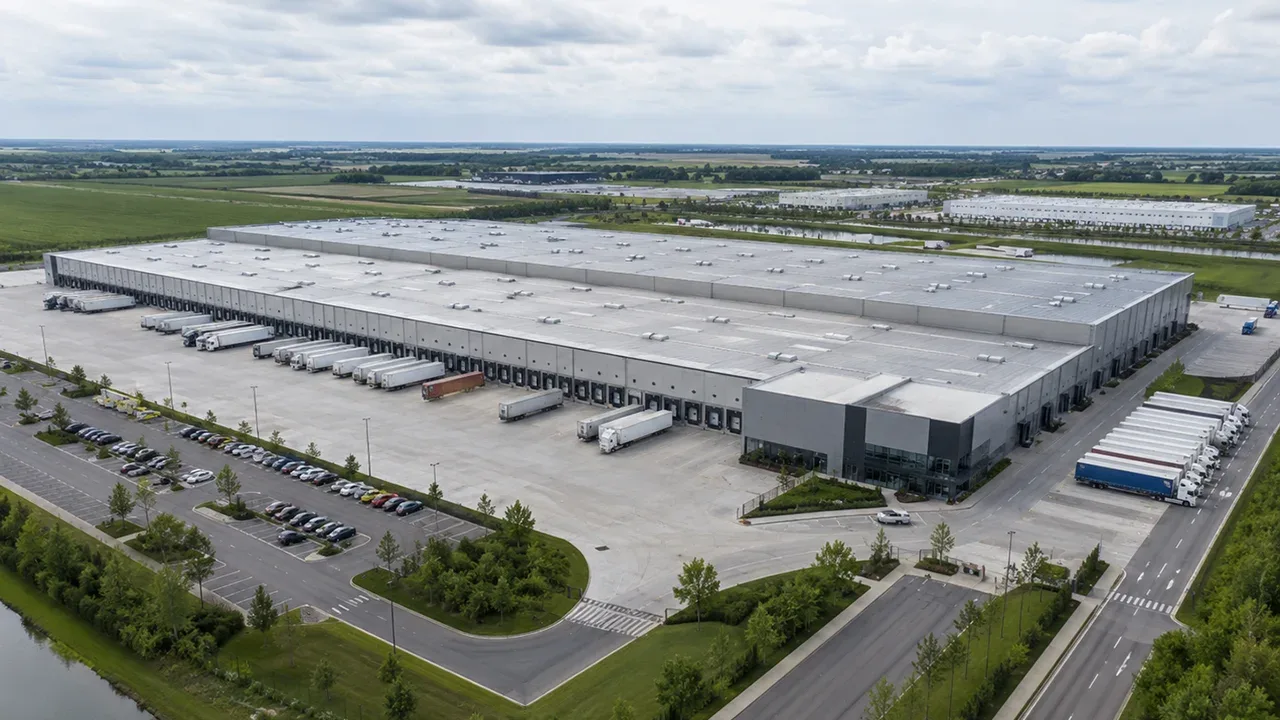
Distribution centers and warehouses normally require large interior areas, adequate clear heights, corridors for the movement of goods, and compatibility with storage systems.
In these cases, a steel building structure in Curitiba can be configured considering the location of loading docks, forklift circulation, racking systems, receiving and shipping areas, and future changes in logistics operations.
Commercial Buildings
Steel can also be used in supermarkets, showrooms, offices, commercial centers, and other facilities where the architecture requires flexible spaces. The structural system should be coordinated with façades, roofing, electrical systems, plumbing, HVAC, and other building systems.
This early coordination reduces interference during construction and allows the structure to be developed as an integrated part of the architectural project.
Infrastructure and Special Structures
Steel structures in Curitiba are not limited to conventional buildings. Steel systems can also be used for roofs, platforms, industrial corridors, walkways, terminals, support structures, and projects with special geometries.
In these cases, the structural solution should be developed specifically for the expected loads, dimensions, and conditions of use.
Steel Building Structure in Curitiba: How Does the Project Process Work?
A well-coordinated project begins before fabrication. The more complete the information provided during the initial stages, the easier it is to develop a solution compatible with architectural, operational, and construction requirements.
Project Requirements
The first stage is to understand how the building will be used. Basic information such as length, width, and height is important, but it is not sufficient to define the entire system.
The requirements assessment normally includes:
- overall building dimensions;
- intended use of the building;
- required clear spans;
- interior clear height;
- permanent and variable loads;
- installed equipment;
- overhead cranes, when applicable;
- future expansion requirements;
- architectural requirements;
- site-specific conditions.
This information forms the basis for developing the steel structure in Curitiba.
Structural Design and Engineering
With the requirements defined, the engineering team can develop the structural model and analyze how loads will be transferred between the roof, beams, columns, bracing, connections, and foundations.
The design should consider the standards applicable to the project, as well as the specific conditions of the location and building use. Wind actions, imposed loads, equipment, and other actions should be evaluated according to the corresponding technical criteria.
This is also the stage when the structure should be coordinated with the architecture and building services. Openings, pipes, ducts, suspended equipment, and other systems can influence the detailing.
Detailing and Fabrication
After project approval, the drawings required for fabrication are prepared. These define dimensions, plates, sections, holes, welds, connections, and component identification.
Fabrication can include processes such as CNC cutting, drilling, assembly, welding, and dimensional inspection. Columns, beams, trusses, bracing, and secondary elements should correspond to the approved drawings to facilitate subsequent erection.
Surface Protection
The specification of surface protection depends on exposure conditions and project requirements. Surface preparation, painting systems, and other coatings can be defined to provide the necessary protection against corrosion.
The selection should not be based solely on appearance. The service environment, moisture exposure, planned maintenance, and expected service life should be considered.
Transportation and Erection
After fabrication, the components are identified and organized for transportation. Planning should consider not only how the pieces fit into the vehicle or container, but also the order in which they will be required on site.
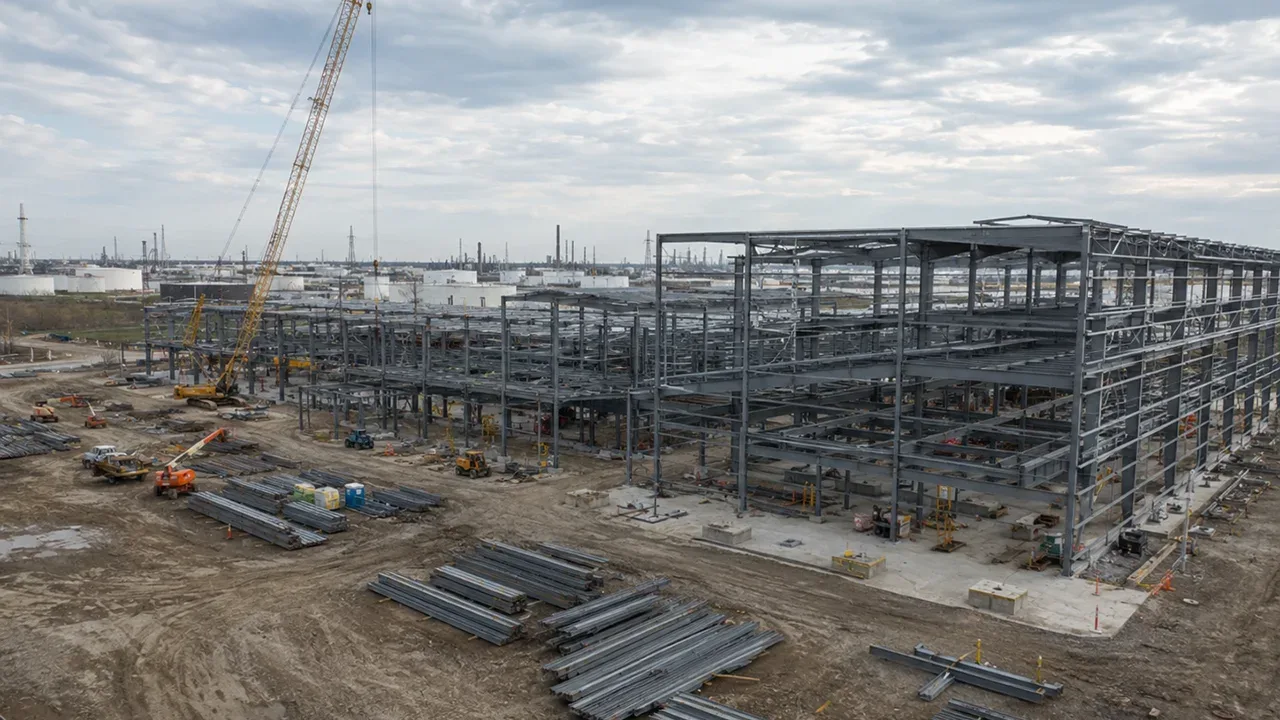
During erection of the steel structure in Curitiba, the lifting sequence, temporary stability, alignment, bolted or welded connections, and final inspection should follow the engineering plan.
How to Choose the Right Structural System
The structural configuration directly influences material consumption, fabrication, transportation, erection, and the interior use of the building. Therefore, choosing the system solely on the basis of the lowest possible weight does not always result in the most efficient solution for the complete project.
Rigid Frames
Rigid frames are widely used in industrial buildings, factories, workshops, warehouses, and certain commercial buildings. Their geometry can provide large interior areas with a relatively simple structural arrangement.
The span, height, roof slope, and spacing between frames should be defined according to the loads and project requirements.
Steel Trusses
Trusses can be used when the project requires larger spans or specific roof configurations. The triangulated geometry allows forces to be distributed through the different truss members.
However, structural depth, fabrication, the number of connections, and transportation should also be included in the evaluation before selecting this solution.
Space Structures
Space structural systems can be used in terminals, sports facilities, exhibition areas, large atriums, and other projects that require large areas to be covered or more complex architectural geometries.
These solutions require detailed coordination between structural analysis, connection fabrication, and erection sequence.
Customized Structural Systems
Projects involving heavy equipment, unusual geometries, large cantilevers, or specific requirements may require customized combinations of frames, trusses, beams, and other elements.
In these cases, the solution should be developed based on the actual needs of the project rather than forcing the project to fit an unsuitable standardized structural system.
Design Factors for Steel Structures in Curitiba
The performance of a steel structure in Curitiba depends on the correct analysis of the actions that will act on the building throughout its service life.
Structural Loads
In addition to the self-weight of the structure, the calculation may need to consider roofing, cladding, equipment, suspended systems, maintenance loads, occupancy, storage, and industrial operations.
In factories, concentrated loads from machinery or overhead cranes can significantly change structural behavior and should be provided during project development.
Wind Actions
Wind is an important consideration in the design of steel structures. Applicable wind actions depend on factors such as location, geometry, height, building dimensions, exposure conditions, and opening characteristics.
These data influence not only the main columns and beams, but also bracing, purlins, girts, connections, and cladding systems.
Rain and Roofing Systems
Roof design should coordinate the structure, slope, gutters, downpipes, and drainage. An inadequate solution may allow water accumulation or overload certain elements.
Therefore, roof engineering should be integrated with the rest of the steel building structure in Curitiba rather than treated as an independent component.
Corrosion Protection
The durability of structural steel in Curitiba depends, among other factors, on exposure conditions and the specified protection system. Dry indoor environments, industrial facilities, and more exposed areas may require different approaches.
In addition to initial protection, the project should consider access for inspection and maintenance when necessary.
Fire Safety
Fire safety requirements depend on occupancy, building characteristics, and applicable regulations. When necessary, specific passive protection systems or other solutions compatible with the project can be used.
Structural Steel in Curitiba: Materials and Quality Control
The quality of the final structure begins with material specifications and traceability. Sections, plates, bolts, welding consumables, and other components should correspond to the requirements defined by the project.
A quality control program for steel structures in Curitiba may include:
- verification of material certificates;
- dimensional control of components;
- inspection of cutting and drilling;
- control of welding processes;
- weld inspections according to applicable requirements;
- verification of connections;
- control of surface preparation and protection;
- fabrication and inspection records.
These controls help verify that the fabricated components correspond to the approved drawings and specifications before they are shipped to the construction site.
Industrialized Fabrication vs. Conventional On-Site Construction
Industrialized fabrication transfers a significant portion of structural work to a controlled environment. This changes how production, quality, and erection are organized.
| Factor | Fabricated Steel Structure | Conventional On-Site Construction |
|---|---|---|
| Production environment | A large portion of the components is produced in a factory | Greater concentration of activities on the construction site |
| Dimensional control | Production based on detailed drawings and industrial equipment | Depends more on conditions and processes carried out on site |
| Weather dependence | Lower during fabrication | May be higher during certain activities |
| On-site labor | Greater focus on erection and connections | A larger volume of processes is carried out on site |
| Waste | Cutting and fabrication can be planned in an industrial environment | Waste management takes place mainly on site |
| Future expansions | Can be planned into the original structural system | Depend on the adopted system and existing conditions |
This does not mean that a steel structure in Curitiba is automatically less expensive or faster for every project. The result, cost, and schedule depend on structural design, project scale, supply chain, fabrication, logistics, and erection planning.
Logistics Planning for Steel Structure Projects in Curitiba
Logistics planning begins during the detailing stage. Components that are too large or heavy may require special transportation solutions, while improper segmentation of components can unnecessarily increase the number of connections carried out on site.
When the structure is fabricated outside Brazil, planning should also consider packaging, loading, documentation, international transportation, customs clearance, road transportation, and temporary storage.
A coordinated process may include:
- defining the fabrication sequence;
- individual marking of components;
- packaging planning;
- loading optimization;
- preparation of the required documentation;
- transportation coordination;
- unloading planning;
- organization of on-site storage;
- coordination of delivery with the erection sequence.
Shipping all components without considering the installation order can create additional handling and make work on site more difficult. For a steel structure in Curitiba, logistics should follow the erection strategy from the beginning.
How Much Does a Steel Structure in Curitiba Cost?
There is no single price applicable to every project. Two buildings with the same floor area may require very different quantities of steel and fabrication processes.
Cost can be influenced by:
- total steel tonnage;
- building spans and height;
- geometric complexity;
- material type and specifications;
- connection complexity;
- amount of welding and processing;
- surface protection system;
- roofing and cladding scope;
- quality control requirements;
- transportation and logistics;
- erection scope;
- project schedule.
For this reason, comparing proposals solely by price per kilogram or square meter can be misleading. It is necessary to confirm exactly which materials, processes, services, and responsibilities are included in each quotation.
How to Reduce Costs Without Compromising Structural Performance
Optimization does not simply mean removing steel. The objective is to develop a solution that uses materials, fabrication, and logistics efficiently without compromising structural requirements.
Some strategies include:
- using rational column grids;
- avoiding unnecessarily complex spans;
- standardizing components where possible;
- optimizing structural weight through engineering;
- increasing component repetition;
- simplifying connections where technically appropriate;
- coordinating architecture and structure early;
- developing fabrication-friendly details;
- considering transportation and erection during design.
A well-optimized steel building structure in Curitiba considers the cost of the complete system. A modification that reduces a few kilograms of steel but significantly increases welding, fabrication, or erection time may not represent a real saving.
How to Choose a Steel Structure Supplier for Curitiba
Supplier selection should consider more than the ability to supply steel. For commercial and industrial projects, engineering, fabrication, quality, documentation, and logistics should work in a coordinated manner.
Before selecting a manufacturer, it is useful to verify:
- engineering and detailing capabilities;
- factory production capacity;
- cutting, drilling, and welding equipment;
- welding procedures and control;
- quality control system;
- project management experience;
- international project experience;
- ability to prepare technical documentation;
- packaging and logistics planning;
- erection support;
- experience with similar projects.
For buyers evaluating international fabrication, understanding a supplier’s capability to serve Steel Structure in Brazil projects helps explain how engineering, fabrication, and delivery can be coordinated for the Brazilian market.
Steel Structure Projects Fabricated in China for Curitiba

International fabrication can be an option for certain projects when there is clear coordination between the project engineering team, the manufacturer, and the team responsible for execution in Brazil. Under this model, structural components are fabricated according to approved drawings, inspected, identified, and prepared for transportation.
XTD Steel Structure can participate in this process by providing steel structure fabrication and engineering support for commercial and industrial projects. For a steel structure in Curitiba project, responsibilities between the parties should be defined before production begins.
Before placing an international order, the buyer should confirm:
- who is responsible for structural design;
- how drawings will be reviewed and approved;
- which material specifications will be used;
- which fabrication requirements must be met;
- which inspections will be required;
- how components will be identified and packaged;
- what the international transportation strategy will be;
- how import coordination will be handled;
- which drawings and documents will be provided for erection.
Clear communication before fabrication reduces later modifications and helps keep production aligned with the actual requirements of the construction site.
Frequently Asked Questions About Steel Structure in Curitiba
Where is steel structure in Curitiba most commonly used?
It can be used in industrial buildings, factories, logistics centers, warehouses, commercial buildings, workshops, roofs, and special structures. The appropriate configuration depends on loads, spans, building use, and architectural requirements.
Are steel structures suitable for industrial buildings?
Yes. Steel systems can be used in buildings with large interior areas, industrial equipment, different heights, and expansion requirements. The project should consider the specific loads and operations of the facility.
Can a steel structure be fabricated overseas for a project in Curitiba?
Yes, provided that design, materials, fabrication, inspection, documentation, transportation, and erection are properly coordinated. It is also important to clearly define which parties are responsible for each stage.
How long does steel structure fabrication take?
The schedule varies according to tonnage, complexity, material availability, production capacity, level of detailing, and inspection requirements. The schedule should be established based on the actual project scope.
Can structural steel be used in commercial buildings?
Yes. Structural steel in Curitiba can be used in various types of commercial buildings, including stores, showrooms, offices, and commercial centers, provided that the system is designed for the specific conditions of the project.
How can steel structures be protected against corrosion?
The solution depends on the environment and expected service life. Proper surface preparation and coating systems specified for the exposure conditions are important parts of the protection strategy.
Can a steel structure be expanded in the future?
Yes, especially when the possibility of expansion is considered during the original design. Connections, structural grids, and building ends can be planned to facilitate future extensions.
What information is needed to request a quotation?
Drawings, dimensions, location, building purpose, loads, equipment requirements, material specifications, roofing and cladding scope, and the desired schedule help the manufacturer prepare a more accurate proposal.
Planning Your Next Steel Structure in Curitiba Project
A steel structure in Curitiba project begins with the correct definition of requirements and continues through engineering, detailing, fabrication, quality control, logistics, and erection. Decisions made during the early stages can directly influence steel consumption, fabrication efficiency, and installation performance.
For commercial and industrial projects, coordination between all these stages is as important as structural design itself. XTD Steel Structure works with steel structure fabrication for different applications and can support projects from technical coordination and production through to preparing components for delivery.
With clear requirements, appropriate engineering, and integrated planning, steel structures in Curitiba can be developed according to the specific needs of factories, logistics centers, warehouses, commercial buildings, and other large-scale projects.