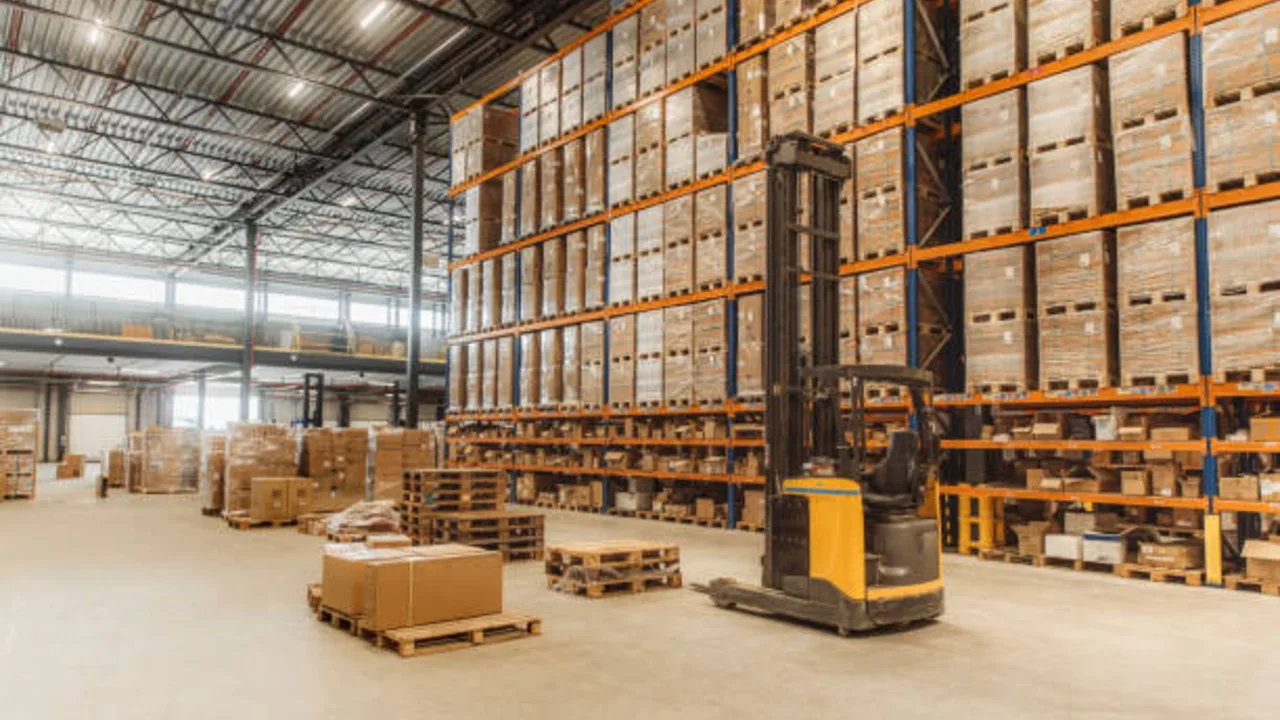
In modern logistics and industrial operations, forklifts are the backbone of material handling. Inside large steel warehouses, forklifts move continuously between receiving docks, storage aisles, picking zones, and shipping areas. Without a well-defined traffic strategy, this constant movement quickly turns into congestion, safety risks, and operational inefficiency. This is why warehouse forklift traffic planning is no longer an optional layout consideration, but a core part of warehouse design and operation.
Steel warehouses, especially large-span and high-bay facilities, offer exceptional flexibility in internal layout. However, that flexibility can become a disadvantage if forklift routes, aisle widths, and traffic flows are not carefully planned. Poor traffic planning leads to frequent near-misses, damaged racking, reduced picking speed, and higher long-term operating costs. Effective warehouse forklift traffic planning ensures that forklifts move smoothly, safely, and predictably throughout the facility, even as volume increases.
This article explains how forklift traffic should be planned inside steel warehouses, focusing on layout logic, aisle width considerations, safety zoning, and the structural advantages of steel buildings. The goal is to help warehouse owners, operators, and designers create facilities that remain efficient and safe over decades of use.
Why Forklift Traffic Planning Matters in Steel Warehouses
Forklift traffic planning directly affects three critical warehouse performance indicators: safety, productivity, and cost. In high-throughput warehouses, forklifts may operate almost continuously, often in close proximity to workers, storage systems, and loading docks. Without defined routes and movement rules, forklifts compete for space, causing bottlenecks and increasing accident risk.
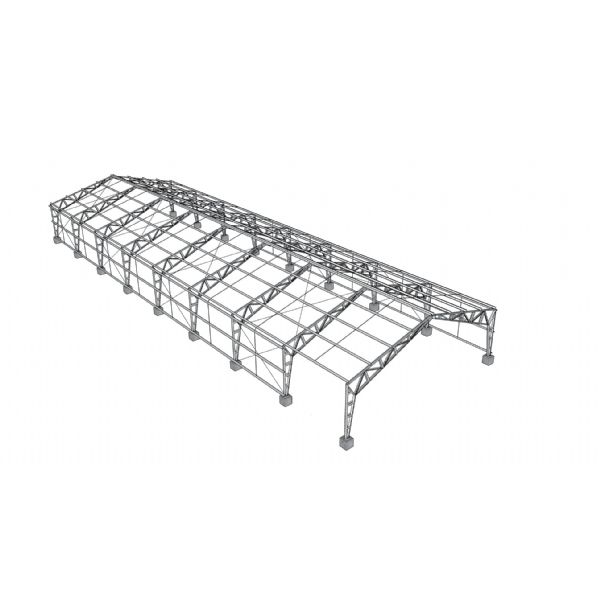
In a steel structure warehouse, the absence of internal columns and the availability of large clear spans create opportunities for efficient traffic flow. Wide open spaces allow designers to align aisles logically, create straight travel paths, and separate inbound and outbound movements. However, if traffic planning is treated as an afterthought, the same open space can result in random movement patterns that reduce overall efficiency.
From a safety perspective, uncontrolled warehouse forklift traffic is one of the leading causes of workplace incidents in logistics facilities. Collisions with pedestrians, racking systems, or other forklifts often occur at intersections, blind corners, and narrow aisles. Traffic planning introduces structure by defining routes, directions, and interaction points, significantly reducing these risks.
Operationally, traffic planning improves travel efficiency. Forklifts spend less time waiting, reversing, or maneuvering in tight spaces. Over time, this translates into faster order fulfillment, lower equipment wear, and reduced labor fatigue. From a cost standpoint, well-planned traffic lowers maintenance expenses and extends the service life of both forklifts and warehouse infrastructure.
Understanding Warehouse Forklift Traffic Fundamentals
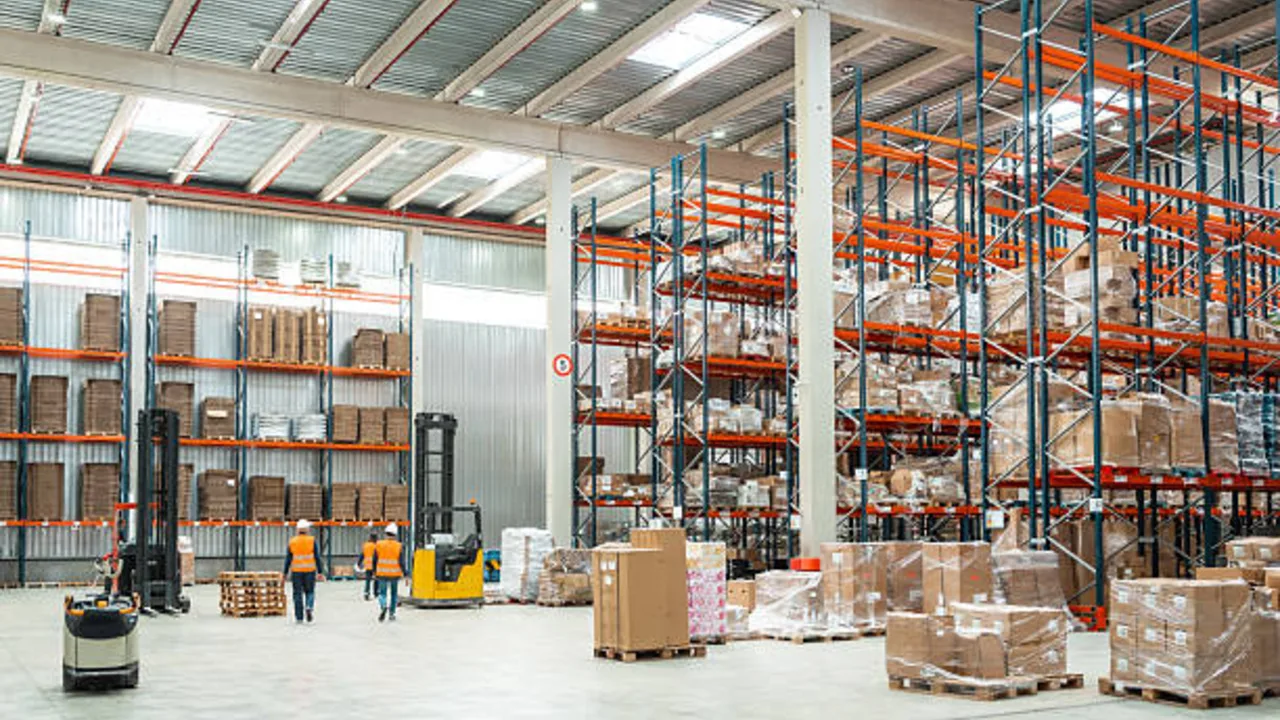
At its core, warehouse forklift traffic planning is about controlling how forklifts move through space. This involves defining travel paths, determining directionality, managing intersections, and coordinating movement with storage and picking activities. Unlike pedestrian traffic, forklift movement is constrained by turning radius, load stability, and braking distance, all of which must be considered during layout design.
Forklift traffic can be broadly categorized into straight-line travel, turning movements, and stopping zones. Straight-line travel occurs along main aisles and cross aisles, where forklifts move at higher speeds. Turning movements happen at aisle intersections, racking entry points, and dock areas, where speed must be reduced. Stopping zones include picking points, staging areas, and loading docks, where forklifts frequently pause or queue.
Effective traffic planning minimizes unnecessary turning and reversing. Straight, predictable routes allow operators to maintain consistent speeds and reduce handling time. This is particularly important in large steel warehouses where travel distances can be significant. By aligning storage systems and work zones with forklift movement logic, planners can dramatically improve throughput without increasing fleet size.
Forklift Traffic Patterns Inside Warehouses
Different warehouses adopt different traffic patterns depending on size, throughput, and operational complexity. One common approach is one-way traffic, where forklifts move in a single direction along designated aisles. This pattern is highly effective in high-density storage environments because it reduces head-on encounters and simplifies operator decision-making.
Two-way traffic is more flexible and is often used in lower-density warehouses or facilities with mixed operations. While two-way aisles reduce total aisle count, they require greater aisle width and stricter speed control to maintain safety. In steel warehouses with ample clear span, designers may combine one-way main aisles with two-way secondary aisles to balance efficiency and flexibility.
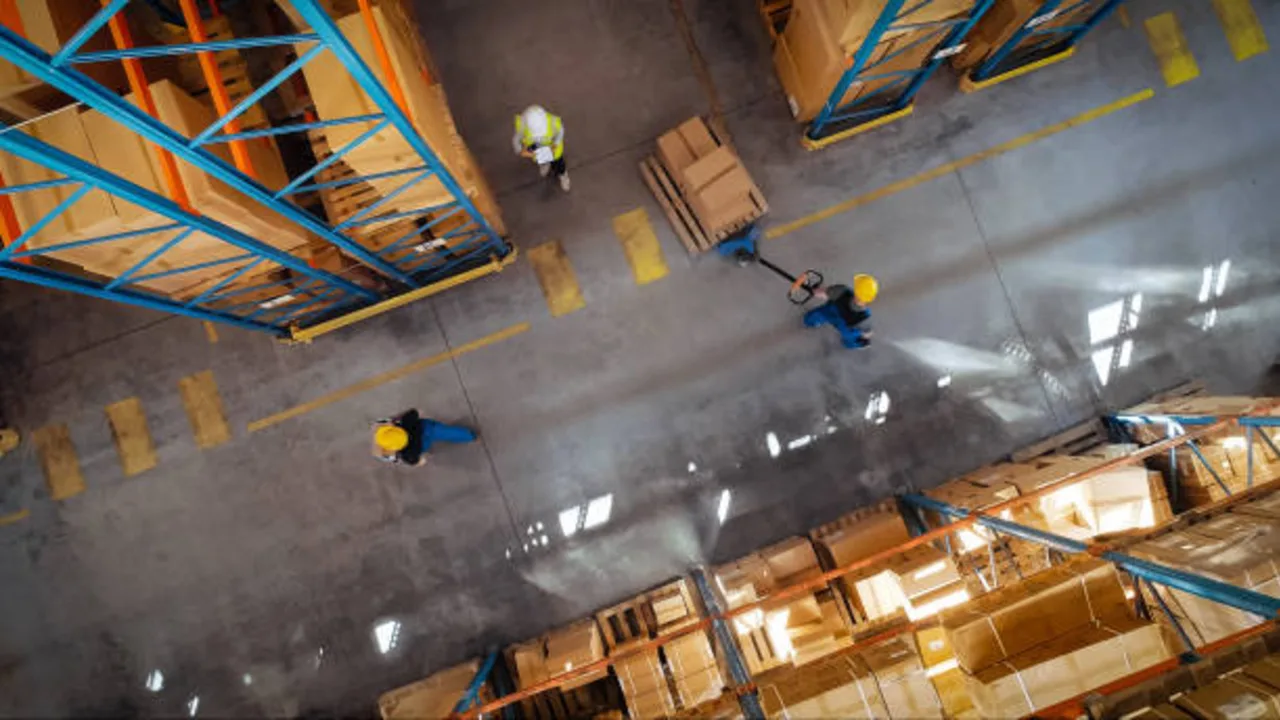
Another critical consideration is mixed traffic zones, where forklifts and pedestrians share space. These zones are common near picking areas, packing stations, and offices. Without clear separation, mixed zones become accident hotspots. Traffic planning must define visual cues, barriers, or timing rules to manage these interactions safely.
Relationship Between Forklift Traffic and Storage Layout
Storage layout and warehouse forklift traffic are inseparable. Racking orientation determines how forklifts approach loads, how often they turn, and how much space they require to maneuver. Longitudinal racking layouts, where aisles run parallel to the building’s long axis, often support smoother traffic flow by reducing cross traffic.
Cross aisles play a critical role in traffic distribution. They allow forklifts to change direction without backtracking, reducing travel distance and congestion. In steel warehouses, cross aisles can be placed strategically thanks to flexible structural grids, ensuring that traffic remains evenly distributed even during peak operations.
Turning radius is another key factor. Forklifts carrying loads require significantly more space to turn safely. If aisle width or intersection clearance is underestimated, operators are forced to make multi-point turns, slowing operations and increasing collision risk. Proper planning aligns aisle geometry with forklift specifications, not just storage density targets.
Ultimately, successful warehouse forklift traffic planning starts with understanding how forklifts interact with storage systems. By designing layout and traffic flow together, rather than separately, steel warehouses can achieve both high storage density and smooth, safe material movement.
Aisle Width Requirements for Forklift Operations
One of the most critical design variables in warehouse forklift traffic planning is aisle width. Aisle width determines how safely and efficiently forklifts can move, turn, and handle loads within the warehouse. Designing aisles that are too narrow creates congestion and collision risks, while overly wide aisles reduce storage density and increase building cost.
Aisle width should never be defined using generic rules of thumb alone. Instead, it must be calculated based on forklift type, load dimensions, turning radius, traffic direction, and operational frequency. In steel warehouses, the advantage of large clear spans allows planners to optimize aisle width precisely, rather than being constrained by internal columns.
Standard Aisle Width by Forklift Type
| Forklift Type | Typical Aisle Width | Operational Notes |
|---|---|---|
| Counterbalance Forklift | 3.5 – 4.0 m | Common in general storage; requires more turning space |
| Reach Truck | 2.7 – 3.2 m | Used in high-bay racking; tighter maneuverability |
| Narrow Aisle (VNA) Forklift | 1.8 – 2.0 m | High-density storage; requires guided systems |
| Articulated Forklift | 2.0 – 2.5 m | Flexible turning; suitable for mixed operations |
These values are indicative and must be adjusted based on pallet size, load overhang, and traffic intensity. In facilities with heavy warehouse forklift traffic, additional clearance is often required to maintain safety margins.
How Aisle Width Impacts Safety and Productivity
The relationship between aisle width and productivity is not linear. Narrow aisles increase storage capacity but slow down forklift movement due to reduced speed and tighter turning constraints. Wider aisles improve maneuverability but increase travel distance and building footprint.
From a safety perspective, insufficient aisle width is one of the leading causes of racking damage and forklift collisions. Operators forced to maneuver in tight spaces are more likely to clip uprights, scrape pallets, or misjudge clearance at intersections. Over time, these minor incidents accumulate into significant repair and downtime costs.
Well-balanced aisle design allows forklifts to operate at consistent speeds, reducing stop-start behavior and operator fatigue. In high-throughput warehouses, even small improvements in travel efficiency can translate into substantial gains in daily output.
Forklift Traffic Planning in Steel Structure Warehouses
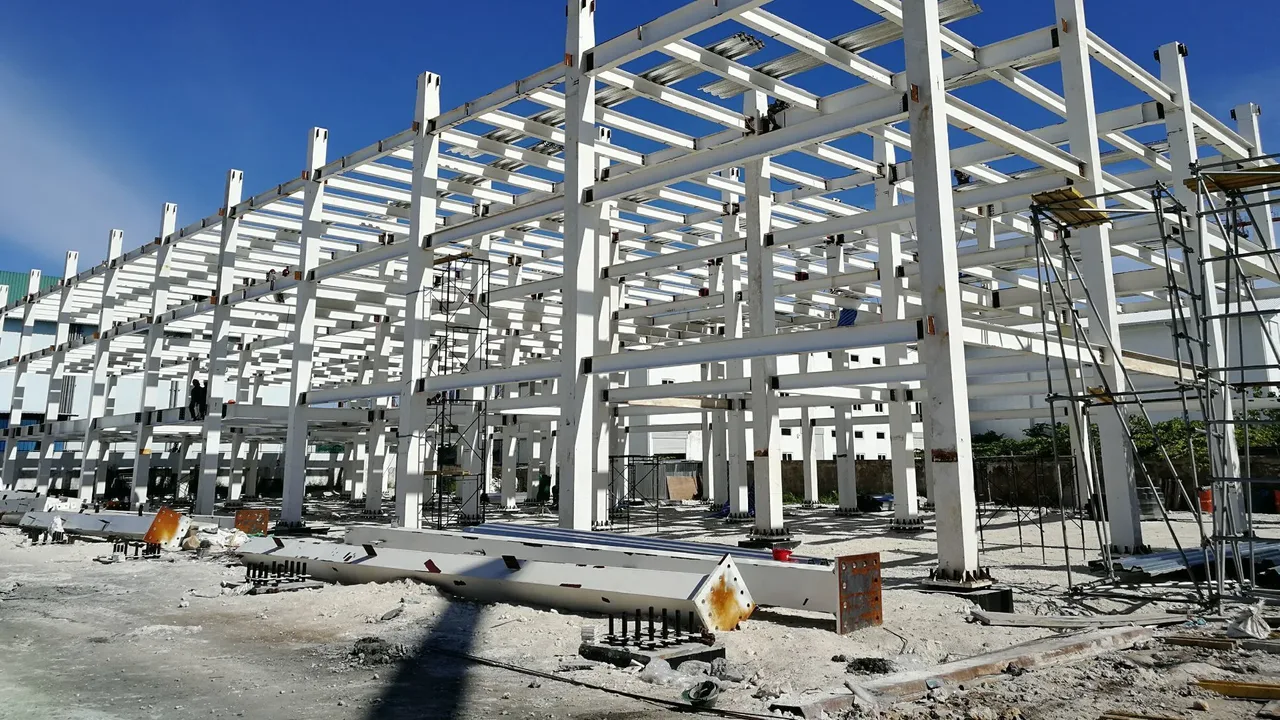
Steel warehouses provide a structural advantage when planning warehouse forklift traffic. Large clear spans eliminate internal obstructions, allowing planners to align aisles with optimal traffic flow rather than structural constraints. This flexibility supports long, straight aisles, wider turning zones, and future layout adjustments.
Another advantage of steel construction is modularity. As operational volume grows, aisle configurations can be modified without major structural changes. Racking systems can be reoriented, cross aisles added, or traffic patterns revised while maintaining the integrity of the building.
When forklift traffic planning is coordinated with the structural grid from the design stage, the result is a warehouse that performs efficiently throughout its lifecycle, not just at initial occupancy.
Safety Zoning and Traffic Segregation
Effective warehouse forklift traffic planning includes clear separation between forklifts, pedestrians, and other equipment. Shared spaces are unavoidable in most warehouses, but uncontrolled interaction significantly increases accident risk.
Traffic zoning introduces structure by defining where forklifts can travel, where pedestrians can walk, and where interactions are permitted. This is especially important near picking stations, packing areas, and dock zones.
Common Safety Zoning Measures
| Zone Type | Purpose | Typical Measures |
|---|---|---|
| Forklift-Only Zones | High-speed material movement | Dedicated aisles, floor markings |
| Pedestrian Zones | Worker safety | Barriers, guardrails, walkways |
| Mixed Zones | Controlled interaction | Warning lights, mirrors, speed limits |
Clear visual cues such as painted lanes, signage, and lighting reinforce traffic rules and improve operator awareness.
Cost Impact of Poor Forklift Traffic Design
Many warehouses underestimate the long-term cost of poorly planned warehouse forklift traffic. While initial construction savings may be achieved by reducing aisle width or simplifying layout, these decisions often result in higher operating costs.
Hidden costs include increased accident rates, higher racking maintenance, damaged pallets, slower picking cycles, and increased insurance premiums. In severe cases, operational inefficiency forces companies to expand earlier than planned, significantly increasing capital expenditure.
Investing in proper traffic planning during the design phase is one of the most cost-effective ways to improve warehouse performance over time.
Planning Forklift Traffic During the Warehouse Design Stage
The most effective forklift traffic plans are developed before construction begins. This allows traffic logic, aisle width, racking layout, and structural design to be aligned from the outset.
Key inputs include forklift specifications, expected throughput, pallet dimensions, and future growth scenarios. When these factors are integrated early, designers can create layouts that support both current operations and long-term scalability.
In steel warehouses, this integrated approach is particularly powerful. Structural flexibility ensures that traffic planning decisions remain valid even as operational requirements evolve.
Real Project Application: Forklift Traffic Planning in a Large-Scale Steel Warehouse
A clear example of how warehouse forklift traffic planning influences real-world performance can be seen in the
Shouning County Edible Fungi Whole Industry Chain Development Project – Phase I
. This project involved the construction of a large steel warehouse facility designed to support continuous material movement across production, storage, and distribution zones.
The warehouse serves a full industry chain operation, which means forklifts operate throughout the day to transport raw materials, semi-finished goods, and packaged products. From the early design stage, forklift traffic routes were coordinated with the structural layout of the steel building to avoid unnecessary crossings and congestion points. Wide clear spans allowed long, uninterrupted travel paths, reducing the need for frequent turning and reversing.
Aisle width planning played a key role in balancing storage density and operational safety. Main traffic aisles were designed wider to support two-way forklift movement during peak hours, while secondary aisles serving racking zones were optimized for controlled one-way flow. This separation helped minimize collision risks and improved loading and unloading efficiency.
Another important consideration was the interface between forklift routes and production-related activities. Dedicated buffer zones were created between processing areas and storage aisles, allowing forklifts to queue without blocking main traffic lanes. This approach reduced bottlenecks during high-volume periods and maintained stable internal logistics flow.
The project demonstrates how warehouse forklift traffic planning is not an abstract design concept, but a practical engineering decision that directly affects daily operations. By aligning traffic flow, aisle width, and structural design from the beginning, the steel warehouse was able to achieve high throughput, improved safety, and long-term operational flexibility.
Final Thoughts on Warehouse Forklift Traffic Planning
Warehouse forklift traffic planning is a strategic design discipline that directly affects safety, efficiency, and cost. Aisle width, traffic patterns, and safety zoning must be treated as core design variables, not secondary details.
By leveraging the structural advantages of steel warehouses and aligning layout decisions with forklift behavior, operators can create facilities that operate smoothly, adapt easily, and remain competitive for decades.