Food Industry Requirements for Warehouse Construction
Clean and Controlled Storage Environments
Food-related facilities require clean environments that help reduce contamination risks and simplify maintenance procedures. Steel warehouses support hygienic operational conditions through organized layouts and smooth structural integration.
Many facilities also integrate washable wall systems and controlled access zones to support food safety protocols.
Temperature and Ventilation Management
Environmental control plays a critical role in food storage operations. Depending on the stored products, facilities may require insulation systems, humidity management, and controlled airflow.
A properly designed steel warehouse for food storage can integrate ventilation equipment, refrigeration systems, and insulated building envelopes for stable internal conditions.
Large-Scale Inventory Operations
Food logistics often involve high inventory turnover and continuous movement of goods. Warehouse layouts must support:
- Pallet storage systems
- Forklift circulation routes
- Loading dock efficiency
- Inventory zoning
- Automated storage systems
Steel structures provide the open interior space needed for these operational requirements.
Why Steel Structures Work Well for Food Storage
Faster Construction for Expanding Supply Chains
Food distribution networks frequently require rapid infrastructure expansion. Prefabricated steel systems reduce construction timelines and accelerate project delivery.
This allows companies to respond more efficiently to growing storage demand.
Flexible Interior Layouts
Steel framing systems support wide-span layouts with minimal internal columns. This flexibility improves operational movement and simplifies warehouse planning.
Storage zones can also be modified later as operational requirements evolve.
Structural Durability in High-Usage Facilities
Food warehouses often operate continuously with heavy logistics activity. Steel structures provide reliable long-term performance under demanding industrial conditions.
Expansion Capability for Future Capacity Growth
- Additional storage bays
- Cold storage expansion
- Extended logistics zones
- Future automation upgrades
Common Applications of Food Storage Steel Warehouses
Dry Food Storage Facilities
Dry food products such as grains, packaged goods, and processed ingredients require stable storage environments with organized inventory systems.
Steel warehouses provide efficient large-scale storage solutions for these operations.
Cold Chain Distribution Centers
Cold storage facilities require buildings capable of integrating refrigeration systems and insulated wall assemblies. Steel structures support these technical requirements while maintaining structural reliability.
A steel warehouse for food storage designed for cold chain logistics can improve temperature stability and operational efficiency.
Agricultural Product Warehouses
Agricultural storage facilities frequently handle bulk products including vegetables, fruits, grains, and packaged produce.
Steel buildings allow efficient loading operations and flexible storage arrangements.
Food Processing and Packaging Storage
Food processing facilities often require adjacent warehouse space for raw materials, packaging inventory, and finished goods storage.
Integrated steel warehouse systems help improve workflow coordination between production and logistics.
Design Features in Food Storage Steel Buildings
Insulated Wall and Roof Systems
Insulated panels help maintain stable internal temperatures while improving energy efficiency. Roofing and wall systems are selected according to operational requirements and climate conditions.
Hygienic Interior Design Considerations
- Easy-clean interior surfaces
- Moisture-resistant materials
- Controlled drainage systems
- Separated operational zones
Moisture and Corrosion Protection
Food storage environments may involve humidity, refrigeration systems, or washdown procedures. Protective coatings and corrosion-resistant treatments help extend structural lifespan and maintain facility reliability.
Loading Dock and Logistics Planning
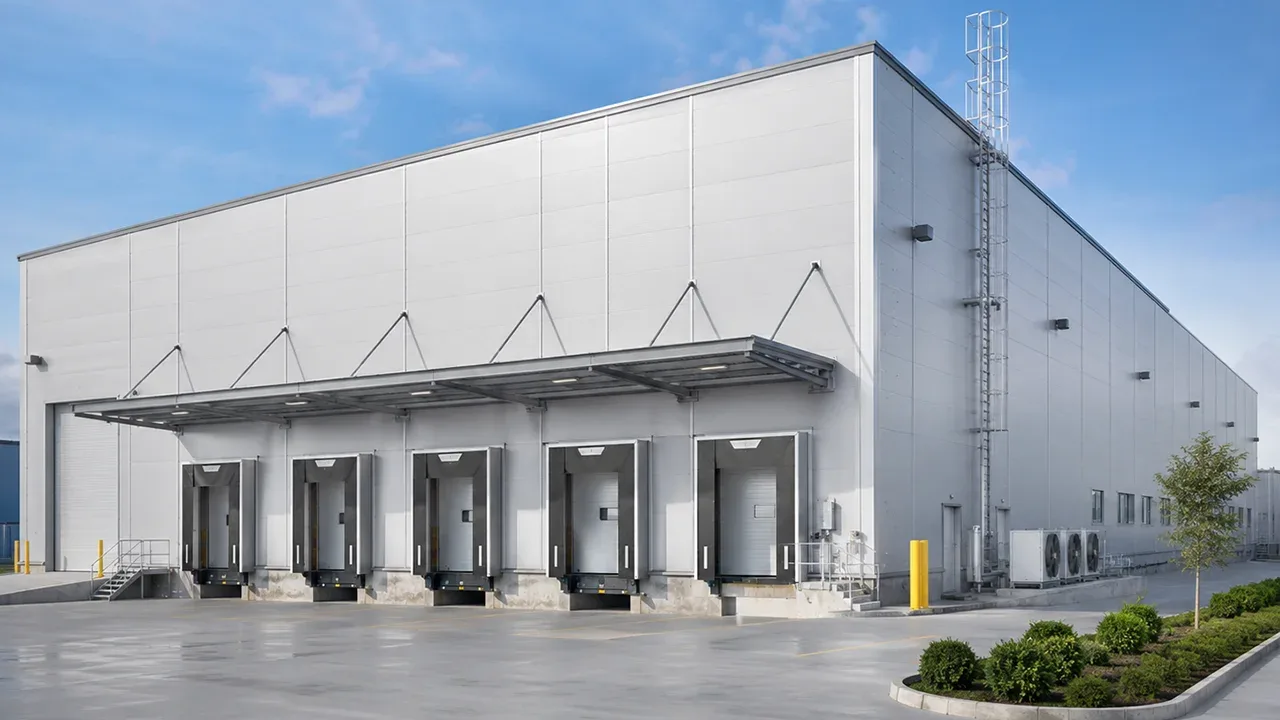
Efficient loading and unloading operations are essential in food distribution. Dock positioning, truck circulation, and internal movement paths are carefully planned to improve operational flow.
Fabrication and Installation Workflow
Precision Steel Manufacturing
Steel components are manufactured using advanced fabrication technologies to ensure dimensional accuracy and production consistency.
Coating and Surface Treatment Systems
Protective systems commonly include galvanization, anti-corrosion coatings, and industrial paint applications depending on operational conditions.
| Process Stage | Main Objective |
|---|---|
| Steel Fabrication | Structural precision |
| Surface Treatment | Corrosion protection |
| Component Delivery | Efficient logistics |
| On-Site Installation | Fast project assembly |
Fast On-Site Assembly for Industrial Projects
Prefabricated steel systems simplify installation procedures and help reduce construction disruption. Faster assembly is especially valuable for active industrial and logistics environments.
As a provider of industrial steel building systems, XTD Steel Structure supports customized warehouse projects for various food industry applications.
Operational Benefits for the Food Industry
Food storage infrastructure directly affects logistics performance, inventory management, and operational continuity.
- Improved storage efficiency
- Better logistics coordination
- Reduced maintenance requirements
- Scalable warehouse capacity
- Faster project completion
Efficient warehouse infrastructure helps support modern food distribution networks and long-term supply chain growth.
Selecting a Steel Warehouse Partner for Food Storage Projects
Food industry projects require coordination between structural engineering, operational planning, environmental control systems, and logistics management.
Choosing an experienced steel warehouse supplier can help improve project execution quality while supporting long-term operational performance.
Engineering capability, fabrication quality, and industrial project experience are all critical factors during supplier evaluation.
Frequently Asked Questions
Can steel warehouses support cold storage systems?
Yes. Steel structures can integrate refrigeration systems and insulated building panels for cold chain operations.
Are steel structures suitable for food safety requirements?
Yes. Properly designed steel warehouses can support hygienic layouts and controlled storage environments.
Can the warehouse be expanded later?
Steel warehouse systems are generally easier to expand compared to many traditional construction methods.
What insulation systems are commonly used?
Sandwich panels and insulated roofing systems are widely used in food storage facilities.
Modern Food Storage Infrastructure with Steel Construction
A well-designed steel warehouse for food storage supports modern logistics operations through durability, efficient space utilization, and environmental adaptability. Steel systems continue to play an important role in food distribution, agricultural storage, and cold chain infrastructure development.
Reliable engineering, efficient fabrication, and flexible warehouse planning help create food storage facilities capable of supporting long-term operational growth.