Logistics Warehousing Requirements in Modern Industry
Industrial logistics facilities must operate continuously while handling large product volumes and complex distribution processes. A properly designed steel warehouse for logistics helps maintain operational efficiency across multiple supply chain stages.
Modern logistics warehouses commonly require:
- Fast loading and unloading operations
- Efficient forklift movement paths
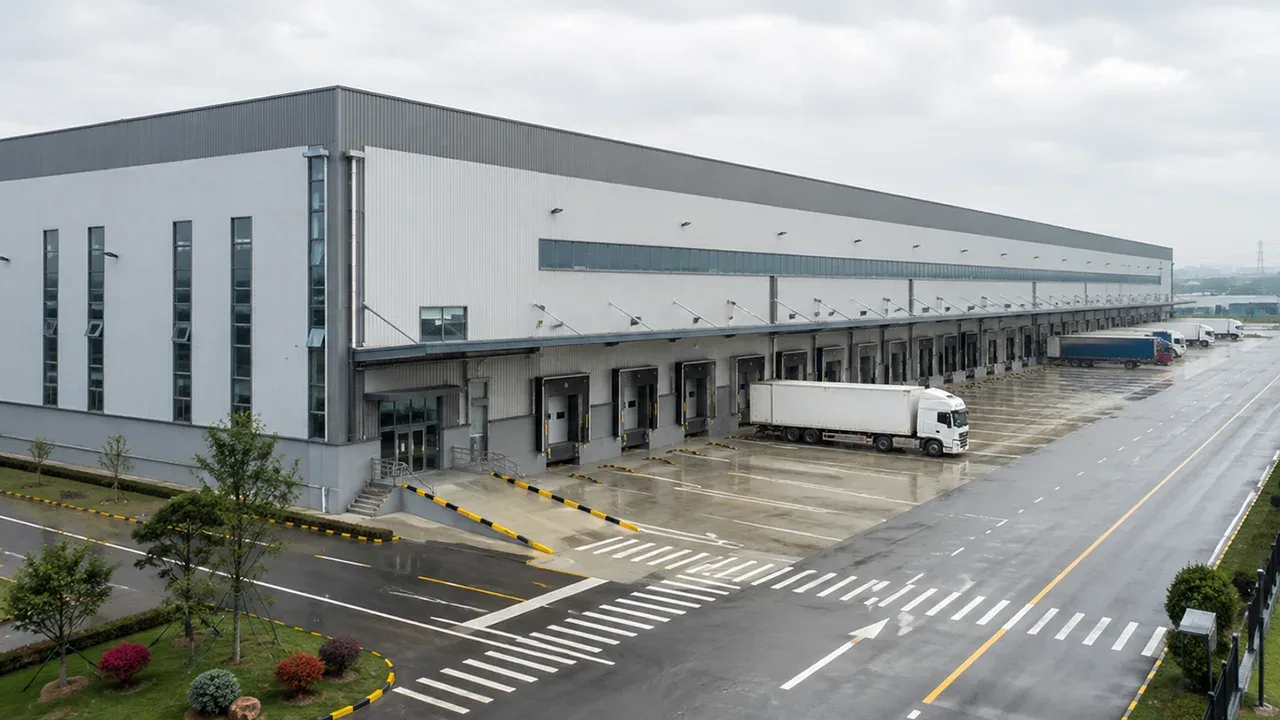
- Wide truck access areas
- High-capacity storage systems
- Scalable warehouse layouts
- Continuous operational reliability
Warehouses serving regional distribution or export logistics often prioritize flexible layouts that can adapt to changing operational demands.
Why Steel Structures Fit Logistics Operations
Large Span Interior Layouts
Steel framing systems allow large column-free spaces that improve warehouse circulation and maximize usable storage areas.
This layout flexibility supports:
- Forklift traffic efficiency
- Automated racking systems
- Pallet storage optimization
- Improved inventory flow
Open interior configurations are particularly important for high-volume logistics environments.
Faster Construction for Supply Chain Expansion
Supply chain expansion often requires warehouse facilities to become operational within tight timelines. Steel structures can be fabricated in advance and assembled quickly on-site.
This reduces construction duration and helps logistics operators respond faster to market demand.
Expansion-Friendly Structural Systems
Logistics infrastructure frequently evolves over time. A steel warehouse for logistics can be designed with future expansion in mind, allowing additional storage areas or operational zones to be integrated later.
This flexibility supports long-term industrial growth.
Common Logistics Warehouse Applications
Distribution Centers
Distribution centers require efficient inventory movement and rapid shipping coordination. Steel warehouse systems help optimize operational workflows while supporting high storage capacity.
E-commerce Fulfillment Warehouses
E-commerce logistics facilities rely heavily on fast processing and organized inventory management. Steel structures provide open layouts suitable for automated sorting systems and packing operations.
Cold Chain Logistics Facilities
Cold storage logistics warehouses often integrate insulation systems and climate-controlled environments. Steel systems can support these technical requirements efficiently.
Manufacturing Supply Warehouses
Industrial manufacturers use logistics warehouses to manage raw materials, spare parts, and finished products across production and distribution networks.
Key Design Priorities for Logistics Warehouses
Truck Circulation and Dock Access
Warehouse operations depend heavily on transportation flow. Efficient truck circulation routes and loading dock configurations improve shipping efficiency and reduce operational delays.
Vertical Storage Optimization
Modern logistics operations maximize vertical storage capacity through high racking systems and automated warehouse technologies.
Steel structures provide the structural support necessary for these systems.
Ventilation and Climate Control
Proper airflow and environmental control are important for worker comfort and product protection. Depending on operational requirements, logistics facilities may integrate:
- Natural ventilation systems
- Industrial exhaust systems
- Temperature-controlled zones
- Humidity management solutions
Floor Load Capacity
Warehouse floors must support heavy storage systems, machinery, and continuous vehicle traffic. Structural engineering design ensures stable long-term performance under industrial loading conditions.
Fabrication and Construction Workflow
Industrial Steel Fabrication
Warehouse steel components are manufactured using precision cutting, welding, and assembly processes to ensure structural accuracy and installation efficiency.
Pre-Engineered Component Manufacturing
Pre-engineered systems allow major structural components to be fabricated before arriving at the project site.
- Structural design and engineering
- Steel fabrication and coating
- Transportation and logistics planning
- Site installation and assembly
This workflow helps accelerate overall project schedules.
Installation Coordination for Active Industrial Sites
Many logistics facilities are built near operational industrial zones. Construction planning must coordinate material delivery, installation activities, and site safety management efficiently.
XTD Steel Structure supports industrial warehouse projects through integrated engineering, fabrication, and installation coordination services.
Operational Advantages of Steel Logistics Warehouses
Logistics operators prioritize buildings that improve operational speed while maintaining long-term reliability.
- Faster warehouse construction
- Flexible operational layouts
- Lower maintenance requirements
- Scalable expansion capability
- Efficient material movement
- Long-term structural durability
Efficient warehouse infrastructure directly impacts supply chain performance and operational productivity.
Choosing a Steel Warehouse Contractor for Logistics Projects
Industrial logistics projects require careful planning, engineering coordination, and manufacturing capability. Warehouse contractors must understand operational requirements such as loading efficiency, storage optimization, and future expansion planning.
Experience in steel fabrication, international logistics delivery, and industrial project execution can significantly improve project efficiency and construction quality.
Frequently Asked Questions
Why are steel warehouses widely used in logistics?
Steel warehouses provide large open spaces, faster construction, and flexible layouts suitable for logistics operations.
Can steel warehouses support automated systems?
Yes. Steel warehouse layouts are highly compatible with automated storage and material handling systems.
Are logistics steel warehouses expandable?
Yes. Steel structures can be designed for future operational expansion and warehouse growth.
Build Efficient Logistics Infrastructure
A modern steel warehouse for logistics supports supply chain efficiency through flexible layouts, scalable storage systems, and durable industrial construction. Steel structures continue to play an important role in logistics infrastructure development worldwide.
Well-planned engineering and quality fabrication help logistics facilities maintain reliable operations while supporting future industrial expansion.