Steel beams with relatively slender webs can become vulnerable to local instability when exposed to high shear forces, concentrated loads, or large support reactions. Stiffeners are commonly added to improve web stability, control local deformation, and create a more effective load path through the beam. Their performance, however, depends on more than simply adding extra steel.
One of the most important design relationships is stiffener thickness and buckling. Increasing plate thickness can improve local stability and stiffness, but the final buckling resistance also depends on stiffener width, spacing, effective length, web geometry, weld detailing, material properties, and fabrication quality. A successful design therefore treats the stiffener as part of the complete beam system rather than as an isolated plate.
Why Steel Beam Stiffeners Are Used to Control Buckling
Deep or fabricated steel beams often use relatively thin webs to reduce structural weight. While this can improve material efficiency, a slender web may be more susceptible to shear buckling, local compression, or distortion around concentrated forces.
Stiffeners provide additional restraint to the web and can divide a large web plate into smaller, more stable panels. Depending on their location and purpose, they may also transfer concentrated loads between the flanges and the web.
Web Buckling Under Shear and Concentrated Loads
Under high shear, a slender web panel can deform out of plane before the steel reaches its full yield strength. Similar instability can occur near supports, crane loads, equipment reactions, or other concentrated loading points where compressive stresses become significant.
Transverse stiffeners help restrict this deformation by providing stronger boundaries to the web panel. The effectiveness of that restraint depends on the stiffener having sufficient stiffness and stability of its own.
How Stiffeners Change the Load Path
A properly designed stiffener can transfer forces from a flange into the web, stabilize the web against out-of-plane movement, or act together with part of the web as a compression element. This means stiffener performance is governed not only by plate strength but also by rigidity, slenderness, restraint, and connection detailing.
The Relationship Between Stiffener Thickness and Buckling Resistance
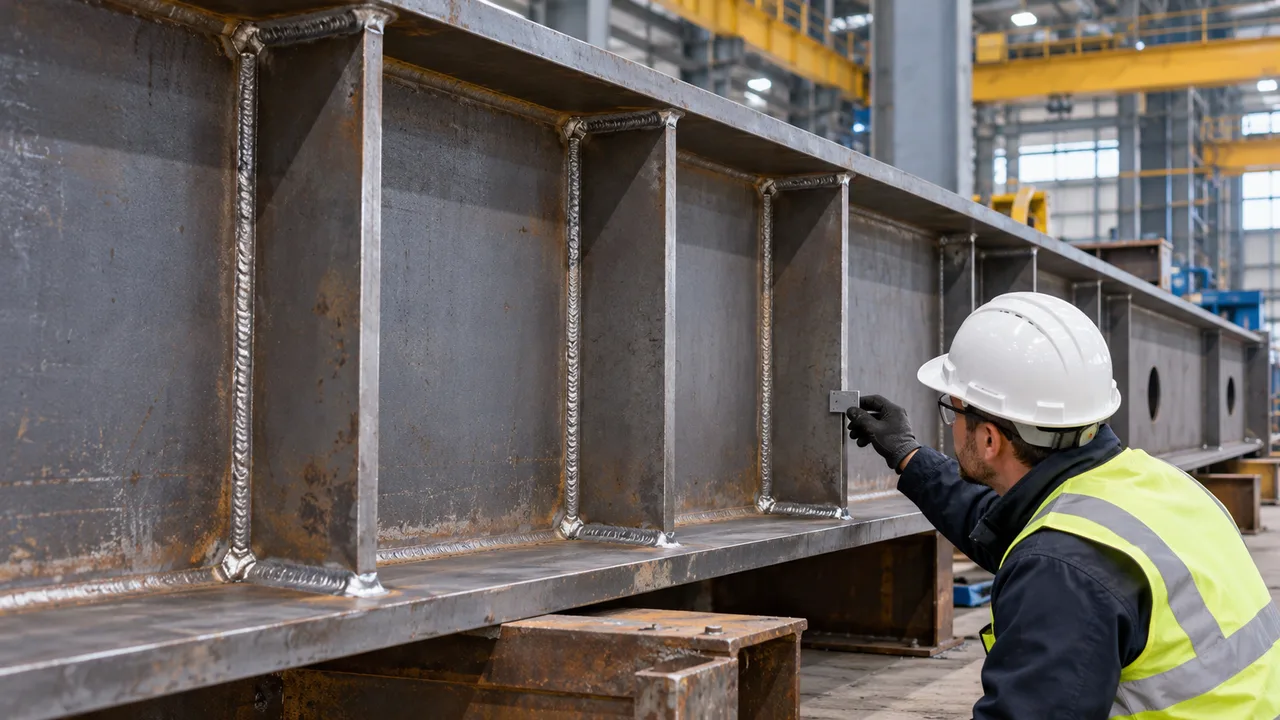
The relationship between stiffener thickness and buckling begins with plate slenderness. For a given stiffener width, increasing thickness reduces the width-to-thickness ratio. The plate becomes less slender and generally more resistant to local out-of-plane instability.
Thickness also increases flexural rigidity. A thicker stiffener is more capable of maintaining its shape while restraining the web, especially when compression forces or web deformation create bending perpendicular to the stiffener plate.
Plate Slenderness and Local Buckling
A stiffener can buckle locally when its outstanding plate elements are too wide relative to their thickness. A wide but very thin stiffener may begin to distort even when the steel stress remains below its nominal yield strength.
Increasing thickness reduces this local slenderness. However, designers must consider both dimensions together because increasing width without increasing thickness can create another slender plate element.
Flexural Rigidity of the Stiffener
Thickness has a strong influence on plate bending rigidity. Even a moderate increase can substantially improve resistance to out-of-plane deformation. Greater rigidity allows the stiffener to provide more effective support to the web rather than deforming together with it.
This is why the design of stiffener thickness and buckling cannot be based only on yielding calculations. A plate may have enough cross-sectional area to carry a force while still being too flexible to provide the required stabilizing effect.
Stiffener Buckling as a Compression Member
At beam supports or concentrated load locations, a stiffener may behave partly like a short compression member. In these situations, overall instability can become important in addition to local plate buckling.
The effective length, end restraint, stiffener configuration, and participation of the adjacent web all influence compression behavior. Making the plate thicker can help, but it does not remove the need to check the complete compression system.
What Happens When a Stiffener Is Too Thin
An undersized stiffener may not provide enough rigidity to stabilize the surrounding web. Instead of restraining deformation, the stiffener and web may bend or distort together. This reduces the effectiveness of the detailing and can concentrate stresses around welds, flange intersections, or load introduction zones.
Reduced Restraint Against Web Buckling
If the stiffener lacks adequate bending stiffness, web deformation may push the plate out of plane. The intended restraint then becomes less effective, allowing the web panel to develop larger distortions.
This interaction is especially important in deep girders where web slenderness is high and the structural behavior relies strongly on properly proportioned stiffeners.
Local Deformation Near Supports and Point Loads
Support reactions and concentrated loads can create high local compressive stresses. Thin stiffeners may deform near the loaded flange, reducing their ability to distribute forces effectively into the web.
For bearing-type applications, the plate may therefore require greater thickness or a different stiffener configuration than an intermediate stiffener used mainly to stabilize a shear panel.
Does Increasing Stiffener Thickness Always Improve Buckling Resistance?
Increasing thickness generally improves local stability, but simply making every stiffener thicker is rarely the most efficient engineering solution. Once adequate plate slenderness and rigidity are achieved, another part of the beam may become the governing limit state.
The connection, web thickness, stiffener spacing, overall beam geometry, or compression effective length may control performance instead. Efficient design therefore evaluates stiffener thickness and buckling together with the rest of the structural system.
Thickness Versus Stiffener Width
Width and thickness should be proportioned together. Increasing stiffener width can improve some aspects of rigidity and load distribution, but an excessively wide and thin outstanding plate can become susceptible to local buckling.
Thickness Versus Stiffener Spacing
Stiffener spacing directly affects the dimensions of the web panels. Reducing the distance between transverse stiffeners can decrease the unsupported web panel length and improve shear stability.
In some beams, adjusting spacing may provide a more efficient solution than increasing the thickness of every stiffener.
Thickness Versus Material Strength
Higher-strength steel can increase resistance to yielding, but it does not automatically eliminate geometric instability. Buckling is strongly affected by slenderness and stiffness, so increasing material yield strength without addressing geometry may provide limited improvement in a buckling-sensitive detail.
Key Parameters That Should Be Checked Together With Stiffener Thickness
| Parameter | Why It Matters for Buckling |
|---|---|
| Stiffener thickness | Influences plate slenderness, rigidity, and compression resistance |
| Stiffener width | Affects local plate slenderness and bending rigidity |
| Web thickness | Determines web slenderness and susceptibility to instability |
| Stiffener spacing | Controls the dimensions of individual web panels |
| Beam depth | Influences overall web slenderness and panel behavior |
| Effective length | Affects compression-member-type buckling of the stiffener |
| Weld connection | Controls force transfer between stiffener, web, and flange |
| Steel grade | Influences yielding strength but does not control geometric stability alone |
These variables demonstrate why a thickness value should never be selected without considering the surrounding beam geometry and expected load path.
Transverse Stiffeners and Buckling Resistance
Transverse stiffeners are commonly placed perpendicular to the beam flanges to stabilize slender web panels, strengthen support regions, or transfer concentrated loads. Their thickness must be sufficient to prevent the stiffener itself from becoming an unstable part of the system.
How Transverse Stiffeners Stabilize the Web
Intermediate transverse stiffeners reduce the effective dimensions of web panels and provide boundaries against out-of-plane movement. At supports or load points, transverse plates can also participate in transferring compression between the loaded flange and the web.
Local and Overall Buckling Checks
The required verification depends on whether the governing failure mode is web instability, local plate instability, or transverse stiffener buckling itself. Each mechanism responds differently to plate dimensions, restraint conditions, and applied forces.
Stiffener Thickness at Beam Supports and Concentrated Load Points
Stiffeners positioned at supports often perform a more demanding role than intermediate stiffeners. Large reactions enter the beam through the flange and must be distributed safely into the web and supporting structure.
Bearing Stiffeners
Bearing stiffeners may act with an effective portion of the web as a compression member. Their design therefore considers bearing resistance, yielding, local plate stability, and overall buckling behavior.
Greater thickness may be required where reaction forces are high, but plate thickness still needs to be coordinated with stiffener width, connection details, effective length, and the surrounding web.
Intermediate Stiffeners
Intermediate stiffeners are often intended primarily to stabilize web panels rather than carry major direct compression forces. Their required dimensions can therefore differ significantly from bearing stiffeners even when both appear similar in fabrication drawings.
Welding and Fabrication Effects on Stiffener Buckling
Structural calculations usually assume defined geometry and restraint, but fabricated plates always contain some degree of residual stress, dimensional tolerance, and initial imperfection. These factors can influence real buckling behavior.
Weld Size and Force Transfer
A thick stiffener cannot perform effectively if the weld connection cannot transfer the required forces to the web or flange. Weld length, size, access, and load path should therefore be coordinated with the stiffener design.
Increasing plate thickness excessively can also increase fabrication demands, including weld volume, heat input, and fit-up requirements.
Residual Stress and Initial Imperfections
Welding introduces heat that can create residual stresses and small distortions. Buckling-sensitive members can be affected by these initial imperfections, particularly when slender plates are involved.
Good fabrication tolerances, controlled welding procedures, and accurate plate alignment therefore contribute directly to reliable stiffener performance.
Choosing an Efficient Stiffener Thickness
An efficient design does not simply specify the thickest available plate. Instead, engineers determine the required stability and then select dimensions that satisfy strength, stiffness, slenderness, connection, and fabrication requirements.
Evaluating stiffener thickness and buckling should include design forces, stiffener width, web slenderness, stiffener spacing, material grade, effective length, weld configuration, and practical fabrication constraints.
When Increasing Thickness Makes Sense
A thicker plate may be appropriate when local slenderness is excessive, compression capacity is insufficient, or the stiffener lacks the rigidity required to restrain the web effectively.
When Another Design Change May Be Better
In other situations, greater efficiency may come from reducing stiffener spacing, increasing web thickness, modifying stiffener width, using paired stiffeners, or improving restraint and connection detailing.
Practical Design Considerations for Fabricated Steel Beams
Fabrication practicality should be considered alongside structural calculations. Plate availability, access for welding, dimensional tolerances, flange fit-up, and assembly sequence can all affect the final detail.
Unnecessarily thick plates may increase steel consumption and welding requirements without producing a proportional improvement in beam performance. The preferred solution is usually the detail that meets structural requirements while remaining straightforward to manufacture and install.
Stiffener Thickness and Buckling in Long-Span Steel Structures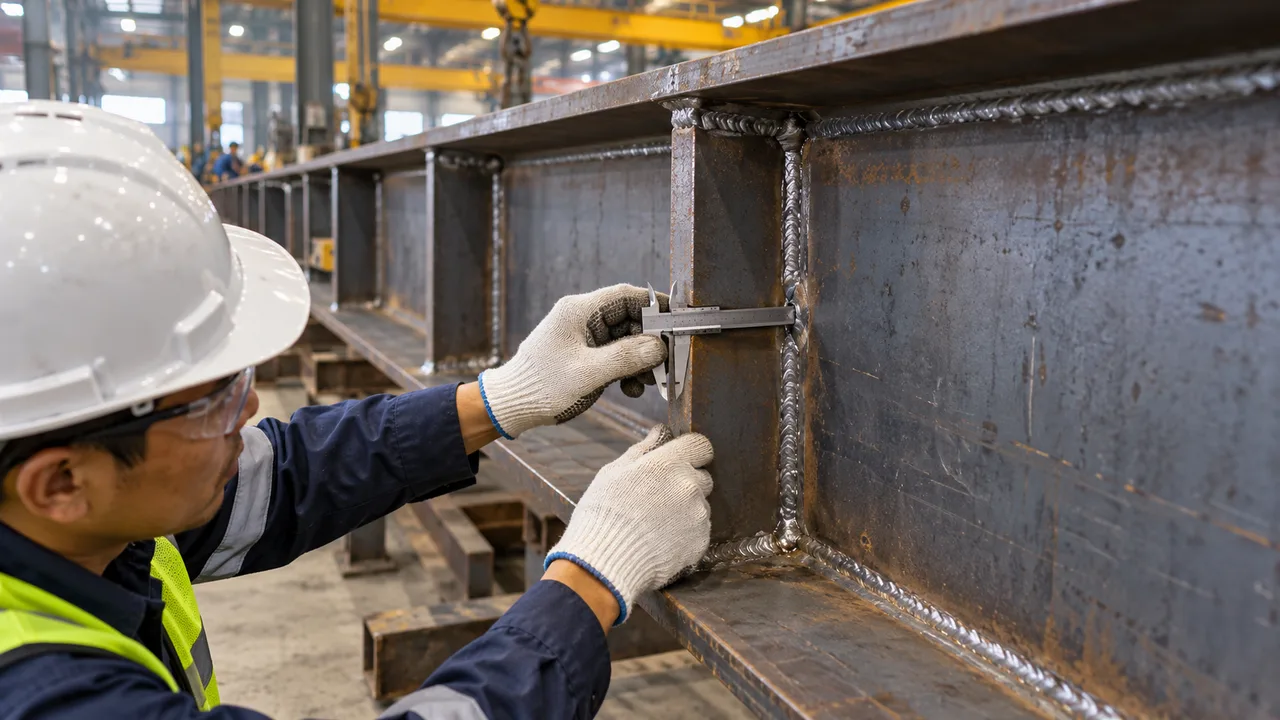
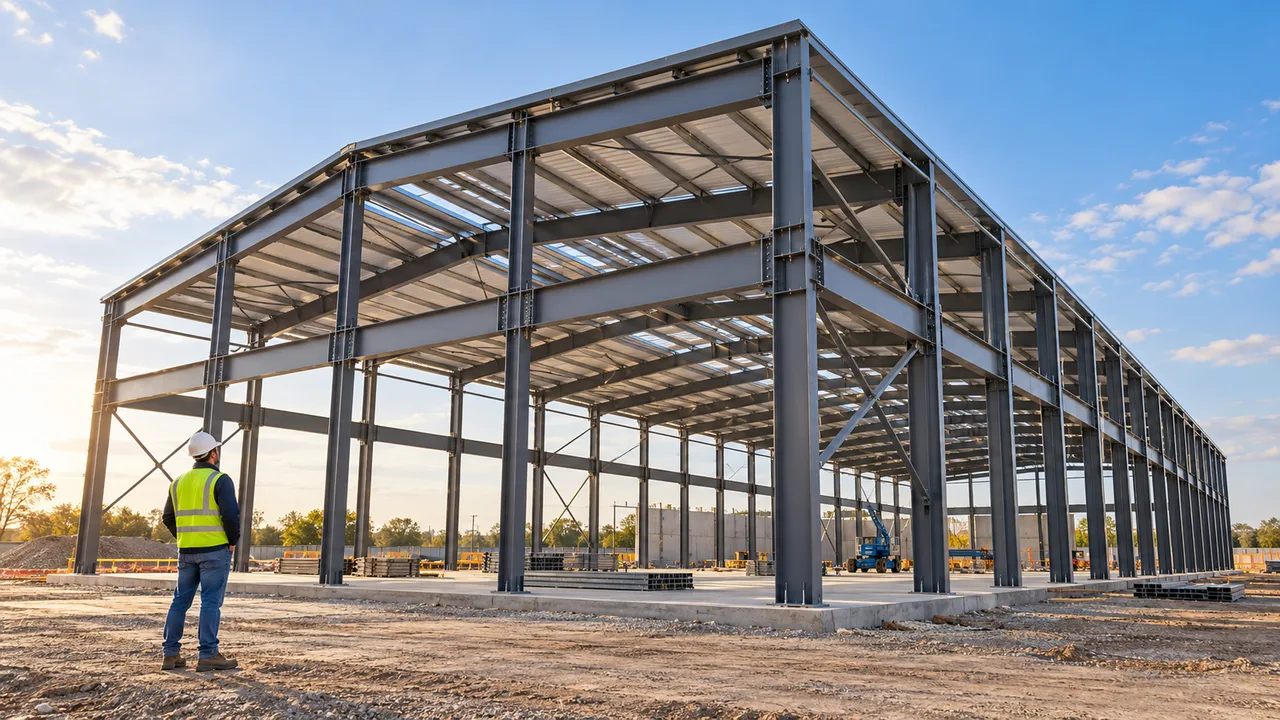
Stiffener design becomes particularly important in long-span industrial buildings, warehouses, crane girders, transfer beams, production facilities, and large roof structures. These applications often use deep fabricated members where thin webs help reduce overall steel weight.
For such projects, XTD Steel Structure evaluates beam geometry, web proportions, stiffener arrangement, welding requirements, and fabrication conditions as part of the complete structural system. Proper coordination between engineering and workshop fabrication helps ensure that the designed restraint can be achieved in the finished member.
Balancing Buckling Resistance, Weight, and Fabrication
The relationship between stiffener thickness and buckling is important because thickness directly influences plate slenderness and rigidity. However, thickness alone cannot determine whether a stiffened beam will perform effectively.
Stiffener width, spacing, web geometry, compression length, material properties, weld detailing, and fabrication quality all contribute to stability. By considering these variables together, engineers can improve buckling resistance without adding unnecessary steel or creating difficult fabrication details.
Frequently Asked Questions
Does a thicker stiffener always prevent buckling?
No. Increasing thickness usually improves local stability and rigidity, but overall buckling may still be governed by effective length, restraint, web interaction, or another part of the beam system.
How does stiffener thickness affect plate slenderness?
For a given plate width, increasing thickness reduces the width-to-thickness ratio. This generally makes the stiffener less slender and more resistant to local plate buckling.
Can a stiffener buckle even if the beam web does not?
Yes. A stiffener subjected to compression can experience local or overall instability even when the adjacent web remains stable. The stiffener therefore requires its own stability checks.
Are bearing stiffeners usually thicker than intermediate stiffeners?
They may be because bearing stiffeners often carry substantial concentrated compression forces. However, the required dimensions depend on load magnitude, geometry, effective length, web participation, and the applicable design criteria.
Can closer stiffener spacing reduce the required stiffener thickness?
In some designs, closer spacing reduces web panel dimensions and improves web stability. This can change the stiffness demand placed on individual stiffeners, although the final thickness still requires structural verification.
Why must weld detailing be considered when selecting stiffener thickness?
The stiffener can only stabilize the beam effectively if forces are transferred through its connections. Weld capacity, weld layout, heat input, and fabrication tolerances must therefore be coordinated with the selected stiffener dimensions.