Steel frames often need more than simple vertical load transfer. In many industrial buildings, warehouses, and portal frame structures, the beam-to-column joint must resist rotation as well as shear. That is why bolted end-plate design is an important part of connection planning. Before selecting bolts, plate thickness, welds, or stiffeners, engineers must understand how moment loads in bolted end-plate connections move through the full connection system.
Moment transfer is not carried by one component alone. The force path may include the beam flange, beam web, welds, end plate, bolt group, column flange, column web, stiffeners, and the surrounding frame. If one part is underdesigned, the connection may deform, rotate excessively, or fail before the connected members reach their intended capacity.
What Moment Loads Mean in Steel Connections
A moment load is a bending effect created when force causes rotation around a point or connection. In a steel beam, bending moment usually creates compression in one flange and tension in the opposite flange. When that beam connects to a column using an end plate, the connection must transfer that tension-compression couple into the column without excessive deformation.
In simple terms, moment loads try to rotate the joint. A moment-resisting connection is designed to control that rotation and transfer bending forces safely into the supporting member. This makes moment loads in bolted end-plate connections especially important in frames where joint rigidity contributes to overall stability.
Moment Versus Shear
Shear force acts mainly across the connection and is commonly associated with vertical load transfer from the beam to the support. Bending moment, on the other hand, creates a rotational demand. A connection designed only for shear may not have enough bolt tension capacity, plate stiffness, weld strength, or column flange resistance to transfer moment safely.
Why Moment Transfer Matters
Moment transfer helps control frame rotation, lateral movement, and structural drift. In portal frames and rigid steel frames, the beam-column joint often contributes to the structure’s resistance against wind loads, crane forces, seismic actions, and serviceability movement. If the connection rotates too much, the frame may become more flexible than intended.
Rigid, Semi-Rigid, and Simple Connections
Not every bolted connection is a moment connection. Simple connections are usually designed to transfer shear while allowing rotation. Semi-rigid connections provide partial rotational restraint. Rigid connections are designed to transfer significant moment with limited rotation. A bolted end-plate connection may fall into any of these categories depending on its geometry, bolt layout, plate thickness, and design intent.
How Bolted End-Plate Connections Transfer Moment Loads
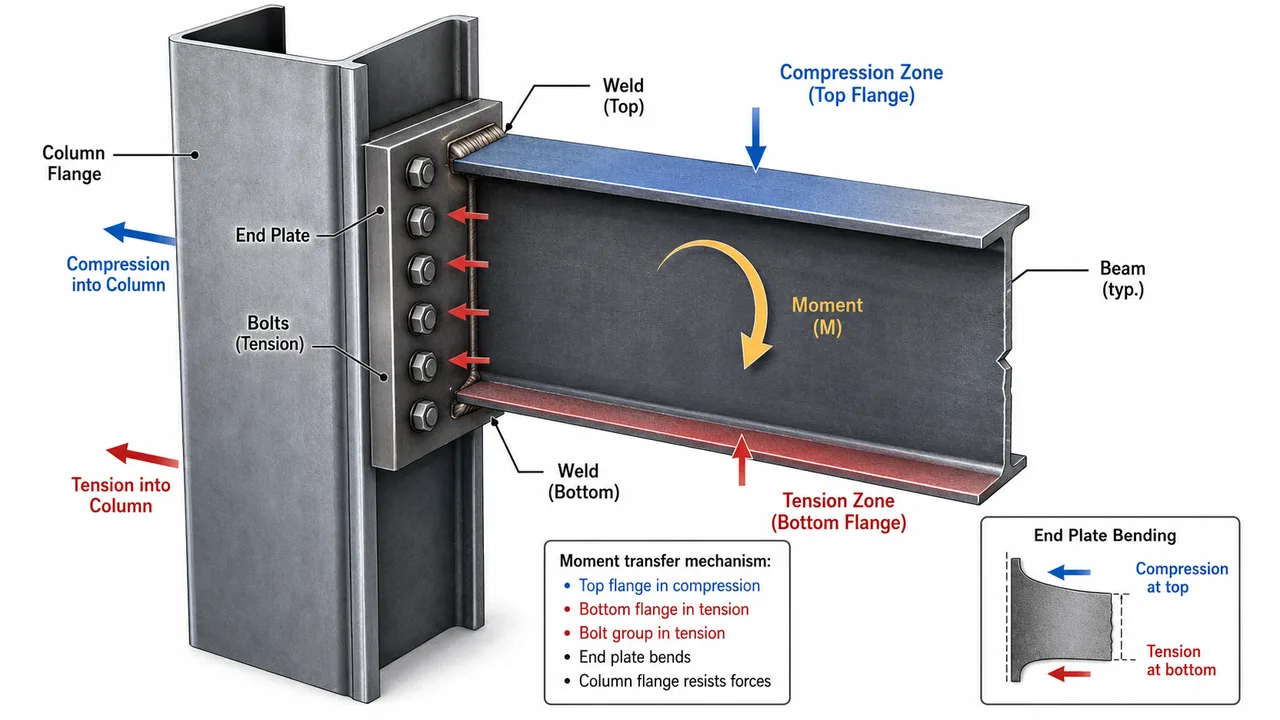
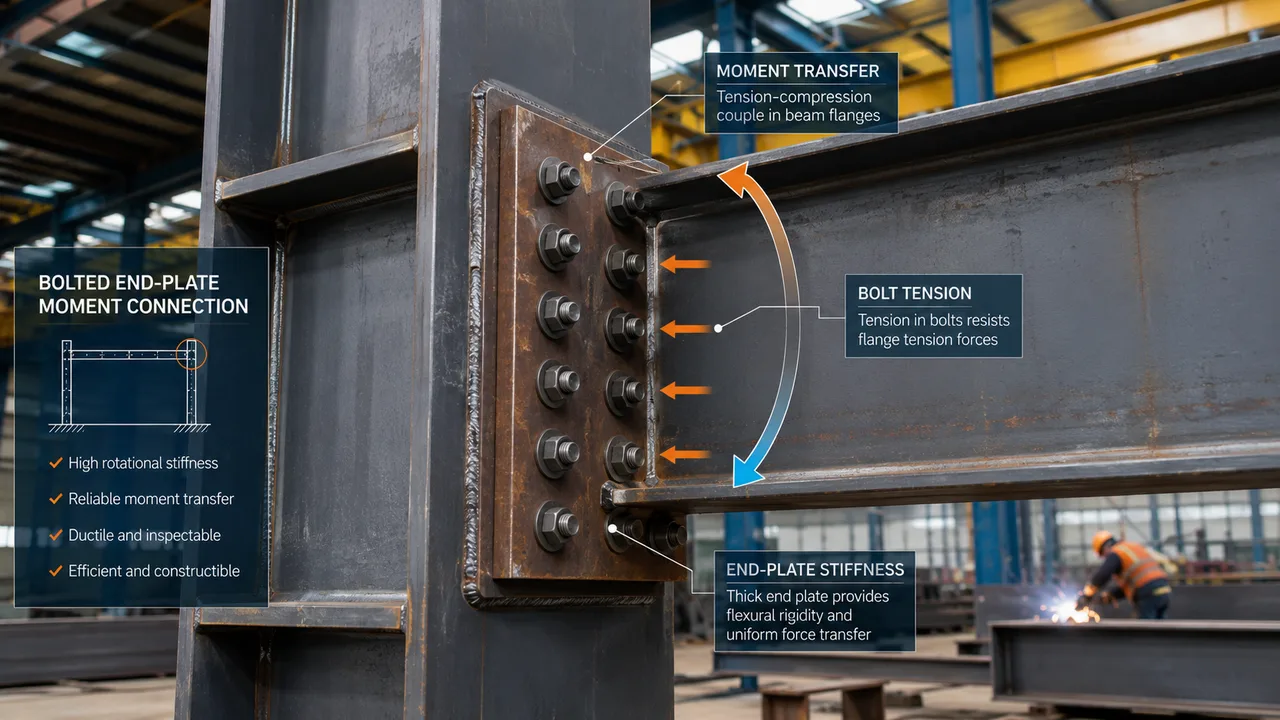
Moment transfer in an end-plate connection is often explained through a force couple. Under bending, one side of the beam connection develops tension while the opposite side develops compression. The tension side is usually resisted by bolts pulling against the end plate and column flange. The compression side is resisted by bearing or contact pressure between the end plate and the column face.
The beam flange transfers force into the end plate through welds. The end plate then bends and distributes force into the bolt group. The bolts transfer tensile force into the column flange, while the column flange and web must resist local bending, yielding, or deformation. If the column face is too flexible, stiffeners or continuity plates may be required.
This load path shows why moment loads in bolted end-plate connections cannot be checked by bolt size alone. The connection must work as a complete system. A strong bolt group may still perform poorly if the end plate is too thin, the welds are undersized, or the column flange lacks local strength.
Main Components in a Bolted End-Plate Moment Connection
Beam Flanges
The beam flanges usually carry the main tension and compression forces created by bending moment. The top flange may be in tension under one loading direction, while the bottom flange may be in tension under another. This force reversal must be considered when wind uplift, crane movement, or alternating frame actions are present.
End Plate
The end plate connects the beam end to the supporting column or member. Its thickness, width, height, bolt-hole layout, and projection beyond the beam flange all affect connection behavior. A thicker plate generally reduces bending deformation, while an extended plate can provide additional bolt rows and higher moment capacity.
Bolts
Bolts in a moment connection may carry significant tensile force. Their diameter, grade, spacing, edge distance, and tightening procedure all influence connection performance. In some applications, pretensioned bolts may be used to improve slip resistance or connection stiffness, depending on the project requirement and design standard.
Welds
Welds transfer force from the beam flange and web into the end plate. If welds are too small or poorly executed, the connection may fail before the bolts or plate reach their intended strength. Weld size, length, access, quality inspection, and fabrication sequence should be considered during shop drawing coordination.
Column Flange and Stiffeners
The column flange must resist concentrated bolt tension and compression forces from the end plate. If the flange is too thin or the local demand is high, the column face may bend or yield. Stiffeners, continuity plates, or doubler plates may be required to strengthen the local connection zone and maintain frame performance.
Key Design Checks for Moment Loads in Bolted End-Plate Connections
Reliable moment connection design requires several checks working together. These checks help confirm that the connection can transfer force safely while controlling deformation, rotation, and local failure modes.
Bolt Tension Capacity
The bolt group must resist tensile forces generated by moment transfer. Engineers should check bolt tension capacity, bolt spacing, edge distance, hole bearing, and bolt group behavior. The bolts farthest from the compression zone often experience the highest tension demand.
End-Plate Bending
The end plate must be thick and stiff enough to resist bending between the bolt rows and beam flange. Excessive plate bending can reduce connection stiffness and increase bolt tension. Plate thickness should be selected based on force demand, bolt layout, and allowable deformation.
Prying Action
Prying action occurs when end-plate bending creates additional leverage on the bolts. This can increase bolt tension beyond the direct force calculated from moment alone. If prying action is ignored, the bolts may be underestimated, especially in thin or flexible end plates.
Weld Strength
Welds must transfer flange forces, web forces, and local stresses into the end plate. Weld failure can interrupt the moment path even when the bolts and plate appear adequate. For heavy connections, weld access and inspection quality are just as important as calculation.
Column Flange Local Bending
The column flange is part of the moment connection. Bolt tension can pull on the column face and create local bending. Compression from the opposite side can also cause local bearing or yielding. When these local effects are high, stiffeners may be needed to increase resistance.
Compression Zone Bearing
The compression zone must transfer bearing pressure between the end plate and the column face. Local crushing, plate deformation, and column flange yielding should be reviewed. A clear compression path helps reduce unwanted rotation and improves connection stiffness.
Common Types of Bolted End-Plate Connections
Flush End-Plate Connection
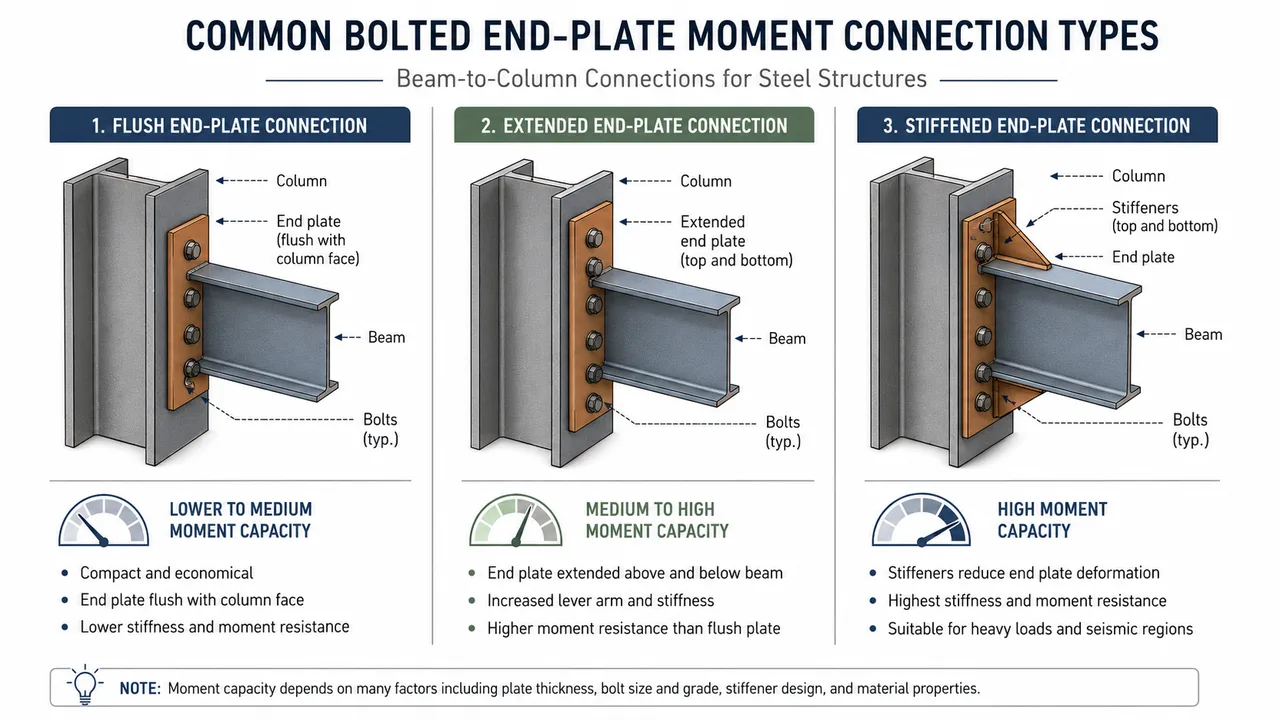
In a flush end-plate connection, the plate does not extend beyond the beam depth. This arrangement is often used for lighter moment demand, semi-rigid behavior, or compact connection zones. Because the bolt layout is limited by the beam depth, its moment capacity is usually lower than that of extended configurations.
Extended End-Plate Connection
An extended end-plate connection has a plate that extends beyond one or both beam flanges. This allows additional bolt rows outside the beam depth, which can increase the tension lever arm and moment capacity. Extended end plates are common in moment-resisting frames and portal frame applications.
Stiffened End-Plate Connection
A stiffened end-plate connection uses stiffeners to reduce plate deformation and improve force transfer. Stiffeners may be placed near the tension zone, compression zone, or beam flange region. This type of detail is often used when moment demand is high or when plate bending and prying action must be controlled.
Comparison of End-Plate Connection Types
| Connection Type | Typical Use | Main Design Concern | Moment Capacity |
|---|---|---|---|
| Flush end-plate connection | Light to moderate connections | Plate bending and bolt tension | Lower to medium |
| Extended end-plate connection | Moment-resisting frames | Bolt tension and prying action | Medium to high |
| Stiffened end-plate connection | Heavy moment connections | Welds, stiffeners, and column flange strength | High |
| Simple shear plate connection | Shear-only framing | Shear transfer, not moment transfer | Low or not moment-resisting |
Why Prying Action Is Important
Prying action is one of the most important behavior checks in end-plate moment connections. When the tension side of the connection pulls on the bolts, the end plate may bend between the beam flange and the bolt line. This bending can create a lever effect that adds extra tensile force to the bolts.
If the end plate is thin, the prying effect can become more significant. Thicker plates, better bolt layout, proper edge distances, and stiffeners can help reduce this effect. However, simply increasing bolt size without checking plate behavior may not solve the problem. The plate and bolts must be designed together.
Fabrication and Installation Factors
Even a well-calculated connection can perform poorly if fabrication and installation are not controlled. End plates must be flat, bolt holes must align correctly, welds must meet the required quality, and the connected surfaces should fit properly during erection. Poor fit-up can introduce unintended gaps, eccentricity, or uneven bolt loading.
Shop accuracy is especially important for steel structure connections that rely on multiple bolts and close plate contact. Hole location, plate cutting, welding sequence, heat distortion, and surface preparation all influence final connection quality. During installation, bolt grade, tightening method, and inspection procedure should match the project specification.
Common Mistakes in Bolted End-Plate Moment Design
A common mistake is treating a moment connection like a simple shear connection. If the connection is expected to resist rotation, it must be checked for bolt tension, plate bending, weld strength, column flange behavior, and frame stiffness. A shear-only detail should not be assumed to provide full moment resistance.
Another mistake is checking the beam side but ignoring the column side. The beam flange, weld, and end plate may be strong enough, but the column flange may still deform under bolt tension. When local deformation is high, stiffeners or thicker column sections may be required.
Ignoring prying action is also a serious design risk. Thin end plates can amplify bolt tension, leading to unexpected bolt demand. Poor bolt spacing, insufficient edge distance, undersized welds, and misalignment during installation can further reduce connection reliability.
How Moment Connections Support Steel Structure Stability
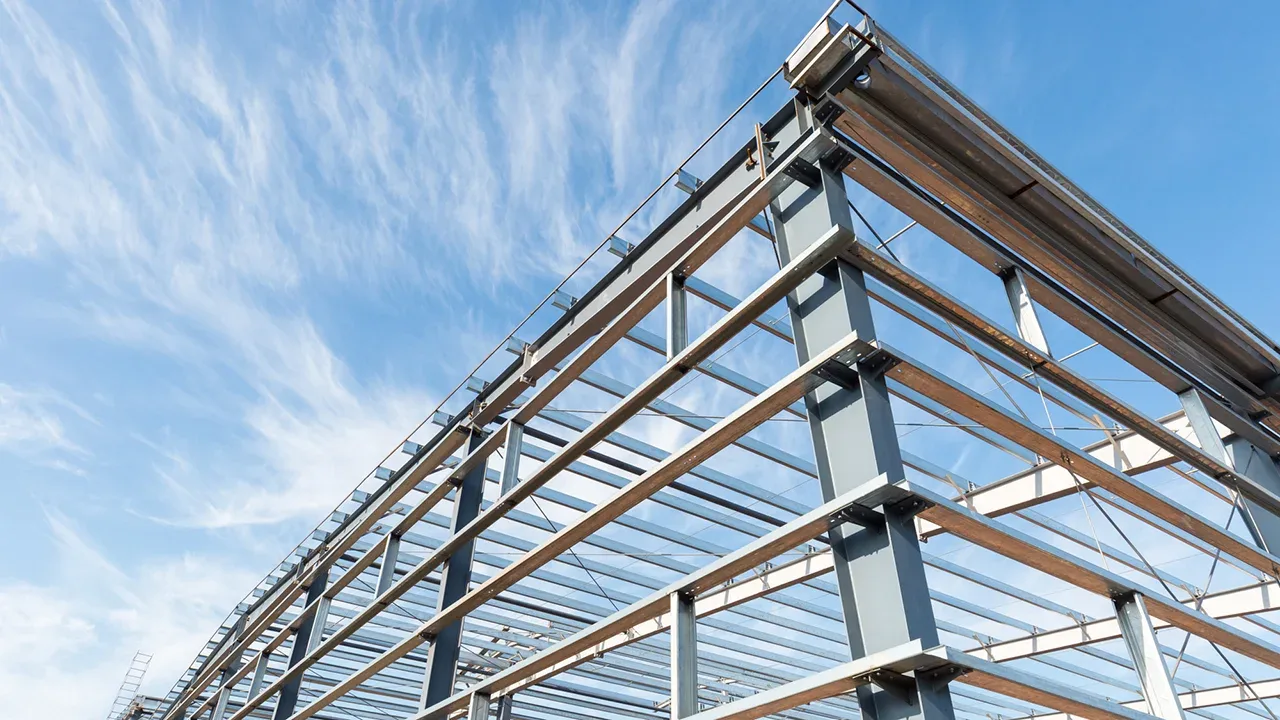
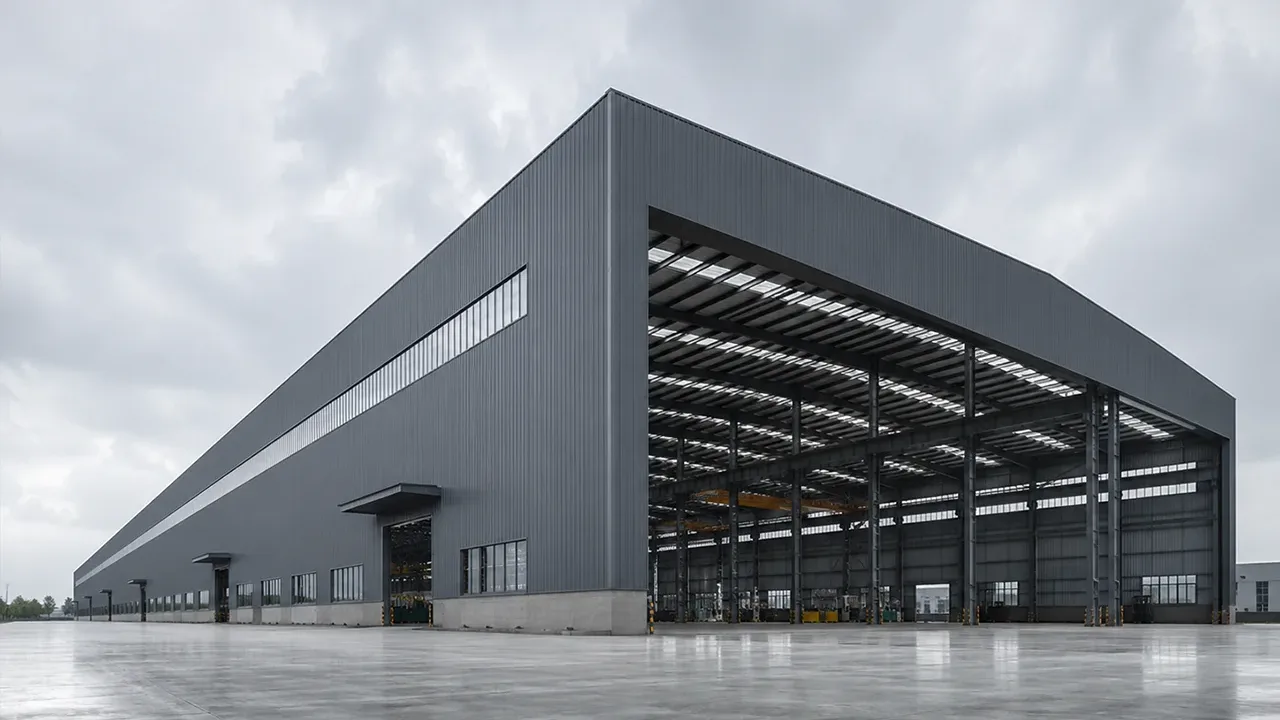
Moment-resisting end-plate connections help a steel structure control rotation, resist lateral loads, and distribute bending forces through the frame. In portal frames, warehouse frames, crane-supported buildings, and long-span industrial structures, connection stiffness can directly affect frame deflection and serviceability.
When moment connections are designed properly, they help the frame act as a coordinated structural system rather than a set of isolated members. This is especially valuable when the building must resist wind pressure, uplift, equipment movement, or repeated service loads over time.
How XTD Steel Structure Supports Connection Design and Fabrication
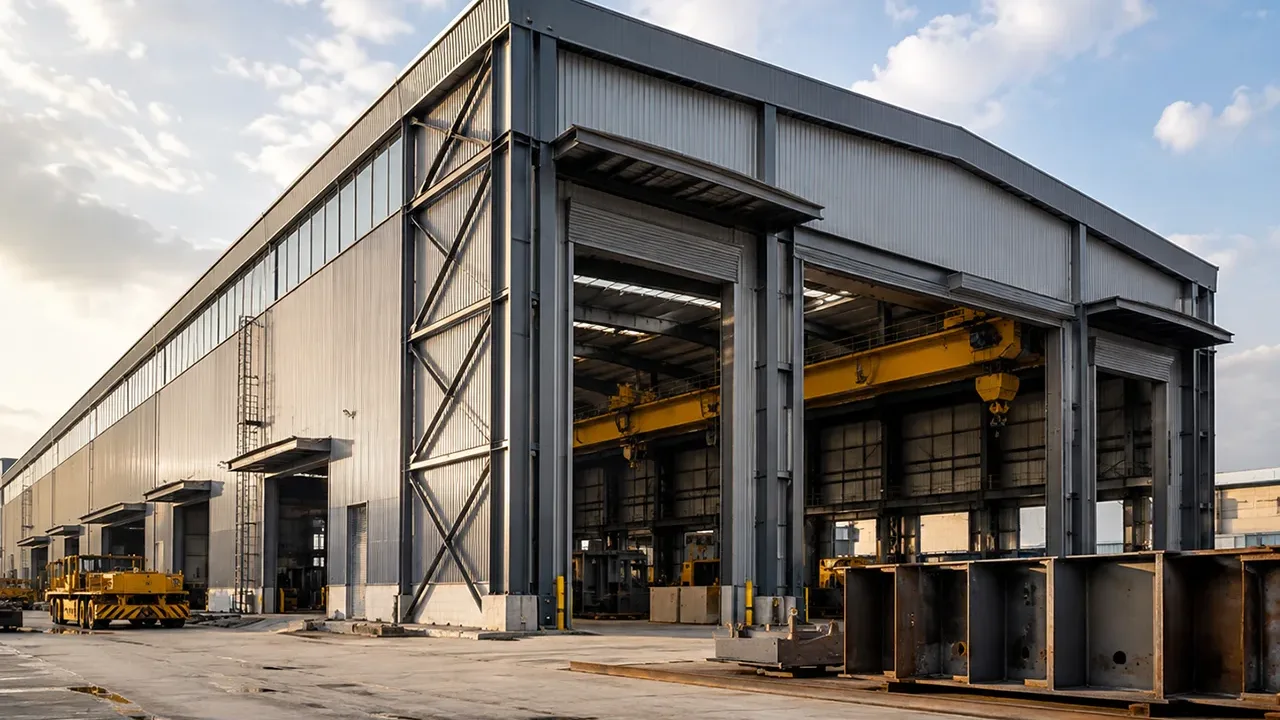
For industrial steel buildings, warehouses, factories, and long-span structures, connection quality affects both structural safety and installation efficiency. XTD Steel Structure supports connection design and fabrication through engineering coordination, shop drawing review, end-plate processing, bolt-hole accuracy control, welding quality inspection, and site installation support.
This integrated approach helps ensure that end plates, bolts, welds, stiffeners, and supporting frame members are coordinated as part of one complete structural system. By controlling both design details and fabrication quality, XTD Steel Structure helps improve the reliability of bolted moment connections in practical steel building projects.
Practical Takeaway for Bolted End-Plate Moment Connections
Moment loads in bolted end-plate connections require more than selecting a bolt size or increasing plate thickness. The complete force path must be reviewed, including the beam flange, welds, end plate, bolt group, column flange, stiffeners, and surrounding frame behavior.
A reliable connection depends on engineering calculation, fabrication precision, and installation quality working together. When each part of the connection is properly designed and coordinated, bolted end-plate moment connections can provide strong, practical, and efficient support for modern steel building frames.
FAQ About Moment Loads in Bolted End-Plate Connections
What Are Moment Loads in Bolted End-Plate Connections?
Moment loads in bolted end-plate connections are bending forces transferred through the beam-column joint. They usually create tension in one region of the connection and compression in another.
Are All Bolted End-Plate Connections Moment Connections?
No. Some bolted end-plate connections are designed mainly for shear transfer, while others are detailed as semi-rigid or rigid moment connections. The design intent must be clear before selecting the connection type.
Why Is End-Plate Thickness Important?
End-plate thickness affects bending stiffness, bolt force distribution, prying action, and overall connection capacity. A thin plate may deform more and increase bolt tension.
What Is Prying Action in an End-Plate Connection?
Prying action is additional bolt tension caused when the end plate bends and creates leverage against the connected surface. It is an important check in moment-resisting end-plate design.
When Are Stiffeners Needed?
Stiffeners may be needed when moment demand is high, end-plate bending is excessive, column flange deformation is significant, or additional local strength is required near the connection zone.