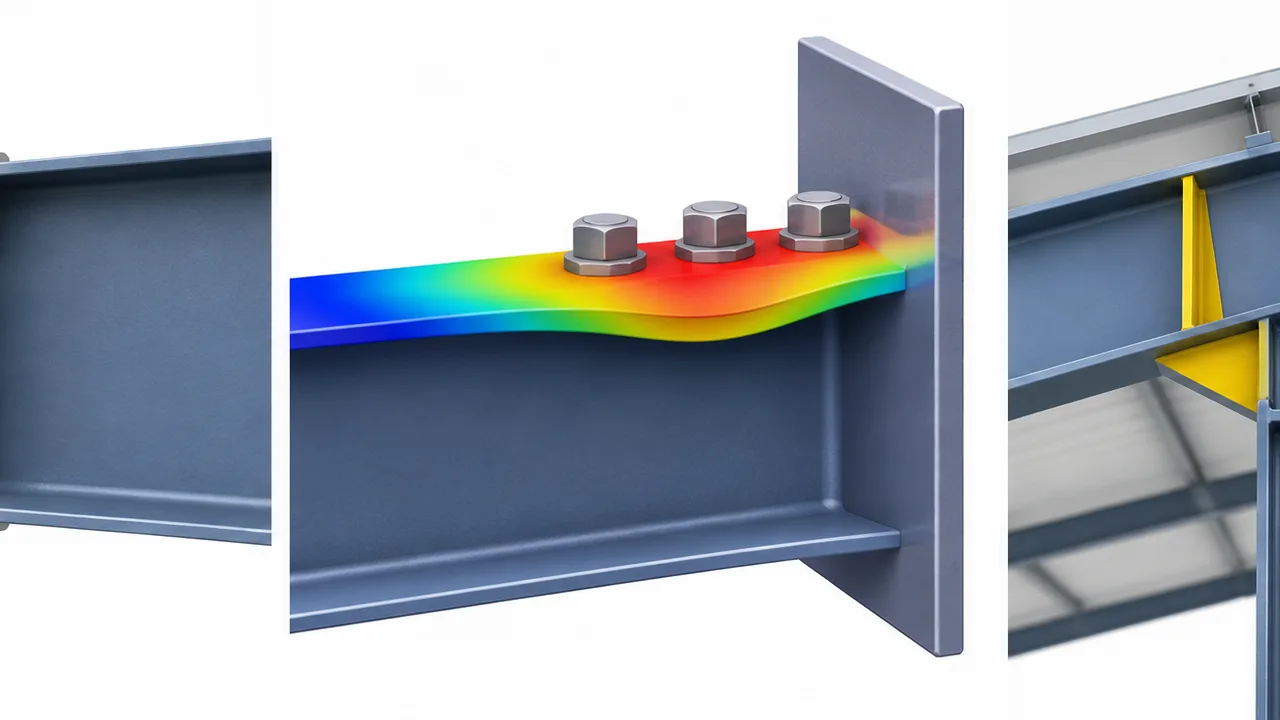
A steel connection can have adequate bolt strength, weld capacity, and overall member resistance while still developing excessive deformation in a localized flange region. Concentrated tension from bolts, compression from bearing zones, end-plate action, and moment transfer can all force a relatively small portion of the flange to behave like a flexible plate.
To prevent flange local bending, the designer needs more than a thicker flange. Stiffeners, continuity plates, bolt positioning, end-plate stiffness, weld detailing, and the surrounding web must work together so that concentrated forces enter the member through a clear and sufficiently stiff load path.
For industrial buildings, warehouses, portal frames, equipment structures, and other heavily loaded steel systems, controlling local flange deformation can improve connection strength, stiffness, fabrication reliability, and long-term structural performance.
Why Flange Local Bending Needs to Be Prevented
Flange local bending develops when a concentrated connection force acts over a relatively limited portion of a beam or column flange. The complete member may remain well below its overall bending capacity while the localized flange region experiences significant plate bending.
This deformation can influence more than the flange itself. As the flange bends, the geometry of the connection changes. Bolt tension can increase, additional prying action may develop, end plates can deform, and forces may redistribute into the adjoining web, welds, stiffeners, and other connection components.
Excessive local flexibility can also reduce the rotational stiffness expected from a moment connection. For connections that are assumed to behave rigidly or semi-rigidly in the structural model, significant local flange deformation can therefore affect both local component behavior and the response of the larger framing system.
How Concentrated Forces Create Flange Local Bending
Flanges are effective at carrying longitudinal bending stresses, but concentrated connection forces introduce a different type of demand. A bolt row, bearing plate, end plate, bracket, haunch, or other connection component can introduce a large force into only part of the flange width.
The flange must then transfer that force toward the web, stiffener, or another supporting structural component. Locally, the flange behaves like a plate spanning between the applied force and its support. The greater this unsupported distance and the more flexible the flange, the greater the local bending demand.
Important variables include flange thickness, flange width, steel yield strength, bolt location, end-plate stiffness, distance from the bolt row to the web, connection moment, and the presence or absence of reinforcement.
The Role of Load Path in Preventing Local Bending
A reliable solution begins by identifying where the connection force originates and where it must go. For a bolted moment connection, a simplified path may run from the tension bolts through the end plate, into the flange, through the web or local stiffeners, and finally into the supporting member.
If a stiffener is added but does not align with this force path, the flange may still need to bend significantly before the force reaches the reinforcement. Similarly, moving a bolt row farther away from the web can increase the local bending lever arm even if the bolts themselves have more than enough tensile capacity.
Connection forces should also be considered together with the member forces acting through the joint. Structural members can carry bending, shear, and axial loads simultaneously, so reinforcement should be designed as part of the complete connection rather than as an isolated plate addition.
Using Stiffeners to Prevent Flange Local Bending
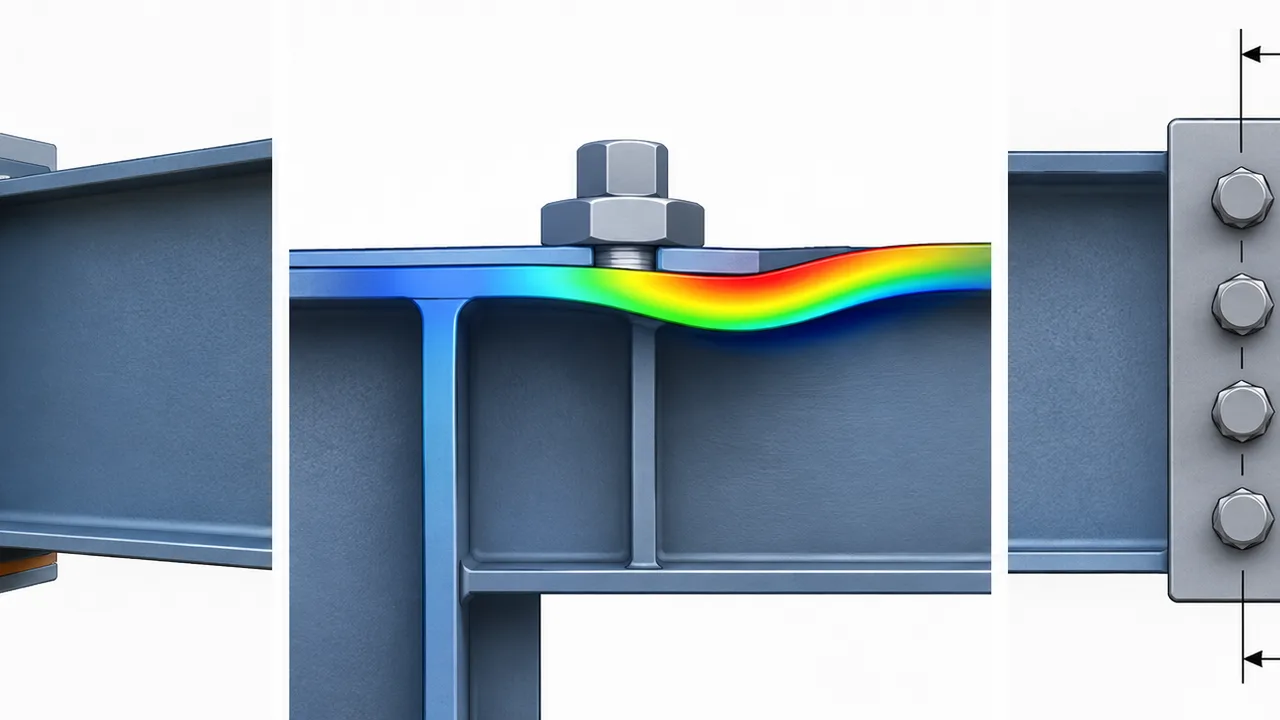
Transverse Stiffeners
Transverse stiffeners can provide a more direct path for concentrated forces between the flange and the web. Instead of requiring the flange plate to spread a large force over a relatively long unsupported distance, the stiffener provides additional support close to the loaded region.
This can significantly reduce local flange deformation when the stiffener is properly aligned with the applied force. Its thickness, width, welds, and connection to the surrounding member must still be sufficient to transfer the required load.
Continuity Plates
Continuity plates are commonly used where large tension and compression forces must pass through a beam-to-column or similar moment connection. They provide a continuous structural path across the web region and can reduce both flange deformation and localized web demand.
The location of the continuity plate should correspond to the actual force level entering the connection. A plate positioned away from the primary tension or compression resultant may provide less benefit than expected.
Full-Depth vs Partial-Depth Stiffeners
A full-depth stiffener extending between both flanges can provide strong restraint and direct load transfer through the full depth of the member. However, full-depth reinforcement is not required for every condition.
A partial-depth stiffener may be sufficient where the concentrated force and required load path are localized near one flange. The appropriate arrangement depends on the direction of force, connection geometry, web behavior, opposite-flange restraint, and applicable structural design requirements.
Stiffener Thickness and Strength
A stiffener must have sufficient thickness and material strength to carry its portion of the connection force. A plate that is too thin may yield, bend, or buckle before it can provide the intended support to the flange.
Increasing stiffener thickness can improve resistance, but simply using a heavy plate does not guarantee an efficient solution. The welds, supporting web, flange, and surrounding connection also need sufficient capacity.
Why Stiffener Buckling Must Also Be Checked
Adding a stiffener may reduce flange bending while introducing another potential limit state. A stiffener subjected to significant compression can behave as a slender plate or compression element and may lose stability before reaching its full material strength.
For this reason, designers should coordinate reinforcement sizing with appropriate stiffener buckling checks. Plate slenderness, unsupported dimensions, edge restraint, weld configuration, load direction, and the interaction with the surrounding web all influence stability.
The objective is not simply to add reinforcement, but to ensure that the reinforcement remains stable while transferring the force for which it was introduced.
How Bolt Layout Affects Flange Local Bending
Bolt Distance from the Supporting Web
The distance between a tension bolt and the supporting web strongly influences the local bending lever arm. If the bolt is positioned far from the web or another stiff structural line, the flange must transfer the bolt force over a larger unsupported distance.
Where connection geometry permits, positioning bolt forces closer to effective support can reduce flange bending demand without increasing member size.
Bolt-Row Spacing
Bolt-row spacing affects how tension is distributed through the end plate and flange. Closely coordinated rows can provide a more controlled force distribution, while an inefficient layout can concentrate large forces into a small flange region.
The designer should consider the complete bolt group rather than evaluating each bolt in isolation. The relative stiffness of the end plate and flange influences how the total connection moment is distributed between individual rows.
Edge Distance
Adequate edge distance is necessary for bolt detailing and connected-part resistance, but the location of a bolt relative to the flange edge also affects the local plate geometry. Excessive cantilevered plate width around a highly loaded bolt can contribute to deformation and prying action.
Bolt layout therefore needs to balance code requirements, fabrication access, erection practicality, and local plate behavior.
Symmetrical Bolt Arrangement
A symmetrical arrangement can help produce a balanced connection and predictable load distribution, particularly in ridge connections, splice connections, and other details with approximately symmetrical loading.
However, symmetry should not replace structural analysis. If the force path itself is asymmetric, the connection may still develop unequal bolt forces and localized flange demand.
End-Plate Thickness and Its Interaction with Flange Bending
The end plate and supporting flange deform together. If the end plate is highly flexible, it can bend around the tension bolts and alter the distribution of bolt forces. If the flange is also flexible, the deformation of both components can become significant.
A thicker end plate can reduce plate bending, but it does not automatically prevent flange local bending. Once the end plate becomes relatively stiff, larger concentrated forces may still be transferred directly into the supporting flange.
For this reason, flange thickness, end-plate thickness, bolt location, web support, and stiffeners should be evaluated as interacting connection components rather than optimized separately.
Preventing Prying Action Around Tension Bolts
Prying action occurs when deformation of the connected plates produces additional forces in the tension bolts. The effect is closely related to the stiffness and geometry of the flange or end plate surrounding the bolt.
Reducing excessive plate flexibility can help control prying forces. This may be achieved by increasing plate thickness, improving support with stiffeners, reducing the unsupported distance between the bolt and supporting web, or modifying the bolt arrangement.
Simply selecting a larger bolt does not eliminate the mechanism that created the additional force. The local plate behavior should be corrected together with bolt capacity.
Flange Local Bending in Beam-to-Column Connections
Beam-to-column moment connections can introduce high concentrated tension and compression forces into column flanges. On the tension side, bolt forces may pull the column flange outward. On the compression side, bearing forces may introduce concentrated demand into the flange and web.
Continuity plates or transverse stiffeners can provide additional support where the column flange alone does not have sufficient local resistance. The reinforcement should align with the beam flange forces or other principal connection resultants.
The column web must also be evaluated because reinforcing the flange can redirect more load into the web. A successful connection detail should address the complete local force-transfer region.
Flange Local Bending in Portal Frame Connections
Portal frame eave and ridge connections frequently transfer substantial moments through bolted end plates, haunches, flanges, and webs. At an eave connection, high tension forces can develop in specific bolt rows while the opposite region transfers compression.
Proper bolt positioning and flange reinforcement can help prevent flange local bending in these highly loaded regions. Haunch geometry can also influence the force demand by changing member depth and connection stiffness.
Any reinforcement should be coordinated with the final portal frame analysis because changes in member stiffness, haunch dimensions, roof geometry, or support conditions can modify the forces at the connection.
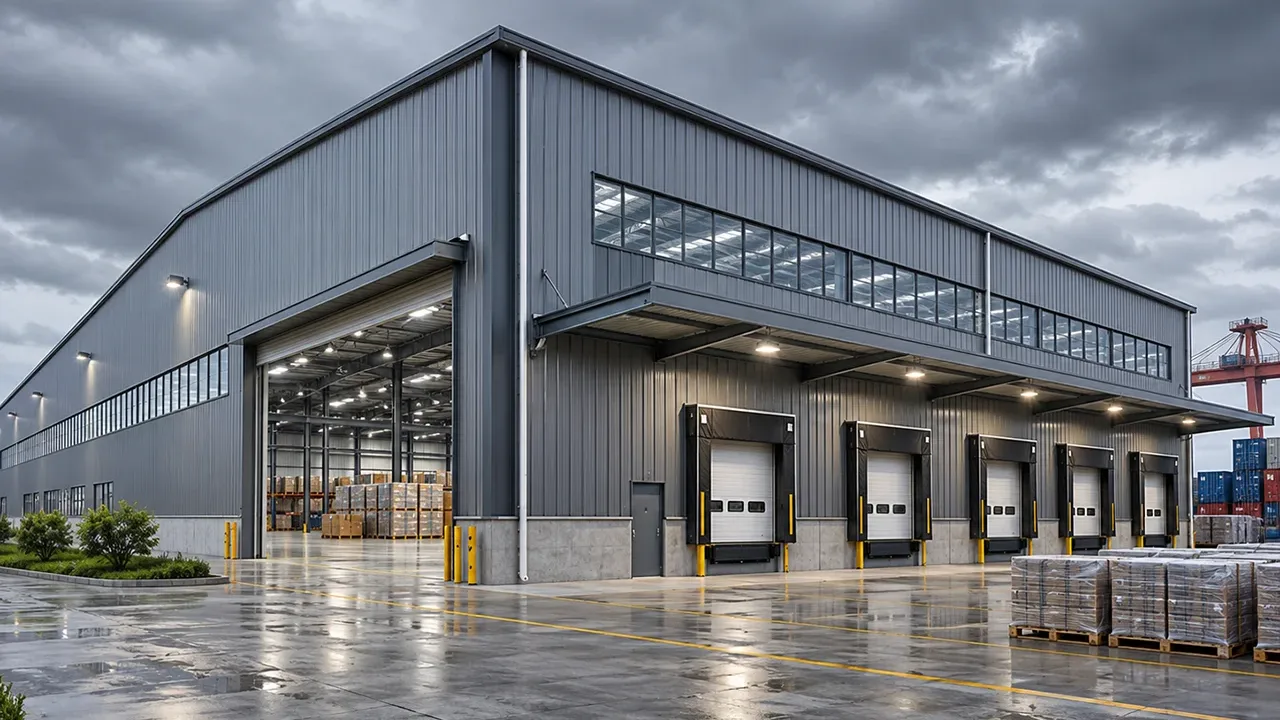
Flange Local Bending in Steel Structure Warehouse Projects
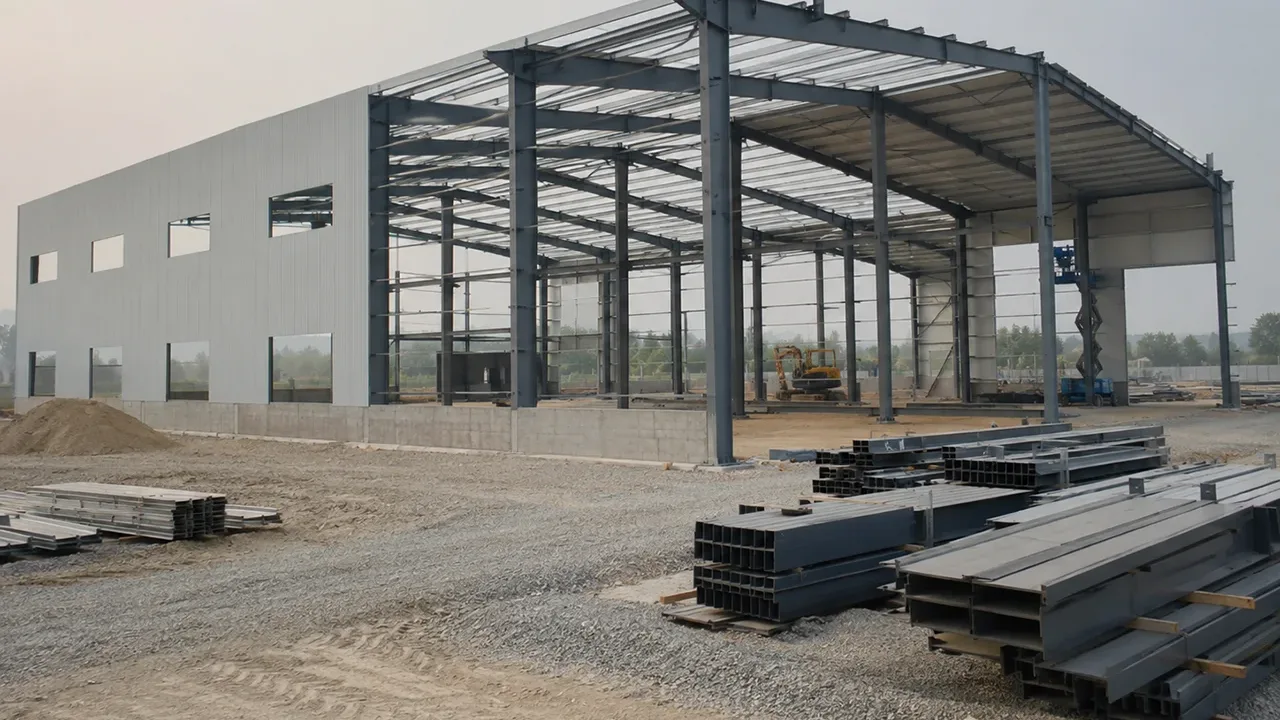
A steel structure warehouse commonly uses repetitive portal frames with large clear spans. This structural arrangement is efficient, but it can generate significant moments at eave and ridge connections, particularly under high wind loads or long-span conditions.
Crane systems, mezzanines, equipment supports, canopies, and other secondary structural systems may introduce additional forces or change the distribution of loads within the main frame. Local connection details should reflect these actual project conditions.
Because warehouse frames often repeat the same connection many times, an efficient stiffener and bolt arrangement can have a substantial effect on fabrication cost. A detail that uses unnecessary plates or complicated welding at every frame may become expensive even if the added steel weight appears small.
Comparison of Common Flange Local Bending Solutions
| Solution | Main Effect | Best Used When | Key Design Concern |
|---|---|---|---|
| Thicker flange | Increases local bending stiffness and resistance | The flange itself is the primary flexible component | Additional member weight and cost |
| Transverse stiffener | Provides a more direct local load path | Concentrated force acts near the flange and web | Stiffener buckling and weld capacity |
| Continuity plate | Transfers concentrated force across the connection region | Large moment-connection forces are present | Alignment, welding, and fabrication access |
| Revised bolt layout | Reduces local bending lever arm or improves force distribution | Poor bolt geometry drives flange demand | Edge distance, spacing, and installation access |
| Thicker end plate | Reduces end-plate deformation | End-plate flexibility contributes to connection deformation | Interaction with bolt and flange forces |
| Larger member section | Increases flange, web, and overall connection-region capacity | Several local and global limit states govern | Higher material weight and cost |
Common Mistakes When Trying to Prevent Flange Local Bending
One common mistake is adding stiffeners before determining which component actually governs the connection. If excessive end-plate bending or bolt tension is the controlling problem, a flange stiffener alone may not provide the required improvement.
Another mistake is positioning a stiffener away from the actual load path. The flange may still need to bend before the force reaches the reinforcing plate, reducing its effectiveness.
Designers should also avoid ignoring stiffener stability. A thin reinforcement plate may provide apparent support in a simplified model but buckle when subjected to actual compression.
Poor bolt spacing can create similar problems. Moving bolts farther from the supporting web may make fabrication easier in some details but increase flange bending demand. Likewise, increasing bolt strength alone does not correct excessive flange or end-plate flexibility.
Fabrication Considerations for Stiffeners and Bolt Layout
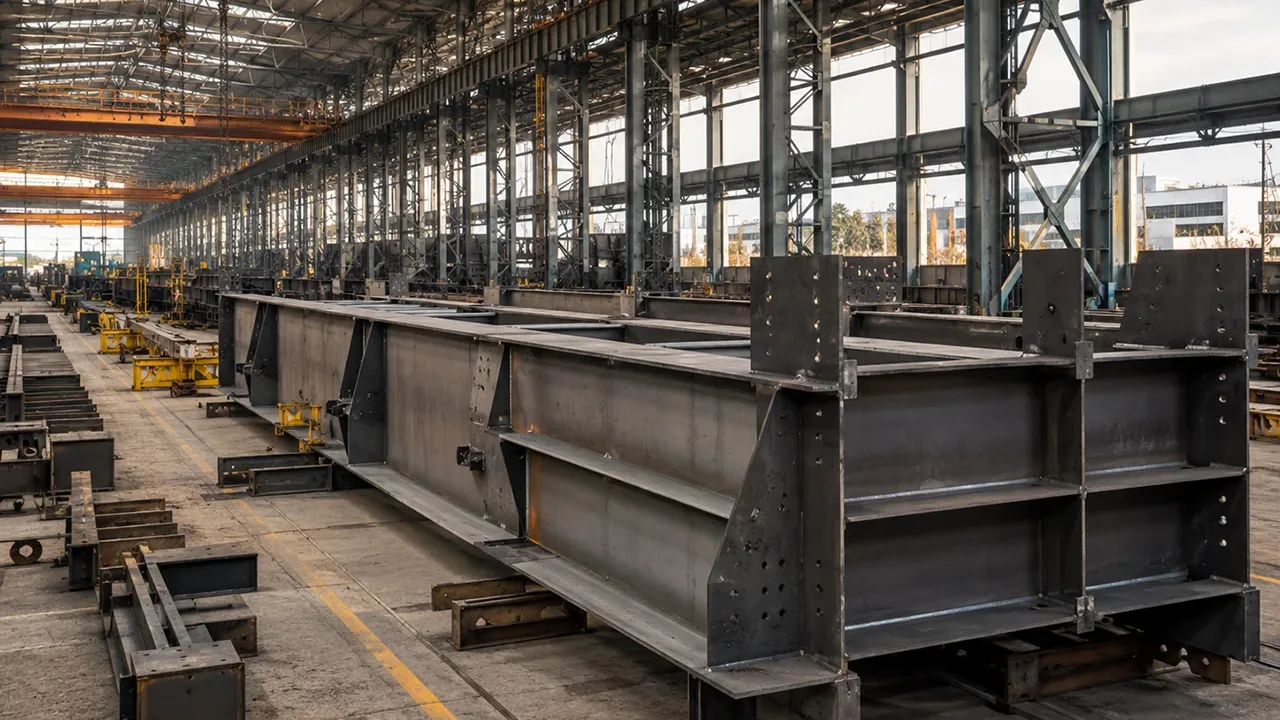
Reinforcement should be practical to fabricate. Stiffeners require sufficient access for welding, correct fit-up against the intended supporting surfaces, and dimensional control so that the finished component matches the structural design assumptions.
Heavy welding can introduce distortion into relatively thin flanges and webs. If welding pulls a flange or end plate out of alignment, the actual load path may become more eccentric than intended.
Bolt-hole position is equally important. Small dimensional changes in a heavily loaded connection can affect edge distance, bolt spacing, plate fit-up, and the distance between the bolt force and supporting web.
Installation and Inspection Requirements
During erection, inspectors should confirm that stiffeners, end plates, bolts, and adjoining members match the approved connection geometry. Connection surfaces should fit as intended, and bolts should be installed and tightened according to the specified procedure.
Unexpected gaps, forced alignment, field-cut stiffeners, relocated holes, or modified welds can change local connection behavior. These changes should not be treated as insignificant simply because the overall member remains in its intended position.
For highly loaded connections, dimensional inspection provides an important link between the structural calculation and the actual installed load path.
How XTD Steel Structure Coordinates Flange Reinforcement
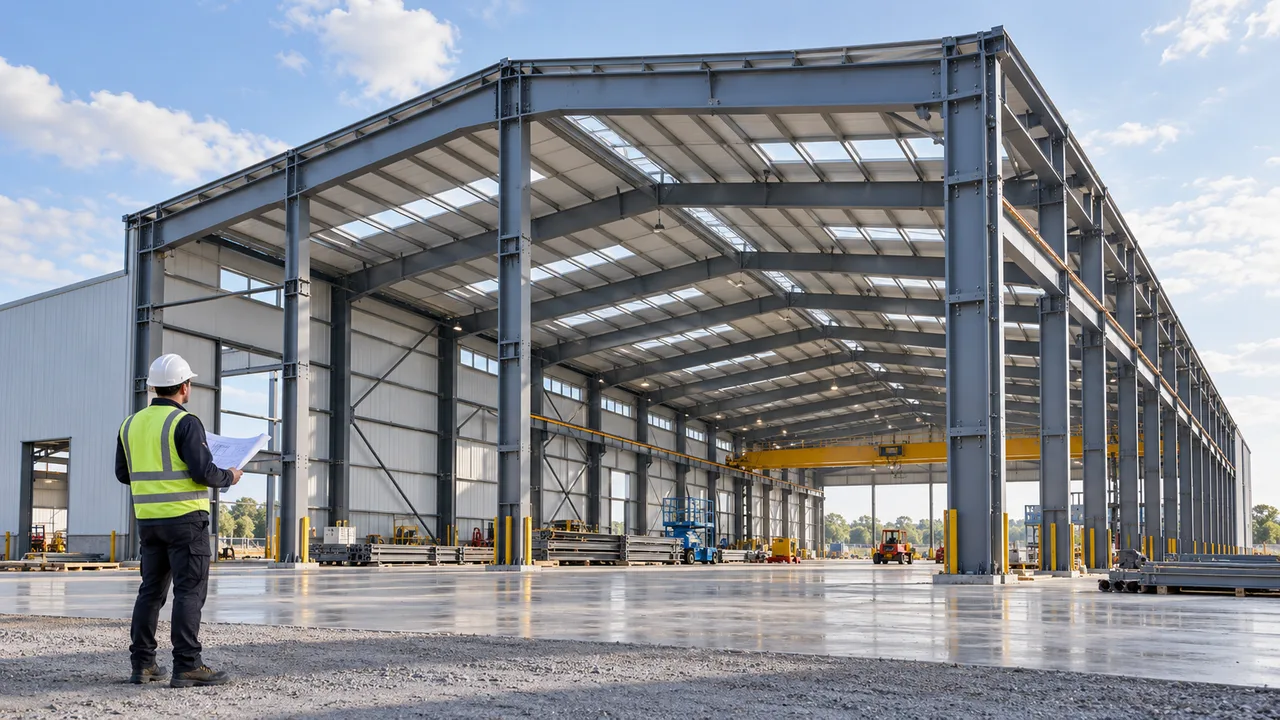
XTD Steel Structure coordinates structural analysis, connection geometry, bolt layout, stiffener design, welding requirements, fabrication tolerances, dimensional inspection, and erection considerations as parts of the same steel structure system.
For industrial buildings and warehouse projects, this coordination helps determine whether local reinforcement is genuinely required and, when it is, how it can be incorporated without unnecessarily complicating repetitive fabrication.
The objective is to provide a connection in which the flange, web, bolts, plates, stiffeners, and welds work together through a clear and practical load path.
Practical Design Strategy to Prevent Flange Local Bending
The first step is to identify the concentrated force and determine exactly how it enters the flange. The designer should then evaluate the local flange plate geometry, supporting web, end plate, bolts, welds, and any existing reinforcement.
Where possible, improving the bolt arrangement can reduce local bending demand without adding steel. If additional support is necessary, stiffeners or continuity plates should be aligned with the actual connection forces and designed for the resulting tension or compression.
To reliably prevent flange local bending, the final detail should also verify stiffener stability, weld capacity, adjoining web behavior, bolt forces, end-plate deformation, fabrication tolerances, and installation practicality. The most effective solution is the one that resolves the governing limit state while maintaining a complete and efficient structural load path.
FAQ About Preventing Flange Local Bending
What Is the Most Effective Way to Prevent Flange Local Bending?
The most effective solution depends on the governing mechanism. Options can include increasing flange thickness, adding properly aligned stiffeners or continuity plates, revising bolt positions, increasing end-plate stiffness, or changing the overall connection geometry.
Can Stiffeners Completely Prevent Flange Local Bending?
Properly designed stiffeners can significantly reduce local flange bending by supporting the flange and creating a more direct load path. However, their effectiveness depends on their location, thickness, stability, weld capacity, and interaction with the surrounding web and flange.
How Does Bolt Layout Affect Flange Local Bending?
Bolt layout controls where concentrated tension enters the flange. Bolt position, spacing, distance from the supporting web, and arrangement of multiple bolt rows can all change the local bending lever arm and force distribution.
Should Bolts Be Positioned Closer to the Web?
Positioning highly loaded tension bolts closer to an effective supporting web can reduce the distance over which the flange must transfer the force and may reduce local bending. The final position must also satisfy spacing, edge-distance, installation, and connection-design requirements.
Can a Thicker End Plate Reduce Flange Local Bending?
A thicker end plate can reduce its own deformation and change bolt-force distribution, but it does not automatically eliminate flange local bending. The end plate and supporting flange should be evaluated together.
Do Stiffeners Need Buckling Checks?
Yes. Stiffeners carrying significant compression can buckle if their dimensions, slenderness, restraint, or connection details are inadequate. Stability should therefore be checked as part of the reinforcement design.
Is Increasing Flange Thickness Better Than Adding Stiffeners?
Not always. A thicker flange can simplify detailing but may increase the weight and cost of the complete member. Local stiffeners may be more efficient when high demand occurs only in a limited connection region, provided they are properly designed and practical to fabricate.
Why Is Flange Local Bending Important in Steel Structure Warehouse Connections?
Warehouse portal frames often use repetitive moment connections and large clear spans. Local flange deformation at these connections can affect bolt forces, connection stiffness, and load transfer, so controlling it is important for both structural reliability and efficient repetitive fabrication.