Complex Steel Structure Fabrication Services
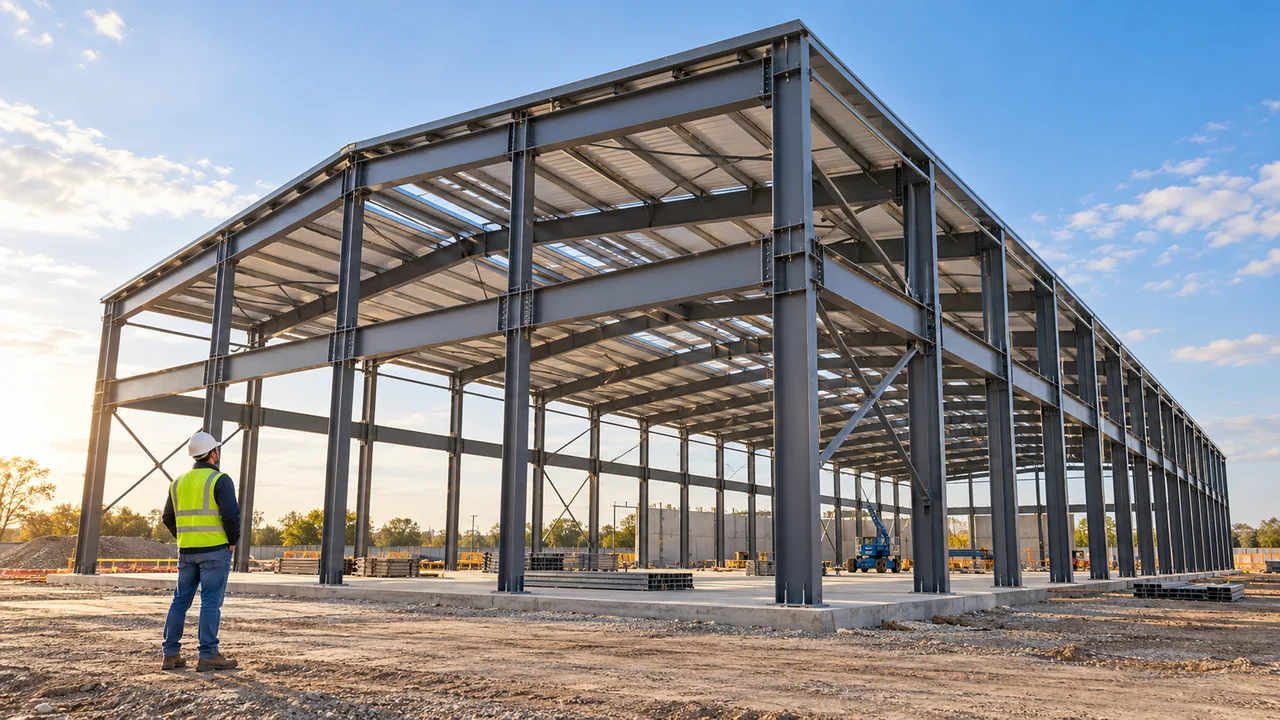
A complete complex steel structure fabrication service connects technical review, detailed production information, material processing, assembly, welding, inspection, and logistics planning. The exact scope depends on the project, but the workflow must remain coordinated because an error in one production stage can affect multiple downstream interfaces.
Complex structures may include irregular members, three-dimensional nodes, heavy built-up sections, multi-part trusses, spatial assemblies, or components that connect with equipment and other building systems. These conditions require disciplined production planning rather than isolated workshop operations.
From Engineering Information to Fabrication-Ready Components
The process begins with a review of structural drawings, technical specifications, models where available, and project-specific requirements. Fabrication teams assess member geometry, connection conditions, tolerances, weld access, assembly interfaces, and production constraints.
Shop information must clearly communicate component marks, dimensions, plate configurations, hole patterns, weld requirements, and related assembly references. Identifying conflicts before material processing begins can prevent expensive rework later.
Production Planning for Non-Standard Structures
Non-standard structures often need to be divided into manageable fabrication packages. Production planners determine how components move through cutting, preparation, fit-up, welding, inspection, surface treatment, and packing.
The sequence should also reflect dependencies between components. A critical node or mating assembly may need verification before related packages proceed to final finishing or shipment.
What Makes a Steel Structure Complex to Fabricate?
Irregular and Three-Dimensional Geometry
Curved members, inclined elements, variable sections, spatial forms, and non-orthogonal intersections can create significant fabrication challenges. Reference points may not follow conventional rectangular grids, and small dimensional deviations can accumulate across a large assembly.
These structures benefit from clear geometric control, coordinated detailing, and carefully defined inspection points throughout production.
Complex Nodes and Connection Assemblies
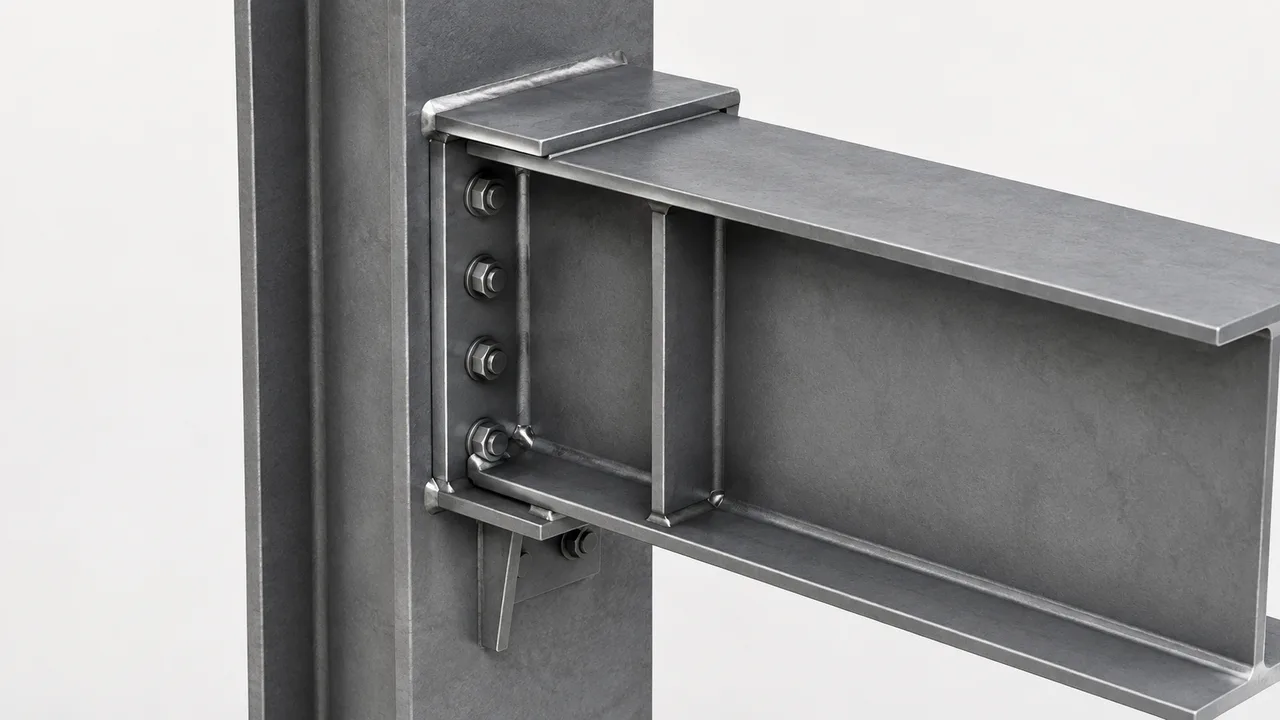
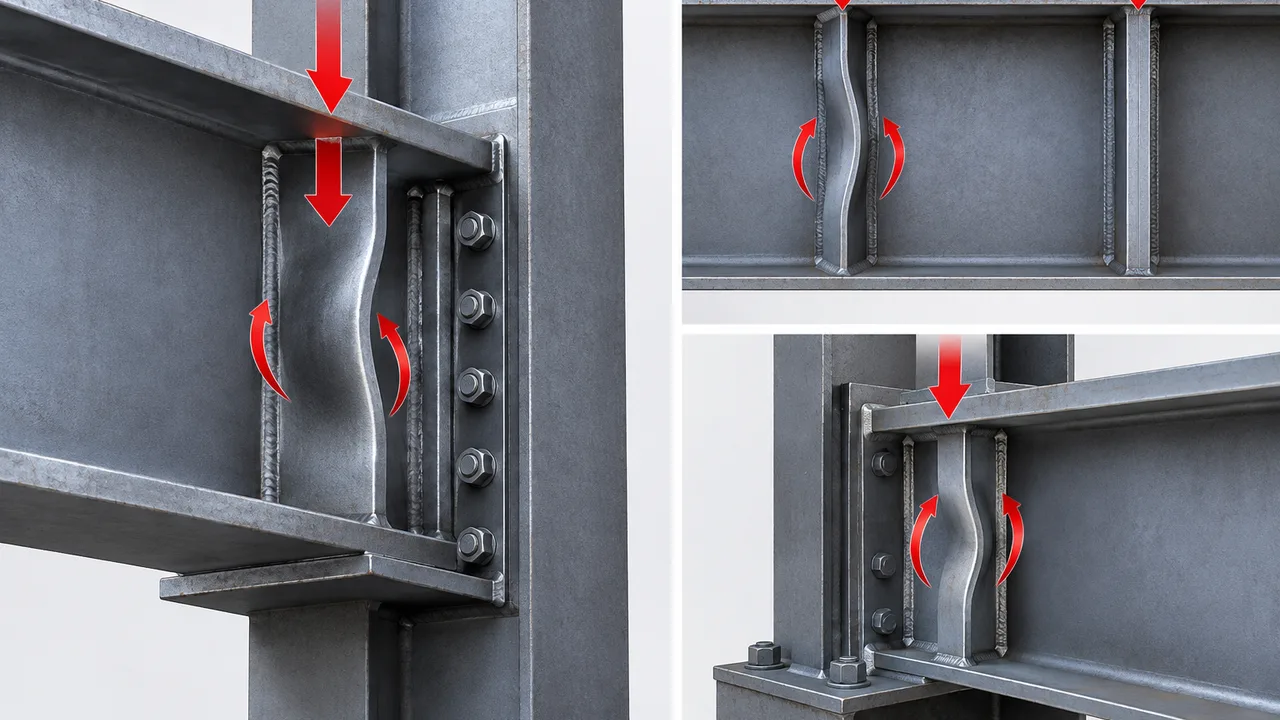
Multi-member nodes can concentrate numerous plates, stiffeners, bolts, welds, and intersecting elements within limited space. Fabricators must consider not only the final structural configuration but also practical access for fit-up, welding, inspection, and assembly.
Heavy connection zones may require carefully planned production sequences so that one operation does not obstruct or distort another.
Tight Dimensional and Interface Tolerances
Some assemblies connect directly with equipment, façades, secondary structures, or components produced in different fabrication packages. In these situations, dimensional control becomes critical because interface errors can create difficulties during erection.
Control dimensions, reference points, hole positions, and mating surfaces should be identified early and monitored throughout fabrication.
Heavy and Oversized Components
Large built-up members, heavy columns, deep beams, and long-span structural segments create additional requirements for workshop handling, lifting, turning, welding, and transportation. Production planning must account for both fabrication capacity and practical movement of the component.
Types of Complex Steel Structures We Fabricate
Special-Shaped Steel Structures
Special-shaped structures may include irregular architectural forms, curved members, inclined frames, or unique project-specific geometries. These structures often require close coordination between structural intent and manufacturing reality.
Where steelwork remains visually exposed, dimensional consistency and surface appearance may also require additional attention.
Space Frames and Spatial Structures
Three-dimensional structural systems rely on coordinated relationships between numerous members and nodes. Applications can include large roof structures, transport buildings, public facilities, and specialized industrial projects.
Accurate component identification and node coordination are essential because errors can propagate through interconnected spatial geometry.
Steel Trusses and Large-Span Assemblies
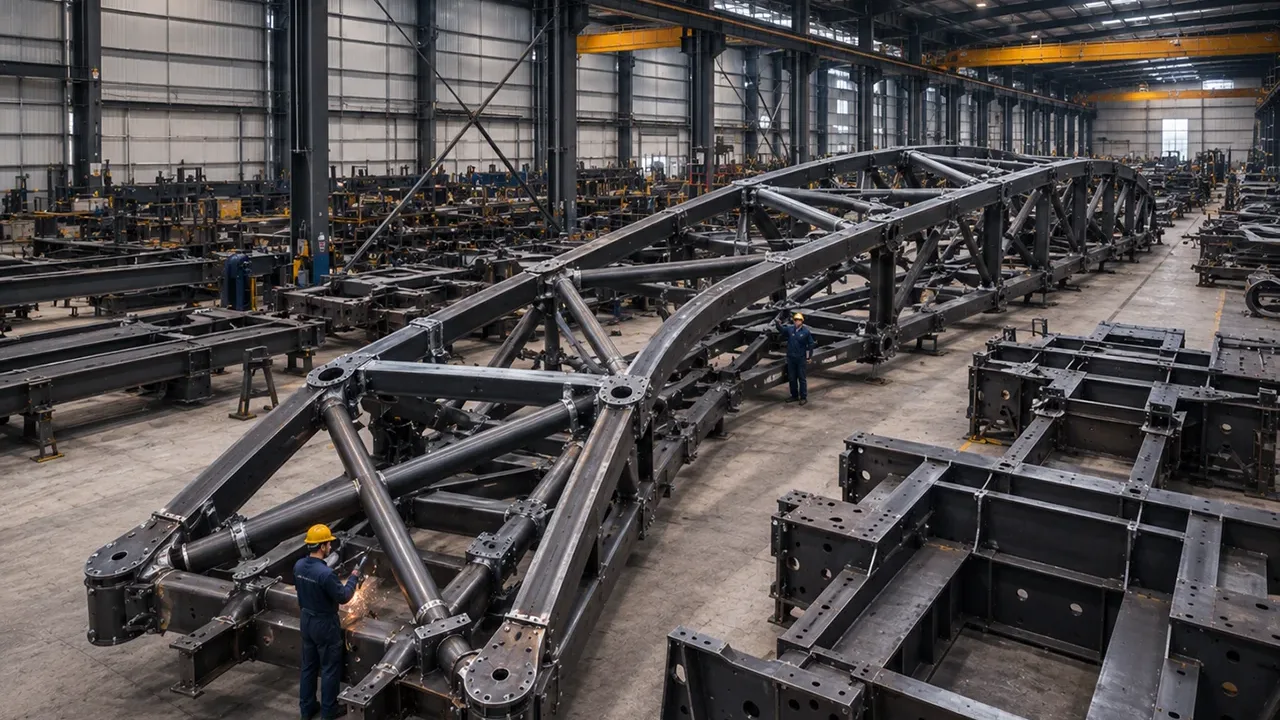
Long-span roof trusses, industrial trusses, transfer trusses, and other large assemblies may be fabricated in multiple segments. Splice locations, camber where specified, connection geometry, and trial fit-up requirements should be considered before production advances.
Segmentation can also be coordinated with transport restrictions and site lifting capacity.
Heavy Industrial Steel Structures
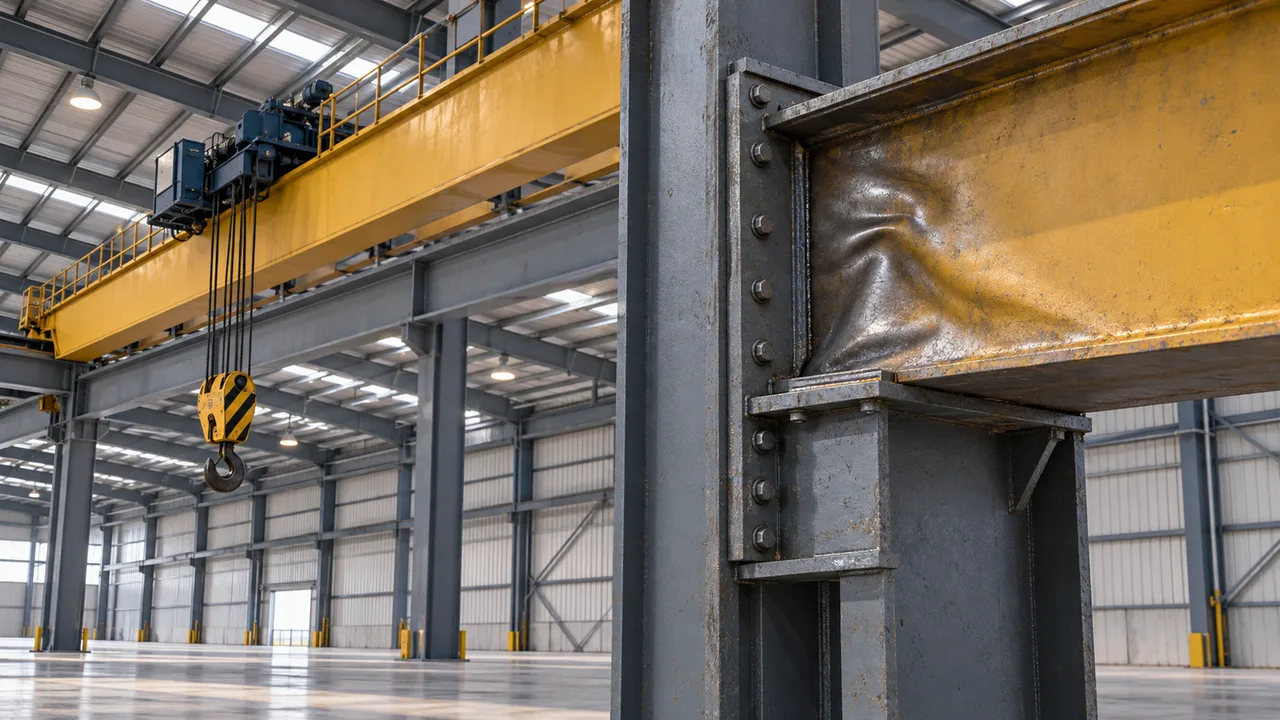
Industrial projects may require equipment support frames, platforms, process structures, crane-related components, and heavy load-bearing assemblies. These structures frequently combine substantial member sizes with demanding operational interfaces.
Fabrication planning should consider equipment clearances, maintenance access, connection zones, and installation sequence.
Multi-Storey and High-Rise Steel Components
Multi-storey projects can involve complex beam-column interfaces, bracing systems, transfer structures, and connections with composite construction. Repetitive floors may improve production efficiency, while transfer levels and special zones require more detailed coordination.
Applications Across Demanding Project Sectors
Industrial and Manufacturing Facilities
Manufacturing and process facilities often contain heavy equipment, cranes, pipe systems, platforms, and operational zones that create complex structural interfaces. Steel components may need to accommodate concentrated loads and strict spatial requirements.
Controlled fabrication supports better coordination between the primary structure and these operational systems.
Infrastructure and Transportation Projects
Transport-related and infrastructure projects can include large spans, irregular geometry, phased construction, restricted installation windows, and demanding interface conditions. Airport-related structures, station buildings, corridors, and other public infrastructure may require specialized fabrication planning.
Commercial and Public Buildings
Large atriums, exhibition facilities, complex roofs, and stadium-related structures can combine architectural requirements with demanding structural behavior. The fabrication strategy must preserve both geometry and connection compatibility.
Specialized Architectural Projects
Projects with non-standard forms may require custom members, unique nodes, and close coordination with façade or architectural systems. In these cases, fabrication accuracy directly influences both erection efficiency and the final appearance of the structure.
Engineering Review Before Complex Fabrication
Drawing and Model Review
Before production begins, structural drawings and available digital models should be reviewed for geometry, interfaces, member relationships, and potential conflicts. Missing or inconsistent information should be identified before it reaches the workshop floor.
This review is especially important where multiple disciplines contribute information to the same structural zone.
Constructability Assessment
A technically valid structural detail must also be practical to manufacture. Teams should assess whether components can be cut, formed, fitted, welded, inspected, transported, and erected as intended.
Access for welding and inspection is particularly important in congested nodes and enclosed assemblies.
Tolerance and Interface Planning
Critical dimensions should be distinguished from general dimensions. Control points can be established for mating components, major connection interfaces, and alignment-sensitive assemblies.
This approach helps manage cumulative dimensional error across larger structural systems.
Digital Detailing and Production Coordination
Shop Drawing Development
Shop drawings convert engineering requirements into practical workshop information. They may define member marks, plate dimensions, hole patterns, weld symbols, assembly relationships, and other production instructions.
Clear information reduces ambiguity and supports consistent fabrication across different production stages.
3D Coordination for Complex Geometry
Where available, three-dimensional coordination can help visualize spatial relationships, verify node arrangements, identify potential clashes, and improve assembly planning. It is particularly useful for irregular structures where conventional two-dimensional views may not fully communicate geometry.
Production Data Management
Complex projects can contain large numbers of related components. Consistent identification, material records, fabrication status, and package coordination help maintain control as components move through the workshop.
Material Preparation and CNC Processing
CNC Cutting and Profiling
CNC processing supports accurate preparation of steel plates, connection plates, stiffeners, and project-specific contours. Digital cutting information can improve repeatability and reduce manual layout errors.
For irregular geometry, precise profiling is especially important because downstream assembly depends on the accuracy of individual parts.
CNC Drilling and Hole Preparation
Accurate bolt holes support alignment between mating components and can reduce site adjustment. Hole patterns should correspond with approved production information and critical connection requirements.
Section Preparation
Structural sections may require saw cutting, bevel preparation, end profiling, coping, or other operations before assembly. Preparation quality directly influences fit-up and subsequent welding accuracy.
Welding Complex Steel Assemblies
Welding Procedure Control
Welding requirements depend on material grade, thickness, joint configuration, structural demand, and project specifications. Appropriate procedures and production controls help maintain consistent joint quality.
Sequence planning is also important because welding can introduce heat-related deformation into complex assemblies.
Distortion Management
Fabricators can manage distortion through balanced welding sequences, suitable fixtures, temporary restraints, controlled fit-up, and dimensional checks during production. The appropriate strategy depends on component geometry and joint arrangement.
Monitoring geometry during fabrication is generally more effective than discovering significant deviation only after all welding is complete.
Multi-Pass and Heavy Joint Welding
Thick plates, heavy built-up members, and demanding connection zones may require multi-pass welding and carefully controlled production sequences. Access, heat input, intermediate inspection, and dimensional stability should be considered.
Weld Inspection
Inspection may include visual examination and non-destructive testing according to project requirements. Acceptance criteria, inspection scope, and documentation should align with applicable specifications.
Assembly, Trial Fit-Up, and Dimensional Control
Workshop Assembly of Complex Components
Workshop assembly can verify geometry and connection compatibility before components leave the production facility. This is particularly valuable for critical nodes, irregular assemblies, and components with multiple interfaces.
Trial Assembly Where Required
Trial fit-up may be appropriate for multi-segment trusses, spatial assemblies, complex nodes, or other critical interfaces. The purpose is to confirm compatibility before shipment rather than relying on extensive correction during erection.
Dimensional Verification
Verification can include overall length, diagonal dimensions, alignment, hole positions, connection geometry, and project-specific control points. Inspection should focus on dimensions that directly affect downstream assembly.
Fabrication of Large and Heavy Steel Components
Built-Up Steel Members
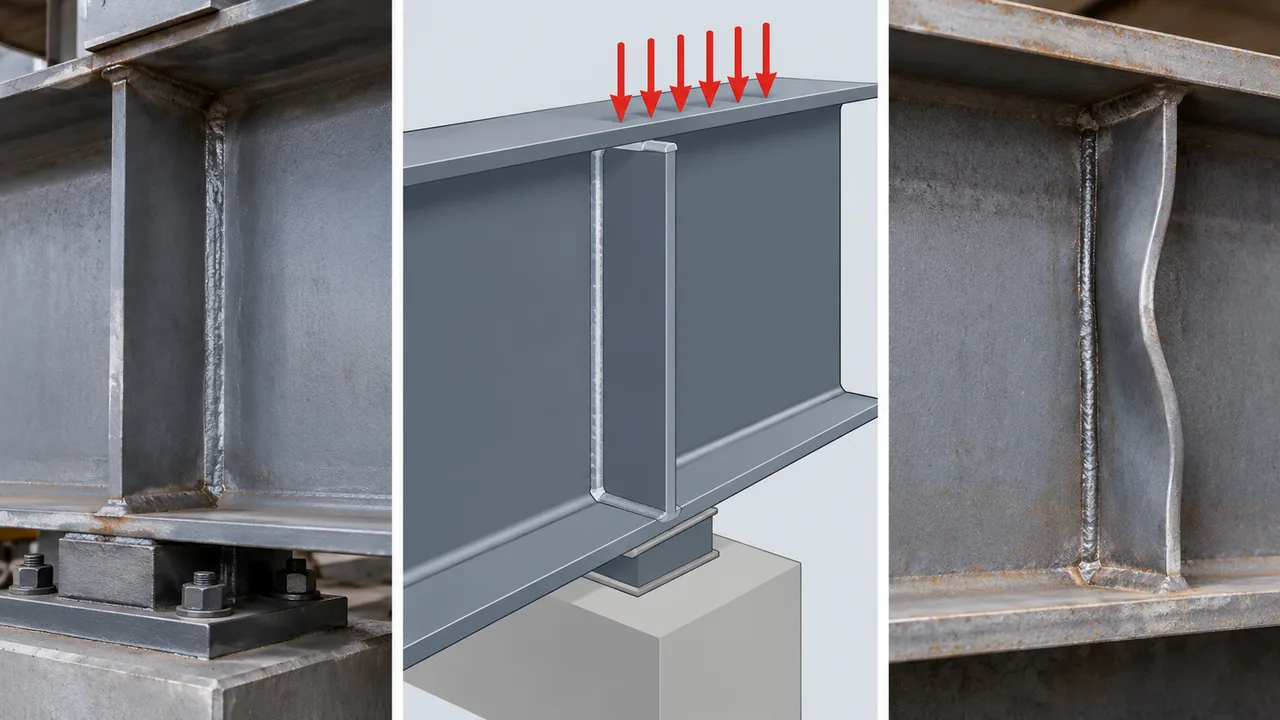
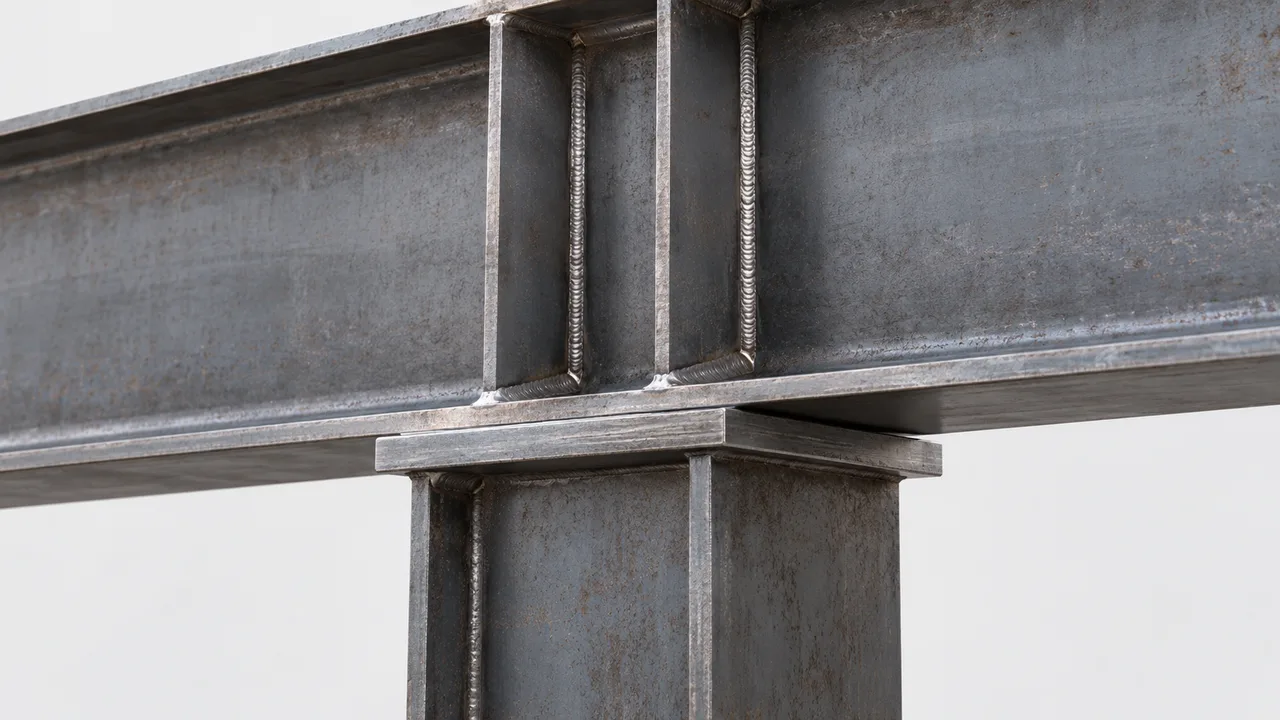
Fabricated beams, heavy columns, variable-depth members, and project-specific sections can be produced where standard rolled profiles do not satisfy structural or geometric requirements.
These members require coordinated plate preparation, fit-up, welding, and dimensional control.
Large Structural Segments
Large components require sufficient workshop space, appropriate handling methods, planned lifting points, and clear production sequences. The ability to fabricate a component must be considered together with the ability to move, inspect, finish, and dispatch it.
Segmentation for Transport and Installation
Oversized structures can be divided into practical shipping units. Field splice positions should be coordinated with structural requirements, transport dimensions, lifting capacity, and erection access.
Effective segmentation preserves geometric continuity while making delivery and installation manageable.
Surface Treatment for Complex Steel Structures
Surface Preparation
Surface preparation requirements depend on the specified protective system. Cleaning and abrasive blasting may be required to establish suitable conditions for coating adhesion and long-term performance.
Protective Coating Systems
Protection may include anti-corrosion primers, intermediate coats, finish coats, or project-specific industrial systems selected according to environmental exposure and specification requirements.
Hot-Dip Galvanizing Where Suitable
Galvanizing can be considered for suitable components, but geometry, dimensions, venting, drainage, and distortion risk must be reviewed. Not every complex assembly is equally appropriate for this treatment method.
Quality Control for Complex Steel Structure Fabrication
Material Verification and Traceability
Material grades and certificates should be reviewed according to project requirements. Identification and traceability may be maintained where specified to connect materials with relevant production records.
In-Process Inspection
Inspection during production can identify issues before they become embedded in completed assemblies. Teams may monitor fit-up, dimensions, welding stages, hole positions, and geometry at defined checkpoints.
Final Inspection Before Delivery
Final review can include dimensional verification, connection checks, surface condition, component identification, and completion of required documentation. Delivery readiness should be confirmed before packing and dispatch.
Managing Fabrication Tolerances and Accuracy
Critical Control Dimensions
Not every dimension has equal influence on erection. Critical control dimensions affecting connections, alignment, equipment interfaces, or mating assemblies should receive focused monitoring.
Interface Compatibility
Components produced at different times or in different fabrication packages must still connect correctly on site. Interface management is therefore essential for large and complex projects.
Reducing Site Modification
Better workshop verification can reduce the need for cutting, drilling, forced alignment, or other corrective work during erection. This is one of the practical objectives of controlled complex steel structure fabrication.
Production Capacity for Complex Projects
Multi-Stage Workshop Coordination
Complex fabrication requires coordination across material processing, fit-up, welding, inspection, surface treatment, and packing. Bottlenecks in one stage can affect the entire delivery sequence.
Production planning should therefore consider workshop flow rather than focusing only on individual machine capacity.
Parallel Fabrication of Multiple Packages
Large projects may require several fabrication packages to progress simultaneously. Clear component identification, separated work zones where practical, and coordinated inspection priorities help maintain control.
Scalable Capacity Without Losing Control
Increasing output should not eliminate dimensional checks or inspection checkpoints. Scalable capacity depends on balancing production speed with technical control, package traceability, and project priorities.
Logistics and Delivery Planning
Packaging and Component Identification
Clear member marking helps site teams identify components and connect deliveries with installation packages. Packaging should also protect critical surfaces and connection areas during handling and transport.
Container and Breakbulk Planning
Shipping methods depend on component dimensions, weight, destination, and project schedule. Containerized transport may suit smaller packages, while oversized elements can require breakbulk or other specialized arrangements.
Delivery Sequence Based on Erection Needs
Random shipment order can create unnecessary site handling. Where project conditions allow, delivery packages should reflect erection priorities so that unloading, storage, and installation can proceed more efficiently.
Why Choose a Specialist for Complex Steel Structure Fabrication?
Engineering Interpretation Capability
A specialist fabricator should be able to understand demanding drawings, models, interfaces, and project-specific requirements. Technical issues should be identified and communicated before they become production problems.
Advanced Fabrication Capability
CNC processing, controlled welding, heavy assembly, complex fit-up, and dimensional verification are important capabilities for non-standard projects. Equipment alone is not sufficient; these resources must operate within a coordinated production system.
Quality and Project Coordination
Inspection discipline, traceability, production sequencing, and logistics coordination help maintain control across complex project packages.
XTD Steel Structure supports demanding steel projects with coordinated engineering review, fabrication planning, CNC processing, welding, assembly, quality management, and delivery preparation for non-standard structural requirements.
Frequently Asked Questions
What is complex steel structure fabrication?
It is the controlled production of steel structures involving non-standard geometry, demanding connections, heavy components, tight tolerances, or intensive coordination between multiple assemblies and interfaces.
What types of complex steel structures can be fabricated?
Typical examples include large-span trusses, spatial structures, special-shaped steelwork, heavy industrial frames, built-up members, complex nodes, and multi-part structural assemblies.
How is dimensional accuracy controlled?
Accuracy can be managed through coordinated detailing, CNC processing, controlled fit-up, fixtures where appropriate, in-process inspection, dimensional verification, and trial assembly for critical interfaces when required.
Can large structures be fabricated in transportable sections?
Yes. Large structures can be segmented into practical shipping units, with field splices coordinated around structural behavior, transport restrictions, lifting capacity, and erection sequence.
Is complex fabrication suitable for international projects?
Yes. International delivery can be supported through export packaging, component identification, container or breakbulk planning, shipping coordination, and preparation of installation-oriented delivery packages.
Start Your Complex Steel Structure Fabrication Project
Successful complex steel structure fabrication requires more than workshop production capacity. It depends on engineering interpretation, coordinated detailing, accurate material processing, controlled welding, dimensional management, systematic inspection, and logistics planning working together across the complete fabrication cycle.
For special-shaped structures, large-span assemblies, heavy industrial components, spatial systems, or other demanding projects, early technical evaluation can help define a practical fabrication strategy. A coordinated approach allows production requirements, critical interfaces, quality controls, transport limitations, and erection needs to be addressed before they become costly downstream problems.