What Is EPC Steel Structure Construction?
EPC refers to Engineering, Procurement, and Construction. In structural steel projects, the model connects technical development with material supply, fabrication, delivery, and construction execution. Depending on the agreed scope, the EPC contractor or integrated project team may coordinate the complete process from initial requirements through structural completion and handover.
The three core stages are closely related:
- Engineering: defining structural requirements, developing the structural system, coordinating interfaces, preparing technical information, and reviewing constructability.
- Procurement: sourcing structural steel, connection materials, protective systems, and project-specific components according to approved requirements.
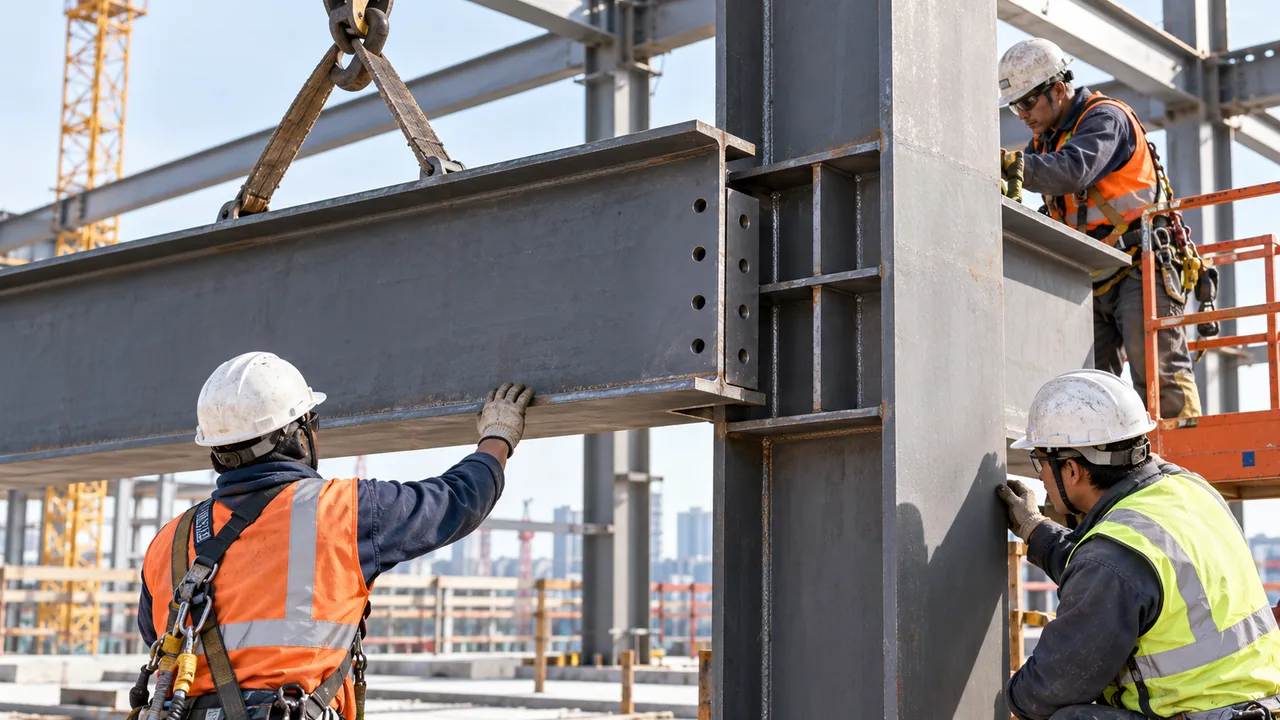
- Construction: coordinating site readiness, delivery sequencing, steel erection, structural connections, alignment, inspection, and completion.
Steel fabrication often forms the practical bridge between engineering and construction. Approved technical information must be converted into accurately processed components that can be transported, identified, assembled, and installed according to the planned construction sequence.
Engineering
The engineering stage establishes the technical basis of the project. It considers building use, operational requirements, structural loads, geometry, equipment interfaces, environmental conditions, applicable standards, and future expansion priorities where relevant.
Typical engineering activities may include:
- Structural system selection
- Load definition and coordination
- Connection planning
- Building geometry development
- Crane and equipment interface coordination
- Constructability review
- Shop drawing development
- Material and component scheduling
Early engineering coordination is especially important in industrial projects because the steel structure may interact with machinery, conveyors, process equipment, maintenance platforms, pipelines, bridge cranes, and other operational systems.
Procurement
Procurement converts approved technical requirements into an organized material supply strategy. The objective is not simply to purchase steel at the lowest unit price. Material grades, dimensions, availability, traceability, delivery timing, coating requirements, and compatibility with the fabrication schedule all influence project execution.
Procurement scope may cover:
- Structural steel plates
- Hot-rolled sections
- Built-up member materials
- High-strength bolts
- Connection plates and fasteners
- Secondary steel components
- Protective coating materials
- Specialized project components
Long-lead items and unusual material specifications require particular attention because delayed procurement can interrupt fabrication and subsequently affect shipment and erection milestones.
Construction
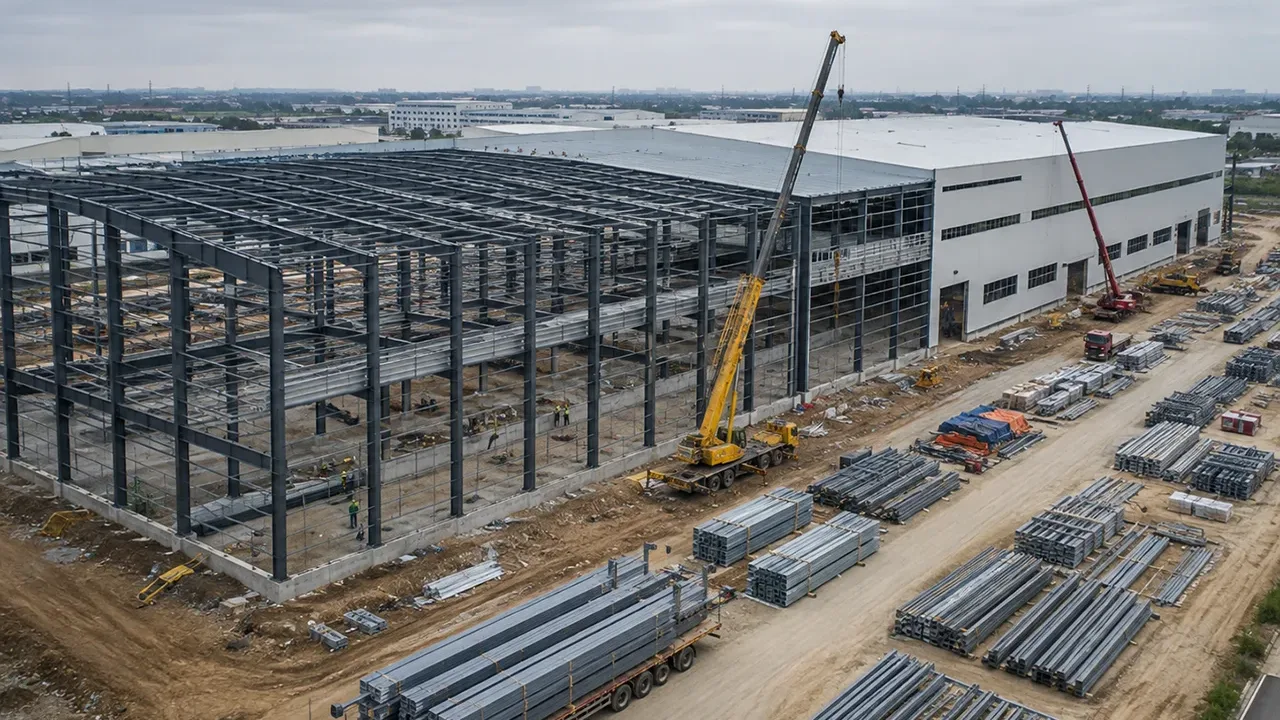
The construction stage transforms manufactured components into the completed structural system. Effective execution depends on more than lifting steel members into position. Foundation readiness, anchor bolt conditions, access routes, crane locations, temporary stability, component sequencing, connection procedures, and inspection activities must be coordinated.
A typical construction scope may include:
- Site readiness verification
- Delivery and unloading coordination
- Main frame erection
- Temporary bracing
- Secondary steel installation
- Bolted and welded connections
- Alignment verification
- Structural inspection
- Completion documentation
How the EPC Delivery Model Changes Steel Structure Projects
The primary value of an integrated model lies in how project interfaces are managed. Structural steel projects rarely fail because cutting, drilling, or erection exists in isolation. Problems more often develop when one stage proceeds without sufficient information from another.
Fewer Interfaces Between Separate Contractors
Traditional multi-contract delivery can divide responsibility among designers, procurement teams, fabricators, logistics providers, and erection contractors. This arrangement can work effectively when responsibilities are clearly defined, but complex projects may create communication gaps between packages.
An integrated workflow can reduce the number of disconnected interfaces by establishing clearer coordination between:
- Structural engineering and fabrication
- Material procurement and production planning
- Fabrication batches and shipping schedules
- Component packaging and erection sequence
- Site progress and future deliveries
This does not eliminate project risk, but it can make responsibilities and information flows easier to manage.
Earlier Coordination Between Design and Construction
Construction requirements can influence engineering decisions long before steel reaches the site. Large components may face transport restrictions. Heavy members may require specific lifting strategies. Certain connection arrangements may be difficult to access during erection. Remote sites may have limited crane availability or restricted storage areas.
By considering these factors during engineering and fabrication planning, the project team can identify practical constraints before they become field problems.
Better Control of Project Sequencing
Steel structure projects depend heavily on sequence. Engineering information must be released before procurement and production. Materials must arrive before fabrication begins. Components must be manufactured in a sequence compatible with shipment. Deliveries should support the erection plan rather than create unnecessary site congestion.
A coordinated EPC workflow can connect:
- Engineering release milestones
- Material procurement dates
- Fabrication priorities
- Inspection hold points
- Shipment batches
- Site erection targets
More Predictable Project Execution
No delivery model can guarantee that a complex construction project will be free from changes or delays. However, integrated visibility across project stages can support earlier identification of material risks, design conflicts, fabrication bottlenecks, logistics constraints, and site readiness issues.
Projects Suitable for EPC Steel Structure Construction
EPC steel structure construction can create particular value where the project contains multiple technical interfaces, significant steel tonnage, demanding schedules, specialized operational requirements, or international supply coordination.
Manufacturing Plants
Manufacturing facilities often combine structural requirements with production layouts, machinery foundations, bridge cranes, maintenance access, ventilation, utility systems, and future capacity expansion.
Typical applications include:
- Machinery manufacturing plants
- Assembly facilities
- Automotive-related factories
- Industrial equipment plants
- Heavy production halls
- Multi-bay manufacturing buildings
Early coordination can help align column spacing, clear height, crane systems, equipment zones, and future expansion requirements with the structural solution.
Industrial Warehouses and Logistics Centers
Modern logistics facilities may require much more than a basic storage shell. High-bay operations, automated systems, large loading zones, internal traffic routes, mezzanines, fire protection interfaces, and future extensions can influence the structural system.
Suitable projects may include distribution centers, raw-material warehouses, finished-goods storage facilities, e-commerce logistics buildings, and manufacturing support warehouses.
Mining and Resource Facilities
Mining projects often combine demanding environmental conditions with remote logistics and specialized operational structures. Steel packages may include processing buildings, maintenance workshops, equipment platforms, conveyor supports, storage buildings, and utility structures.
In remote locations, coordination between fabrication, packing, transportation, local installation resources, and construction sequencing becomes especially important. Missing or incorrectly identified components can create disproportionate delays when replacement supply requires long-distance transport.
Processing Plants
Processing facilities frequently contain multiple levels, equipment support frames, access platforms, pipe interfaces, material transfer systems, and maintenance routes. The steel structure must coordinate with the process rather than simply enclose it.
Applications can include mineral processing, food processing, raw-material handling, industrial production lines, and other facilities where structural systems interact closely with operational equipment.
Commercial and Public Steel Buildings
Some commercial and public developments can also benefit from integrated delivery, particularly where large spans, complex roofs, architectural geometry, or demanding schedules are involved. Examples may include exhibition buildings, public facilities, large commercial spaces, and specialized roof structures.
Infrastructure-Related Projects
Steel construction packages may support industrial corridors, utility structures, pipe racks, specialized platforms, transport-related facilities, and other infrastructure-linked developments. These projects often require careful interface management because the steel package connects with civil works, equipment systems, or existing infrastructure.
Engineering Stage of an EPC Steel Structure Project
Project Requirement Definition
Effective engineering begins with a clear understanding of how the facility will operate. Building dimensions alone are insufficient for complex industrial projects.
Requirement definition may consider:
- Building function
- Production workflow
- Structural loads
- Equipment locations
- Crane requirements
- Clear-height priorities
- Environmental exposure
- Expansion plans
- Construction schedule
The more accurately operational requirements are defined, the easier it becomes to develop a structural system that supports actual project needs.
Structural System Selection
Different projects require different structural solutions. Portal frames may be efficient for many industrial buildings, while trusses can support longer spans or specific roof geometries. Space frames may suit large covered areas, and heavy steel frames may be necessary where equipment or crane loads dominate.
Possible systems include:
- Rigid portal frames
- Steel trusses
- Space frame systems
- Heavy industrial frames
- Multi-level steel structures
- Customized hybrid arrangements
System selection should consider structural performance together with fabrication practicality, transport constraints, erection sequence, and lifecycle requirements.
Multidisciplinary Design Coordination
Industrial steel structures rarely operate independently. Coordination may be required with architecture, mechanical systems, electrical services, production equipment, fire protection, crane systems, conveyors, and civil works.
Early interface management helps identify conflicts before they reach fabrication or site installation.
Constructability Review
A structurally valid design must also be practical to manufacture, transport, lift, connect, and inspect. Constructability review examines whether the proposed solution can be executed efficiently under real project conditions.
Key questions may include:
- Can oversized members be transported to the site?
- Are lifting points and crane positions practical?
- Can connection zones be accessed during erection?
- Does the installation sequence maintain temporary stability?
- Are component sizes compatible with available fabrication capacity?
Fabrication Information Development
Approved engineering must eventually become clear production information. Shop drawings, material lists, connection details, component marks, and release packages create the link between design and manufacturing.
For large projects, organized release packages can support phased procurement and fabrication rather than waiting for the entire structure to reach the same level of completion.
Procurement and Supply Coordination
Structural Steel Material Procurement
Material procurement should align with approved specifications and the production schedule. Steel grade, plate thickness, section size, certification, availability, and lead time all affect planning.
Material verification may include:
- Grade confirmation
- Mill certificate review
- Batch identification
- Dimensional checks
- Traceability records
Connection Materials
Bolts, plates, fasteners, and specialized connection components should be coordinated with the structural design and installation sequence. Incomplete connection packages can delay erection even when the main steel members have already arrived.
Protective Coating Systems
Surface protection requirements depend on project conditions. Industrial steel may be exposed to humidity, coastal environments, dust, chemicals, temperature variation, or other aggressive conditions.
Coating planning may consider:
- Surface preparation requirements
- Primer selection
- Multi-layer coating systems
- Target dry film thickness
- Transport damage protection
- Site touch-up procedures
Procurement Schedule Management
Procurement must support production priorities. Long-lead materials, heavy plates, unusual sections, special bolts, or project-specific coating materials may need early release to prevent downstream delays.
Steel Fabrication Within the EPC Workflow
Fabrication converts coordinated engineering information and procured materials into physical components ready for erection. Within an EPC workflow, production planning should reflect not only workshop efficiency but also inspection requirements, shipment batches, and site installation priorities.
CNC Cutting and Drilling
Computer-controlled processing can improve dimensional consistency across repeated components and complex connection patterns. CNC operations may support:
- Plate cutting
- Section processing
- Precision drilling
- Hole positioning
- Component marking
- Preparation for assembly
Consistent processing accuracy can reduce fit-up problems during workshop assembly and field erection.
Assembly and Welding
Prepared components are positioned, fitted, and welded according to approved fabrication information. Production control may address joint preparation, welding sequence, heat input, distortion, and dimensional verification.
For large built-up members, distortion management is especially important because deviations can affect connection geometry and site alignment.
Heavy and Customized Fabrication
Industrial EPC projects may require non-standard components beyond conventional light steel building systems. These can include:
- Heavy built-up columns
- Deep fabricated beams
- Crane support members
- Equipment frames
- Industrial platforms
- Special connection assemblies
- Large-span structural components
Production methods should match the geometry, load requirements, material thickness, and inspection needs of each component type.
Quality Inspection
Quality management should be integrated throughout fabrication rather than postponed until final shipment. Inspection activities may include:
- Material verification
- Dimensional inspection
- Fit-up checks
- Visual welding inspection
- Non-destructive testing where specified
- Coating inspection
- Final component verification
Inspection scope should follow project requirements, applicable standards, approved procedures, and the structural significance of the components involved.
Component Marking and Packaging
Clear component identification becomes critical when a large project is delivered in multiple batches. Marking should support packing, shipment, unloading, storage, and erection.
For international projects, organized export packaging can also help protect components and simplify site identification after long-distance transportation.
Construction and Installation Stage
Site Readiness Verification
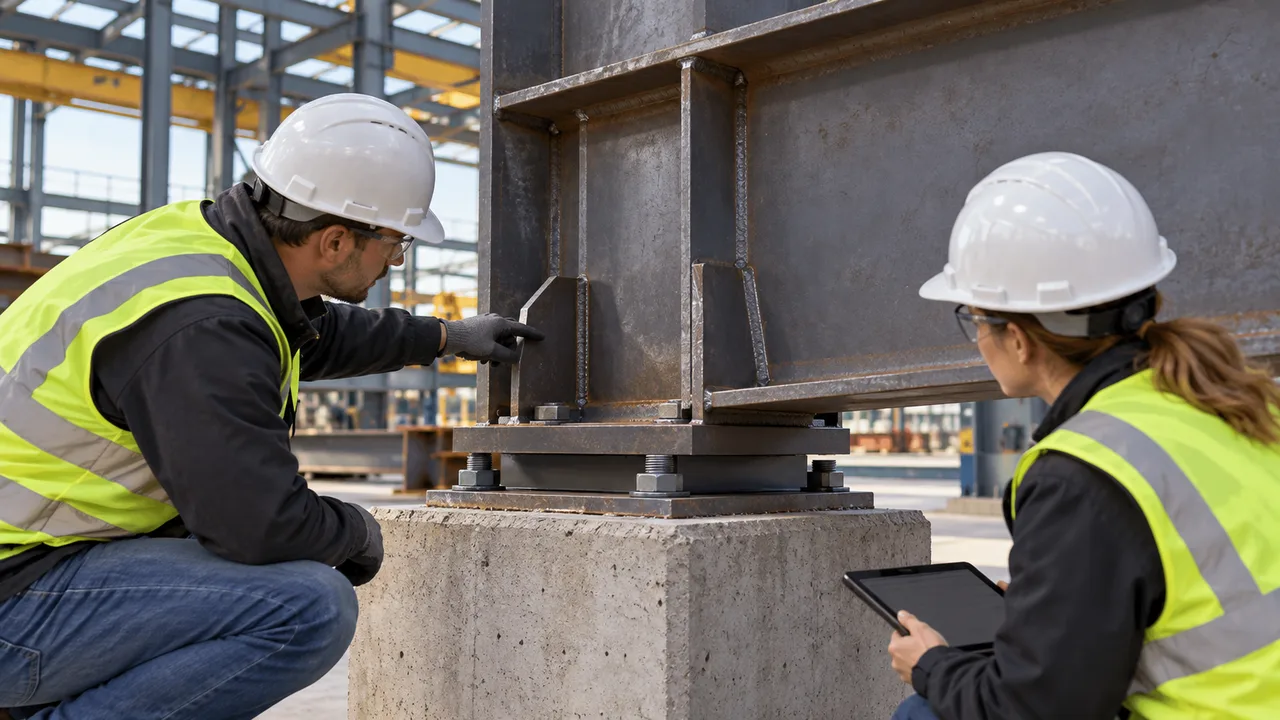
Before steel erection begins, site conditions should be checked against the planned construction sequence. Relevant items may include:
- Foundation completion
- Anchor bolt position
- Access roads
- Crane working areas
- Component storage zones
- Temporary support requirements
Early verification helps identify conditions that could otherwise interrupt erection after crews and lifting equipment are mobilized.
Delivery and Erection Sequencing
Shipping every available component to the site as early as possible is not always efficient. Excessive material can create congestion, complicate identification, and increase handling.
Coordinated delivery can align fabrication batches with:
- Erection zones
- Crane schedules
- Foundation readiness
- Available storage space
- Installation priorities
Main Structural Frame Installation
Main frame erection typically progresses through columns, primary beams or rafters, temporary bracing, and progressive stabilization. The exact sequence depends on the structural system and site conditions.
Temporary stability must remain a core consideration because partially completed structures may behave differently from the final completed system.
Secondary Steel Installation
Secondary components may include purlins, girts, bracing elements, roof supports, wall framing, and other members that contribute to stability or support the building envelope.
Their installation should be coordinated with the main frame, cladding sequence, access requirements, and other construction activities.
Alignment and Connection Verification
Before structural completion, the erected system may require checks covering geometry, verticality, alignment, bolt tightening, connection completion, and applicable weld inspection.
These controls help confirm that the installed structure reflects project requirements before subsequent work conceals or restricts access to critical areas.
Project Controls in EPC Steel Structure Construction
Schedule Coordination
A steel structure schedule should connect engineering, procurement, fabrication, logistics, and site milestones. Monitoring only the final erection date can hide delays developing earlier in the workflow.
Useful control points may include:
- Engineering approval dates
- Material release milestones
- Procurement status
- Fabrication progress
- Inspection completion
- Shipping dates
- Erection targets
Cost Control
Integrated coordination can support cost visibility by connecting scope decisions with material quantities, fabrication complexity, logistics requirements, and construction implications. Change management is particularly important because late revisions can affect several stages simultaneously.
Quality Management
Quality planning may use inspection and test plans, defined hold points, production records, material traceability, fabrication checks, and site verification. The exact system should reflect contract requirements and project risk.
Risk Management
Common risks in steel structure delivery can include:
- Incomplete engineering information
- Material procurement delays
- Fabrication bottlenecks
- Late design changes
- Shipping disruption
- Site access limitations
- Foundation readiness issues
- Coordination conflicts with equipment
Integrated project visibility can help identify these risks earlier, although active management remains necessary throughout execution.
International EPC Steel Structure Projects
Export Logistics
International projects introduce additional planning requirements. Components may travel by container, breakbulk vessel, or combined transport routes depending on size, destination, and project conditions.
Export planning may address:
- Container utilization
- Oversized components
- Packing lists
- Shipment batches
- Surface protection
- Component identification
Overseas Site Coordination
Installation may involve local contractors, international supervisors, remote engineering support, or a combination of these arrangements. Clear erection documentation and communication protocols become important when fabrication and construction teams operate in different countries.
Adapting to Local Project Conditions
International delivery should account for climate, corrosion exposure, transport infrastructure, local codes, labor availability, lifting equipment, and site access. A solution suitable for one market may require modification for another.
EPC vs Traditional Steel Structure Project Delivery
| Factor | EPC Delivery | Traditional Multi-Contract Delivery |
|---|---|---|
| Engineering coordination | Integrated across project stages | Often divided between separate parties |
| Procurement | Linked with design and schedule | May be managed independently |
| Fabrication | Connected to coordinated engineering release | May require additional interfaces |
| Construction planning | Considered earlier in the workflow | Often coordinated later |
| Responsibility | More consolidated | Distributed across contracts |
| Schedule visibility | Viewed across multiple stages | May be fragmented by package |
| Change management | Coordinated through an integrated workflow | May require multiple separate approvals |
Neither model is automatically correct for every project. Traditional contracting can be effective when the owner has strong internal management capacity, clearly separated scopes, and established specialist relationships. EPC delivery can create more value where interface complexity and cross-stage coordination are major project concerns.
When Should a Project Consider EPC Steel Structure Construction?
An integrated model may be particularly relevant when a project involves:
- Large structural steel tonnage
- Complex industrial operations
- Multiple equipment interfaces
- Heavy crane requirements
- Strict completion schedules
- Remote construction locations
- International fabrication and delivery
- Phased production and erection
- Specialized structural systems
The decision should be based on actual project complexity rather than the assumption that EPC is universally superior. For a small, straightforward building with simple local procurement and limited interfaces, a conventional delivery model may be entirely appropriate. For a complex industrial development, however, integrated coordination can address risks that are difficult to manage through isolated packages.
XTD Steel Structure for Coordinated EPC Project Delivery
XTD Steel Structure supports coordinated steel structure projects through capabilities spanning engineering coordination, steel processing, fabrication, quality inspection, international supply, and construction-related project support. The delivery approach can be adapted according to project scope, location, structural complexity, installation responsibilities, and owner requirements.
Relevant applications include industrial factories, warehouses, heavy workshops, mining-related facilities, processing buildings, large-span structures, and selected infrastructure-related projects. Project coordination can connect technical information with material planning, fabrication batches, component identification, export packaging, shipment schedules, and site erection priorities.
For overseas developments, the objective is not simply to manufacture steel and dispatch it from the factory. Effective delivery also requires attention to how components will be packed, transported, identified, unloaded, stored, and assembled at the destination.
Frequently Asked Questions
What does EPC mean in steel structure construction?
EPC means Engineering, Procurement, and Construction. In a steel structure project, the model coordinates technical development, material sourcing, fabrication and supply activities, and construction execution within an integrated delivery framework.
Is EPC suitable for large industrial steel buildings?
Yes, particularly when the project includes significant steel tonnage, complex equipment interfaces, crane systems, strict schedules, international supply, or multiple construction packages. Suitability should still be evaluated according to the actual project scope.
Does EPC include steel fabrication?
It can. The exact contractual scope varies, but steel fabrication is commonly integrated into the procurement and delivery workflow because approved engineering information must be converted into physical components before construction can proceed.
Can EPC steel structure projects be delivered internationally?
Yes. International delivery can include export packaging, shipment planning, component identification, logistics coordination, erection documentation, and interfaces with local construction teams, depending on the agreed project scope.
How can EPC reduce coordination problems?
The model can reduce fragmented interfaces by connecting engineering decisions with procurement timing, fabrication planning, logistics, and construction requirements. Earlier cross-stage coordination can help identify conflicts before they create larger downstream problems.
Discuss Your EPC Steel Structure Project
Every EPC steel structure construction project has different requirements for engineering responsibility, procurement scope, fabrication capacity, logistics, installation, schedule control, and international coordination. The appropriate delivery structure should reflect the actual complexity of the facility rather than follow a fixed template.
Share your project location, building purpose, available drawings, expected steel tonnage, equipment requirements, target construction schedule, and preferred delivery scope to evaluate a coordinated approach for your steel structure project.